
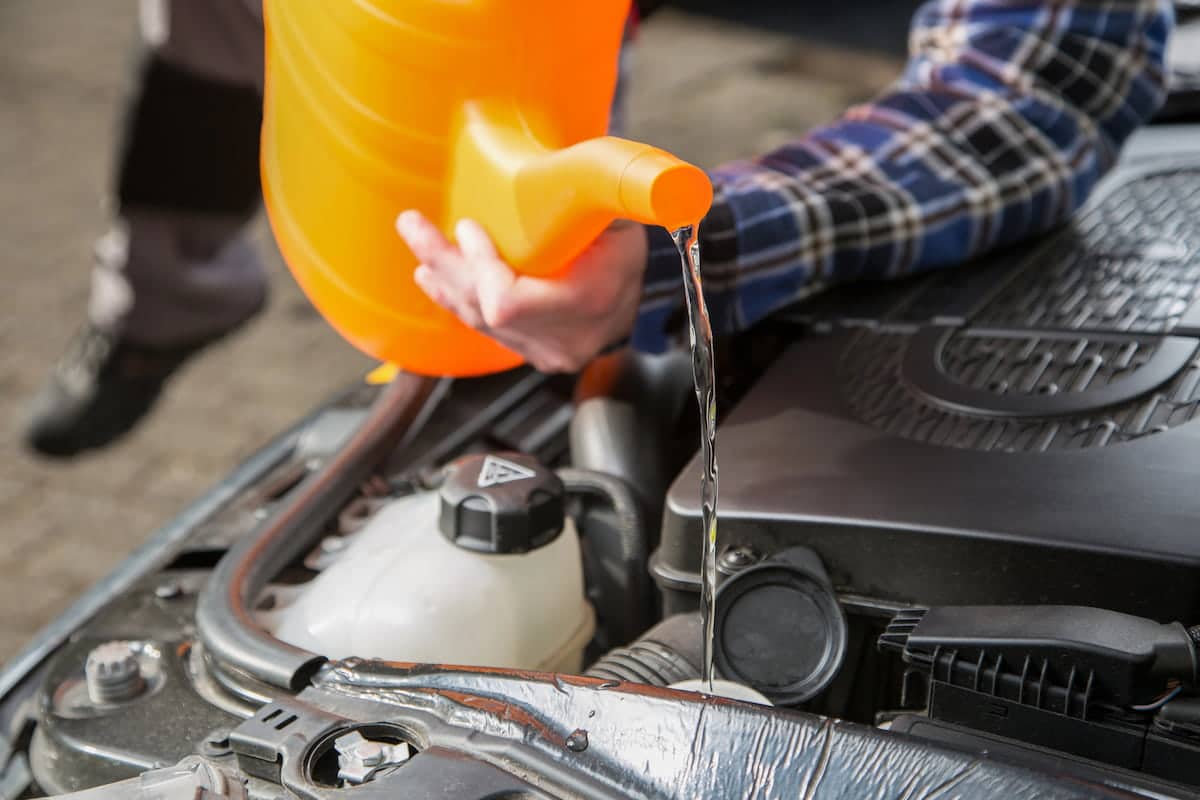
Ferrari Cooling System Repair at DART Auto
Ferrari cooling systems aren't just larger versions of what's under a Honda's hood. Mid-engine and front-engine V8 and V12 platforms demand precise coolant flow, split-circuit routing, and exacting bleed procedures that generic shops routinely botch. The 360 Modena (F131 engine) introduced electronic thermostats that fail closed, starving the rear cylinder bank of coolant and warping heads in minutes. The 458 Italia and later turbocharged models like the 488 GTB use twin intercooler circuits alongside engine coolant loops, each with its own expansion tank, sensors, and bleed points. Miss one air pocket during refill and you'll chase overheating ghosts for weeks.
DART Auto has been Denver's European specialist since 2000, and our master technicians bring dealer-level training plus over a decade of hands-on Ferrari experience. We use Leonardo diagnostic software to read real-time coolant temperatures at each cylinder bank, verify thermostat actuation cycles, and log pump duty cycles under load – data points invisible to scan tools built for mass-market cars. We source Genuine Ferrari hoses and clamps where failure history demands it, and premium Behr or Mahle components for radiators and expansion tanks. Our salaried technicians have zero incentive to sell you a radiator when a $40 bleeder valve is the actual culprit.
When you bring your Ferrari to DART Auto for cooling system repair, expect:
- Pressure testing of all coolant circuits before disassembly to pinpoint leaks
- Factory-spec vacuum fill procedures that eliminate air pockets in complex mid-engine plumbing
- Thermal imaging to confirm even heat distribution across radiator cores and cylinder banks
- 3-year/36,000-mile warranty on parts and labor – longer than most Ferrari dealers offer
Common Cooling System Repair Issues on Ferrari Vehicles
Ferrari cooling systems face unique challenges that generic shops often misdiagnose. The mid-engine layout on models like the 360 Modena and F430 creates heat-soak conditions that stress radiators, hoses, and expansion tanks in ways front-engine designs never see. Here's what actually fails:
- Expansion tank cracking on 1999–2004 360 Modena and Spider: The OEM plastic tanks become brittle from constant heat cycling in the rear engine bay. Hairline cracks appear near the mounting tabs and seams, causing slow coolant loss that owners mistake for normal evaporation until the low-level warning triggers. The tank sits directly above the exhaust routing, accelerating degradation.
- Radiator core separation on F430 and 430 Scuderia (2004–2009): The aluminum end tanks separate from the plastic core under thermal stress. This platform runs higher coolant pressures than the 360, and the OEM radiators weren't overbuilt for longevity. You'll see seepage at the crimp joints before catastrophic failure. Aftermarket units often use thinner cores that can't handle track use.
- Water pump bearing failure on F136 V8 engines (California, 458 Italia): The mechanical water pump on these engines develops bearing noise and shaft play around 30,000–40,000 miles. Early symptoms sound like belt squeal, but the bearing is actually disintegrating. When it seizes, the serpentine belt shreds and you lose all accessory drive – alternator, power steering, A/C compressor.
- Thermostat housing leaks on 612 Scaglietti and 599 GTB (2004–2012): The front-engine V12 models use a plastic thermostat housing that cracks at the coolant outlet. This isn't a gasket issue – the housing itself splits. Ferrari revised the part twice, but even the updated design fails. Shops that don't know the service bulletin will replace the thermostat and gasket, then watch it leak again two weeks later.
- Coolant hose deterioration on all models with Dayco OEM hoses: Ferrari specifies formed silicone hoses with internal reinforcement, but the rubber degrades from the inside out. External inspection looks fine while the inner lining sheds particles that clog the heater core and radiator tubes. You won't see the problem until flow restriction causes overheating under load.
- Air pocket formation after service on 488 GTB and F8 Tributo: The mid-engine layout creates multiple high points in the cooling system. If the bleeding procedure isn't followed exactly – engine at specific RPM, bleed screws opened in sequence, climate control set to maximum heat – trapped air causes localized hot spots that trigger limp mode. The factory diagnostic tool is required to monitor coolant temperature at each sensor location during the bleed.
Why Choose DART Auto for Ferrari Cooling System Repair
Ferrari cooling systems demand more than generic shop knowledge. From the F430's notorious header tank failures to the 458's complex dual-radiator architecture and the California's variable-speed electric fans, each platform has documented weak points that show up predictably around 10–15 years or 30,000 miles. DART's master technicians know these failure modes by chassis code and model year – not from a service manual skim, but from two decades of hands-on diagnostics using Leonardo diagnostic software and factory repair procedures.
We approach every Ferrari cooling repair as a system, not a parts swap. That means pressure-testing the entire circuit, inspecting coolant hoses for the micro-cracking common on F136 and F133 engines, verifying thermostat operation with live data rather than guesswork, and bleeding the system using Ferrari's prescribed fill procedure to prevent airlock. Our salaried technicians have no incentive to rush – they take the time to verify proper fan operation, check for head-gasket weep at the block deck, and confirm that your coolant temperature stays stable under load before signing off.
- Factory-level diagnostics: Leonardo scan tools and Ferrari TSB access to identify software-related fan faults or sensor drift
- Platform-specific parts sourcing: OEM radiators, genuine Behr expansion tanks, and premium Gates hoses that meet Ferrari's thermal specs
- Post-repair validation: road test with live coolant temp monitoring and a final pressure test to confirm zero leaks
- 3-year/36,000-mile warranty: parts and labor coverage that backs the repair long-term
Symptoms – How to Know You Need This Service
Ferrari cooling systems telegraph trouble early if you know what to watch for. Catching these signs before metal meets metal saves thousands in secondary damage.
- Temperature gauge climbing past the halfway mark during spirited driving or idling in traffic – Ferrari V8s and V12s generate tremendous heat; any upward creep means the system is losing capacity.
- Sweet coolant smell in the cabin or near the rear deck (mid-engine cars) – heater core leaks or failed hose connections behind the firewall.
- Visible coolant pooling under the car after it sits overnight – expansion tank cracks, radiator end-tank failures, or corroded coolant pipe O-rings are common on 360/430/California models.
- Low coolant warning light on the dash accompanied by reduced power – ECU cuts boost or retards timing to protect the engine; stop driving immediately and have the car towed.
- White steam from the exhaust on cold starts that doesn't clear after two minutes – head gasket breach or cracked cylinder head allowing coolant into combustion chambers.
- Radiator fans running at full speed constantly, even when the engine is cool – failed coolant temperature sensor sending false hot readings to the ECU.
- Bubbling or gurgling sounds from the dashboard or rear bulkhead during acceleration – air trapped in the cooling system, often after improper refill procedures.
- Coolant level dropping steadily with no visible leaks – internal consumption through a head gasket or intake manifold gasket (common on early F136 engines in the California).
Which Ferrari Models We See for Cooling System Repair
We service cooling systems across Ferrari's modern lineup, with deep experience in the platforms Denver owners actually drive. Each generation has distinct failure modes – 360 Modena electronic thermostats, 458 Italia intercooler pump failures, California T turbo coolant feed lines – and our technicians know where to look first.
- 360 Modena / Spider (1999–2005, F131 engine) – electronic thermostat failures, expansion tank cracks, rear coolant hard-line corrosion
- F430 / Scuderia (2005–2009, F136E engine) – radiator end-tank splits, heater valve leaks, oil cooler O-ring seepage
- California / California T (2008–2017, F136/F154 engines) – intake manifold coolant passage leaks on naturally aspirated models; turbo coolant feed line failures and intercooler pump issues on T variants
- 458 Italia / Spider / Speciale (2010–2015, F136F engine) – dual expansion tanks, intercooler circuit air locks, radiator fan controller failures
- 488 GTB / Spider / Pista (2015–2020, F154 twin-turbo) – intercooler pump cavitation, charge-air cooler end-tank cracks, complex bleed procedures requiring Leonardo scan tool
- F12berlinetta / 812 Superfast (2012–present, F140 V12) – front-mounted radiators with long coolant runs, thermostat housing leaks, expansion tank mounting bracket failures
- GTC4Lusso / FF (2011–2020, F140 V12) – AWD system adds front differential cooler circuit; unique bleed points and sensor locations
- Portofino / Roma (2017–present, F154 twin-turbo) – latest-generation thermal management with electric coolant pumps and software-controlled thermostats
We're equipped to handle both naturally aspirated and turbocharged platforms, manual and F1/DCT gearboxes, and all-wheel-drive cooling circuit variations. Older models like the 355 and 550 Maranello are welcomed, though parts availability may extend timelines. If you own a limited-production model (Enzo, LaFerrari, SF90), call us first to discuss tooling and parts sourcing – we'll be honest about whether we're the right fit or if a marque specialist is better suited.
Causes & Risks – What Happens if Ignored
Ferrari cooling systems fail for predictable reasons. The brand's focus on performance means cooling components operate at higher temperatures and pressures than mass-market vehicles. Most Ferraris spend time parked, and the heat-soak cycle after shutdown – when coolant stops flowing but engine and exhaust temperatures remain extreme – degrades plastic and rubber faster than continuous highway use would. Denver's temperature swings accelerate this: summer heat weakens materials, winter cold makes them brittle, and the freeze-thaw cycle cracks anything already compromised.
Ignoring early symptoms turns a straightforward repair into major damage:
- Slow coolant loss becomes head gasket failure: Running even slightly low on coolant creates steam pockets around the combustion chambers. On the F136 V8, this leads to head gasket breach between cylinders 4 and 5 within 500–800 miles of sustained low-coolant operation. What starts as a $200 expansion tank becomes a $12,000 head gasket job requiring engine removal.
- Minor overheating warps cylinder heads: Aluminum heads on Ferrari V8 and V12 engines warp at lower temperatures than cast-iron designs. A single overheating event – coolant temperature reaching 240°F for just five minutes – can cause permanent distortion. The heads must be removed, inspected on a surface plate, and either machined or replaced. Most can't be saved once warped beyond 0.003 inches.
- Thermostat failure causes localized damage: A stuck-closed thermostat forces coolant through the bypass circuit only. The radiator stays cold while the engine overheats. Owners see normal coolant temperature on the gauge because the sensor reads the cold radiator side. By the time the temperature spikes, the heads are already heat-soaked and the catalytic converters have sustained thermal shock damage from excessive exhaust temperatures.
- Water pump bearing debris contaminates the system: When the pump bearing disintegrates, metal particles circulate through every coolant passage. They score the thermostat seat, clog the heater core, and embed in the radiator tubes. Flushing doesn't remove embedded particles – the entire system requires disassembly and individual component cleaning or replacement.
- Radiator leaks escalate to electrical damage: On mid-engine models, coolant drips from a failing radiator onto the engine harness and ECU mounting area. Coolant is conductive and causes short circuits that trigger random fault codes. Shops chase phantom electrical problems while the real issue is coolant intrusion into connectors. The harness repair alone can exceed the cost of the radiator replacement you delayed.
Safety Impact – Why Cooling System Repair Matters
A compromised cooling system on a Ferrari creates immediate safety risks that differ from typical passenger cars. These vehicles generate extreme heat under normal driving, and the margin between operating temperature and damage is narrow. When cooling capacity drops, you lose performance systems first – the ECU pulls timing and limits throttle to protect the engine – but structural failures follow quickly.
Here's what actually happens when cooling system integrity is compromised:
- Loss of power assistance: When the serpentine belt fails due to water pump seizure, you lose power steering immediately. Ferrari hydraulic steering systems require significant effort without assist – manageable at low speed, dangerous in emergency maneuvers at highway speed or on mountain roads.
- Brake system heat rejection failure: Ferrari brake systems rely on airflow and coolant system heat management to maintain pad and fluid temperatures. An overheating engine raises under-hood temperatures beyond design limits, causing brake fluid to boil and pedal fade. This happens progressively – brakes feel normal until a hard stop attempt, then the pedal goes soft.
- Fire risk from coolant-on-exhaust contact: Mid-engine Ferraris route exhaust components directly beneath coolant hoses and the expansion tank. A pressurized coolant leak onto 1400°F exhaust manifolds creates steam explosions and potential fire. The engine cover traps heat and prevents immediate detection – you smell coolant inside the cabin after damage is already occurring.
- Sudden engine seizure: Unlike gradual overheating, catastrophic coolant loss from a burst hose or split radiator can seize the engine in under two minutes at highway speed. The crankshaft locks, the rear wheels lose drive instantly, and if you're mid-corner the handling dynamics change without warning.
Stop driving immediately if: the temperature gauge reads above normal range, you see steam from the engine bay, the low coolant warning illuminates, or you smell coolant inside the cabin. Schedule service soon if: you notice coolant level dropping between checks, see stains under the car after overnight parking, or hear new squealing noises that change with engine speed.
How Ferrari Cooling System Repair Actually Works
Ferrari cooling systems use pressurized liquid cooling with separate circuits for engine block, cylinder heads, and often a dedicated oil cooler loop. The system maintains 15–18 PSI pressure to raise the boiling point above 250°F, allowing higher operating temperatures for performance and emissions. What separates Ferrari from mass-market designs is the integration: the ECU monitors coolant temperature at multiple points and adjusts ignition timing, fuel delivery, and throttle response based on thermal conditions. The cooling system isn't just preventing damage – it's actively managing engine performance.
Mid-engine models like the 360, F430, and 488 mount radiators in the front corners with coolant lines running the length of the chassis to reach the engine. This creates long coolant paths with multiple joints and increases the risk of air pocket formation. Front-engine V12 models like the 599 and 812 use twin radiators with complex routing around the engine, requiring specific bleeding procedures at multiple high points.
What makes Ferrari cooling system repair different from generic
How We Diagnose Cooling System Repair Issues on Ferrari
Ferrari cooling systems fail in predictable ways that generic shops miss. The F430 and 360 Modena are notorious for radiator header tank cracking under heat cycling. The 458 Italia and California models suffer from expansion tank failures that trigger limp mode long before coolant actually boils. The 488 GTB introduced electric water pumps prone to bearing noise and controller faults that masquerade as thermostat issues. Catching the root cause early saves you from chasing symptoms across multiple visits.
- Factory-level scan with Leonardo Diagnostics or Autologic. We pull live coolant temps at both cylinder banks, radiator inlet/outlet differentials, and electric pump duty cycle. On 458 and later platforms, we log fan control module commands and compare against actual RPM to catch relay or motor degradation before it triggers overheat.
- Pressure testing the entire circuit. We isolate the radiator, hoses, expansion tank, and block to pinpoint micro-leaks that evaporate before they drip. F355 and 360 models often weep at the lower radiator neck where the composite tank meets aluminum core.
- Thermal imaging under load. We run the engine to operating temp and scan for hot spots that indicate restricted flow, air pockets, or failing thermostats. The 599 GTB and F12 Berlinetta use dual thermostats that can fail independently, creating uneven bank temps.
- Visual inspection of ancillary components. Coolant hoses harden with age and crack at clamps. Water pump weep holes on older models like the 550 Maranello telegraph impeller seal failure weeks before catastrophic loss.
- Fluid analysis. We check for combustion gas contamination (head gasket breach), oil emulsion (oil cooler failure), and pH to assess corrosion activity. Ferrari specifies Paraflu coolant; aftermarket substitutes accelerate aluminum corrosion.
The scan data, pressure results, and thermal map combine into a detailed quote that explains exactly what failed, why it failed, and what adjacent components need attention now versus monitoring for the future.
Cooling System Repair on Ferrari: Repair vs. Replacement
Ferrari cooling systems blend aluminum, composite plastics, and rubber under extreme thermal stress. Knowing when to repair versus replace determines whether your fix lasts two months or two decades.
When True Repair Makes Sense
- Hose replacement only. If the radiator, pump, and expansion tank test sound, swapping aged silicone hoses and new OEM clamps solves most minor seepage on 360 and 430 models without touching core components.
- Thermostat housing reseal. The F355 and 550 Maranello use bolt-on housings with replaceable gaskets. If the thermostat itself functions correctly and housing isn't warped, a fresh gasket and proper torque spec stops the leak.
- Coolant flush and bleed. Air pockets from improper filling cause localized overheating. A vacuum-fill procedure with OEM Paraflu restores normal operation without part replacement.
When Partial Replacement Is the Smart Move
- Radiator replacement on 360/430/458 platforms. Once the header tank cracks, the entire radiator is compromised. Replacing just the tank isn't possible; the core and tank are bonded. We replace the radiator but retain hoses and pump if they pass testing.
- Electric water pump on 458/488/Portofino. Bearing noise or controller fault codes require pump replacement. The rest of the system typically survives if caught early.
When Full System Overhaul Is Required
- Cascading failures after overheat. If the engine ran hot enough to warp the heads or blow a gasket, coolant contamination degrades hoses, seals, and pump internals. Piecemeal repairs fail within months.
- Age-related brittleness on 1990s models. F355 and 550 Maranello systems with original hoses, clamps, and tanks are living on borrowed time. Replacing the entire circuit during one service prevents being stranded.
We walk you through the cost-benefit of each approach with photos and test data, so you decide based on facts rather than fear.
How to Make Your Ferrari Cooling System Repair Last Longer
Ferrari engines generate tremendous heat in compact spaces. How you drive and maintain the car directly impacts cooling system longevity.
Driving Habits That Protect the System
- Allow proper warm-up before high RPM. Cold starts with immediate high load stress thermal expansion joints. Let coolant reach 180°F before aggressive throttle, especially on F430 and 458 models with composite expansion tanks.
- Cool-down laps after track sessions. Shutting down immediately after hard driving traps heat in the block and boils coolant locally. A two-minute cooldown lap lets fans and pumps dissipate residual heat evenly.
- Monitor temp gauge during spirited driving. If temps climb above normal, back off throttle and increase airflow. Sustained high temps accelerate hose degradation and header tank stress cracking.
Maintenance You Can Monitor Yourself
- Check expansion tank level monthly. Slow seepage shows up as gradual level drop. Top off only with Ferrari-spec Paraflu; mixing coolants causes precipitation and clogs narrow passages.
- Listen for pump noise on startup. Electric pumps on 458 and later models should run silently. Bearing whine or grinding means replacement is imminent.
- Inspect hoses during every wash. Look for surface cracks, soft spots, or staining around clamps. Catching a failing hose before it bursts prevents overheat damage.
Professional Service That Extends Life
- Follow Ferrari's coolant replacement intervals. Paraflu degrades chemically over time, losing corrosion inhibitors. Flushing every three years prevents internal corrosion regardless of mileage.
- Pressure test annually if the car sees track use. Heat cycling accelerates joint fatigue. Annual testing catches micro-leaks before they strand you.
- Software updates for 458 and later models. Ferrari periodically updates fan control and pump logic to improve thermal management. Keeping software current optimizes component longevity.
Leave pressure testing, coolant system bleeding, and pump replacement to the shop. Improper bleeding traps air and causes localized boiling; incorrect pump installation on 458 models can damage the controller. DIY fluid top-offs and visual checks are safe; anything requiring tools or software should come to us.
What to Expect When You Bring Your Ferrari In
We treat your Ferrari like the precision machine it is. Here's how the cooling system repair process unfolds:
- Appointment and drop-off: Schedule a time that works for you. We offer loaner vehicles for longer repairs – just ask when you book. Bring your key and any service records; remove valuables from the cabin.
- Initial inspection and diagnosis: A master technician connects Leonardo diagnostics, pulls stored fault codes, and performs a complete cooling-system pressure test. We inspect hoses, radiator end tanks, the header tank (a known F430/360 weak spot), thermostat housing, and water pump for leaks or corrosion.
- Written estimate and consultation: You'll receive a detailed breakdown of what needs replacement, why, and what happens if you delay. We explain the repair in plain language and answer questions before any wrench turns.
- Repair execution: Technicians follow Ferrari's torque specs, use OEM or premium aftermarket parts, and bleed the system per factory procedure to eliminate air pockets. We verify fan operation and coolant flow under controlled conditions.
- Post-repair verification: A road test with live data monitoring confirms stable operating temps. A final pressure test ensures zero leaks. We scan for residual codes and clear the fault memory.
- Pickup walkthrough: At pickup, we review what was done, show you the old parts if requested, and explain what to watch for in the first few hundred miles. After-hours pickup can be arranged – just call ahead.
If anything feels off after you leave – temperature creeping up, a drip in the driveway – call us immediately. We'll get you back in, re-check the system, and make it right. That's the advantage of salaried technicians who own their work from diagnosis through follow-up.
Our Ferrari Services
- Air Conditioning AC Repair
- Battery Repair Replacement
- Brake Repair & Brake Fluid Change
- Check Engine Light Diagnostics
- Clutch Repair & Replacement
- Coolant Leak Repair
- Drive Shaft Repair
- Engine Repair
- Exhaust & Catalytic Converter Repair
- Head Gasket Repair & Replacement
- Oil Change
- Oil Leak Repair
- Scheduled Service Maintenance
- Steering Repair
- Suspension Repair
- Cambelt Timing Belt Replacement
- Transmission Repair
- Tune Up
- Wheel Alignment