
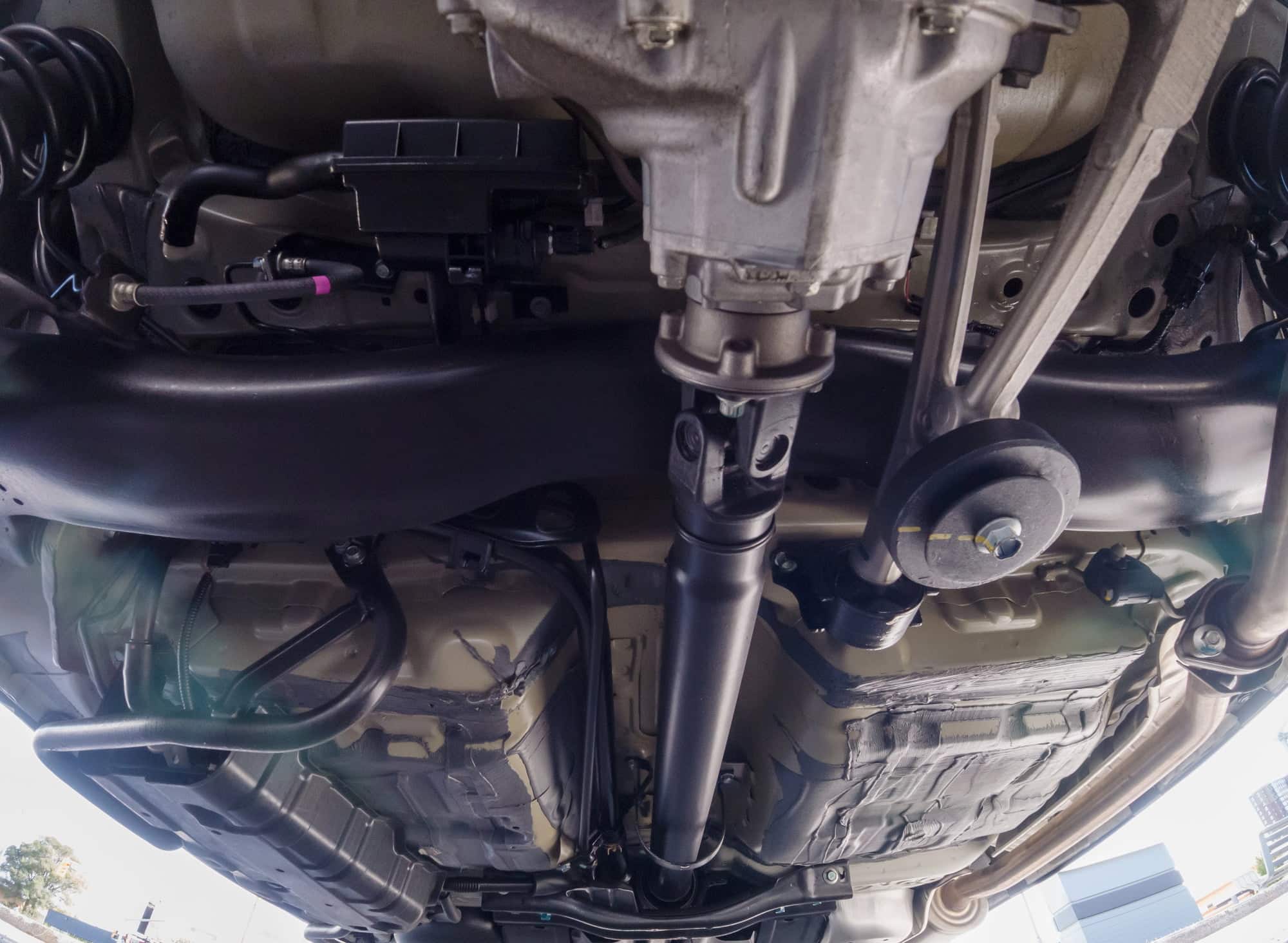
Volkswagen Drive Shaft Repair at DART Auto
You're accelerating onto I-25 when a metallic clunk echoes from underneath your GTI, followed by a vibration that intensifies with speed. Your Volkswagen's drive shaft – the precision-engineered component that transfers power from your transmission to the wheels – doesn't tolerate neglect. Unlike domestic vehicles with forgiving tolerances, Volkswagen drive shafts integrate with sophisticated all-wheel-drive systems like 4Motion, DSG transmissions with precise input shaft speeds, and Haldex controllers that monitor every rotation. A generic shop treating this as simple "shaft replacement" will miss the calibration steps, torque specifications, and software adaptations that prevent comeback vibrations and premature wear.
At DART Auto, we approach Volkswagen drive shaft repair with factory-level diagnostic capability. Our master technicians – each with over a decade of European vehicle experience – use VCDS and VAS diagnostic platforms to read fault codes from your Haldex controller, ABS wheel-speed sensors, and transmission control module before disassembly. We reference Volkswagen repair procedures that specify dynamic balancing tolerances, spline lubrication compounds, and the exact Nm torque values for CV joint bolts that differ between MQB, PQ35, and earlier platforms. Because our technicians earn salaries rather than flat-rate pay, they invest the time to inspect companion flanges, center support bearings, and guibo couplings that often fail alongside drive shafts.
When you bring your Volkswagen to our Denver shop, you can expect:
- Complete drivetrain inspection using factory scan tools to identify root causes beyond the obvious symptoms
- OEM or premium aftermarket drive shafts sourced from GKN, Raxles, or Volkswagen suppliers – never rebuilt units with questionable balancing
- Proper installation following VW torque specifications, spline engagement depths, and post-repair software adaptations where required
- A 3-year/36,000-mile warranty covering both parts and labor, backing our commitment to fix it right the first time
Common Drive Shaft Repair Issues on Volkswagen Vehicles
A worn CV joint clicking around corners or a vibration at highway speed often signals the beginning of a drive shaft problem. Volkswagen owners frequently encounter these scenarios because of the brand's AWD architecture, transverse engine layouts, and high-mileage durability expectations that sometimes outpace component lifespan.
- CV boot tears on Mk4 through Mk7 platforms (1999–2018 Golf, Jetta, Passat): The rubber boots protecting the constant-velocity joints crack from age, road salt, and flexing. Once torn, grease escapes and contaminants enter, accelerating joint wear. Left unaddressed, the joint itself fails, causing clicking, popping, or complete separation of the axle.
- Inner tripod joint wear on 4Motion AWD models (Tiguan, Atlas, Q5-platform Touareg): The inner tripod joint on AWD Volkswagens absorbs plunge and articulation. High mileage or aggressive driving wears the bearings and races, producing a clunking sound during acceleration or deceleration. The 2009–2017 Tiguan 4Motion is particularly prone to this as original axles age past 100,000 miles.
- Intermediate shaft bearing failure on Mk5/Mk6 2.0T and VR6 models: Vehicles with longer right-side axles use an intermediate support bearing mounted to the engine block. This bearing can seize or develop play, causing vibration at all speeds and, in severe cases, allowing the axle to drop or bind.
- Axle nut loosening on earlier water-cooled platforms: Insufficient torque or reuse of single-use axle nuts allows the hub to work loose on the splines. This creates a clunk over bumps and can lead to catastrophic wheel bearing or hub failure if the axle separates.
- Driveshaft center bearing wear on longitudinal AWD (Touareg, Q7-platform): The two-piece driveshaft connecting front and rear differentials relies on a rubber-mounted center support bearing. Age and heat degrade the rubber, causing a drone or vibration between 40–60 mph that intensifies under load.
- Torn boots on DSG-equipped models with high torque: The dual-clutch transmission's abrupt torque delivery stresses CV joints more than a conventional automatic. Mk6 and Mk7 GTI, Golf R, and Audi S3 (shared MQB platform) see accelerated boot wear, especially when tuned or driven hard.
Why Choose DART Auto for Volkswagen Drive Shaft Repair
When a vibration at highway speed or a clunk during acceleration points to a failing drive shaft, you need a shop that knows Volkswagen platforms inside and out. DART Auto has been diagnosing and repairing European vehicles since 2000, and our master technicians bring dealer-level training and over a decade of hands-on experience to every job. We use the same factory repair procedures and diagnostic protocols that VW dealerships follow – but without the inflated labor rates.
Our investment in OEM-quality tooling sets us apart. We have the specialty balancers, torque-angle gauges, and alignment fixtures required for MQB, PQ35, and PQ46 platform drive shaft work. Whether your Tiguan has a failing center support bearing on its two-piece shaft or your Golf R needs CV joint replacement at the front flanges, we follow VW Group torque specifications and use genuine or premium aftermarket components from trusted suppliers. Because our technicians are salaried rather than flat-rate, there's no incentive to rush through critical steps like runout measurement or proper phasing of multi-piece shafts.
- Platform-specific expertise: We recognize common failure modes like MK6 GTI intermediate shaft bearing wear and Passat 4Motion rear CV boot tears.
- Complete diagnostic workflow: We verify the issue with lift inspections, road tests, and scan-tool data before quoting repairs.
- 3-year/36,000-mile warranty: Every drive shaft repair is backed by our comprehensive parts and labor guarantee.
Symptoms – How to Know You Need This Service
Volkswagen drive shaft failures announce themselves through sensations your chassis transmits directly to the cabin. You may notice:
- Clunking when shifting from Park to Drive or Reverse – worn CV joints or loose splines creating rotational slack that slams when torque reverses direction
- Vibration that worsens with speed – an out-of-balance drive shaft or failing center support bearing resonating through the floorboards, often felt most between 45–65 mph
- Metallic clicking during tight turns – outer CV joints with worn cages or insufficient lubrication binding as the shaft articulates through steering angles
- Grease splatter on the inner wheel well or undercarriage – torn CV boots allowing lubricant to escape and contaminants to enter, accelerating joint destruction
- ESP/traction control warning lights with fault codes – wheel-speed sensor discrepancies caused by excessive play in damaged CV joints confusing the ABS module
- Shuddering during acceleration from a stop – particularly noticeable in 4Motion models where worn drive shafts create uneven torque distribution between axles
- Grinding or humming that changes pitch with vehicle speed – center support bearings collapsing or CV joints running without grease after boot failure
If you hear sudden loud banging or lose power delivery to the wheels, stop driving immediately. A completely separated CV joint or fractured drive shaft can damage your transmission output shaft, differential housing, or wheel hub – turning a focused repair into a multi-component rebuild.
Which Volkswagen Models We See for Drive Shaft Repair
Drive shaft work spans Volkswagen's front-wheel-drive and all-wheel-drive platforms, with complexity varying by drivetrain architecture. We regularly service:
- Golf / GTI / Golf R (Mk5–Mk8) – PQ35 and MQB platforms, with Golf R and 4Motion variants requiring front and rear drive shafts plus propeller shaft inspection
- Jetta / GLI (Mk5–Mk7) – primarily front axle half-shafts on FWD models; 4Motion sedans add rear-axle and transfer-case-to-rear-differential propeller shafts
- Passat (B6–B8) – longitudinal 3.6L VR6 4Motion models use a more complex three-piece propeller shaft with center support bearing that fails between 80,000–120,000 miles
- Tiguan (first and second generation) – Haldex-based AWD systems where rear drive shaft failure often coincides with Haldex pump or coupling issues requiring simultaneous attention
- Atlas / Atlas Cross Sport – MQB-based SUVs with robust front axles but rear drive shafts prone to boot tears from road debris on Colorado's gravel-strewn highways
- Touareg (7L / 7P) – full-time AWD with Torsen center differential; drive shaft work often involves propeller shaft guibo replacement and aluminum driveline component inspection
- Arteon – 4Motion variants sharing architecture with Passat B8, experiencing similar center bearing and CV joint wear patterns
We focus on 2005-and-newer Volkswagen models where our VCDS and factory tooling provide full diagnostic coverage. Earlier air-cooled and Mk3/Mk4 platforms receive case-by-case evaluation based on parts availability and our technicians' platform familiarity.
Causes & Risks – What Happens if Ignored
Drive shaft problems stem from a combination of environmental exposure, driving habits, and design trade-offs. Volkswagen's transverse FWD and AWD layouts pack axles into tight spaces where road spray, heat from exhaust components, and steering articulation stress the boots and joints. Colorado's freeze-thaw cycles and road salt accelerate rubber degradation. High-mileage commuters and enthusiasts who enjoy spirited driving add cyclic loading that fatigues the joints faster than gentle use.
When you ignore the early warning signs, the damage compounds quickly:
- Clicking becomes grinding: A torn boot lets moisture and grit into the CV joint. Within weeks to a few months, the balls and races pit and score. The joint binds, then fragments, leaving you stranded with a separated axle.
- Vibration spreads to wheel bearings and hubs: An out-of-balance or worn axle transmits oscillating loads into the hub assembly. What started as a $400 axle replacement becomes a $900 job when the bearing and hub need replacement too.
- Differential and transmission damage on AWD models: A failed inner joint or driveshaft center bearing can allow the shaft to flail, damaging the differential output seal, transmission case, or Haldex coupling. Repair bills escalate from four figures to five.
- Loss of power to the wheels: Complete joint failure means no torque transfer. On a FWD Volkswagen, you lose all drive. On AWD, you may limp home in reduced-power mode, but you risk additional damage to the transfer case or rear differential if metal debris circulates through the system.
- Safety risk in traffic: A sudden axle separation while merging or cornering removes steering control and propulsion simultaneously. The wheel can lock or the vehicle can lurch unpredictably, creating collision risk.
Safety Impact – Why Drive Shaft Repair Matters
A failing drive shaft compromises multiple safety systems because it sits at the intersection of propulsion, steering geometry, and stability control. When an axle separates or a CV joint seizes, the wheel can lock abruptly, triggering ABS intervention and destabilizing the vehicle mid-corner. On AWD Volkswagens, asymmetric torque delivery confuses the electronic stability program, potentially causing unexpected yaw or loss of traction on slippery surfaces.
The severity of the safety impact depends on how far the failure has progressed:
- Stop driving immediately: Loud grinding, complete loss of drive, visible grease spray on the wheel well, or a clunking that causes the steering wheel to jerk. These indicate imminent or complete joint failure.
- Schedule service within days: Clicking that occurs only in tight turns, a vibration that appears above 50 mph but doesn't worsen rapidly, or a torn boot discovered during an oil change. The joint still functions, but the clock is ticking.
- Plan service within weeks: Minor vibration at highway speed, slight clunk on hard acceleration from a stop, or a boot with surface cracks but no tear. Preventive replacement avoids the cascade of secondary damage.
Insurance and liability concerns also come into play. If a known defect – documented by a prior inspection or warning light – causes an accident, your insurer may scrutinize the claim. Keeping up with recommended service protects both your safety and your coverage.
How Volkswagen Drive Shaft Repair Actually Works
Volkswagen's drive shafts use constant-velocity joints to transmit torque from the transmission to the wheels while accommodating suspension travel and steering angle. The outer CV joint (near the wheel) handles extreme articulation; the inner joint (near the transmission) absorbs plunge as the suspension compresses and extends. On AWD models, a two-piece driveshaft with a center support bearing connects the transfer case or Haldex coupling to the rear differential, adding another layer of complexity.
What sets Volkswagen apart is the integration with electronic systems and the precision required during reassembly. Most 2010-and-newer models use hub assemblies that require OEM-specified torque sequences and single-use fasteners. The axle nut, for example, must be torqued to 148 lb-ft on many platforms, then angle-tightened an additional 90 degrees – a procedure that generic shops often skip or approximate. On DSG-equipped cars, the axle seal at the transmission is a multi-lip design sensitive to installation angle; improper seating causes immediate leaks and potential clutch contamination.
- Wheel speed sensor integration: The ABS sensor mounts directly to the hub or axle on many Volkswagens. Disturbing it without recalibration can trigger fault codes and disable stability control.
- Electronic parking brake on MQB-platform vehicles (2015-up Golf, Jetta, Tiguan, Atlas): The EPB must be placed in service mode via VCDS or factory scan tool before removing the rear axle. Skipping this step can damage the caliper motor.
- Haldex service on AWD models: Axle work is the ideal time to inspect and service the Haldex coupling, which shares fluid with the rear differential on many 4Motion systems. Contaminated fluid from a failed axle seal accelerates clutch pack wear.
- Alignment-critical suspension geometry: Removing the axle often requires disconnecting the lower control arm or strut. Volkswagen specifies camber, caster, and toe settings that must be verified post-repair to prevent premature tire wear and ensure stable handling.
You're heading down I-25 when you feel it – a vibration through the floor, a clunk when you shift into drive, maybe a shudder during acceleration. It's subtle at first, easy to dismiss as road noise or worn tires. But the sensation persists, and you start to wonder if something deeper is wrong. On many Volkswagen platforms, especially all-wheel-drive models like the Golf R, Tiguan, and Atlas, drive shaft issues show up exactly this way. The good news? Catching it early means you have options, and the right shop can map out a repair plan that fits both your car and your budget.
How We Diagnose Drive Shaft Repair Issues on Volkswagen
Drive shaft diagnosis on a Volkswagen isn't guesswork. We start with a complete picture of what's happening, then drill down to the exact failure point.
- Customer interview and symptom confirmation. We ask when the vibration or noise happens – under load, at certain speeds, during turns – and whether it's getting worse. This narrows the field before we touch the car.
- Road test with the technician. We replicate the concern on the road, listening for clunks on acceleration, feeling for vibration at highway speed, and noting whether symptoms change with steering input or throttle position.
- Lift inspection and visual assessment. On the rack, we check CV joint boots for tears or grease fling, inspect the center support bearing on two-piece shafts (common on Passat and Atlas), and look for play in the slip yoke or flex disc connections used on rear-wheel-biased Haldex and 4Motion systems.
- Measurement and tolerance checks. We rotate the shaft by hand to feel for binding or roughness, check runout with a dial indicator if vibration is the primary symptom, and measure axial play at the CV joints and center bearing mounts.
- Scan for fault codes and adaptation values. Using factory-level diagnostic software, we pull codes from the transmission control module, ABS/ESP controller, and Haldex unit (where applicable) to see if the car has logged wheel-speed mismatches, torque distribution faults, or driveline slip events that point to a failing component.
- Component-specific tests. If the center support bearing is suspect, we check for excessive deflection under load. If a CV joint is clicking, we verify the exact failure mode – inner vs. outer joint, which side – so we replace only what's needed.
Once the diagnosis is complete, we walk you through what we found, show you the worn parts if possible, and provide a detailed quote that explains the repair and the alternative if you choose to wait. No surprises, no upselling – just a clear path forward.
Drive Shaft Repair on Volkswagen: Repair vs. Replacement
Not every drive shaft problem requires a full assembly replacement. The decision depends on what failed, how much wear has cascaded to neighboring parts, and whether repair components are available.
- True repair scenarios: If a CV boot has torn recently and the joint itself is still smooth and tight, we can often clean out contamination, repack the joint with fresh grease, and install a new boot. This is common on early-stage failures where the customer caught it quickly. Similarly, if the center support bearing on a two-piece shaft (Passat, CC, Atlas) shows minor play but the shaft itself is straight and balanced, we can replace just the bearing and its mount.
- Partial replacement: On many Volkswagen platforms, the drive shaft is modular. If the outer CV joint on a Golf R or Tiguan is clicking but the inner tripod joint and shaft are fine, we replace the outer joint assembly and leave the rest intact. If the flex disc (guibo) connecting the transmission to the rear drive shaft on an all-wheel-drive model is cracked, we swap the disc without touching the shaft itself.
- Full replacement: When a CV joint has run dry for thousands of miles, the clicking often means the cage and balls are pitted beyond service limits. At that point, a new or remanufactured half-shaft is the right call – the cost difference between attempting a repair and replacing the assembly is minimal, and the new part comes with a warranty. Likewise, if the center bearing has been knocking long enough to bend the shaft or damage the splines, replacement is the only safe option.
We walk you through the trade-offs – longevity, warranty coverage, and total cost – so you can make an informed choice. Our technicians are salaried, not flat-rate, so there's no incentive to oversell a replacement when a targeted repair will do the job.
How to Make Your Volkswagen Drive Shaft Repair Last Longer
Once the repair is done, a few simple habits can help you get the most life out of the new components.
Driving Habits That Matter
- Avoid full-lock starts on all-wheel-drive models. Launching from a stop with the steering wheel cranked hard loads the CV joints unevenly and accelerates wear, especially on Haldex-equipped vehicles like the Golf R and Tiguan.
- Let the drivetrain warm up in cold weather. Grease in CV joints and center bearings thickens when cold. A minute or two of idle before driving hard gives everything time to circulate and reduces shock loads.
- Watch your load and towing habits. Overloading or towing beyond the rated capacity puts extra stress on the center support bearing and rear drive shaft on models like the Atlas and Touareg. Stay within spec, and the components will last.
Maintenance You Can Do
- Inspect CV boots during tire rotations. A quick visual check every few months can catch a torn boot before dirt and water destroy the joint. If you see grease on the inside of a wheel or a split boot, bring it in right away.
- Listen for changes. A new clicking, clunking, or humming from the driveline is your car telling you something is wearing. The earlier you address it, the simpler and cheaper the fix.
- Keep up with fluid services. On Haldex all-wheel-drive systems, the rear differential and coupling unit share fluid with tight service intervals (every 20,000–30,000 miles on many models). Old fluid accelerates wear on the rear drive components.
What to Leave to the Shop
Drive shaft work involves torque-critical fasteners, safety-related components, and in some cases rebalancing. Attempting to replace a CV joint or center bearing at home without the right tools and torque specs can lead to vibration, premature failure, or even a loss of drive. We're happy to show you what we're doing and explain the process, but this is one area where professional service pays off in safety and longevity.
```What to Expect When You Bring Your Volkswagen In
Drive shaft concerns often start with a vibration or noise that's hard to pinpoint. When you schedule your appointment, we'll ask about the symptoms and driving conditions so our technicians can prepare the right diagnostic approach. You're welcome to use our complimentary shuttle service or arrange a loaner vehicle while we have your car – just let us know your preference when you book.
- Initial inspection and road test: We'll replicate the concern on a test drive, then lift your Volkswagen to inspect CV boots, center support bearings, flex discs (on rear-drive models), and mounting hardware for play or damage.
- Written estimate and consultation: Before any work begins, you'll receive a detailed estimate explaining which components have failed, why they matter, and what happens if you delay the repair. We'll walk you through the findings with photos when helpful.
- Repair execution: Our technicians follow VW Group repair procedures, using factory torque specs and alignment marks to maintain proper shaft phasing. We source OEM or premium aftermarket parts and verify fit before installation.
- Post-repair verification: Every job ends with a road test to confirm the vibration or noise is gone, plus a final scan-tool check to clear any stored fault codes and verify drivetrain operation.
At pickup, we'll review what we replaced, show you the old parts if you're interested, and explain any maintenance items we noted during the inspection. If anything feels off after you drive home, call us immediately – we'll get you back in and make it right. Our 3-year/36,000-mile warranty means you can drive with confidence long after the repair.
Our Volkswagen Services
- Air Conditioning AC Repair
- Battery Repair Replacement
- Brake Repair & Brake Fluid Change
- Check Engine Light Diagnostics
- Clutch Repair & Replacement
- Coolant Leak Repair
- Cooling System Repair
- Engine Repair
- Exhaust & Catalytic Converter Repair
- Head Gasket Repair & Replacement
- Oil Change
- Oil Leak Repair
- Scheduled Service Maintenance
- Steering Repair
- Suspension Repair
- Cambelt Timing Belt Replacement
- Transmission Repair
- Tune Up
- Wheel Alignment