
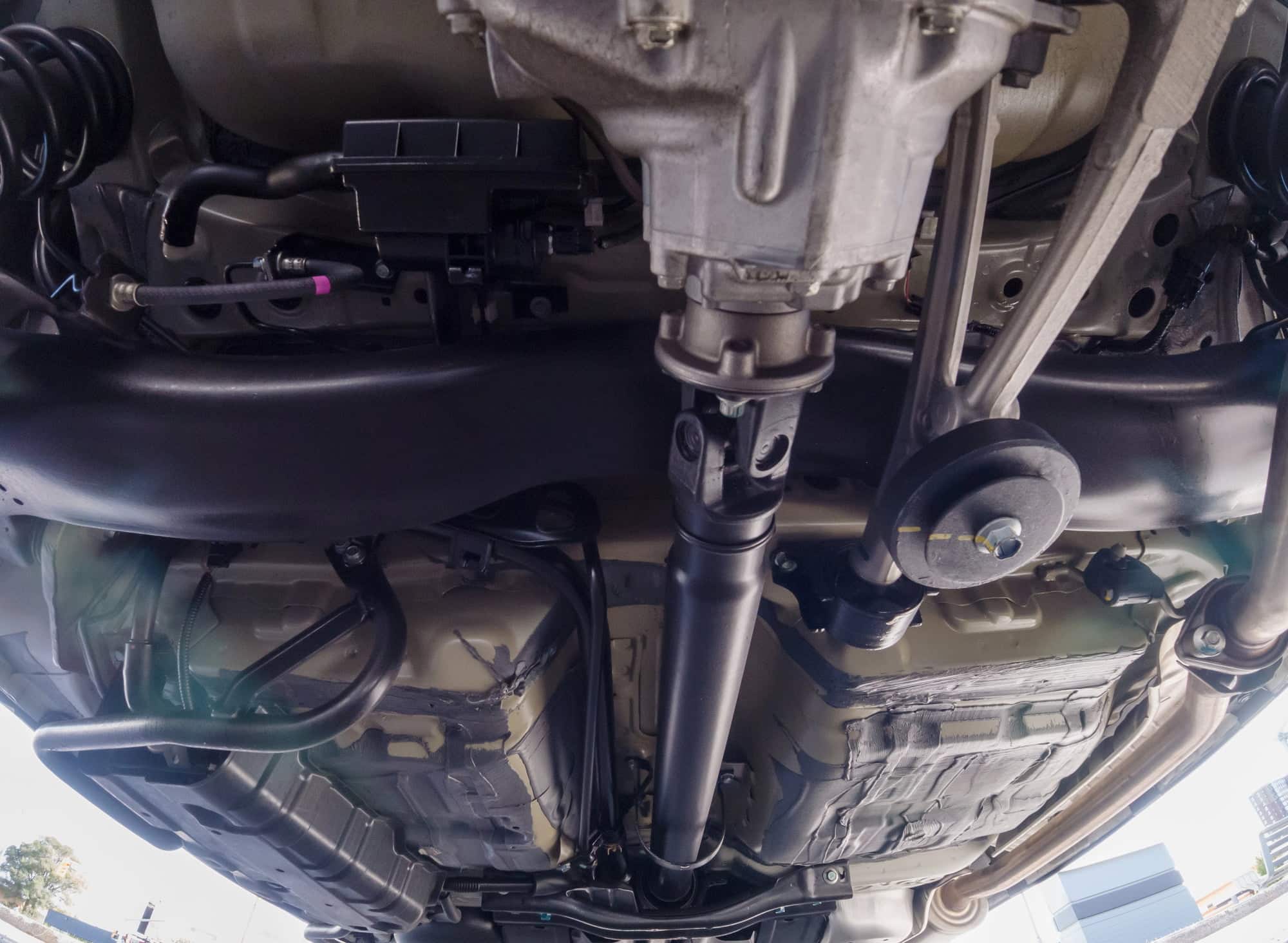
Rolls-Royce Drive Shaft Repair at DART Auto
Rolls-Royce drive shafts operate under conditions most shops never encounter. The combination of aluminum spaceframe construction, rear-biased weight distribution, and the sheer torque output from twin-turbocharged V12 powerplants places exceptional demands on propeller shaft assemblies, center bearings, and CV joints. Phantom, Ghost, Wraith, and Dawn models share BMW 7-series underpinnings but with bespoke calibrations and component specifications that require factory-level diagnostic capability. When a drive shaft fails on a Rolls-Royce, generic replacement parts and guesswork won't restore the whisper-quiet refinement these vehicles are known for.
DART Auto has served Denver's European car community since 2000, applying dealer-trained expertise without the dealer markup. Our master technicians use the same diagnostic protocols and torque specifications called out in Rolls-Royce factory repair information. We source OEM center bearings, flex discs, and CV assemblies from trusted suppliers who understand that dimensional tolerances matter when you're chasing vibrations measured in fractions of a millimeter. Because our technicians are salaried rather than flat-rate, they have every incentive to diagnose the root cause rather than throw parts at symptoms.
When you bring your Rolls-Royce to DART Auto for drive shaft repair, you can expect:
- Complete drivetrain inspection on the lift to identify worn center bearings, torn CV boots, and failing flex discs before they cause secondary damage
- Factory-spec torque procedures for propeller shaft bolts, carrier bearing mounts, and differential flanges to eliminate post-repair vibration
- OEM or premium aftermarket components that meet Rolls-Royce dimensional and material standards
- 3-year/36,000-mile warranty on parts and labor, giving you confidence the repair will last
Common Drive Shaft Repair Issues on Rolls-Royce Vehicles
Rolls-Royce drive shafts operate under unique stress. These vehicles weigh upwards of 5,500 pounds, deliver over 500 lb-ft of torque through ZF eight-speed automatic transmissions, and use aluminum-intensive construction throughout. The drive shaft assembly must transmit massive power while maintaining the near-silent cabin experience that defines the brand. When components wear, the symptoms are often subtle at first – a faint vibration at highway speed, a barely perceptible clunk during throttle transitions – but the underlying damage progresses quickly.
- Center support bearing failure on Ghost/Wraith/Dawn (2010–2020): The rubber-isolated center bearing degrades from heat cycling and torque load, causing a resonant vibration between 45–65 mph. Early-generation Ghost models (2010–2014) are particularly susceptible due to the original bearing compound specification.
- CV joint boot tears and subsequent joint contamination: The constant-velocity joints at each end of the drive shaft rely on sealed grease environments. Colorado's temperature swings crack the rubber boots, allowing grit and moisture inside. Once contaminated, the precision-ground ball bearings score and bind within 2,000–5,000 miles.
- Flex disc (giubo) deterioration on Phantom VII (2003–2017): The rubber coupling between transmission and drive shaft absorbs torsional shock. Age and ozone exposure harden the rubber, leading to bolt-hole elongation and eventual catastrophic separation. Phantom VII models with over 60,000 miles show accelerated wear patterns.
- Aluminum shaft tube imbalance from corrosion pitting: Road salt and de-icing chemicals pit the lightweight aluminum shaft surface, creating microscopic mass imbalances that manifest as steering-wheel shake above 70 mph. The issue compounds because Rolls-Royce specifies tighter balance tolerances than mass-market brands.
- Spline wear at the transmission output shaft connection: High torque combined with micro-movements during launch wears the hardened splines. Symptoms include clunking during direction changes and eventually complete power loss if the splines strip.
- U-joint bearing cap failures on older Phantom models: Pre-2010 Phantom drive shafts use traditional Spicer-style universal joints. The needle bearings fatigue from continuous articulation, producing a rhythmic squeaking that accelerates into catastrophic separation if ignored.
Why Choose DART Auto for Rolls-Royce Drive Shaft Repair
Rolls-Royce drive shafts operate under unique demands – transmitting power through a long, heavy chassis while maintaining the silence and refinement the marque is known for. The aluminum two-piece drive shaft on Ghost and Wraith platforms uses a center support bearing that commonly fails between 40,000 and 70,000 miles, producing a characteristic vibration at highway speed. Phantom models employ a steel shaft with rubber-isolated flex discs at each end that degrade over time, causing clunking during throttle tip-in. We've diagnosed and repaired these failures across every Rolls-Royce platform since the BMW-era cars arrived, and we maintain the factory tooling and service information to do it correctly.
Our approach to drive shaft work on Rolls-Royce vehicles includes:
- Platform-specific diagnostics – We use ISTA/D and ISTA/P software to interrogate the Dynamic Stability Control and powertrain modules for driveline vibration events stored in memory, the same tools used at the dealer.
- OEM and premium aftermarket parts – We source genuine BMW Group components or GKN/Walterscheid premium replacements, never generic aftermarket shafts that lack the balance and damping characteristics the factory specifies.
- Complete driveline inspection – Before recommending a drive shaft, we verify the differential mounts, transmission output seal, and rear subframe bushings, because a worn mount can mimic drive shaft symptoms and lead to misdiagnosis.
- Post-repair road testing – Every Rolls-Royce leaves our shop after a full-speed test drive to confirm vibration is eliminated and no new DTCs are present.
Our salaried master technicians have dealer-level training and over a decade of experience each, so they take the time to isolate the root cause rather than guess. We've been Denver's leading European auto shop since 2000, and we back every repair with a 3-year/36,000-mile warranty on parts and labor.
Symptoms – How to Know You Need This Service
Rolls-Royce drive shaft problems announce themselves in ways that contradict the brand's promise of effortless refinement. Pay attention to these warning signs:
- Clunking or knocking when shifting from Park to Drive or Reverse, especially noticeable in the Phantom's long wheelbase where propeller shaft length amplifies slack in worn U-joints or flex discs
- Vibration at highway speed that feels like it's coming from underneath the cabin rather than the wheels – often a failing center bearing or out-of-balance propeller shaft
- Squeaking or chirping that changes with vehicle speed, typically indicating a dry or worn center bearing support
- Shudder during acceleration from a stop, particularly in rear-wheel-drive Ghost and Wraith models where worn CV joints or flex discs allow excessive driveline lash
- Grease on the undercarriage or inside rear wheel wells from torn CV boots – this requires immediate attention before dirt contaminates the joint
- Metallic grinding or rumbling that worsens with speed – a sign of complete center bearing failure or disintegrating flex disc
If you hear grinding, experience severe vibration, or see grease leaking from CV boots, avoid driving the vehicle. A failed center bearing or separated flex disc can allow the drive shaft to contact the underbody or drop entirely, causing catastrophic damage to the transmission, differential, and exhaust system. For clunking or mild vibration, schedule an inspection within the week.
Which Rolls-Royce Models We See for Drive Shaft Repair
DART Auto regularly services drive shaft components on the following Rolls-Royce platforms:
- Phantom (2003–2017, Series I and Series II) – Extended wheelbase models see accelerated center bearing wear due to longer propeller shaft length and increased mass
- Ghost (2010–2020, RR04 platform) – Shares BMW F01 7-series architecture; common issues include flex disc deterioration on early models and center bearing failure on high-mileage examples
- Wraith (2014–2023, RR05 platform) – Rear-wheel-drive coupe with aggressive torque delivery from the N74 V12; CV joints and flex discs experience higher stress during spirited driving
- Dawn (2016–2023, RR05 platform) – Convertible variant sharing Wraith's drivetrain; same failure modes apply
- Ghost Series II (2015–2020) – Updated platform with revised center bearing mounts; still susceptible to flex disc cracking after 60,000+ miles
We also work on Cullinan SUV models (2019+), though the all-wheel-drive system introduces additional complexity with transfer case output shafts and front propeller shaft assemblies. For older Corniche, Silver Spirit, or pre-2003 models with different driveline configurations, we recommend contacting us directly to confirm parts availability and tooling compatibility.
Causes & Risks – What Happens if Ignored
Drive shaft problems on Rolls-Royce vehicles stem from the intersection of extreme performance demands and harsh operating conditions. Denver's freeze-thaw cycles crack protective boots and seals. The combination of high curb weight, instant torque delivery from twin-turbo V12 engines, and aggressive launch-control programming stresses every connection point. Factory maintenance intervals assume ideal conditions – covered parking, smooth roads, moderate climate – that rarely match Colorado reality.
What begins as a barely noticeable vibration escalates through predictable stages. A torn CV boot allows contamination within days. The precision joint then degrades rapidly under load, progressing from faint clicking during turns to complete binding and potential axle separation. A failing center support bearing starts with highway-speed resonance but leads to drive shaft misalignment, which then accelerates wear on transmission output seals and differential input bearings – components costing thousands to replace.
Delaying drive shaft repair creates a cascade of secondary damage:
- Transmission output seal leaks: Vibration from an imbalanced or misaligned drive shaft hammers the transmission tailshaft seal, causing fluid loss and potential internal damage from low-level operation.
- Differential pinion bearing failure: Continuous vibration transfers through the drive shaft into the differential input, wearing the preloaded pinion bearings and requiring complete differential rebuild.
- Chassis component fatigue: Unchecked drive shaft vibration resonates through subframe mounts, transmission mounts, and exhaust hangers, cracking welds and tearing rubber isolators throughout the drivetrain.
- Complete drive shaft separation: Ignored flex disc deterioration or U-joint failure leads to catastrophic separation at highway speed, with the loose shaft potentially damaging the undercarriage, fuel lines, brake lines, and creating an immediate crash risk.
- Wheel speed sensor damage: Severe CV joint failure sends metal debris into the wheel bearing area, contaminating ABS sensors and triggering stability control faults that disable critical safety systems.
Safety Impact – Why Drive Shaft Repair Matters
A compromised drive shaft directly affects vehicle control. Rolls-Royce stability systems depend on predictable torque delivery to all wheels. When a CV joint binds or a center bearing allows shaft wobble, the Dynamic Stability Control system receives conflicting data from wheel-speed sensors and yaw-rate monitors. The result is delayed or inappropriate intervention during emergency maneuvers – exactly when you need full system capability.
Complete drive shaft failure presents immediate danger. If a flex disc separates or a U-joint disintegrates at highway speed, the spinning shaft contacts the undercarriage with tremendous force. It can sever brake lines, puncture the fuel tank, or jam against suspension components and lock a wheel. Phantom and Ghost models position the drive shaft directly above the rear exhaust system; contact with hot exhaust components has caused vehicle fires in documented failure cases.
Symptoms requiring immediate attention:
- Metallic grinding or clicking that increases with vehicle speed
- Violent shuddering during acceleration or deceleration
- Clunking when shifting between drive and reverse
- Dashboard warnings for stability control, ABS, or drivetrain malfunction
- Visible fluid leaking from the transmission or differential area
Schedule service within the week for:
- Vibration felt through the steering wheel or seat at specific speeds
- Faint squeaking during tight turns at low speed
- Slight resistance or binding sensation during parking maneuvers
How Rolls-Royce Drive Shaft Repair Actually Works
Rolls-Royce drive shafts are two-piece aluminum assemblies designed to handle over 600 lb-ft of torque while maintaining rotational balance within 0.5 grams at the shaft ends. The front section connects to the ZF 8HP transmission via a flex disc – a rubber-and-fabric composite coupling that absorbs torsional shock. A center support bearing, mounted to the chassis via a rubber isolator, supports the mid-span and allows the shaft to articulate as the suspension moves. The rear section connects to the differential through a constant-velocity joint that accommodates suspension travel while maintaining smooth power transfer.
This design differs fundamentally from simpler single-piece shafts. The two-piece configuration reduces cabin vibration and allows packaging around the complex rear suspension geometry. However, it introduces additional failure points and requires precise alignment during installation. The factory specifies shaft runout tolerances under 0.020 inches and angular alignment within 0.5 degrees – measurements that require laser alignment tools and calibrated fixtures.
Rolls-Royce-specific considerations during drive shaft repair:
- Center bearing preload must be set using OEM tooling; incorrect preload causes premature bearing failure or introduces new vibration
- Flex disc bolt torque follows a specific sequence and angle-tightening protocol; improper installation leads to bolt fatigue and sudden separation
- CV joints require Rolls-Royce-approved high-temperature grease; generic substitutes break down under the heat generated by high-torque launches
- Shaft balance must be verified on a dynamic balancing machine after any component replacement; static balancing is insufficient for these precision assemblies
- Installation requires resetting transmission adaptation values through the factory diagnostic system to account for new component tolerances
How We Diagnose Drive Shaft Repair Issues on Rolls-Royce
Rolls-Royce vehicles – particularly the Phantom (RR1/RR2/RR3), Ghost (RR4), and Wraith (RR5) platforms – rely on precision-balanced aluminum drive shafts, flex discs, and center support bearings that demand exacting diagnosis. The BMW-derived powertrains transmit enormous torque through these assemblies, and even minor imbalance or wear generates vibration that degrades the driving experience. Our process starts with what the car tells us, then validates every finding with hands-on inspection.
- Initial interview and road test. We ask when the vibration or clunk occurs: acceleration, deceleration, coasting, or turning. We replicate the symptom on a test drive, noting speed range and load condition. Phantom and Ghost models often exhibit center-bearing hum between 40–60 mph when the bearing races pit.
- Scan with factory-level diagnostics. We connect BMW ISTA diagnostic software to read fault codes, driveline sensor data, and powertrain adaptation values. Active tests command the transmission and transfer case (on AWD Ghost/Wraith) to isolate mechanical noise from electronic faults.
- Lift inspection and runout measurement. With the vehicle on the lift, we rotate the drive shaft by hand, checking for play at the flex discs (common failure point on 2010–2016 Ghost RR4), center bearing movement, and U-joint bind. We use a dial indicator to measure shaft runout; Rolls-Royce specifies tolerances under 0.5 mm, and anything beyond that requires balancing or replacement.
- Component-by-component assessment. We inspect the guibo (flex disc) for cracks and oil saturation, the CV joints for boot tears and grease loss, and the splined slip yoke for wear. On Phantom VII, the two-piece shaft's center bearing often shows rubber deterioration after 60,000 miles.
- Written findings and repair plan. We document every measurement, photograph wear points, and present a detailed quote that explains which components need service, why, and what happens if deferred. You receive a clear path forward, not a parts-cannon guess.
Drive Shaft Repair on Rolls-Royce: Repair vs. Replacement
Not every drive shaft issue requires a new assembly. The decision hinges on what failed, how far the damage has spread, and whether OEM replacement parts remain available for your platform.
When Repair Makes Sense
- Flex disc replacement. The rubber guibo between transmission and shaft is a wear item. If the shaft itself is straight and balanced, we replace only the flex disc and hardware – a targeted fix that restores smoothness without the cost of a full shaft.
- Center bearing refresh. On two-piece shafts (Phantom VII, early Ghost), the center support bearing can be pressed out and replaced if the carrier bracket and shaft tubes are undamaged. We torque the new bearing to BMW AG specifications and verify runout afterward.
- CV boot and joint service. Torn boots on AWD Wraith and Ghost can be caught early. If the joint hasn't run dry and pitted, we repack with OEM-spec grease and install a new boot, preserving the original shaft.
When Replacement Is the Right Call
- Bent or out-of-balance shaft. Impact damage or prolonged vibration can warp the aluminum tube. Straightening risks internal stress fractures; replacement is safer and often no more expensive than attempted repair plus re-balancing.
- Spline wear or yoke damage. Worn splines at the transmission or differential end allow axial play that no bearing or disc can fix. A new shaft restores proper engagement.
- Multiple failed components. If the flex disc, center bearing, and CV joint all show wear, labor to replace each separately exceeds the cost of a complete OEM or OE-equivalent assembly. We walk you through the math so the decision is transparent.
How to Make Your Rolls-Royce Drive Shaft Repair Last Longer
Rolls-Royce drive shafts endure high torque and luxury-car weight. Thoughtful operation and maintenance extend component life and keep vibration at bay.
Driving Habits That Protect the Driveline
- Smooth throttle application. Abrupt wide-open-throttle launches shock-load the flex disc and U-joints. The 6.75-liter V12 and twin-turbo V12 engines deliver torque instantly; progressive throttle inputs reduce stress spikes.
- Avoid prolonged low-speed high-load driving. Towing or crawling uphill in high gear for extended periods heats the center bearing and accelerates grease breakdown. Downshift to keep engine speed above 1,500 rpm under load.
- Let the drivetrain warm up. Cold transmission fluid is thick; hard acceleration before the gearbox reaches operating temperature strains the output shaft and flex disc. A few minutes of gentle driving warms fluids and extends component life.
Maintenance You Can Monitor
- Listen for new sounds. A low hum that rises with speed suggests center-bearing wear. Clunking during direction changes points to flex-disc failure. Catching these early prevents secondary damage to the transmission output shaft seal or differential input.
- Check for fluid leaks at the tunnel. Oil on the drive shaft often traces back to a transmission or transfer-case seal, but it also saturates the flex disc rubber and hastens its failure. Address leaks promptly.
- Follow Rolls-Royce service intervals. The factory schedule calls for transmission and differential fluid changes at specific mileage points. Fresh fluid maintains correct viscosity and protects seals that keep contaminants off the drive shaft.
What to Leave to the Professionals
Drive shaft work requires specialized balancing equipment, torque-angle tightening, and alignment of phased yokes. Incorrect installation introduces vibration or catastrophic failure at highway speed. We handle the critical work; you enjoy the result – a Rolls-Royce that glides as intended, backed by our 3-year/36,000-mile warranty on parts and labor.
What to Expect When You Bring Your Rolls-Royce In
We know your Rolls-Royce represents a significant investment, and we treat it accordingly. Here's how the process unfolds from the moment you contact us:
- Schedule and drop-off – Call or book online. If you prefer, we offer shuttle service within the Denver metro area or a loaner vehicle depending on availability. Remove personal items and valuables; we'll take care of the rest.
- Initial inspection and diagnosis – A technician performs a complete visual inspection of the drive shaft, center bearing, flex discs, and related mounts. We road-test the vehicle to replicate your concern, then place it on the lift for a detailed undercarriage examination. If vibration is speed-dependent, we rotate the wheels to rule out tire balance.
- Written estimate and explanation – You'll receive a detailed estimate that itemizes parts, labor, and any additional findings. We explain what's failing, why it's failing, and what happens if you delay the repair. No pressure, no upselling – just the facts you need to make an informed decision.
- Repair and quality checks – Once you approve, we order OEM or premium parts, perform the replacement following factory torque specifications, and verify driveline runout with a dial indicator. We clear any stored fault codes and road-test the car at multiple speeds to confirm the repair.
- Pickup and follow-up – At pickup, we walk you through the work completed and show you the old parts if you'd like. If anything feels off in the days following the repair, call us – we'll bring the car back in and make it right at no charge.
After-hours pickup can be arranged if your schedule requires it. Our goal is to fix your Rolls-Royce correctly the first time, so you can return to the driving experience you expect.
Our Rolls-Royce Services
- Air Conditioning AC Repair
- Battery Repair Replacement
- Brake Repair & Brake Fluid Change
- Check Engine Light Diagnostics
- Clutch Repair & Replacement
- Coolant Leak Repair
- Cooling System Repair
- Engine Repair
- Exhaust & Catalytic Converter Repair
- Head Gasket Repair & Replacement
- Oil Change
- Oil Leak Repair
- Scheduled Service Maintenance
- Steering Repair
- Suspension Repair
- Cambelt Timing Belt Replacement
- Transmission Repair
- Tune Up
- Wheel Alignment