
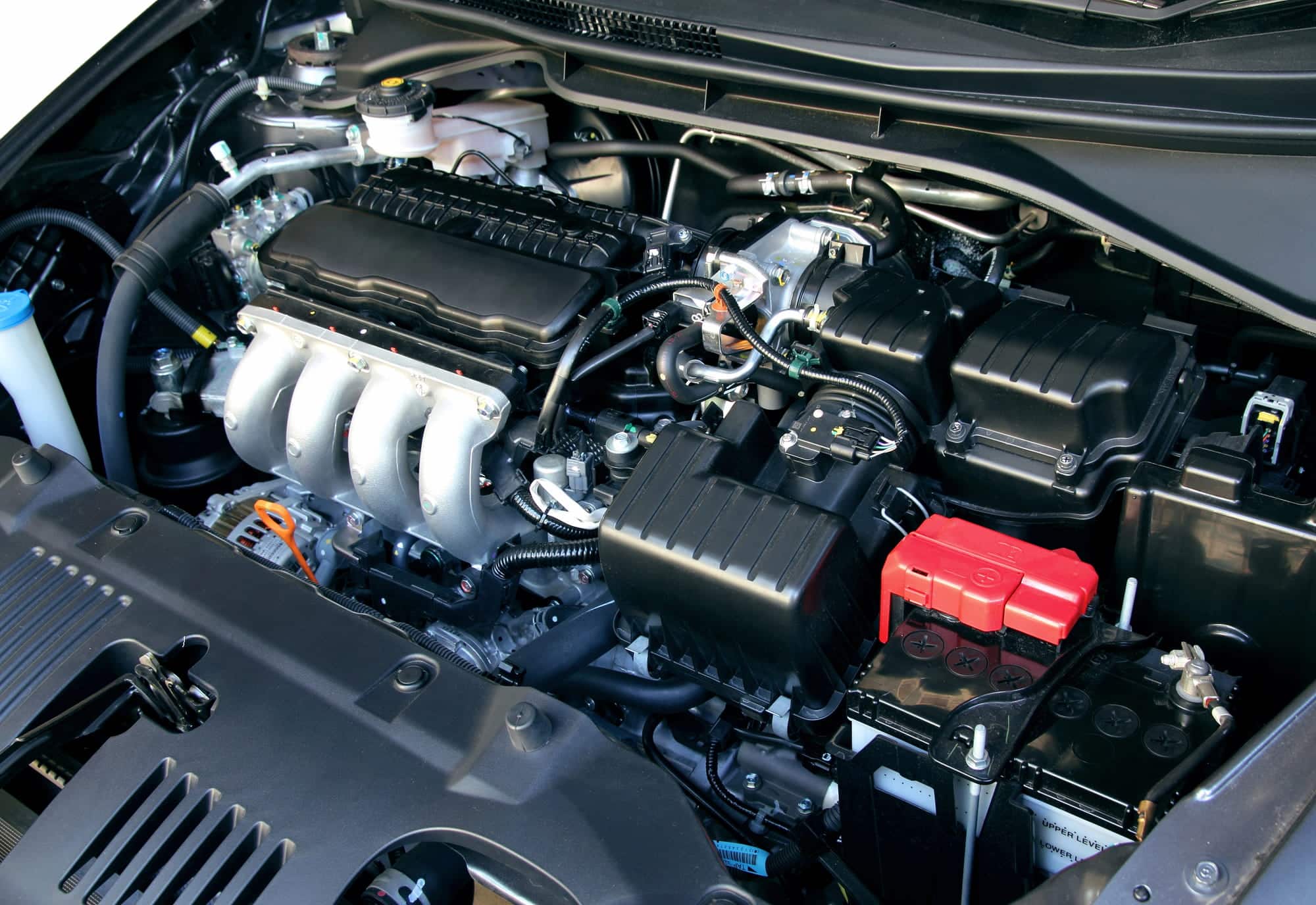
Ferrari Engine Repair at DART Auto
A Ferrari owner from Cherry Creek brought in his 458 Italia last month after noticing an unusual metallic resonance at 4,000 RPM. The engine had logged 38,000 miles, and what started as a subtle harmonic became a sharp reminder that even the most meticulously engineered V8s demand expert attention. After a complete teardown, we discovered excessive wear on the exhaust cam lobes – a known concern on early F136 engines when valve lash intervals are stretched beyond Ferrari's prescribed 15,000-mile service.
Ferrari engine repair isn't a job for shops that treat all European cars the same. These powerplants – whether naturally aspirated flat-plane V8s, screaming V12s, or turbocharged F154 units – operate at extreme tolerances and demand factory-level diagnostic capability. We use Leonardo diagnostic software to interrogate every control module, monitor live sensor data, and access the same fault-code libraries Ferrari technicians rely on at the factory. Torque sequences for head bolts, cam phasing calibration, and valve timing procedures are all model-specific and non-negotiable.
When you bring your Ferrari to DART Auto for engine repair, you can expect:
- Complete diagnostic workup using Ferrari-specific tooling and software before disassembly begins
- Transparent communication about what failed, why it failed, and what adjacent components need attention
- OEM and premium aftermarket parts sourced from trusted Ferrari specialists, not generic catalog suppliers
- Master technicians with dealer training and at least a decade of hands-on experience on exotic platforms
Common Engine Repair Issues on Ferrari Vehicles
A Ferrari owner in Denver once brought us a 2007 F430 that had begun misfiring on cold starts. The car ran beautifully once warm, but those first thirty seconds sounded like a paint mixer. After a thorough diagnostic, we traced it to a failed ignition coil – a common issue on F136 V8s from that era, especially in our dry, high-altitude climate where electrical components age differently than at sea level.
Ferrari engines are masterpieces of engineering, but they're also highly strung machines with failure modes that differ sharply from everyday vehicles. Here's what we see most often:
- F136 V8 ignition coil failures (2004–2009 F430, 2009–2014 California, 2010–2014 458): These coils sit directly on the valve covers in intense heat. Over time, the potting compound cracks and internal resistance rises, causing misfires, rough idle, and CEL codes. The factory service bulletin recommends replacing all eight when one fails because the rest are on borrowed time.
- Timing belt and variator failures (Testarossa, 348, 355, 360, F430): Ferrari's flat-12 and V8 engines used cam-belt-driven variable valve timing. Belt service intervals are strict – 5 years or 30,000 miles – because a snapped belt on an interference engine destroys valves, pistons, and cylinder heads. Variator solenoids also clog with varnish if oil changes are delayed.
- Oil leaks from cam cover gaskets and rear main seals (all models, especially 308–512): Older Ferraris with aluminum valve covers and cork gaskets leak profusely once the gaskets harden. Rear main seals on the Tipo F113 and F133 V12s weep oil onto clutches, requiring transmission removal to address properly.
- Throttle body carbon buildup on direct-injection models (2009+ California, 458, 488): Ferrari adopted direct injection on newer V8s, which bypasses fuel's detergent action on intake valves. Carbon accumulates on throttle plates and intake runners, causing rough idle, hesitation, and reduced power. Walnut-blasting the intake manifold restores performance.
- Exhaust manifold cracking and stud failures (360 Modena, F430): The F136 exhaust manifolds run extremely hot and crack near the collector or around stud bosses. Broken studs require drilling and extraction, and aftermarket headers are often the long-term solution.
- Engine mount deterioration (all models): Ferrari mounts use a combination of rubber and hydraulic damping. When they fail, the engine rocks violently under throttle, transmitting vibration into the cabin and stressing drivetrain components. On mid-engine cars, failed mounts can even cause the engine to contact the firewall.
Why Choose DART Auto for Ferrari Engine Repair
A Ferrari owner in Cherry Hills brought us a 458 Italia that had been to two other shops – both diagnosed a vague "engine noise," quoted new pistons, and walked away when the owner asked for details. We put the car on the lift, pulled the valve covers, and found a failed variable valve timing solenoid rattling against its mount. The engine itself was fine. That's the difference between guessing and knowing.
Our technicians have factory-level training on Ferrari platforms and direct access to the same diagnostic tooling and repair procedures the dealership uses. We've worked on everything from 360 Modena F131 V8s with exhaust valve guide wear to 488 GTB F154 twin-turbo engines throwing boost faults under load. When a Check Engine light appears or oil pressure drops on a cold start, we don't throw parts at the problem – we trace the root cause with scan tools that read live data streams, freeze frames, and adaptation values specific to Ferrari's control modules.
- Platform-specific expertise: Familiar with F136 timing variator issues on California models, F140 valve-seat recession on early 612 Scagliettis, and turbo oil-feed failures on 488/F8 Tributo engines.
- OEM-grade tooling: Ferrari-specific scan tools, torque-angle wrenches for head-bolt procedures, and specialty fixtures for timing alignment.
- End-to-end ownership: Same technician handles diagnosis, teardown, reassembly, and post-repair road test – no handoffs, no miscommunication.
- Salaried technicians: No flat-rate pressure to rush a cam-cover reseal or skip a leak-down test.
Symptoms – How to Know You Need This Service
Ferrari engines communicate distress in specific ways. Recognizing these early can mean the difference between a focused repair and a full rebuild.
- Metallic ticking or knocking that changes pitch with RPM, especially on cold starts – often points to valve train wear, cam follower damage, or timing chain slack on turbocharged models
- Check Engine light accompanied by rough idle – misfires from coil pack failure, injector clogging, or carbon buildup on intake valves (common on direct-injection F154 engines)
- Oil pressure warning at idle after the engine is fully warmed – serious concern indicating bearing wear, oil pump failure, or internal oil leaks
- White or blue smoke from exhaust – white suggests coolant entering combustion chambers (head gasket or cracked head), blue indicates oil consumption from worn piston rings or valve seals
- Loss of power above 5,000 RPM with no fault codes – can signal cam timing drift, variable valve timing solenoid failure, or exhaust restrictions
- Coolant loss with no visible leaks – internal head gasket breach or cracked cylinder liner
- Sudden overheating with normal coolant levels – thermostat failure, water pump cavitation, or air pockets in the cooling system
If you see oil pressure warnings or severe overheating, stop driving immediately and arrange transport. Continuing to run the engine can turn a repairable issue into a catastrophic failure.
Which Ferrari Models We See for Engine Repair
We service the full range of modern Ferrari platforms, with particular depth on models from the mid-2000s forward. Our diagnostic equipment and technical library cover both naturally aspirated and turbocharged architectures.
- 360 Modena / Spider (1999–2005) – F131 V8, common valve guide wear and exhaust manifold cracking
- F430 (2005–2009) – F136E V8, improved over 360 but still prone to valve lash drift and cam wear if service intervals slip
- 458 Italia / Spider (2010–2015) – F136F V8, direct injection introduced carbon buildup concerns, crankshaft position sensor failures
- 488 GTB / Spider (2016–2020) – F154 twin-turbo V8, wastegate rattle, turbo seal leaks, and intercooler condensation issues on early cars
- F8 Tributo / Spider (2020–2023) – refined F154 with improved turbo sealing, still benefits from frequent oil analysis
- California / California T (2008–2017) – F131/F149 and later F154 turbocharged, front-engine layout simplifies some access but presents unique cooling challenges
- GTC4Lusso / FF (2011–2020) – F140 V12 and F151 V12, timing chain tensioner updates critical on higher-mileage examples
- 812 Superfast (2017–present) – F140 V12, valve train and oiling system demand strict adherence to service intervals
We maintain factory repair procedures and torque specifications for all these platforms. If you own an earlier model – 355, 550 Maranello, or 575M – contact us to discuss your specific needs. Our focus remains on the generation of Ferraris where electronic engine management and variable valve timing became standard.
Causes & Risks – What Happens if Ignored
Ferrari engines fail for predictable reasons: heat cycling from spirited driving, extended oil change intervals, sitting unused for months, and Denver's altitude stressing fuel and ignition systems differently than at sea level. Factory maintenance schedules assume regular use; a car driven 2,000 miles per year still needs annual fluid changes because moisture and acids accumulate in oil regardless of mileage.
Delaying engine repairs on a Ferrari rarely saves money. What starts as a $1,200 ignition coil replacement becomes a $6,000 catalytic converter job when unburned fuel destroys the cats. A leaking cam cover gasket that drips onto an exhaust manifold can ignite, causing an engine bay fire. Here's how problems escalate:
- Ignored misfires: Unburned fuel washes oil from cylinder walls, scores pistons, and melts catalytic converters. Within 500–1,000 miles, you're looking at catalyst replacement and possibly cylinder honing.
- Deferred timing belt service: A snapped belt on an F136 or Tipo F129 engine bends every intake and exhaust valve. Repair costs jump from $3,000 for a belt service to $15,000+ for head removal, valve replacement, and machine work.
- Oil leaks left unaddressed: Oil on exhaust components creates fire risk. Oil dripping onto clutches causes slippage and chatter, requiring transmission removal. Low oil levels from leaks can starve bearings, leading to spun rod or main bearings.
- Carbon buildup ignored: Throttle response degrades, fuel economy drops, and eventually the engine won't idle smoothly. In severe cases, carbon chunks break free and score cylinder walls or damage valves.
- Cracked exhaust manifolds: Exhaust leaks create a raspy sound, trigger O2 sensor fault codes, and allow hot gases to escape near wiring harnesses and fuel lines. Broken studs corrode in place, making future removal exponentially harder.
The safety risk becomes acute when misfires occur at highway speeds or when oil leaks reduce lubrication to the point of bearing failure. A seized engine at 75 mph removes power steering assist and dramatically reduces braking effectiveness on models with vacuum-assisted brakes.
Safety Impact – Why Engine Repair Matters
Ferrari engineered these cars for performance, which means many systems depend on the engine running correctly. When engine issues cascade, they affect more than just acceleration.
A misfiring engine reduces power unpredictably, which is dangerous when merging or passing. Oil leaks onto hot exhaust components can ignite, and an engine bay fire spreads quickly in a car with composite body panels and fuel lines routed near the engine. Timing belt failure can occur without warning, leaving you stranded in traffic or on a mountain pass with no power and limited braking assist.
Specific risks by symptom:
- Stop driving immediately: Loud knocking or ticking from the lower engine (rod bearing failure), sudden loss of oil pressure, visible smoke from the engine bay, strong fuel smell inside the cabin, or coolant mixing with oil (head gasket failure).
- Schedule service within the week: Persistent misfires, oil leaks leaving spots on the garage floor, rough idle that doesn't smooth out when warm, or a check engine light accompanied by reduced power.
- Address at next scheduled service: Minor oil seepage around valve covers, slight hesitation on cold starts that clears within seconds, or a single misfire code that hasn't returned.
From an insurance and liability standpoint, documented maintenance matters. If a known issue like a timing belt overdue by two years causes an accident, insurers can argue negligence. Keeping records of inspections and following factory service intervals protects both your safety and your financial exposure.
How Ferrari Engine Repair Actually Works
Ferrari engines use a combination of traditional mechanical components and sophisticated electronics that require factory-level diagnostic tools to service properly. Unlike domestic V8s where parts interchange freely, Ferrari specifies exact part numbers, torque sequences, and assembly procedures that must be followed to avoid comebacks.
Take the F136 V8 found in the F430 and 458: it's a flat-plane crank design with a 9,000 rpm redline, titanium connecting rods, and variable valve timing on both intake and exhaust cams. Timing belt replacement isn't just swapping a belt; it requires locking the crank and cams with special tools, verifying valve timing with a dial indicator, and using the Ferrari diagnostic system to relearn cam positions after reassembly. Torque specs for head bolts follow a multi-step sequence with angle measurements, not just ft-lbs. Miss a step and the engine won't run correctly, or worse, you'll have internal damage on the first startup.
Carbon cleaning on direct-injection models involves removing the intake manifold, masking sensors and ports, and walnut-blasting each intake runner individually. The factory procedure specifies media type, air pressure, and blast duration to avoid damaging aluminum ports. Afterward, the throttle bodies must be recalibrated using the Leonardo diagnostic system – the same tool Ferrari dealers use – because the ECU has learned the previous airflow characteristics and needs to rebaseline.
Ferrari-specific design elements that affect repairs:
- Dry-sump oiling systems: Most Ferraris use a separate oil tank and scavenge pumps, requiring specific bleeding procedures and oil capacity measurements that differ from conventional wet-sump engines.
How We Diagnose Engine Repair Issues on Ferrari
A Ferrari owner drove into our shop last month complaining of rough idle and hesitation under load on his 458 Italia. The car had been to another shop twice, where they'd replaced coils and spark plugs without improvement. Within an hour, we'd traced the problem to a failing fuel pressure regulator – a classic F136 platform issue that requires the right diagnostic approach to catch.
Our diagnostic process for Ferrari engine repair follows a systematic path that leaves nothing to chance:
- Initial interview and road test. We drive the car with the owner or technician notes in hand, reproducing the complaint under real-world conditions. Ferrari engines respond differently to load, temperature, and throttle input, so we vary all three to map the symptoms accurately.
- Factory-level scan with Leonardo diagnostics. We connect Ferrari-specific diagnostic equipment that reads every control module – engine, transmission, ABS, stability control – and pulls live data streams. This reveals pending codes, fuel trims, ignition timing deviations, and sensor rationality that generic scanners miss entirely.
- Physical inspection and measurement. We pull spark plugs to read combustion condition, borescope cylinders when valve or piston wear is suspected, test compression and leak-down on each cylinder, and inspect timing components through access ports. On F430 and 360 models, we check valve clearances since the Tipo F131 and F129 engines use solid lifters that drift out of spec.
- Fluid analysis and system-specific tests. Oil condition tells us about bearing wear and fuel dilution. Coolant pressure testing reveals head gasket integrity. Fuel pressure and injector flow tests confirm delivery matches factory spec.
At the end of the process, you receive a detailed written estimate that explains what we found, what needs repair, and why. No guesswork, no parts-swapping – just a clear plan based on measurable data.
Engine Repair on Ferrari: Repair vs. Replacement
The decision between repairing a component and replacing it outright depends on the failure mode, the part's condition, and how the repair affects long-term reliability.
When True Repair Makes Sense
- Valve adjustments on solid-lifter engines. The F131 (360) and F129 (F430) engines require periodic valve lash adjustment. The valvetrain itself is fine – it just needs precise measurement and shimming to bring clearances back to spec.
- Carbon cleaning on direct-injection engines. The California and later turbocharged models accumulate intake valve carbon. Walnut-blasting the valves restores airflow without replacing anything.
- Timing belt and tensioner service. On belt-driven Ferrari V8s and V12s, the belts and tensioners are wear items. Replacing them on schedule prevents catastrophic valve-to-piston contact, but the rest of the timing system remains sound.
- Oil leak repairs. Valve cover gaskets, cam cover seals, and oil pan gaskets fail from age and heat cycling. Replacing the gaskets solves the leak without touching internal components.
When Component Replacement Is the Right Call
- Failed ignition coils or injectors. These are sealed units. When they fail, replacement is the only option. On F136 engines (458, California), coil failure is common enough that we often recommend replacing all eight when one fails to avoid comebacks.
- Worn camshaft lobes or lifters. If a cam lobe shows scoring or a lifter is pitted, replacement prevents further damage to the valvetrain and cylinder head.
- Cracked or warped cylinder heads. Overheating or detonation can warp heads beyond the machine shop's ability to resurface them. Replacement heads ensure proper sealing and combustion chamber geometry.
We walk you through the cost-benefit analysis for every repair, showing you what each option buys in terms of reliability and longevity. You make the final call – we just make sure you have the information to choose wisely.
How to Make Your Ferrari Engine Repair Last Longer
Once we've completed your engine repair, a few deliberate habits can extend the life of the work and the surrounding components significantly.
Driving Habits That Protect the Engine
- Warm up before hard acceleration. Ferrari engines run tight tolerances. Let oil temperature reach at least 180°F before exploring the upper half of the tachometer. Cold oil doesn't lubricate bearings or piston rings adequately.
- Cool down before shutdown. After spirited driving, cruise gently for the last mile or two. This lets turbocharger bearings (on California T and 488) cool under oil flow rather than heat-soaking after shutdown.
- Vary engine speed. Steady-state highway cruising at 3,000 RPM for hours can glaze cylinder bores. Periodically vary throttle and RPM to keep rings seated and combustion chambers clean.
- Use the gears. Ferrari engines are designed to rev. Lugging the engine at low RPM under heavy throttle creates more stress than letting it spin freely in a lower gear.
Maintenance You Can Monitor
- Check oil level weekly. Ferrari engines can consume oil during spirited driving – it's not a defect, it's a characteristic of high-performance flat-plane V8s and V12s. Top off as needed with the correct viscosity Shell Helix or Pennzoil Platinum Euro as specified.
- Listen for changes. You know your car's sound. New ticking, rattling, or exhaust tone changes warrant a phone call before they become expensive.
- Watch the temperature gauge. If coolant temperature climbs above normal or fluctuates, don't ignore it. Overheating kills head gaskets and warps aluminum components quickly.
Professional Service That Matters
- Follow Ferrari's service intervals. Annual service isn't arbitrary – it catches wear before it cascades. Belt service at the prescribed intervals is non-negotiable on interference engines.
- Use OEM or equivalent fluids. Ferrari specifies particular oil viscosities and coolant formulations for thermal and chemical reasons. Substituting bargain fluids invites problems.
- Keep software current. Engine control unit updates refine fuel maps, timing, and sensor logic. We flash updates during service visits to keep your car running as Ferrari intended.
Some tasks – fluid checks, visual inspections – are safe to handle yourself. Anything involving timing components, internal engine work, or safety systems should stay with trained technicians who have the tooling and experience to do it right.
What to Expect When You Bring Your Ferrari In
We know your Ferrari isn't just another car. From the moment you schedule an appointment, we treat the repair as a partnership – you stay informed, we handle the details, and nothing moves forward without your approval.
- Drop-off and intake: Bring the car in at your scheduled time. We'll ask about symptoms, driving conditions when the issue occurs, and any recent work. Leave personal items at home or take them with you – we'll have the car for a thorough inspection.
- Diagnostic phase: We connect factory-level scan tools, pull fault codes, review live data, and perform physical inspections (compression test, leak-down, oil analysis if needed). If the engine needs to come apart for internal inspection, we document findings with photos.
- Written estimate and consultation: You receive a detailed breakdown of what we found, which parts need replacement, and why. We explain the repair in plain terms and answer questions about urgency, alternative approaches, and what happens if you delay.
- Repair execution: Once you approve, the same technician who diagnosed the issue performs the work. We follow Ferrari torque specs, use OEM gaskets and seals, and verify timing alignment with factory procedures.
- Post-repair verification: Every engine repair includes a road test under load and a final scan-tool check to confirm no pending codes. We walk you through what we did at pickup and provide documentation for your records.
If you need a loaner vehicle during the repair, let us know when you book – availability varies, but we'll arrange transportation whenever possible. After you drive away, we're available by phone or text if something feels off. If a concern arises within our warranty window, bring the car back and we'll make it right.
Our Ferrari Services
- Air Conditioning AC Repair
- Battery Repair Replacement
- Brake Repair & Brake Fluid Change
- Check Engine Light Diagnostics
- Clutch Repair & Replacement
- Coolant Leak Repair
- Cooling System Repair
- Drive Shaft Repair
- Exhaust & Catalytic Converter Repair
- Head Gasket Repair & Replacement
- Oil Change
- Oil Leak Repair
- Scheduled Service Maintenance
- Steering Repair
- Suspension Repair
- Cambelt Timing Belt Replacement
- Transmission Repair
- Tune Up
- Wheel Alignment