
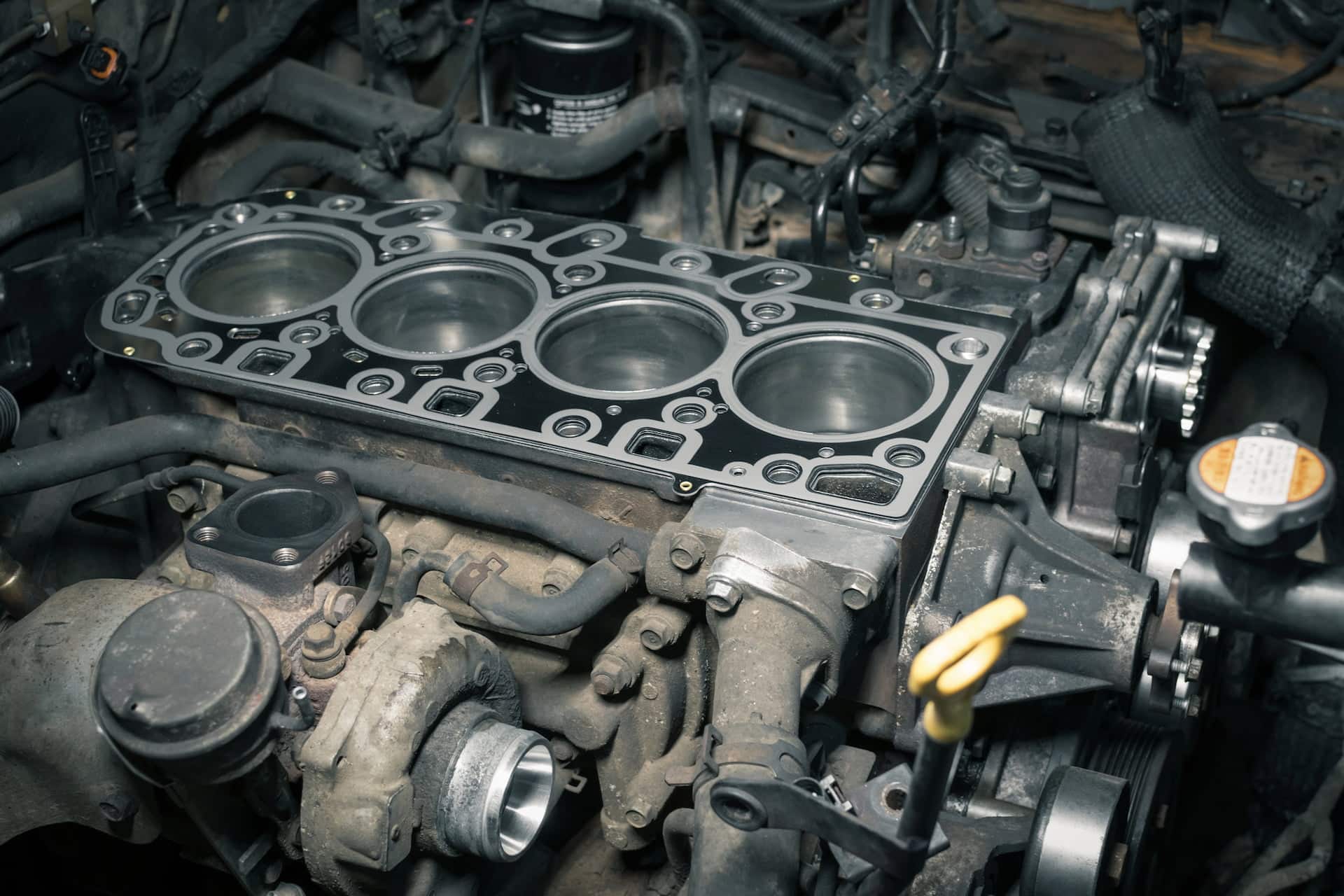
Ferrari Head Gasket Repair & Replacement at DART Auto
You're seeing coolant in places it shouldn't be, or your Ferrari is running hotter than normal. Maybe you've noticed white smoke from the exhaust or oil that looks milky. These signs point to head gasket failure, and on a Ferrari, this repair demands precision that goes well beyond what most shops can deliver.
Ferrari engines – whether the naturally aspirated V8s in the F430 and 458, the twin-turbo V8s in the 488 and F8, or the legendary V12s – use aluminum blocks and heads with specific torque sequences and multi-stage head bolt procedures. The factory service information calls for exact surface preparation, specialized sealants, and torque-to-yield fasteners that must be replaced, not reused. Get the sequence wrong or skip the OEM break-in procedure, and you risk warped heads or repeat failure within months.
We use Ferrari-specific diagnostic software to verify combustion leak testing, coolant system pressure decay, and block/head surface flatness before we commit to the repair. Our technicians follow the exact factory procedures, including the multi-angle torque sequences and the thermal cycling steps that Ferrari specifies for proper gasket seating.
When you bring your Ferrari to DART Auto for head gasket work, expect:
- Complete combustion leak testing and cylinder pressure analysis using Ferrari-compatible diagnostic tools
- Head and block surface inspection with precision straightedge and feeler gauges to factory flatness specs
- OEM or premium Athena/Payen gasket sets with all required fasteners, seals, and updated components
- Post-repair pressure testing and thermal cycling to confirm seal integrity before you drive away
Common Head Gasket Repair & Replacement Issues on Ferrari Vehicles
Head gasket failure on a Ferrari is not just an inconvenience – it's a threat to the engine's integrity and your investment. These high-performance powerplants run hotter and demand more from sealing surfaces than everyday commuter engines. When coolant and combustion gases start crossing paths, the damage clock starts ticking fast.
- F355 (1994–1999) head gasket weeping and coolant loss: The Tipo F129 V8 is known for head gasket seepage around the cylinder head perimeter, especially on higher-mileage examples. Owners often notice gradual coolant consumption without visible external leaks, and white residue around head bolt areas. The flat-plane crank design and high-revving nature create significant thermal cycling stress on gasket surfaces.
- 360 Modena and F430 (1999–2009) valve guide wear accelerating gasket stress: The F131 and F136 engines can develop excessive valve guide clearance over time, allowing oil into the combustion chamber. This creates hot spots and uneven pressure distribution that compromise head gasket integrity. Combining valve guide replacement with gasket service is common on these platforms.
- 550 Maranello and 575M (1996–2006) coolant crossover passage corrosion: The Tipo F133 V12 uses aluminum heads with cast-iron liners, and the dissimilar metals can promote galvanic corrosion in coolant passages near gasket surfaces. This creates pitting and uneven clamping, leading to localized leaks. Original coolant service intervals were too long, exacerbating the issue.
- California and 458 Italia (2008–2015) thermal expansion mismatches: Modern direct-injection Ferrari engines run leaner and hotter than previous generations. The F136E and F136F engines in particular see significant head-to-block thermal expansion differentials under sustained high load, which can stress OEM multi-layer steel gaskets beyond their elastic limit if coolant system efficiency drops.
- Testarossa and 512 TR (1984–1996) flat-12 gasket complexity: The Tipo F113 boxer configuration places heads horizontally, making gasket replacement labor-intensive and requiring precise torque sequencing. Oil and coolant passages run close together, and any gasket degradation quickly contaminates fluids. These engines are also prone to stud pull-out if block threads weren't properly maintained.
- Post-2015 turbocharged models (488, F8, Roma) boost pressure accelerating failure: Forced induction adds cylinder pressure spikes that multiply head gasket clamping demands. Even minor combustion leaks create rapid gasket erosion, and the factory MLS gaskets require flawless surface finish and precise torque-to-yield fastener installation to maintain seal integrity under boost.
Why Choose DART Auto for Ferrari Head Gasket Repair & Replacement
Your Ferrari's head gasket is experiencing coolant loss, overheating, or white exhaust smoke – signs that demand immediate, expert attention. DART Auto has spent over two decades diagnosing and repairing Ferrari powertrains, from naturally aspirated V8s and V12s to the turbocharged platforms in modern 488 and F8 models. We invest in the factory diagnostic tooling and repair information that Ferrari dealerships use, then apply it without the dealer price tag.
Head gasket failure on Ferrari engines often stems from thermal cycling, coolant system pressure spikes, or cylinder head warping – issues that require precision machining and OEM-spec torque procedures. Our master technicians are salaried, not flat-rate, so they take the time to measure cylinder head flatness, check for block deck distortion, and verify coolant flow through the complex passages unique to Ferrari's mid-engine and front-engine layouts. We use OEM gaskets and premium hardware kits, then follow factory torque sequences and heat-cycling protocols to prevent comebacks.
- Platform-specific expertise: familiarity with F136, F133, and F154 engine families, including known head-bolt stretch patterns and coolant routing quirks
- Complete teardown inspection: cam timing verification, valve guide wear assessment, and cooling system pressure testing before reassembly
- 3-year/36,000-mile warranty: parts and labor coverage that reflects our confidence in doing the job right the first time
Symptoms – How to Know You Need This Service
Head gasket failure on a Ferrari rarely happens without warning. You'll notice changes in how the car runs, often starting subtly before becoming impossible to ignore.
- White or sweet-smelling exhaust smoke – coolant burning in the combustion chamber, especially noticeable on cold starts
- Coolant loss with no visible leaks – the expansion tank needs frequent topping off, but you don't see puddles under the car
- Milky or frothy oil – check the dipstick or oil cap; coolant mixing with oil creates a tan, mayonnaise-like substance
- Overheating or fluctuating temperature gauge – combustion gases entering the cooling system disrupt normal flow and create air pockets
- Rough idle or misfires – coolant seeping into a cylinder causes poor combustion and can trigger check engine lights for misfire codes
- External coolant seepage – visible wetness between the head and block, often at the rear of the engine near the firewall
- Bubbles in the coolant reservoir – with the engine running, you see continuous bubbling from exhaust gases pressurizing the system
If you see white smoke or the temperature climbs into the red, stop driving immediately. Continued operation with a blown head gasket can warp the aluminum heads or damage the block, turning a gasket job into a full engine rebuild.
Which Ferrari Models We See for Head Gasket Repair & Replacement
We regularly service head gasket repairs across Ferrari's modern lineup, particularly the mid-engine V8 platforms and front-engine V12 models. The flat-plane V8s and naturally aspirated V12s each have unique sealing challenges and specific factory procedures.
Common models and platforms we work on:
- 360 Modena / Spider (1999–2005) – F131 3.6L V8, known for rear bank head gasket seepage near the firewall
- F430 / Scuderia (2004–2009) – F136E 4.3L V8, improved sealing over the 360 but still susceptible at high mileage
- 458 Italia / Spider / Speciale (2009–2015) – F136F 4.5L V8, direct injection adds complexity to diagnosis and repair
- California / California T (2008–2017) – F136I/F149C V8s, front-engine layout changes access but not the precision required
- 488 GTB / Spider / Pista (2015–2020) – F154C twin-turbo V8, turbo heat cycling accelerates gasket aging
- F8 Tributo / Spider (2019–2022) – F154CD twin-turbo V8, shares platform with 488 but updated fastener specs
- 599 GTB / GTO (2006–2012) – F140C 6.0L V12, larger displacement means more critical torque sequence adherence
- 612 Scaglietti / FF / GTC4Lusso (2004–2020) – F133/F140 V12s, front-engine V12 layout requires different tooling access
For older models like the 348, 355, or 550, we evaluate on a case-by-case basis depending on parts availability and the condition of surrounding components. If your Ferrari isn't listed, call us – we'll discuss whether we're the right shop for your specific chassis.
Causes & Risks – What Happens if Ignored
Head gasket failure in Ferrari engines stems from thermal stress, age-related material degradation, and the extreme duty cycle these powerplants endure. High compression ratios, aggressive ignition timing, and sustained high-RPM operation create combustion pressures that push gasket materials to their limits. Add in coolant system neglect – old fluid loses corrosion inhibitors and pH stability – and you accelerate the chemical breakdown of gasket surfaces and adjacent aluminum.
Ignoring early symptoms turns a manageable repair into an engine rebuild. Here's what escalates:
- Combustion gases entering the cooling system: Pressurizes coolant passages, forcing fluid past radiator caps and into overflow tanks. Within weeks, this can crack radiator end tanks, blow heater core seams, and warp cylinder heads from localized overheating.
- Coolant entering cylinders: Creates steam during combustion, which strips protective oil film from cylinder walls and accelerates ring and bore wear. A few hundred miles of driving with coolant intrusion can score bores badly enough to require block replacement or sleeving.
- Oil and coolant mixing: Turns lubricant into a mayonnaise-like sludge that clogs oil passages and starves bearings. Rod and main bearings can be damaged within hours of operation once oil contamination begins, turning a head gasket job into a complete engine teardown.
- Exhaust gas erosion: High-velocity combustion gases escaping past a failed gasket erode the head and block sealing surfaces, creating grooves and pits. What started as a simple gasket replacement now requires precision machining or even head replacement if erosion is severe.
- Hydrolocking risk: Coolant pooling in cylinders during shutdown can cause hydraulic lock on startup, bending connecting rods or cracking pistons the instant the starter engages. This transforms a repair measured in thousands into one measured in tens of thousands.
The cost difference between addressing head gasket symptoms immediately versus waiting six months can easily triple. More importantly, continued operation risks catastrophic engine damage that no repair can fully reverse.
Safety Impact – Why Head Gasket Repair & Replacement Matters
A failing head gasket doesn't just threaten your engine – it creates real safety hazards. Coolant loss leads to overheating, and an overheated Ferrari can experience sudden power loss, leaving you vulnerable in traffic or during highway merging. Steam venting from under the hood reduces visibility and can cause panic in emergency maneuvers. Oil contamination degrades lubrication rapidly, and bearing failure at speed can seize the engine, locking the drivetrain and destabilizing the vehicle.
Combustion gases pressurizing the cooling system can rupture hoses without warning, dumping scalding coolant onto hot exhaust components and creating fire risk. On models with engine-driven cooling fans, sudden coolant loss can cause fan clutch failure, sending broken components through the hood or into the cabin. These aren't theoretical risks – they happen when gasket failures are ignored.
When to stop driving immediately:
- Temperature gauge climbing into the red zone or warning lights illuminating
- White smoke from the exhaust that smells sweet (coolant burning)
- Sudden loss of coolant with no visible external leak
- Rough idle, misfiring, or loss of power accompanied by coolant loss
- Bubbling or gurgling sounds from the coolant reservoir with the engine running
Schedule service soon if you notice:
- Gradual coolant consumption requiring top-offs between service intervals
- White residue or staining around cylinder head edges
- Oil that looks milky or has a tan foam on the dipstick or filler cap
- Slight rough idle that wasn't present before, especially when cold
How Ferrari Head Gasket Repair & Replacement Actually Works
Ferrari cylinder heads seal to the engine block using multi-layer steel gaskets that must maintain perfect compression across dozens of bolt locations while managing oil passages, coolant channels, and combustion chamber perimeters. Unlike simpler engines, Ferrari V8 and V12 designs use complex coolant routing and require precise torque-to-yield head bolt procedures that stretch fasteners to a calculated elongation point. This means bolts are single-use, and installation demands both accurate torque values and angle measurements using calibrated tooling.
The repair process involves complete cylinder head removal, which on Ferrari engines means disconnecting variable valve timing actuators, cam phasing systems, and often exhaust headers that are integrated with catalytic converters. Heads are then inspected for flatness using precision straight edges and feeler gauges – Ferrari specifies tolerances measured in thousandths of an inch. Any warpage beyond spec requires resurfacing on specialized milling equipment, and too much material removal alters compression ratios and valve timing geometry.
Ferrari-specific design considerations that affect the repair:
- Torque-to-yield head bolts: Require specific angle-torque sequences and cannot be reused. Ferrari specifies both initial torque values and subsequent angle rotations, tracked in multiple stages.
- Integrated cam carriers: Many Ferrari engines have camshaft bearing caps that are part of the head casting, requiring complete valve train removal and reassembly with precise bearing clearances.
- Variable valve timing calibration: After reassembly, cam timing must be verified using factory tooling and reset using Ferrari diagnostic software to ensure proper phasing across
How We Diagnose Head Gasket Repair & Replacement Issues on Ferrari
When your Ferrari shows signs of coolant loss, white exhaust smoke, or unexplained overheating, you're likely facing a head gasket problem. We start from what you're experiencing behind the wheel and trace it back to the root cause using factory-level diagnostics.
- Initial consultation and symptom review. We discuss what you've noticed – rough idle, coolant disappearing without visible leaks, steam from the exhaust, or temperature fluctuations. These clues point us toward specific failure modes common on Ferrari flat-plane V8s and V12s.
- Factory scan tool interrogation. We connect Leonardo or Texa diagnostic platforms to pull fault codes, live data streams, and freeze-frame snapshots. On models like the F430 and 458, we monitor individual cylinder misfires, coolant temperature variance between banks, and combustion pressure anomalies that reveal head gasket breaches.
- Compression and leak-down testing. We perform cylinder-by-cylinder compression tests to identify pressure loss. Leak-down testing pinpoints whether compression is escaping past rings, valves, or the head gasket itself. On Ferrari's high-strung engines, even minor leakage affects performance.
- Coolant system pressure test and chemical analysis. We pressurize the cooling system to reveal external leaks and use combustion gas detection fluid in the radiator. If exhaust gases are present in the coolant, the head gasket has failed.
- Visual inspection with borescope. For engines like the 360 Modena's F131 V8, we may use a borescope through spark plug holes to inspect piston tops and valve faces for coolant staining or carbon deposits indicating internal coolant intrusion.
Once testing is complete, we walk you through exactly what failed, why it happened, and what's required to restore your Ferrari to proper operating condition. You receive a detailed quote before any work begins.
Head Gasket Repair & Replacement on Ferrari: Repair vs. Replacement
Head gasket work on a Ferrari almost always means full replacement. The gasket itself is a consumable seal subjected to extreme cylinder pressures and temperatures that Ferrari's high-revving engines generate. Once it fails, repair isn't an option – the gasket must come out.
When Replacement Is the Only Path Forward
- Gasket failure on any Ferrari engine. Whether it's the F136 V8 in your California or the F140 V12 in a 599, a blown head gasket requires removal of the cylinder heads, surface inspection, and installation of new OEM gaskets with precise torque sequencing.
- Warped cylinder heads. Overheating from initial gasket failure can warp the aluminum heads common on models like the 488 GTB. We measure head flatness with precision straightedges; warpage beyond 0.002" requires machining or replacement.
- Damaged block deck surface. If the block mating surface is scored or corroded, machining may be necessary. On older models like the 348 or Testarossa, we sometimes find coolant corrosion that requires block deck resurfacing before new gaskets seal properly.
The Decision Process
We measure everything, photograph what we find, and present options with transparent cost breakdowns. If heads need machining, we explain the time and expense. If additional work like timing belt replacement makes sense while the engine is apart – common on 360 and F430 models – we discuss bundling services to save labor hours. You decide what happens; we provide the expertise to make an informed choice.
How to Make Your Ferrari Head Gasket Repair & Replacement Last Longer
Once your Ferrari's head gasket is replaced, longevity depends on how you drive and maintain the car. These engines were built for performance, but they demand respect and proper care.
Driving Habits That Protect Your Engine
- Warm up properly before high-load driving. Let oil and coolant reach operating temperature before pushing past 4,000 rpm. Cold aluminum expands differently than steel, and premature high-load acceleration stresses gasket seals.
- Monitor temperature gauges religiously. If coolant temperature climbs above normal, back off immediately and investigate. Overheating is the fastest path to head gasket failure on any Ferrari.
- Avoid lugging the engine. Downshift rather than laboring at low rpm under heavy throttle. High cylinder pressure at low speed generates extreme stress on gasket surfaces.
Maintenance You Can Monitor
- Check coolant level weekly. A slow drop signals a developing leak. Address it before it becomes catastrophic.
- Watch for white smoke or sweet exhaust smell. Both indicate coolant entering the combustion chamber – an early warning sign.
- Use only OEM-spec coolant. Ferrari specifies Shell Premium or Paraflu formulations for a reason. Aftermarket coolants can corrode aluminum components and degrade gasket materials.
What to Leave to the Professionals
Coolant system bleeding on Ferrari engines requires specific procedures and sometimes vacuum-fill equipment to eliminate air pockets. Timing belt service – recommended every five years on models like the 360, F430, and California – should coincide with major engine work. We handle these tasks with factory tooling and training, ensuring your investment in head gasket replacement pays off for years to come.
What to Expect When You Bring Your Ferrari In
Head gasket work is major surgery, and we treat it that way. Here's how the process unfolds from the moment you schedule your appointment:
- Drop-off and initial assessment: We'll ask about symptoms – when the overheating started, whether you've noticed coolant odor in the cabin, any performance changes. Bring any recent service records if you have them. We'll perform a complete cooling system pressure test, exhaust gas analysis, and scan for stored codes before committing to teardown.
- Written estimate and communication: Once we confirm head gasket failure, you'll receive a detailed estimate covering gasket replacement, cylinder head machining (if required), new coolant, and any ancillary seals or hoses that must come off during the job. We'll explain what we found, share photos of the failed gasket or corroded surfaces, and outline the repair plan in plain language.
- Repair execution: Our technicians follow Ferrari's factory torque specifications and head-bolt tightening sequences. Cylinder heads are sent to a trusted machine shop for resurfacing if flatness is out of spec. We replace timing components accessible during the teardown and refill the cooling system using OEM-approved coolant and vacuum-fill equipment to eliminate air pockets.
- Post-repair verification: Before you pick up, we road-test the car, monitor coolant temperature under load, and re-scan for codes. If anything feels off in the days after pickup, call us – we'll schedule a follow-up inspection at no charge.
We offer loaner vehicles and shuttle service to keep you mobile during the repair. Remove personal items from the cabin and glove box before drop-off. After-hours key drop and pickup are available by arrangement – just let the service advisor know your schedule.
Our Ferrari Services
- Air Conditioning AC Repair
- Battery Repair Replacement
- Brake Repair & Brake Fluid Change
- Check Engine Light Diagnostics
- Clutch Repair & Replacement
- Coolant Leak Repair
- Cooling System Repair
- Drive Shaft Repair
- Engine Repair
- Exhaust & Catalytic Converter Repair
- Oil Change
- Oil Leak Repair
- Scheduled Service Maintenance
- Steering Repair
- Suspension Repair
- Cambelt Timing Belt Replacement
- Transmission Repair
- Tune Up
- Wheel Alignment