
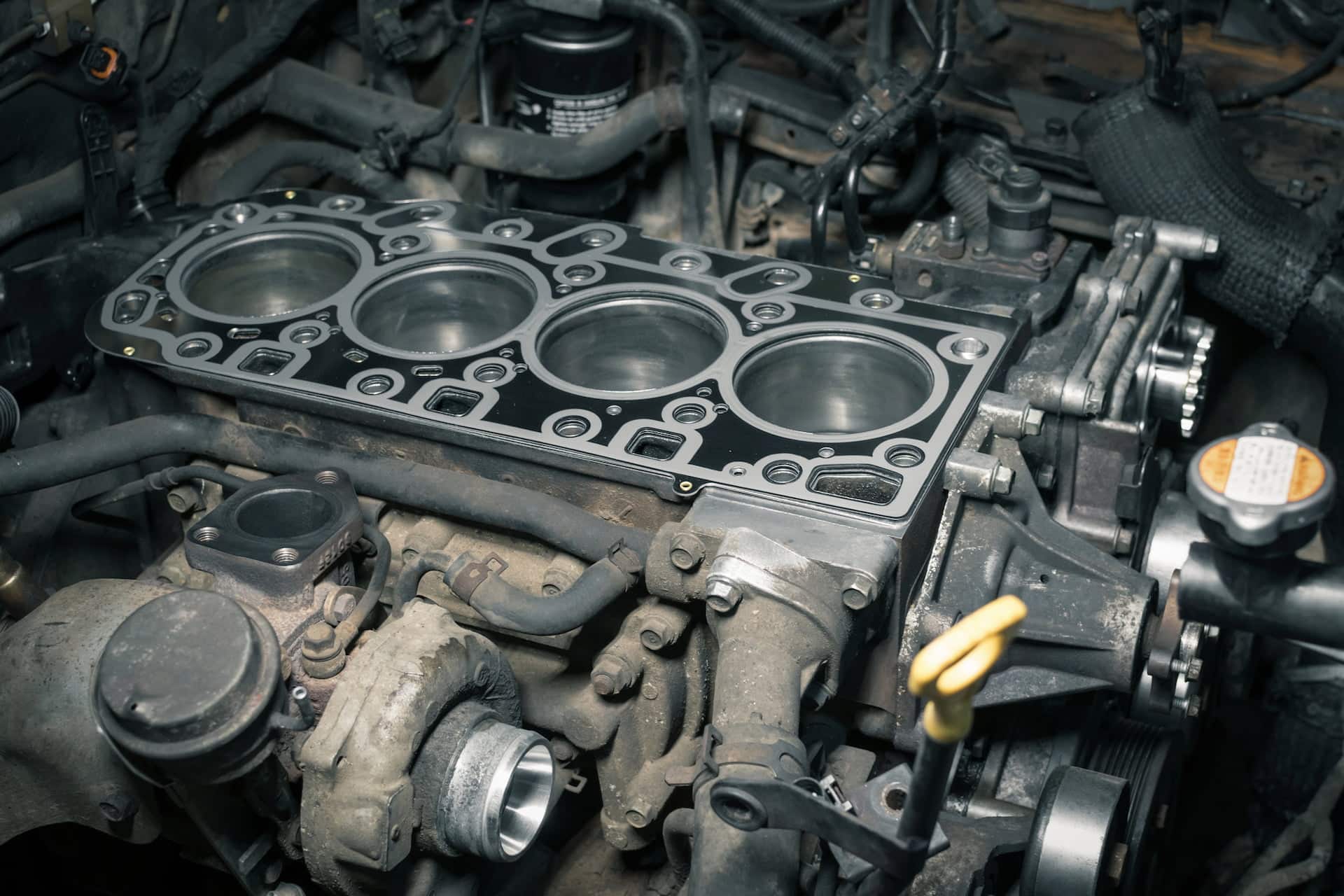
Rolls-Royce Head Gasket Repair & Replacement at DART Auto
You're driving your Phantom home after a weekend getaway when you notice the temperature gauge climbing higher than usual. A faint sweet smell drifts through the vents, and there's a puddle of coolant in your garage the next morning. Head gasket failure on a Rolls-Royce isn't just an inconvenience – it's a precision engineering challenge that demands specialized knowledge and tooling most shops simply don't have.
The head gasket seals the interface between your engine block and cylinder head, containing combustion pressure and separating oil and coolant passages. On Rolls-Royce vehicles – especially the BMW-era V12 platforms (N73, N74) found in 2003–2016 Phantom, Ghost, and Wraith models – head gasket work requires factory-level diagnostic capability, torque-angle procedures, and an understanding of the aluminum block's thermal expansion characteristics. The N73 6.75L V12, for instance, uses multi-layer steel gaskets with specific torque sequences that differ bank-to-bank, and improper installation can warp the deck surface or cause oil gallery cross-contamination.
DART Auto has invested in the factory repair procedures, specialized tooling, and diagnostic equipment that Rolls-Royce head gasket replacement demands. Our master technicians – each with over a decade of experience and dealer training – approach this work with the thoroughness your vehicle deserves.
When you bring your Rolls-Royce to DART Auto for head gasket service, expect:
- Complete cylinder head inspection including pressure testing and deck surface measurement to OEM flatness specifications
- Replacement of all related seals, coolant hoses, and thermostat components as part of the repair
- Factory torque sequences and angle specifications using calibrated tooling
- Comprehensive post-repair testing including combustion leak detection and cooling system pressure verification
Common Head Gasket Repair & Replacement Issues on Rolls-Royce Vehicles
You notice a faint sweetness in the air when you park your Phantom, or the coolant reservoir keeps dropping despite no visible leaks. Head gasket failure on a Rolls-Royce isn't as common as on mass-market vehicles, but when it happens, the complexity of these V12 and twin-turbo V12 powerplants demands precision work.
- 6.75-liter V12 (Silver Seraph, Phantom I/II) – coolant cross-contamination: The naturally aspirated 6.75L V12 in early-generation Phantom and Silver Seraph models can develop head gasket seepage between coolant passages and cylinders, particularly on bank-to-bank surfaces. Owners report mysterious coolant loss, white exhaust smoke on cold starts, and milky residue under the oil cap. The BMW-derived block uses composite multi-layer steel gaskets that can fail if the engine has been overheated even once, and the long block geometry makes diagnosis tricky without pressure testing each bank independently.
- 6.6-liter twin-turbo V12 (Phantom VII, Ghost, Wraith, Dawn) – turbocharger heat cycling: The N74 twin-turbo V12 introduced in 2009 runs hotter than its naturally aspirated predecessor, and repeated heat cycling can cause gasket compression set between the cylinder head and block. Early-generation N74 engines (2009–2012) are more prone to this issue, especially if the vehicle has seen aggressive driving or inadequate cooling system maintenance. Symptoms include pressurized cooling systems, bubbling in the expansion tank, and occasional misfires under load.
- Aluminum block expansion and torque retention: Rolls-Royce V12 engines use aluminum blocks with steel cylinder liners, and differential thermal expansion between dissimilar metals can lead to head bolt stretch over time. If the factory torque-to-yield head bolts aren't replaced during a head gasket job, or if torque sequences aren't followed to the letter, re-sealing becomes necessary within months. This is especially common on higher-mileage Phantom and Ghost models (over 60,000 miles).
- Coolant passage corrosion on early Ghost (2010–2014): Some early Ghost models experienced localized corrosion in coolant passages near the head gasket surface, often traced to incorrect coolant formulations or extended service intervals. The corrosion creates an uneven sealing surface, and simply replacing the gasket without machining the head leads to repeat failures. Shops unfamiliar with the N74 platform sometimes miss this step.
- Oil gallery leaks on high-performance variants (Wraith, Dawn Black Badge): The higher boost pressures and increased thermal loads on Black Badge variants can accelerate head gasket wear around oil return galleries. Owners notice oil seepage at the head-to-block joint, oil consumption, and occasionally oil in the coolant. These engines require OEM gaskets and precise surface prep – aftermarket gaskets rarely hold up under the increased stress.
Why Choose DART Auto for Rolls-Royce Head Gasket Repair & Replacement
Your Rolls-Royce just lit up the dash with a coolant warning, or you've noticed white smoke trailing from the exhaust. Head gasket failure on these ultra-luxury platforms demands more than a generic shop with a torque wrench.
DART Auto has invested in the factory diagnostic tooling and repair information that Rolls-Royce platforms require. Our master technicians – each with at least 10 years of experience and dealer-level training – understand the BMW-derived N73 and N74 V12 engines found in Phantom, Ghost, and Wraith models, along with the N63-based V12 variants. We follow OEM torque sequences, use the correct multi-layer steel gaskets, and perform the block-deck surface inspections that prevent comebacks. Because our technicians are salaried rather than flat-rate, they take the time to measure deck flatness, inspect cylinder bores for scoring, and pressure-test the cooling system after reassembly – steps that rushed shops skip.
We own the work end-to-end: pre-repair compression and leak-down testing, complete teardown documentation, post-repair road testing with live data monitoring, and a 3-year/36,000-mile warranty on parts and labor. You'll receive transparent estimates that explain what failed, why it failed, and what ancillary components – water pump, thermostat housing, coolant hoses – should be addressed while the engine is apart. No surprises, no upsells, just honest expert-level service without the dealer price tag.
Symptoms – How to Know You Need This Service
Head gasket failure rarely announces itself all at once. You'll notice warning signs that escalate if ignored:
- White smoke from the exhaust – especially on cold starts, indicating coolant burning in the combustion chamber
- Persistent coolant loss with no visible external leaks – the reservoir drops steadily but you can't find where it's going
- Milky, chocolate-colored oil on the dipstick or inside the oil filler cap, showing coolant contamination in the lubrication system
- Overheating or erratic temperature readings – combustion gases entering the cooling system create air pockets that prevent proper circulation
- Rough idle or misfires when coolant seeps into a cylinder, fouling the spark plug and disrupting combustion
- Bubbles in the coolant reservoir while the engine runs, visible evidence of exhaust gases pressurizing the cooling system
- External coolant seepage at the head-to-block mating surface, sometimes visible as orange residue on the V12's valley area
- Loss of power or hesitation as compression escapes past the failed gasket
If you see white smoke or milky oil, stop driving immediately – continued operation can warp the cylinder head or damage bearings. Overheating and coolant loss mean schedule service soon, before minor seepage becomes catastrophic failure.
Which Rolls-Royce Models We See for Head Gasket Repair & Replacement
DART Auto regularly services head gasket repairs on BMW-era Rolls-Royce platforms, where the N73 and N74 V12 engines present specific challenges related to aluminum block thermal expansion and multi-layer gasket technology:
- Phantom (2003–2017, Series I and II) – N73 6.75L V12 and later N74 6.75L twin-turbo, both susceptible to coolant crossover pipe failures that can mask or accelerate head gasket issues
- Ghost (2010–2020, Series I) – N74 6.6L twin-turbo V12, where valley coolant pipes and turbocharger heat cycling can stress gasket sealing surfaces
- Wraith (2014–2021) – N74 6.6L twin-turbo, same platform concerns as Ghost with added stress from higher performance tuning
- Dawn (2016–2020) – N74 6.6L twin-turbo, convertible variant with identical engine architecture
- Cullinan (2019–present) – N74 6.75L twin-turbo, newest iteration with updated cooling system design but same fundamental V12 architecture
We focus on 2003–present models where the BMW-developed V12 platforms share common repair procedures and tooling requirements. Earlier Crewe-era Rolls-Royce vehicles (pre-2003 Silver Seraph and its Bentley siblings) used different engine architectures that we evaluate case-by-case. The V12 configuration requires bank-specific torque sequences and careful attention to coolant passage alignment – work that benefits from our investment in factory tooling and diagnostic capability.
Causes & Risks – What Happens if Ignored
Head gasket failure on a Rolls-Royce V12 typically stems from thermal stress, improper cooling system maintenance, or age-related gasket compression. The N74 twin-turbo V12 runs significantly hotter than naturally aspirated engines, and even a single overheating event – caused by a failed thermostat, low coolant, or a clogged radiator – can warp the aluminum heads enough to compromise the gasket seal. Denver's temperature swings compound the issue: cold morning starts followed by highway driving create rapid thermal cycling that accelerates gasket fatigue. On older 6.75L engines, simple age and mileage cause the composite gaskets to lose their spring tension, allowing combustion gases to escape.
Delaying head gasket repair sets off a cascade of expensive secondary damage:
- Coolant contamination of engine oil: Within weeks, coolant mixing with oil destroys bearing surfaces, scores cylinder walls, and clogs the oil pump pickup screen. What starts as a gasket replacement becomes a full engine rebuild or replacement.
- Combustion gas pressurizing the cooling system: Persistent pressure in the cooling system blows out hoses, cracks plastic expansion tanks, and forces coolant past water pump seals. Owners often replace these components multiple times before addressing the root cause.
- Cylinder head warpage: Continued overheating warps the aluminum heads beyond the manufacturer's resurfacing limits. At that point, you're looking at new or remanufactured cylinder heads – a five-figure expense on top of the gasket work.
- Turbocharger damage on N74 engines: Coolant intrusion into the turbocharger oil feed lines destroys the turbo bearings. Replacing twin turbos on a Phantom or Ghost adds substantial cost to an already complex repair.
- Catalytic converter contamination: Coolant burning in the combustion chambers coats the catalytic converters, causing them to fail emissions testing and triggering check-engine lights. New catalytic converters for a V12 Rolls-Royce are expensive and require extensive disassembly.
Safety Impact – Why Head Gasket Repair & Replacement Matters
A failing head gasket on a Rolls-Royce doesn't typically create immediate brake or steering hazards, but it does introduce serious reliability and stranded-motorist risks. The most dangerous scenario is sudden overheating during highway driving. When combustion gases pressurize the cooling system, coolant can be expelled through the pressure cap or a burst hose, causing the engine to overheat in seconds. Modern Rolls-Royce models will enter limp mode and severely limit power, but if the driver doesn't notice the warning lights immediately, the engine can seize, leaving the vehicle immobile in traffic.
Specific safety-related failure modes include:
- Loss of power under load: Misfires caused by coolant in the cylinders reduce power output unpredictably, which is hazardous during highway merging or passing maneuvers.
- Engine compartment steam and smoke: Coolant leaking onto hot exhaust manifolds creates dense steam clouds that obscure vision and can be mistaken for fire, causing panic stops.
- Electrical system damage: Coolant seepage onto wiring harnesses and control modules (common on V12 engines with tight packaging) can cause short circuits, triggering false fault codes or disabling stability control and ABS systems.
When to stop driving immediately: temperature gauge in the red zone, steam from under the hood, white smoke from the exhaust, or a strong sweet smell inside the cabin. Schedule service soon: gradual coolant loss, occasional white exhaust puffs on cold starts, or oil that looks milky on the dipstick.
How Rolls-Royce Head Gasket Repair & Replacement Actually Works
The head gasket on a Rolls-Royce V12 seals the interface between the cylinder heads and the engine block, containing combustion pressure, engine oil, and coolant in their respective passages. Unlike simpler inline engines, a V12 has two cylinder heads and two gaskets, and the BMW-derived N74 twin-turbo V12 uses multi-layer steel gaskets with integrated fire rings and silicone bead seals around coolant and oil passages. The gasket must withstand combustion pressures exceeding 1,000 psi, oil temperatures above 250°F, and coolant temperatures around 200°F – all while accommodating thermal expansion between the aluminum heads and block.
What makes Rolls-Royce head gasket work different from generic engines:
- Torque-to-yield head bolts: The factory bolts are designed to stretch during installation, creating precise clamping force. They must be replaced every time and torqued in multiple stages using an angle gauge – reusing old bolts guarantees re-sealing failure within months.
- Surface flatness tolerances: Rolls-Royce specifies cylinder head flatness within 0.002 inches across the sealing surface. Shops must use precision straightedges and feeler gauges, and often machine the heads even if warpage isn't visible.
- Coolant system bleeding procedure: The N74 V12 cooling system holds over four gallons and has multiple bleed points. Incomplete bleeding traps air pockets that cause localized overheating and repeat gasket failure. The factory procedure requires a specific bleed sequence and running the engine through heat cycles
How We Diagnose Head Gasket Repair & Replacement Issues on Rolls-Royce
You notice a faint sweet smell from under the hood, or perhaps your Phantom's temperature gauge creeps higher than usual during city driving. Head gasket problems on Rolls-Royce vehicles don't announce themselves with drama – they whisper warnings that demand expert interpretation.
Our diagnostic process for Rolls-Royce head gasket concerns follows a methodical path:
- Initial consultation and symptom review. We document what you've noticed: coolant loss, white exhaust smoke, rough idle, overheating episodes, or oil contamination. These clues guide our physical inspection priorities.
- Factory-level scan with BMW ISTA diagnostics. Since Rolls-Royce shares platform architecture with BMW (the Ghost and Wraith use the N74 V12, the Cullinan employs the N74B68), we use the same diagnostic tooling as the factory. This reveals misfires, coolant temperature anomalies, and stored fault codes that pinpoint cylinder-specific issues.
- Combustion leak test. We use chemical block testers that detect exhaust gases in the cooling system – the definitive confirmation of head gasket breach on the N74 and older M73 V12 platforms.
- Cooling system pressure test. We pressurize the system cold and monitor for pressure drop, which reveals external leaks versus internal gasket failure.
- Oil and coolant analysis. We inspect both fluids for cross-contamination: milky oil or oily coolant confirms the gasket has failed between oil and coolant passages.
- Visual inspection of spark plugs. Steam-cleaned plugs on specific cylinders indicate coolant intrusion through a failed gasket on that bank.
Once we've confirmed the failure mode and affected cylinders, we provide a detailed repair plan. You'll understand exactly what failed, why it happened, and what the fix entails before any work begins.
Head Gasket Repair & Replacement on Rolls-Royce: Repair vs. Replacement
Head gasket failure on a Rolls-Royce V12 is rarely a "repair" scenario in the traditional sense. The gasket itself is a consumable seal – once it's breached, replacement is the only reliable fix.
When Replacement Is the Only Path Forward
- Confirmed gasket breach. If combustion gases enter coolant, or coolant enters cylinders, the multi-layer steel gaskets on the N74 must be replaced. There is no reseal or patch option.
- Warped cylinder heads. Overheating often warps the aluminum heads on Rolls-Royce V12s. We measure head flatness with precision straightedges; anything beyond 0.002" requires machining or replacement.
- Corroded head bolts. The torque-to-yield head bolts used on N74 engines cannot be reused. Replacement is mandatory, and we follow BMW's multi-stage torque sequence to factory specifications.
Scope Decisions During the Job
With the heads off, we assess additional wear:
- Valve stem seals and guides (common wear on higher-mileage M73 engines from the Phantom VII era)
- Timing chain guides and tensioners (the N74 uses chain-driven cams; we inspect for stretch and guide wear)
- Coolant hoses and thermostat housings that are accessible only with heads removed
We walk you through what we find and explain the cost of addressing it now versus returning later. Our salaried technicians have no incentive to upsell – the recommendation reflects what the engine actually needs.
How to Make Your Rolls-Royce Head Gasket Repair & Replacement Last Longer
Once your Rolls-Royce has new head gaskets, protecting that investment requires attention to cooling system health and operating habits.
Driving Habits That Protect Head Gaskets
- Allow proper warm-up. The N74 V12 runs tight tolerances. Let coolant reach operating temperature (around 190°F) before sustained high load. This prevents thermal shock to the gaskets and heads.
- Avoid sustained overheating. If the temperature gauge climbs into the red, shut down immediately. Aluminum heads warp quickly under extreme heat, and a warped head will blow a gasket again.
- Monitor coolant level monthly. A slow leak that drops coolant below the sensor can create hot spots that stress gaskets. Top off with BMW-spec coolant (the N74 requires a specific low-silicate formula) before levels drop critically.
Maintenance You Can Monitor
- Check for coolant puddles under the car or sweet smells from the vents – early warning signs of minor leaks before they become gasket-threatening overheats.
- Watch for white exhaust smoke on cold starts, which can signal early gasket seepage even before diagnostic codes appear.
- Listen for rough idle or misfires, especially after the engine is fully warm – coolant intrusion into cylinders often shows up as a stumble under light throttle.
What to Leave to the Professionals
Cooling system work on a Rolls-Royce V12 is not DIY territory. The bleeding procedure requires a factory scan tool to run the electric coolant pump through its purge cycle. Improper bleeding leaves air pockets that cause localized overheating and gasket failure. Follow the factory service intervals for coolant replacement (typically every four years), and insist on BMW-approved coolant and distilled water mixed to exact specifications. We handle the technical work; you enjoy the confidence that it's done right.
What to Expect When You Bring Your Rolls-Royce In
Head gasket work is a major repair, and you deserve to know exactly how we'll handle your Rolls-Royce from drop-off to pickup.
- Appointment and Initial Inspection: When you arrive, we'll document your concerns – overheating events, coolant loss, rough idle – and perform a complete visual inspection. We'll scan for fault codes, run a cooling-system pressure test, and check for combustion gases in the coolant. You'll receive a written diagnostic report before we quote the repair.
- Detailed Estimate and Authorization: Our estimate breaks down labor phases (cylinder-head removal, machining if needed, gasket replacement, timing-component reinstallation) and parts (OEM gaskets, head bolts, coolant, ancillary seals). We'll explain which additional items – valve-cover gaskets, spark plugs, coolant hoses – make sense to address while the engine is disassembled. You approve the scope before we start.
- During the Repair: If we discover warped cylinder heads or cracked block surfaces during teardown, we'll contact you immediately with photos and options. Our shop has relationships with trusted machine shops for head resurfacing. We keep you updated at each milestone and answer questions promptly.
- Post-Repair Verification and Pickup: Before you return, we road-test your Rolls-Royce, monitor coolant temperature and pressure with factory scan tools, and verify no fault codes. At pickup, we'll walk you through the work performed, show you old parts, and explain the break-in procedure for new gaskets. If anything feels off in the first few hundred miles, call us – we'll recheck it at no charge.
We offer loaner vehicles and local shuttle service so you're not stranded. Remove valuables and personal items before drop-off; after-hours key drop and pickup are available by arrangement.
Our Rolls-Royce Services
- Air Conditioning AC Repair
- Battery Repair Replacement
- Brake Repair & Brake Fluid Change
- Check Engine Light Diagnostics
- Clutch Repair & Replacement
- Coolant Leak Repair
- Cooling System Repair
- Drive Shaft Repair
- Engine Repair
- Exhaust & Catalytic Converter Repair
- Oil Change
- Oil Leak Repair
- Scheduled Service Maintenance
- Steering Repair
- Suspension Repair
- Cambelt Timing Belt Replacement
- Transmission Repair
- Tune Up
- Wheel Alignment