
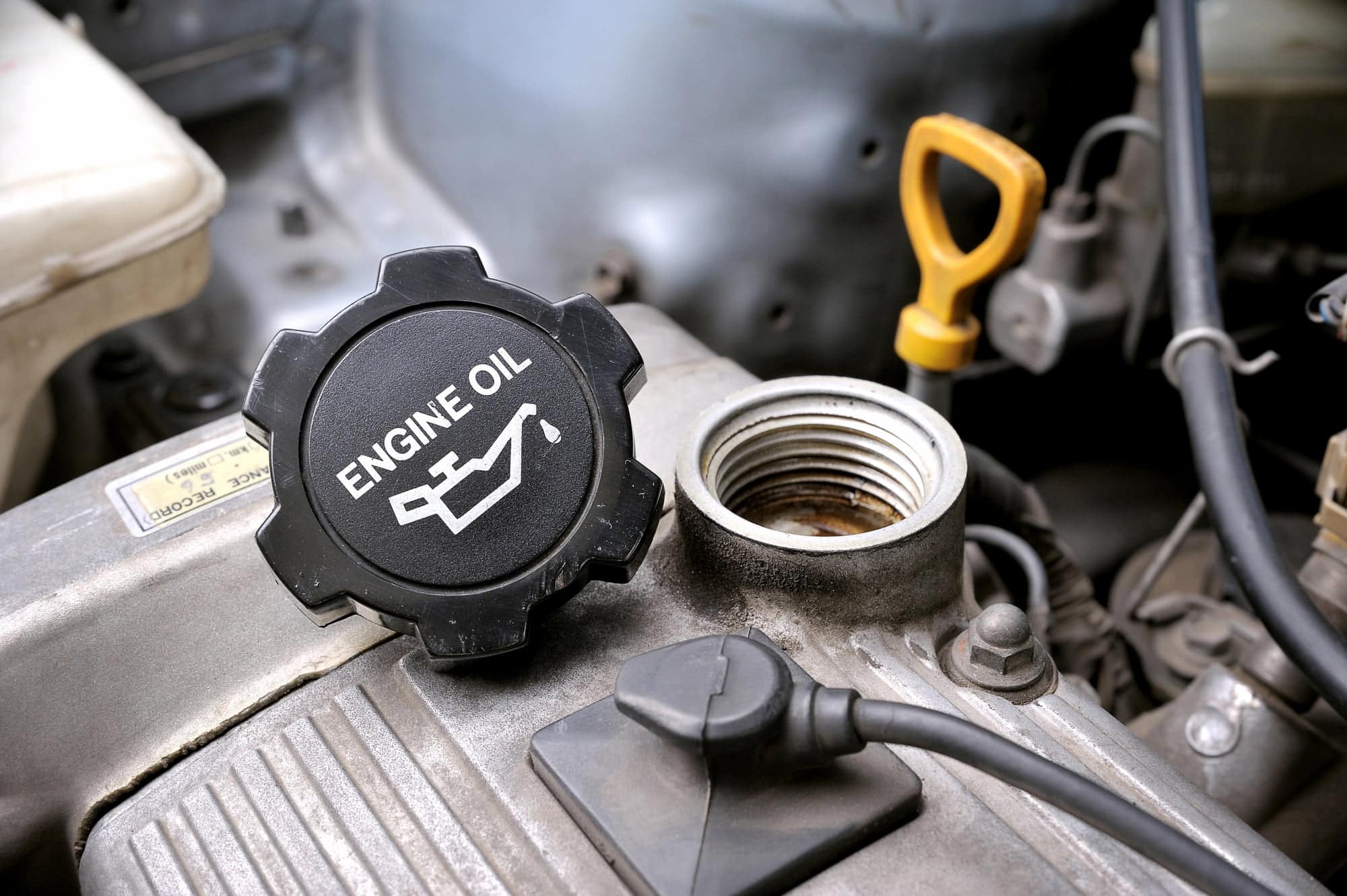
Ferrari Oil Change at DART Auto
Ferrari engines demand more than a standard oil change. The F136 V8 in 458 Italia models runs a dry-sump system with multiple scavenge pumps, while the naturally aspirated flat-plane V8s in 360 and F430 platforms require precise oil capacity to avoid aeration under high-G cornering. Modern twin-turbo V8s like the F154 in 488 and F8 Tributo add intercooler management and variable cam timing that depend on clean, high-quality oil to maintain valve control at 8,000+ RPM. Factory procedures specify torque values for drain plugs and filter housings that prevent cross-threading aluminum sumps, and many models require resetting service intervals through Leonardo diagnostic software – not a generic OBD scanner.
DART Auto has invested in the factory tooling, training, and diagnostic equipment to perform Ferrari oil changes to OEM standards. Our master technicians follow Maranello's exact fluid specifications, filter part numbers, and fill procedures. We've been maintaining exotic and European vehicles in Denver since 2000, and our salaried technicians take the time to inspect oil condition, check for metal particulate in the filter media, and document baseline data for your records. Every service includes a complete underbody inspection while the car is elevated.
When you bring your Ferrari to DART Auto for an oil change, you can expect:
- Factory-spec synthetic oil (Shell Helix Ultra or Agip Sint 2000) matched to your engine platform and operating environment
- OEM or premium equivalent oil filters with correct bypass valve pressure ratings
- Leonardo diagnostic reset of service counters and inspection of stored fault codes
- Complementary multi-point inspection covering fluid levels, brake pad thickness, suspension bushings, and exhaust heat shields
Common Oil Change Issues on Ferrari Vehicles
Ferrari flat-plane V8 and V12 engines demand precise oil specifications and service intervals that go well beyond typical passenger cars. The 458 Italia and 488 GTB (F136 and F154 engines) run extremely tight tolerances and high compression ratios, making contaminated or degraded oil a fast path to bearing wear and scored cylinder walls. Early F430 models (2005–2009) are notorious for oil consumption when service intervals stretch beyond 7,500 miles, particularly in track-driven cars where sustained high RPM accelerates thermal breakdown of conventional synthetics.
- F430 and 360 Modena oil starvation under hard cornering: Inadequate baffling in early dry-sump systems allows oil to migrate away from pickup points during sustained lateral G-forces, starving bearings momentarily. Fresh oil with proper viscosity and regular changes mitigate sludge that worsens pickup blockage.
- California and 458 cam variator deposits: Variable valve timing solenoids clog with varnish when oil change intervals exceed factory recommendations (typically annual or 7,500 miles). Degraded oil loses detergent capacity, leaving carbon deposits that freeze variator actuators and trigger check-engine lights.
- 599 GTB and F12 Berlinetta rear main seal leaks: Extended oil service allows acids and moisture to degrade rear crankshaft seals, causing visible drips on garage floors. The V12 platform's rear-mounted transaxle makes seal replacement labor-intensive, so maintaining fresh oil chemistry prevents premature seal hardening.
- 812 Superfast and SF90 Stradale oil sensor faults: Modern Ferraris use multiple oil quality and level sensors that throw fault codes when oil viscosity drifts outside narrow parameters. Delayed changes trigger limp mode or persistent dashboard warnings requiring dealer-level scan tool resets.
- Portofino and Roma turbo oil coking: Turbocharged V8 platforms see oil baking onto hot turbo bearing surfaces when service intervals stretch. Coking restricts oil flow to turbo bearings, accelerating wear and eventually causing catastrophic turbo failure with metal debris circulating through the entire oiling system.
Why Choose DART Auto for Ferrari Oil Change
Ferrari engines demand more than a drain-and-fill. The F154 V8 in 488 and F8 models runs synthetic oil at precise viscosity grades, and the naturally aspirated F136 and F140 V12 platforms require strict adherence to factory fill capacities and torque specs on drain plugs and filter housings. DART Auto has invested in the same factory service information and diagnostic tooling that Ferrari dealerships use, so we catch nuances like resetting service intervals via the CAN gateway and checking for oil weepage at cam cover gaskets during every service.
Our technicians bring dealer-level training and over a decade of hands-on experience with European exotics. We use OEM filters and Mobil 1 or Shell Helix Ultra synthetics that meet Ferrari's exacting standards. Because our techs are salaried rather than flat-rate, there's no incentive to rush your car through the bay or upsell services you don't need. Every oil change includes a multi-point inspection – we scan for stored fault codes, inspect brake pad thickness, check coolant condition, and photograph any fluid seepage or suspension wear. You receive a written report with photos and candid recommendations, ranked by priority. We've served Denver's European car community since 2000, and our 3-year/36,000-mile parts-and-labor warranty backs every service we perform.
Symptoms – How to Know You Need This Service
Ferrari service intervals are time-based as well as mileage-based. Even if you've only driven 1,500 miles in a year, the factory recommends annual oil changes because moisture accumulation and fuel dilution degrade synthetic oil over time. Watch for these indicators that service is due or overdue:
- Dashboard service reminder: Yellow wrench icon or "Service Due" message in the instrument cluster – schedule service within the next 500 miles
- Oil pressure fluctuation: Gauge needle dropping at idle or momentary low-pressure warning light during hard acceleration – stop driving and arrange flatbed transport
- Metallic ticking from valve covers: Audible on cold start, especially on F136 and earlier V8s – indicates oil film breakdown on cam lobes
- Dark, gritty oil on dipstick: Oil should remain amber-brown; black oil with visible particles means extended drain intervals or combustion contamination
- Burning oil smell in cabin: Often from valve cover gasket seepage onto exhaust manifolds – address immediately to prevent catalytic converter damage
- Increased oil consumption: More than one quart between services suggests piston ring wear or PCV system issues requiring investigation
- Rough idle or misfires: Variable valve timing solenoids clogged with sludge can cause poor cam phasing
Any oil pressure warning that stays illuminated requires immediate shutdown. Continuing to drive risks catastrophic bearing failure and engine replacement.
Which Ferrari Models We See for Oil Change
DART Auto services oil changes across the modern Ferrari lineup, from naturally aspirated V8 and V12 platforms through current turbocharged models. We maintain detailed service histories and torque specifications for each generation:
- 360 Modena / Spider (1999–2005): F131 V8, 10.8-quart dry-sump system, annual service critical for cam variator longevity
- F430 / Scuderia (2004–2009): F136E V8, electronic differential requires specific GL-5 gear oil during major services
- 458 Italia / Spider / Speciale (2009–2015): F136F V8, seven scavenge pumps, Leonardo diagnostic reset mandatory
- California / California T (2008–2017): F131 and F154 V8, front-engine layout simplifies access but requires transmission fluid check during service
- 488 GTB / Spider / Pista (2015–2020): F154 twin-turbo V8, intercooler system inspection, turbo oil feed line inspection for carbon buildup
- F8 Tributo / Spider (2019–2022): F154 evolution, 7,500-mile / 12-month intervals, oil cooler lines prone to seepage on early examples
- SF90 Stradale (2019–present): F154 hybrid, requires high-voltage system lockout during service, specialized training required
- 812 Superfast / GTS (2017–present): F140 V12, 17-quart capacity, dual oil filters, extended service access panels
We also service 599, F12, and GTC4Lusso V12 platforms. For older models (F355, 550 Maranello, 575M), we recommend a pre-service consultation to verify parts availability and any known platform issues.
Causes & Risks – What Happens if Ignored
Ferrari oil degradation accelerates under Denver's high-altitude conditions, where thinner air reduces cooling efficiency and engines work harder. Track days, spirited canyon drives, and even aggressive highway merges push oil temperatures well beyond what grocery-getter vehicles experience. Ferrari specifies synthetic oils with high film strength precisely because their engines operate at sustained high RPM and cylinder pressures that shear conventional oils within thousands of miles. Age compounds the issue – moisture accumulation in cars driven infrequently (common with weekend exotics) creates acidic sludge that corrodes bearing surfaces even when odometer mileage looks low.
Delaying an oil change on a Ferrari sets off a predictable cascade. Within the first few thousand miles past due, detergent additives deplete and combustion byproducts start forming varnish on cam lobes and piston rings. Variator screens clog, throwing timing codes. By 5,000 miles overdue, bearing clearances widen as protective film breaks down, causing rattles on cold starts. Turbo cars begin showing blue smoke as seals fail. At this stage, oil analysis reveals elevated metal content – iron from cylinder walls, aluminum from bearings. The repair bill transitions from a routine service to engine teardown, bearing replacement, and potentially cylinder honing or turbo rebuild.
- Immediate (0–2,000 miles overdue): Loss of detergent capacity, varnish formation on valve train, slight increase in engine noise.
- Short-term (2,000–5,000 miles overdue): Cam variator codes, oil consumption increase, turbo bearing wear, visible exhaust smoke on startup.
- Medium-term (5,000+ miles overdue): Bearing clearance growth, rattling on cold starts, oil pressure warning lights, metal contamination throughout system.
- Long-term (severe neglect): Spun bearings, scored cylinder walls, seized turbochargers, complete engine failure requiring replacement or full rebuild costing five figures.
Why Oil Change Matters
Neglected oil changes compromise Ferrari's advanced traction and stability systems by introducing unpredictable power delivery. When bearing clearances widen or variators stick, throttle response becomes inconsistent – the car may hesitate mid-corner or surge unexpectedly when the system can't precisely control valve timing. This is especially dangerous on mountain roads or during emergency maneuvers where split-second predictability matters. Low oil pressure triggers limp mode in modern Ferraris, abruptly cutting power to protect the engine, which creates hazards if it occurs during highway merging or passing.
Catastrophic engine failure from oil neglect introduces immediate safety risks. A seized bearing can lock the crankshaft, causing sudden loss of power steering assist and brake vacuum (on older models with engine-driven pumps). Turbocharged models risk fires when failed turbo seals spray oil onto exhaust manifolds exceeding 1,500°F. Metal debris from bearing failure circulates through the oiling system, potentially jamming the oil pump and causing complete lubrication loss within seconds.
- Stop driving immediately: Oil pressure warning light illuminated, loud knocking from engine bay, sudden power loss with warning messages, visible smoke from engine compartment.
- Schedule service within days: Check-engine light with variator codes, slight ticking on cold starts, oil level dropping between checks, rough idle when warm.
- Address at next convenient appointment: Approaching service interval mileage, oil color darkening significantly, slight increase in engine noise during spirited driving.
How Ferrari Oil Change Actually Works
Ferrari engines use dry-sump oiling systems on most models, storing oil in a separate tank rather than a traditional pan. Multiple scavenge pumps pull oil from different engine zones and route it through external coolers before returning to the tank. This design prevents oil starvation during hard cornering and allows lower engine mounting for better center of gravity. The oil change procedure requires draining both the tank and residual oil from remote cooler lines, then refilling to precise levels verified through Ferrari's diagnostic software – simply filling to a dipstick mark isn't sufficient on newer models without dipsticks.
Modern Ferraris track oil condition through sensors monitoring viscosity, temperature, and contamination levels. The service interval countdown adjusts based on driving style – track use accelerates the countdown while highway cruising extends it. Resetting the service indicator requires Leonardo diagnostic software (Ferrari's factory tool) to clear adaptive fuel trims and variator learning tables that compensate for old oil properties. Using incorrect oil viscosity or skipping the electronic reset leaves the ECU operating on degraded compensation maps, reducing performance and fuel economy even with fresh oil installed.
- Dry-sump architecture: Separate oil tank, multiple scavenge pumps, external cooler circuits requiring complete system drainage and precise refill volumes.
- Electronic service monitoring: Oil quality sensors adjust service intervals dynamically; Leonardo diagnostic tool required for proper interval reset and ECU adaptation clearing.
- Viscosity-specific calibration: Ferrari ECUs adjust variator timing and fuel maps based on expected oil viscosity; using incorrect spec causes performance loss even if oil is fresh.
- Filter location challenges: Many models mount filters in confined spaces requiring specific Ferrari tooling and chassis lift points to access without damaging undertray aerodynamics.
How We Diagnose Oil Change Issues on Ferrari
Ferrari engines – whether a naturally aspirated F136 V8 in a 430 or the twin-turbo F154 in a 488 – demand more than a quick-lube approach. The F1 gearbox on many models requires a separate oil service with precise fill procedures, and the dry-sump oiling systems on V12 platforms hold significantly more capacity than conventional engines. Before we drain a single drop, we connect Ferrari-specific diagnostic tools to pull stored fault codes and live oil pressure data, checking for sensor drift, low-pressure warnings, or temperature anomalies that signal deeper issues.
- Visual inspection under the car: We check for oil weeping around the sump gasket, rear main seal, and cam cover seals – common leak points on older 360 and 575 models. On newer platforms like the 458 and F12, we inspect the oil cooler lines and heat-exchanger fittings for seepage.
- Scan tool interrogation: Using Leonardo or Autologic diagnostic platforms, we review oil-pressure sensor readings, temperature data, and service history stored in the ECU. This reveals whether the engine has been running lean on oil or if a previous service was skipped.
- Oil quality assessment: We examine the drained oil for metal particulate, fuel dilution, or coolant contamination. Glitter in the pan on a California or F12 can indicate cam-follower wear or timing-chain guide breakdown.
- Filter dissection: Cutting open the old cartridge filter shows us what the engine is shedding – bronze from bearings, aluminum from pistons, or carbon buildup from extended intervals.
This process translates into a clear recommendation: whether you need a straightforward oil change, additional seal work, or further investigation into abnormal wear patterns. You receive a written quote before any work begins, with photos of what we found and why it matters.
Oil Change on Ferrari: Repair vs. Replacement
On most Ferraris, an oil change is preventive maintenance rather than a repair. You're replacing consumable fluids and filters on a schedule – every 12 months or 5,000–7,500 miles, depending on model year and driving style. But when we find issues during the service, the repair-versus-replacement decision becomes relevant.
- Repair scenario: A leaking cam-cover gasket on a 360 or 430 can be addressed by replacing just the gasket and re-torquing the covers to factory spec. The covers themselves are reusable, and the repair prevents oil from pooling in the valley and fouling spark plugs.
- Partial replacement: If the oil-pressure sensor on an F430 is reading erratically, we replace the sensor rather than the entire oil gallery. Similarly, a cracked oil-cooler line on a 458 gets a new line and fresh O-rings, not a full cooler assembly unless the core is damaged.
- Full replacement: A failing oil pump on an F12 or 812 – evidenced by low hot-idle pressure and metal in the filter – requires pump replacement. Attempting to rebuild a worn pump invites catastrophic bearing failure. Likewise, a sump that's been dented and is now too shallow for proper pickup clearance gets replaced, not hammered back into shape.
We walk you through the options with photos and pressure-test data, explaining what each path buys you in longevity and safety. Our salaried technicians have no incentive to upsell; we recommend what we'd do on our own cars.
How to Make Your Ferrari Oil Change Last Longer
Ferrari's service intervals are conservative by design, but your driving style and maintenance habits determine whether the oil stays clean and protective for the full term. High-revving naturally aspirated engines like the F136 and F140 shear oil faster than turbo motors, and track use accelerates oxidation and additive depletion.
Driving habits that preserve oil quality:
- Warm the engine fully before sustained high-RPM use – cold oil doesn't lubricate cam lobes and followers effectively on flat-plane V8s.
- Avoid short trips where the engine never reaches operating temperature; moisture accumulates in the crankcase and emulsifies the oil.
- On track days, monitor oil temperature and pressure in real time. If temps exceed 250°F consistently, plan a post-event oil change regardless of mileage.
Owner-level maintenance:
- Check the dipstick weekly – dry-sump systems on 458 and later models hold 10+ quarts, but consumption between changes is normal. Top off with the same grade (Shell Helix Ultra or equivalent 10W-60 on most V12s, 5W-40 on turbo V8s).
- Listen for valve-train noise on cold starts; ticking that persists beyond 30 seconds can signal oil starvation or worn hydraulic lifters.
- Keep an eye on the oil-pressure gauge during spirited driving. A drop below normal range warrants immediate shutdown and diagnosis.
Leave to the professionals: Never attempt to service the F1 gearbox oil yourself – the fill procedure requires a scan tool to cycle actuators and purge air. Overfilling or underfilling causes erratic shifts and clutch slip. Annual oil changes, software updates via the Leonardo tool, and seal inspections are shop-only tasks that protect your investment and keep your Ferrari running as Maranello intended.
What to Expect When You Bring Your Ferrari In
From the moment you schedule your appointment, we treat your Ferrari with the care it deserves. Here's how the process unfolds:
- Appointment and drop-off. We'll confirm your service window and ask about any concerns – unusual noises, dashboard warnings, or driving behavior. Bring your key fob and remove valuables; we'll note your mileage and walk around the car with you to document pre-existing condition.
- Initial inspection and estimate. Before we drain a drop of oil, a technician connects our scan tool to pull fault codes and review service history stored in the ECU. We inspect the undercarriage, check fluid levels, and photograph anything that needs attention. You'll receive a written estimate with line-item detail and photos via text or email.
- Approval and execution. Once you approve the work, we proceed with the oil change – torquing drain plugs and filter housings to factory spec, resetting the service reminder, and topping off windshield washer fluid. If we spot an oil leak or worn component during the service, we'll call before adding any work.
- Post-service verification and pickup. We start the engine, verify oil pressure on the dash, and scan again to confirm no new codes. At pickup, we walk you through the work completed and hand you an itemized invoice plus a digital inspection report. If anything feels off in the days after, call us – we'll get you back in promptly to recheck.
We offer loaner vehicles and local shuttle service when available, so you're never stranded. After-hours key drop and pickup can be arranged for busy schedules. Our goal is to return your Ferrari running exactly as it should, with complete transparency every step of the way.
Our Ferrari Services
- Air Conditioning AC Repair
- Battery Repair Replacement
- Brake Repair & Brake Fluid Change
- Check Engine Light Diagnostics
- Clutch Repair & Replacement
- Coolant Leak Repair
- Cooling System Repair
- Drive Shaft Repair
- Engine Repair
- Exhaust & Catalytic Converter Repair
- Head Gasket Repair & Replacement
- Oil Leak Repair
- Scheduled Service Maintenance
- Steering Repair
- Suspension Repair
- Cambelt Timing Belt Replacement
- Transmission Repair
- Tune Up
- Wheel Alignment