
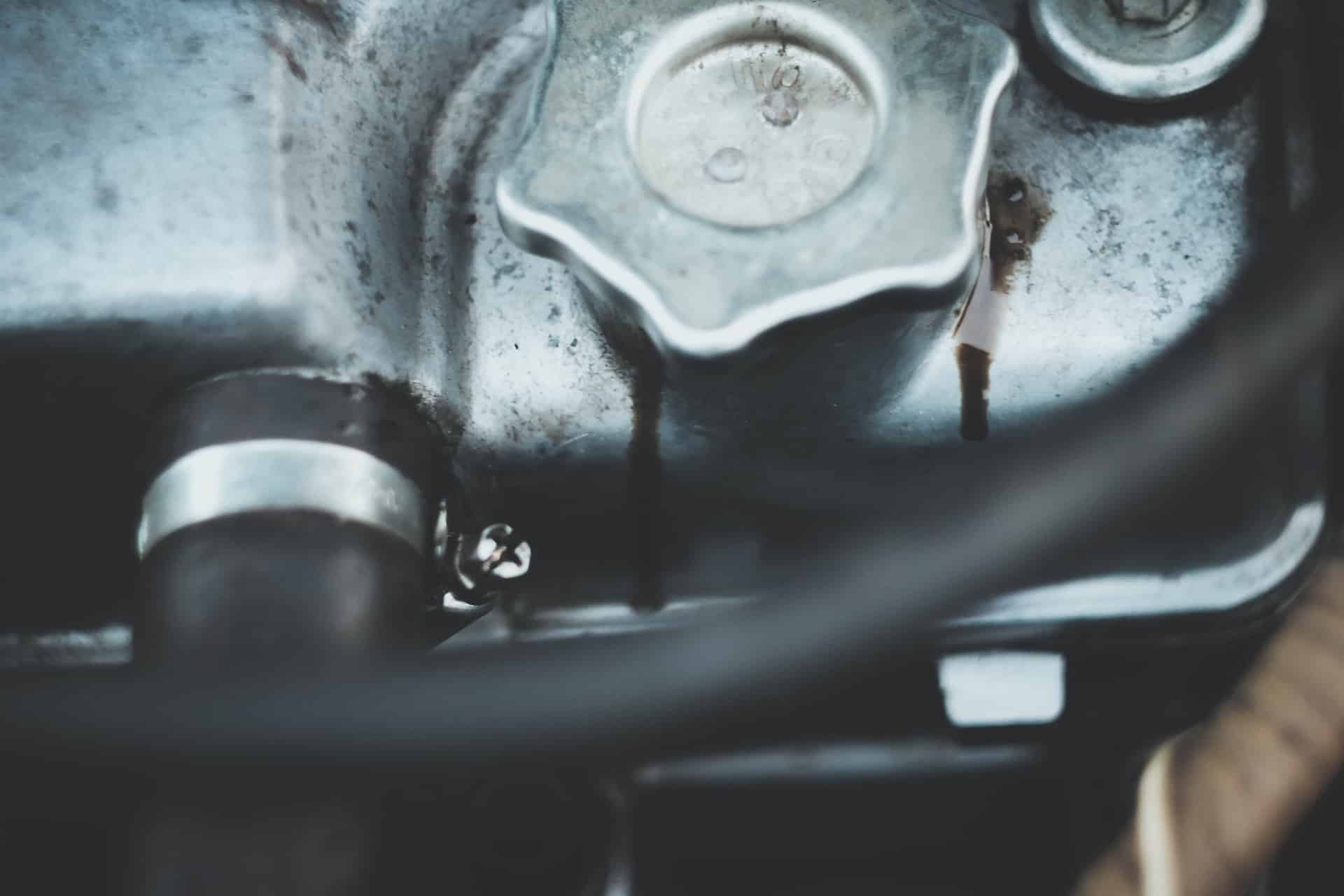
Volkswagen Oil Leak Repair at DART Auto
Volkswagen engines are engineered for precision and longevity, but their multi-piece construction and specific torque requirements make oil leak repair more nuanced than a simple gasket swap. The EA888 Gen 3 engines (2012–present) use a two-piece oil pan design with an aluminum upper section bolted directly to the block, while earlier MQB and PQ35 platforms rely on interference-fit cam seals that demand OEM tooling to seat correctly. Generic shops often overtorque fasteners or skip critical alignment steps, leading to repeat leaks within months.
At DART Auto, we approach every Volkswagen oil leak with factory-level diagnostic precision. Our master technicians use VCDS and Erwin repair data to identify not just the source of the leak but the root cause – whether it's a failing PCV system pressurizing the crankcase, a warped oil cooler housing on TSI engines, or a valve cover that's migrated due to incorrect torque sequences. We replace seals and gaskets using OEM or premium aftermarket parts, follow VW's exact torque specs and tightening patterns, and verify crankcase ventilation health before reassembly.
When you bring your Volkswagen to DART Auto for oil leak repair, expect:
- Complete visual inspection and pressure testing to pinpoint every leak source – front main seal, rear main seal, oil pan, valve cover, turbo feed lines, and oil filter housing
- PCV system evaluation and cleaning or replacement to prevent future seal failures caused by excessive crankcase pressure
- OEM torque sequences and sealant application procedures specific to your engine platform (EA113, EA888, EA211, or VR6)
- Three-year/36,000-mile warranty on parts and labor, backed by over two decades of European automotive expertise in Denver
Common Oil Leak Repair Issues on Volkswagen Vehicles
Volkswagen engineers favor compact, transverse-mounted powertrains that maximize cabin space but place gaskets, seals, and housings in tight quarters where heat cycles and vibration accelerate wear. Certain platform generations carry well-documented leak paths that appear predictably as mileage climbs.
- Valve-cover gasket seepage on EA888 Gen 1 and Gen 2 engines (2008–2014 GTI, Jetta, Passat, CC). The PCV system routes crankcase pressure through the valve cover; when the diaphragm inside the integrated PCV valve hardens, pressure spikes and forces oil past the gasket onto the exhaust manifold. You'll smell burning oil before you see a puddle.
- Cam-bridge / cam-adjuster seals on EA888 Gen 3 (2015+). The variable valve-timing adjusters sit at the front of the cylinder head behind the timing cover. O-rings harden with heat, allowing oil to weep down the front of the block and pool on the subframe. Repair requires removing the timing cover and resetting valve timing with VCDS or factory scan tools.
- Oil-cooler and oil-filter-housing gaskets on TDI engines (2009–2015 Golf, Jetta, Passat TDI). The sandwich-plate oil cooler sits above the oil filter; its aluminum housing expands and contracts at a different rate than the steel block. Gaskets compress, crack, and leak onto the front crossmember. Diagnosis often requires steam-cleaning the block to identify the exact source.
- Rear main seal on 02E DSG and 02Q manual transmissions. High clamping loads from the dual-mass flywheel and stop-start cycling fatigue the crankshaft seal lip. Oil migrates into the bellhousing and saturates the clutch or mechatronic module. Repair demands transmission removal and flywheel inspection for runout.
- Turbocharger oil-feed and oil-return lines on 2.0T TSI (EA888 Gen 2 and Gen 3). Braided stainless lines connect the block to the turbo's center bearing. Banjo-bolt crush washers take a single-use torque spec; reusing old washers or over-torquing cracks the fitting and creates a pressurized oil spray onto the exhaust housing.
- Timing-cover reseal on VR6 engines (12v and 24v, 1999–2006 GTI, Jetta, Passat). The narrow-angle V6 uses a plastic lower timing cover sealed with RTV. Oil wicks through porous sections of aged RTV and drips onto the starter and AC compressor. Proper reseal requires removing the radiator, pulling the cover, and applying OEM-spec anaerobic sealant in the correct bead pattern.
Why Choose DART Auto for Volkswagen Oil Leak Repair
Oil leaks on Volkswagen platforms often trace back to design quirks that generic shops miss. The EA888 Gen3 engine (2015+ GTI, Golf, Jetta, Passat) frequently develops cam adjuster seal weeps around 60,000 miles, while the VR6 platform is notorious for upper timing cover and valve cover gasket failures that require specialty tooling to access. Our technicians use VCDS and factory ELSA repair procedures to pinpoint the exact failure mode before disassembly, saving you from unnecessary parts replacement.
We've invested in the OEM-spec torque angle gauges and sealant application tools that Volkswagen TSBs specify for cam bridge sealing and oil pan reinstallation. Because our technicians are salaried rather than flat-rate, they follow the complete factory procedure – including surface prep, adhesion promoter application, and prescribed cure times – instead of rushing to the next job. That attention to detail is why we back every oil leak repair with a 3-year/36,000-mile warranty on parts and labor.
After repair, we road-test the vehicle and perform a final underbody inspection with the lift raised to confirm no residual seepage. If a leak reappears within the warranty window, we'll diagnose and correct it at no charge. You get dealer-level diagnostics and OEM-compliant repair execution without the dealership markup.
Symptoms – How to Know You Need This Service
Oil leaks on Volkswagen vehicles often announce themselves subtly before becoming urgent. You may notice a burning oil smell after highway drives, especially if oil is dripping onto the exhaust manifold or turbocharger heat shield. Dark spots or puddles under the engine bay after overnight parking – typically brown or amber when fresh, black when aged – signal active seepage. On turbocharged TSI and TDI models, blue-gray smoke from the exhaust at startup can indicate oil entering the intake tract through a failed turbo seal or PCV valve.
Watch for these specific indicators:
- Oil residue coating the underside of the engine, transmission bell housing, or subframe – visible during routine maintenance
- Low oil level warnings on the dashboard despite no visible external puddles (internal consumption versus external leaks require different diagnostics)
- Wet or oil-soaked engine mounts, especially on the driver's side where valve cover leaks migrate downward
- Burning oil odor through the HVAC vents when the heater is running, pointing to leaks near the firewall or turbo
- Visible oil seepage around the timing cover, oil filter housing, or cam chain tensioner access plug on EA888 engines
- Oil-soaked spark plug wells causing misfires or rough idle – common with degraded valve cover gaskets
If you see smoke or smell burning oil consistently, schedule service within the week. Sudden oil pressure warnings or rapid oil loss require immediate attention – stop driving and arrange towing to prevent catastrophic engine damage.
Which Volkswagen Models We See for Oil Leak Repair
DART Auto services oil leaks across the full Volkswagen lineup, with particular expertise in the turbocharged four-cylinder and VR6 platforms that dominate the Denver market. Our technicians have extensive experience with the EA888 engine family found in most 2008–present models, where valve cover gasket leaks and oil cooler housing seepage are endemic after 60,000 miles. Earlier PQ35 and PQ46 chassis vehicles (2005–2014 Jetta, GTI, Passat) frequently develop cam seal and rear main seal leaks due to age and PCV system deterioration.
We regularly repair oil leaks on these Volkswagen models and platforms:
- Golf / GTI / Golf R (Mk5–Mk8): 2006–present, including EA113 2.0T FSI, EA888 Gen 1/2/3 TSI, and EA888 evo4 engines – valve cover, oil pan, timing cover, and turbo feed line leaks
- Jetta / GLI (Mk5–Mk7): 2005–present across PQ35, PQ46, and MQB platforms – cam seals, oil filter housing, and rear main seal work
- Passat (B6, B7, NMS): 2006–2019 with 2.0T TSI, 3.6L VR6, and 2.0L TDI engines – oil cooler gaskets, valve cover, and oil pan reseals
- Tiguan (5N, 5N2, AD1): 2009–present, first- and second-generation MQB crossovers – front crankshaft seal and valve cover gasket replacement
- Atlas / Atlas Cross Sport: 2018–present with 2.0T and 3.6L VR6 – oil pan and timing cover leaks on higher-mileage examples
- Arteon: 2019–present 2.0T EA888 Gen 3B – valve cover and oil filter housing service
- CC (358): 2009–2017 with 2.0T TSI – oil cooler and cam bridge seal leaks
- Beetle (A5): 2012–2019 turbocharged models – valve cover and rear main seal work
We also service earlier air-cooled and water-cooled classics on a case-by-case basis. If your Volkswagen is leaking oil, we have the diagnostic tools, OEM repair data, and parts relationships to fix it correctly the first time.
Causes & Risks – What Happens if Ignored
Volkswagen gaskets and seals age faster in short-trip urban driving and high-altitude climates like Denver's, where temperature swings and lower atmospheric pressure stress PCV systems and increase crankcase pressure. Factory service intervals assume highway use; stop-and-go commutes keep oil hotter longer and accelerate elastomer degradation. Many Volkswagen platforms use cork-rubber composite gaskets that shrink when exposed to synthetic oil above 240°F, opening leak paths within 60,000–80,000 miles.
Postponing a valve-cover reseal allows oil to saturate ignition coils and spark-plug tubes, causing misfires that damage the catalytic converter – a repair that jumps from three hundred dollars to three thousand. A leaking cam-adjuster seal drips onto the serpentine belt, which slips and shreds, leaving you without power steering, alternator output, and water-pump circulation. Oil pooling on the subframe wicks onto sway-bar bushings and control-arm mounts, softening rubber and introducing handling slop that fails state safety inspection.
What escalates when you wait:
- Rear main seal leaks saturate the dual-mass flywheel and clutch friction material, requiring flywheel replacement alongside the seal.
- Turbo oil-feed leaks starve the bearing, scoring the shaft and destroying the compressor wheel – turning a gasket job into a turbocharger replacement.
- Oil-cooler leaks mix coolant and oil, forcing a complete cooling-system flush and potential cylinder-head work if the mixture reaches combustion chambers.
- Valve-cover leaks ignite on the exhaust manifold during hard acceleration, creating visible smoke and triggering emissions-system fault codes that lock you out of readiness monitors needed for registration.
Safety Impact – Why Oil Leak Repair Matters
Oil leaking onto heated exhaust components produces acrid smoke that reduces visibility and distracts surrounding drivers. On turbocharged Volkswagen models, oil sprayed onto the turbo housing at highway speed can ignite, sending flames into the engine bay and melting wiring harnesses for ABS wheel-speed sensors and throttle-position sensors. Loss of throttle input or ABS function during emergency braking eliminates electronic stability control and extends stopping distances beyond safe margins.
A failing rear main seal allows oil to contaminate the clutch on manual-transmission cars or foul the mechatronic clutch packs in DSG models. Clutch slip under load – merging onto highways, climbing mountain grades – leaves you without predictable acceleration and increases the risk of being rear-ended. Oil-starved turbochargers seize suddenly, cutting boost pressure and dropping power output by forty percent mid-corner or mid-pass.
When to stop driving versus schedule soon:
- Stop now: visible flames, heavy smoke from the engine bay, sudden loss of power steering, oil-pressure warning light steady on, large puddles forming in minutes.
- Schedule this week: persistent burning-oil smell, small drips after overnight parking, oil level dropping a quart between changes, visible saturation on belts or hoses.
- Schedule this month: slight seepage at gasket seams with no active drip, faint oil odor only during hard acceleration, oil level stable but staining visible on the underside.
How Volkswagen Oil Leak Repair Actually Works
Volkswagen's transverse engine layout places the timing chain at the transmission end of the block, meaning front-cover and cam-adjuster seal work requires supporting the engine from above, dropping the subframe, and sometimes disconnecting the transmission mounts. The EA888 Gen 3 uses a two-piece oil pan – an upper aluminum section bolted to the block and a lower stamped-steel sump – so a complete reseal involves separating both sections, replacing two gaskets, and torquing twenty-plus fasteners to sequence-specific values that prevent warping.
Most 2015-and-newer Volkswagen models store adaptation values for valve timing, throttle position, and DSG clutch engagement in the ECU and TCU. Disconnecting the battery or clearing fault codes after a repair erases these values; the car won't run correctly until you perform a guided-function reset with VCDS, ODIS, or equivalent factory tooling. Aftermarket scanners lack the security login and coding authority to complete these resets, which is why independent shops that lack OEM-level diagnostic platforms often leave customers with rough idle, delayed shifts, or check-engine lights after otherwise competent mechanical work.
Design factors that shape Volkswagen oil-leak repair:
- Plastic timing covers and valve covers require precise RTV bead placement and cannot be reused once removed; OEM replacements come with bonded gaskets.
- Cam-bridge seals demand crankshaft and camshaft locking tools to prevent valve-to-piston contact when the timing chain is loosened.
- Turbocharger oil lines use single-use copper crush washers torqued to 25 Nm; overtightening cracks the banjo fitting, undertightening allows weepage.
- DSG mechatronic units require a clean-room environment for clutch-pack inspection; contamination from a rear main seal often mandates mechatronic replacement, not just a clutch flush.
How We Diagnose Oil Leak Repair Issues on Volkswagen
Volkswagen engines – especially the EA888 Gen 3 found in 2015+ GTI, Golf R, and Audi models – are known for valve cover and oil pan seepage that can escalate if left unchecked. The 2.0T TSI and 1.8T platforms also develop rear main seal weeps, and older VR6 engines (2.8L and 3.6L) frequently leak from the upper timing cover and cam adjusters. Pinpointing the exact source requires methodical inspection and the right diagnostic equipment.
Our process follows a structured sequence:
- Initial visual inspection under the vehicle and in the engine bay. We look for fresh oil trails, carbon buildup around gaskets, and pooling on crossmembers or the transmission bell housing. On transverse-mounted engines, oil can migrate rearward and appear to be a transmission leak when it's actually a front crank seal or oil cooler issue.
- UV dye injection and drive cycle. If the leak source isn't obvious, we add fluorescent dye to the oil, run the engine to operating temperature, and use a UV lamp to trace the exact path. This is especially useful on multi-point leaks where oil from the valve cover drips onto the turbo heat shield and spreads.
- Pressure testing (when applicable). For crankcase ventilation and PCV system leaks – common on TSI engines with integrated valve covers – we perform a smoke test to reveal cracks in the diaphragm or check valves that cause pressure buildup and force oil past seals.
- VCDS or factory-level scan. We pull freeze-frame data and monitor oil temperature, pressure, and any stored codes related to the oil pressure sensor or cam position sensors, which can indicate oil starvation from a severe leak.
- Documentation and estimate. We photograph the affected areas, explain which seals or gaskets need replacement, and provide a transparent quote that reflects the labor access required – removing the intake manifold or subframe if necessary – so there are no surprises.
This thoroughness ensures we address the root cause, not just the visible symptom, and gives you a clear repair plan before any wrench turns.
Oil Leak Repair on Volkswagen: Repair vs. Replacement
Not every oil leak demands a full component swap. The decision hinges on the severity of wear, the design of the part, and the cost-effectiveness of partial fixes.
When a True Repair Makes Sense
- Minor valve cover gasket seepage on EA888 engines: If the cover itself isn't cracked and the PCV diaphragm is intact, a new gasket and proper torque sequence (10 Nm in a specific pattern) can stop the leak without replacing the entire cover assembly.
- Oil pan reseal on 2.0T engines: If the pan isn't dented and the drain plug threads are good, a new OEM gasket and RTV application at the timing cover junction often suffices. No need for a new pan unless corrosion or impact damage is present.
- Oil cooler O-rings on VR6 and 3.6L FSI engines: The sandwich-style cooler uses replaceable O-rings. Swapping those and cleaning the mating surfaces is far cheaper than a new cooler, and it works if the cooler body isn't cracked.
When Replacement Is the Right Call
- Integrated valve cover with failed PCV: On many TSI engines, the PCV system is molded into the valve cover. If the diaphragm tears, you replace the entire cover – repair isn't an option due to the design.
- Cracked timing cover on 2.0T Gen 1 (BPY/BWA): Plastic timing covers can crack around bolt holes or the cam sensor bore. A gasket won't fix structural failure; a new cover is required.
- Rear main seal with flywheel wear: If the flywheel surface is grooved from a long-leaking seal, installing a new seal alone won't stop the leak. The flywheel needs resurfacing or replacement.
We walk you through the trade-offs – showing you the failed part, explaining why a repair will or won't hold, and pricing both options when feasible. Our salaried technicians have no incentive to upsell; they're paid to fix it right, not fast.
How to Make Your Volkswagen Oil Leak Repair Last Longer
Once the leak is fixed, a few habits can keep seals and gaskets in good shape for years.
Driving Habits That Protect Seals
- Warm up before hard acceleration: Cold oil is thick and puts extra pressure on seals. Let the engine reach 180°F (visible on the MFI temp gauge) before boosting hard, especially on turbo models.
- Avoid short trips in winter: Condensation in the crankcase can emulsify oil and degrade gaskets. Combine errands into longer drives so the engine fully heats and evaporates moisture.
- Don't ignore oil level warnings: Running low increases oil temperature and accelerates seal degradation. Check the dipstick monthly, especially on TSI engines known for consumption between changes.
Maintenance You Can Monitor
- Visual inspections every oil change: Pop the hood and look for fresh oil around the valve cover, turbo oil feed lines, and the oil filter housing. Catching seepage early means a gasket, not a cleanup and multi-part repair.
- Use OEM-spec oil and filters: VW 502.00/504.00 spec oils have the right viscosity and additives for long-life seals. Aftermarket "equivalent" oils may not meet the same standards, leading to premature leaks.
- Follow the longlife service intervals – but adjust for your driving: If you do mostly city driving or short trips, consider 5,000-mile changes instead of the 10,000-mile interval. Moisture and fuel dilution are harder on seals than highway miles.
What to Leave to the Professionals
Checking oil level and topping off is safe DIY. Replacing valve cover gaskets or oil pan seals requires proper torque specs, sealant application, and sometimes subframe removal on transverse engines – mistakes here can cause worse leaks or engine damage. We use factory repair procedures and the right tools, so the job is done once and done right.
What to Expect When You Bring Your Volkswagen In
We start every oil leak repair with a complete diagnostic inspection, not assumptions. Here's how the process unfolds:
- Drop-off and initial assessment: Schedule an appointment or call ahead for same-day availability. Leave your keys at the service desk; we'll ask about symptoms (oil spots on the driveway, burning smell, low-oil warning light frequency) and recent service history. Remove personal items from the cabin – we provide complimentary shuttle service within Denver or loaner vehicles for multi-day repairs.
- Diagnostic inspection: We pressure-test the crankcase ventilation system (a common root cause of seal failures on TSI engines), degrease the lower engine bay, and run the vehicle to operating temperature. UV dye may be introduced if the leak source isn't immediately visible. You'll receive a written estimate detailing the failed component, labor procedure, and parts sourcing before any work begins.
- Repair execution: Once approved, we order OEM or premium aftermarket gaskets and seals from trusted suppliers. The technician follows factory torque specs, applies the correct anaerobic sealant where specified (critical on aluminum oil pans), and replaces any degraded fasteners. We communicate proactively if additional leaks are discovered during disassembly.
- Post-repair verification and pickup: After reassembly, we road-test the car and perform a final lift inspection to confirm the repair. At pickup, we walk you through the work completed and provide photos of the old gasket condition. If you notice any seepage within the first few weeks, bring it back immediately – we'll re-inspect at no charge.
After-hours key drop and pickup are available by arrangement. You'll leave with documentation of the repair and a multi-year warranty that covers both the parts installed and the labor performed.
Our Volkswagen Services
- Air Conditioning AC Repair
- Battery Repair Replacement
- Brake Repair & Brake Fluid Change
- Check Engine Light Diagnostics
- Clutch Repair & Replacement
- Coolant Leak Repair
- Cooling System Repair
- Drive Shaft Repair
- Engine Repair
- Exhaust & Catalytic Converter Repair
- Head Gasket Repair & Replacement
- Oil Change
- Scheduled Service Maintenance
- Steering Repair
- Suspension Repair
- Cambelt Timing Belt Replacement
- Transmission Repair
- Tune Up
- Wheel Alignment