
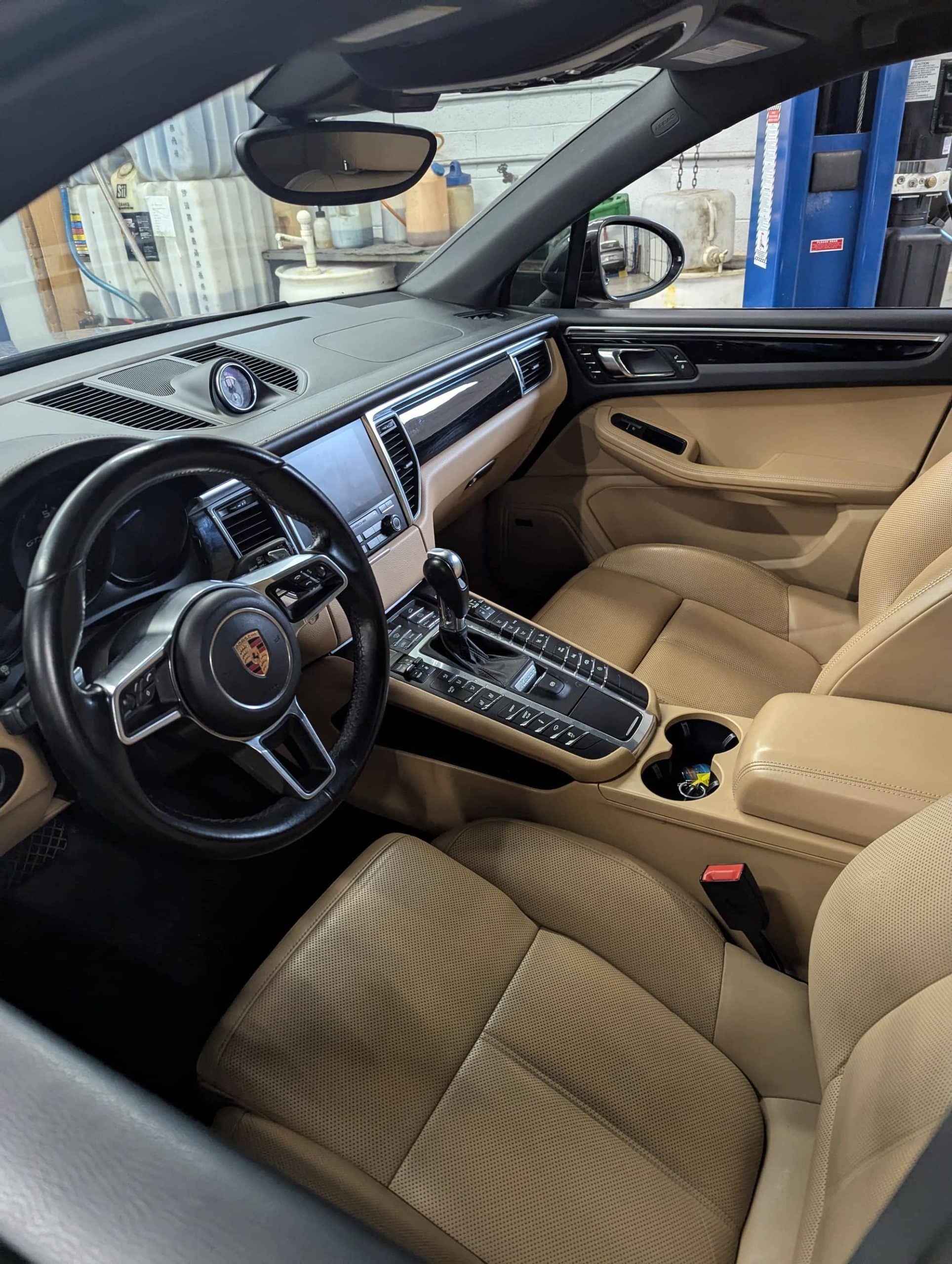
Volkswagen Steering Repair at DART Auto
You're merging onto I-25 when the steering wheel pulls hard left, or you're parallel parking downtown and hear a groaning whine from under the hood. Volkswagen steering systems blend hydraulic precision with electromechanical assist, and when something goes wrong, the fix requires more than a generic rack swap. MQB-platform Golfs, Jettas, and Tiguans use electric power steering with torque-sensor calibration that must be coded after replacement. Older PQ35 and PQ46 chassis – think Mk5/Mk6 GTI, B6/B7 Passat – rely on hydraulic racks that leak at the bellows or develop internal wear grooves. Both demand factory scan tools to bleed air, reset steering angle sensors, and verify assist motor function. A corner shop with a code reader can't complete the job safely.
DART Auto has served Denver's Volkswagen community since 2000, combining dealer-level diagnostics with transparent pricing and a 3-year/36,000-mile warranty. Our master technicians use ODIS and VAS diagnostic platforms to perform end-of-line steering calibrations, torque inner tie rods to OEM spec, and source genuine VAG or premium aftermarket components from suppliers we've vetted over two decades. Because our techs are salaried rather than flat-rate, they take the time to inspect ball joints, control-arm bushings, and subframe mounts that often contribute to steering complaints. When you bring your Volkswagen here, you'll receive:
- Complete steering-system inspection using factory procedures and scan-tool diagnostics
- Transparent estimate explaining which parts have failed and why, with photos when helpful
- OEM or premium aftermarket components installed to VAG torque specifications
- Post-repair calibration and road test to confirm proper assist feel and straight-line tracking
Common Steering Repair Issues on Volkswagen Vehicles
You're merging onto I-25 when you notice the steering wheel isn't centered, or maybe there's a clunk when you turn into your driveway. These aren't just annoyances – they're early warnings your Volkswagen is trying to give you. We see these patterns constantly, and knowing what's typical helps you act before a minor issue becomes a major repair.
- Mk5/Mk6 (2006–2014) Golf, Jetta, GTI – Steering rack internal seal failure: The PQ35/PQ46 platform uses a hydraulic rack prone to leaking at the internal seals, especially on high-mileage examples past 100k. You'll notice fluid pooling on the subframe or a whining noise during lock-to-lock turns. The rack itself often needs replacement rather than a reseal because the housing wears unevenly.
- Mk7/Mk7.5 (2015–2021) Golf, GTI, Jetta – Electric power steering (EPS) module faults: The MQB platform introduced electric assist, and the control module can develop software glitches or internal sensor failures. Symptoms include intermittent heavy steering, a "steering assist fault" warning, or complete loss of assist at low speeds. Volkswagen issued TSBs for certain VINs requiring a module reflash or replacement.
- B6/B7 Passat (2006–2015) – Outer tie rod end wear: These generations chew through tie rod ends faster than competitors, partly due to bushing geometry and partly due to road salt exposure. Play in the tie rods causes wandering at highway speed and uneven tire wear on the inside edges. Alignment becomes impossible until the rods are replaced.
- Tiguan (2009–2017, first-gen PQ46) – Steering column intermediate shaft U-joint clunk: A notorious issue where the splined shaft between the column and rack develops play, creating a distinct "thunk" when turning at low speeds or over bumps. Volkswagen released an updated shaft design, but older vehicles need the revised part to eliminate the noise.
- Atlas (2018+) – Premature inner tie rod boot tears: The MQB-based Atlas has seen early failures of the inner tie rod bellows, allowing dirt and moisture into the rack. Once contaminated, the rack's internal gears wear rapidly. Catching torn boots early means replacing just the boots and tie rods; waiting means a full rack replacement.
- Touareg (2011–2017, second-gen) – Active steering pump failure: The variable-assist hydraulic pump on these models can develop internal vane wear, leading to noisy operation and eventual loss of assist. The pump shares architecture with Audi Q7 and Porsche Cayenne, and failure often cascades to rack damage if the pump runs dry.
Why Choose DART Auto for Volkswagen Steering Repair
You notice the steering wheel pulling left during your morning commute, or maybe there's a clunk when you turn into your driveway. Steering issues in your Volkswagen demand precision – the MQB platform's electric power steering system integrates with stability control and lane-keep assist, so a proper repair requires more than swapping parts.
DART Auto's master technicians bring factory-level capability to every Volkswagen steering diagnosis. We use VCDS and ODIS diagnostic platforms to read steering angle sensor data, motor current draw, and fault codes that generic scanners miss. Our team knows the common failure points across Volkswagen platforms:
- MQB platform (2015+ Golf, Jetta, Tiguan): Electric power steering control module faults and steering angle sensor calibration drift
- PQ35/PQ46 chassis (2005-2014 models): Rack bushing wear, tie rod end play, and hydraulic pump noise on 2.0T and VR6 engines
- Touareg and Atlas: Heavy-duty rack seal leaks and steering damper failures under load
We follow Volkswagen repair procedures for torque specs, fluid types (G 004 000 M2 where specified), and post-repair calibration using factory tooling. Because our technicians are salaried rather than flat-rate, they take the time to verify alignment geometry, road-test steering feel, and confirm that electronic steering assist responds correctly across the speed range. You get the expertise of a dealer service department without the inflated labor rates.
Symptoms – How to Know You Need This Service
Volkswagen steering problems announce themselves in predictable ways. You may notice:
- Groaning or whining when turning the wheel at low speeds, especially in parking lots – hydraulic pump wear or low fluid on older models, or failing electric assist motor on MQB cars
- Steering wheel off-center when driving straight, even after alignment – inner tie rod wear, rack slippage, or uncalibrated steering-angle sensor after suspension work
- Fluid puddles under the front of the car, often pink or amber – rack-and-pinion bellows tears or pressure-line leaks on hydraulic systems
- Heavy or inconsistent steering effort – assist motor failure on electric systems, hydraulic pump belt slip, or air in the hydraulic circuit
- Clunking over bumps combined with steering looseness – worn inner tie rods, strut mounts, or control-arm bushings that affect steering geometry
- Dashboard warning lights – yellow steering wheel icon or EPC light indicating electric power-steering faults stored in the control module
- Vibration through the wheel at highway speeds – bent tie rods, out-of-balance wheels, or failing wheel bearings that load the steering unevenly
If the steering wheel becomes extremely stiff or you lose power assist entirely, pull over safely and arrange a tow. Continuing to drive can damage the rack or column and turn a manageable repair into a much larger bill.
Which Volkswagen Models We See for Steering Repair
DART Auto services the full range of modern Volkswagen platforms. We regularly perform steering repairs on:
- MQB platform (2015–present) – Golf (Mk7/Mk7.5/Mk8), GTI, Golf R, Jetta (A7/A8), Tiguan (second-gen), Atlas, Arteon – electric power steering with torque-sensor coding and steering-angle calibration required after rack or assist-motor replacement
- PQ35 platform (2006–2014) – Golf/GTI (Mk5/Mk6), Jetta (A5/A6), Rabbit – hydraulic racks prone to bellows leaks and inner tie-rod wear; pump whine common after 100k miles
- PQ46 platform (2006–2015) – Passat (B6/B7), CC – larger hydraulic racks with similar leak points; control-arm bushings often contribute to steering slop
- PQ25 platform (2007–2018) – Tiguan (first-gen) – hydraulic assist with rack-mount issues; subframe movement can mimic steering problems
- Older A4 platform (1999–2005) – Jetta/Golf (Mk4), New Beetle, Passat (B5/B5.5) – hydraulic systems with steering-column flex couplers that crack and cause clunking; rack bellows deteriorate with age
We also work on Touareg, Eos, and earlier air-cooled or water-cooled models when steering work involves mechanical components. For vehicles requiring proprietary scan tools or coding beyond ODIS capability, we'll let you know upfront so you can make an informed decision about next steps.
Causes & Risks – What Happens if Ignored
Steering components wear because they're under constant load – every pothole, every turn, every temperature swing stresses seals, bushings, and joints. Volkswagen's European design priorities favor precise handling, which often means tighter tolerances and less forgiveness for deferred maintenance. Colorado's freeze-thaw cycles accelerate seal degradation, and road salt attacks boots and bushings. High-mileage city driving – lots of lock-to-lock turning in parking lots – wears tie rods and rack internals faster than highway cruising.
When you ignore early symptoms, here's the typical progression:
- Weeks 1–4: A small fluid leak becomes a steady drip. The hydraulic system loses pressure, and steering effort increases. You might top off the reservoir, but the leak worsens because the seal is torn, not just weeping.
- Months 2–6: Play in a tie rod end allows the wheel to toe in and out as you drive, scrubbing the tire's inner edge bald. What started as a $150 tie rod job now includes $800 in tires and an alignment that can't be set until the rod is replaced.
- 6+ months: A leaking rack runs low on fluid, and the pump runs dry. Metal-on-metal contact destroys the pump's vanes and scores the rack's internal bore. A $600 rack repair becomes a $1,400 rack-and-pump replacement, plus labor to bleed and flush the contaminated system.
- Critical failure: On MQB electric systems, ignoring a failing EPS module can lead to sudden total loss of assist at highway speeds. The car remains steerable, but the effort required is extreme – enough to cause an accident if you're not prepared. On hydraulic systems, a catastrophic rack seal failure can dump all fluid in seconds, leaving you with no assist mid-turn.
The safety risk escalates faster than the cost. A car that wanders in its lane or doesn't respond predictably to steering input is a liability to you and everyone around you.
Safety Impact – Why Steering Repair Matters
Steering is the primary control interface between you and the road. When it's compromised, your ability to avoid hazards, maintain lane position, and execute emergency maneuvers disappears. On Volkswagens with electronic stability control (ESC) and lane-keeping assist, steering faults can also disable these secondary safety systems because they rely on accurate steering angle sensor data. A failed tie rod or loose rack can send erratic signals, triggering limp modes or disabling traction control entirely.
Specific failure modes and their risks:
- Tie rod separation: If an outer tie rod end pulls apart – rare but possible after prolonged wear – the wheel loses all steering connection. The car pulls violently in one direction, and you have no directional control. This is a "stop driving immediately" scenario.
- Rack internal failure: When the rack's internal teeth strip or the piston seizes, you'll feel binding or complete loss of assist in one direction. Trying to force the wheel can cause the rack to jam entirely, locking the steering mid-turn.
- EPS module dropout: On MQB platforms, a failing module can cut assist without warning. The steering wheel becomes extremely heavy, and inexperienced drivers may not have the strength to turn it quickly. This is especially dangerous in parking lots or during low-speed maneuvers where you expect light effort.
- Steering column U-joint failure: If the intermediate shaft's U-joint disintegrates, the steering wheel disconnects from the rack. You'll turn the wheel, but the wheels won't respond. This is catastrophic and requires immediate towing.
If you experience sudden heavy steering, clunking that worsens over a few days, or any warning light related to steering assist, don't wait for your next oil change – schedule a diagnostic immediately. Insurance adjusters and accident investigators look for documented steering defects; if you knew about a problem and continued driving, liability shifts.
How Volkswagen Steering Repair Actually Works
Most modern Volkswagens use either hydraulic power steering (pre-2015 models on PQ platforms) or electric power steering (2015+ MQB and MLB platforms). Hydraulic systems rely on a belt-driven pump that pressurizes fluid, which assists a piston inside the steering rack. Electric systems use a brushless motor mounted either on the steering column or integrated into the rack itself, with a control module that adjusts assist based on speed, steering angle, and driver input. Volkswagen's EPS systems are particularly sophisticated – they communicate with the ABS module, ESC, and even the adaptive cruise control to provide variable assist and enable semi-autonomous features.
What makes Volkswagen steering repair different from generic work:
- Coding and calibration: After replacing an EPS module or steering angle sensor, the new part must be coded to the vehicle's VIN using ODIS (Offboard Diagnostic Information System) or equivalent VAG-COM tooling. Without this step, the module won't communicate properly, and safety systems remain disabled.
- Rack-specific bleeding procedures: Hydraulic Volkswagen racks require a specific lock-to-lock bleeding sequence – often 20+ full turns in each direction with the front wheels off the ground – to purge air. Skipping this leaves air pockets that cause noise and reduced assist.
- Torque-to-yield fasteners: Many steering components, especially on MQB platforms, use stretch bolts that must be replaced every time they're removed. Reusing them risks under-torqued connections that can loosen over time.
- Subframe alignment: On some models, accessing the
How We Diagnose Steering Repair Issues on Volkswagen
You've noticed your Volkswagen pulling to one side, or maybe there's a clunk when you turn the wheel at low speeds. Steering problems rarely announce themselves politely, and they always deserve immediate attention. At DART Auto, we've been diagnosing Volkswagen steering issues since 2000, and we know that finding the real problem – not just the symptom – is what separates a lasting repair from a temporary band-aid.
Our diagnostic process follows a systematic approach:
- Initial scan with factory-level VCDS or VAS diagnostic tools. These systems read fault codes from the steering control modules, electric power steering systems, and wheel speed sensors. On newer MQB-platform models (2015+ Golf, Jetta, Tiguan), the steering assist motor and angle sensor data are critical starting points.
- Physical inspection on the lift. We examine tie rod ends, ball joints, control arm bushings, and subframe mounts. MK5 and MK6 Golf/Jetta models are notorious for worn lower control arm bushings that create vague steering feel and clunking over bumps.
- Road test to replicate the concern. A technician drives the vehicle to confirm the symptom – whether it's wandering, pulling, noise during turns, or vibration through the wheel. This step often reveals issues that don't show up on a static lift.
- Measurement and alignment check. We measure toe, camber, and caster angles. Even if alignment specs look acceptable, we check for bent components or frame damage that might explain why the car won't hold an alignment.
- Hydraulic and electric power steering system tests. For older hydraulic systems, we check fluid condition, pump pressure, and rack integrity. On electric systems (most post-2010 Volkswagens), we monitor assist torque and motor current draw to identify failing assist motors or faulty sensors.
Once the diagnosis is complete, you receive a detailed explanation of what's failing, why it matters for safety and driveability, and a transparent estimate. Our master technicians – each with over a decade of experience and dealer-level training – walk you through the findings so you understand exactly what your Volkswagen needs and what happens if you delay the repair.
Steering Repair on Volkswagen: Repair vs. Replacement
Not every steering problem requires replacing an entire assembly. The right approach depends on what's actually worn, how the rest of the system looks, and whether a targeted fix will last. Because our technicians are salaried rather than flat-rate, there's no incentive to sell you more than you need.
When a true repair makes sense:
- Adjusting tie rod length to correct alignment after hitting a pothole or curb
- Flushing contaminated power steering fluid on older hydraulic systems before it damages the pump or rack
- Replacing a single torn boot on a tie rod end or CV joint before dirt intrusion ruins the joint itself
- Recalibrating the steering angle sensor after battery replacement or alignment work on vehicles with electronic stability control
When partial replacement is the smart call:
- Replacing worn outer tie rod ends while the inner tie rods and rack are still solid – common on MK4 through MK7 platforms around 80,000–120,000 miles
- Installing new control arm bushings when the arms themselves aren't bent or cracked
- Swapping a failed electric power steering motor on MQB-platform vehicles rather than replacing the entire column assembly
When full replacement is necessary:
- Steering rack leaking internally on hydraulic systems – seal kits often fail quickly, and a remanufactured rack with a warranty is the reliable fix
- Electric steering column with multiple faults (motor, torque sensor, and angle sensor all degraded) where piecemeal repairs exceed replacement cost
- Subframe corrosion or cracking on older northern-climate Volkswagens where bolt torque can't be safely achieved
We present all viable options with honest pros and cons, then let you decide. You're never pressured into the most expensive path.
How to Make Your Volkswagen Steering Repair Last Longer
Once your Volkswagen's steering is back to factory feel, a few habits will help you protect that investment and avoid premature wear.
Driving habits that matter:
- Avoid holding the steering wheel at full lock for extended periods – this strains the power steering pump or assist motor unnecessarily
- Slow down for potholes and speed bumps rather than slamming through them; tie rod ends and ball joints absorb that impact
- In winter, give the power steering fluid (or electric assist system) a moment to warm up before making aggressive steering inputs
- Don't "dry steer" – turning the wheel while the vehicle is stationary – especially on rough pavement, as this accelerates tire and steering component wear
Owner-level maintenance you can do safely:
- Check power steering fluid level monthly if you have a hydraulic system; top off with OEM-spec fluid (Pentosin CHF 11S or CHF 202 depending on model year)
- Listen for new noises when turning – groaning, clunking, or squealing often signal early-stage wear
- Watch for dashboard warnings related to steering assist or stability control; address them promptly rather than ignoring the light
- Visually inspect tie rod boots and ball joint boots during tire rotations for cracks or tears
What to leave to the professionals:
- Alignment checks and adjustments – improper toe settings accelerate tire and suspension wear
- Any work involving removing or loosening steering or suspension fasteners – torque specs and sequences are safety-critical
- Steering angle sensor calibration after any suspension or alignment work on vehicles with electronic stability control
- Power steering system bleeding or electric assist motor replacement – these require factory procedures and diagnostic confirmation
Follow Volkswagen's recommended service intervals, use OEM or premium aftermarket parts when replacements are needed, and keep your software updated during scheduled maintenance. Small investments in preventive care today avoid expensive emergency repairs tomorrow.
What to Expect When You Bring Your Volkswagen In
Steering concerns can feel unsettling, but our process is designed to give you clarity and confidence from the moment you arrive. Here's how we handle your Volkswagen steering repair from start to finish:
- Check-in and initial conversation: We ask detailed questions about the symptoms – when the pull started, whether the steering feels heavy at low speeds, any warning lights on the dash. This guides our diagnostic approach.
- Comprehensive inspection: A master technician performs a hands-on steering and suspension inspection on the lift, checking tie rod ends, ball joints, control arm bushings, and rack boots. We scan for fault codes and review live steering sensor data.
- Written estimate and explanation: You receive a detailed estimate that breaks down what we found, which components need replacement, and why. We explain the difference between worn tie rods and a failing steering rack so you understand what's driving the repair cost.
- Repair authorization and updates: Once you approve the work, we keep you informed if we discover additional wear during disassembly. No surprise charges – any changes to the scope get your approval first.
- Post-repair verification: After the repair, we perform a steering angle sensor calibration (if applicable), road-test the vehicle to confirm steering response and centering, and re-scan to verify no fault codes remain.
We offer loaner vehicles and local shuttle service so your day isn't disrupted. Remove personal items and valuables before drop-off; we'll keep your keys secure. At pickup, we walk you through what we replaced, show you the old parts if requested, and explain any maintenance items to watch in the coming months. If anything feels off after you drive it, call us immediately – we stand behind every repair with a 3-year/36,000-mile warranty and will make it right.
Our Volkswagen Services
- Air Conditioning AC Repair
- Battery Repair Replacement
- Brake Repair & Brake Fluid Change
- Check Engine Light Diagnostics
- Clutch Repair & Replacement
- Coolant Leak Repair
- Cooling System Repair
- Drive Shaft Repair
- Engine Repair
- Exhaust & Catalytic Converter Repair
- Head Gasket Repair & Replacement
- Oil Change
- Oil Leak Repair
- Scheduled Service Maintenance
- Suspension Repair
- Cambelt Timing Belt Replacement
- Transmission Repair
- Tune Up
- Wheel Alignment