
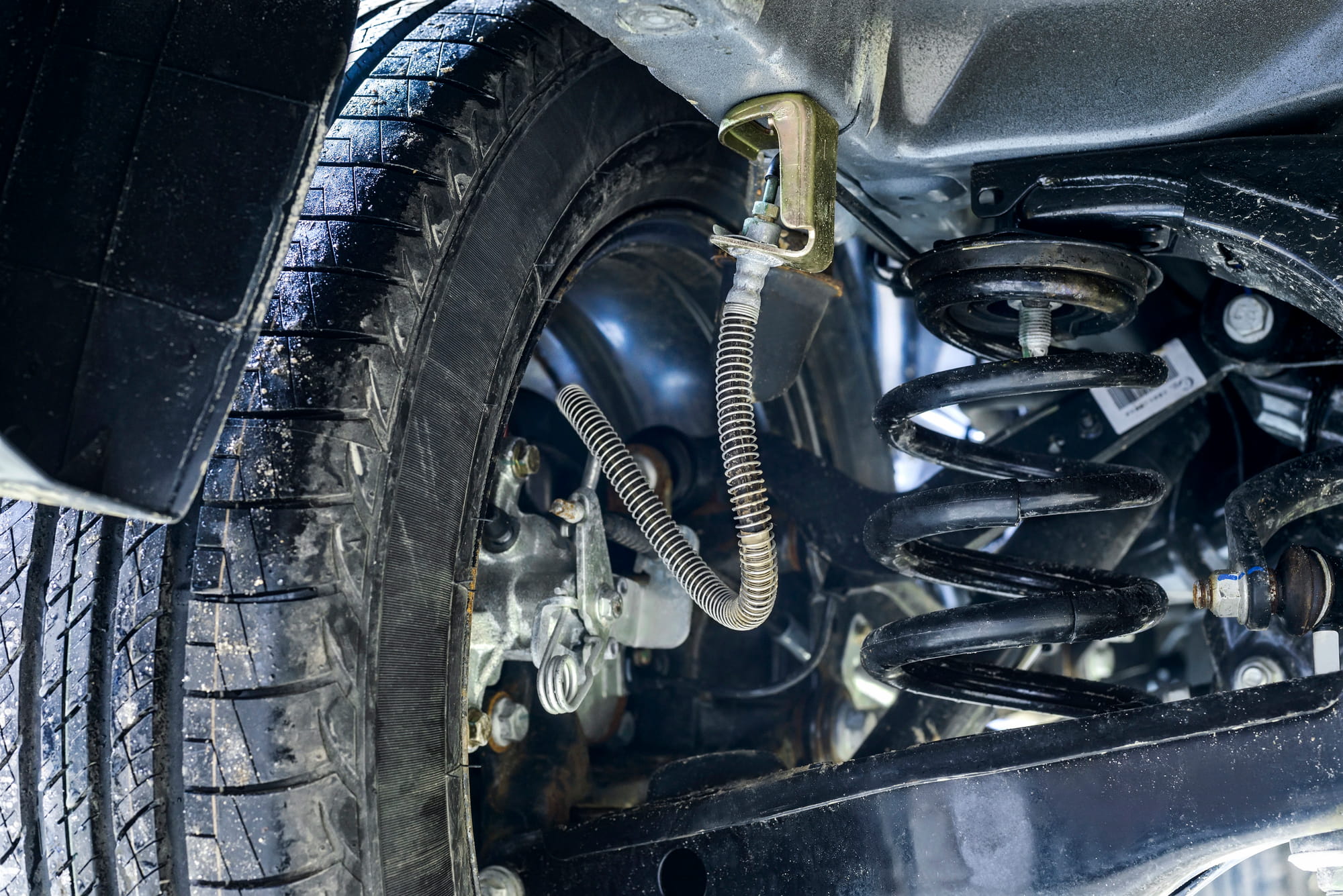
Rolls-Royce Suspension Repair at DART Auto
Rolls-Royce suspension systems are engineering marvels, not commodity parts. The self-leveling air suspension on Phantom, Ghost, Wraith, and Dawn models relies on height sensors, air springs, adaptive dampers, and a central compressor – all calibrated to deliver the brand's signature "magic carpet ride." When a generic shop treats a Rolls-Royce like a pickup truck, you lose precision geometry, risk compressor damage from incorrect bleeding procedures, and often trigger cascading faults in the suspension control module. DART Auto approaches every Rolls-Royce suspension repair with factory-aligned diagnostics and the specialized tooling these platforms demand.
Most suspension complaints on modern Rolls-Royce models trace to air spring leaks (especially at the upper mounts on 2010-2016 Ghost RR4 chassis), failed height sensors, or compressor relay failures that leave the car sagging overnight. We use OEM scan tools to read live suspension data, verify ride-height calibration, and bleed the system per BMW Group procedures – the parent architecture shares critical software with 7-Series platforms but adds Rolls-Royce-specific tuning files. Skipping the software recalibration after replacing air springs guarantees uneven ride height and premature wear.
When you bring your Rolls-Royce to DART Auto for suspension repair, you can expect:
- Complete electronic diagnostics of air suspension modules, height sensors, and compressor circuits before recommending parts.
- OEM or premium aftermarket air springs, dampers, and control arms sourced from trusted European suppliers.
- Proper ride-height calibration and corner-balancing using factory procedures and scan-tool commands.
- Transparent explanations of what failed, why it failed, and what happens if you delay the repair – so you make informed decisions without pressure.
Common Suspension Repair Issues on Rolls-Royce Vehicles
Rolls-Royce engineers every suspension component to deliver the "magic carpet ride" the brand promises, but that complexity introduces failure modes most shops never see. Here's what actually breaks:
- Air spring membrane failures on Phantom VII (2003–2017) and Ghost I (2009–2014): The multi-chamber air springs rely on rubber bellows that crack from ozone exposure and flexing cycles. When one corner fails, the self-leveling system overworks the remaining springs, cascading into a full quad replacement. Early warning signs include a corner sitting low after overnight parking or the suspension fault lamp illuminating intermittently during cold starts.
- Hydraulic damper leaks on Wraith and Dawn (2013–2021): These models use electronically controlled hydraulic dampers that adjust stiffness in real time. Seal degradation – accelerated by road salt and temperature swings – causes visible oil weeping at the damper body. The variable damping system cannot compensate for a failed unit, resulting in harsh ride quality and triggering fault codes that disable adaptive modes.
- Control arm bushing deterioration across the RR1 platform (Ghost, Wraith, Dawn): Rolls-Royce uses soft, compliance-oriented bushings to isolate road noise. These polyurethane and hydraulic bushings wear faster than traditional rubber, especially under spirited driving. Symptoms include clunking over bumps, steering wander at highway speed, and uneven inner tire wear. The OEM service procedure requires sub-frame alignment after replacement – a step generic shops routinely skip.
- Active anti-roll bar actuator failures on Phantom VIII (2017+) and Ghost II (2020+): The 48-volt active stabilizer system uses electric motors at each axle to counteract body roll. Bearing wear and motor winding failures produce grinding noises during cornering and trigger limp-home modes that lock the bars in a neutral position, eliminating roll control entirely.
- Air suspension compressor wear on all air-sprung models after 80,000 miles: The twin compressors run frequently to maintain ride height. Piston ring wear causes extended run times, overheating, and eventual seizure. Diagnostics require monitoring compressor duty cycle and system pressure decay rates – data points accessible only through Rolls-Royce factory scan tools.
Why Choose DART Auto for Rolls-Royce Suspension Repair
Most shops lack the diagnostic depth to properly service Rolls-Royce air suspension systems. The Phantom, Ghost, and Wraith platforms use self-leveling air springs, active dampers, and ride-height sensors that communicate over proprietary CAN networks. Generic scan tools flag faults without context; DART's factory-level diagnostic equipment reads live sensor data, calibration states, and compressor duty cycles to pinpoint whether a ride-height fault stems from a leaking strut, a failing compressor, or a corrupted module calibration. We follow OEM procedures for bleeding air lines, resetting ride-height memory, and performing post-repair geometry sweeps that generic shops skip.
Our master technicians bring dealer-trained expertise to every Rolls-Royce suspension job. We stock OEM air springs, control arms, and bushings sourced directly from trusted suppliers, eliminating the guesswork of aftermarket compatibility. Because our techs are salaried rather than flat-rate, they take the time to inspect upper and lower control-arm bushings, subframe mounts, and tie-rod ends during every suspension diagnosis. We've seen early Ghost models develop premature front lower-arm bushing wear, and Phantom VII platforms suffer compressor relay failures that mimic strut leaks. Our process catches these nuances before you pay for the wrong repair.
- Factory diagnostic software for air-suspension calibration and fault-tree analysis
- Salaried technicians who perform complete undercarriage inspections, not just the complaint part
- OEM and premium parts from verified suppliers, ensuring proper ride quality and longevity
- 3-year/36,000-mile warranty on parts and labor, backing every suspension repair
Symptoms – How to Know You Need This Service
Rolls-Royce suspension faults announce themselves in ways that range from subtle ride-quality changes to dashboard warnings you cannot ignore. Pay attention to these driver-facing symptoms:
- Vehicle sits noticeably lower on one corner or side after sitting overnight – classic air spring leak, often at the upper bellows on Ghost/Wraith models.
- Compressor runs continuously or cycles on and off every few minutes – the system is trying to maintain pressure through a leak, risking compressor burnout.
- Amber or red suspension warning on the instrument cluster – fault codes stored in the suspension control module; stop driving and schedule diagnostics immediately if the red warning appears.
- Harsh ride over bumps that once felt glassy-smooth – failed adaptive dampers or loss of nitrogen charge in the air springs.
- Clunking or knocking from the front suspension over rough pavement – worn control-arm bushings or ball joints, common on higher-mileage RR4 Ghost and earlier Phantom VII platforms.
- Steering wander or vague on-center feel – tie-rod wear or misalignment after suspension component replacement without proper geometry reset.
- Uneven tire wear on inside or outside edges – camber/toe drift from worn bushings or incorrect ride-height calibration.
If you see a red suspension warning or the car drops to the bump stops, do not drive it – compressor damage and control-arm contact can escalate repair costs quickly. Amber warnings and gradual ride-height loss mean schedule service soon, ideally within the week.
Which Rolls-Royce Models We See for Suspension Repair
DART Auto services suspension systems across the modern Rolls-Royce lineup, focusing on the platforms that share BMW Group architecture and diagnostic protocols. We see these models regularly:
- Phantom VII (2003–2017) – the original modern Rolls-Royce, prone to air spring leaks and height-sensor drift as mileage climbs past 60,000 miles.
- Ghost Series I (RR4 chassis, 2010–2014) and Ghost Series II (2015–2020) – built on modified 7-Series F01/F02 architecture; common issues include front air spring bellows cracks and compressor relay failures.
- Wraith (2014–2021) and Dawn (2016–2021) – share the same RR5 platform; adaptive dampers and rear air springs see the most wear, especially on cars driven aggressively.
- Cullinan (2019–present) – the SUV variant on CLAR architecture; newer platform with fewer common faults, but we handle air spring replacement and calibration when needed.
We do not commonly service Phantom VIII (2018–present) or the upcoming electric Spectre due to limited diagnostic-tool coverage for the newest BMW Group platforms – if you own one of these models, call us to discuss capabilities before scheduling. For all other Rolls-Royce platforms listed above, we have the factory scan tools, repair procedures, and suspension-specific tooling to match or exceed dealer-level service without the dealer price tag.
Causes & Risks – What Happens if Ignored
Suspension failures on Rolls-Royce vehicles stem from a combination of environmental exposure and design philosophy. The brand prioritizes ride comfort over longevity, using softer bushings, complex hydraulic dampers, and air springs with thin-wall construction. Colorado's freeze-thaw cycles crack rubber components, road salt corrodes aluminum control arms, and UV exposure degrades air spring membranes. High curb weights – the Phantom weighs over 6,000 pounds – accelerate bushing compression set and damper seal wear.
Delaying repairs sets off a domino effect that multiplies costs and compromises safety:
- Ignoring a single failed air spring for 2,000 miles typically destroys the compressor. The system runs continuously trying to level the vehicle, overheating the pump and burning out motor windings. What starts as a $1,200 spring replacement becomes a $4,500 job requiring compressor, dryer, and often additional springs once the system is opened.
- Driving on worn control arm bushings misaligns the suspension geometry. Camber and toe shift out of spec, scrubbing the inner edges of $600-per-tire Pirelli or Michelin rubber in 5,000 miles. Steering response becomes vague, increasing accident risk during emergency maneuvers. The misalignment also overloads ball joints and tie rod ends, adding another $2,000 in parts once those fail.
- Leaking dampers allow metal-on-metal contact inside the shock body. Piston rods score the cylinder walls, contaminating the hydraulic fluid with metal particles. These particles circulate through the electronic valving, jamming solenoids and destroying the adaptive damping controller – a $3,800 module that's often on backorder for weeks.
- Failed active anti-roll actuators disable the stability control system's full authority. The DSC system relies on stabilizer bar input to predict and counteract skids. Without it, the vehicle becomes tail-happy in wet conditions, and the increased body roll during cornering loads suspension mounts unevenly, cracking subframe bushings that require frame-off labor to replace.
Safety Impact – Why Suspension Repair Matters
A compromised suspension doesn't just hurt ride quality – it undermines every safety system Rolls-Royce engineers integrated into the vehicle. The air suspension provides real-time ride height data to the ABS, stability control, and adaptive cruise radar. When a corner sags or the system faults, the DSC module receives incorrect body position information and miscalculates brake force distribution during panic stops. Worn bushings introduce slop into the steering geometry, increasing stopping distances by allowing the wheels to toe out under braking load. On Phantom VIII and Ghost II models, the active anti-roll system communicates with the airbag deployment logic – a failed actuator can delay side-curtain inflation during a rollover event.
Here's when to act immediately versus schedule promptly:
- Stop driving now: Vehicle sits more than two inches lower on one corner; suspension warning light is solid red; clunking or grinding noises during straight-line driving; steering pulls hard to one side without input; visible fluid pooling under the vehicle after it's been parked.
- Schedule within the week: Amber suspension fault lamp; one corner drops overnight but rises after starting; light knocking over bumps at low speed; steering feels loose or requires constant correction on the highway; uneven tire wear patterns appearing on inner edges.
- Address at next service interval: Ride feels slightly firmer than usual; minor body roll increase in corners; compressor runs for more than 30 seconds after startup; faint hissing near wheel wells when parked.
How Rolls-Royce Suspension Repair Actually Works
Rolls-Royce air suspension integrates four corner air springs, twin compressors, a central reservoir, electronic dampers, and a network of height sensors feeding a dedicated suspension control module. Unlike simpler air systems, Rolls-Royce uses closed-loop control with accelerometers at each corner that adjust damping rates 500 times per second. The system monitors vehicle speed, steering angle, brake pressure, and throttle position to pre-load the dampers before body motion occurs. On Phantom VIII and newer, the 48-volt active stabilizers add another layer: electric motors twist the anti-roll bars in real time, decoupling left and right wheels to smooth out single-wheel impacts while maintaining flat cornering.
This architecture dictates specific repair procedures that separate dealer-level work from generic suspension shops:
- Height sensor calibration requires Rolls-Royce factory diagnostic software. After replacing any suspension component, the control module must relearn ride height references for each corner. The procedure involves driving the vehicle through a prescribed speed and load cycle while connected to the scan tool – skipping this step leaves the system hunting for correct height and triggers nuisance faults.
- Air spring replacement demands contamination control. The system uses a desiccant dryer to remove moisture from compressed air. Opening any air line exposes the dryer to atmosphere, requiring replacement to prevent internal corrosion. Proper procedure includes purging all lines with dry nitrogen before reconnecting components.
- Control arm installation follows torque-to-yield sequences. Many Rolls-Royce suspension fasteners are single-use, stretch-to-yield bolts that must be replaced and torqued to a specific angle after reaching initial spec. Reusing old hardware or skipping the angle step allows the arms to shift under load, throwing alignment out within 1,000 miles.
- Active stabilizer motors require electrical initialization. The control module must run a self-test routine after installation to map motor resistance and set neutral position. Without this step, the system defaults to limp mode and disables adaptive damping across the entire vehicle.
How We Diagnose Suspension Repair Issues on Rolls-Royce
Rolls-Royce vehicles ride on some of the most sophisticated air suspension systems ever fitted to a production car. The Phantom, Ghost, Wraith, and Dawn all use adaptive air springs, continuously variable dampers, and a network of sensors that adjust ride height and damping rates hundreds of times per second. When something goes wrong – a compressor fault, a leaking air spring, a failed height sensor, or a malfunctioning control module – the system logs dozens of fault codes that generic scan tools simply can't decode. We approach every Rolls-Royce suspension concern with factory-level diagnostics and a methodical process that finds the root cause instead of guessing at parts.
- Initial interview and road test. We ask when the concern started, whether it happens at startup or after driving, and if any warning lights or messages appeared. A test drive over varied surfaces reveals whether the car sags on one corner, whether damping feels soft or harsh, and whether the self-leveling system responds correctly to load changes.
- Factory-level scan with BMW ISTA. Because Rolls-Royce shares its platform architecture with BMW (the Phantom VII and Ghost I use adaptations of the 7-Series air suspension), we use BMW ISTA diagnostics to pull live data from the air suspension control module, height sensors, compressor relay, and individual corner valves. This reveals faults that consumer-grade scanners miss – for example, a height sensor drift on early Ghost models (2010–2014) or a compressor duty-cycle fault that points to a worn valve block rather than the compressor itself.
- Visual and physical inspection. We lift the car and inspect each air spring for cracks, abrasion, or moisture stains that indicate a slow leak. We check the compressor intake filter, inspect air lines for chafing near the subframe, and verify that height sensors move freely and aren't corroded. On Phantom VII (2003–2017), we pay close attention to the rear air springs, which are known to develop pinhole leaks near the upper piston after eight to ten years.
- Functional tests and measurements. We command the suspension to raise and lower using the diagnostic software, measure actual versus target ride height at each corner, and listen for compressor run-time and valve actuation. Excessive compressor run-time usually means a leak; sluggish corner response points to a failed valve block or damper solenoid.
- Clear repair plan and transparent quote. Once we've pinpointed the fault – whether it's a single leaking air spring, a failing compressor, or a software calibration issue – we walk you through what failed, why it failed, and what we recommend. You'll receive a detailed estimate that separates parts, labor, and any additional work needed to prevent a comeback, so you can make an informed decision without pressure.
Suspension Repair on Rolls-Royce: Repair vs. Replacement
The distinction between repair and replacement on a Rolls-Royce suspension comes down to whether the affected component can be restored to OEM specification or whether wear, age, or safety concerns demand a new part. Here's how we decide:
When True Repair Makes Sense
- Software recalibration. If the suspension control module has lost its ride-height calibration – often after a battery disconnect or module replacement – we can re-learn the sensors and restore proper operation without replacing hardware.
- Cleaning and servicing. A clogged compressor intake filter or a corroded height sensor connector can cause faults that clear once the obstruction or corrosion is addressed. We clean, lubricate, and test before recommending parts.
- Minor bracket or mount repair. If a damper mount shows surface rust but the threads and structure are sound, we can clean and treat it rather than replace the entire shock assembly.
When Partial Replacement Is the Right Call
- Single failed air spring. If one air spring is leaking but the others hold pressure and show no cracking, replacing just the failed unit is appropriate. However, if the car is over ten years old and the other springs are original, we'll recommend replacing in pairs or all four to avoid a second trip within months.
- Compressor or valve block. On Ghost and Wraith models, the compressor and valve block are separate serviceable units. If the compressor motor is worn but the valve block tests good, we replace only the compressor.
- Individual damper. If one adaptive damper has failed internally – common on early Phantom VII front dampers – and the others still adjust properly, a single damper replacement is viable, though we often recommend doing both fronts for balanced damping response.
When Full Replacement Is Necessary
- Cascading wear. If multiple air springs are leaking, or if the compressor is cycling constantly and the valve block shows internal leakage, replacing the entire air suspension subsystem (springs, compressor, valve block, and lines) prevents repeated failures.
- Safety-critical components. Control arms, ball joints, and tie rods on a Rolls-Royce are not rebuildable. Once wear is detected, replacement with OEM or OEM-equivalent parts is the only safe option.
- Age and mileage. Original air springs and dampers on a 2010 Ghost with 80,000 miles are living on borrowed time. Replacing all four corners at once avoids the inconvenience and added labor cost of returning every few months as each component fails individually.
We walk you through the trade-offs – repair cost, expected lifespan of the repaired component, and the likelihood of related failures – so you can choose the approach that fits your budget and how long you plan to keep the car. We never push the most expensive option just because we can.
How to Make Your Rolls-Royce Suspension Repair Last Longer
Once we've restored your Rolls-Royce suspension to factory specification, a few mindful habits will extend the life of the new components and delay the next round of repairs.
Driving Habits That Protect the Suspension
- Avoid potholes and sharp impacts. Air springs and adaptive dampers tolerate normal road irregularities, but repeated hard impacts can crack the spring bellows or damage the damper piston seals. Slow down for potholes, railroad crossings, and speed bumps.
- Let the car level before driving. When you start the car, the air suspension raises to the correct ride height. Driving off immediately while the system is still adjusting puts uneven stress on the springs and compressor. Wait ten seconds after startup before moving.
- Don't overload the trunk. The rear air springs compensate for load, but chronic overloading – especially on long trips – forces the compressor to run longer and wears the rear springs faster. Respect the published load limits in your owner's manual.
- Use the correct drive mode for conditions. The Comfort and Dynamic modes adjust damping firmness. Running in Dynamic mode all the time increases wear on the damper solenoids and control valves. Use Comfort for daily driving and save Dynamic for spirited runs.
Maintenance You Can Do Yourself
- Visual checks every few weeks. Walk around the car and look for uneven ride height, sagging corners, or any visible fluid leaks near the wheels. Early detection of a leaking air spring saves you from a compressor failure caused by continuous cycling.
- Listen for compressor noise. The air suspension compressor should run briefly at startup and then shut off. If you hear it running continuously or cycling on and off every few minutes while parked, you likely have a slow leak that needs attention before the compressor burns out.
- Keep an eye on warning messages. If the dashboard displays "Suspension Fault" or "Reduced Ride Height," don't ignore it. Continuing to drive with a known suspension fault can turn a simple air-spring replacement into a compressor and valve-block job.
- Wash the undercarriage in winter. Road salt accelerates corrosion on air lines, height sensors, and damper mounts. A periodic undercarriage rinse during winter months helps prevent premature failures.
Professional Maintenance and OEM Standards
- Follow Rolls-Royce service intervals. The factory calls for suspension inspections at major service milestones. These inspections catch worn bush
What to Expect When You Bring Your Rolls-Royce In
We treat your Rolls-Royce with the care it deserves, starting the moment you schedule your appointment. Here's how the process unfolds:
- Drop-off and intake: Bring your vehicle in at your scheduled time. We'll discuss the symptoms you're experiencing – sagging ride height, warning lights, uneven stance, or harsh ride quality. Remove personal items from the cabin; we'll handle the rest. Loaner vehicles and shuttle service are available if you need to leave the car with us.
- Comprehensive inspection: Our technician connects factory-level scan tools to read air-suspension fault codes, live sensor data, and compressor performance. We perform a full undercarriage inspection, checking control arms, bushings, tie rods, and subframe mounts for wear. We road-test the vehicle to confirm symptoms and capture intermittent faults.
- Written estimate and consultation: You'll receive a detailed estimate explaining what we found, which components need replacement, and why. We'll walk you through the repair options and the consequences of deferring work, so you can make an informed decision.
- Repair and verification: Once approved, we replace failed components using OEM or premium parts, torque fasteners to factory specifications, and perform ride-height calibrations. After the repair, we road-test the vehicle and re-scan the system to confirm all faults are cleared and ride quality is restored.
- Pickup walkthrough: At pickup, we'll explain the work performed, show you the old parts if requested, and answer any questions. If something feels off in the days following your repair, call us – we'll schedule a follow-up inspection at no charge.
Our Rolls-Royce Services
- Air Conditioning AC Repair
- Battery Repair Replacement
- Brake Repair & Brake Fluid Change
- Check Engine Light Diagnostics
- Clutch Repair & Replacement
- Coolant Leak Repair
- Cooling System Repair
- Drive Shaft Repair
- Engine Repair
- Exhaust & Catalytic Converter Repair
- Head Gasket Repair & Replacement
- Oil Change
- Oil Leak Repair
- Scheduled Service Maintenance
- Steering Repair
- Cambelt Timing Belt Replacement
- Transmission Repair
- Tune Up
- Wheel Alignment