
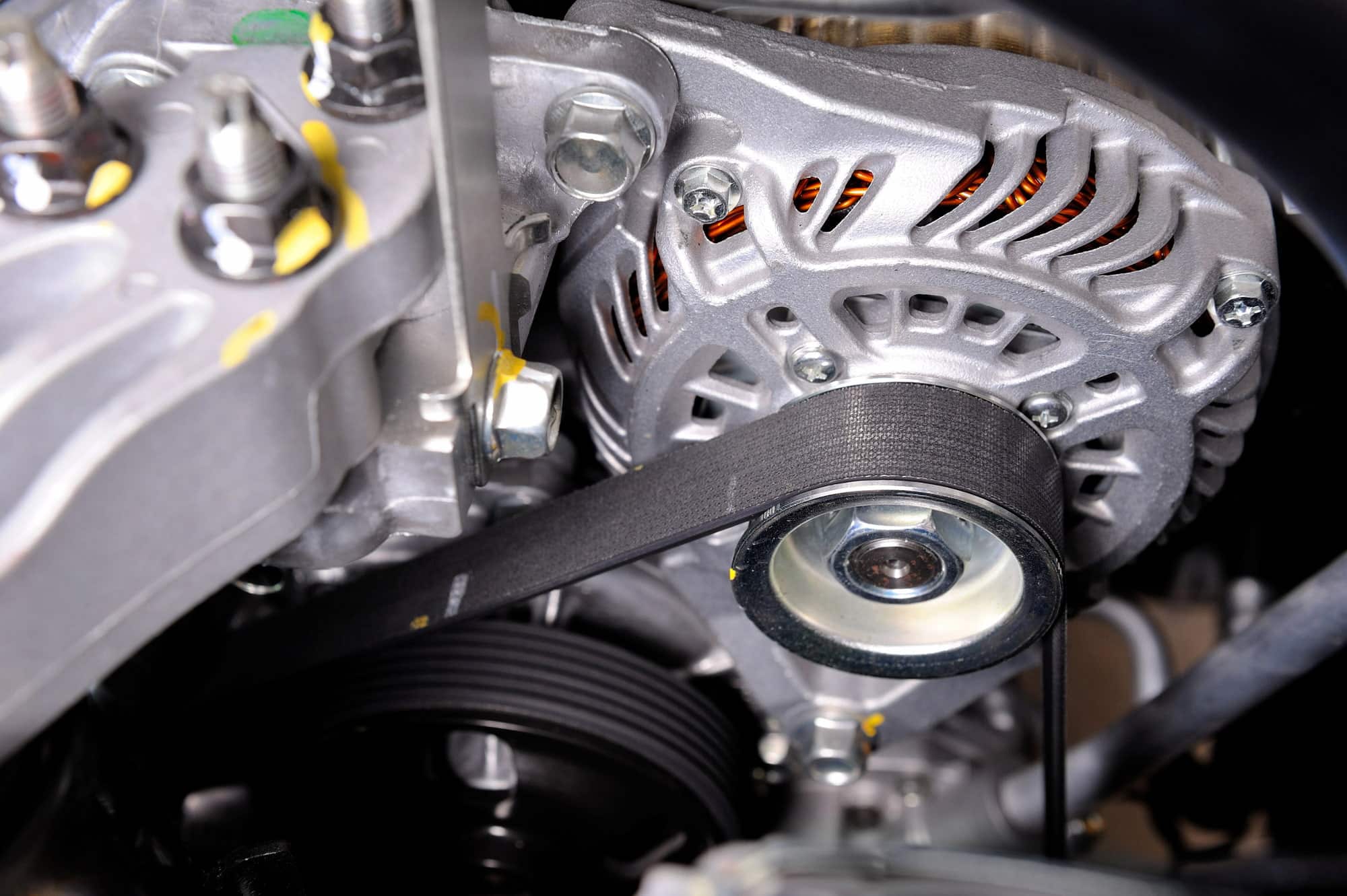
Rolls-Royce Cambelt Timing Belt Replacement at DART Auto
Rolls-Royce vehicles are engineered to exacting standards that demand equally precise service. While many modern Rolls-Royce models use chain-driven timing systems, certain platforms and earlier engines rely on timing belts that require scheduled replacement to prevent catastrophic engine damage. The difference between a generic shop and a specialist becomes clear when you consider the access challenges unique to Rolls-Royce: heavily packaged engine bays, bespoke fastener torque specifications, and software-dependent procedures for crankshaft positioning and tensioner calibration. Our technicians use factory diagnostic tools and OEM repair information to perform this service exactly as the manufacturer intended, protecting your investment and maintaining the seamless performance Rolls-Royce owners expect.
Since 2000, DART Auto has specialized in European marques, and our master technicians bring dealer-level training and over a decade of hands-on experience to every Rolls-Royce that enters our shop. We invest in the cutting-edge diagnostic equipment and specialty tooling required to work confidently on these ultra-luxury vehicles, ensuring that cambelt replacement is performed with the precision and care your car deserves.
When you bring your Rolls-Royce to DART Auto for cambelt timing belt replacement, you can expect:
- Complete pre-service inspection to identify any related components (water pump, tensioners, idler pulleys) that should be addressed during belt access
- OEM or premium aftermarket parts sourced from trusted suppliers, meeting or exceeding factory specifications
- Factory-correct procedures including crankshaft locking, camshaft alignment, and tensioner pre-load verification using manufacturer-specified tooling
- 3-year/36,000-mile warranty on parts and labor, giving you confidence that the work is done right the first time
Common Cambelt Timing Belt Replacement Issues on Rolls-Royce Vehicles
Rolls-Royce vehicles demand specialist attention because their timing systems integrate with sophisticated engine management and variable valve timing architectures that differ sharply from mainstream platforms. The BMW-derived V12 powerplants in Phantom, Ghost, and Wraith models – particularly the N73 and N74 engines – use timing chains rather than belts, but ancillary belt-driven components and tensioner systems present their own failure patterns. When these systems degrade, the consequences ripple through multiple engine subsystems simultaneously.
- Phantom (2003–2017, Series I and II N73/N74 V12): Auxiliary drive belt tensioner failure and serpentine belt glazing under the hood's limited airflow. The long belt path and multiple idler pulleys mean a single seized pulley can shred the belt, killing alternator, water pump, and power steering simultaneously. The N74's twin-turbo configuration adds heat stress that accelerates rubber degradation.
- Ghost and Wraith (2010–2020, N74 V12): Timing chain guide wear on higher-mileage examples (above 60,000 miles), often accompanied by cold-start rattle. While not a cambelt, the chain system shares similar catastrophic failure risk if guides fracture and chain skips timing.
- Cullinan (2018+, N74B68 V12): Newer platform but inherits N74 timing chain and guide architecture. Early examples show accelerated guide wear when service intervals are stretched beyond factory spec, compounded by stop-start system cycling.
- Dawn convertible models: Serpentine belt path routing near the convertible top mechanism creates debris ingestion risk (fabric lint, hydraulic fluid mist) that contaminates pulleys and causes premature belt slip.
- All V12 platforms: VANOS (variable valve timing) solenoid screen clogging from degraded oil, indirectly stressing timing components as the ECU compensates for sluggish cam phasing. This isn't belt-specific but shares diagnostic overlap.
- Accessory drive idler pulley bearing seizure: Common across all Rolls-Royce models after 50,000 miles, often silent until catastrophic failure. The pulley locks, belt shreds, and coolant pump stops – leading to immediate overheating.
Why Choose DART Auto for Rolls-Royce Cambelt Timing Belt Replacement
Rolls-Royce engines – particularly the BMW-derived V12 powerplants found in Phantom, Ghost, and Wraith models – demand a level of precision that few independent shops can deliver. The N73 and N74 V12 engines, while robust, require exact timing alignment and torque procedures that deviate significantly from standard BMW platforms. DART Auto has invested in the factory diagnostic software and specialty tooling needed to service these ultra-luxury platforms without the dealer markup.
Our master technicians bring dealer-level training to every cambelt service. We follow OEM replacement intervals and procedures, including the critical step of inspecting tensioners, guides, and the water pump – components that often fail concurrently on higher-mileage Rolls-Royce V12s. Because our technicians are salaried rather than flat-rate, there's no incentive to rush through the delicate process of aligning cam and crank timing marks or to skip the post-installation verification steps that prevent catastrophic engine damage.
- Factory-spec diagnostics: We use OEM scan tools to verify cam/crank correlation before and after belt replacement, catching timing drift that generic code readers miss.
- Complete ancillary inspection: Every cambelt service includes a thorough review of tensioners, idler pulleys, and the water pump – parts that share the same service life and labor access.
- 3-year/36,000-mile warranty: Our parts and labor coverage reflects confidence in the quality of OEM-grade components and meticulous installation.
Symptoms – How to Know You Need This Service
Timing belt failure on a Rolls-Royce can result in catastrophic valve-to-piston contact, leading to five-figure engine repairs. Recognizing the warning signs early allows you to schedule replacement before failure occurs.
- Mileage or time interval approaching: Most Rolls-Royce timing belt systems require replacement every 60,000 to 100,000 miles or 4 to 6 years, whichever comes first – consult your service booklet for the exact interval
- High-pitched squealing or chirping from the front of the engine, especially during cold starts, indicating belt wear or glazing
- Visible cracking, fraying, or glazing on the belt surface if you can inspect it through an access panel
- Engine misfires or rough idle that may point to timing drift caused by a stretched or slipping belt
- Oil or coolant contamination on the belt, often from a leaking front crankshaft seal or water pump, which accelerates belt degradation
- Check engine light with timing-related fault codes, such as camshaft/crankshaft correlation errors
- Sudden loss of power or failure to start – if the belt has already broken, stop driving immediately and arrange for towing to prevent further damage
If you notice squealing or visible wear, schedule service soon. If the engine won't start or runs extremely rough after hearing a loud snap, do not attempt to drive – internal damage may already be occurring.
Which Rolls-Royce Models We See for Cambelt Timing Belt Replacement
Most modern Rolls-Royce models use timing chains rather than belts, but certain platforms and earlier engine variants still require periodic belt replacement. We commonly service:
- Phantom (2003–2008, Series I): Early Series I cars with the BMW-derived N73 V12 may have belt-driven accessories or auxiliary systems requiring attention, though primary timing is chain-driven
- Ghost (2010–2014, Series I): The N74 twin-turbo V12 is chain-driven for valve timing, but accessory belt systems and tensioners still require scheduled inspection and replacement
- Wraith and Dawn (2013–2020): These models share the N74 V12 platform with chain-driven timing, but ancillary belt systems (alternator, A/C compressor, power steering) demand periodic service
- Silver Seraph (1998–2002): Powered by the BMW M73 V12, this model may require timing-related belt service depending on configuration – we verify service history and inspect thoroughly
While most contemporary Rolls-Royce engines use durable timing chains, accessory drive belts, serpentine belts, and related tensioners still require replacement at regular intervals. If you own an older or less common Rolls-Royce variant, contact us with your VIN and service history so we can confirm compatibility and provide an accurate assessment of what your vehicle needs.
Causes & Risks – What Happens if Ignored
Rolls-Royce timing and accessory belt systems degrade primarily from heat cycling, oil contamination (leaking valve covers or turbo oil feeds on N74 engines), and the extended service intervals owners assume these ultra-premium vehicles can tolerate. Denver's temperature swings – subzero winter mornings followed by summer heat – accelerate rubber hardening and tensioner spring fatigue. The N73 and N74 V12 engines generate substantial underhood temperatures even at idle, and the tightly packaged engine bay limits airflow, baking belts and plastic guide rails over time.
When early symptoms appear and go unaddressed, the failure progression is predictable and expensive:
- Week one to three: Slight belt squeal on cold starts becomes persistent chirping under acceleration. Tensioner arm flutter visible during idle. At this stage, a belt and tensioner replacement is straightforward.
- Month two: Belt begins glazing and slipping on the alternator pulley. Battery warning light flickers. Power steering assist becomes inconsistent. The vehicle remains drivable but auxiliary systems are compromised.
- Month three to six: Belt shreds completely or timing chain guide fractures. On chain-driven engines, a skipped tooth bends valves into pistons – requiring cylinder head removal, valve replacement, and piston inspection. Cost escalates from a routine service into a five-figure engine rebuild.
- Catastrophic failure: Seized water pump from belt loss causes immediate overheating. Aluminum cylinder heads warp within minutes. Head gasket failure, coolant intrusion into cylinders, and potential crankshaft bearing damage follow. The engine may be deemed uneconomical to repair.
Delaying this work transforms a preventative maintenance item into an engine-out catastrophe. The safety dimension becomes critical when power steering fails mid-corner or the alternator dies on a highway at night, killing headlights and instrument cluster.
Safety Impact – Why Cambelt Timing Belt Replacement Matters
Rolls-Royce vehicles weigh between 5,000 and 6,000 pounds, and their hydraulic power steering and electrically assisted braking systems depend entirely on accessory belt-driven components functioning correctly. When the serpentine belt fails, the power steering pump stops instantly – turning the wheel at parking-lot speeds becomes nearly impossible for most drivers, and highway-speed lane changes require dangerous levels of force. The alternator failure that follows drains the battery within minutes, killing ABS module operation, stability control, and adaptive cruise systems that rely on continuous electrical supply.
Specific failure modes that create immediate hazards include:
- Loss of power steering during evasive maneuvers: The vehicle's mass and long wheelbase make manual steering nearly uncontrollable in emergency situations.
- Coolant pump failure and overheating: Steam obscures vision, and drivers often pull over in unsafe locations (highway shoulders, blind curves) as the temperature gauge spikes.
- Electrical system collapse: Headlights dim to uselessness, brake lights fail, and the instrument cluster goes dark – other drivers cannot see your intentions, and you cannot see the road.
- Timing chain skip on interference engines: Sudden loss of power at highway speeds forces the driver into traffic without acceleration capability, risking rear-end collisions.
Stop driving immediately if you hear metallic rattling from the engine bay, see the battery light illuminate, or experience sudden steering resistance. Schedule service within the week for belt squeal, visible cracking on the belt ribs, or oil seepage near timing covers.
How Rolls-Royce Cambelt Timing Belt Replacement Actually Works
Rolls-Royce V12 engines use timing chains rather than cambelt systems, but the principle remains identical: synchronizing crankshaft and camshaft rotation so valves open and close precisely as pistons rise and fall. The N73 and N74 engines employ a dual-row chain linking the crankshaft to four camshafts (two per cylinder bank), with hydraulic tensioners maintaining constant chain tension. Variable valve timing (VANOS) units sit at each camshaft nose, rotating cam position relative to the chain drive to optimize power and efficiency across the rev range. The accessory drive – a single serpentine belt – powers the alternator, water pump, power steering pump, and air conditioning compressor from a crankshaft pulley.
What distinguishes Rolls-Royce timing service from generic work:
- Factory-mandated crankshaft locking tools: The N74 V12 requires specific BMW timing pins to lock both camshaft sprockets and the crankshaft at TDC before removing chain tensioners. Incorrect positioning bends valves instantly.
- VANOS calibration after chain service: The DME (engine control module) stores learned camshaft position data. After chain or guide replacement, the system must be reset and re-adapted using BMW ISTA diagnostic software – no generic scan tool can perform this.
- Torque-to-yield fasteners throughout: Camshaft bridge bolts, timing cover bolts, and chain tensioner mounting bolts are single-use. Reusing them risks catastrophic fastener failure and oil leaks.
- Oil system priming procedure: After timing work, the engine must be primed (crankshaft rotated without spark or fuel) to circulate oil through VANOS solenoids and chain tensioners before first start. Skipping this step starves bearings and scores cam lobes.
The serpentine belt replacement is simpler but demands attention to tensioner arm condition and pulley alignment – a misaligned idler pulley will destroy a new belt within weeks. Every component in the accessory drive path gets inspected for bearing noise, wobble, and surface glazing before the new belt goes on.
How We Diagnose Cambelt Timing Belt Replacement Issues on Rolls-Royce
Rolls-Royce powertrains – whether the BMW-sourced N73 V12 in the Phantom or the N74 twin-turbo V12 in newer Ghost and Wraith models – demand a diagnostic approach that combines factory-level scan tools with hands-on inspection. These engines use timing chains rather than belts, but the ancillary belt-driven systems (alternator, water pump, A/C compressor) are critical to engine health and require precise diagnosis when issues arise.
- Initial consultation and symptom mapping. We document any unusual noises (squealing, chirping from the serpentine belt area), warning lights (battery, coolant temperature), or performance changes. On Rolls-Royce, even minor belt slip can trigger cascading electrical faults.
- Factory-level scan with BMW ISTA/D and ISTA/P. We pull stored fault codes and live data streams, checking alternator output voltage, coolant pump duty cycle, and A/C compressor engagement patterns. The scan reveals whether a belt-driven accessory is underperforming or if the belt itself is slipping under load.
- Visual and tactile inspection. We remove engine covers to inspect the serpentine belt for glazing, cracking, rib separation, and proper tension. On the V12 platform, the belt routing is complex and any misalignment can cause premature wear. We check all pulleys for bearing noise and free rotation.
- Accessory load testing. We measure belt tension with a calibrated gauge and observe belt behavior under electrical load (headlights, climate control, heated seats). A healthy belt maintains constant tension; a worn belt will visibly flutter or slip.
- Comprehensive report and recommendation. We document findings with photos, explain which components need attention now versus monitoring, and provide a transparent estimate. You'll understand exactly what's failing and why replacement is the right next step.
Cambelt Timing Belt Replacement on Rolls-Royce: Repair vs. Replacement
On Rolls-Royce models, the serpentine belt system is an integrated assembly where one component's failure often signals broader wear. Here's how we decide the right scope of work:
When Repair Makes Sense
- Belt tension adjustment only. If the belt is relatively new and simply needs re-tensioning due to thermal cycling or initial stretch, we can adjust the automatic tensioner without replacing the belt itself.
- Single pulley bearing replacement. If one idler pulley bearing has failed but the belt and other pulleys show minimal wear, we replace just that pulley and verify belt condition before closing the job.
When Partial Replacement Is Right
- Belt plus tensioner. The automatic tensioner wears over time and loses spring force. When the belt shows age-related cracking, we replace both together – the new belt needs proper tension to perform.
- Accessory-driven components. If the alternator or water pump pulley shows wobble or bearing noise, we replace that component along with the belt to prevent premature belt failure.
When Full System Replacement Is the Call
- High-mileage comprehensive service. On Phantom or Ghost models approaching 60,000–80,000 miles, all belt-driven accessories and the belt itself have experienced similar stress. Replacing the belt, tensioner, and all idler pulleys as an assembly prevents comebacks and maximizes service life.
- Catastrophic belt failure. If the belt has shredded or separated, we inspect every pulley and bearing for damage. Debris can contaminate bearings, making full replacement the only safe path forward.
We walk you through the options with photos and explain the trade-offs. Our salaried technicians have no incentive to upsell – we recommend what genuinely extends the life of your Rolls-Royce.
How to Make Your Rolls-Royce Cambelt Timing Belt Replacement Last Longer
Rolls-Royce engineering prioritizes refinement and longevity, but the serpentine belt system still benefits from thoughtful care. Here's how to maximize service intervals and avoid premature wear:
Driving Habits That Protect Belt-Driven Systems
- Allow proper warm-up. Cold starts place higher loads on the alternator and A/C compressor. Let the V12 idle for 30–60 seconds before driving, especially in winter, to reduce belt stress.
- Moderate electrical loads at startup. Avoid turning on heated seats, rear defroster, and high-beam headlights simultaneously during cold starts. Stagger accessory activation to reduce instantaneous belt load.
- Avoid extended idling with high accessory demand. Running the A/C at maximum with all electrical systems active while idling generates heat and belt slip. Drive gently to allow airflow and alternator speed to stabilize.
Owner-Level Maintenance You Can Do
- Listen for changes. A healthy serpentine belt is silent. Any squealing, chirping, or grinding warrants immediate inspection – don't wait for a warning light.
- Monitor the battery and electrical system. Dimming lights or sluggish starts can indicate belt slip affecting alternator output. Address these symptoms early.
- Check for fluid leaks. Coolant or oil on the belt causes rapid deterioration. Inspect the engine bay monthly for any seepage near pulleys or hoses.
Professional Maintenance That Matters
- Follow Rolls-Royce service intervals. The factory schedule includes belt inspection at major services. We use OEM-spec belts and tensioners – aftermarket parts rarely meet the V12's exacting tolerances.
- Software updates. BMW periodically releases updates for alternator control and battery management that optimize belt load. We apply these during service visits.
- Comprehensive inspections. We check belt condition, pulley alignment, and bearing health at every service, catching wear before it becomes a roadside failure.
What to leave to the professionals: Belt replacement on the V12 requires removing engine covers, routing the belt through a complex pulley system, and verifying proper tension with calibrated tools. This is not a driveway job – improper installation can damage the alternator or water pump. Trust our master technicians with dealer training and over 24 years of experience to handle it right the first time, backed by our 3-year/36,000-mile warranty.
What to Expect When You Bring Your Rolls-Royce In
From the moment you schedule your appointment, we treat your Rolls-Royce with the care it deserves. Here's how the process unfolds:
- Appointment and drop-off: We'll confirm your service window and discuss any symptoms or concerns you've noticed. If you need a loaner vehicle or shuttle service, let us know when booking – we'll arrange transportation so you're not stranded.
- Pre-service inspection: Before touching the cambelt, our technician performs a complete visual and scan-tool inspection. We check for oil leaks, coolant seepage around the water pump, and any stored fault codes that might indicate existing timing issues or sensor drift.
- Written estimate and authorization: You'll receive a detailed breakdown of the cambelt replacement and any recommended ancillary work (tensioners, guides, seals). We explain what each component does and the risk of deferring replacement, then wait for your approval before proceeding.
- Cambelt replacement and verification: Our technician follows factory torque specs, aligns timing marks to OEM standards, and uses the diagnostic tool to confirm cam/crank correlation post-installation. We road-test the vehicle to verify smooth operation and re-scan for any new codes.
- Pickup walkthrough: At pickup, we review the work performed, show you the old parts, and answer any questions. If something feels off in the days following service, call us – we'll re-check the work at no charge.
Remove valuables and personal items before drop-off. If you need after-hours pickup, we can arrange secure key drop-off once payment is settled.
Our Rolls-Royce Services
- Air Conditioning AC Repair
- Battery Repair Replacement
- Brake Repair & Brake Fluid Change
- Check Engine Light Diagnostics
- Clutch Repair & Replacement
- Coolant Leak Repair
- Cooling System Repair
- Drive Shaft Repair
- Engine Repair
- Exhaust & Catalytic Converter Repair
- Head Gasket Repair & Replacement
- Oil Change
- Oil Leak Repair
- Scheduled Service Maintenance
- Steering Repair
- Suspension Repair
- Transmission Repair
- Tune Up
- Wheel Alignment