
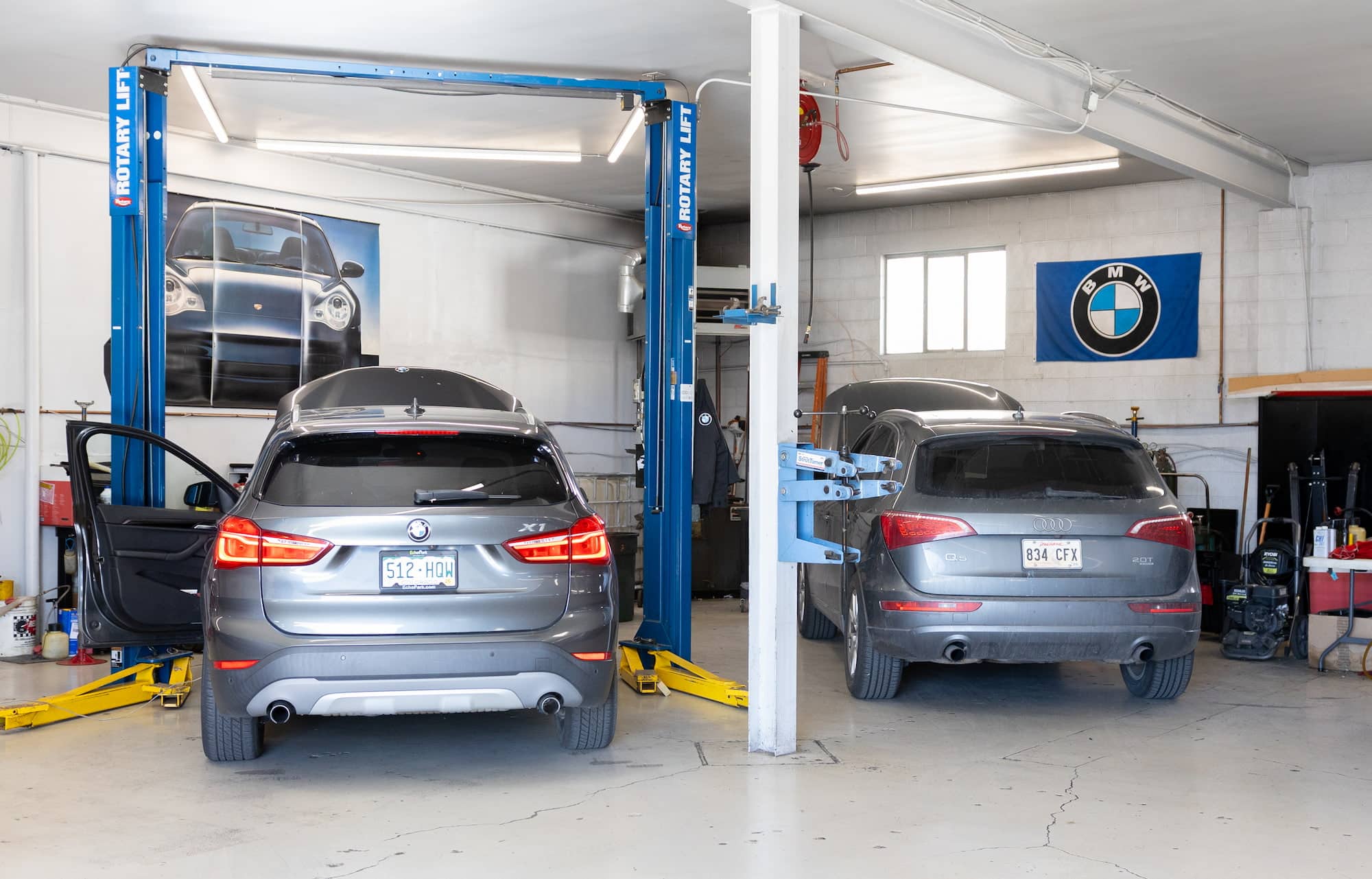
Volkswagen Wheel Alignment at DART Auto
Volkswagen platforms demand more than a quick rack adjustment and printout. From the multi-link rear suspension on MQB-platform Golf and Jetta models to the sophisticated electronic damping systems in Tiguan and Atlas SUVs, these vehicles rely on precise geometry to deliver the handling balance and tire life VW engineered into them. Generic alignment shops often lack the factory service data for camber shims, eccentric bolts, and subframe positioning procedures that distinguish a proper Volkswagen alignment from guesswork. DART Auto maintains current ERWIN technical documentation and uses hunter alignment systems calibrated to Volkswagen's published tolerances, not aftermarket approximations.
Modern Volkswagens integrate alignment with driver assistance systems. Vehicles equipped with Lane Assist, adaptive cruise control, and emergency braking rely on camera and radar calibration that can drift after suspension work or curb strikes. We verify sensor mounting angles and perform static camera calibration when specifications call for it, ensuring your safety systems function as intended. Our technicians reference chassis-specific torque values for control arm fasteners, subframe bolts, and steering gear mounts because Volkswagen suspension geometry changes measurably when fasteners are under or over-torqued. This level of detail separates alignment work that lasts from adjustments that drift within weeks.
When you bring your Volkswagen to DART Auto for alignment, expect:
- Pre-alignment inspection of bushings, ball joints, tie rod ends, and subframe position to identify worn components that prevent accurate adjustment
- Four-wheel alignment to factory specifications using current VW service data, including rear toe and camber where adjustable
- Documentation of before and after readings with explanation of any out-of-spec measurements and recommended corrective action
- ADAS camera calibration verification on 2016-newer models equipped with front-facing driver assistance cameras
Common Wheel Alignment Issues on Volkswagen Vehicles
Volkswagen platforms demand more than generic alignment racks can deliver. The multi-link rear suspensions on MQB-platform vehicles – Golf Mk7/Mk8, Jetta Mk7, Tiguan, Atlas – introduce toe and camber adjustability that many shops ignore, leaving owners with accelerated tire wear even after an "alignment." The PQ35 and PQ46 chassis (Mk5/Mk6 Golf, Passat B6/B7) are notorious for control-arm bushings that degrade silently, throwing camber out of spec long before the owner notices uneven tread.
- MQB rear multi-link camber drift: 2015–present Golf, GTI, Jetta, Tiguan, and Atlas use eccentric bolts at the lower control arm for camber adjustment. Shops without Volkswagen-specific alignment databases often skip the rear, leaving negative camber that chews the inside shoulder of rear tires in 10,000 miles.
- PQ35/PQ46 lower control-arm bushing collapse: 2006–2014 Passat, CC, GTI, and Jetta develop soft rubber at the front lower control-arm rear bushing, allowing the wheel to toe out under braking and pull camber negative. Alignment numbers look acceptable on the rack but shift under load.
- Mk4 Golf/Jetta rear beam axle toe creep: 1999–2005 models with torsion-beam rear suspensions rely on shims and eccentric washers. Corrosion locks the hardware, making rear toe adjustment impossible without replacing bolts – a step many quick-lube alignment shops skip entirely.
- Tiguan and Atlas front strut mount wear: 2018–2022 models show premature strut mount bearing failure, introducing a camber shift that appears intermittently. The alignment reads fine static but drifts under cornering load, causing diagonal wear patterns on front tires.
- Arteon and Passat B8 adaptive damper calibration: DCC-equipped models require a steering-angle sensor reset and suspension-height calibration after alignment. Skipping the VCDS or VAS scan tool step leaves the adaptive dampers hunting for a ride height that no longer matches the alignment spec.
Why Choose DART Auto for Volkswagen Wheel Alignment
Volkswagen platforms demand precision that generic shops often miss. MQB-chassis vehicles (Golf, Jetta, Tiguan from 2015-forward) use electronic steering angle sensors and adaptive dampers that must be recalibrated after suspension work or alignment changes. PQ35/PQ46 platforms (2005–2014 Jetta, Passat, GTI) frequently develop control-arm bushing wear that skews camber readings mid-corner, something a static rack measurement won't catch. We own factory VCDS and ODIS diagnostic systems to reset steering angle sensors, clear adaptive suspension fault codes, and verify that your Volkswagen's electronic stability control sees the corrected geometry.
Our master technicians bring dealer training and over a decade of hands-on Volkswagen experience to every alignment. We don't guess at torque specs or reuse stretch bolts – common shortcuts that cause wandering or premature tire wear. Before touching the rack, we inspect ball joints, tie-rod ends, and subframe bushings; aligning a car with worn components wastes your money and leaves the underlying problem untouched. After the adjustment, we road-test and scan for fault codes, confirming that ABS, ESC, and lane-keep systems all register the corrected wheel angles. You'll leave with a printed before-and-after spec sheet and the confidence that your Volkswagen drives the way its engineers intended.
Symptoms – How to Know You Need This Service
Volkswagen owners often notice alignment problems through subtle cues that worsen over time. Pay attention to these indicators:
- Steering wheel off-center while driving straight – the most common sign, particularly noticeable on highway driving when you expect the wheel to sit level
- Vehicle pulls consistently to one side on flat, level pavement when you release steering pressure, requiring constant correction to maintain lane position
- Uneven or accelerated tire wear patterns – feathering on inside or outside tread blocks, shoulder wear on one side, or cupping that creates a rhythmic hum at highway speeds
- Steering feels vague or wanders within the lane, requiring frequent small corrections that weren't necessary before
- Vibration or shimmy through the steering wheel at specific speeds, often worsening after hitting a pothole or curb
- Lane Assist or steering warnings illuminate on the dashboard, particularly after suspension repairs or wheel replacement
- Squealing from front tires during low-speed turns in parking lots, suggesting excessive toe misalignment
None of these symptoms require you to stop driving immediately, but continued operation accelerates tire wear and can mask underlying suspension damage. Schedule an alignment inspection within the week, particularly if you recently hit a curb, pothole, or road debris that jarred the suspension hard enough to feel through the cabin.
Which Volkswagen Models We See for Wheel Alignment
DART Auto performs wheel alignment on the full range of modern Volkswagen platforms, with particular depth of experience on MQB and PQ-platform vehicles common to the Denver market. We routinely align:
- Golf / GTI / Golf R – Mk6 (2010–2014 PQ35), Mk7 / 7.5 (2015–2021 MQB), Mk8 (2022–newer MQB Evo), including multi-link rear suspension variants
- Jetta / GLI – PQ35 (2011–2018), MQB (2019–newer), with attention to torsion-beam versus multi-link rear configurations
- Passat – NMS North American platform (2012–2019) and MQB B8 (2020–newer)
- Tiguan – first-generation 5N (2009–2017) and second-generation MQB (2018–newer), including 4Motion all-wheel-drive models requiring rear thrust angle verification
- Atlas / Atlas Cross Sport – MQB (2018–newer), three-row SUVs with complex rear multi-link geometry and available 4Motion
- Arteon – MQB fastback sedan (2019–newer) sharing Golf R suspension architecture
- Taos – compact MQB SUV (2022–newer) with similar alignment procedures to Tiguan
- ID.4 – MEB electric platform (2021–newer), requiring specific torque procedures for battery-equipped subframe mounts
We also service earlier Mk5 Golf, B6 Passat, and first-generation Touareg models when they present for alignment work. Vehicles with aftermarket suspension modifications receive individual assessment, as lowering springs and coilovers often exceed factory camber adjustment range without additional hardware.
Causes & Risks – What Happens if Ignored
Colorado's freeze-thaw cycles and pothole-riddled spring roads accelerate suspension wear on Volkswagen platforms. The rubber control-arm bushings Volkswagen favors for ride compliance degrade faster in temperature extremes, allowing geometry to shift even when metal components remain intact. MQB platforms add electronic ride-height sensors and adaptive dampers that assume factory alignment specs – when the actual geometry drifts, the software compensates incorrectly, masking the problem until tire wear becomes severe.
Delaying alignment on a Volkswagen triggers a cascade. What starts as a slight pull becomes:
- Premature tire replacement: Ignoring a 0.5-degree camber error for 15,000 miles typically destroys the inner or outer tread shoulder, forcing replacement of tires with 60% tread remaining on the center.
- Steering rack and tie-rod wear: Constant correction input from the driver to counteract pull accelerates wear on the steering rack bushings and inner tie-rod sockets, turning a $200 alignment into a $1,400 steering-component job.
- Wheel bearing stress: Misalignment loads wheel bearings unevenly. On Tiguan and Atlas front hubs, this shortens bearing life from 100,000 miles to under 60,000, adding another $800 per corner when the hum becomes unbearable.
- ESC and ABS false activation: Volkswagen's electronic stability control uses wheel-speed sensors to detect slip. Misalignment creates a constant speed differential between left and right wheels, causing the ESC to intervene unpredictably during highway merges or wet corners.
- Subframe and bushing fatigue: Chronic toe misalignment on MQB rear suspensions overloads the subframe bushings, introducing a clunk over bumps that requires subframe removal and bushing replacement – a labor-intensive repair that exceeds $1,200.
Safety Impact – Why Wheel Alignment Matters
Volkswagen integrates alignment geometry into every electronic safety system. The steering-angle sensor, yaw sensor, and lateral accelerometer all assume the wheels point where the steering wheel indicates. When alignment drifts, the ESC computer receives conflicting data – the steering wheel is centered, but the car pulls left – and may delay intervention during an actual skid or apply braking when none is needed. On DCC-equipped models, misalignment confuses the adaptive dampers, which stiffen or soften based on cornering forces the system calculates from wheel speed and steering input. The result is unpredictable handling during emergency maneuvers.
Stop driving immediately if you notice:
- Steering wheel off-center by more than 15 degrees while driving straight – indicates severe toe misalignment or a bent component that can cause sudden tire failure.
- Vehicle pulls sharply to one side under moderate braking – suggests a dragging caliper combined with alignment error, which can lock a wheel during panic stops.
- ESC or ABS warning light illuminated alongside alignment symptoms – the control module has detected a sensor fault or implausible data, disabling critical safety systems.
Schedule within the week if:
- Steering wheel sits slightly off-center but the car tracks straight – typically a toe issue that accelerates tire wear but doesn't immediately compromise control.
- Tires show uneven wear on one edge – camber or toe drift that will worsen rapidly but hasn't yet affected handling.
How Volkswagen Wheel Alignment Actually Works
Volkswagen alignment isn't a matter of loosening a few bolts and centering a laser. MQB and MLB platforms require steering-angle sensor resets, ride-height calibration, and – on models with DCC or electronic dampers – a scan-tool procedure that tells the suspension control module the new geometry. The multi-link rear suspension on Golf, Jetta, Tiguan, and Atlas offers camber and toe adjustment via eccentric bolts and lateral links, but the factory spec windows are narrow: ±0.25 degrees on camber, ±0.08 degrees on toe. Generic alignment systems lack the Volkswagen-specific database entries, so technicians either skip the rear entirely or set it to a generic "zero" that doesn't match what Volkswagen's engineers intended for tire wear and handling balance.
Volkswagen's design choices directly affect the procedure:
- Steering-angle sensor calibration: After any toe change, the sensor must be reset using VCDS, VAS, or equivalent VAG tooling. Skipping this step leaves the ESC system operating on incorrect data, causing false activation or delayed intervention.
- Ride-height verification: DCC-equipped models adjust damping based on ride height measured by suspension-position sensors. The alignment must be performed at the factory-specified ride height, or the geometry will shift as soon as the adaptive dampers cycle.
- Eccentric bolt torque sequence: MQB rear camber bolts require a specific tightening sequence and torque spec – loosen both, adjust camber, then torque the forward bolt first to prevent the eccentric from rotating during final tightening of the rear bolt.
- Subframe position check: PQ46 and MQB platforms use a bolt-on front subframe. If the subframe has shifted due to a prior curb impact, aligning the wheels to the subframe creates a car that drives straight but has the subframe cocked relative to the body – a condition that shows up as asymmetric camber and requires subframe realignment before wheel alignment.
How We Diagnose Wheel Alignment Issues on Volkswagen
Volkswagen platforms – from MQB-based Golfs and Jettas to PQ35/PQ46 Passats – demand precision alignment to preserve handling balance and tire life. Unlike domestic trucks with simple beam axles, these front-drive and all-wheel-drive architectures use multi-link rear suspensions and MacPherson or multi-link fronts with tight OEM geometry tolerances. We start every diagnosis by understanding what the chassis is telling us.
- Road-test observation. We drive the car on familiar roads to feel for pull, drift under braking, or steering wheel off-center. On Mk7/Mk8 Golf platforms with electric power steering, we note whether the pull is consistent or speed-dependent, which can point to alignment versus a tire or brake drag issue.
- Tire wear pattern inspection. We pull all four wheels and inspect tread for inner/outer shoulder wear, feathering, or cupping. Asymmetric wear on the rear tires of a 4Motion Tiguan often signals rear toe drift from worn control-arm bushings or subframe shift.
- Suspension component inspection. Before mounting the alignment rack, we check ball joints, tie-rod ends, control-arm bushings, and subframe mounts. On 2011–2018 Jetta and Passat (PQ46/MQB), rear trailing-arm bushings are notorious for collapsing and allowing rear toe to walk out of spec.
- Hunter or John Bean computerized alignment measurement. We use laser or camera-based systems to measure camber, caster, toe, and thrust angle on all four corners. The system compares live readings to Volkswagen factory specs, flagging red (out of tolerance) or green (in spec) for each parameter.
- Suspension ride-height check. Sagging springs or failed dampers shift geometry even if components are tight. We measure fender-to-ground height and compare to Volkswagen's published ride-height specs.
Once we've captured the data, we translate the numbers into plain language: which angles are out, which parts caused the drift, and what it will take to bring everything back to factory spec. You receive a detailed quote before any adjustment begins.
Wheel Alignment on Volkswagen: Repair vs. Replacement
Alignment itself is an adjustment, not a replacement – we're returning camber, caster, and toe to Volkswagen's published ranges by turning eccentric bolts or threaded tie-rods. But when worn or damaged suspension components prevent those adjustments from holding, parts must be addressed first.
When Adjustment Alone Is Sufficient
- All suspension components pass inspection. Ball joints, bushings, tie-rod ends, and subframe mounts show no play or excessive wear.
- Alignment drift is minor. Toe or camber has walked slightly out of spec due to normal settling or a recent pothole, but no parts are damaged.
- Tire wear is even. Tread shows no feathering or shoulder scalloping, confirming the geometry hasn't been wrong for long.
When Component Replacement Is Required
- Worn control-arm bushings. Rubber bushings in the lower control arms or rear trailing arms (common on 2011–2018 Jetta, Passat, and Tiguan) allow the suspension to shift under load, making alignment unstable.
- Loose tie-rod ends or ball joints. Play in these joints prevents toe or camber from staying locked in. Replacement restores the rigid connection needed for alignment to hold.
- Bent suspension components. A hard curb strike can bend a control arm or knuckle on MQB-platform cars. If the part is deformed, no amount of adjustment will bring geometry back to spec – the part must be replaced.
- Subframe shift. On some 2015–2019 Golf and GTI models, subframe mounting points can shift after repeated freeze-thaw cycles or aggressive driving. Subframe realignment or new mount hardware is required before wheel alignment can proceed.
We walk you through the alignment printout, show you which angles are out and why, and explain whether fresh parts or simple adjustment will solve the problem. Our salaried technicians have no incentive to upsell – they're paid to fix it right, not fast.
How to Make Your Volkswagen Wheel Alignment Last Longer
Volkswagen's multi-link suspension geometries are engineered for balance and compliance, but they rely on tight tolerances and healthy bushings to maintain alignment. A few deliberate habits will keep your camber, caster, and toe stable between services.
Driving Habits That Preserve Alignment
- Avoid potholes and curbs. MQB and PQ-platform control arms and knuckles are lightweight aluminum or stamped steel. A single hard impact can bend a control arm or shift a subframe mount, knocking alignment out instantly.
- Reduce harsh cornering loads on worn bushings. If your Jetta or Passat has over 80,000 miles, the rear trailing-arm bushings are likely softening. Aggressive cornering accelerates their collapse and lets rear toe drift.
- Rotate tires every oil change. Even wear across all four corners reduces the chance that a single tire's abnormal wear pattern will mask an alignment issue until it's severe.
Maintenance You Can Monitor
- Inspect tire wear monthly. Run your hand across the tread – if you feel sharp edges or feathering on the inner or outer shoulder, alignment may be drifting.
- Check for steering pull after any suspension work. If you've had struts, springs, or control arms replaced, request a post-repair alignment check to confirm geometry was restored.
- Follow Volkswagen's service intervals. The factory maintenance schedule includes periodic suspension inspections. Catching a worn bushing early prevents the cascading wear that forces multiple parts to be replaced at once.
What to Leave to the Shop
Alignment adjustment requires a calibrated rack, factory spec sheets, and the ability to safely load the suspension while making changes. Attempting to "eyeball" toe or camber at home will cost you tires and handling precision. Let our master technicians – each with over a decade of European-car experience and access to Volkswagen's latest service information – handle the geometry. You'll leave with a printout showing every angle in the green, and the confidence that your Volkswagen will track straight for thousands of miles.
What to Expect When You Bring Your Volkswagen In
We've designed our process to keep you informed and your Volkswagen handled correctly from the moment you arrive:
- Appointment and drop-off: Schedule online or by phone. When you arrive, a service advisor walks your car with you, noting any cosmetic concerns and asking about handling symptoms – pulling, uneven tire wear, or steering-wheel off-center. If you need transportation, we offer loaner vehicles (subject to availability) or local shuttle service within Denver. Remove valuables and personal items; we'll secure your keys.
- Initial inspection and estimate: Before mounting your Volkswagen on the alignment rack, the technician performs a comprehensive suspension inspection – control-arm bushings, tie-rod play, strut-mount condition, and subframe bolts. If we find worn parts that will compromise the alignment, we document them with photos and provide a written estimate that separates alignment from necessary repairs. You decide which work to authorize.
- Alignment and verification: We adjust toe, camber, and caster to factory specifications using computerized Hunter or John Bean equipment, then torque every fastener to OEM spec with calibrated tools. The technician resets the steering angle sensor via VCDS, clears any stored fault codes, and road-tests the car to confirm straight-line tracking and centered steering.
- Pickup walkthrough: At pickup, your advisor reviews the printed alignment report, explains any deviations from spec (and why), and answers questions about tire rotation intervals or follow-up inspections. If something feels off within the first week, call us – we'll recheck the work at no charge.
After-hours key drop and pickup are available by arrangement. You'll receive a digital copy of all inspection findings and alignment specs for your records, and we'll note the service date in your vehicle history for future reference.
Our Volkswagen Services
- Air Conditioning AC Repair
- Battery Repair Replacement
- Brake Repair & Brake Fluid Change
- Check Engine Light Diagnostics
- Clutch Repair & Replacement
- Coolant Leak Repair
- Cooling System Repair
- Drive Shaft Repair
- Engine Repair
- Exhaust & Catalytic Converter Repair
- Head Gasket Repair & Replacement
- Oil Change
- Oil Leak Repair
- Scheduled Service Maintenance
- Steering Repair
- Suspension Repair
- Cambelt Timing Belt Replacement
- Transmission Repair
- Tune Up