
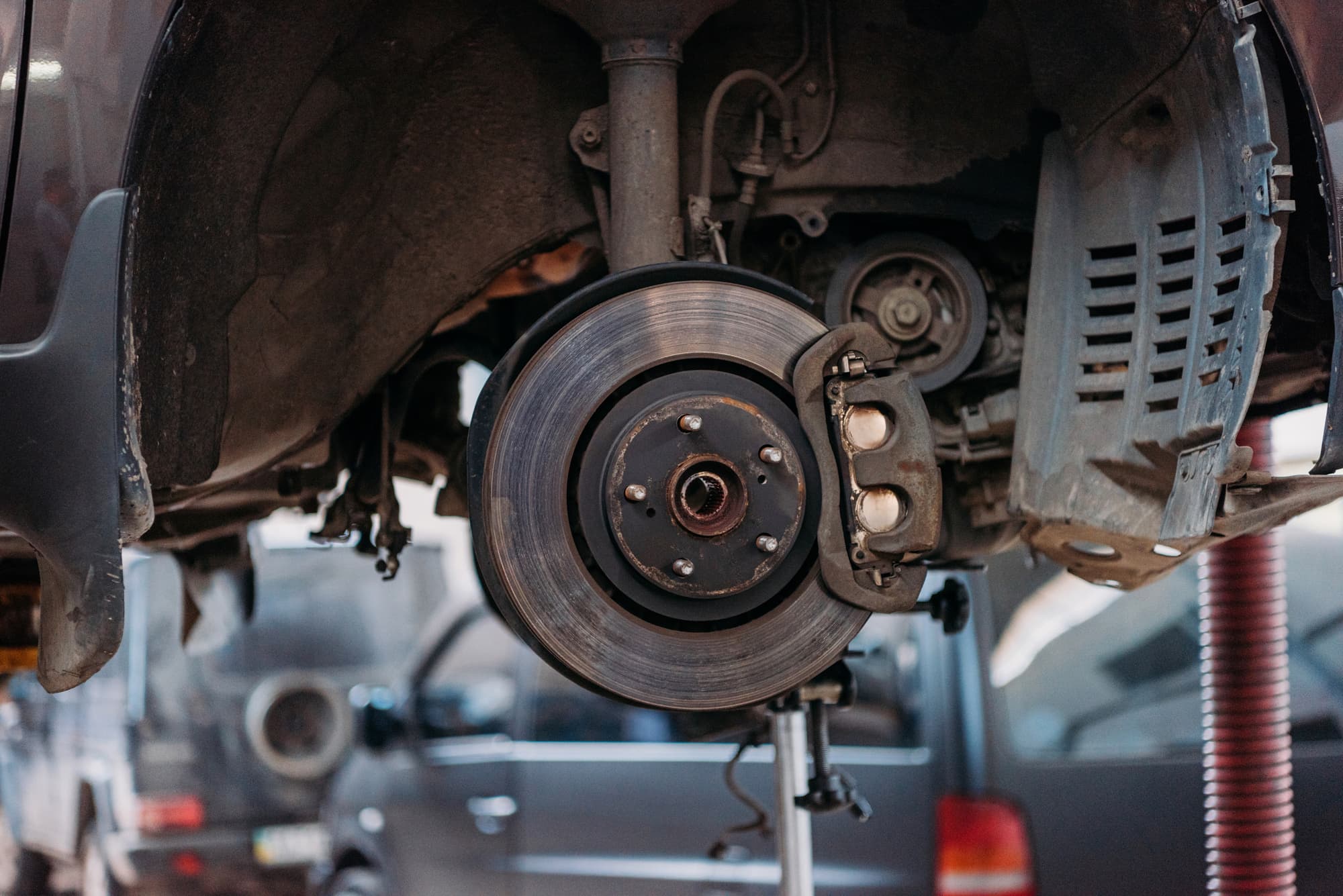
Rolls-Royce Brake Repair & Brake Fluid Change at DART Auto
Getting brake work wrong on a Rolls-Royce doesn't just mean reduced stopping power – it means jeopardizing the balance of a platform engineered to deliver whisper-quiet deceleration and effortless control at any speed. The Phantom, Ghost, Wraith, and Dawn all share BMW 7-Series underpinnings (F01/F02 and later G11/G12 platforms), but with substantially heavier curb weights, unique composite brake disc assemblies, and integrated dynamic drive systems that communicate constantly with the ABS and stability control modules. A generic shop treating these as ordinary BMW brakes will miss the calibration nuances, torque specifications, and fluid hygiene protocols that keep these systems functioning as intended for years after service.
Rolls-Royce brake systems demand more than pad slaps and topped-off reservoirs. The factory specifies DOT 4 low-viscosity fluid (not interchangeable with standard DOT 4) and requires complete bleeding sequences that include the DSC pump and all four corner modules in a precise order. Composite front rotors on Phantom VII and VIII models use a two-piece design with aluminum hats bonded to iron friction rings – improper torque during installation can induce runout and pulsation that no amount of subsequent machining will cure. We use ISTA diagnostic software to verify proper ABS module function, reset brake pad wear sensors without triggering fault codes, and confirm that the electronic parking brake performs its self-test cycle after rotor or caliper replacement.
When you bring your Rolls-Royce to DART Auto for brake service, expect:
- Complete fluid exchange using OEM-spec low-viscosity DOT 4, bled through the DSC pump and all corner modules in factory sequence
- Torque-to-yield hardware replaced per specification, with composite rotor assemblies torqued in the correct star pattern to avoid distortion
- ISTA diagnostics to reset pad wear sensors, verify ABS module communication, and confirm electronic parking brake calibration
- Inspection of brake cooling ducts, dust shields, and wheel speed sensors – components often ignored but critical to long-term performance
Common Brake Repair & Brake Fluid Change Issues on Rolls-Royce Vehicles
Rolls-Royce brake systems are engineered for effortless, whisper-quiet stopping power under extreme weight and performance demands. When these systems falter, the cost of delay extends far beyond the repair itself – it jeopardizes the refined driving experience and safety margins these vehicles are built to deliver. Here are the brake and fluid issues we see most often on Rolls-Royce platforms:
- Premature rear brake wear on Phantom Series I and II (2003–2017): The sheer curb weight – often exceeding 6,000 pounds – accelerates rear pad and rotor wear, especially when owners underestimate service intervals. Electronic parking brake calipers on these models require specialized retraction procedures during pad replacement; skipping the proper sequence damages the caliper motor.
- Moisture contamination in DOT 4 brake fluid on Ghost and Wraith (2010–present): The hygroscopic nature of DOT 4 fluid means it absorbs water over time. Denver's temperature swings exacerbate this, leading to reduced boiling points and spongy pedal feel. Rolls-Royce specifies fluid replacement every two years, yet many owners stretch intervals to three or four, risking internal corrosion in ABS modules and master cylinders.
- Carbon-ceramic rotor delamination on high-performance variants: Phantom Coupé and Drophead models equipped with optional carbon-ceramic brakes can develop surface cracking and delamination after repeated thermal cycling. These rotors are extraordinarily expensive to replace and require torque specs and bedding procedures that differ sharply from cast-iron equivalents.
- ABS module valve body corrosion on early Ghost (2010–2014): Contaminated brake fluid accelerates internal corrosion in the Bosch ABS/DSC module. Symptoms include intermittent ABS warning lights, extended stopping distances, and eventually complete ABS failure. Replacement modules carry five-figure price tags when sourced through the dealer.
- Electronic parking brake actuator seizure: Infrequent use – common among collector-owned Rolls-Royces – causes the rear caliper actuators to seize. Forcing the system without proper diagnostic commands can strip gears inside the motor assembly, turning a routine brake service into a caliper replacement.
Why Choose DART Auto for Rolls-Royce Brake Repair & Brake Fluid Change
Getting brake work wrong on a Rolls-Royce isn't just inconvenient – it's expensive. Phantom and Ghost platforms use composite ceramic discs with aluminum hubs that require precise torque sequences and specialized handling. A technician unfamiliar with the BMW 7-Series-derived architecture (Phantom VII, Ghost I/II) may misdiagnose electronic parking brake faults as hydraulic issues, sending you down a costly parts-replacement path when a software recalibration would have solved the problem.
DART Auto has invested in the factory-level diagnostic tooling required to properly bleed and register brake components on these vehicles. Our master technicians – each with dealer training and at least ten years of experience – follow OEM procedures for bleeding sequence, ABS module activation, and post-service electronic parking brake registration. We source OEM or premium aftermarket pads, rotors, and fluid from trusted suppliers, never generic parts that compromise pedal feel or longevity.
- Platform-specific diagnostics: We access brake control modules to clear adaptation values, monitor live sensor data, and verify electronic parking brake calibration after rotor or pad replacement.
- Salaried technicians: No flat-rate incentives means no rushed jobs – your Rolls-Royce gets the time it needs for proper torque specs, bedding procedures, and road-test verification.
- 3-year/36,000-mile warranty: Parts and labor coverage that matches or exceeds dealer terms, because we fix it right the first time.
Symptoms – How to Know You Need This Service
Rolls-Royce brake systems give clear warnings when service is overdue, though the symptoms can be subtle at first given how well-insulated the cabin is from mechanical noise. Pay attention to these signs:
- Brake warning light or DSC fault message on the instrument cluster – often triggered by low fluid level, worn pads tripping the sensor, or a detected hydraulic imbalance that requires immediate attention
- Soft or spongy pedal feel – indicates air in the hydraulic system, moisture-contaminated fluid (common after three years), or internal seal degradation in the master cylinder or ABS pump
- Pulsation through the brake pedal or steering wheel during normal stops – warped rotors from pad deposits, uneven rotor wear, or improper torque during previous service
- High-pitched squealing or grinding noise when braking – metal-on-metal contact means the pads are worn to the backing plates and rotor damage is occurring; stop driving and arrange transport
- Vehicle pulling to one side under braking – seized caliper piston, collapsed brake hose, or contaminated pad material on one side
- Burning smell after repeated stops or descending grades – dragging caliper or parking brake that hasn't fully released, generating excessive heat
- Electronic parking brake fails to engage or release – motor failure, software fault, or insufficient hydraulic pressure; requires ISTA diagnostics to pinpoint
- Increased stopping distance or reduced pedal firmness – moisture in aged brake fluid lowers boiling point and compresses under heat, or internal master cylinder wear
If you notice grinding noise, complete pedal loss, or a hard pull to one side, stop driving immediately and have the vehicle towed. All other symptoms warrant scheduling service within the week to prevent compounding damage.
Which Rolls-Royce Models We See for Brake Repair & Brake Fluid Change
We service brake systems across the modern Rolls-Royce lineup, all of which share BMW platform architecture but with bespoke calibration and component specifications. Most of our brake work involves these models and generations:
- Phantom VII (2003–2017, chassis code RR1/RR2/RR3) – composite front rotors, early models prone to DSC pump failures that contaminate fluid, requires ISTA for parking brake calibration
- Phantom VIII (2018–present, chassis code RR4) – shares G11/G12 7-Series platform, six-piston front calipers, low-viscosity DOT 4 fluid mandatory
- Ghost I (2010–2020, chassis code RR4) – F01 7-Series underpinnings, frequent pad sensor faults if not reset properly, electronic parking brake actuator common failure point after 60k miles
- Ghost II (2021–present, chassis code RR5) – G11/G12 platform, integrated brake-by-wire feel simulation, requires software update after rotor replacement to recalibrate pedal maps
- Wraith (2014–present, chassis code RR5) – performance-oriented braking with larger rotors and upgraded pads, higher fluid temperatures demand more frequent changes
- Dawn (2016–present, chassis code RR6) – convertible variant of Wraith, identical brake hardware and service intervals
- Cullinan (2018–present, chassis code RR31) – SUV platform with heavier brake loading, composite rotors front and rear, air suspension interacts with ABS calibration
We maintain factory service information and ISTA diagnostics for all current and recent Rolls-Royce platforms. If you own a Phantom Coupe, Drophead, or other limited-production variant, contact us to confirm parts availability before scheduling.
Causes & Risks – What Happens if Ignored
Brake degradation on Rolls-Royce vehicles stems from a combination of factors: the extreme weight these systems must manage, infrequent driving cycles that allow moisture buildup, and the complexity of electronic brake components that demand precise maintenance. Denver's altitude and temperature swings accelerate fluid degradation, while the stop-and-go traffic along I-25 and frequent mountain drives impose thermal stress that reveals any weakness in pads, rotors, or fluid.
When you delay brake service, the timeline to catastrophic failure is shorter than you might expect:
- Worn pads left in service: Once pad material reaches the backing plate, metal-on-metal contact scores rotors deeply within a few hundred miles. What would have been a pad replacement now requires rotors, and on carbon-ceramic systems, that escalation carries a cost measured in tens of thousands.
- Contaminated brake fluid: Moisture lowers the boiling point from the factory spec of 500°F down to 350°F or less. During a single mountain descent, boiled fluid creates vapor pockets that collapse pedal firmness. The result is either an accident or, at minimum, glazed pads and warped rotors from overheating.
- Ignored ABS warnings: A glowing ABS light often signals internal valve corrosion or failing wheel-speed sensors. Continuing to drive without ABS means no stability control, no brake force distribution, and no panic-stop assistance – systems you've paid for and depend on in emergency maneuvers.
- Seized parking brake actuators: Forcing a seized electronic parking brake can strip internal gears, turning a lubrication and exercise procedure into a complete caliper replacement. Each rear caliper assembly on a Phantom or Ghost is a complex, costly unit.
Safety Impact – Why Brake Repair & Brake Fluid Change Matters
Brake failure on a 6,000-pound Rolls-Royce has consequences that extend beyond the vehicle itself. Compromised braking affects every integrated safety system: ABS relies on clean fluid and functional wheel-speed sensors, Dynamic Stability Control requires predictable brake force at each corner, and the collision-avoidance systems assume the brakes will respond instantly when commanded. When any component in this chain degrades, the entire safety architecture loses effectiveness.
Specific failure modes create distinct hazards:
- Spongy pedal from moisture-saturated fluid: Pedal travel increases unpredictably, and stopping distances extend by 20 to 40 percent. In traffic or during emergency stops, that margin is the difference between a near-miss and a collision.
- Glazed pads or warped rotors: Vibration during braking unsettles the chassis, reduces driver confidence, and can trigger false inputs to stability control. On wet or icy roads, this instability becomes dangerous.
- Complete ABS failure: Without ABS, threshold braking on slick surfaces locks the wheels, eliminating steering control. Drivers accustomed to modern safety systems rarely have the skill to cadence-brake a three-ton luxury sedan.
When to stop driving immediately: pedal sinks to the floor, grinding noise from any wheel, ABS and brake warning lights illuminated simultaneously, or complete loss of parking brake function. Schedule service soon: spongy pedal feel, pulsation during braking, or any single warning light related to brakes or ABS.
How Rolls-Royce Brake Repair & Brake Fluid Change Actually Works
Rolls-Royce brake systems combine hydraulic fundamentals with electronic control layers that require factory-level diagnostic access. The hydraulic side uses a tandem master cylinder feeding dual circuits – one for the front axle, one for the rear – ensuring that a single leak never eliminates all braking. The electronic side integrates ABS, Dynamic Stability Control, and electronic parking brake functions into a central module that monitors wheel speed, yaw rate, and lateral acceleration to modulate brake pressure at each corner.
What sets Rolls-Royce apart is the integration of these systems with the air suspension, active anti-roll bars, and powertrain management. During aggressive braking, the system adjusts suspension damping and preloads the transmission for downshifts. This coordination requires that every brake component – from fluid condition to sensor calibration – meet exact specifications. Deviations create conflicts between systems, triggering fault codes and limp modes that generic scan tools cannot interpret.
Platform-specific design choices that affect service procedures:
- Electronic parking brake retraction: Rear calipers on 2010-and-newer models require a diagnostic command to retract the actuator motor before pads can be replaced. Forcing the piston mechanically damages the motor assembly.
- Brake fluid bleeding sequence: The ABS module contains internal valves that must be cycled open during bleeding. Without the correct diagnostic software, trapped air remains in the system, causing a spongy pedal and reduced ABS performance.
- Carbon-ceramic rotor torque specs: These rotors require specific torque values and star-pattern tightening sequences to avoid inducing stress cracks. The bedding procedure – a series of controlled stops from defined speeds – is non-negotiable for proper friction-material transfer.
- Wheel-speed sensor calibration: After rotor or hub replacement, the ABS module must relearn the magnetic signature of each wheel-speed ring. Skipping this step causes erratic ABS behavior and false fault codes.
This level of integration is why Rolls-Royce brake work demands factory repair information, OEM diagnostic software, and technicians trained on these specific platforms. Shortcuts create cascading failures that cost far more to unwind than doing the work correctly from the start.
How We Diagnose Brake Repair & Brake Fluid Change Issues on Rolls-Royce
Getting brake work wrong on a Rolls-Royce doesn't just compromise safety – it can trigger a cascade of electronic faults across the Dynamic Stability Control, Active Roll Stabilisation, and brake-by-wire systems that share sensor data on these platforms. The cost of misdiagnosis compounds quickly when you're dealing with integrated chassis management.
Our diagnostic process for Rolls-Royce brake systems follows a layered approach:
- Initial road test and driver interview. We replicate the reported concern – pedal feel, noise, pull, warning lights – under real-world conditions. On Phantom and Ghost platforms (2003-2016 especially), we pay close attention to how the electro-hydraulic brake assist responds during threshold braking.
- Factory-level scan with Rolls-Royce diagnostic protocols. We connect OEM-equivalent tooling to interrogate the brake control module, ABS/DSC controller, and suspension ECU. This reveals fluid pressure anomalies, sensor drift in the wheel-speed circuits, and any stored fault codes that point to hydraulic or electronic root causes.
- Physical inspection and measurement. We pull all four wheels, measure rotor thickness and runout with precision micrometers, inspect caliper piston seals and dust boots, and check pad material for uneven wear that signals floating caliper seizure or contaminated fluid.
- Brake fluid analysis. We test boiling point and moisture content. Rolls-Royce specifies DOT 4 low-viscosity fluid; contamination above 3% moisture degrades ABS modulator valves and corrodes the aluminum master cylinder bore.
- System function test. After any service, we verify pedal travel, ABS self-test completion, and proper DSC intervention with the scan tool active.
Once the data is collected, we walk you through what we found, which components have reached their service limit, and exactly what the repair plan entails. You receive a detailed quote before any work begins, so there are no surprises when you return for your vehicle.
Brake Repair & Brake Fluid Change on Rolls-Royce: Repair vs. Replacement
Not every brake concern on a Rolls-Royce demands wholesale replacement. The decision hinges on whether the underlying hardware can be restored to factory specification – and whether doing so makes sense given the vehicle's value and safety profile.
When Repair Is the Right Move
- Brake fluid exchange alone. If rotors and pads are within spec and calipers move freely, a complete fluid flush restores hydraulic performance and protects the ABS modulator from internal corrosion.
- Caliper service. Sticking slide pins or minor piston corrosion on floating calipers can often be cleaned, re-lubricated with high-temperature synthetic grease, and fitted with new seals – especially on lower-mileage Wraith and Dawn models where the hardware itself is sound.
- Rotor resurfacing. Light scoring or surface rust can be machined away if rotor thickness remains above the minimum spec cast into the hub. This is common after a vehicle sits through Denver winters.
When Replacement Makes Sense
- Rotors below discard thickness. Once wear reaches the minimum, resurfacing compromises thermal mass and crack resistance.
- Caliper bore pitting. Deep corrosion in the aluminum caliper bore – often caused by neglected fluid changes on 2003-2010 Phantom – cannot be reliably sealed and will leak within months of a rebuild attempt.
- Contaminated pads. Brake fluid or differential oil on friction material requires pad replacement; the organic binders cannot be cleaned.
We lay out both paths with transparent pricing and explain the durability trade-offs, so you can make an informed choice rather than feeling pushed toward the highest-cost option.
How to Make Your Rolls-Royce Brake Repair & Brake Fluid Change Last Longer
Brake longevity on a Rolls-Royce is as much about how you drive as how often you service the system. These vehicles weigh 5,500–6,000 pounds; momentum management and fluid hygiene directly affect component life.
Driving Habits That Preserve Brake Life
- Anticipate stops and use engine braking. Downshifting the ZF eight-speed (manual mode) before heavy braking reduces pad wear and keeps rotors cooler.
- Avoid threshold braking from highway speed. Repeated panic stops from 70+ mph generate extreme rotor temperatures that accelerate pad glazing and warp risk.
- Let the system cool after spirited driving. A short cool-down lap or gentle final mile allows brake temperatures to normalize and prevents fluid vaporization in the calipers.
Owner-Level Maintenance You Can Do Safely
- Visual inspection every oil change. Look through the wheel spokes for pad thickness (should see more than 3mm of friction material) and rotor condition (no deep grooves or blue heat discoloration).
- Listen for changes. New squealing, grinding, or pulsing through the pedal means it's time for a professional inspection – don't wait for a warning light.
- Check the fluid reservoir monthly. The level should sit between MIN and MAX; a sudden drop signals a leak that requires immediate attention.
Professional Service That Extends System Life
- Flush brake fluid every two years. Rolls-Royce specifies this interval to prevent moisture absorption that corrodes the ABS pump and master cylinder internals.
- Use only OEM-spec DOT 4 low-viscosity fluid. Generic DOT 3 or silicone fluids will damage the hydraulic control unit and void any remaining factory coverage.
- Replace pads and rotors as matched axle sets. Mixing old and new components creates uneven braking force and triggers premature DSC intervention.
Leave caliper rebuilds, rotor replacement, and anything involving the hydraulic control unit to the shop. These are safety-critical systems with precise torque specs and bleeding procedures that require factory tooling and training to execute correctly.
What to Expect When You Bring Your Rolls-Royce In
From the moment you schedule your appointment, we treat your Rolls-Royce with the care it deserves. Here's how the process unfolds:
- Drop-off and initial consultation: We discuss your concerns – pulsation, noise, warning lights – and note any recent service history. Bring your service records if available; we'll cross-reference them with our diagnostic findings.
- Complete inspection: Before recommending brake work, we measure rotor thickness, pad depth, fluid condition, and scan all brake control modules for stored faults. We check brake hose condition and caliper piston retraction – common wear points on older Ghost and Phantom platforms.
- Written estimate and approval: You receive a detailed breakdown of what needs attention now versus what can wait. We explain the consequences of delaying repairs and answer questions before you authorize any work.
- Repair and verification: We perform the brake service using OEM torque specs, bleed the system in the correct sequence, and register new components electronically. Every job ends with a road test to verify pedal feel, ABS function, and electronic parking brake operation.
- Pickup walkthrough: We show you the old parts, explain what we found, and answer follow-up questions. If anything feels off in the days after pickup, call us – we'll schedule a re-check at no charge.
Loaner vehicles and shuttle service are available for longer jobs. Remove personal items before drop-off, and let us know if you need after-hours pickup – we'll arrange key handoff. Our goal is to return your Rolls-Royce with confidence-inspiring brakes and complete transparency about what was done and why.
Our Rolls-Royce Services
- Air Conditioning AC Repair
- Battery Repair Replacement
- Check Engine Light Diagnostics
- Clutch Repair & Replacement
- Coolant Leak Repair
- Cooling System Repair
- Drive Shaft Repair
- Engine Repair
- Exhaust & Catalytic Converter Repair
- Head Gasket Repair & Replacement
- Oil Change
- Oil Leak Repair
- Scheduled Service Maintenance
- Steering Repair
- Suspension Repair
- Cambelt Timing Belt Replacement
- Transmission Repair
- Tune Up
- Wheel Alignment