
Audi Coolant Leak Repair at DART Auto
You've spotted a puddle of bright green or pink fluid under your Audi, or the low coolant warning has lit up your dashboard for the third time this month. Coolant leaks in Audi vehicles aren't just annoying – they're a direct path to catastrophic engine damage if ignored. The aluminum-intensive construction and tightly packaged engine bays of modern Audis demand precision diagnostics and repair techniques that generic shops simply don't have.
Audi coolant systems are sophisticated networks of plastic and aluminum components operating under pressure and extreme temperature swings. The 2.0T EA888 engines (2009–2018) are notorious for coolant flange and thermostat housing failures, while the 3.0T supercharged V6 platforms often develop leaks at the valley pan coolant pipes – a repair requiring supercharger removal. The B8/B8.5 A4 and Q5 models frequently crack their coolant expansion tanks, and the C7 A6/A7 platforms see water pump failures that can grenade the timing system if not caught early. These aren't repairs you hand to a shop without factory scan tools, OEM torque specifications, and experience bleeding complex multi-zone cooling systems.
At DART Auto, we've been diagnosing and repairing Audi coolant leaks since 2000. Our master technicians use pressure testing, UV dye tracing, and VCDS/ODIS factory diagnostics to pinpoint the exact failure point – no guesswork, no parts-cannon approach. When we find the leak, we address it with OEM or premium aftermarket components, follow Audi-specific bleeding procedures, and back the work with our 3-year/36,000-mile warranty. Here's what you can expect:
- Complete pressure testing and UV dye diagnostics to locate every leak source, not just the obvious one
- Factory-correct repair procedures using Audi-specific tooling and torque specifications
- OEM or premium aftermarket parts sourced from trusted European suppliers
- Proper coolant system bleeding using VCDS activation of electric coolant pumps where applicable
Common Coolant Leak Repair Issues on Audi Vehicles
If you're noticing puddles under your Audi, a sweet smell in the cabin, or the temperature gauge creeping higher than normal, you're likely dealing with one of several platform-specific coolant leak patterns. Audi's longitudinal engine layouts and complex cooling architectures create failure points that experienced technicians recognize immediately.
- B8/B8.5 A4/A5/Q5 (2009–2016) – Thermostat housing and coolant flange failures: The plastic coolant flanges on the 2.0T EA888 Gen2 and Gen3 engines crack at the seams, particularly where they meet aluminum. The thermostat housing itself often warps, causing seepage that accelerates into full leaks. These parts sit in high-heat zones and the thermal cycling breaks down the composite materials Audi chose for weight savings.
- C5 A6/Allroad (1998–2004) – Upper radiator hose connection and expansion tank cracks: The upper radiator connection point on 2.7T and 2.8L V6 models develops stress cracks where the hose clamps onto the plastic neck. The expansion tank, mounted high in the engine bay, becomes brittle and splits along the seams after 15–20 years, dumping coolant suddenly.
- C6 A6/S6 (2005–2011) – Water pump and coolant pipe corrosion on V8 models: The 4.2L V8 uses aluminum coolant pipes that corrode internally, creating pinhole leaks that are difficult to spot until they worsen. The water pump, driven by the timing chain, develops weep holes at the seal, and replacement requires partial timing system disassembly.
- B9 A4/A5 (2017–present) – Coolant outlet pipe and turbo coolant line leaks: The EA888 Gen3 in these chassis uses a complex network of small-diameter coolant lines feeding the turbocharger. The quick-disconnect fittings and rubber O-rings degrade, causing slow leaks that leave residue but don't always drip visibly. The outlet pipe from the cylinder head also cracks at the mounting points.
- D3 A8 (2004–2010) – Auxiliary coolant pump failures: Audi's larger sedans use electric auxiliary coolant pumps to circulate coolant after shutdown for turbo cooling. These pumps seize or crack their housings, leaking coolant onto the subframe and creating persistent drips that owners mistake for AC condensation.
- Q7/Q8 3.0T – Coolant crossover pipe and valley pan seepage: The supercharged and turbocharged 3.0 V6 models route coolant through a crossover pipe in the valley between cylinder banks. The gaskets here weep coolant into the valley pan, where it evaporates on hot engine surfaces, creating that telltale sweet smell without obvious external puddles.
Why Choose DART Auto for Audi Coolant Leak Repair
You've spotted the telltale puddle under your Audi, or the low-coolant warning won't clear. Coolant leaks on modern Audis demand more than a quick hose swap – they require platform-specific diagnostic tools and familiarity with how these systems fail. Our technicians use factory-level ODIS scan tools and follow OEM repair procedures to pinpoint exactly where your coolant is escaping, whether it's a cracked expansion tank on a B8-chassis A4, a weeping thermostat housing on the EA888 Gen3 2.0T, or the notorious coolant flange failures common on C7 A6/A7 3.0T models.
We've been diagnosing European vehicles since 2000, and every technician on our team brings at least ten years of experience plus dealer-level training. Because we pay our technicians a salary rather than flat-rate commission, there's zero incentive to rush your repair or recommend parts you don't need. We perform a complete pressure test, UV dye trace if needed, and scan-tool verification before quoting the work – so you know exactly what failed and why. Our 3-year/36,000-mile parts-and-labor warranty backs every repair, and we source OEM or premium aftermarket components from suppliers we've trusted for decades.
After the repair, we road-test your Audi, re-scan for fault codes, and verify coolant system pressure holds steady. If something doesn't feel right in the days following pickup, we'll get you back in and make it right – no runaround, no surprise charges.
Symptoms – How to Know You Need This Service
Your Audi will give you clear signals when the cooling system is compromised. Catching these early prevents turning a straightforward repair into an engine replacement. You may notice:
- Visible coolant puddles under the car after parking – typically bright green, pink, or orange fluid with a sweet smell
- Low coolant warning light on the dashboard, often accompanied by a message in the driver information system
- Rising temperature gauge or overheating warnings, especially in traffic or under load
- Sweet smell from the vents or engine bay, indicating coolant burning off hot engine components
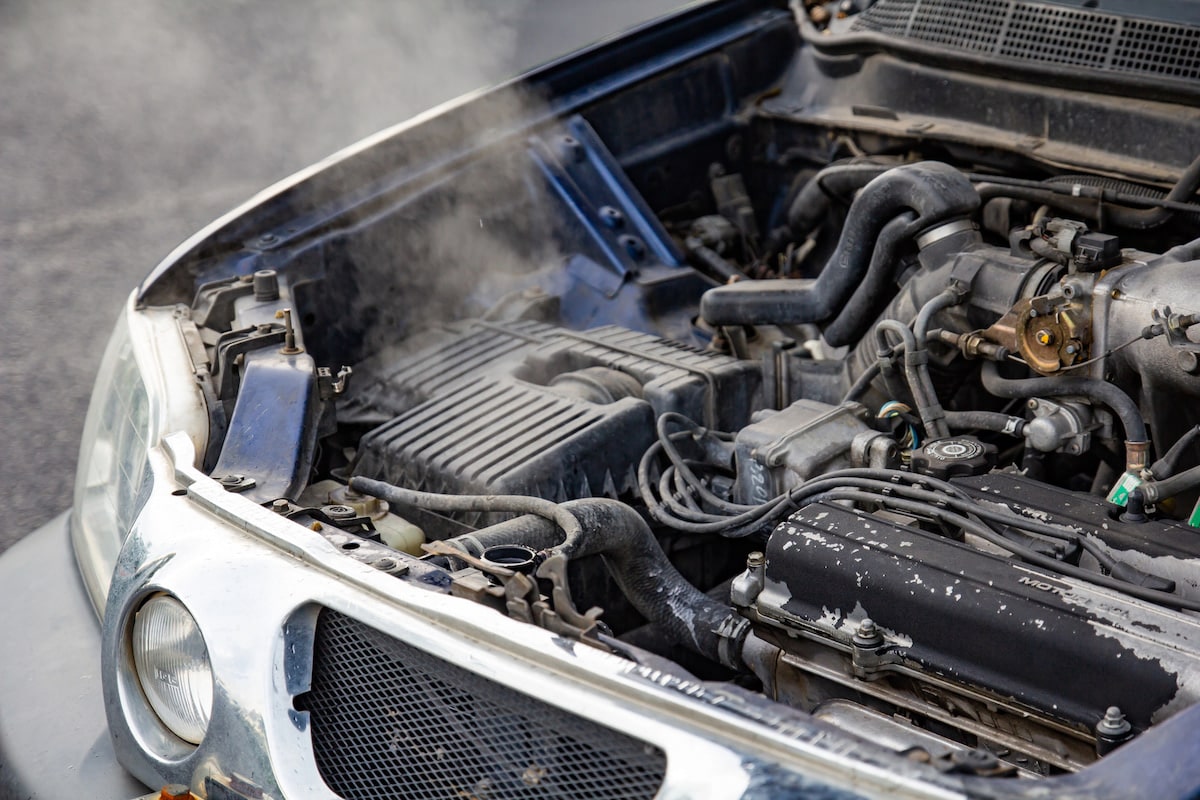
- White steam from under the hood, particularly after shutdown or during warm-up
- Visible staining on engine components, hoses, or the underside of the hood – dried coolant leaves crusty white or green residue
- Coolant reservoir level dropping repeatedly even after topping off
- Heater performance issues – weak or cold air from the vents when heat is selected, indicating air in the system
Stop driving immediately if you see the temperature gauge climb into the red zone or if steam is actively pouring from the engine bay. Continuing to drive with an overheating engine will warp the cylinder head and destroy head gaskets within minutes. For persistent low coolant warnings or visible leaks without overheating, schedule service within a few days – the leak will only worsen, and you're risking sudden failure.
Which Audi Models We See for Coolant Leak Repair
We regularly diagnose and repair coolant leaks across the full Audi lineup, with particular expertise in the platforms where these failures are most common. The work varies significantly depending on engine configuration, platform generation, and component accessibility.
- A3/S3 (8P, 8V): 2006–2023, including 2.0T EA888 Gen 1/2/3 engines – common coolant flange and thermostat housing leaks
- A4/S4/RS4 (B7, B8, B8.5, B9): 2005–2023 – expansion tank failures on B8/B8.5, water pump leaks on 2.0T and 3.0T platforms
- A5/S5/RS5 (B8, B8.5, B9): 2008–2023 – supercharger valley coolant pipe leaks on 3.0T, coolant flanges on 2.0T
- A6/S6/RS6 (C6, C7, C8): 2005–2023 – complex multi-zone cooling systems, water pump and thermostat failures
- A7/S7/RS7 (C7, C8): 2012–2023 – similar failure modes to A6 platform
- A8/S8 (D3, D4, D5): 2004–2023 – auxiliary coolant pumps, valley pipe leaks on V8 platforms
- Q3/Q5/Q7/Q8 (all generations): 2007–2023 – expansion tanks, coolant flanges, and water pumps across 2.0T, 3.0T, and diesel platforms
- TT/TTS/TTRS (8J, 8S): 2008–2023 – coolant flange and thermostat housing leaks on EA888 engines
- R8 (Type 42, Type 4S): 2008–2023 – V8 and V10 platforms with mid-engine cooling system complexity
We work on both quattro and FWD variants, manual and automatic transmissions, and gasoline and diesel engines. For earlier C5 A6 or B6 A4 platforms (2000–2005), we still service these regularly but parts availability and system design differ from modern vehicles.
Causes & Risks – What Happens if Ignored
Coolant leaks on Audi vehicles stem from a combination of thermal stress, material choices, and Colorado's temperature swings. Audi engineers favor lightweight plastic and composite materials in cooling systems to reduce weight and improve efficiency, but these materials become brittle after years of heat cycling between sub-zero winters and summer engine bay temperatures exceeding 220°F. The G12 and G13 coolants Audi specifies are long-life formulations, but when they leak and mix with air, they accelerate corrosion on aluminum components.
When you ignore early symptoms – a slow drip, occasional low-coolant warnings, or slight temperature fluctuations – the damage compounds quickly:
- Minor seepage becomes catastrophic failure: A weeping thermostat housing that loses an ounce per week will eventually crack completely, dumping the entire system in minutes. On the highway, this means immediate overheating with no warning beyond the sudden temperature spike.
- Air enters the system and creates hot spots: Even small leaks allow air pockets to form in the cooling passages. These air bubbles prevent proper heat transfer, causing localized overheating that warps cylinder heads on the 2.0T four-cylinder and cracks exhaust manifolds on V6 models.
- Overheating damages the head gasket and turbocharger: Once the engine exceeds operating temperature, the head gasket begins to fail, allowing combustion gases into the cooling system and coolant into the oil. Turbocharged engines suffer additional damage as the turbo's oil supply breaks down under excessive heat, leading to bearing failure and a $3,000+ turbo replacement on top of cooling system work.
- Corrosion spreads to the heater core and radiator: Coolant leaking externally means the system is running low and pulling in air. This oxidizes the heater core and radiator from the inside, creating secondary leaks that require dash removal or front-end disassembly to address.
- Engine seizure becomes a real possibility: If the leak is severe enough or goes unnoticed during a long drive, coolant loss leads to metal-on-metal contact in the cylinder walls. The repair bill shifts from a few hundred dollars for hoses and flanges to $8,000–$15,000 for a replacement engine.
Safety Impact – Why Coolant Leak Repair Matters
A failing cooling system doesn't just threaten your engine – it creates immediate safety hazards. When coolant leaks onto hot exhaust components, it vaporizes into steam that can obscure your vision if it enters the cabin through the HVAC system. More critically, overheating disables several electronic systems that modern Audis rely on for safe operation.
- Loss of cabin heat in winter: A low coolant level means no hot coolant flows through the heater core, leaving you without defrost capability. Driving with a fogged or iced windshield in Colorado winters is a direct safety risk.
- Sudden loss of power on the highway: Audi's engine management systems cut power dramatically when coolant temperature exceeds safe limits. This limp mode can activate without warning, leaving you struggling to merge or climb a grade with a fraction of normal power.
- Steam and coolant spray under the hood: When a pressurized cooling system fails catastrophically, boiling coolant sprays across the engine bay. If this happens while you're pulled over inspecting the problem, you risk serious burns. The steam can also reduce visibility if it vents through the hood gaps.
- Fire risk from coolant on exhaust: While less common, coolant leaking onto catalytic converters or turbocharger housings can ignite, especially if mixed with oil from a failing head gasket. The G12/G13 coolants are glycol-based and flammable under the right conditions.
Stop driving immediately if: the temperature gauge enters the red zone, you see steam from under the hood, the low-coolant warning stays illuminated, or you smell coolant inside the cabin. Schedule service soon if: you notice small puddles after parking, the coolant reservoir needs topping off more than once between oil changes, or the heater output seems weaker than normal.
How Audi Coolant Leak Repair Actually Works
Audi's cooling systems are closed-loop, pressurized networks designed to maintain precise operating temperatures across a wide range of conditions. Coolant circulates from the engine block through the cylinder head, then splits to feed the radiator, heater core, turbocharger (on forced-induction models), and throttle body. An expansion tank – mounted at the system's high point – allows for thermal expansion and provides a visible level reference. The thermostat, often electronically controlled on newer models, regulates flow to the radiator based on engine load and temperature targets programmed into the ECU.
What makes Audi cooling system repairs distinct from generic work:
- Pressure testing requires OEM adapters: Audi's expansion tanks and radiator caps use specific thread pitches and sealing surfaces. Proper diagnosis means pressurizing the system to 20–22 psi with the correct adapter and watching for leaks while the system is cold, then re-testing after a heat cycle to catch leaks that only appear under thermal expansion.
- Bleeding procedures are model-specific and critical: Air pockets trapped in the system cause overheating and false temperature readings. Many Audi models require running the engine at specific RPM ranges with the heater on full, then using bleeder screws in precise sequences. The B8 A4, for example, has a bleeder on the upper
How We Diagnose Coolant Leak Repair Issues on Audi
You've spotted a puddle under your Audi, or the low-coolant light keeps coming on despite topping off the reservoir. Coolant leaks rarely announce themselves clearly – they hide behind plastic covers, evaporate off hot components, or seep slowly into places you can't see. Our diagnostic process finds the source so we can fix it right the first time.
- Initial interview and inspection. We ask when you first noticed the leak, whether the car overheats, and if you smell coolant inside the cabin. We pop the hood and check coolant level, inspect hoses and clamps, and look for obvious staining or wetness around the expansion tank, radiator, and thermostat housing.
- Pressure test the cooling system. We connect a pressure tester to the reservoir and pump the system to operating pressure. This forces coolant to the weakest point – a cracked hose end, a failing water pump weep hole, or a pinhole in the radiator – making leaks visible that would otherwise take hours of driving to reveal.
- VCDS scan and live data review. We connect factory-level diagnostic software to pull fault codes and monitor coolant temperature, flow rates, and thermostat operation. On B8/B9 platforms (2009–present A4/A5/Q5), we often see implausible temperature readings that point to a failed coolant flange or sensor housing that's leaking and corrupting the signal.
- Dye test for elusive leaks. If the pressure test and visual inspection don't pinpoint the source, we add UV dye to the coolant and run the engine to operating temperature. A UV lamp reveals traces invisible to the naked eye – common on C7 A6/A7 (2012–2018) where the auxiliary water pump or heater core connections weep slowly behind the dashboard.
- Underbody and component removal if needed. Some leaks hide behind the timing cover, under the intake manifold, or at the back of the cylinder head. We lift the car, remove skid plates, and if necessary pull components to access the leak zone – especially on longitudinal V6/V8 engines where coolant pipe O-rings fail between the block and heads.
Once we've identified every leak point, we document it with photos and translate the findings into a clear repair plan. You'll know exactly what's leaking, why it matters, and what it takes to fix it.
Coolant Leak Repair on Audi: Repair vs. Replacement
Not every coolant leak means replacing an entire radiator or water pump assembly. The right approach depends on where the leak originates, how much damage has occurred, and whether a smaller fix will hold up long-term.
When a True Repair Makes Sense
- Hose clamps and connections. If a hose has worked loose or a spring clamp has lost tension, we can often re-secure the connection or replace the clamp without replacing the hose itself – provided the hose end isn't cracked or swollen.
- Coolant flange O-rings. The plastic coolant flanges on EA888 Gen3 2.0T engines (2013–present A3/A4/Q3) are notorious for leaking at the O-ring interface. If the flange housing isn't cracked, we replace the O-rings and gasket, torque to spec, and you're back on the road.
- Thermostat housing gaskets. On older models, a weeping thermostat housing gasket can be addressed by replacing the gasket and re-torquing the housing – as long as the housing itself hasn't warped from overheating.
When Partial or Full Replacement Is the Right Call
- Cracked expansion tanks. The plastic reservoir on B7 A4 (2006–2008) and C6 A6 (2005–2011) becomes brittle and cracks at the seams. There's no repair – the tank must be replaced along with the pressure cap.
- Water pump weep holes. If coolant is seeping from the weep hole on the water pump, the internal seal has failed. Replacing just the seal isn't possible; the pump assembly gets replaced with an OEM or premium unit.
- Radiator end-tank separation. Plastic end tanks on aluminum radiators can separate or crack, especially after years of heat cycling. A leaking radiator gets replaced – attempting to epoxy or plastic-weld the joint rarely holds under pressure and heat.
We walk you through the decision based on the actual condition of your components, not a one-size-fits-all recommendation. If a smaller repair will last, we'll tell you. If replacement is the only durable solution, we explain why.
How to Make Your Audi Coolant Leak Repair Last Longer
Once we've sealed the leak and refilled the system with the correct G12evo or G13 coolant, a few habits will help you avoid a repeat visit.
Driving Habits That Protect the Cooling System
- Let the engine warm up before hard acceleration. Cold coolant is thicker and flows more slowly; hammering the throttle before the thermostat opens can spike localized temperatures and stress hoses and gaskets.
- Avoid prolonged idling in extreme heat. Sitting in traffic on a 95-degree day with the AC on high taxes the cooling system. If the temperature gauge climbs, pull over and let the engine idle in neutral with the heater on full blast to dump heat.
- Don't ignore the low-coolant warning. Running the system low even once can introduce air pockets, cause the water pump to cavitate, and overheat localized areas – accelerating wear on hoses and seals.
Maintenance You Can Do Yourself
- Check coolant level monthly. With the engine cold, verify that the reservoir is between the min and max marks. A slow drop over weeks suggests a small leak that's worth catching early.
- Look for staining or crusty residue. Pop the hood and scan hose connections, the radiator seams, and the expansion tank for white or green residue – dried coolant leaves a telltale crust.
- Smell for coolant inside the cabin. A sweet smell from the vents or fogged windows can mean a leaking heater core – a problem that gets worse fast and requires dashboard removal to fix.
Brand-Specific Care That Matters
- Use only OEM-spec coolant. Audi specifies G12evo (pink) or G13 (purple) coolant for most modern engines. Generic green coolant or mixing brands can cause corrosion, clog passages, and degrade rubber hoses.
- Follow the factory coolant change interval. Audi recommends coolant replacement every 6 years or 90,000 miles on most models. Old coolant loses its anti-corrosion additives and becomes acidic, eating away at aluminum and rubber from the inside.
- Replace hoses and clamps during major service. If you're having timing belt or water pump service on a high-mileage car, ask us to inspect and replace aging coolant hoses – it's far cheaper to do it while the components are already exposed.
Leave pressure testing, coolant flange replacement, and any work involving the timing cover or cylinder head to the shop. These jobs require specialty tools, precise torque specs, and proper bleeding procedures to avoid air locks. We'll handle the technical work; you handle the simple checks that catch problems early.
What to Expect When You Bring Your Audi In
From the moment you schedule your appointment, we'll make the process straightforward. Here's how a typical coolant leak repair visit unfolds:
- Drop-off and initial consultation: Bring your Audi in at your scheduled time. We'll ask about symptoms – sweet smell, steam from the engine bay, low-coolant warnings, overheating episodes – and note any recent service history. Remove valuables from the cabin; we'll keep your keys secure and provide a loaner vehicle or shuttle service if the diagnosis and repair will take more than a few hours.
- Diagnostic inspection: Our technician performs a complete coolant-system pressure test, scans for stored fault codes, and inspects common Audi leak points: thermostat housings, water pump weep holes, radiator end tanks, coolant flanges, and hose connections. If the leak isn't immediately visible, we'll inject UV dye and run the engine to trace the source under black light.
- Written estimate and approval: You'll receive a detailed estimate listing the failed component, labor involved, and parts needed. We explain what happens if you delay the repair – risk of overheating, potential head-gasket damage, stranded-vehicle scenarios – so you can make an informed decision. No work begins until you approve the estimate.
- Repair and verification: Once approved, we replace the failed parts using OEM or premium aftermarket components, refill the system with the correct G12++ or G13 coolant spec for your model year, bleed air from the system, and pressure-test again to confirm the leak is resolved. Before you pick up, we road-test the car and re-scan to verify no new fault codes.
- Pickup walkthrough: At pickup, we'll show you the old parts, walk through what we found, and answer any questions. If you notice anything unusual in the days after – temperature fluctuations, lingering smells, dashboard warnings – call us immediately and we'll schedule a follow-up check at no charge.
After-hours key drop and pickup are available by arrangement. Our goal is to return your Audi with the cooling system sealed, tested, and ready for thousands more miles.
Our Audi Services
- Air Conditioning AC Repair
- Battery Repair Replacement
- Brake Repair & Brake Fluid Change
- Check Engine Light Diagnostics
- Clutch Repair & Replacement
- Cooling System Repair
- Drive Shaft Repair
- Engine Repair
- Exhaust & Catalytic Converter Repair
- Head Gasket Repair & Replacement
- Oil Change
- Oil Leak Repair
- Scheduled Service Maintenance
- Steering Repair
- Suspension Repair
- Cambelt Timing Belt Replacement
- Transmission Repair
- Tune Up
- Wheel Alignment