
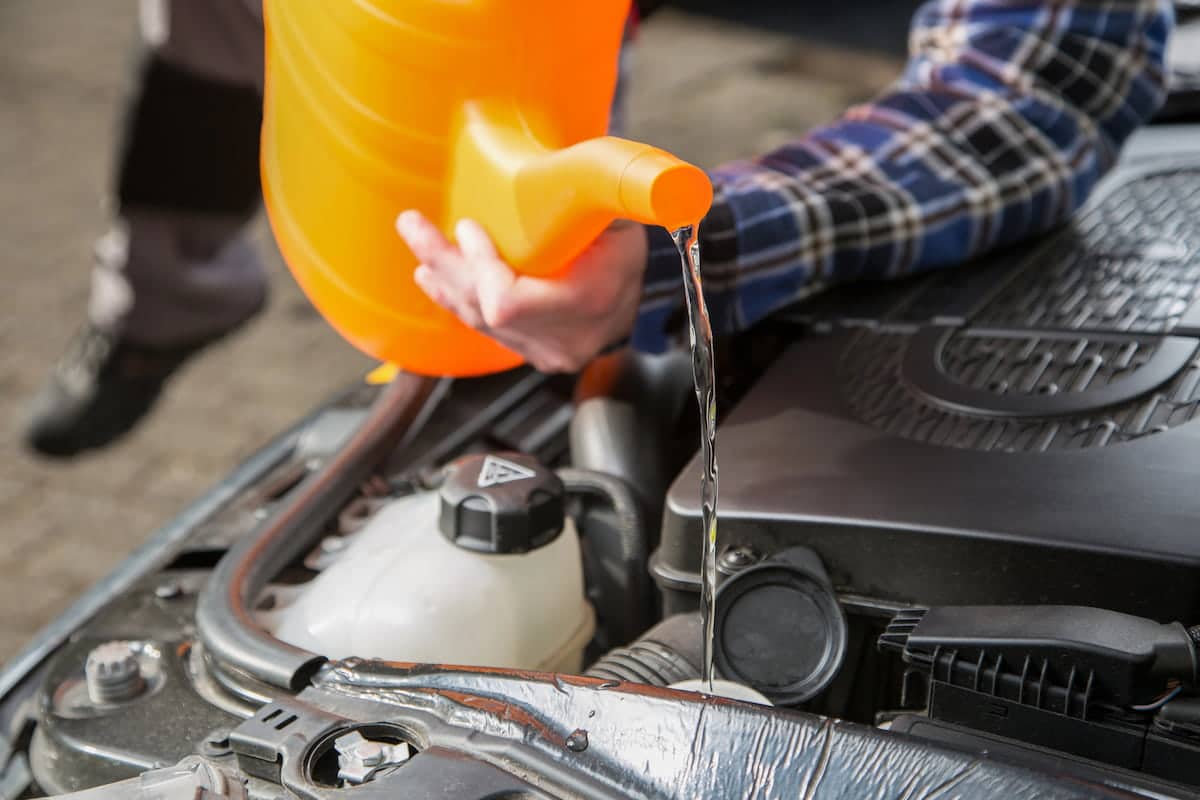
Audi Cooling System Repair at DART Auto
Most shops treat Audi cooling systems like any other car – swap the radiator, top off the coolant, call it done. That approach misses the platform-specific details that separate a lasting repair from a comeback. Audi's longitudinal engine layouts and transverse quattro designs route hoses, expansion tanks, and auxiliary pumps in ways that generic mechanics overlook. The B8/B8.5 A4 and Q5 2.0T models, for instance, use plastic expansion tanks prone to stress cracking at the seam welds, and replacing just the tank without addressing the brittle lower radiator hose or the auxiliary electric coolant pump leaves the job half-finished. C7 A6 and A7 3.0T supercharged engines add an intercooler circuit with dedicated pumps and separate fluid reservoirs – miss one component during diagnosis, and you'll chase overheating gremlins for months.
DART Auto approaches Audi cooling system work with factory-level diagnostic tools and OEM repair procedures. We scan for fault codes that point to failing thermostats, air pockets from improper bleeding, or sluggish coolant pumps before we wrench on anything. Our technicians know which model years demand G12++ coolant versus G13, the torque specs for aluminum thermostat housings that strip if overtightened, and the bleed sequences that prevent air locks in longitudinal V6 and V8 setups. We source OEM or premium aftermarket parts from Meyle, Genuine VAG, or Rein – no bargain-bin plastic that cracks in two winters.
When you bring your Audi to DART Auto for cooling system repair, you get:
- Complete pressure testing of the entire cooling circuit to isolate leaks at hoses, fittings, and heat exchangers
- VCDS and VAS diagnostic scans to read coolant temperature deviations, pump performance, and thermostat operation
- OEM-spec coolant bleeding procedures using factory fill tools to eliminate air pockets
- Three-year, 36,000-mile warranty on parts and labor – dealer-quality work without the dealer markup
Common Cooling System Repair Issues on Audi Vehicles
Audi cooling systems are sophisticated networks of pumps, thermostats, hoses, and radiators that work in concert with the brand's high-performance engines. When one component fails, the cascade can be swift and expensive. Here's what we see most often in our Denver shop:
- B8/B8.5 A4/A5 (2009–2016) thermostat housing failures. The plastic housing on EA888 Gen2 and Gen3 2.0T engines cracks around the 60,000–80,000-mile mark, leaking coolant onto the timing cover. Early symptoms include a slight sweet smell and low coolant warnings. Left unaddressed, this leads to overheating and potential head gasket damage.
- C7 A6/A7 3.0T auxiliary water pump failures (2012–2018). The electric auxiliary pump on the supercharged V6 fails due to bearing wear or internal corrosion. You'll see a "Coolant Pump Malfunction" message on the dash, and the engine will run hot at idle or in traffic. The pump is buried behind the intake manifold, so labor adds up quickly if you wait until the engine overheats.
- D4 A8 4.0T coolant pipe corrosion (2013–2017). Aluminum coolant pipes on the twin-turbo V8 corrode internally, shedding debris that clogs the radiator and heater core. You'll notice reduced heat output in winter and fluctuating temperature gauges. Flushing alone won't fix it – the pipes need replacement along with a full system flush.
- B9 A4/A5 (2017–present) expansion tank cracking. The plastic expansion tank on EA888 Gen3 engines develops hairline cracks near the mounting tabs. Coolant seeps slowly at first, then ruptures under pressure. If the tank fails while driving, you lose coolant rapidly and risk warping the cylinder head.
- Q5/Q7 3.0T radiator end-tank separation (2009–2016). Plastic end tanks on OEM radiators separate from the aluminum core due to thermal cycling. You'll see coolant pooling under the front bumper after the car sits overnight. Once the separation begins, it accelerates – a small weep becomes a gusher within weeks.
- Mk2 TT 2.0T water pump impeller failure (2008–2014). The plastic impeller on the mechanical water pump disintegrates, reducing coolant flow and causing localized hot spots in the cylinder head. The engine will overheat intermittently, often after highway driving. By the time the temperature gauge climbs into the red, the head may already be warped.
Why Choose DART Auto for Audi Cooling System Repair
Audi cooling systems fail in ways generic shops don't anticipate. B8/B8.5 platforms (2009–2016 A4/A5/Q5) are notorious for plastic thermostat housing cracks and auxiliary water pump failures that trigger limp mode without obvious overheating. C7 A6/A7 3.0T models suffer from coolant pipe corrosion behind the supercharger, a repair many shops quote blindly because they lack the factory removal sequences. We own factory ODIS diagnostic software and the scan tools to read live coolant flow rates, electric fan duty cycles, and secondary air injection faults that mask themselves as cooling problems.
Our master technicians follow Audi-specific torque specs for coolant flange bolts (critical on EA888 Gen3 engines where undertorquing causes seepage, overtorquing cracks the housing) and use OEM G13 coolant with the correct dilution ratio – not universal green fluid that attacks aluminum. We pressure-test the system to 2.0 bar, bleed it using the factory VCDS procedure to purge air from the heater core and expansion tank, then road-test under load to verify fan engagement at the correct ECU thresholds. Salaried techs mean no incentive to skip the bleed cycle or reuse single-use clamps. You get the repair done once, backed by a 3-year/36,000-mile warranty on parts and labor.
Symptoms – How to Know You Need This Service
Audi cooling system failures announce themselves in predictable ways if you know what to watch for. Pay attention to these warning signs:
- Sweet coolant smell in the cabin or under the hood – often the first clue that an expansion tank seam or heater core is weeping
- Coolant warning light on the instrument cluster – Audi's low-coolant sensor triggers before you see puddles, giving you time to act
- Temperature gauge climbing past the midpoint or fluctuating erratically – points to a stuck thermostat, failing water pump, or air trapped in the system
- Visible coolant puddles under the car – check the color (pink, orange, or purple depending on G12/G13 spec) and trace back to radiator end tanks, hose clamps, or the expansion tank cap
- White steam from the exhaust – a head gasket breach or cracked cylinder head is forcing coolant into the combustion chamber; stop driving immediately
- Reduced cabin heat output in winter – low coolant level or a clogged heater core restricts hot coolant flow to the HVAC box
- Hissing or gurgling sounds after shutdown – air pockets or a pressurized leak releasing steam as the engine cools
If you see steam, smell coolant inside the cabin, or watch the temperature gauge spike into the red, pull over and shut off the engine. Continued driving risks warping the aluminum cylinder head or cracking the block. For persistent coolant loss without visible leaks, schedule an inspection soon – internal leaks and failed water pumps escalate quickly.
Which Audi Models We See for Cooling System Repair
We service cooling systems across the Audi lineup, with deep experience in the platforms most prone to age-related failures. Common models and generations include:
- B8/B8.5 A4 and A5 (2009–2016) – 2.0T and 3.0T engines; expansion tank stress cracks and auxiliary pump failures are routine at 80,000+ miles
- C7 A6, A7, and Q5 (2012–2018) – 3.0T supercharged V6; intercooler pump and secondary coolant circuit leaks require separate diagnosis
- 8V A3 and S3 (2015–2020) – EA888 Gen3 2.0T transverse layout; plastic thermostat housings crack at the flange, and lower radiator hoses harden with age
- B9 A4 and Q7 (2017–present) – 2.0T and 3.0T; newer platforms with electronic coolant control valves that fail closed, causing localized overheating
- D4 A8 (2011–2017) – 4.0T V8; complex dual-circuit cooling with multiple pumps and heat exchangers
- 8P A3 and TT Mk2 (2006–2013) – EA888 Gen1 and Gen2 2.0T; coolant flanges at the back of the cylinder head are notorious leak points
- Older B6/B7 A4 and C5 A6 (2002–2008) – 1.8T, 2.0T, and 3.0 V6; aging plastic radiator end tanks and brittle hoses demand full-system replacement
We handle quattro and FWD variants, manual and S tronic transmissions, and both longitudinal and transverse engine orientations. For rare or heavily modified Audis, we'll assess feasibility during the initial inspection and recommend a specialist if needed.
Causes & Risks – What Happens if Ignored
Audi cooling systems fail for predictable reasons: thermal stress from turbocharged engines, Denver's temperature swings, and the brand's preference for lightweight plastic components in high-heat zones. Audi engineers prioritize weight savings and packaging density, which means cooling parts operate closer to their thermal limits than in mass-market vehicles. Add in Colorado's hard water and the corrosive effects of old coolant, and you have a recipe for accelerated wear.
Ignoring early warning signs – a slow coolant leak, a temperature gauge that climbs higher than usual, or a "Coolant Level Low" message – turns a manageable repair into a catastrophic failure. Here's the typical escalation path:
- Week 1–2: Small coolant leak or failing auxiliary pump. Coolant level drops slightly; you top it off and keep driving. No immediate danger, but the root cause remains.
- Week 3–4: Leak worsens or pump fails completely. Engine begins running hot in traffic or under load. Coolant boils in the expansion tank, increasing system pressure and stressing hoses and seals.
- Week 5–6: Temperature gauge enters the red zone. Cylinder head begins to warp from uneven heating. Head gasket starts to fail, allowing combustion gases into the coolant and coolant into the cylinders.
- Beyond 6 weeks: Full overheat event. Warped head, blown head gasket, and potential damage to pistons and rings. What started as a $600 thermostat housing or $900 water pump repair is now a $4,000+ head gasket job or $8,000+ engine replacement.
The safety risk is real. An overheating engine can lose power suddenly, leaving you stranded in traffic or on the highway. Steam from a ruptured hose can obscure your windshield. And if the engine seizes, you lose power steering and brake assist – both rely on engine-driven systems.
Safety Impact – Why Cooling System Repair Matters
A failing cooling system doesn't just threaten your engine – it jeopardizes your ability to control the vehicle. Modern Audis integrate cooling with multiple safety-critical systems, and when temperatures spike, the consequences extend beyond the engine bay.
- Loss of power steering assist. If the engine overheats and stalls, the electric or hydraulic power steering assist stops. Turning the wheel becomes difficult, especially at low speeds or when parking.
- Reduced brake performance. Overheating can boil brake fluid in the master cylinder and calipers, creating vapor pockets that make the brake pedal feel spongy. In extreme cases, you lose braking force entirely.
- Sudden loss of propulsion. An engine in thermal distress may enter limp mode or shut down completely to prevent damage. If this happens in moving traffic, you become an obstacle with limited ability to maneuver.
- Windshield visibility loss. A ruptured radiator hose or expansion tank sprays hot coolant onto the windshield, creating steam that blocks your view. Drivers instinctively hit the brakes, creating a rear-end collision risk.
When to stop driving immediately: temperature gauge in the red zone, steam from under the hood, "Engine Overheating – Stop Vehicle" message, or sudden loss of heat from the HVAC vents while the engine is hot.
When to schedule within days: "Coolant Level Low" warning, visible coolant leak, temperature gauge reading higher than normal, or reduced heater output in cold weather.
Insurance and liability matter too. If you ignore a known cooling system fault and cause an accident due to sudden power loss or visibility issues, your insurer may question whether you maintained the vehicle responsibly. Don't give them a reason to deny a claim.
How Audi Cooling System Repair Actually Works
Audi cooling systems are closed-loop networks that circulate coolant through the engine block, cylinder head, radiator, heater core, and turbocharger (where applicable). The system maintains a precise operating temperature – typically 190–220°F – using an electronically controlled thermostat, one or more coolant pumps, and a radiator with electric fans. Turbocharged engines add complexity: they require auxiliary electric pumps to circulate coolant after shutdown, preventing heat soak and turbo bearing damage.
What sets Audi apart is the integration of cooling with the engine management system. The ECU monitors coolant temperature via multiple sensors and adjusts fuel delivery, ignition timing, and boost pressure accordingly. If the system detects overheating, it triggers limp mode – reduced power and RPM limits – to protect the engine. This means you can't simply swap a thermostat or water pump and call it done. The new part must be coded to the ECU using factory-level diagnostic tools, and the system must be bled of air using a specific sequence. Generic scan tools can't perform these steps.
Key design elements that affect repair procedures:
- Electronically controlled thermostats. Unlike mechanical thermostats that open at a fixed temperature, Audi's electronic units adjust coolant flow based on load, ambient temperature, and engine speed. Replacement requires ECU adaptation to recognize the new part.
- Auxiliary electric coolant pumps. Turbocharged models use additional pumps to circulate coolant after the engine shuts off. These pumps have their own control modules and require VCDS or VAS coding after installation.
- Pressurized bleeding procedures. Audi cooling systems trap air easily due to complex routing and multiple high points. Proper
How We Diagnose Cooling System Repair Issues on Audi
Most shops hook up a generic scanner and call it a day. That approach misses the nuances built into Audi's cooling architecture – electric auxiliary pumps, multi-zone thermostats, and adaptive fan strategies that vary by platform. We start with the factory-level tooling that speaks the same language as your Audi's control modules.
- VAS/ODIS scan and live data capture. We pull fault codes from the engine, transmission, and auxiliary cooling circuits. On B8/B9 platforms (2009–present A4/A5/Q5), we monitor coolant temperature sensor readings at multiple points, thermostat position, and electric coolant pump duty cycle under load. Discrepancies between sensor banks often point to air pockets or failing thermostats before you see a temperature spike on the dash.
- Pressure test the system cold. We pressurize the cooling circuit to factory spec and watch for leaks at common failure points: plastic thermostat housings on EA888 Gen3 engines (2013–present 2.0T), water pump weep holes on 3.0T Supercharged V6 platforms, and the notorious coolant flange on 2.7T/2.8 V6 models. Dye tracing helps us pinpoint seepage that isn't yet dripping onto your driveway.
- Visual inspection of hoses, reservoir, and radiator. We check for brittle silicone at connection points, stress cracks in the expansion tank (a wear item on any Audi past 80k miles), and fin corrosion on the radiator core. On older C5/C6 A6 and D3 A8 chassis, we inspect auxiliary coolant lines routed through the valley – a leak there can be invisible until coolant drops suddenly.
- Functional test under operating temperature. We run the engine through heat cycles and monitor fan engagement, thermostat opening temperature, and auxiliary pump activation. If the system can't hold stable temperature during idle or highway simulation, we know whether the issue is mechanical restriction, air intrusion, or a control module miscalculation.
Once we've traced the root cause, we walk you through what we found, what needs attention now, and what can wait. You get a transparent quote tied directly to the diagnosis – no guessing, no upselling parts that still have life left.
Cooling System Repair on Audi: Repair vs. Replacement
Not every cooling system fault requires swapping the entire assembly. The right call depends on what failed, how the rest of the system looks, and whether a repair buys you meaningful life or just delays the inevitable.
When a True Repair Makes Sense
- Hose clamp replacement or re-torquing. If a coolant leak traces to a loose clamp at a hard line junction, we replace the spring clamp with a proper worm-drive unit and verify torque. Common on B7 A4 (2006–2008) auxiliary heater lines.
- Thermostat housing reseal. On some 2.0T platforms, the thermostat housing can be resealed if the plastic isn't cracked and the o-ring grooves are clean. We only attempt this if the housing passes close inspection – one heat cycle on a compromised part and you're back to square one.
- Radiator end-tank repair. Occasionally a small crack in a plastic end tank can be welded if caught early and the core itself is intact. This is rare – most of the time, radiator damage has progressed too far by the time you notice a leak.
When Partial Replacement Is the Right Move
- Water pump replacement with existing thermostat. If your thermostat is opening correctly and the housing is solid, we replace just the pump. On 3.0T engines, the mechanical pump is a known wear item around 80–100k miles; the rest of the cooling circuit often remains sound.
- Expansion tank and cap, radiator stays. Plastic expansion tanks crack from heat cycling. If the radiator and hoses pass pressure testing, we swap the tank and cap, bleed the system, and you're set.
When Full Replacement Is the Smart Call
- Radiator with compromised core. If fin corrosion or internal tube blockage has reduced cooling capacity, patching one leak won't restore performance. We replace the radiator and inspect hoses at the same time – they've seen the same heat cycles.
- Water pump on high-mileage 2.0T EA888 Gen2. These pumps (2009–2012 A4/Q5) often fail alongside thermostat housing cracks. Since labor overlaps, replacing both together avoids a second round of shop time when the housing fails six months later.
- Auxiliary electric pump and associated wiring. When the pump motor burns out (common on C6 A6 3.2 and older V8 platforms), we replace the pump and inspect the wiring harness. Corrosion in the connector can kill a new pump quickly.
We lay out the options, explain the trade-offs, and let you decide. Our techs are salaried, so there's no incentive to push the most expensive route if a targeted repair solves the problem.
How to Make Your Audi Cooling System Repair Last Longer
Once your cooling system is sorted, a few habits go a long way toward keeping it that way. Audi's thermal management is sophisticated, but it rewards owners who respect the engineering.
Driving Habits That Protect the System
- Let the engine reach operating temperature before hard acceleration. Cold oil and coolant are thicker; the system needs a few minutes to circulate fully. On turbocharged models (2.0T, 3.0T), skipping the warm-up stresses seals and accelerates wear on the water pump and thermostat.
- Avoid repeated short trips in extreme cold. The engine never fully warms, condensation accumulates in the cooling system, and the expansion tank sees constant thermal cycling without reaching equilibrium. If your daily commute is under ten minutes, plan a longer drive every week or two to burn off moisture.
- Don't ignore the temperature gauge or warning lights. If the needle climbs past center or a coolant warning appears, pull over safely and shut down. Running hot – even briefly – can warp the cylinder head on aluminum-block engines (most Audi four- and six-cylinders). Address it immediately rather than hoping it resolves itself.
Owner Maintenance You Can (and Should) Do
- Check coolant level monthly when cold. The expansion tank has MIN and MAX marks. If you're adding coolant more than once between service intervals, you have a leak – bring it in before it becomes a roadside breakdown.
- Inspect hoses and the expansion tank during oil changes. Look for cracks, bulges, or seepage at clamps. A failing expansion tank often shows stress cracks near the seams before it ruptures.
- Listen for unusual fan noise or pump whine. Electric auxiliary pumps can develop bearing noise before they fail. Catching it early means a planned repair instead of an overheating incident.
What to Leave to the Professionals
- Coolant bleeding and air purge. Audi cooling systems require specific bleeding procedures – often involving VCDS commands to cycle pumps and open bleed points. Trapped air causes hot spots and sensor faults. Let us handle it with the proper tooling.
- Thermostat and water pump replacement. Both are buried on most Audi engines and require precise torque specs, new o-rings, and system refill with the correct G12++ or G13 coolant. DIY attempts often result in leaks or improper bleeding.
- Software updates for cooling control modules. Audi periodically releases updates that refine fan strategy and pump control. We flash these during service to keep your system running as intended.
Stick to the factory service intervals, use OEM-spec coolant (mixing types causes gel formation and clogs narrow passages), and address small leaks before they strand you. Your cooling system will thank you with years of trouble-free operation.
What to Expect When You Bring Your Audi In
Drop off your Audi at your scheduled appointment or call ahead for same-day availability. Remove personal items from the cabin; if you need a loaner vehicle or shuttle service to your home or office, let the service advisor know when you book. We'll start with a complete cooling system inspection before quoting any work.
- Initial Diagnostic Inspection: We pressure-test the system cold, scan for stored fault codes (P0128 low coolant temp, P2181 high coolant temp at radiator outlet, P3081 auxiliary coolant pump performance), and inspect hoses, the expansion tank for stress cracks, and the water pump weep hole for seepage. On models with electric auxiliary pumps (most 2009+ Audis), we command the pump on with the scan tool to verify flow.
- Written Estimate and Approval: You receive a detailed estimate listing each failed component, the OEM part number or premium aftermarket equivalent, and what happens if you delay the repair (e.g., "cracked thermostat housing will leak onto the alternator within 500 miles"). We explain the work in plain language and answer questions before you authorize anything.
- Repair Execution: Techs follow factory service information for disassembly sequences, replace single-use fasteners and O-rings, refill with OEM-spec G13 coolant, and bleed air using VCDS. If we discover additional damage during the repair (corroded coolant pipes, failed radiator end tanks), we call for approval before proceeding.
- Post-Repair Verification: We road-test the car under load, monitor live coolant temperature with the scan tool to confirm both fans cycle correctly, and re-scan for any new codes. At pickup, your advisor walks you through what was replaced, shows you the old parts if requested, and explains what to watch for in the next few hundred miles. If anything feels off after you leave, call us – we'll recheck it at no charge.
Our Audi Services
- Air Conditioning AC Repair
- Battery Repair Replacement
- Brake Repair & Brake Fluid Change
- Check Engine Light Diagnostics
- Clutch Repair & Replacement
- Coolant Leak Repair
- Drive Shaft Repair
- Engine Repair
- Exhaust & Catalytic Converter Repair
- Head Gasket Repair & Replacement
- Oil Change
- Oil Leak Repair
- Scheduled Service Maintenance
- Steering Repair
- Suspension Repair
- Cambelt Timing Belt Replacement
- Transmission Repair
- Tune Up
- Wheel Alignment