
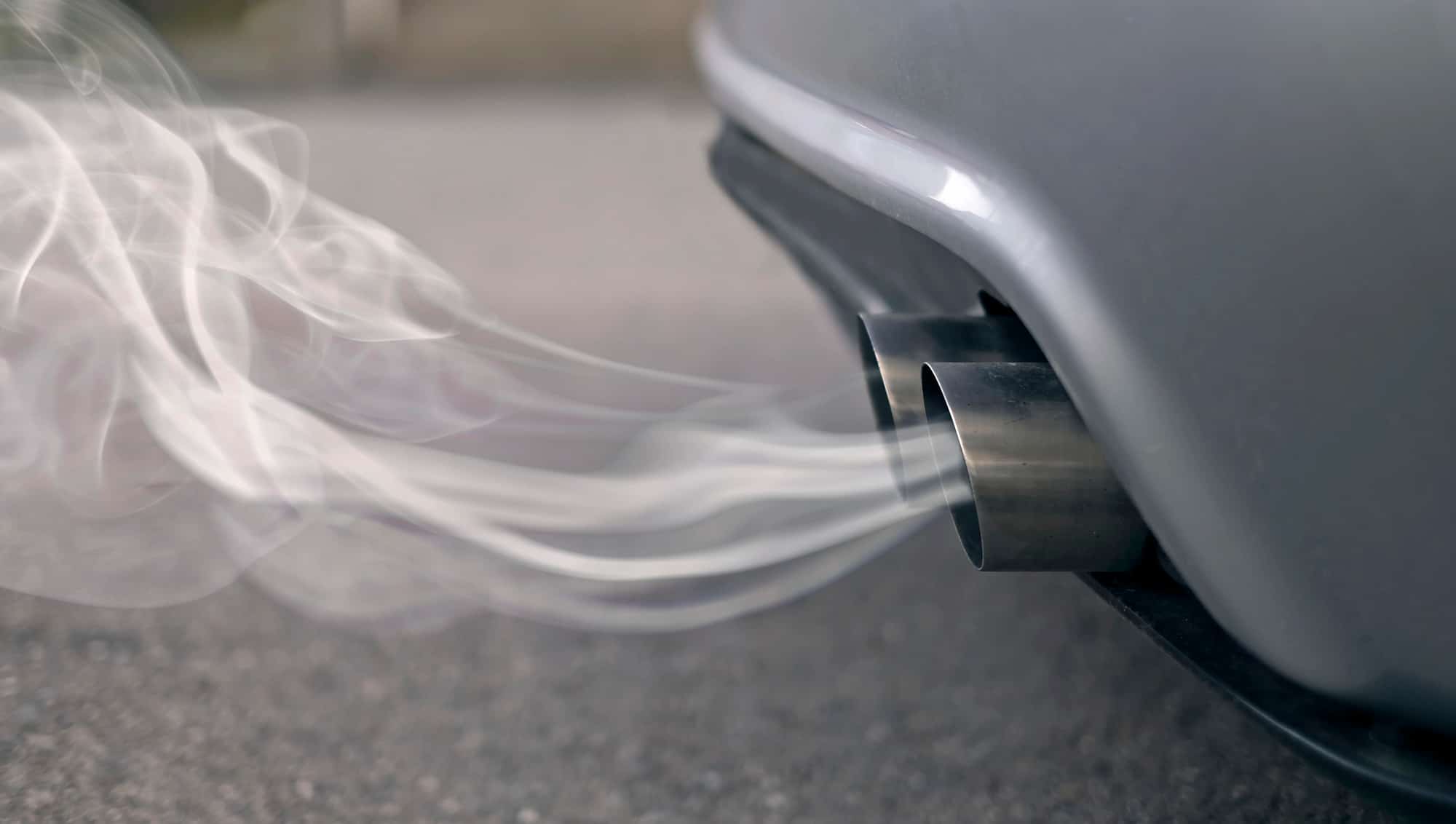
Mercedes-Benz Exhaust & Catalytic Converter Repair at DART Auto
A failing exhaust or catalytic converter on a Mercedes-Benz isn't just about noise or emissions – it's about protecting thousands of dollars in downstream components. When oxygen sensors, turbos, or even the ECU receive incorrect data from a compromised catalyst or exhaust leak, the cascade of misdiagnosis and failed parts can quickly eclipse the original repair cost. Mercedes-Benz platforms use sophisticated lambda control strategies and bank-specific fuel trims that demand precise exhaust integrity, especially on the M276 and M278 V6/V8 engines where even minor upstream leaks trigger persistent P0420/P0430 codes and limp mode.
Proper Mercedes-Benz exhaust work requires more than a universal cat and some pipe bending. The factory specifies exact substrate cell counts, precious metal loading, and sensor placement tolerances – deviations cause check-engine lights, failed emissions tests, and warranty headaches. DART Auto uses Xentry diagnostics to verify catalyst efficiency in real time, cross-reference VIN-specific part numbers, and confirm post-repair readiness monitors cycle correctly before you leave. Our technicians reference factory repair procedures for torque specs on manifold studs (critical on the M272/M273 V6/V8 where overtightening cracks aluminum heads) and use OEM or premium aftermarket catalysts that meet Mercedes CARB and EPA certifications.
When you bring your Mercedes-Benz to DART Auto for exhaust and catalytic converter repair, expect:
- Complete pre-repair diagnostics using Xentry or Autologic – we verify the root cause before replacing parts
- OEM-equivalent catalytic converters with proper substrate and lambda sensor bungs, not universal fit compromises
- Inspection of related components: oxygen sensors, exhaust manifold studs, flex sections, and heat shields
- Post-repair drive cycle confirmation and readiness monitor verification so you pass emissions immediately
Common Exhaust & Catalytic Converter Repair Issues on Mercedes-Benz Vehicles
Getting exhaust and catalytic converter work wrong on a Mercedes-Benz doesn't just mean a failed emissions test – it means check-engine lights that won't clear, limp mode that kills performance, and expensive secondary damage to oxygen sensors and turbos. Mercedes-Benz exhaust systems are engineered as integrated emissions-control platforms, not bolt-on aftermarket parts bins. When one component fails, the cascading effect hits hard.
- M276 and M278 V6/V8 catalytic converter substrate failure (2012–2018 E-Class, S-Class, ML/GLE): The honeycomb ceramic inside the OEM cats breaks down prematurely, often between 60k–90k miles. Fragments get sucked back into the turbo or clog downstream O2 sensors. You'll see P0420/P0430 codes, rough idle, and power loss. The M276 3.0L V6 and M278 4.6L/5.5L V8 share this weakness across multiple platforms – W212, W222, W166.
- OM642 diesel particulate filter clogging (2007–2016 BlueTEC models – ML, GL, E, S-Class): Short-trip driving prevents regeneration cycles from completing. The DPF fills with soot, triggering limp mode and eventually cracking the filter housing. Mercedes-Benz Star Diagnostic is required to force manual regens and monitor backpressure sensors.
- Exhaust flex-pipe cracking on W204 C-Class and W212 E-Class (2008–2015): The bellows-style flex joint between the downpipe and midpipe cracks from thermal cycling and road salt. You'll hear a ticking or hissing on cold starts. Ignored long enough, exhaust gases erode the surrounding heat shields and wiring harnesses.
- Turbo-to-downpipe gasket and stud failure on M274/M276 engines: Exhaust studs snap or strip threads in the aluminum turbo housing. The gasket blows out, causing a loud ticking and loss of boost pressure. Requires precision torque specs and often a time-sert thread repair.
- O2 sensor fouling from oil consumption on M272/M273 V6/V8 (2006–2011): Valve-stem seal wear lets oil into the exhaust stream, coating the oxygen sensors. You'll see sluggish fuel trims, poor fuel economy, and persistent P0171/P0174 lean codes even after replacing sensors.
Why Choose DART Auto for Mercedes-Benz Exhaust & Catalytic Converter Repair
Getting catalytic converter work wrong on a Mercedes-Benz can trigger persistent check-engine lights, failed emissions tests, and performance issues that generic shops often misdiagnose as sensor faults. DART Auto's investment in factory-level diagnostic tools and OEM repair procedures means we pinpoint whether you're dealing with a failed cat substrate, oxygen sensor drift, or an upstream air-fuel mixture problem before recommending parts replacement.
Our master technicians draw on dealer training and over 24 years of platform-specific experience to address common Mercedes-Benz exhaust issues with precision:
- M272/M273 V6/V8 catalytic converter failures on 2006–2011 E-Class, ML, and S-Class models, where substrate breakdown often mimics O2 sensor codes
- OM642 diesel particulate filter (DPF) regeneration failures on 2007–2016 GL, ML, and Sprinter platforms, requiring SCR system diagnostics beyond generic scan tools
- Turbocharger-related exhaust backpressure issues on M276 and M278 engines, where catalytic converter blockage can mask turbo wastegate faults
- Exhaust manifold cracking on early W204 C-Class and W212 E-Class models, often misdiagnosed as exhaust leaks downstream
We use Xentry diagnostics and live-data analysis to confirm catalyst efficiency, oxygen sensor response times, and post-repair emissions readiness. Our salaried technicians have no incentive to replace parts you don't need – we verify the root cause, source OEM or premium aftermarket components from trusted suppliers, and back the work with a 3-year/36,000-mile warranty.
Symptoms – How to Know You Need This Service
Mercedes-Benz exhaust and catalyst issues announce themselves through a combination of dashboard warnings, performance changes, and unmistakable sounds or smells. Recognizing these early can prevent collateral damage to oxygen sensors, turbos, and engine management components.
You may notice:
- Check Engine Light with P0420, P0430, P0171, or P0174 codes – catalyst efficiency below threshold or system running too lean due to exhaust leaks upstream of the oxygen sensors
- Rattling or hissing from under the car – catalyst substrate has broken apart internally, or exhaust manifold gaskets/studs have failed (common on M272/M273 V6/V8 and early M276 engines)
- Sulfur or rotten-egg smell – catalyst is overheating or breaking down, often paired with misfires or rich fuel trims
- Loss of power or limp mode activation – severe catalyst restriction or exhaust backpressure triggering ECU failsafe
- Ticking or popping on cold start – cracked exhaust manifold or loose heat shield, especially on W204 C-Class and W212 E-Class with M271 and M276 engines
- Visible smoke or soot around exhaust joints – active leak at flex pipe, flange gasket, or turbo outlet (critical on OM642 and OM651 diesels)
- Failed emissions test – even if the car drives normally, catalyst efficiency or evaporative readiness monitors not set
If you see visible smoke, smell fuel inside the cabin, or experience sudden power loss, stop driving and arrange a tow. Continuing to operate with a severely restricted catalyst can overheat and damage the turbocharger, valve seats, or cylinder head.
Which Mercedes-Benz Models We See for Exhaust & Catalytic Converter Repair
DART Auto services exhaust and catalytic converter systems across the full range of Mercedes-Benz passenger cars and SUVs. The work varies significantly by engine family – V6 and V8 models often require manifold stud replacement alongside catalyst work, while inline-four turbocharged engines see flex pipe and downpipe failures. Diesel platforms demand careful attention to DPF and SCR system integration.
Common platforms and engines we repair:
- C-Class (W203, W204, W205): M271 turbo four, M272/M276 V6 – manifold stud failures and catalyst efficiency codes prevalent on 2008–2014 models
- E-Class (W211, W212, W213): M272/M273 V6/V8, M276/M278 V6/V8, OM642 diesel – exhaust manifold cracks and downstream catalyst failures common after 80k miles
- S-Class (W221, W222): M273/M278 V8, M157 AMG V8 – close-coupled catalysts and complex heat shield arrangements require OEM-specific procedures
- ML/GLE/GLS (W164, W166, X166): M272/M276 V6, OM642 diesel – flex pipe failures and catalyst rattle on high-mileage examples
- GLK/GLC (X204, X253): M272/M274 engines – manifold stud and catalyst substrate issues on 2010–2015 GLK350
- SLK/SLC, CLK, CLS: M272 V6 and M273 V8 – same manifold stud and catalyst concerns as sedan platforms
- AMG Models (C63, E63, S63, ML63): M156/M159 naturally aspirated V8, M157/M177/M178 twin-turbo V8 – high-flow catalysts and performance exhaust configurations require precise fitment
We handle both gasoline and diesel exhaust systems but recommend contacting us directly if your vehicle has aftermarket exhaust modifications or tuning – we'll discuss compatibility and emissions compliance before scheduling.
Causes & Risks – What Happens if Ignored
Mercedes-Benz exhaust and catalyst failures stem from a mix of high-performance engineering, thermal stress, and driving patterns. Turbocharged engines run exhaust gas temperatures north of 1,600°F under load. Short commutes prevent catalytic converters from reaching full operating temperature, allowing fuel residue and carbon to build up. Colorado's freeze-thaw cycles corrode exhaust hangers, flex pipes, and flange bolts. The M276 and M278 engines use close-coupled cats mounted directly to the turbo outlet – great for emissions warm-up, terrible for longevity when the ceramic substrate sees repeated thermal shock.
Delaying repairs turns a contained problem into a system-wide failure:
- Clogged DPF ignored for 5,000 miles: Backpressure climbs until the engine derates to protect the turbo. Soot bakes into the filter substrate, making it unrecoverable. What started as a forced regen becomes a full DPF replacement plus turbo inspection.
- Cracked flex pipe driven for months: Exhaust leaks upstream of the O2 sensors feed false-lean data to the ECU. The engine over-fuels to compensate, washing down cylinder walls and diluting oil. Catalytic converters overheat from the extra fuel, accelerating substrate meltdown.
- Broken cat substrate left in place: Ceramic chunks migrate downstream, clogging mufflers and damaging turbine wheels. A $1,200 catalytic converter repair becomes a $4,500 turbo replacement.
- Fouled O2 sensors not traced to root cause: Replacing sensors without fixing valve-stem seals or PCV issues means you're back in the shop in six months with the same codes and another parts bill.
The cost of waiting isn't just the next repair – it's the compounding damage that makes a straightforward fix into a multi-system overhaul.
Safety Impact – Why Exhaust & Catalytic Converter Repair Matters
Exhaust failures on a Mercedes-Benz don't just trigger warning lights – they compromise occupant safety and vehicle control. A blown exhaust gasket upstream of the catalytic converter leaks carbon monoxide into the cabin through the HVAC fresh-air intake. You won't smell it. Symptoms start with headache and fatigue; prolonged exposure causes confusion and loss of consciousness. Diesel particulate filter clogs force the engine into limp mode, cutting power to 30% and leaving you vulnerable in highway merge lanes or mountain passes.
Catalytic converter meltdown creates backpressure that starves the turbocharger of exhaust flow. Boost pressure drops unpredictably under acceleration, eliminating the power you expect when passing or climbing grades. On AWD 4MATIC models, sudden power loss mid-corner can upset chassis balance and trigger stability interventions that feel like brake pulsing or hesitation.
When to stop driving vs. schedule soon:
- Stop now: Smell of exhaust in the cabin, visible smoke from under the hood, loud rattling from the converter (substrate breakup), or persistent limp mode with multiple fault codes.
- Schedule this week: Check-engine light with P0420/P0430 codes, audible exhaust leak (ticking/hissing), reduced power on acceleration, or failed emissions test.
- Schedule soon: Occasional rough idle, slight fuel-economy drop, or single O2 sensor heater code without driveability symptoms.
Documented exhaust leaks left unrepaired can create liability issues if an incident occurs – insurance adjusters review service history when occupant injury is involved.
How Mercedes-Benz Exhaust & Catalytic Converter Repair Actually Works
Mercedes-Benz exhaust systems are closed-loop emissions platforms monitored by multiple oxygen sensors, temperature probes, and pressure transducers. The ECU continuously compares upstream and downstream O2 sensor voltage swings to calculate catalytic converter efficiency. When efficiency drops below threshold (typically 70–80% of new), the system logs P0420 or P0430 and illuminates the check-engine light. On turbocharged models, the cats are close-coupled to the turbo outlet to minimize light-off time – the downside is thermal shock that cracks ceramic substrates faster than conventional mid-pipe designs.
Diesel models add selective catalytic reduction (SCR) and diesel particulate filters with active regeneration. The ECU injects extra fuel during the exhaust stroke to raise DPF temperature above 1,100°F, burning off accumulated soot. This requires precise control of injection timing, EGR flow, and turbo boost – any deviation triggers incomplete regens and progressive clogging.
What makes Mercedes-Benz exhaust work different:
- Component coding and adaptation: New catalytic converters and O2 sensors must be coded into the ECU using Star Diagnostic (Xentry). The system won't clear readiness monitors or complete drive cycles without proper registration.
- Torque-to-yield fasteners: Exhaust manifold studs and turbo-to-downpipe bolts are single-use. Reusing them causes clamp-load loss and blown gaskets within weeks.
- OEM substrate material: Mercedes-Benz cats use palladium-rhodium catalysts with specific cell densities (400–600 cpsi). Aftermarket "universal fit" converters lack the precious-metal loading to pass emissions or satisfy the ECU's efficiency algorithms.
- Backpressure and lambda control: The ECU monitors pre- and post-cat pressure differentials. Installing the wrong muffler or resonator changes backpressure enough to skew fuel trims and trigger fault codes.
Proper repair means
How We Diagnose Exhaust & Catalytic Converter Repair Issues on Mercedes-Benz
Misdiagnosing an exhaust or catalytic converter fault on a Mercedes-Benz often leads to replacing expensive components that weren't the root cause. On platforms like the W204 C-Class or W212 E-Class, a Check Engine Light for catalyst efficiency can stem from upstream oxygen sensor drift, air leaks post-turbo, or fuel trim issues – not always a failed cat. Getting it wrong means wasted money and a car that still doesn't run right.
Our diagnostic process ensures we identify the actual problem before recommending parts:
- Factory-level scan with Mercedes-Benz XENTRY diagnostics. We pull fault codes, freeze-frame data, and live sensor readings from the engine control module. This reveals oxygen sensor switching patterns, catalyst monitor readiness, and fuel trim values that point to the true fault.
- Visual and physical inspection. We lift the car and inspect exhaust flanges, flex joints, catalytic converter shells, and heat shields for cracks, rust-through, or impact damage. On M276 and M278 engines, we check for oil contamination from valve cover leaks that can poison catalysts prematurely.
- Backpressure and flow testing. We measure exhaust restriction using a pressure gauge upstream of the catalytic converter. A clogged substrate shows elevated backpressure even at idle, confirming internal failure rather than sensor error.
- Road test under load. We drive the vehicle through varying throttle and load conditions to replicate the fault and observe real-time sensor behavior. Hesitation or power loss under acceleration often confirms a restricted exhaust path.
Once we've isolated the cause, we walk you through what failed, why it failed, and what it will take to fix it properly. You receive a detailed estimate that separates parts, labor, and any related work – no surprises, no guesswork.
Exhaust & Catalytic Converter Repair on Mercedes-Benz: Repair vs. Replacement
Not every exhaust issue requires replacing the entire system. The right approach depends on what's actually worn and how the rest of the assembly has aged.
When Repair Makes Sense
- Isolated gasket or clamp failure. A leaking flange gasket between the manifold and downpipe can be resealed without touching the catalytic converter itself.
- Heat shield rattle. Loose or corroded heat shields can be re-secured or trimmed if they're vibrating but the exhaust path remains intact.
- Minor flex joint wear. On some platforms, a flex section can be cut out and replaced with an OEM or high-quality aftermarket piece, preserving the rest of the exhaust.
When Partial Replacement Is the Right Call
- Single failed oxygen sensor. If the catalyst itself tests healthy but an upstream or downstream sensor is sluggish or dead, we replace only the sensor.
- Localized rust or impact damage. A damaged mid-pipe or resonator section can be cut and replaced while keeping the catalytic converters and muffler if they're still sound.
When Full Replacement Is Necessary
- Catalyst substrate failure. If backpressure testing or visual inspection shows internal honeycomb collapse or melting, the converter must be replaced. This is common on high-mileage M272 and M273 V6/V8 engines with oil consumption issues.
- Cascading corrosion. When rust has compromised multiple sections or structural integrity is questionable, replacing the affected assembly ensures safety and longevity.
We present the options and explain the trade-offs. Our technicians are salaried, so there's no incentive to oversell – just honest guidance on what will fix your car correctly.
How to Make Your Mercedes-Benz Exhaust & Catalytic Converter Repair Last Longer
Once the work is done, a few habits will help you get maximum life from your new exhaust components and avoid premature failure.
Driving Habits That Protect Your Exhaust
- Allow proper warm-up in cold weather. Catalytic converters need to reach operating temperature to function efficiently. Short trips in winter prevent full heat cycling and can lead to moisture buildup and internal corrosion.
- Avoid prolonged idling with a cold engine. Unburned fuel can wash into the exhaust and contaminate the catalyst substrate, especially on direct-injection engines like the M274 and M276.
- Address misfires immediately. A cylinder misfire dumps raw fuel into the exhaust, which ignites in the catalytic converter and can melt the honeycomb. If the Check Engine Light flashes, stop driving and have it diagnosed.
Maintenance You Can Monitor
- Watch for new exhaust noise or smell. A sudden change in sound or the smell of sulfur indicates a leak or catalyst issue developing.
- Keep an eye on oil consumption. Excessive oil burning (common on older M272 engines) fouls oxygen sensors and clogs catalysts. If you're adding oil between services, have the cause diagnosed.
- Follow Mercedes-Benz service intervals. Regular oil changes with the correct MB-approved spec prevent sludge and combustion deposits that can migrate into the exhaust.
What to Leave to the Professionals
Exhaust work involves high-temperature components, emissions compliance, and proper sealing under pressure. Attempting to replace catalytic converters or oxygen sensors without the right tools and software can trigger fault codes or cause exhaust leaks. Leave diagnosis and replacement to a shop with Mercedes-Benz factory tooling and OEM repair procedures.
What to Expect When You Bring Your Mercedes-Benz In
We start every exhaust and catalytic converter repair with a complete diagnostic inspection, not guesswork. Here's how the process unfolds:
- Drop-off and initial consultation. Bring your Mercedes-Benz in at your scheduled appointment. We'll ask about symptoms – check-engine lights, sulfur smells, rattling noises, reduced power – and review any fault codes you've seen. Remove personal items from the cabin; we'll keep your key secure and provide a loaner vehicle or shuttle service if the work extends beyond a few hours.
- Comprehensive inspection and diagnosis. Our technicians connect factory-level scan tools to pull freeze-frame data, monitor oxygen sensor switching, and measure catalyst efficiency in real time. We inspect the exhaust system on a lift for physical damage, corrosion, and manifold cracks. If we find multiple faults – say, a failed downstream cat and a leaking flex pipe – we'll document both and explain which repair is urgent and which can wait.
- Written estimate and repair authorization. You'll receive a detailed estimate that breaks down parts, labor, and the consequences of delaying the work. We explain why a particular catalytic converter is failing (substrate collapse, contamination from oil consumption, heat damage) and what we'll do to prevent recurrence. No work begins until you approve the scope.
- Repair execution and post-repair verification. We replace failed components using OEM or equivalent parts, torque all fasteners to Mercedes-Benz specifications, and clear fault codes. Before you pick up, we road-test the car to confirm smooth operation, re-scan for pending codes, and verify readiness monitors have set for emissions compliance.
- Pickup walkthrough and follow-up support. At pickup, we show you the old parts if requested and review what we found. If a check-engine light reappears or you notice any performance changes after pickup, contact us immediately – we'll re-inspect at no charge to confirm the repair held.
After-hours key drop and pickup arrangements are available if your schedule requires flexibility. Our goal is to fix your Mercedes-Benz right the first time, so you leave with confidence and a car that passes emissions and performs as designed.
Our Mercedes-Benz Services
- Air Conditioning AC Repair
- Battery Repair Replacement
- Brake Repair & Brake Fluid Change
- Check Engine Light Diagnostics
- Clutch Repair & Replacement
- Coolant Leak Repair
- Cooling System Repair
- Drive Shaft Repair
- Engine Repair
- Head Gasket Repair & Replacement
- Oil Change
- Oil Leak Repair
- Scheduled Service Maintenance
- Steering Repair
- Suspension Repair
- Cambelt Timing Belt Replacement
- Transmission Repair
- Tune Up
- Wheel Alignment