
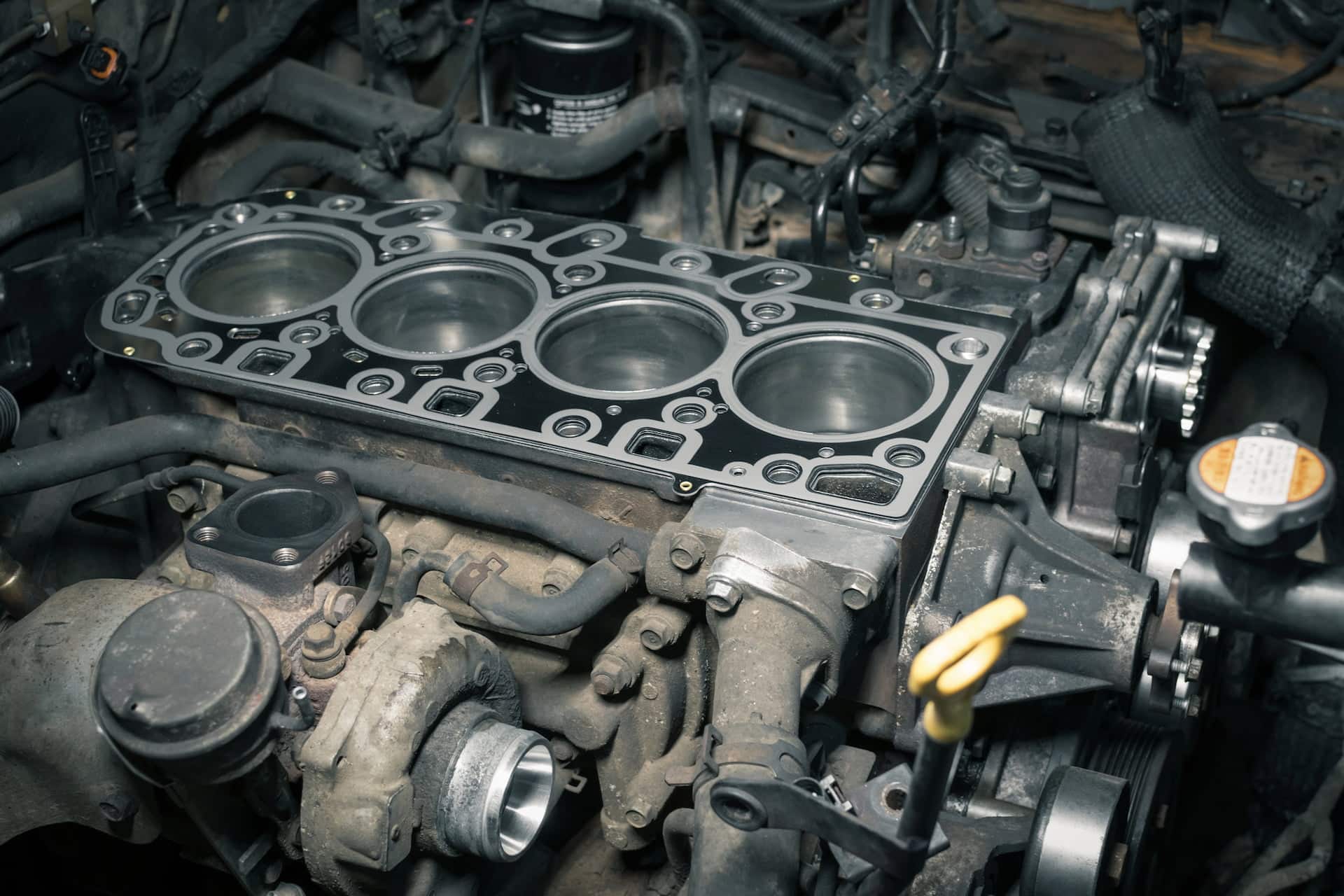
Mercedes-Benz Head Gasket Repair & Replacement at DART Auto
Mercedes-Benz engines are precision-engineered powerplants that demand exacting attention when head gasket failure occurs. The M272 and M273 V6 and V8 engines found in 2004–2011 E-Class, S-Class, and ML-Class models are particularly notorious for head bolt stretch and gasket weeping, often requiring specialized torque-to-yield fastener procedures and multi-stage tightening sequences that generic shops simply don't follow. When coolant begins mixing with oil or combustion gases escape into the cooling system, the repair window narrows quickly – and doing it wrong means doing it twice.
At DART Auto, we've been diagnosing and repairing Mercedes-Benz head gasket failures since 2000. Our master technicians use factory repair information, OEM torque specifications, and the same diagnostic scan tools found at the dealership to confirm gasket failure versus cracked heads or block porosity. We machine-check head flatness with precision straightedges, pressure-test cooling systems to 18 psi, and follow Mercedes-Benz time-saver group procedures for timing chain tensioner replacement during disassembly. Every repair is backed by our 3-year/36,000-mile warranty on parts and labor.
When you bring your Mercedes-Benz to DART Auto for head gasket work, expect:
- Complete diagnostics first – we confirm head gasket failure with combustion gas testing, cooling system pressure decay, and oil analysis before recommending teardown
- OEM and premium aftermarket parts – genuine Mercedes-Benz MLS gaskets, new head bolts, updated timing components, and fresh coolant meeting MB 325.0 or 326.5 specifications
- Transparent pricing – detailed estimates that explain what we found, what we'll replace, and why each step matters
- Salaried technicians – no flat-rate rush jobs, just methodical work done right the first time
Common Head Gasket Repair & Replacement Issues on Mercedes-Benz Vehicles
Mercedes-Benz engines are engineered for precision and performance, but certain platforms develop predictable head gasket vulnerabilities that owners should recognize early. The M272 and M273 V6 and V8 engines (2004–2011 E-Class, C-Class, ML-Class, S-Class) are particularly prone to head gasket failure due to a design flaw in the head bolt threads. Over time, the aluminum block threads strip under thermal cycling, causing head bolts to lose torque and allowing coolant to seep into the combustion chamber or oil passages. This issue often appears between 60,000 and 100,000 miles and requires not just gasket replacement but thread repair or Timesert installation to restore clamping force.
- M272/M273 head bolt thread failure (2004–2011 models): Aluminum block threads strip under heat stress, leading to coolant intrusion, white exhaust smoke, and overheating. Requires specialized thread repair kits and precise torque sequencing during reassembly.
- OM642 diesel head gasket weeping (2007–2014 ML, GL, E-Class): The 3.0L V6 diesel develops external coolant leaks at the head gasket perimeter, often misdiagnosed as a water pump or thermostat housing leak. High compression and thermal expansion exacerbate the issue on higher-mileage units.
- M156/M159 AMG V8 coolant migration (2007–2014 C63, E63, SL63): High-performance naturally aspirated AMG engines can develop head gasket seepage under track use or sustained high-RPM operation, leading to coolant loss and localized hot spots that warp the head surface.
- M276 V6 turbo head gasket stress (2012–2016 E350, ML350): The twin-turbo V6 generates significant cylinder pressure, and early examples occasionally show gasket compression failure near the fire ring, causing misfires and coolant contamination in the oil.
- OM651 four-cylinder diesel head warping (2009–2018 Sprinter, C-Class, E-Class): Overheating events or EGR cooler failures can warp the aluminum head on this common diesel, requiring both gasket replacement and head machining to restore flatness within Mercedes-Benz's strict tolerance specifications.
- M278 biturbo V8 coolant crossover gasket failure (2010–2017 S-Class, CL-Class): While not the main head gasket, the coolant crossover pipe gaskets on the M278 fail frequently, mimicking head gasket symptoms with external leaks and overheating, often requiring cylinder head removal for proper access.
Why Choose DART Auto for Mercedes-Benz Head Gasket Repair & Replacement
Head gasket failure on a Mercedes-Benz is rarely a straightforward bolt-on job. M272 and M273 V6/V8 engines (2004–2011) are notorious for head bolt thread failure in the aluminum block, often requiring Heli-Coil inserts or block replacement if corrosion has progressed. The OM642 diesel (2007–2016) can suffer from head warping due to EGR cooler failures that spike coolant temps. We stock the factory tooling to handle both scenarios – thread repair kits, torque-angle gauges calibrated to Mercedes specifications, and the diagnostic software to verify camshaft timing and injector coding after reassembly.
Our technicians hold Mercedes-Benz factory training credentials and have been diagnosing European platforms since 2000. We don't guess at head gasket failure; we pressure-test the cooling system, perform combustion gas leak tests, and pull freeze-frame data to confirm whether you're looking at a gasket alone or collateral damage to the head surface, valve seats, or turbocharger seals. Every estimate includes a written scope – resurfacing limits, bolt replacement, coolant flush, and any ancillary seals that should be addressed while the engine is apart.
- Platform-specific procedures: We follow Mercedes-Benz torque sequences and use OEM multi-layer steel gaskets, not universal aftermarket sets that fail within months.
- Salaried technicians: No flat-rate pressure to skip steps like deck-surface inspection or coolant system back-flushing.
- Three-year, 36,000-mile warranty: Parts and labor coverage that matches or exceeds what you'd get at the dealer, at a fraction of the cost.
Symptoms – How to Know You Need This Service
Head gasket failure on a Mercedes-Benz rarely happens without warning. You may notice:
- White smoke from the exhaust – steady plumes of sweet-smelling steam, especially during cold starts or acceleration, indicate coolant burning in the combustion chamber
- Coolant loss with no visible leaks – the expansion tank drops repeatedly, but you see no puddles under the car
- Milky or frothy oil – check the oil cap or dipstick for tan or coffee-colored emulsion, a sign coolant has breached into the crankcase
- Overheating or erratic temperature gauge – combustion gases entering the cooling system create air pockets that prevent proper circulation and trigger the coolant warning light
- Rough idle or misfires – coolant pooling in cylinders overnight causes hard starts and stumbling until the plugs dry out
- Bubbling or gurgling in the coolant reservoir – exhaust pressure forcing its way into the cooling system produces visible bubbles at idle
- External coolant seepage – wet spots along the head-to-block mating surface, often visible near the back of the engine on V6 and V8 models
If you see white smoke combined with overheating, stop driving immediately – continued operation can warp the cylinder head or crack the block. Coolant loss alone means schedule an appointment within the week to prevent cascading damage.
Which Mercedes-Benz Models We See for Head Gasket Repair & Replacement
DART Auto regularly performs head gasket repairs on a wide range of Mercedes-Benz platforms. We see this work most often on:
- W211 E-Class (2003–2009) – M272 V6 and M273 V8 engines with head bolt stretch and gasket weeping
- W221 S-Class (2007–2013) – M273 and M278 V8 platforms requiring precision torque sequences
- W164 ML-Class and X164 GL-Class (2006–2011) – M272 and M273 engines prone to coolant intrusion on high-mileage examples
- W204 C-Class (2008–2014) – M272 V6 and M276 V6 with timing chain and gasket concerns
- R171 SLK-Class (2005–2011) – M272 V6 requiring careful head removal to avoid damaging intake manifold runners
- W212 E-Class (2010–2016) – M276 and M278 engines where head gasket failure is less common but still occurs on neglected cooling systems
- W166 ML-Class and GLE-Class (2012–2019) – M276 V6 and M278 V8 platforms with improved gasket materials but still vulnerable to overheating damage
We also service earlier W210, W220, and R230 chassis with M112 and M113 engines, though gasket failure is less frequent on these cast-iron block designs. If your Mercedes-Benz uses a four-cylinder turbocharged engine (M274, M270), head gasket issues are rare but we handle those as well. AMG variants with hand-built engines receive the same meticulous attention – we follow AMG-specific torque specs and use genuine AMG gaskets where applicable.
Causes & Risks – What Happens if Ignored
Head gasket failure on Mercedes-Benz vehicles stems from a combination of thermal cycling, material expansion mismatch between aluminum heads and blocks, and in some cases, inherent design weaknesses. The M272/M273 thread-stripping issue is accelerated by frequent short trips that never allow full engine warm-up, creating repeated expansion and contraction cycles. Diesel engines like the OM642 and OM651 face higher combustion pressures and temperatures, which stress gasket materials and can lead to micro-cracking over time. Coolant contamination, whether from neglected fluid changes or using incorrect Mercedes-Benz-spec coolant, degrades gasket elastomers and promotes corrosion on sealing surfaces.
Delaying head gasket repair sets off a cascade of secondary damage that quickly escalates repair scope and cost:
- Coolant in oil: Turns lubricant into a milky sludge that destroys bearings, clogs oil passages, and can seize the engine within hundreds of miles. Requires complete engine teardown and bearing replacement.
- Combustion gases in coolant: Pressurizes the cooling system, blowing out hoses, cracking plastic expansion tanks, and forcing coolant past radiator cap seals. Can warp cylinder heads if localized hot spots develop.
- Cylinder pressure loss: Misfires and rough idle damage catalytic converters as unburned fuel passes through, adding thousands to the repair bill. Oxygen sensors foul, and the engine computer may enter limp mode.
- Hydrolock risk: Severe coolant intrusion into cylinders can cause hydrolock on startup, bending connecting rods or cracking pistons – turning a gasket job into a complete engine replacement.
- Head warping: Continued overheating warps the aluminum head beyond machining limits, requiring costly head replacement rather than simple resurfacing.
Safety Impact – Why Head Gasket Repair & Replacement Matters
A failing head gasket directly threatens safe operation by compromising engine reliability and creating sudden-failure scenarios. Coolant loss from a leaking gasket leads to overheating, which can cause the engine to stall without warning in traffic, on highways, or during lane changes. Loss of power steering assist and brake vacuum (on older models with vacuum-assisted brakes) follows immediately if the engine dies, leaving the driver struggling to control a heavy vehicle. Modern Mercedes-Benz models with electric power steering retain assist, but losing propulsion in fast-moving traffic creates collision risk.
Specific safety concerns include:
- Steam and coolant vapor: A blown head gasket can vent pressurized coolant onto hot exhaust manifolds, creating dense steam clouds that obscure vision and distract surrounding drivers.
- Sudden power loss: Severe gasket failure causes immediate loss of compression, stalling the engine in motion and eliminating power steering assist on hydraulic systems.
- Hydrolock on restart: Coolant pooling in cylinders can cause the engine to lock solid when you turn the key, leaving you stranded in unsafe locations.
- Fire risk: Coolant leaking onto electrical components or hot turbochargers (M276, M278 engines) can ignite, especially if mixed with oil residue.
Stop driving immediately if you see white smoke, smell sweet coolant inside the cabin, or notice the temperature gauge climbing into the red. Schedule service soon for external seepage, minor coolant loss, or occasional misfires – these are early warnings before catastrophic failure.
How Mercedes-Benz Head Gasket Repair & Replacement Actually Works
The head gasket on a Mercedes-Benz seals the junction between the engine block and cylinder head, containing combustion pressure, isolating coolant and oil passages, and managing thermal expansion across dissimilar metals. Mercedes-Benz uses multi-layer steel (MLS) gaskets on most modern engines, which rely on precise surface flatness and controlled clamping force from torque-to-yield head bolts. These bolts stretch permanently during installation and cannot be reused – Mercedes-Benz specifies exact torque sequences, angles, and final stretch measurements that must be verified with factory tooling.
What makes Mercedes-Benz head gasket work different:
- Torque-to-yield bolts: Single-use fasteners that stretch to a specific yield point, requiring angle gauges and multi-stage tightening sequences documented in factory service information. Reusing old bolts guarantees future failure.
- Surface flatness tolerances: Mercedes-Benz specifies head and block flatness within 0.002 inches across the sealing surface. Requires precision machining equipment and measurement with calibrated straightedges and feeler gauges.
- Thread repair on M272/M273: Stripped block threads demand Timesert or Helicoil installation, boring out damaged threads and installing hardened steel inserts to restore full clamping strength.
- Coolant system flushing and bleeding: After reassembly, the cooling system must be chemically flushed, refilled with Mercedes-Benz-spec coolant (exact formulation matters for aluminum corrosion protection), and bled using factory procedures to eliminate air pockets that cause localized overheating.
- Valve timing verification: Timing chains or belts must be confirmed in correct position before and after head installation. Mercedes-Benz uses specific camshaft locking tools and crankshaft position markers to prevent catastrophic valve-to-piston contact.
How We Diagnose Head Gasket Repair & Replacement Issues on Mercedes-Benz
Mercedes-Benz engines – particularly the M276 V6 and M278 V8 platforms – demand precise diagnostics when head gasket failure is suspected. Early M272 V6 engines (2006–2011) are notorious for coolant intrusion into cylinders, often traced to head bolt stretch rather than gasket failure alone. We use factory-level tools and methodical testing to pinpoint the root cause before recommending any work.
Our Step-by-Step Diagnostic Workflow
- Scan with Mercedes-Benz XENTRY diagnostics: We pull freeze-frame data, monitor misfires, and check coolant temperature sensor rationality to identify which bank or cylinder is affected.
- Combustion leak test: A chemical block tester detects exhaust gases in the cooling system – the clearest sign of a breached head gasket or cracked head.
- Compression and leak-down testing: Cylinder-by-cylinder measurements reveal whether compression loss is gasket-related or points to valve or piston ring issues.
- Visual inspection: We remove the valve covers to inspect for coolant pooling in the valley, oil emulsification, and head bolt torque retention on platforms prone to stretch.
- Coolant system pressure test: Isolates external leaks from internal breaches and confirms whether the block or heads have surface cracks.
- Oil analysis (when warranted): Lab testing detects coolant contamination in the oil – critical on high-mileage AMG engines where internal seepage can go unnoticed.
Once testing is complete, we walk you through what failed, why it happened, and what else needs attention during disassembly. You'll receive a detailed quote covering machine-shop work, updated head bolts (or studs), and any ancillary seals or hoses that should be replaced while the engine is apart. No surprises when the heads come off.
Head Gasket Repair & Replacement on Mercedes-Benz: Repair vs. Replacement
True head gasket "repair" on a Mercedes-Benz is rare. Once the multi-layer steel gasket has blown, it must be replaced – there's no patching it. The decision revolves around what else gets replaced and whether the cylinder heads themselves are serviceable.
When Replacement Is the Only Path Forward
- Warped or cracked heads: M272 and M273 V6/V8 engines often develop cracks between valve seats after repeated overheating. Machine-shop resurfacing has limits; beyond 0.010" removal, valve timing and compression ratios shift out of spec.
- Head bolt stretch: Early M272 engines used torque-to-yield bolts that lose clamping force over time. Reusing old bolts invites repeat failure within months. We install updated bolts or aftermarket studs on high-performance applications.
- Coolant intrusion damage: If coolant has been mixing with oil for weeks, bearing surfaces and piston rings may be compromised. A head gasket replacement alone won't fix an engine that's been hydraulically locked or has scored cylinder walls.
- Valve guide wear: Once the heads are off, we measure valve stem clearances. Worn guides on high-mileage engines justify a full valve job or remanufactured head rather than slapping new gaskets on tired components.
We lay out the options clearly: replace gaskets and bolts if the heads pass inspection, or invest in machined or remanufactured heads if the damage runs deeper. Our salaried technicians have no incentive to upsell – we recommend what keeps your Mercedes-Benz reliable for the next 100,000 miles.
How to Make Your Mercedes-Benz Head Gasket Repair & Replacement Last Longer
Once your head gaskets are replaced, longevity depends on managing heat, maintaining proper coolant chemistry, and catching small issues before they cascade. Mercedes-Benz engines run tight tolerances and sophisticated thermal management – neglect accelerates failure.
Driving Habits That Protect Your Investment
- Allow proper warm-up: M276 and M278 engines use variable valve timing that doesn't reach full authority until oil reaches operating temperature. Avoid hard acceleration or sustained high RPM for the first five minutes.
- Monitor coolant temperature: If the gauge climbs above normal or the auxiliary fan runs constantly, pull over immediately. Modern Mercedes-Benz engines can warp heads in minutes once coolant boils.
- Avoid prolonged idling in extreme heat: Electric fans and coolant pumps work harder when there's no airflow. If you're stuck in traffic on a 95-degree day, consider shutting down rather than idling for extended periods.
Maintenance You Can Monitor Yourself
- Check coolant level weekly: The expansion tank should stay between MIN and MAX when cold. A slow drop signals a leak – catch it before the engine runs low and overheats.
- Inspect for oil contamination: Pull the dipstick and look for milky discoloration or a frothy texture. Either means coolant is getting into the oil – shut down and call us.
- Listen for changes: A new ticking or knocking from the valve covers can indicate a coolant leak into the valley or a failing camshaft adjuster – both accelerate head gasket stress.
Professional Maintenance That Matters
Use only Mercedes-Benz-approved coolant (MB 325.0 or 326.0 spec). Aftermarket "universal" coolants lack the corrosion inhibitors that protect aluminum heads and can cause electrolysis that eats gaskets from the inside. Follow the factory service intervals for coolant flushes – typically every four years or 40,000 miles. Software updates from Mercedes-Benz sometimes revise cooling-fan logic or thermostat control strategies; keeping your ECU current prevents avoidable overheating. Leave coolant system work to the professionals – airlocks in the complex plumbing of a V6 or V8 can cause localized hot spots that warp heads even when the gauge reads normal.
What to Expect When You Bring Your Mercedes-Benz In
We know head gasket work is a significant repair, so we walk you through every phase before we turn a wrench. Here's how the process unfolds:
- Drop-off and initial inspection: Bring your Mercedes in at your scheduled time. We'll ask about symptoms – white exhaust smoke, coolant loss, rough idle – and perform a visual inspection of the cooling system, oil cap, and exhaust. If you need a loaner vehicle or shuttle service, let us know when you book; we'll arrange it.
- Diagnostic testing: We run a combustion gas test, pressure-test the cooling system, and pull diagnostic trouble codes. If the head needs to come off for inspection, we'll document findings with photos – cracks, warping, carbon buildup – and send them to you before we proceed.
- Written estimate: You'll receive a line-item breakdown covering gasket replacement, head resurfacing (if required), new head bolts, coolant flush, and any seals we recommend replacing while the engine is disassembled. We explain what happens if you defer ancillary work, so you can make an informed decision.
- Repair and reassembly: Once approved, we follow Mercedes factory procedures – torque specs, angle tightening, cam timing verification. We refill with OEM-spec coolant and bleed the system to eliminate air pockets.
- Post-repair verification: Before you pick up, we road-test the car, re-scan for codes, and verify operating temperatures under load. If anything feels off in the first week, call us – we'll re-check it at no charge.
Remove personal items from the cabin before drop-off. If you need after-hours pickup, we can leave keys in a lockbox. You'll receive a call when the car is ready, and we'll walk you through the work at pickup so you know exactly what was done and why.
Our Mercedes-Benz Services
- Air Conditioning AC Repair
- Battery Repair Replacement
- Brake Repair & Brake Fluid Change
- Check Engine Light Diagnostics
- Clutch Repair & Replacement
- Coolant Leak Repair
- Cooling System Repair
- Drive Shaft Repair
- Engine Repair
- Exhaust & Catalytic Converter Repair
- Oil Change
- Oil Leak Repair
- Scheduled Service Maintenance
- Steering Repair
- Suspension Repair
- Cambelt Timing Belt Replacement
- Transmission Repair
- Tune Up
- Wheel Alignment