
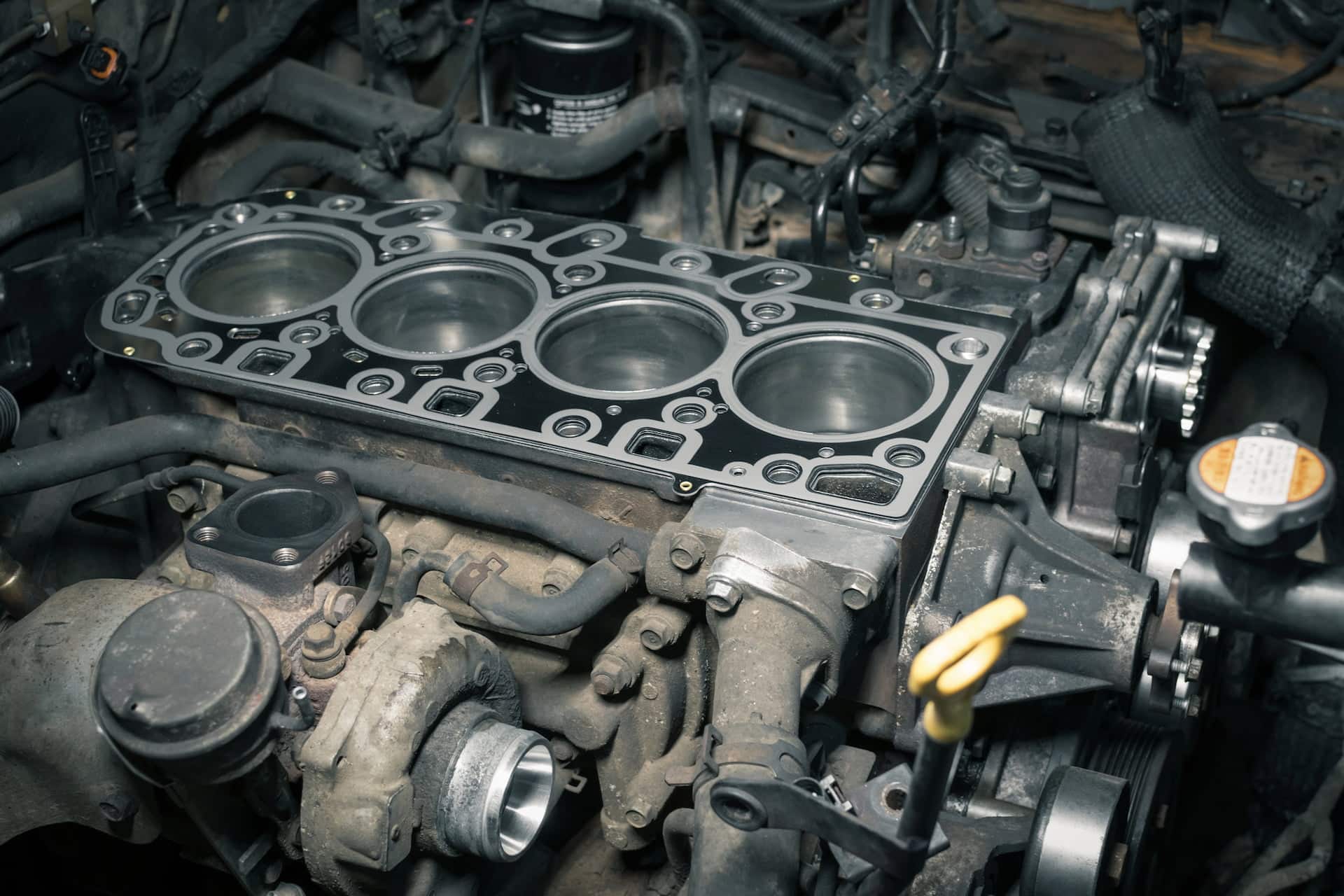
Alfa Romeo Head Gasket Repair & Replacement at DART Auto
You're driving your Giulia or 4C when you notice a sweet smell creeping through the vents, or maybe your coolant reservoir keeps dropping without visible leaks. Head gasket failure isn't just inconvenient – it can destroy an engine if ignored. Alfa Romeo engines demand precision work that respects their high-compression aluminum architecture and tight tolerances. The 2.0L turbocharged four-cylinder found in 2017-newer Giulia and Stelvio models, along with the 2.9L V6 twin-turbo in Quadrifoglio variants, require specific torque sequences and multi-layer steel gasket specifications that differ dramatically from mass-market vehicles.
DART Auto has specialized in European performance vehicles since 2000. Our master technicians use factory repair procedures, OEM gasket sets, and precision measurement tools to restore proper compression and seal integrity. We follow Alfa Romeo's prescribed head-bolt torque-to-yield procedures and deck surface flatness specifications – critical steps that generic shops often skip. Because our technicians are salaried rather than flat-rate, they take the time to inspect head surfaces for warping, check for block damage, and pressure-test the cooling system before reassembly.
When you bring your Alfa Romeo to DART Auto for head gasket work, expect:
- Complete disassembly with documentation of internal component condition
- Cylinder head machining and pressure testing to verify flatness and seal integrity
- OEM multi-layer steel gaskets and new head bolts installed per factory torque sequences
- Full cooling system flush, pressure test, and air-bleed procedure using Alfa Romeo-specific protocols
Common Head Gasket Repair & Replacement Issues on Alfa Romeo Vehicles
You turn the key and notice the temperature gauge climbing faster than usual, or perhaps you've spotted a puddle of coolant beneath your Alfa after it's been parked overnight. Head gasket problems on Alfa Romeo vehicles present distinct patterns tied to specific platforms and engine families.
- 159 and Brera 2.2 JTS (939 platform, 2006–2011): The direct-injection 2.2-liter four-cylinder is notorious for head gasket weeping between cylinders two and three, often caused by uneven thermal expansion and marginal OEM gasket material. Owners report white exhaust smoke on cold starts and gradual coolant loss without visible external leaks.
- Spider and GTV 3.0 V6 (916 platform, 1995–2005): The Busso V6 can develop head gasket seepage at the rear cylinder banks where cooling passages run close to exhaust ports. Overheating events – common if the plastic thermostat housing cracks – accelerate gasket degradation, leading to oil-coolant mixing visible in the expansion tank.
- Giulia and Stelvio 2.0 Turbo (952/953 platform, 2017–present): While generally robust, the GME-T4 engine can experience head gasket issues after repeated high-boost driving cycles without proper cooldown. Symptoms include pressurized cooling systems that blow off the expansion tank cap and intermittent misfires on cylinder four.
- MiTo 1.4 MultiAir (955 platform, 2008–2018): The MultiAir valve system generates significant heat in the cylinder head. Combined with the lightweight aluminum block, thermal cycling can cause the MLS (multi-layer steel) gasket to lose clamping force around the fire rings, resulting in compression leaks and rough idle when warm.
- 4C 1.75 TBi (960 platform, 2013–2020): The mid-mounted turbocharged four-cylinder runs aggressive boost levels. Head gasket failure typically presents as external coolant seepage from the head-to-block joint near the turbo feed, often mistaken for a water pump leak until proper diagnosis.
Why Choose DART Auto for Alfa Romeo Head Gasket Repair & Replacement
Your Giulia just overheated on I-25, coolant pooling under the engine. Or maybe your 4C is mixing oil and coolant, turning your expansion tank into a milkshake. Head gasket failure on Alfa Romeo engines – particularly the 2.0L MultiAir turbos in the Giulia and Stelvio (Type 952 platform) and the 1750 TBi in earlier models – demands precision teardown, meticulous surface prep, and OEM-spec torque sequences that generic shops often skip.
DART Auto brings factory-level diagnostic capability and over two decades of European platform experience to every head gasket job. Our master technicians use the same Alfa Romeo WITECH diagnostic software and repair procedures the dealer relies on, but without the markup. We invest in the specialty tooling required for proper head bolt torque-to-yield installation and deck surface measurement. Every repair includes:
- Complete failure-mode diagnosis – pressure testing, combustion leak detection, and block/head deck inspection to confirm the gasket is the root cause, not a cracked head or warped block
- OEM or premium gasket sets sourced from trusted suppliers, matched to your engine code and production year
- Post-repair verification – cold and hot pressure tests, scan-tool monitoring of coolant temp vs. oil temp, and a road test under load to confirm the seal holds
- 3-year/36,000-mile warranty on parts and labor, so you're covered long after pickup
Because our technicians are salaried rather than flat-rate, there's no incentive to rush the job or skip steps. We fix it right the first time.
Symptoms – How to Know You Need This Service
Head gasket failure announces itself in ways that range from subtle to catastrophic. Recognizing these signs early can mean the difference between a straightforward repair and a complete engine rebuild.
- White smoke from the exhaust that smells sweet – coolant burning in the combustion chamber, especially noticeable on cold starts
- Coolant loss without visible leaks – the reservoir drops steadily but you see no puddles under the car
- Milky or chocolate-colored oil on the dipstick or under the oil cap, indicating coolant mixing with engine oil
- Overheating or temperature fluctuations – the gauge climbs higher than normal or swings erratically, especially under load
- Rough idle or misfires accompanied by check engine codes for cylinder misfires (P0300-P0304 on four-cylinder models)
- Bubbles in the coolant reservoir when the engine is running – exhaust gases forcing their way into the cooling system
- External coolant seepage at the head-to-block mating surface, visible as crusty residue near the engine's sides
- Loss of power and hesitation as compression escapes between cylinders or into the coolant passages
If you see white smoke or the temperature gauge climbs into the red, stop driving immediately. Continuing to run an overheating Alfa Romeo engine can warp the aluminum cylinder head beyond repair, turning a manageable gasket replacement into a costly head or block replacement.
Which Alfa Romeo Models We See for Head Gasket Repair & Replacement
Head gasket issues appear across Alfa Romeo's modern lineup, though failure patterns vary by engine family and model year. We regularly service these platforms at DART Auto:
- Giulia (952, 2017-newer) – 2.0L turbocharged four-cylinder and 2.9L V6 twin-turbo in Quadrifoglio models; earlier production years occasionally show gasket seepage
- Stelvio (949, 2018-newer) – shares the Giulia's 2.0T and 2.9 V6 powertrains with similar failure modes
- 4C / 4C Spider (960, 2015-2020) – 1.75L turbocharged four-cylinder derived from Fiat architecture; high-compression turbo applications stress gaskets under track use
- Giulietta (940, 2014-2020 US gray-market imports) – 1.4L MultiAir turbo and 1.75L TBi engines; MultiAir valve timing complexity requires careful head removal procedures
- 159 / Brera / Spider (939, 2006-2011) – 2.2 JTS and 3.2 V6 engines; aging examples now showing head gasket weepage and coolant consumption
We focus on 2006-newer Alfa Romeo models where parts availability and factory repair data remain strong. Earlier 156, 147, and GTV models require sourcing challenges that extend turnaround times. Quadrifoglio variants demand additional care due to higher compression ratios and forced induction stress. If your model falls outside our typical service range, we'll assess feasibility during the initial diagnostic appointment and provide an honest recommendation about whether we're the right shop for your specific platform.
Causes & Risks – What Happens if Ignored
Alfa Romeo head gasket failures stem from a combination of aggressive engine tuning, aluminum block/head expansion rates, and sometimes insufficient cooling system maintenance. The brand's performance-oriented engineering means engines run hotter and work harder than mass-market equivalents. When the original plastic cooling components age – thermostats, crossover pipes, expansion tanks – they fail suddenly, causing overheat events that warp heads and compromise gasket seal. Denver's temperature swings accelerate this process.
Waiting to address early symptoms sets off a cascade. Here's what escalates:
- Coolant into cylinders: Initially causes rough running and white smoke. Within weeks, unburned coolant washes oil from cylinder walls, scoring pistons and rings. Compression drops, and you're facing a full engine rebuild instead of a head gasket job.
- Combustion gases into coolant: Pressurizes the cooling system, blowing hoses and cracking the radiator. The constant pressure prevents proper coolant circulation, leading to localized hot spots that warp the cylinder head beyond machining limits – now you need a new head, not just a resurface.
- Oil-coolant mixing: Coolant in the oil destroys bearing surfaces within 50–100 miles of driving. What starts as a $2,500 head gasket repair becomes a $12,000 engine replacement when rod and main bearings seize.
- External leaks: Seem minor until coolant drips onto the alternator or starter, causing electrical failures. Coolant on hot exhaust manifolds creates acrid smoke that obscures visibility and can trigger catalytic converter damage from the glycol contamination.
Safety Impact – Why Head Gasket Repair & Replacement Matters
A failing head gasket doesn't just threaten your engine – it creates immediate safety hazards. When combustion gases pressurize the cooling system, the engine can overheat without warning, causing sudden loss of power on highways or mountain passes. Coolant boiling over onto the windshield eliminates visibility at exactly the wrong moment. If coolant floods a cylinder, hydrolock can occur, stalling the engine in traffic and potentially bending connecting rods if you attempt to restart.
Specific risks that demand immediate attention:
- Stop driving now: White smoke from the exhaust accompanied by rough running or misfires; temperature gauge in the red zone; steam from under the hood; loss of power or hesitation under acceleration.
- Schedule within days: Gradual coolant loss requiring weekly top-ups; slight sweet smell from the exhaust; minor external seepage at the head-to-block joint; cooling system that requires burping frequently.
- Liability consideration: If a known head gasket issue causes engine failure that leads to a collision (sudden power loss, smoke obscuring vision), insurance adjusters will scrutinize maintenance records. Documented neglect of warning signs can complicate claims.
How Alfa Romeo Head Gasket Repair & Replacement Actually Works
The head gasket on an Alfa Romeo seals the interface between the aluminum cylinder head and block, containing combustion pressure (often exceeding 1,000 psi in turbocharged applications), oil passages, and coolant jackets. Alfa uses multi-layer steel gaskets with embossed fire rings and silicone bead seals. The aluminum alloys expand at different rates than the steel gasket, so precise torque sequences and angle-tightening procedures are mandatory – the factory service information specifies not just torque values but the exact tightening pattern and multiple stages of rotation measured in degrees.
What makes Alfa Romeo head gasket work distinct:
- Head resurfacing requirements: Alfa cylinder heads have tight flatness tolerances (typically 0.002 inches over the sealing surface). Machine shops must use precision grinding equipment; simple belt-sanding won't meet spec. Removing too much material alters compression ratio and valve timing on engines with variable valve timing.
- Timing system reset: On MultiAir and GME engines, removing the cylinder head requires timing chain or belt removal. Reinstallation demands OEM-specific tools to lock the crankshaft and camshafts in precise positions. Aftermarket "universal" tools often don't fit Alfa's unique cam profiles.
- Cooling system bleeding: Alfa Romeo cooling systems have multiple bleed points and require specific procedures to purge air pockets. The 939 platform, for example, needs the front of the vehicle elevated and the heater set to maximum while running through a timed bleed sequence. Skipping this causes localized overheating even with a perfect gasket installation.
- Software adaptation: Newer Alfas with drive-by-wire throttle and adaptive fuel trims need ECU resets after head work. The computer must relearn idle parameters and fuel maps, which requires factory-level diagnostic tools to prevent rough running and check-engine lights post-repair.
How We Diagnose Head Gasket Repair & Replacement Issues on Alfa Romeo
You're topping off coolant more often than you'd like, or maybe you've spotted a puddle of oil under your Giulia after it sits overnight. Head gasket failures on Alfa Romeo vehicles – especially the 2.0L turbocharged four-cylinder found in 2017-newer Giulia and Stelvio models – can present as anything from coolant loss to white exhaust smoke or even a misfire that won't clear. We start every diagnosis by listening to your description of symptoms, then move methodically through our process:
- Visual inspection: Check for external coolant or oil leaks around the cylinder head perimeter, inspect the expansion tank for oil contamination, and look for signs of overheating (warped plastics, stained hoses).
- Pressure testing: We pressure-test the cooling system to confirm whether it holds pressure or leaks down, pinpointing whether the breach is internal or external.
- Combustion leak test: Using a block tester with chemical indicator fluid, we check for exhaust gases in the coolant – a telltale sign of a breached head gasket.
- Scan tool analysis: Connect factory-level diagnostics (Alfa Romeo Witech or equivalent) to pull freeze-frame data, monitor coolant temperature vs. gauge readings, and check for misfires or lean/rich codes that correlate with coolant intrusion into cylinders.
- Compression and leak-down testing: Measure cylinder compression and perform leak-down tests to isolate which cylinder(s) are affected and whether valves, rings, or the gasket itself are compromised.
- Oil analysis: Inspect the oil cap and dipstick for milky residue (coolant mixing with oil) and note whether the oil level has risen unexpectedly.
Once we've confirmed the head gasket is the culprit, we provide a detailed quote that outlines gasket replacement, machine-shop resurfacing if the head is warped, and any ancillary parts (timing components, coolant hoses, thermostat) that should be addressed while the engine is apart. You'll know exactly what's broken, why it matters, and what it takes to fix it right.
Head Gasket Repair & Replacement on Alfa Romeo: Repair vs. Replacement
Head gasket work is rarely a simple "repair" in the patch-and-go sense. The gasket itself is a consumable seal, and once it's blown, replacement is the only reliable fix. That said, the decision tree branches when we consider the cylinder head and block:
- Gasket replacement only: If the head and block surfaces are flat and undamaged, we replace the multi-layer steel gasket, torque the head bolts to Alfa Romeo's precise spec (often a torque-plus-angle sequence), and reinstall. This is the baseline repair on most 2.0T and 2.9L V6 engines when caught early.
- Head resurfacing: Overheating – common when drivers ignore coolant-loss warnings – warps the aluminum cylinder head. We send the head to a trusted machine shop for milling to restore flatness. This adds time but prevents a repeat failure.
- Full head replacement: If the head is cracked (look for this on early 159/Brera 2.2 JTS engines) or if valve seats are damaged from coolant intrusion, a reman or used OEM head becomes the cost-effective choice. We also replace timing components, cam seals, and the water pump while we're in there.
- Short-block concerns: If compression tests reveal scored cylinder walls or damaged pistons (from hydrolock when coolant floods a cylinder), the conversation shifts to short-block replacement or even a complete engine swap. We walk you through the numbers so you can decide whether to invest in the car or move on.
We never push the most expensive option by default. Our salaried technicians have no incentive to upsell, so the recommendation you receive is the one we'd make for our own cars. If a gasket-and-resurface will give you another 100,000 miles, that's what we'll propose.
How to Make Your Alfa Romeo Head Gasket Repair & Replacement Last Longer
Once we've replaced your head gasket and sent you on your way, a few habits will help you protect that investment and avoid a repeat failure:
- Monitor coolant level weekly: Alfa Romeo's electronic level sensors can be slow to warn you. Pop the hood when the engine is cold and verify the expansion tank is between min and max. A slow leak caught early prevents overheating and head warpage.
- Respect the warm-up period: The 2.0T and 2.9L V6 run tight tolerances. Give the engine 30 seconds at idle before driving, and avoid full-throttle pulls until the coolant gauge reads normal operating temperature.
- Use OEM or OE-spec coolant only: Alfa Romeo specifies a specific ethylene-glycol formulation (Mopar OAT or equivalent). Generic coolant can cause corrosion in the aluminum block and head, leading to gasket seepage. Flush and fill every 100,000 miles or five years.
- Address overheating immediately: If the temperature gauge climbs or the warning light appears, pull over and shut down. Driving even a mile with an overheating engine can warp the head and undo a fresh gasket job.
- Follow the factory service intervals: Alfa Romeo's maintenance schedule includes coolant system inspections and thermostat replacement at prescribed intervals. Skipping these invites problems – a stuck-closed thermostat is a common prelude to head gasket failure.
- Keep an eye (and ear) out: White smoke from the exhaust, a sweet smell in the cabin, or a rough idle after a cold start can all signal early gasket seepage. Bring the car in at the first sign rather than waiting for a full-blown failure.
Most of these checks are safe to do yourself. What's not safe: attempting to resurface a head at home, reusing torque-to-yield head bolts, or skipping the precise torque sequence. Leave the technical work to us, and you'll enjoy years of trouble-free driving.
What to Expect When You Bring Your Alfa Romeo In
Head gasket work is invasive, and you deserve to know exactly what happens from the moment you drop off your keys. Here's how we handle every Alfa Romeo head gasket repair from start to finish:
- Drop-off and intake – Describe your symptoms in detail (overheating frequency, coolant loss rate, white smoke, rough idle). We'll ask about recent service history and any warning lights. Remove personal items from the cabin; we'll keep your car secure in our shop.
- Diagnostic inspection – Before disassembly, we perform a full pressure test, combustion leak check, and scan-tool pull for stored codes and freeze-frame data. We'll also inspect the cooling system for auxiliary failures (thermostat, water pump, radiator cap) that may have contributed to the gasket failure.
- Written estimate and approval – You'll receive a line-item breakdown covering gasket set, machine work (if the head requires resurfacing), coolant flush, and any ancillary parts (timing components, sensors, hoses) that should be replaced while the engine is apart. We explain what happens if you delay the repair and answer questions before you commit.
- Repair and reassembly – We follow Alfa Romeo torque specs and sequences, install new head bolts (torque-to-yield on most MultiAir engines), and replace timing components if they're due. Throughout the work, we'll update you on progress and flag any unexpected findings (corroded coolant passages, cracked exhaust manifold studs).
- Post-repair verification and pickup – After reassembly, we run the engine through heat cycles, monitor live data for proper combustion seal, and road-test under load. At pickup, we'll walk you through what we found, what we replaced, and what to monitor in the first few hundred miles. If something feels off after you drive it, call us – we'll get you back in promptly.
Loaner vehicles and shuttle service are available by request. If you need after-hours pickup, let us know at drop-off and we'll arrange key handoff.
Our Alfa Romeo Services
- Air Conditioning AC Repair
- Battery Repair Replacement
- Brake Repair & Brake Fluid Change
- Check Engine Light Diagnostics
- Clutch Repair & Replacement
- Coolant Leak Repair
- Cooling System Repair
- Drive Shaft Repair
- Engine Repair
- Exhaust & Catalytic Converter Repair
- Oil Change
- Oil Leak Repair
- Scheduled Service Maintenance
- Steering Repair
- Suspension Repair
- Cambelt Timing Belt Replacement
- Transmission Repair
- Tune Up
- Wheel Alignment