
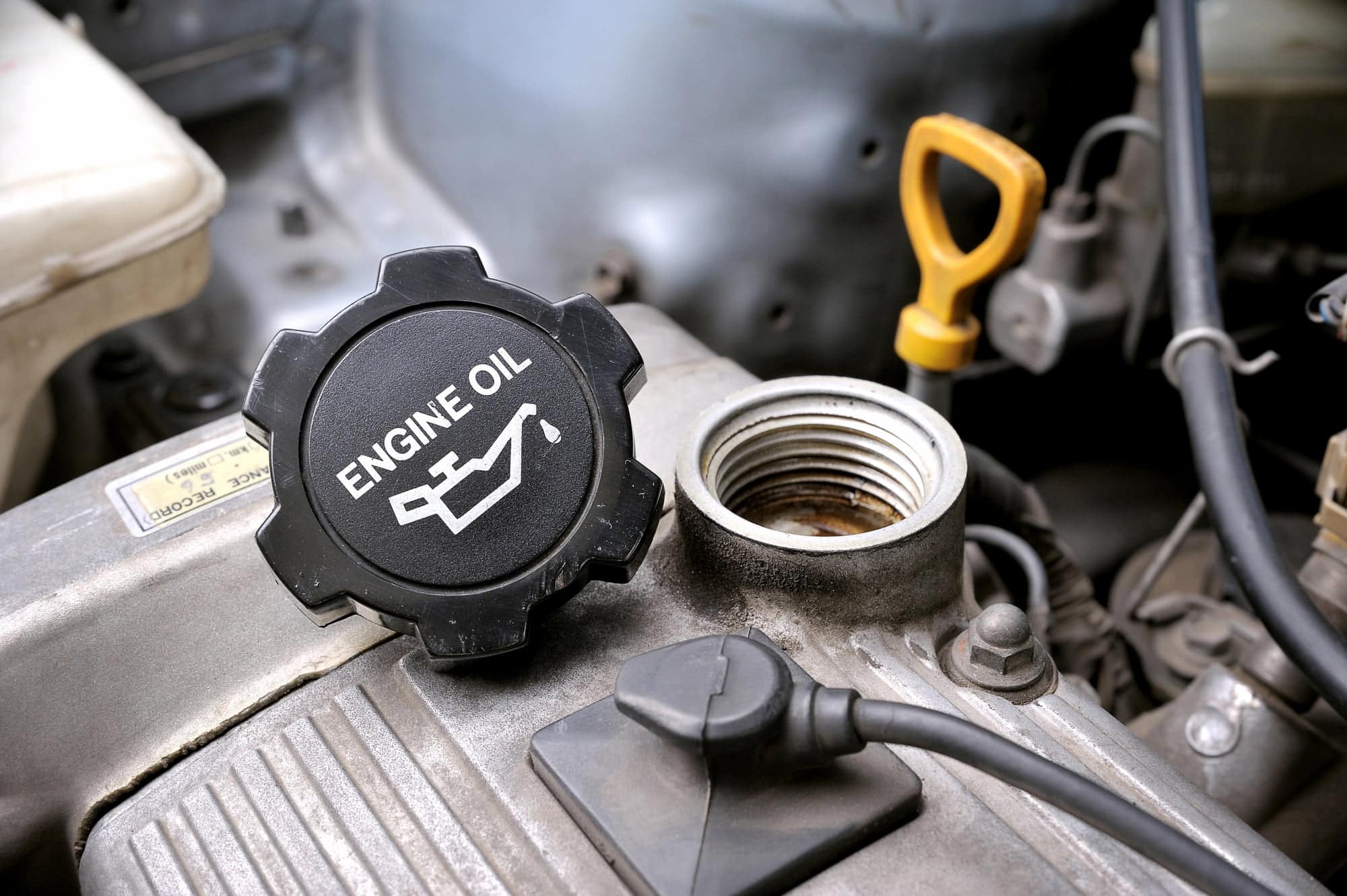
Mercedes-Benz Oil Change at DART Auto
Mercedes-Benz engines demand precision engineering at every level, and that extends to something as routine as an oil change. Modern Mercedes platforms – from the M274 turbo-four to the M177/M178 twin-turbo V8 – rely on low-viscosity synthetic oils and exact fill volumes to maintain variable valve timing, turbocharger lubrication, and emissions compliance. A generic quick-lube approach can introduce the wrong spec, overfill the sump, or skip the software reset that tracks oil life on ASSYST-equipped models. DART Auto treats every Mercedes oil service as a precision maintenance event, using factory-spec fluids, OEM-equivalent filters, and the same XENTRY diagnostic tools found at the dealership.
Our technicians reference Mercedes-Benz WIS/ASRA repair data for torque values on drain plugs and filter housings, verify correct oil grades for your specific engine code, and reset the flexible service indicator through the instrument cluster. On AMG variants and models with dry-sump systems, we follow the extended procedures that account for multiple oil reservoirs and scavenge pumps. Since 2000, we've serviced hundreds of Mercedes vehicles across Denver, and our salaried master technicians take the time to inspect oil condition, check for leaks at common failure points like valve cover gaskets and oil cooler seals, and document findings before you leave.
When you bring your Mercedes to DART Auto for an oil change, you can expect:
- Factory-specified MB 229.5, 229.51, or 229.52 synthetic oil matched to your engine and model year
- OEM or premium Mann/Mahle filter elements installed with correct torque and new sealing rings
- ASSYST service indicator reset via XENTRY diagnostic interface
- Complimentary multi-point inspection covering fluid levels, belts, hoses, and visible leaks
Common Oil Change Issues on Mercedes-Benz Vehicles
Mercedes-Benz engines demand precise oil specifications and service intervals that differ significantly from mainstream vehicles. The M276 and M278 V6/V8 engines (2012–2019 E-Class, S-Class, CLS) are particularly sensitive to oil quality degradation, with extended drain intervals often leading to timing chain wear and variable valve timing (VVT) solenoid failures. Here's what we commonly see:
- Oil leaks from valve cover gaskets and oil cooler seals – The M272/M273 V6/V8 engines (2006–2014 E-Class, ML-Class, GL-Class) develop valve cover gasket leaks that drip onto hot exhaust components. The plastic valve covers become brittle over time, and improper torque during previous oil changes accelerates cracking. Oil cooler seals on these platforms fail around 80,000–120,000 miles, mixing oil and coolant if ignored.
- Sludge buildup in turbocharged OM651 and OM654 diesels – The four-cylinder diesel engines in 2010–2020 Sprinter vans and E-Class/C-Class sedans accumulate sludge when owners extend oil change intervals beyond 10,000 miles or use incorrect oil grades. This clogs oil pickup screens and starves turbocharger bearings, leading to catastrophic turbo failure.
- Assyst Plus service indicator inaccuracy – Mercedes-Benz's onboard service reminder calculates oil life based on driving conditions, but it doesn't account for short-trip driving or extreme temperatures common in Denver. Relying solely on the dash indicator often results in oil breaking down 2,000–3,000 miles before the system triggers a warning.
- Overfill or underfill from incorrect dipstick reading – Many 2015+ Mercedes-Benz models lack traditional dipsticks, relying instead on electronic oil level sensors accessed through the instrument cluster. Technicians unfamiliar with the procedure often overfill during oil changes, causing excessive crankcase pressure that blows out seals and fouls oxygen sensors.
- Wrong oil specification causing engine damage – Mercedes-Benz requires MB 229.5, 229.51, or 229.52 approved oils depending on the engine. Using generic 5W-30 or incorrect viscosity grades leads to accelerated wear on camshaft lobes, lifters, and timing chain tensioners, especially on high-performance AMG variants with the M157 or M177 engines.
- Oil filter housing leaks on OM642 V6 diesel – The 3.0L diesel V6 (2007–2016 GL-Class, ML-Class, R-Class, Sprinter) develops leaks at the plastic oil filter housing around 60,000–100,000 miles. The housing cracks from heat cycling, and overtightening the filter cap during oil changes accelerates failure.
Why Choose DART Auto for Mercedes-Benz Oil Change
Mercedes-Benz oil service demands more than draining and filling. The M276 and M278 V6/V8 engines require specific MB 229.5 or 229.52 spec fluids, and the OM651 diesel uses low-SAPS formulations to protect emissions equipment. We maintain factory-calibrated XENTRY diagnostic systems to reset Assyst Plus service counters and capture stored fault codes that trigger service lights – work many quick-lube shops skip entirely. Our technicians follow OEM torque specs for drain plugs and filter housings, preventing the stripped oil pans and cross-threaded cartridges we routinely repair after improper service elsewhere.
Every oil change includes a full underbody inspection using factory service information. We check for the oil cooler seals that weep on 2012–2016 M276 engines, valve cover gasket seepage common to early W212 E-Class, and the oil-to-coolant heat exchanger leaks seen on OM642 diesels. Because our technicians are salaried rather than flat-rate, they document what they find without pressure to upsell. You receive a written multi-point inspection with photos and explanations of any developing issues, plus clear guidance on what needs attention now versus what to monitor.
- OEM-grade fluids and filters: MB-approved synthetic oils and genuine or premium aftermarket cartridges that meet factory filtration standards
- Diagnostic integration: XENTRY scan-tool reset of service intervals and fault-code review to catch issues before the check-engine light appears
- Platform expertise: familiarity with W204, W212, W222 chassis-specific drain-plug torque, filter-housing O-ring replacement intervals, and common leak points
- 3-year/36,000-mile warranty: parts and labor coverage that reflects confidence in the quality of every service
Symptoms – How to Know You Need This Service
Mercedes-Benz vehicles equipped with the ASSYST flexible service system will display a countdown in the instrument cluster, typically prompting service between 10,000 and 15,000 miles depending on driving conditions. If you see "Service A" or "Service B" illuminated, an oil change is due. Beyond the dashboard reminder, several physical symptoms indicate it's time to schedule:
- Oil life warning or wrench icon in the multifunction display – schedule service within the next few hundred miles
- Dark, gritty oil visible on the dipstick (if equipped) or during a fluid check – indicates breakdown of additives and contamination
- Engine noise at cold start, particularly a rattling or ticking from the valvetrain – can signal oil that's lost viscosity or low oil level affecting hydraulic lifters
- Low oil level warning on the dashboard – check immediately and top off; persistent consumption between services may indicate valve stem seals or turbo seal wear
- Burning oil smell from the engine bay – often points to leaks onto hot exhaust components, common at valve covers on M276 and M278 engines
- Rough idle or hesitation on turbocharged models – degraded oil can affect variable cam timing solenoids and turbo bearing clearances
- Check engine light with codes for cam/crank correlation – sometimes triggered by incorrect oil viscosity affecting VVT actuators
If the oil pressure warning light illuminates or you hear knocking under load, stop driving immediately and have the vehicle towed. Continuing to run the engine with insufficient oil pressure can destroy bearings and camshafts within minutes.
Which Mercedes-Benz Models We See for Oil Change
DART Auto services the full range of Mercedes-Benz passenger vehicles, from compact luxury sedans to high-performance AMG models. Our equipment and training cover both older naturally aspirated platforms and the latest turbocharged, hybrid, and AMG architectures:
- C-Class (W204, W205, W206) – 2008–present, including C300, C350, C43 AMG, and C63 AMG variants with M274, M276, M177, and M156/M159 engines
- E-Class (W212, W213, W214) – 2010–present, covering E300, E350, E400, E43, E53, and E63 AMG with turbocharged inline-six and V8 powertrains
- S-Class (W221, W222, W223) – 2007–present, including S450, S500, S560, S63 AMG, and S65 AMG with M276, M278, M177, and M279 engines
- GLE / GLE Coupe (W166, W167) – 2016–present, including GLE350, GLE450, GLE53 AMG, and GLE63 AMG
- GLC / GLC Coupe (X253, X254) – 2016–present, covering GLC300, GLC43 AMG, and GLC63 AMG
- CLA / CLA Coupe (C117, C118) – 2014–present, with M133 and M260 turbocharged engines
- GLA / GLB (X156, H247, X247) – 2015–present compact crossovers with transverse engine layouts
- SL / SLC / AMG GT (R231, R172, C190) – 2013–present sports and GT models, including dry-sump AMG GT variants
- Sprinter vans (W906, W907) – 2007–present with OM651 and OM654 diesel engines, requiring different service intervals and oil specs
We regularly service both rear-wheel-drive and 4MATIC all-wheel-drive configurations. AMG models with dry-sump lubrication systems receive extended service procedures to account for separate oil tanks and scavenge pumps. If you drive a classic R107 SL, W123, or W126, we're happy to discuss service – our focus is on 2000-and-newer platforms where our diagnostic tooling and training provide the greatest advantage over independent shops.
Causes & Risks – What Happens if Ignored
Mercedes-Benz oil change issues stem from a combination of tight engine tolerances, turbocharged powertrains generating extreme heat, and Denver's temperature swings that accelerate oil breakdown. The brand's extended service intervals (10,000 miles in many cases) assume highway driving and premium oil, but stop-and-go traffic and short trips degrade oil far faster. Older models with higher mileage face additional risk from worn seals and gaskets that leak when oil viscosity drops.
Delaying oil changes or ignoring early warning signs sets off a predictable cascade of damage:
- First 2,000–5,000 miles of overdue service – Oil loses its viscosity and protective additives, allowing metal-on-metal contact in high-stress areas like timing chain guides and VVT actuators. You'll hear rattling on cold starts as hydraulic lifters struggle to pump up with degraded oil.
- 5,000–10,000 miles overdue – Sludge forms in oil passages and clogs the oil pickup screen. Oil pressure drops at idle, triggering dashboard warnings. Turbocharger bearings begin to score from oil starvation, producing a high-pitched whine under acceleration. Piston rings carbon up, increasing oil consumption to a quart every 500–1,000 miles.
- Beyond 10,000 miles overdue – Timing chains stretch from inadequate lubrication, throwing off valve timing and causing rough idle, misfires, and check engine lights. Camshaft lobes wear flat, requiring cylinder head replacement. Turbochargers seize completely, sending metal debris through the intake system. At this stage, you're looking at engine replacement rather than a simple oil change.
- Ignored oil leaks – What starts as a small valve cover drip becomes a fire hazard when oil saturates ignition coils or drips onto the exhaust manifold. Low oil levels from unaddressed leaks lead to rod bearing failure and catastrophic engine seizure, often without warning.
Safety Impact – Why Oil Change Matters
Neglected oil changes on Mercedes-Benz vehicles create direct safety risks that extend beyond engine damage. When oil pressure drops from degraded or insufficient oil, the engine can seize while driving, eliminating power steering assist and vacuum for the brake booster. On models with electric power steering (most 2012+ vehicles), a seized engine still allows steering, but the sudden loss of power in traffic or on the highway creates dangerous situations.
Specific safety-critical failures include:
- Turbocharger failure sending debris into the intake – A disintegrating turbo can cause sudden power loss or uncontrolled acceleration if debris jams the throttle body, leaving you unable to slow down predictably.
- Oil starvation causing timing chain failure – When the chain jumps time, valves contact pistons, stalling the engine instantly. This often happens during acceleration onto highways or while passing, putting you in harm's way with no power.
- Oil leaks creating underhood fires – Oil dripping onto hot exhaust components ignites, especially on turbocharged models where exhaust temperatures exceed 1,200°F. Small leaks become major fire risks within minutes.
- Dashboard warning lights distracting the driver – Multiple warning lights (oil pressure, check engine, reduced power) competing for attention during critical driving moments increase accident risk.
Stop driving immediately if: the oil pressure warning light illuminates, you hear loud knocking from the engine, or you see smoke from under the hood. Schedule service within the week if: you notice oil spots under the car, the oil level is low between changes, or you're past the service interval by more than 1,000 miles.
How Mercedes-Benz Oil Change Actually Works
Mercedes-Benz oil change procedures differ substantially from generic service because of the brand's integrated electronic systems and precise fluid specifications. The Assyst Plus service computer monitors oil condition through algorithms that track engine load, temperature cycles, fuel quality, and driving patterns. When you bring your Mercedes-Benz in for service, the technician must reset this system using factory-level diagnostic tools (Xentry or equivalent), not just change the oil and stick a reminder sticker on the windshield. Skipping the reset throws off future service intervals and can trigger limp mode on some models.
Mercedes-Benz engines also require specific oil capacities and fill procedures. Models without dipsticks demand precise fill amounts verified through the instrument cluster's oil level display, accessed via steering wheel controls while the engine is at operating temperature. Overfilling by even half a quart causes excessive crankcase pressure that damages the PCV system and catalytic converters.
Key technical considerations that separate Mercedes-Benz oil service from generic work:
- MB-approved oil specifications – The 229.5, 229.51, and 229.52 standards require specific additive packages and viscosity stability that generic oils don't meet, even if the weight appears identical on the bottle.
- Fleece oil filters with integral bypass valves – Mercedes-Benz uses high-efficiency fleece media filters with built-in bypass protection. Aftermarket filters often lack proper bypass calibration, causing oil starvation during cold starts.
- Electronic oil level sensors requiring calibration – On 2015+ models, the oil level sensor must be read through the diagnostic system to verify proper fill, not estimated by pouring in the "recommended" amount.
- Assyst Plus reset requiring factory
Mercedes-Benz engines have always demanded precision – from the M104 inline-six's legendary durability to the modern M256 inline-six with integrated starter-generator. Regular oil changes remain the single most effective way to protect these sophisticated powerplants. The difference between a Mercedes that runs 200,000 miles and one that needs an engine rebuild at 100,000 often comes down to consistent oil service using the correct specification and interval. Since 2000, DART Auto has specialized in keeping Mercedes-Benz engines healthy with OEM-aligned procedures, factory-spec fluids, and diagnostic equipment that reads deeper than a basic code scanner.
How We Diagnose Oil Change Issues on Mercedes-Benz
Even a routine oil change on a Mercedes-Benz begins with a thorough assessment. We don't just drain and fill – we evaluate the entire lubrication system to catch problems before they escalate.
- Connect factory-level diagnostics. We use Mercedes-Benz XENTRY or equivalent tooling to read oil quality sensors, oil level monitors, and service history stored in the vehicle's control modules. On newer models with ASSYST PLUS, the system calculates remaining oil life based on actual driving conditions, not just mileage.
- Inspect the oil during drain. We examine the drained oil for metal particles, coolant contamination, or fuel dilution. Glitter in the oil pan signals bearing wear; milky residue points to a head gasket or oil cooler leak. Early M272/M273 V6 and V8 engines are prone to balance shaft wear that shows up as fine metallic debris.
- Check the filter housing and seals. Many Mercedes-Benz engines use cartridge-style filters with plastic housings that crack over time, especially on M276 and M278 engines. We inspect for seepage and verify the condition of all O-rings before reassembly.
- Measure oil consumption history. We review service records and ask about top-off frequency. Engines with turbochargers – like the M274 and M256 – can consume oil normally, but excessive loss suggests valve stem seals or turbo bearing wear.
- Perform a visual underbody inspection. While the vehicle is on the lift, we check for oil leaks at the oil pan gasket, valve cover gaskets, camshaft adjuster seals, and front crankshaft seal. The OM642 diesel is notorious for oil cooler seals that weep onto the starter.
After the inspection, we provide a detailed report with photos of any concerns. You'll know exactly what the oil change revealed, what needs attention now, and what can wait for the next service.
Oil Change on Mercedes-Benz: Repair vs. Replacement
Oil changes themselves are straightforward service, but related issues often require a decision between repairing a component or replacing it outright.
When Repair Makes Sense
- Resealable housings. If the oil filter housing or oil cooler is leaking but the component itself is sound, we can often replace just the seals and O-rings. This is common on M276 V6 engines where the housing cracks are rare but seal deterioration is routine.
- Accessible drain plug threads. Stripped oil pan threads can be repaired with a time-sert or helicoil insert rather than replacing the entire oil pan, saving hundreds of dollars.
- Software-related oil consumption. Some M274 engines had software updates that adjusted fuel injection timing to reduce oil dilution. A reflash can solve the problem without touching hardware.
When Replacement Is the Right Call
- Cracked plastic housings. Oil filter housings on M276 and M278 engines crack from heat cycling. Once cracked, they cannot be reliably sealed – replacement is the only durable fix.
- Worn turbocharger seals. If oil consumption traces back to turbo bearing wear on an M274 or OM651 diesel, the turbocharger needs replacement. Attempting to reseal a worn turbo is false economy.
- Severe sludge buildup. Engines with neglected oil changes – especially M272/M273 V6/V8 engines – can develop sludge that clogs passages. At that point, an engine flush and frequent short-interval oil changes may restore function, but severe cases require teardown or replacement.
We walk you through the cost-benefit of each option. Our salaried technicians have no incentive to upsell – if a repair will last as long as a replacement, we'll recommend it.
How to Make Your Mercedes-Benz Oil Change Last Longer
Mercedes-Benz engines are built for longevity, but only if you give them the right care between oil changes.
Driving Habits That Protect Your Engine
- Let the engine warm up before hard acceleration. Turbocharged engines – M274, M256, OM654 diesel – need 30 seconds at idle and a few minutes of light driving before full throttle. Cold oil doesn't protect turbo bearings adequately.
- Avoid excessive idling. Long idle periods on direct-injection engines can lead to fuel dilution of the oil, especially in cold weather. If you're stopped for more than a minute, shut it down.
- Use the correct driving mode. Sport mode holds gears longer and runs higher RPM, which increases oil temperature. Save it for spirited drives, not commuting, to reduce thermal stress on the oil.
Maintenance You Can Monitor
- Check oil level monthly. Use the dipstick or digital oil level display. Top off with the exact Mercedes-Benz specification – 229.51 for most modern gasoline engines, 229.52 for diesels. Never mix oil specs.
- Watch for dashboard warnings. The oil level light, oil pressure light, and service reminder are not suggestions. Address them immediately to avoid catastrophic damage.
- Listen for valve train noise. Ticking or rattling on cold starts can indicate low oil level, wrong viscosity, or worn camshaft adjusters – all issues that shorten oil life and damage the engine.
What to Leave to the Professionals
Mercedes-Benz oil changes require more than a drain pan and wrench. The oil filter housing torque specs, the correct MB-approved oil, and proper reset of the service indicator all matter. We use factory repair procedures, OEM-equivalent filters, and the exact fluid specification for your engine. Cutting corners with bargain oil or skipping the digital service reset can trigger false warnings or void warranty coverage on newer models. Trust the oil change to a shop with Mercedes-Benz diagnostic tools and training – it's the cheapest insurance your engine will ever have.
What to Expect When You Bring Your Mercedes-Benz In
We designed our service process to keep you informed and minimize disruption to your day. Here's how an oil change appointment unfolds:
- Appointment and drop-off: Schedule online or by phone; we confirm the year, model, and engine to ensure the correct fluid and filter are on hand. Drop off your Mercedes-Benz at your scheduled time or use our after-hours key drop if you need early service.
- Initial scan and inspection: Before we touch the drain plug, a technician connects XENTRY to pull stored codes and review service history. We photograph the undercarriage, check fluid levels, and inspect common leak zones – valve covers, oil pan gasket, oil filter housing.
- Written estimate and approval: If we find anything beyond routine service – a seeping oil cooler seal, a cracked charge-air pipe, worn engine mounts – you receive a detailed estimate with photos. We explain what the repair addresses and what happens if you defer it. No work starts without your go-ahead.
- Service completion and reset: We drain the old oil, replace the filter cartridge and crush washer, refill with the correct MB-spec synthetic, reset the Assyst counter via XENTRY, and re-scan to confirm no new faults.
- Post-service walkthrough: At pickup, we review the multi-point inspection report, show you any photos of concern areas, and answer questions. If something feels off in the days following service – an unfamiliar noise, a dashboard message – call us. We'll bring the car back in and verify everything without a second service charge.
Loaner vehicles and local shuttle service are available when your visit extends beyond a basic oil change. Secure valuables and remove personal items before drop-off; we're not responsible for items left in the cabin, but we treat every Mercedes-Benz as if it were our own.
Our Mercedes-Benz Services
- Air Conditioning AC Repair
- Battery Repair Replacement
- Brake Repair & Brake Fluid Change
- Check Engine Light Diagnostics
- Clutch Repair & Replacement
- Coolant Leak Repair
- Cooling System Repair
- Drive Shaft Repair
- Engine Repair
- Exhaust & Catalytic Converter Repair
- Head Gasket Repair & Replacement
- Oil Leak Repair
- Scheduled Service Maintenance
- Steering Repair
- Suspension Repair
- Cambelt Timing Belt Replacement
- Transmission Repair
- Tune Up
- Wheel Alignment