
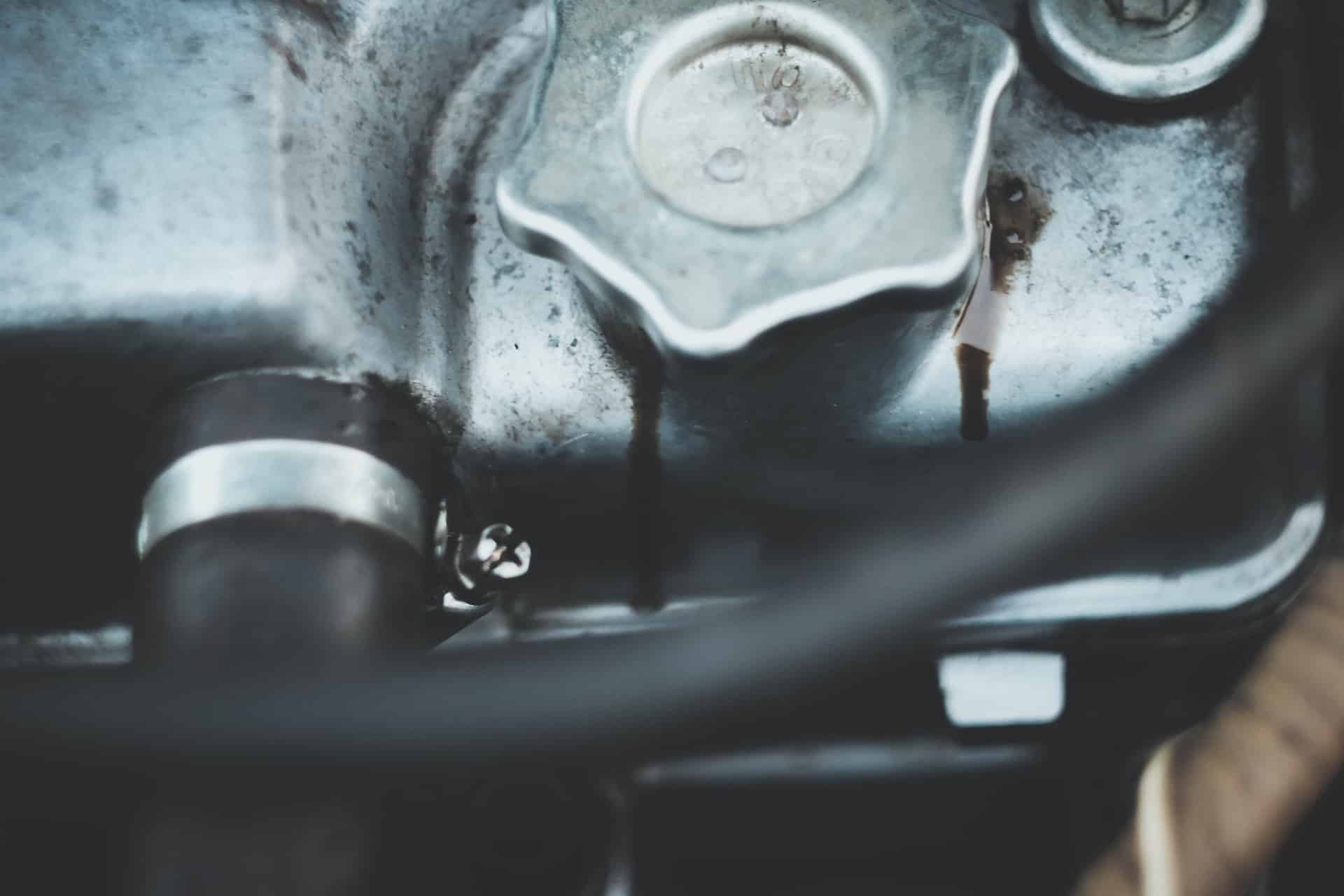
Audi Oil Leak Repair at DART Auto
You're parked on a slight incline, and there it is – a dark puddle spreading beneath your Audi. Oil leaks don't announce themselves with dashboard warnings until it's often too late, and on modern Audi platforms, pinpointing the source demands more than a flashlight and good intentions. Between timing cover seals on EA888 Gen3 engines (2013–present A4, A5, Q5), cam adjuster seals on the supercharged 3.0T V6, and the notoriously weepy valve cover gaskets on B8/B8.5 models, Audi oil leaks span a spectrum from nuisance drips to engine-threatening failures.
DART Auto approaches every Audi oil leak with factory-level diagnostic rigor. We use ODIS Engineering software and pressure-decay testing to isolate the exact failure point – critical when a visible leak at the oil pan may actually originate from a failing turbo oil feed line or crankcase ventilation valve two feet higher. Audi's longitudinal engine layout and subframe-mounted components mean many seal replacements require partial drivetrain drops, and we follow VAG torque specifications and sealant cure times to the letter. Our salaried master technicians have dealer training on Audi-specific procedures, so you're not paying for guesswork or comebacks.
What you can expect from DART Auto's Audi oil leak repair:
- Comprehensive pressure testing and UV dye tracing to confirm the leak source before disassembly
- OEM gaskets, seals, and fasteners – we replace stretch bolts and use Audi-spec sealants where required
- Complete fluid service with VW 502.00/504.00 approved oil and proper fill procedures
- 3-year/36,000-mile warranty on parts and labor, backed by over two decades serving Denver's Audi community
Common Oil Leak Repair Issues on Audi Vehicles
If you've spotted oil pooling under your Audi or caught a whiff of burning oil after a drive, you're dealing with one of the most common – and platform-specific – issues these cars face. Audi engines are tightly packaged, run hot, and rely on seals and gaskets that age poorly under heat cycling. Here's what we see most often:
- Valve cover gasket leaks (B8/B8.5 A4/A5/Q5 2.0T EA888 Gen2, 2009–2016): The plastic valve cover becomes brittle over time, and the integrated gasket hardens. Oil weeps down the back of the engine onto the exhaust manifold, creating that telltale burning smell. By 80,000 miles, nearly every EA888 Gen2 needs this addressed.
- Cam bridge / camshaft adjuster seals (3.0T supercharged V6, C7 A6/A7/Q5/Q7, 2012–2018): The cam bridge at the front of the engine uses O-rings that fail predictably around 60,000–90,000 miles. Oil leaks down the timing cover and can pool on top of the subframe. Left unaddressed, it saturates the serpentine belt and fouls the alternator.
- Oil cooler / oil filter housing gaskets (2.0T and 3.0T platforms, B8/B8.5/C7/D4): The sandwich-style oil cooler and filter housing sit low on the block and see constant thermal cycling. Gaskets fail, and oil drips onto the subframe and exhaust. This is a high-volume leak that accelerates once it starts.
- Rear main seal (longitudinal V6/V8 platforms, C6/C7 A6, D3/D4 A8, Q7): The crankshaft seal at the back of the engine fails due to age and crankshaft endplay. Oil leaks into the bellhousing and can contaminate the clutch (manual) or foul the flexplate area (automatic). Requires transmission removal to access.
- Turbocharger oil feed and return lines (2.0T EA888, all generations): Braided stainless lines and banjo bolt crush washers harden with heat. Small leaks turn into steady drips that coat the underside of the engine and create smoke on startup.
- PCV valve and breather system leaks (all turbocharged four-cylinder and V6 engines): Audi's positive crankcase ventilation systems use integrated valves in the valve cover or oil separator housings. When these fail, crankcase pressure spikes, forcing oil past every gasket and seal. You'll see oil around the dipstick, valve cover, and even inside the intake manifold.
Why Choose DART Auto for Audi Oil Leak Repair
You've spotted the telltale puddle under your Audi, or your dashboard is flashing a low oil warning more often than it should. Oil leaks on Audi platforms aren't always straightforward – B8/B8.5 A4 2.0T models (2009–2016) commonly develop oil cooler seal leaks that require subframe work, while C7 A6/A7 3.0T supercharged engines often leak from the timing chain cover and valley pan gaskets. DART Auto's technicians bring dealer-level diagnostic capability without the dealer markup, using ODIS software and factory service information to pinpoint the exact source before any wrench turns.
Our approach to Audi oil leak repair includes:
- Comprehensive dye testing and pressure checks – We don't guess. UV dye tracing and crankcase pressure testing isolate the leak source, whether it's a camshaft adjuster seal on an EA888 Gen3 or a rear main seal on an older 2.8L V6.
- Platform-specific tooling – Audi timing chain cover removal on the 3.0T requires specialized alignment tools and torque-to-yield bolt procedures. We stock the OEM tooling and follow factory torque sequences.
- Salaried master technicians – Because our techs aren't paid flat-rate, there's zero incentive to skip steps like proper RTV cure time or coolant system bleeding after front cover work.
- 3-year/36,000-mile warranty – We stand behind every gasket, seal, and bolt we install, giving you confidence that the repair will last.
Symptoms – How to Know You Need This Service
Oil leaks rarely fix themselves, and on Audi's turbocharged engines, even a slow drip can escalate quickly. You may notice a burnt oil smell through the cabin vents when the heater runs – a telltale sign of valve cover oil seeping onto the exhaust manifold. Fresh oil spots on your driveway after the car sits overnight, especially centered under the engine or slightly rearward near the bellhousing, point to active leaks that need attention soon.
Watch for these specific symptoms:
- Blue-white smoke from the exhaust on cold starts, indicating oil burning past turbo seals or PCV system failures
- Low oil level warnings on the MMI display between service intervals – consumption beyond 1 quart per 1,000 miles suggests external leaks or internal seal wear
- Visible oil coating on the underside of the engine, transmission bellhousing, or subframe crossmember
- Burning oil odor inside the cabin, particularly noticeable when using recirculation mode
- Oil residue around the timing cover, cam adjuster area, or oil filter housing – common leak points on 2.0T and 3.0T engines
- Pooling oil in the spark plug wells, causing misfires and rough idle (requires immediate service to prevent coil pack damage)
- Wet oil film on the lower intercooler pipes or charge air cooler, indicating turbo seal failure
If you see smoke paired with rapid oil loss or smell burning oil constantly, stop driving and arrange for towing – continuing to operate can score bearings or damage the turbocharger.
Which Audi Models We See for Oil Leak Repair
DART Auto services the full range of modern Audi platforms, with particular depth on the longitudinal-engine quattro models and transverse-FWD/quattro variants from 2005 forward. We regularly repair oil leaks on B8/B8.5/B9 A4 and A5 models (2009–present), Q5 and Q7 SUVs across all three generations, and C7/C8 A6/A7 sedans. The EA888 2.0T four-cylinder – used across A3, A4, A5, Q3, and Q5 from 2008 onward – accounts for a significant share of our valve cover, timing cover, and oil cooler seal work, particularly Gen2 (2008–2014) and Gen3 (2013–present) variants.
Platforms and engines we commonly service for oil leak repair:
- B8/B8.5 A4, A5, allroad (2009–2016): 2.0T EA888 valve cover gaskets, cam adjuster seals; 3.0T supercharged V6 timing cover and valley pan leaks
- B9 A4, A5 (2017–present): EA888 Gen3 timing cover seals, PCV valve integration issues
- 8V A3, S3 (2015–present): Transverse 2.0T oil filter housing, turbo oil feed lines
- 8R Q5 (2009–2017), 8S/FY Q5 (2018–present): 2.0T and 3.0T oil pan gaskets, rear main seals
- 4G Q7 (2007–2015), 4M Q7 (2016–present): 3.0T supercharged and TDI oil cooler seals, upper oil pan leaks
- C7 A6, A7 (2012–2018): 3.0T timing cover, oil filter flange; 4.0T twin-turbo V8 valley cover seals
- D4 A8 (2011–2017): 4.0T and 3.0T supercharged oil leaks, often require subframe lowering for access
We also service earlier C6 A6 (2005–2011) and D3 A8 models, though parts availability and labor complexity increase on pre-2009 platforms. RS and S models receive the same attention – our technicians are familiar with high-output engine variants and the additional sealing points around upgraded turbos and oil coolers.
Causes & Risks – What Happens if Ignored
Oil leaks on Audi vehicles stem from a handful of predictable causes. Heat cycling is the primary culprit – turbocharged engines run hot, and the temperature swings between cold starts and full operating temp cause gaskets to harden and crack. Denver's altitude exacerbates this; thinner air means less cooling efficiency, and engines work harder. Short trips where the engine never fully warms also allow moisture to accumulate in the oil, accelerating seal degradation. Audi's use of plastic valve covers, composite oil pans, and integrated gaskets means that when one component fails, you're often replacing an entire assembly rather than a simple gasket.
Here's what escalates when you wait:
- Minor seepage becomes major loss: A valve cover gasket that's weeping at 500 miles between top-offs will progress to a quart every 300 miles within six months. Running low on oil starves the turbocharger, cam phasers, and timing chain tensioner – all of which depend on full oil pressure to survive.
- Catalytic converter damage: Oil burning on the exhaust manifold eventually saturates the upstream catalytic converter, poisoning the catalyst. A $400 gasket repair becomes a $2,200 repair with converter replacement.
- Turbocharger failure: Oil starvation from low levels or contaminated oil from a failed PCV system will cook turbo bearings. Turbos on the 2.0T EA888 cost $1,800–$2,400 to replace, and the failure often sends metal shavings through the oil system, requiring a full engine flush or worse.
- Timing system damage: The timing chain tensioner on Audi engines is oil-pressure actuated. Low oil pressure from leaks allows the chain to slap, stretching it and damaging the guides. Once the chain jumps a tooth, you're looking at valve-to-piston contact and an engine rebuild.
- Fire risk: Oil pooling on an exhaust manifold or turbocharger housing can ignite under the right conditions – high load, sustained speed, or an especially large leak. We've seen engine bay fires start this way.
Safety Impact – Why Oil Leak Repair Matters
An oil leak doesn't just threaten your engine – it creates immediate safety hazards. Oil dripping onto hot exhaust components produces smoke that obscures vision and can ignite. If the leak is severe enough to drop oil pressure, you lose hydraulic pressure to the cam phasers and variable valve timing system, causing rough running, misfires, and potential stalling at speed. On Quattro all-wheel-drive models, a sudden loss of power while accelerating through an intersection or merging onto I-25 puts you and others at risk.
Here's when to act:
- Stop driving immediately: Oil pressure warning light illuminated, heavy smoke from the engine bay, or a visible puddle forming under the car while parked. These indicate catastrophic loss of oil or an active fire risk.
- Schedule within the week: Burning oil smell after driving, oil spots on your garage floor larger than a quarter, or needing to add more than a quart between oil changes. The leak is active and accelerating.
- Address at your next service: Light oil residue on the engine during an inspection, minor seepage around gaskets with no drips, or oil consumption within half a quart per 1,000 miles. These are early warnings before the leak worsens.
Insurance and liability also come into play. If you're aware of an oil leak and continue driving without repair, you may be found negligent in the event of a fire or collision caused by mechanical failure. Colorado requires vehicles to be maintained in safe operating condition – a known defect left unaddressed can complicate claims.
How Audi Oil Leak Repair Actually Works
Audi engines use a pressurized oil system that circulates lubricant through the block, cylinder head, turbocharger, variable valve timing components, and back to the sump. Oil is drawn from the pan by a chain- or balance-shaft-driven pump, pushed through a cooler and filter, then distributed via internal galleries. Seals and gaskets at every junction – valve cover, cam bridge, oil pan, turbocharger lines, crankshaft ends – keep oil contained. When these seals age, oil escapes under pressure, and the leak accelerates as heat and pressure continue to degrade the remaining seal material.
What makes Audi repair different:
- Integrated gaskets in composite covers: Audi valve covers and oil filter housings often use molded-in gaskets. You can't buy the gasket separately – you replace the entire cover or housing assembly, and that requires OEM-specific part numbers by engine code and model year.
- Timing cover and front-end removal: Accessing the cam bridge seals or oil pump chain on the 3.0T supercharged V6 requires removing the front bumper, radiator support, and timing cover. This is a 10–12 hour job that demands precise torque specs and timing alignment using factory tooling.
- Adaptation and coding after repair: If the repair involves removing the throttle body, intake manifold, or any sensor with a learned value, the control modules must be reset and re-adapted using ODIS (Offboard Diagnostic Information System) or equivalent VAS tooling. Skipping this step causes rough idle, poor fuel trims, and check-engine lights.
- Torque
How We Diagnose Oil Leak Repair Issues on Audi
If you're seeing fresh oil spots under your Audi or noticing a burning smell after a drive, you're likely dealing with an oil leak that needs attention. Our diagnostic process is designed to pinpoint the exact source and severity before we recommend any work.
- Initial visual inspection and fluid identification. We lift the vehicle and examine the engine bay, undercarriage, and valve covers. Audi engines – especially the EA888 Gen 2 and Gen 3 2.0T – are notorious for oil cooler housing leaks and valve cover gasket seepage. We trace the oil trail upward to find the origin, not just the lowest drip point.
- UV dye injection and drive cycle. For slow or intermittent leaks, we add fluorescent dye to the oil, run the engine to operating temperature, and inspect under UV light. This reveals hairline cracks in oil pan gaskets or camshaft adjuster seals that aren't obvious during a static inspection.
- Pressure testing and scan tool analysis. We connect factory-level diagnostic equipment to check for excessive crankcase pressure, which can indicate PCV valve failure – a common culprit on B8/B8.5 A4 and Q5 models. Elevated pressure forces oil past seals that would otherwise hold.
- Component-specific inspection. We remove any necessary covers to inspect timing cover seals, camshaft bridge seals, and turbocharger oil feed lines. On older C6 A6 3.2 V6 models, rear main seal leaks often masquerade as transmission issues.
- Documentation and repair plan. We photograph the affected areas, measure leak severity, and provide a detailed quote that explains what failed, why it failed, and what's required to fix it properly.
This thorough approach means you're not paying for guesswork. You'll know exactly what's leaking, what it will take to repair it, and what happens if you delay the work.
Oil Leak Repair on Audi: Repair vs. Replacement
Not every oil leak demands a full component replacement. The right solution depends on what's leaking, how badly, and whether the underlying part is still serviceable.
When a True Repair Makes Sense
- Valve cover gasket replacement. The valve cover itself is typically fine; we replace the gasket, spark plug tube seals, and PCV components. Common on 2.0T and 3.0T engines across A4, A5, Q5, and Allroad platforms.
- Oil cooler housing reseal. On EA888 engines (2009–2014 A4, A5, Q5), the plastic oil cooler housing develops leaks at the gasket interface. We replace the gaskets and O-rings without replacing the entire housing unless it's cracked.
- Turbo oil feed line replacement. A leaking braided oil line to the turbocharger can be replaced individually without touching the turbo itself, saving significant cost.
When Replacement Is the Right Call
- Timing cover oil leaks on 3.0T supercharged V6 engines. If the front crankshaft seal is leaking, we're already removing the timing cover – at that point, replacing the cover gasket, camshaft bridge seals, and water pump makes sense to avoid repeat labor.
- Rear main seal on high-mileage vehicles. This repair requires transmission removal; if your clutch or flywheel is near end-of-life, addressing those components together avoids paying twice for the same labor.
We walk you through the options and explain the trade-offs. You'll never be pushed toward the most expensive path unless it genuinely delivers better long-term value.
How to Make Your Audi Oil Leak Repair Last Longer
Once we've sealed the leak, a few smart habits will help you get the most life out of the repair and the engine overall.
Driving Habits That Protect Seals and Gaskets
- Allow proper warm-up. Audi's turbocharged engines run tight tolerances. Give the oil two to three minutes to circulate before heavy throttle, especially in cold weather. Cold oil doesn't seal as effectively and puts extra stress on gaskets.
- Avoid short trips whenever possible. Frequent cold starts without reaching full operating temperature cause condensation in the crankcase, degrading oil quality and accelerating seal wear.
- Monitor oil level between changes. Even after a repair, turbocharged engines can consume oil normally. Check your dipstick monthly and top off with the correct VW 502.00 / 504.00 spec oil if needed.
Maintenance You Can Handle
- Visual checks during every fill-up. Glance under the car for fresh spots. Early detection of a new leak saves money.
- Follow Audi's oil change intervals. Synthetic oil breaks down over time and loses its sealing properties. Stick to the 10,000-mile interval or annual service, whichever comes first.
- Keep an eye on the oil pressure warning light. If it flickers at idle or illuminates during driving, bring the car in immediately – low pressure can indicate a leak or failing pump.
What to Leave to the Professionals
PCV system service, timing cover work, and any repair requiring special tooling or torque specs should be handled by experienced technicians. Incorrect torque on valve cover bolts or improper sealant application will cause a repeat leak within months. We use factory procedures and OEM-equivalent parts to make sure the repair holds.
What to Expect When You Bring Your Audi In
Oil leak diagnosis on Audi vehicles requires time and methodical testing. Here's how we handle your visit from start to finish:
- Drop-off and initial inspection – Schedule an appointment or use our early drop-off if you need to leave your Audi before we open. Remove personal items from the cabin; we'll handle the rest. If you need transportation, ask about loaner availability or our local shuttle service.
- Dye trace and diagnostic scan – We add UV dye to the oil system, run the engine to operating temperature, and inspect under LED lighting. Simultaneously, we scan for fault codes that might point to PCV system faults or crankcase ventilation issues contributing to pressure-related leaks.
- Written estimate with photos – You'll receive a detailed estimate naming the failed component (valve cover gasket, oil pan gasket, turbo oil feed line, etc.), the labor involved, and OEM vs. premium aftermarket part options. Photos show you exactly what we found.
- Repair execution – Once approved, we follow factory removal sequences, replace all related seals in the area (no point opening the timing cover without replacing the water pump and thermostat housing gaskets on a high-mileage 3.0T), and torque everything to spec.
- Post-repair verification – After reassembly, we road-test the car, re-scan for codes, and inspect the repair area for any seepage. You'll get a walk-through at pickup explaining what was done and what to monitor over the next few hundred miles.
If you notice any seepage or warning lights after pickup, call us immediately. We'll get you back in and make it right – no runaround, no surprise charges.
Our Audi Services
- Air Conditioning AC Repair
- Battery Repair Replacement
- Brake Repair & Brake Fluid Change
- Check Engine Light Diagnostics
- Clutch Repair & Replacement
- Coolant Leak Repair
- Cooling System Repair
- Drive Shaft Repair
- Engine Repair
- Exhaust & Catalytic Converter Repair
- Head Gasket Repair & Replacement
- Oil Change
- Scheduled Service Maintenance
- Steering Repair
- Suspension Repair
- Cambelt Timing Belt Replacement
- Transmission Repair
- Tune Up
- Wheel Alignment