
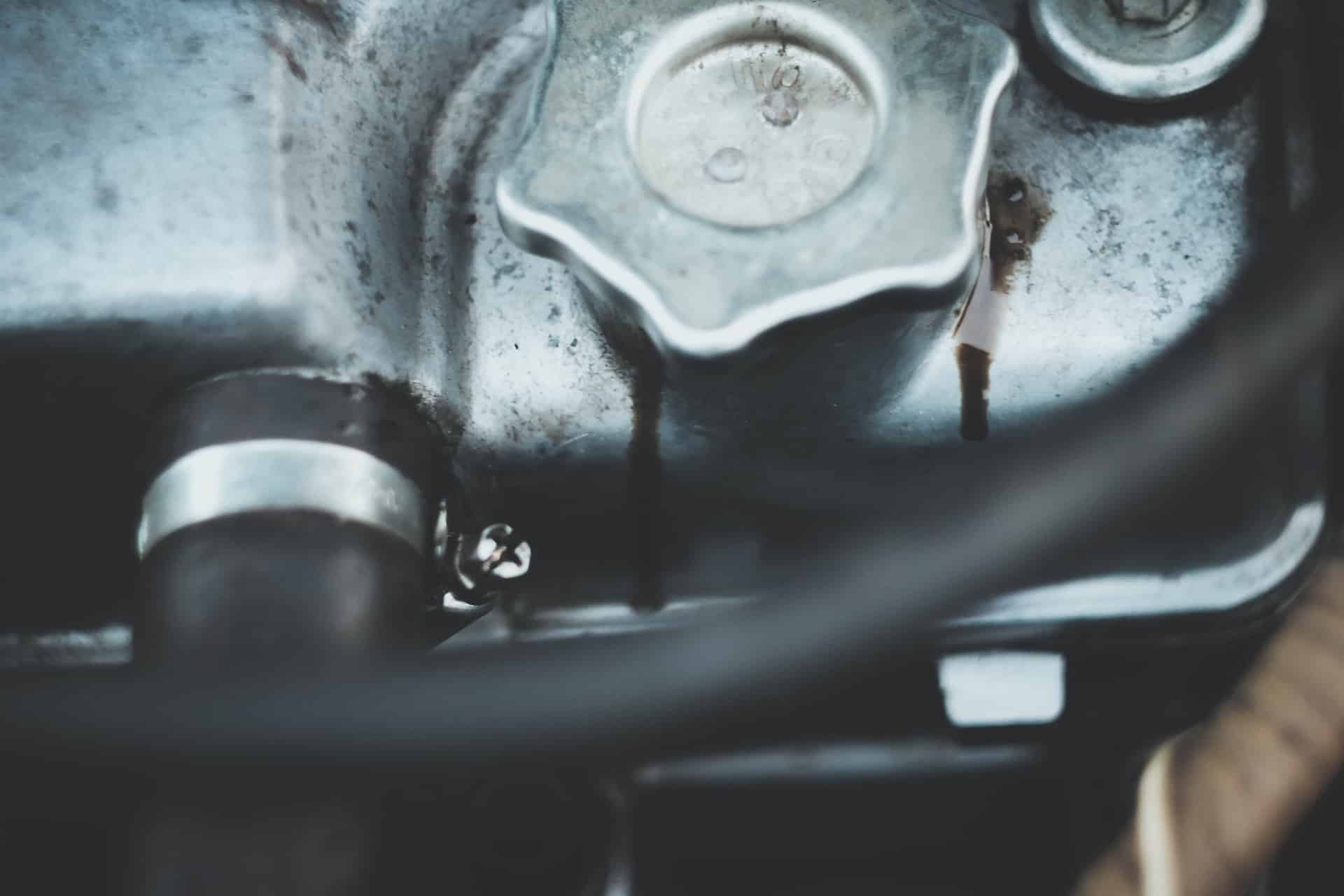
Mercedes-Benz Oil Leak Repair at DART Auto
An oil leak on a Mercedes-Benz is expensive to ignore. Modern Mercedes engines – from M276 V6s to M157 AMG V8s – run tight tolerances and high operating temperatures. A slow drip today becomes a catastrophic failure tomorrow when oil starvation damages variable valve timing actuators, turbocharger bearings, or timing chain tensioners. These platforms demand precision: factory torque specs measured in Newton-meters, OEM gasket materials engineered for specific expansion rates, and diagnostic software that monitors oil pressure at multiple points across the engine. A generic shop treats oil leaks as simple gasket swaps. We treat them as system-level repairs that protect your investment.
Mercedes-Benz oil leaks often originate from known weak points. The M276 and M278 engines (2011–2017 across E-Class, S-Class, ML, and GL platforms) suffer from timing cover leaks where aluminum meets composite materials. The OM642 diesel V6 sees oil cooler seal failures that contaminate coolant if left unchecked. Early W204 C-Class models with M271 engines develop valve cover leaks that drip onto exhaust manifolds, creating smoke and fire risk. We use Mercedes-Benz factory repair procedures, OEM-spec sealants, and XENTRY diagnostic validation to confirm oil pressure and system integrity after every repair.
When you bring your Mercedes-Benz to DART Auto for oil leak repair, you can expect:
- Complete visual inspection with UV dye tracing to identify all leak sources – not just the obvious ones
- OEM gaskets, seals, and fasteners sourced from trusted Mercedes-Benz suppliers
- Factory torque sequences and sealant cure times followed exactly as specified
- Post-repair system checks using dealer-level XENTRY diagnostics to verify oil pressure, camshaft position sensor data, and no fault codes
Common Oil Leak Repair Issues on Mercedes-Benz Vehicles
Oil leaks on Mercedes-Benz vehicles often stem from design choices that prioritize performance and refinement but introduce specific failure points as mileage accumulates. Getting these repairs wrong – or delaying them – can transform a straightforward gasket replacement into a multi-system failure that sidelines your vehicle for weeks. Here's what we see most often:
- M272 and M273 V6/V8 valve cover gasket failures (2006–2011 W211, W221, W164): These engines use plastic valve covers with integrated spark plug tube seals that become brittle with heat cycling. Oil migrates down the back of the engine onto the exhaust manifolds, creating smoke and fire risk. The plastic covers themselves often crack during removal, requiring complete replacement rather than simple gasket service.
- M157 oil cooler and front cover seals (2012–2016 AMG models): The twin-turbo 5.5L V8 runs high oil temperatures, degrading the oil cooler gasket and front crankshaft seal prematurely. Oil pools in the valley and drips onto the subframe. These require timing cover removal and precise torque sequences to prevent warping the aluminum housing.
- OM642 diesel oil pan and turbo feed line leaks (2007–2016 GL, ML, E-Class diesels): The V6 diesel's aluminum oil pan uses a multi-piece gasket that fails where the transmission bell housing meets the block. Turbo oil feed lines crack at the banjo fittings. Both require subframe lowering and careful alignment during reinstallation to avoid transmission mount stress.
- 722.9 transmission conductor plate seal leaks (2004–2016 7-speed automatic applications): The seven-speed automatic develops leaks at the conductor plate – the electronic control module mounted inside the transmission pan. This isn't an engine oil leak, but transmission fluid weeping past the plate gasket. Replacement requires transmission-specific fluid, precise torque on the 13mm bolts, and SCN coding to marry the new plate to the TCU.
- M276 timing cover and balance shaft module seals (2012–2018 E-Class, C-Class, GLE): The direct-injection V6 uses a complex front cover with integrated balance shaft housing. Seals fail where the cover meets the block and at the balance shaft access plate. Oil leaks onto the serpentine belt, causing slip and potential timing chain contamination. Repair requires removal of the front accessories, harmonic balancer, and careful RTV application per factory spec.
- W204 C-Class rear main seal and oil pan gasket (2008–2014, M271 and M274 engines): The four-cylinder models develop rear main seal leaks that saturate the clutch on manual-transmission cars or contaminate the torque converter on automatics. The stamped steel oil pan gasket also fails, often misdiagnosed as a rear main seal because oil collects at the bell housing. Proper diagnosis requires cleaning the block and observing leak paths with UV dye.
Why Choose DART Auto for Mercedes-Benz Oil Leak Repair
Oil leaks on Mercedes-Benz vehicles often stem from platform-specific failure modes that generic shops miss. M272 and M273 V6 and V8 engines (2004–2011) are notorious for balance shaft seal failures and valve cover gasket deterioration, while M276 and M278 engines (2012–2017) commonly leak from timing cover seals and oil cooler O-rings. Getting the diagnosis wrong means replacing a $40 gasket when the real culprit is a $1,200 timing cover reseal – or worse, missing a crankcase pressure issue that will destroy the new seals within months.
DART Auto has invested in factory-level diagnostic capability for Mercedes-Benz platforms. Our master technicians use Xentry diagnostics and OEM repair procedures to pinpoint the exact leak source, verify crankcase ventilation function, and follow torque specs and sealant application methods that match what the Stuttgart engineers designed. We've been repairing European vehicles since 2000, and our salaried compensation structure means your technician has zero incentive to misdiagnose or rush the repair.
You'll receive a complete written estimate that explains which seals are leaking, why they failed, and what we'll do to prevent recurrence. Every oil leak repair is backed by our 3-year/36,000-mile warranty on parts and labor – the same coverage window Mercedes-Benz dealers offer, but at a fair price that reflects independent-shop overhead instead of franchise markups.
Symptoms – How to Know You Need This Service
Mercedes-Benz oil leaks announce themselves in ways that range from subtle to urgent. Catching them early prevents secondary damage that multiplies repair costs.
- Oil spots or puddles under the engine bay after the car has been parked overnight – look for dark brown or amber fluid, not coolant (which is typically pink or green)
- Burning oil smell during or after driving, especially noticeable when stopped at a light or idling in a garage – indicates oil dripping onto hot exhaust components
- Blue-gray smoke from the exhaust on startup or during acceleration – oil entering the combustion chamber through valve stem seals or turbocharger seals
- Low oil level warning on the dashboard that appears more frequently than your normal service interval suggests – Mercedes systems monitor oil level continuously and alert early
- Visible oil residue on the engine block, timing cover, or valve covers during routine inspections – fresh oil appears wet and glossy, old leaks show as dark crusty buildup
- Oil coating on the undercarriage or suspension components – indicates a leak severe enough that airflow is distributing oil across multiple surfaces
- Rough idle or misfires accompanied by oil smell – oil contaminating spark plug wells causes ignition issues on V6 and V8 engines
Stop driving immediately if the oil pressure warning light illuminates or if you see heavy smoke. Schedule service within the week for persistent oil spots or burning smells. Delaying repairs risks damaging timing components, catalytic converters, and oxygen sensors – all far more expensive than addressing the leak itself.
Which Mercedes-Benz Models We See for Oil Leak Repair
We perform oil leak repairs on Mercedes-Benz platforms from the early 2000s through current model years. The work varies significantly by engine family and chassis generation, so knowing your platform helps us provide accurate guidance.
- C-Class (W203, W204, W205): 2001–present, including C230, C240, C280, C300, C350, C43 AMG, C63 AMG – M271 four-cylinder and M276 V6 timing cover leaks are common; W204 valve cover leaks on early models
- E-Class (W211, W212, W213): 2003–present, including E320, E350, E400, E43 AMG, E53 AMG, E63 AMG – M272/M273 balance shaft issues and M276 timing cover seepage; OM642 diesel oil cooler seal failures
- S-Class (W220, W221, W222): 2000–present, including S430, S500, S550, S63 AMG – M113/M273 valve cover leaks and M278 timing cover leaks on twin-turbo V8s
- ML / GLE / GL / GLS (W163, W164, W166): 2000–present – same M272/M276/OM642 leak patterns as sedans, plus oil pan gasket failures from off-road use
- GLK / GLC (X204, X253): 2010–present – M276 timing cover leaks and valve cover gasket deterioration
- SLK / SLC / SL (R171, R172, R230, R231): 2005–present – M272/M276 issues plus convertible top hydraulic pump contamination from engine oil leaks
- AMG variants across all platforms: M156/M159 naturally aspirated V8s, M157/M177/M178 twin-turbo V8s – higher oil temperatures accelerate gasket degradation; turbocharger oil feed line leaks require immediate attention
We service both gasoline and diesel engines. If you drive a Sprinter, Metris, or older R-Class, call us to confirm – these platforms require different tooling and we'll let you know upfront if we're the right fit.
Causes & Risks – What Happens if Ignored
Mercedes-Benz oil leaks accelerate due to a combination of high-performance engine design, extended service intervals, and the thermal cycling inherent in turbocharged and direct-injection platforms. Synthetic oil's detergent properties actually contribute to gasket degradation on older seals not formulated for modern PAO-based fluids. Denver's temperature swings – freezing mornings followed by afternoon heat – exacerbate seal contraction and expansion, particularly on rubber components that harden with age.
What starts as a few drops on your garage floor escalates predictably if left unaddressed:
- First 500 miles: Oil saturates engine mounts and accessory drive belts. Serpentine belts slip under load, causing intermittent power steering loss and battery warning lights as the alternator loses grip.
- 1,000–2,000 miles: Leaked oil contacts exhaust components, creating acrid smoke and potential fire hazard. On turbocharged models, oil entering the turbo intake tract fouls the mass airflow sensor and coats intercooler cores, reducing boost pressure and triggering limp mode.
- 2,000–5,000 miles: Oil level drops below the safe operating range. The oil pressure sensor triggers a warning, but internal damage may already be occurring. M272/M273 engines develop timing chain stretch when oil pressure drops, requiring a $4,000–$6,000 chain and guide replacement on top of the original leak repair.
- Beyond 5,000 miles: Bearing surfaces score from inadequate lubrication. Turbochargers fail from oil starvation. On OM642 diesels, low oil pressure allows the high-pressure fuel pump to cavitate, sending metal debris through the fuel system and necessitating injector replacement across all six cylinders.
The cost differential is stark: a valve cover gasket addressed early runs $800–$1,200. Ignored until timing chain damage occurs, that same repair balloons to $5,000–$8,000 once you account for chain guides, tensioners, and the labor to remove the front of the engine.
Safety Impact – Why Oil Leak Repair Matters
Oil leaks on Mercedes-Benz vehicles create immediate safety risks that extend beyond engine damage. Oil dripping onto exhaust manifolds or catalytic converters ignites at temperatures above 400°F – a threshold these components routinely exceed during highway driving or mountain passes. We've seen engine bay fires start from valve cover leaks that owners dismissed as "just a small drip." On AMG models with twin-turbo configurations, oil pooling in the valley between cylinder banks creates a reservoir of flammable liquid directly above 1,400°F exhaust components.
Oil contamination affects vehicle dynamics in ways owners don't anticipate:
- Serpentine belt slip: Oil-soaked belts lose 60–80% of their friction coefficient, causing power steering pump failure during low-speed maneuvers and alternator dropout that kills the battery mid-drive.
- Tire contamination: Oil dripping from the front crankshaft seal or oil pan lands on the front tires, reducing traction by up to 40% in wet conditions – particularly dangerous on vehicles equipped with summer performance tires.
- ABS/ESP sensor fouling: Oil migrating to wheel speed sensors causes erratic ABS activation and disables Electronic Stability Program, removing the safety net during emergency maneuvers.
- Catalytic converter damage: Oil entering the exhaust stream coats the catalyst substrate, triggering overheating and potential catalyst disintegration. Ceramic fragments then enter the turbocharger on force-fed engines, destroying the compressor wheel and scattering debris into the intake tract.
Stop driving immediately if: you see smoke from under the hood, smell burning oil in the cabin, or the oil pressure warning illuminates. Schedule within one week if: you notice fresh oil spots larger than a quarter, oil residue on the undercarriage during routine checks, or a persistent burning smell after the engine reaches operating temperature.
How Mercedes-Benz Oil Leak Repair Actually Works
Mercedes-Benz engines use a combination of molded rubber gaskets, multi-layer steel (MLS) head gaskets, and liquid gasket compounds applied at the factory with robotic precision. Unlike domestic vehicles that rely on simple cork or paper gaskets, Mercedes-Benz specifies exact RTV bead dimensions, cure times, and torque sequences that must be followed to achieve a lasting seal. The M276 and M278 V6/V8 engines, for example, require a 2–3mm bead of AMG-approved RTV at specific block mating surfaces, with a 10-minute flash-off period before bolt installation – skip this step and the gasket extrudes under clamp load, causing immediate re-leakage.
What makes Mercedes-Benz oil leak repair distinct from generic work:
- Torque-to-yield fasteners: Valve cover bolts, timing cover bolts, and oil pan fasteners on 2005+ models are single-use. They stretch during installation to achieve precise clamp load. Reusing them results in under-torqued joints that leak within weeks.
- Aluminum block prep: Mercedes-Benz's aluminum blocks require chemical cleaning and surface inspection with a straight edge to verify flat
How We Diagnose Oil Leak Repair Issues on Mercedes-Benz
Oil leaks on a Mercedes-Benz can originate from a dozen different points, and misdiagnosing the source costs you twice – once for the wrong repair, and again for the correct one. Our diagnostic process eliminates guesswork and pinpoints the exact failure before any wrench turns.
- Initial scan with Mercedes-Benz XENTRY diagnostics. We pull stored fault codes and live data to identify pressure anomalies, camshaft position deviations, and oil-level sensor faults that point to specific leak zones. On M276 and M278 engines (2012–2016 E-Class, S-Class), timing cover leaks often trigger cam correlation codes before the oil puddle appears.
- UV dye injection and drive cycle. We add fluorescent dye to the oil system, run the engine through operating temperature, and use UV lamps to trace the exact leak path. This distinguishes between valve cover seepage, oil cooler housing cracks, and front main seal leaks – all of which can drip onto the same crossmember.
- Visual inspection on the lift. With the vehicle elevated, we examine oil pan gaskets, transmission bell housing (rear main seal), turbocharger oil feed lines on AMG models, and the oil filter housing – a notorious leak point on OM642 diesels and M276 V6 engines where the plastic housing develops stress cracks.
- Pressure test critical seals. On high-mileage W204 and W212 platforms, we pressure-test the crankcase ventilation system. A clogged PCV valve creates positive crankcase pressure that forces oil past every seal, turning a $200 valve replacement into a $3,000 gasket job if ignored.
- Document findings with photos and fluid loss rate. We measure oil consumption over a standardized interval and photograph every leak source, then walk you through what needs immediate attention versus what can be monitored.
This systematic approach gives you a transparent repair plan with no surprise leaks reappearing two weeks later because we chased symptoms instead of causes.
Oil Leak Repair on Mercedes-Benz: Repair vs. Replacement
Not every oil leak demands a full component swap. The decision hinges on whether the underlying structure is compromised or just the sealing surface.
When Repair Makes Sense
- Valve cover gasket replacement on M272/M273 V6 and V8 engines. The covers themselves rarely fail – the rubber gaskets harden and leak. We replace gaskets, spark plug tube seals, and PCV valve components while the covers are off, restoring the seal without replacing cast aluminum parts.
- Oil cooler O-ring service on M276 engines. The cooler housing bolts to the block with replaceable O-rings. If the housing isn't cracked, we clean the mating surfaces, install new OEM seals, and torque to spec – done in two hours instead of sourcing a $600 housing.
- Turbo oil feed line resealing on OM651 diesels. The banjo bolts and copper crush washers are the usual culprits, not the hardline itself. New washers torqued correctly stop the seep.
When Replacement Is the Right Call
- Oil filter housing cracks on M276 and OM642 engines. The plastic housing develops stress fractures that no gasket can seal. We replace with updated OEM units that address the original design flaw.
- Timing cover leaks on M157 AMG V8s (2012–2016). These often coincide with front main seal failure and require timing cover removal. At that labor depth, replacing the cover, seal, and water pump together prevents a second teardown six months later.
- Oil pan rust-through on northern-climate W211 and W164 models. Road salt corrodes the steel pan from outside. No gasket fixes a perforated pan – replacement is the only option.
We present both paths with transparent labor and parts costs, then recommend the approach that makes sense for your vehicle's mileage and your ownership timeline. You decide – we just make sure you understand the trade-offs.
How to Make Your Mercedes-Benz Oil Leak Repair Last Longer
Once we've stopped the leak, a few intentional habits keep fresh oil inside the engine where it belongs.
Driving Habits That Protect Seals
- Allow proper warm-up before hard acceleration. Cold oil is thick and creates higher pressure spikes that stress gaskets and seals. Give the engine two minutes at idle before loading it – especially on turbocharged models where cold oil can't protect bearings or lubricate the turbo shaft adequately.
- Avoid extended idling in extreme heat. Sitting in traffic on a 95-degree day with the AC at full blast elevates underhood temps and accelerates gasket degradation. If you're stopped for more than five minutes, shut down and restart when moving.
- Don't ignore oil level warnings. Running a quart low increases operating temperature and thins the oil film on sealing surfaces, accelerating wear on valve stem seals and turbo bearings.
Maintenance You Can Monitor
- Check your parking spot weekly. A fresh drip means a new leak or a failed repair – catch it early before it becomes a puddle.
- Use Mercedes-Benz 229.5 or 229.52 specification oil. Aftermarket "equivalent" oils lack the additive packages that keep seals pliable on high-mileage engines. The $30 you save per change costs you $1,200 in gasket jobs.
- Follow the flexible service intervals – but verify them. ASSYST maintenance reminders adapt to driving style, but they assume you're checking oil between services. On M276 engines known for oil cooler seepage, verify the level every other fill-up.
What you should leave to us: crankcase pressure testing, PCV valve function checks, and any work requiring special torque procedures or sealants. Improper torque on oil pan bolts warps the flange; wrong RTV on a timing cover creates a worse leak than you started with. We have the factory procedures, the calibrated tools, and two decades of experience keeping these engines sealed.
What to Expect When You Bring Your Mercedes-Benz In
We treat oil leak diagnosis as a methodical process, not a guessing game. Here's how your visit unfolds:
- Drop-off and intake: Schedule your appointment online or by phone. Bring your service history if you have it. We offer loaner vehicles and local shuttle service during business hours – ask when you book. Remove valuables and personal items from the cabin; we'll need access to the engine bay and undercarriage.
- Inspection and diagnosis: We'll perform a complete visual inspection, dye test if needed, and scan-tool check of crankcase ventilation system function. On M156/M157 AMG engines, we verify camshaft adjuster seals and oil filter housing O-rings. On diesel models (OM642, OM651), we check turbo oil return lines and EGR cooler seals.
- Written estimate and approval: You'll receive a detailed estimate listing every leaking component, the labor involved, and OEM or premium aftermarket parts we'll use. We explain what happens if you delay the repair – whether it's minor seepage or active dripping that risks catalytic converter damage.
- Repair execution: Our technicians follow factory torque sequences, use OEM sealants where specified, and replace any fasteners that require one-time use. We don't reuse crush washers or stretch bolts.
- Post-repair verification: After reassembly, we road-test the vehicle and perform a final underbody inspection to confirm the leak is resolved. If you notice seepage or oil odor after pickup, call us immediately – we'll recheck at no charge.
After-hours key drop and pickup are available by arrangement. You'll leave with a complete invoice, warranty documentation, and our direct line if questions come up.
Our Mercedes-Benz Services
- Air Conditioning AC Repair
- Battery Repair Replacement
- Brake Repair & Brake Fluid Change
- Check Engine Light Diagnostics
- Clutch Repair & Replacement
- Coolant Leak Repair
- Cooling System Repair
- Drive Shaft Repair
- Engine Repair
- Exhaust & Catalytic Converter Repair
- Head Gasket Repair & Replacement
- Oil Change
- Scheduled Service Maintenance
- Steering Repair
- Suspension Repair
- Cambelt Timing Belt Replacement
- Transmission Repair
- Tune Up
- Wheel Alignment