
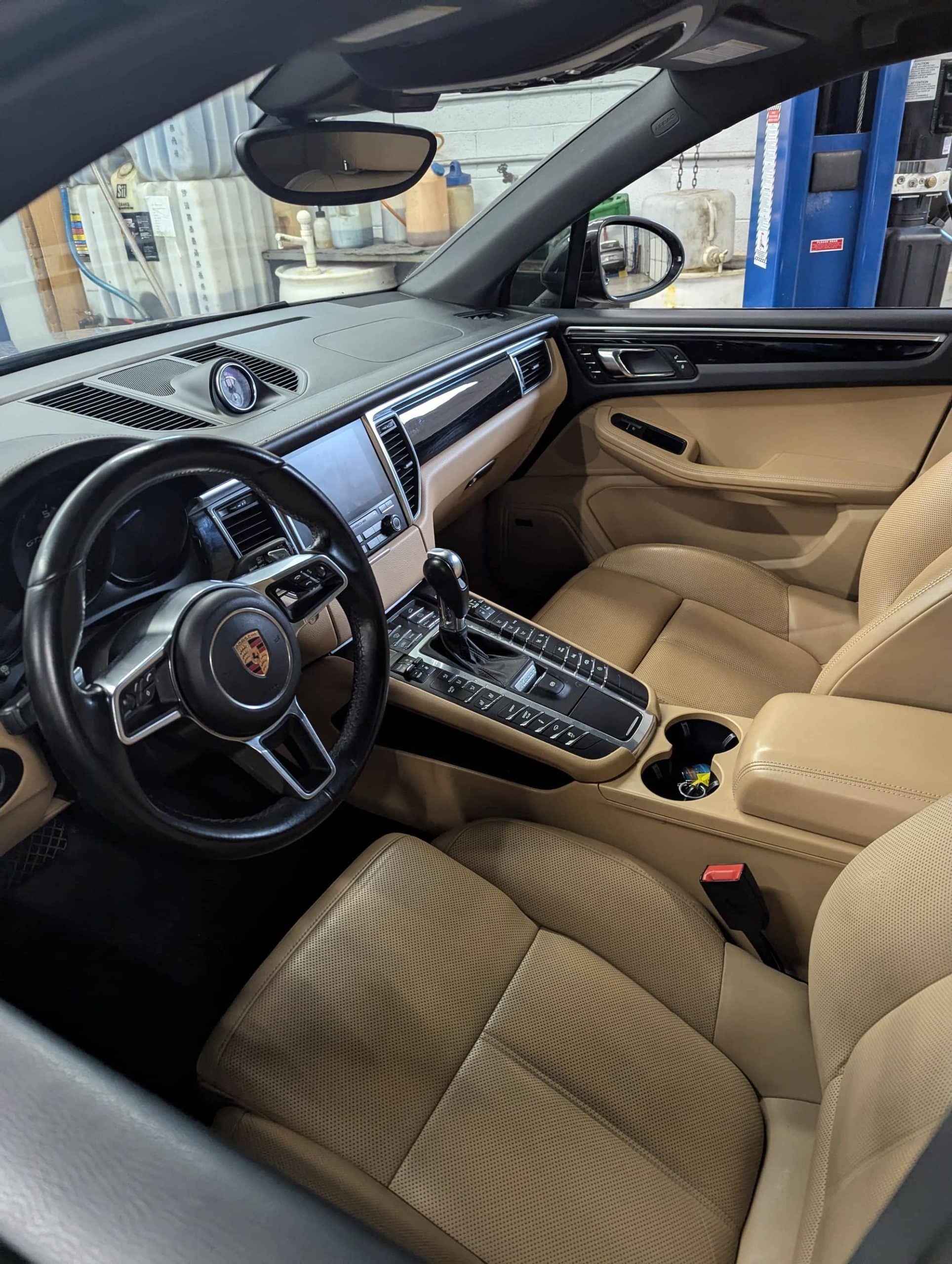
Alfa Romeo Steering Repair at DART Auto
You're navigating a tight mountain switchback when the steering wheel suddenly feels vague, disconnected from the front wheels. That telepathic precision Alfa Romeo engineered into your Giulia or 4C has vanished, replaced by uncertainty and a faint hydraulic whine. Alfa Romeo steering systems – whether the electro-hydraulic setup in 159/Brera platforms or the fully electric rack in Giulia/Stelvio (Type 952) – demand specialist-level attention. These systems integrate torque vectoring, dynamic steering ratios, and CAN-bus communication with stability control modules. A generic shop treats steering as simple mechanical linkage; we recognize it as a coordinated dance between rack, sensors, control units, and calibration files accessible only through factory-grade diagnostic protocols.
The Giorgio platform (Giulia, Stelvio) uses a dual-pinion electric power steering rack with integrated position sensors that feed the Q4 all-wheel-drive system and Chassis Domain Control module. Replacing or repairing this rack requires not just torque specs and fluid bleeding, but post-installation calibration through Alfa Romeo's Witech diagnostics to relearn steering angle sensor zero position and verify torque overlay maps. Skipping these steps leaves the vehicle in limp mode or triggers phantom stability warnings. We invest in the OEM tooling and training to complete the job properly.
When you bring your Alfa Romeo to DART Auto for steering repair, expect:
- Complete system diagnosis using Witech and advanced oscilloscope analysis to distinguish rack wear from sensor drift or control module faults
- OEM-spec replacement parts sourced from ZF or approved premium suppliers, not remanufactured racks with unknown service history
- Full calibration and road-test validation to restore factory steering feel, ratio, and integration with dynamic systems
- Transparent communication before any work begins – you'll understand exactly what failed, why, and what we're doing to fix it right the first time
Common Steering Repair Issues on Alfa Romeo Vehicles
Alfa Romeo owners often describe the brand's steering as communicative and direct – until something goes wrong. When your Giulia refuses to track straight on I-25 or your Stelvio's steering wheel vibrates through every turn on Speer Boulevard, you're likely experiencing one of the platform-specific wear patterns these vehicles are known for. The good news? We've diagnosed and repaired these exact scenarios hundreds of times, and we know precisely what to look for.
- Steering rack internal seal leakage (2017–2020 Giulia/Stelvio Giorgio platform): The electric power steering rack on these models develops internal seals that weep fluid into the bellows boots. You'll notice a greasy residue on the inner tie rod boots and progressively heavier steering effort, especially during cold starts. This is a known weakness in the ZF-supplied racks used across the Giorgio platform, and it requires rack replacement rather than a rebuild because Alfa Romeo does not supply internal seal kits.
- Tie rod end wear and play (4C, 2014–2020): The lightweight suspension on the 4C uses smaller-diameter tie rod ends that wear quickly under spirited driving. Owners report clunking over expansion joints and vague turn-in response. Because the 4C shares almost no parts with other Alfa Romeo models, these are specific OEM components with long lead times if not stocked locally.
- Lower control arm bushing failure (159, 2006–2011): The 159's front lower control arms use pressed-in rubber bushings that crack and separate, creating steering wander and a rhythmic knocking during lane changes. This is exacerbated by Colorado's freeze-thaw cycles, which accelerate rubber degradation. The bushings are not sold separately – the entire control arm assembly must be replaced, and proper torque sequencing with the suspension loaded is critical to avoid premature re-failure.
- Steering column intermediate shaft universal joint wear (Giulietta, 2010–2020): The U-joint connecting the steering column to the rack input shaft develops play over time, creating a distinct clunk when reversing direction at low speeds – parking lots and three-point turns make it obvious. This part requires specific Alfa Romeo tooling to remove and install without damaging the column's integrated controls.
- Power steering pump pulley bearing noise (156/147/GT, 1997–2010): On older hydraulic steering systems, the pump pulley bearing begins to whine or growl, often mistaken for alternator noise. Left unaddressed, the bearing seizes, shearing the serpentine belt and leaving you without power steering mid-turn. These pumps use a specific pressure spec and fluid type – generic "universal" power steering fluid causes seal swell and accelerated failure.
- Alignment drift from subframe movement (Giulia Quadrifoglio, 2017–present): The performance-tuned subframe mounts on the QV can shift slightly under hard cornering, causing alignment specs to drift out of factory tolerance. You'll chase a pull to one side that returns after every spirited drive. This requires not just alignment, but subframe centering using Alfa Romeo's specific fixture and torque procedure.
Why Choose DART Auto for Alfa Romeo Steering Repair
Alfa Romeo steering systems demand more than generic alignment racks and guesswork. We own the diagnostic equipment and factory service information that dealers use – including the software to recognize Alfa-specific fault codes and execute steering angle sensor calibrations after rack replacement or alignment work. Our technicians know the difference between a worn outer tie rod and the binding lower ball joints common on Giulia and Stelvio platforms, and they understand why the electric power steering on 4C models requires CAN-bus interrogation before throwing parts at a complaint.
Because our technicians are salaried rather than flat-rate, they have no incentive to sell you a full rack when an inner tie rod boot and re-torque will solve the issue. We perform complete inspections before quoting work, so you see exactly what's worn, what's marginal, and what can wait. Every repair is backed by a 3-year/36,000-mile warranty on parts and labor, and we road-test after installation to confirm steering feel, center position, and absence of noise – not just check a box and hand you the keys.
- Platform-specific tooling: Alfa-compatible scan tools, steering lock removal kits for rack jobs, and torque-angle gauges for critical fasteners
- OEM procedures: Factory torque specs, fluid requirements (CHF 11S where specified), and post-repair calibration steps
- Transparent pricing: Written estimates that separate parts, labor, and alignment so you understand what you're paying for
- No unnecessary upsells: Salaried compensation means techs fix what's broken, not what pads the ticket
Symptoms – How to Know You Need This Service
Alfa Romeo steering problems announce themselves in ways that range from subtle to alarming. You may notice:
- Vague or wandering steering feel – the car requires constant small corrections on straight roads, or the wheel feels disconnected from the front tires during turn-in
- Hydraulic whine or groaning when turning the wheel at low speeds, especially on 159/Brera/Spider models with electro-hydraulic racks – often accompanied by fluid leaks near the rack boots
- Dashboard warnings – "Power Steering Failure," "EPS System Fault," or stability control lights that won't clear, common when rack position sensors drift out of specification
- Notchy or binding sensation through the steering arc, particularly in Giulia/Stelvio where internal rack wear creates dead spots in the assist map
- Pulling to one side that persists after alignment, suggesting unequal rack pressure or a seized inner tie rod on one side
- Clunking over bumps felt through the steering column – worn rack bushings or loose intermediate shaft U-joints allow the rack to shift in its mounts
- Heavy steering effort that appears suddenly, indicating loss of hydraulic pressure or electric assist motor failure
If you experience sudden complete loss of power assist or the steering wheel locks up, stop driving immediately and arrange towing. Otherwise, schedule an inspection soon – deteriorating steering components accelerate tire wear and compromise vehicle control.
Which Alfa Romeo Models We See for Steering Repair
We regularly service steering systems across the modern Alfa Romeo lineup, with particular expertise in the platforms that have established themselves in the Denver market:
- Giulia (Type 952, 2017–present) – all variants including Quadrifoglio, which uses the same ZF dual-pinion electric rack with higher assist tuning; common issues include rack boot tears allowing moisture ingress and position sensor drift triggering Q4 faults
- Stelvio (Type 949, 2018–present) – shares Giorgio platform steering architecture with Giulia; AWD models require additional calibration steps to synchronize rack position with rear differential torque vectoring
- 4C / 4C Spider (Type 960, 2014–2020) – unassisted manual rack with unique geometry and carbon-fiber tub mounting points; we handle linkage wear, inner tie rod replacement, and the specialized alignment this mid-engine platform demands
- 159 / Brera / Spider (Type 939, 2006–2011) – electro-hydraulic system prone to rack seal leaks and pump whine as mileage climbs; requires specific Tutela fluid and careful bleeding procedure to eliminate air
- MiTo (Type 955, 2008–2018) – electric power steering with known control module software issues; we verify hardware faults versus reflash needs before recommending rack replacement
- Giulietta (Type 940, 2010–2020) – similar EPS architecture to MiTo with added torque vectoring integration on Quadrifoglio Verde models
For earlier Alfa Romeo models or low-production variants like the 8C Competizione, we evaluate each case individually. Our focus remains the post-2006 platforms where factory diagnostic access and parts availability allow us to deliver dealer-quality results without the dealer price.
Causes & Risks – What Happens if Ignored
Steering issues on Alfa Romeo vehicles rarely appear overnight. Colorado's temperature swings – from sub-zero January mornings to 90-degree summer afternoons – accelerate rubber bushing degradation and cause metal components to expand and contract at different rates. Add spirited driving on mountain roads, and you're asking suspension components to work harder than they would in, say, Florida. Alfa Romeo's performance-oriented geometry amplifies wear: tighter tolerances mean smaller amounts of play create noticeable symptoms faster than on a typical sedan.
When you ignore early warning signs, the damage compounds in predictable ways:
- Tie rod end play progresses to complete separation: What starts as a minor clunk can end with the tie rod popping free from the knuckle during a turn, leaving you with no directional control over that wheel. We've seen this happen in parking lots and on highway on-ramps – both scenarios are terrifying and completely avoidable.
- Steering rack seal leaks lead to contaminated electric motors: On Giorgio-platform cars, leaking rack fluid migrates into the electric assist motor housing, corroding the brushes and circuit board. A $1,200 rack replacement becomes a $2,800 rack-and-motor assembly replacement because you waited three months.
- Worn bushings destroy control arm mounting points: When a control arm bushing tears completely, the arm shifts and wallows the mounting hole in the subframe. Now you're welding and sleeving subframe steel, not just pressing in a new bushing. A $600 repair escalates to $1,800 in structural work.
- Misalignment from subframe shift eats tires in 4,000 miles: Quadrifoglio owners report going through a set of Pirelli P Zeros in under 5,000 miles when alignment drifts go uncorrected. At $400+ per tire, that's $1,600 in rubber plus the alignment work you still need.
- Intermediate shaft wear damages the steering rack input: The clunking U-joint eventually hammers oval wear into the rack's input shaft splines. What should be a $280 intermediate shaft replacement becomes a full rack replacement because the splines no longer hold torque.
Safety Impact – Why Steering Repair Matters
Steering system failures don't just affect comfort or tire wear – they directly compromise your ability to control the vehicle. When a tie rod separates or a rack loses assist mid-corner, your reaction time shrinks to nearly zero. Alfa Romeo's performance-tuned suspension amplifies these risks: the same quick steering ratio that makes the Giulia fun on a back road becomes a liability when a component fails and you're trying to correct at 75 mph on I-70.
Immediate safety risks include:
- Loss of directional control: A separated tie rod or failed rack mount means the wheel no longer responds predictably to steering input. In traffic or during emergency maneuvers, this is catastrophic.
- Unpredictable steering effort: Intermittent power assist failure – common with leaking racks – can cause sudden heavy steering mid-turn, leading to overcorrection and loss of lane position.
- ABS and stability control degradation: Worn suspension components create wheel position data that confuses the ABS and ESC systems. Your Giulia's safety systems depend on accurate wheel speed and position sensing – play in the steering linkage corrupts that data.
- Tire blowout risk from misalignment: Severe toe misalignment from subframe shift or bushing failure causes tires to scrub laterally, building heat and increasing blowout risk, especially during sustained highway driving in summer heat.
When to stop driving immediately: If you experience a sudden clunk followed by loss of steering response, a wheel that visibly toes in or out when stationary, or steering that requires both hands and significant effort to turn, do not continue driving. Have the vehicle towed. If symptoms are gradual – increasing play, wander, or noise – schedule an inspection within the week, but the car is likely safe for careful, low-speed driving to the shop.
How Alfa Romeo Steering Repair Actually Works
Most modern Alfa Romeo vehicles use electric power steering systems rather than traditional hydraulic pumps. The Giorgio platform (Giulia, Stelvio) employs a rack-mounted electric motor that applies assist torque directly to the steering rack based on inputs from steering angle sensors, vehicle speed, and yaw rate. This system is lighter and more efficient than hydraulic setups, but it's also more complex to diagnose and repair. The steering control module continuously monitors motor current, rack position, and driver input torque – any discrepancy throws a fault code and often triggers limp-home mode with reduced or no assist.
Alfa Romeo-specific design elements that affect repair:
- Integrated steering angle sensor calibration: After any steering component replacement – rack, column, or even tie rods on some models – the steering angle sensor must be recalibrated using Alfa Romeo's Witech diagnostic software. This isn't a simple "drive straight and press a button" procedure; it requires the vehicle to be on a level surface, wheels pointed exactly straight using a wheel alignment fixture, and a multi-step software routine that writes new zero-point data to the control module.
- Torque-to-yield fasteners
How We Diagnose Steering Repair Issues on Alfa Romeo
You climb into your Giulia or Stelvio, turn the wheel, and something feels off – maybe a notchy sensation through corners, a groan when parking, or play that wasn't there last week. Alfa Romeo steering systems blend hydraulic and electric-assist technologies across platforms, and accurate diagnosis separates a quick fix from unnecessary parts replacement.
Our diagnostic process for Alfa Romeo steering issues follows a methodical sequence:
- Initial interview and road test. We drive the vehicle with you or immediately after intake, replicating the conditions where the symptom appears. Steering concerns often change with temperature, speed, or steering angle, so we note exactly when the problem shows itself.
- Factory-level scan with Alfa Romeo-capable tooling. We connect diagnostic equipment that communicates with the Electric Power Steering (EPS) module, reading fault codes, live steering angle sensor data, motor current draw, and torque sensor values. Giorgio-platform cars (2016-up Giulia, Stelvio) log EPS faults that generic scanners miss entirely.
- Physical inspection on the lift. With the wheels off, we check tie rod ends, inner tie rods, rack boots for fluid weeping, steering column U-joints, and subframe bushings. Compact platform models sometimes show premature inner tie rod wear if alignment has drifted.
- Measurement and play testing. We measure steering rack travel, check for excessive play in the column bearings, and verify proper preload on adjustable components. Power steering fluid condition and level tell us whether contamination or air has entered the system.
- Documentation and estimate. You receive photos of worn components, a plain-language explanation of what failed and why, and a detailed quote covering parts, labor, and our 3-year/36,000-mile warranty. No surprises, no upselling – just the repair your Alfa Romeo needs.
Steering Repair on Alfa Romeo: Repair vs. Replacement
Not every steering problem demands a complete rack replacement or column assembly swap. The decision hinges on what actually failed, the condition of surrounding parts, and whether a repair restores full safety and function.
True repair scenarios on Alfa Romeo platforms:
- Replacing outer tie rod ends when the inner rods and rack are still tight – common maintenance item on all models.
- Servicing a leaking power steering pump on 159 or Brera hydraulic systems (pre-Giorgio) by replacing seals and fluid, provided the pump housing isn't scored.
- Recalibrating the steering angle sensor after alignment work or battery disconnect – a software procedure rather than a parts swap.
- Replacing torn rack boots before contaminants damage the rack itself – preventive work that saves the larger assembly.
When partial replacement makes sense:
- Swapping the EPS motor on a Giulia when the rack and pinion assembly remain sound – the motor can fail independently on 2017-2019 models.
- Replacing inner tie rods when the rack shows no play or fluid leaks – you save the cost and labor of a full rack job.
Full replacement is the right call when:
- The steering rack itself has internal wear, fluid bypassing seals, or excessive play that no adjustment can correct.
- Cascading damage has occurred – a failed boot let dirt into the rack, scoring the piston and ruining seals.
- Repair cost approaches 70-80% of replacement cost and the new assembly includes updated parts that address the original failure mode.
Our technicians walk you through the trade-offs with photos and cost comparisons, so you understand exactly what you're paying for and why.
How to Make Your Alfa Romeo Steering Repair Last Longer
Once we've restored your Alfa Romeo's steering to factory spec, a few thoughtful habits keep it that way for years.
Driving habits that protect steering components:
- Avoid holding the steering wheel at full lock for extended periods – this strains the EPS motor and pump on hydraulic systems.
- Let the engine reach operating temperature before aggressive maneuvering, especially in cold weather. Cold fluid and stiff grease increase wear on bushings and seals.
- Take speed bumps and potholes at moderate speed with the wheel straight. Hitting obstacles mid-turn hammers tie rods and can knock alignment out of spec.
- Don't rest your hand on the shifter while driving if you have a manual – unrelated to steering directly, but the habit of resting weight on controls applies to the wheel too. A light grip reduces fatigue on column bearings.
Owner-level maintenance you can handle:
- Listen for new noises when turning – groans, clicks, or clunks signal wear before it becomes dangerous.
- Check power steering fluid monthly on hydraulic systems (pre-2016 models). Low fluid or a burnt smell means a leak or overheating issue needs attention now.
- Watch for the EPS warning light on Giorgio-platform cars. If it illuminates, have the system scanned immediately – these faults rarely clear themselves and can disable assist entirely.
- Visually inspect tie rod boots and rack bellows during tire rotations. A split boot is cheap to replace; a contaminated rack is not.
Professional maintenance that matters:
- Follow Alfa Romeo's alignment intervals, especially after suspension work or a curb strike. Misalignment accelerates tie rod and tire wear.
- Use OEM or OE-equivalent power steering fluid on hydraulic systems – off-brand substitutes can swell seals and cause leaks.
- Keep software updated on 2016-newer models. Alfa Romeo has issued steering calibration updates that refine EPS behavior and address early fault codes.
Leave torque-sensitive work – inner tie rods, rack installation, EPS motor replacement – to the shop. These jobs require specialty tools, precise torque specs, and post-repair calibration that aren't safe to improvise at home.
You're driving through Denver when your Alfa Romeo starts pulling left during braking, or the steering wheel sits crooked even though you're going straight. Maybe there's a clunk from the front end over bumps, or the wheel feels vague and disconnected on highway ramps. These aren't quirks you live with – they're symptoms of steering and suspension wear that affect both safety and the joy that drew you to an Alfa in the first place.
What to Expect When You Bring Your Alfa Romeo In
From the moment you schedule your appointment, the process is designed around clarity and convenience. Here's how a typical steering repair visit unfolds:
- Drop-off and intake: We'll ask about the symptoms you're experiencing – pull, vibration, noise, warning lights – and note any recent impacts or curb strikes. Remove personal items from the cabin; we'll keep your key secure and provide a loaner or shuttle service if the work extends beyond a few hours.
- Inspection and diagnosis: A master technician with at least 10 years of experience will road-test your Alfa, then lift it for a hands-on inspection of tie rods, ball joints, control arm bushings, and rack mounts. We'll scan for stored codes, check steering angle sensor data, and measure play in the steering column and intermediate shaft.
- Written estimate and approval: You'll receive a detailed estimate breaking down each worn component, explaining why it matters, and outlining the consequences of delaying the repair. We'll call to walk you through the findings and answer questions before starting any work.
- Repair and calibration: We use OEM or premium aftermarket parts from trusted European suppliers, torque fasteners to factory spec, and perform steering angle relearns when required. If alignment is needed, we set camber, caster, and toe to Alfa Romeo specifications – not generic "in the green" settings.
- Post-repair verification: Every car gets a final road test to confirm steering center, responsiveness, and absence of noise. We'll re-scan to verify no new faults have appeared and walk you through what we did at pickup.
If anything feels off in the days after you leave, call us. We'll get you back in promptly to verify the work and make it right – no runaround, no surprise charges. That's part of the 3-year/36,000-mile warranty and the reason customers have trusted us since 2000.
Our Alfa Romeo Services
- Air Conditioning AC Repair
- Battery Repair Replacement
- Brake Repair & Brake Fluid Change
- Check Engine Light Diagnostics
- Clutch Repair & Replacement
- Coolant Leak Repair
- Cooling System Repair
- Drive Shaft Repair
- Engine Repair
- Exhaust & Catalytic Converter Repair
- Head Gasket Repair & Replacement
- Oil Change
- Oil Leak Repair
- Scheduled Service Maintenance
- Suspension Repair
- Cambelt Timing Belt Replacement
- Transmission Repair
- Tune Up
- Wheel Alignment