
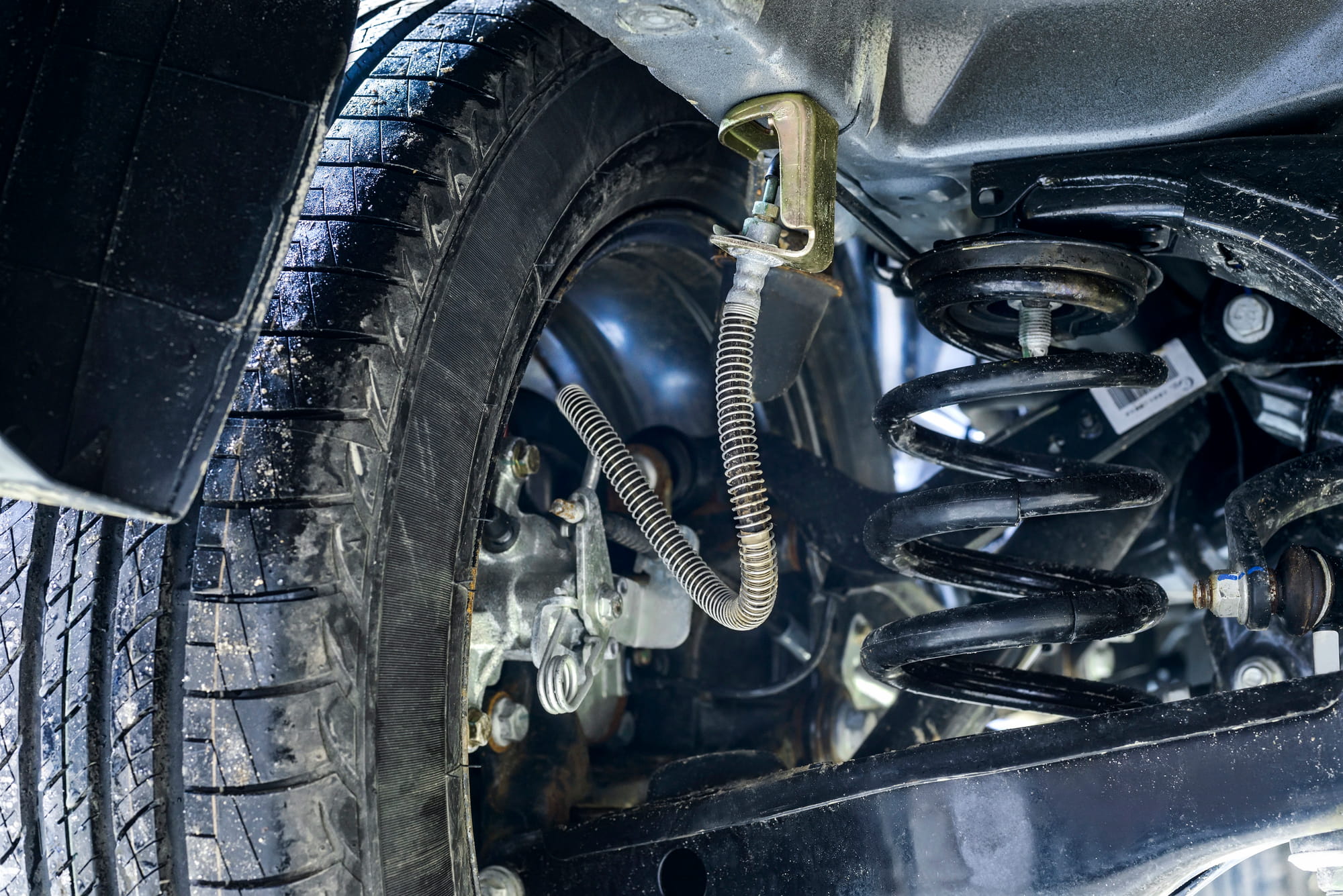
Mercedes-Benz Suspension Repair at DART Auto
When your Mercedes-Benz develops a clunk over bumps or settles unevenly at stoplights, you're dealing with a suspension system engineered to very tight tolerances – and that means the fix demands more than generic parts and guesswork. Mercedes-Benz AIRMATIC systems, ABC (Active Body Control) hydraulic setups, and even conventional spring-and-damper platforms rely on precise ride-height sensors, nitrogen-charged dampers, and software-calibrated valve blocks that most shops simply don't have the tools or training to diagnose correctly. We've invested in factory-level XENTRY diagnostics, genuine pressure-test equipment for ABC accumulators, and the Mercedes-Benz torque specifications that prevent premature bushing failure or alignment drift after reassembly.
Our master technicians – each with over a decade of experience and dealer-level training – treat every W205 C-Class control arm or W222 S-Class air spring replacement as a complete system repair, not a parts swap. We source OEM or premium aftermarket components from trusted European suppliers, verify ride-height calibration with live data, and perform a full alignment check to confirm geometry matches factory spec. Because our technicians are salaried rather than flat-rate, there's no incentive to rush the bleed procedure on an ABC system or skip the nitrogen pre-charge on a shock absorber.
When you bring your Mercedes-Benz to DART Auto for suspension repair, you can expect:
- Factory-level diagnostics using XENTRY and live sensor data to pinpoint failing air springs, leaking ABC lines, or worn control-arm bushings before we touch a wrench.
- Platform-specific procedures – we follow Mercedes-Benz torque sequences, ride-height calibration steps, and bleed protocols that generic shops often overlook.
- OEM and premium parts sourced from suppliers who understand the difference between a standard damper and a self-leveling, electronically adjustable unit.
- 3-year/36,000-mile warranty on parts and labor, so you drive away confident the repair will last.
Common Suspension Repair Issues on Mercedes-Benz Vehicles
Mercedes-Benz suspension systems are engineered for a refined ride and precise handling, but their complexity introduces specific failure patterns. When components wear or fail, the symptoms often escalate quickly. Here's what we see most often at DART Auto:
- AIRMATIC air suspension leaks (W220 S-Class 2000–2006, W211 E-Class 2003–2009, W164 ML-Class 2006–2011): The air struts and supply lines develop cracks and perforations over time. You'll notice the vehicle sagging overnight or after sitting for a few hours, often accompanied by a compressor that runs constantly. The factory system uses rubber bladders that harden and split, particularly in cold climates. Left unchecked, the compressor burns out from overwork, turning a strut replacement into a multi-component overhaul.
- Control arm bushing deterioration (W203 C-Class, W210/W211 E-Class): The pressed-in rubber bushings crack and tear, especially on the front lower control arms. This creates a clunking noise over bumps and causes steering wander at highway speeds. Mercedes-Benz uses hydraulic-filled bushings on many models for vibration damping, and when these rupture, the handling becomes vague and tire wear accelerates unevenly.
- Thrust arm and tension strut failures (W204 C-Class 2008–2014, W212 E-Class 2010–2016): The rear multi-link suspension uses thrust arms with large bushings that crack under lateral load. You'll feel a shimmy during lane changes or a wandering sensation on grooved pavement. These arms connect the rear subframe to the wheel hubs, and worn bushings allow toe misalignment that chews through rear tires in a matter of months.
- Sway bar end link and bushing wear (most platforms): The stabilizer bar links use ball-and-socket joints that develop play, creating rattles and clunks on uneven surfaces. The rubber frame bushings also split, allowing the bar to shift and knock against the subframe. This is often misdiagnosed as a strut issue until the vehicle is lifted and the links are inspected by hand.
- ABC (Active Body Control) hydraulic leaks (R230 SL-Class 2003–2012, W215/W220 CL/S-Class): The high-pressure hydraulic struts and pulsation dampers develop seepage at the seals. You'll see fluid pooling under the car and a warning message on the dash. The system operates at over 3,000 psi, so even a small leak drops system pressure and triggers a fault that lowers the car into limp mode. Delaying repair risks contaminating the hydraulic pump and valve block, which are expensive components.
- Subframe mounting bolt corrosion and elongation (W204, W212, W166): Road salt and moisture cause the subframe mounting points to rust, and the bolts can stretch or snap under load. This creates a deep thud over bumps and can cause catastrophic failure if the subframe separates. Certain model years were subject to service campaigns for reinforcement plates, but many vehicles outside the campaign window still develop the issue.
Why Choose DART Auto for Mercedes-Benz Suspension Repair
When your Mercedes-Benz develops a suspension issue – whether it's Airmatic sag on a W221 S-Class, ABC fluid leaks on an R230 SL, or clunking control arm bushings on a W204 C-Class – the fix demands more than generic replacement parts. DART Auto owns the entire repair from diagnosis through post-repair verification, using factory diagnostic tools and OEM repair procedures that match or exceed dealership capability.
Our master technicians carry dealer training and platform-specific experience with Mercedes-Benz suspension systems. We address known failure modes head-on: Airmatic compressor wear on 2007–2013 W221 platforms, front lower control arm bushing separation on W204/W212 chassis, and ABC accumulator sphere leaks on SL/CL models. We reference Mercedes-Benz TSBs, apply the correct software calibrations after component replacement, and use the torque specs and alignment procedures your chassis requires.
Because our technicians work on salary rather than flat-rate, there's no incentive to rush the diagnosis or recommend parts you don't need. You get a written estimate that explains what failed, why it matters, and what happens if you delay the repair. The work is backed by a 3-year/36,000-mile warranty on parts and labor, and every repair concludes with a road test and scan-tool verification to confirm the system operates as designed.
Symptoms – How to Know You Need This Service
Mercedes-Benz suspension problems announce themselves in ways that range from subtle to impossible to ignore. You may notice:
- Clunking or knocking over bumps – worn control-arm bushings, ball joints, or sway-bar end links produce metallic thuds that worsen on rough pavement.
- Vehicle sits low on one corner – a telltale sign of a failed air spring (AIRMATIC) or leaking ABC accumulator; the car may drop overnight or sag after sitting for a few hours.
- "AIRMATIC Visit Workshop" or "ABC Drive Carefully" warnings on the instrument cluster – these messages indicate pressure loss, sensor faults, or valve-block failures that require immediate attention.
- Excessive body roll or nose-dive during braking – worn dampers or failing ABC struts no longer control weight transfer, making the car feel loose and unresponsive.
- Uneven tire wear – camber or toe misalignment caused by bent control arms, worn bushings, or sagging springs shows up as feathering on the inside or outside tread blocks.
- Hissing or groaning when turning – ABC systems under hydraulic pressure can leak at hose fittings or pump seals, producing audible noise and leaving green fluid puddles.
- Vibration through the steering wheel at highway speed – sometimes suspension wear allows wheels to shimmy, especially if tie-rod ends or thrust-arm bushings have excessive play.
- Pulling to one side under braking – can indicate a seized caliper, but also a collapsed control-arm bushing that shifts alignment under load.
If you see ABC or AIRMATIC warnings, schedule service immediately – continued driving can damage the compressor or pump. Clunks and uneven wear mean schedule soon, before alignment damage accelerates tire replacement costs.
Which Mercedes-Benz Models We See for Suspension Repair
We service suspension systems across the Mercedes-Benz lineup, with particular depth of experience on platforms where AIRMATIC air springs, ABC hydraulic struts, and complex multi-link geometries are the norm. Common chassis codes and generations we work on include:
- W205/C205/S205 C-Class (2015–2021) – conventional spring/damper setups and optional AIRMATIC; frequent control-arm bushing and sway-bar link replacement.
- W213/S213 E-Class (2017–present) – AIRMATIC air suspension with self-leveling; we see air-spring leaks and compressor relay failures on higher-mileage examples.
- W222/V222 S-Class (2014–2020) – AIRMATIC and MAGIC BODY CONTROL with camera-based road scanning; valve-block and accumulator work requires factory tooling.
- W166/C292 GLE/GLE Coupe (2016–2019) and X166 GL/GLS (2013–2019) – AIRMATIC systems under heavy SUV loads; air-spring bellows and height sensors are common wear items.
- W212 E-Class (2010–2016) – both conventional and AIRMATIC variants; ABC on E63 AMG models requires hydraulic pressure testing and accumulator pre-charge.
- W221 S-Class (2007–2013) – ABC Active Body Control; we rebuild valve blocks, replace pulsation dampers, and flush hydraulic fluid on schedule.
- W204 C-Class (2008–2014) – simpler coil-spring platforms, but thrust-arm bushings and ball joints wear predictably by 80,000 miles.
- W211 E-Class (2003–2009) – ABC on E55/E63 AMG and SL-Class (R230) models; we stock OEM accumulators and have the bleed equipment these systems demand.
- AMG variants across all platforms – adaptive damping, stiffer bushings, and performance alignment specs require model-specific torque values and ride-height settings.
If your model year or chassis code isn't listed, give us a call – we regularly work on older W220, W210, and R129 platforms where parts availability and diagnostic access remain strong. We're transparent about the few ultra-exotic or brand-new models where we may refer you to the dealer for warranty or tooling reasons.
Causes & Risks – What Happens if Ignored
Suspension wear on Mercedes-Benz vehicles accelerates due to several factors: high-performance damping calibrations that stress bushings, the weight of luxury features and all-wheel-drive systems, and Colorado's freeze-thaw cycles that crack rubber components. The factory uses sophisticated multi-link geometries for ride quality, but every additional pivot point introduces another wear surface. AIRMATIC and ABC systems add hydraulic complexity, and their seals degrade faster in climates with temperature extremes.
When you delay suspension repairs, the damage compounds quickly. A worn bushing allows excessive movement, which overloads adjacent bushings and accelerates their failure. A leaking air strut forces the compressor to cycle constantly, shortening its lifespan and raising the cost from a single strut to a full corner replacement plus compressor. Ignoring a clunk for six months often means the ball joint or link has worn to the point where the stud pulls through the socket, requiring emergency roadside service instead of a planned appointment.
Here's what escalates when suspension issues are left unaddressed:
- Tire wear: Misalignment from worn bushings causes feathering and cupping, destroying a set of tires in 5,000 to 8,000 miles instead of the expected 40,000.
- Secondary component failure: A failed thrust arm bushing allows toe changes that overload the adjacent control arm bushings, cascading the repair from one part to four or five.
- Brake and ABS performance: Excessive suspension play confuses the wheel speed sensors and causes erratic ABS pulsing or longer stopping distances on rough pavement.
- Structural damage: A sagging AIRMATIC strut that bottoms out repeatedly can crack the spring perch on the strut tower, turning a strut job into bodywork and welding.
- Hydraulic system contamination: ABC fluid leaks allow moisture into the system, corroding the valve block and pump internals, which can exceed $6,000 in parts alone.
- Subframe separation: Corroded mounting bolts that snap during hard braking or a pothole impact can cause loss of control and a collision, along with extensive undercarriage damage.
Safety Impact – Why Suspension Repair Matters
A compromised suspension directly affects your ability to control the vehicle. Worn bushings and links allow the wheels to move independently of steering input, creating unpredictable handling during emergency maneuvers. When a strut loses damping, the tire bounces off the pavement during braking, extending stopping distances and triggering ABS prematurely. Mercedes-Benz stability control and collision-prevention systems rely on predictable suspension geometry; excessive play causes false triggers or delayed intervention because the sensors can't distinguish between body roll and actual loss of traction.
Specific risks include:
- Steering loss: A separated ball joint or tie rod allows the wheel to fold under the car, causing immediate loss of directional control.
- Brake imbalance: Suspension sag or misalignment shifts weight distribution, causing one side to lock up earlier than the other and inducing a pull or spin during hard stops.
- Rollover risk: Worn sway bar links reduce the anti-roll stiffness, increasing body lean in turns and raising the center of gravity on SUVs like the ML, GL, and GLE.
- Airbag deployment errors: Severe suspension sag can alter the crash sensors' perception of impact angle, potentially causing airbags to deploy late or not at all.
Stop driving immediately if: you hear a loud snap or pop followed by steering pull, the vehicle sags to one corner and won't rise, or you see fluid actively dripping from a strut. Schedule service within a week if: you notice new clunks, steering wander, or uneven tire wear. Delaying these symptoms puts you and other drivers at risk, and insurance may deny a claim if an accident is linked to a known, unaddressed defect.
How Mercedes-Benz Suspension Repair Actually Works
Mercedes-Benz uses multi-link independent suspension at all four corners on most models, with each wheel controlled by three to five arms and links. This design isolates road inputs for a smooth ride but requires precise geometry and tight tolerances. AIRMATIC systems replace coil springs with air bladders fed by an electric compressor and controlled by ride-height sensors and solenoid valves. ABC (Active Body Control) goes further, using hydraulic struts with no conventional springs at all – a high-pressure pump and computer-controlled valves actively counteract body roll and pitch in real time. Both systems require Star Diagnosis (Mercedes-Benz's factory scan tool) to calibrate ride height, bleed the hydraulic system, and clear fault codes after component replacement.
Why Mercedes-Benz suspension work is different:
- Ride-height calibration: After replacing AIRMATIC struts or sensors, the system must be recalibrated using Star Diagnosis to set the correct reference height. Without this step, the compressor runs continuously or the vehicle sits too high or low.
- Hydraulic bleeding: ABC systems require a specific bleeding sequence through the scan tool to purge air from the lines
How We Diagnose Suspension Repair Issues on Mercedes-Benz
When your Mercedes-Benz starts pulling to one side, bottoming out over bumps, or triggering Airmatic suspension warnings, we move straight into a structured diagnostic process that combines factory-level scan tools with hands-on inspection. Here's how we pinpoint the exact cause:
- Initial scan with Mercedes-Benz STAR diagnostic system. We pull fault codes from the suspension control module, Airmatic ECU (W221 S-Class, W212 E-Class), and ADS (Active Damping System) units. This reveals sensor drift, compressor faults, valve block leaks, and ride-height calibration errors that generic scanners miss entirely.
- Road test under load. We drive the vehicle over varied surfaces – smooth pavement, expansion joints, gentle turns – listening for clunks from worn control-arm bushings (common on W204 C-Class front lower arms), knocking from failed strut mounts, or the telltale hiss of air-spring leaks on Airmatic-equipped models.
- Lift inspection and measurement. With the car on the hoist, we check ball-joint play with a pry bar, measure tie-rod end movement, inspect shock bodies for oil seepage, and examine air springs for cracks or abrasion (W166 ML/GLE rear bags often fail at the lower piston seal). We also verify alignment settings against Mercedes-Benz factory specs to catch bent components.
- Component-specific tests. For Airmatic systems, we command individual corner height adjustments through the scan tool to isolate valve-block or compressor issues. On ABC (Active Body Control) equipped models like the CL-Class, we monitor accumulator pressure and pump flow rates.
Once we've isolated the failed parts and contributing wear, we walk you through exactly what needs attention now, what can wait, and what the repair will involve. You'll receive a detailed estimate before any work begins, so there are no surprises when you pick up your keys.
Suspension Repair on Mercedes-Benz: Repair vs. Replacement
Not every suspension problem demands a complete part swap. We assess each situation based on what's actually worn and what still has service life left:
When Repair Makes Sense
- Airmatic compressor relay or fuse replacement – if the pump itself tests healthy but isn't getting power, a $30 relay solves the problem instead of a $1,200 compressor.
- Re-torquing or adjusting mounting hardware – loose subframe bolts or sway-bar end-link nuts can mimic worn bushings; we verify torque specs before replacing parts.
- Cleaning corroded connectors on ride-height sensors (W211 E-Class front sensors are notorious for this) restores accurate readings without sensor replacement.
When Partial Replacement Works
- Replacing only the worn bushing or ball joint within a control arm, if the arm itself isn't bent and the design allows serviceable components (some Mercedes-Benz arms are pressed assemblies where this isn't practical).
- Swapping a single blown shock when the opposite side still performs within spec and mileage is low – though we typically recommend pairs for balanced damping.
When Full Replacement Is the Right Call
- Airmatic air springs with visible cracks – patching isn't safe; the bag will fail again within weeks.
- Control arms with multiple worn bushings – labor to press out and install individual bushings often exceeds the cost of a complete OEM or Lemförder arm.
- ABC struts leaking hydraulic fluid – internal seal failure on these high-pressure units requires complete strut replacement; there's no rebuild option.
We lay out all three options when they exist, explain the trade-offs, and let you decide. Our technicians are salaried, so there's no incentive to upsell the most expensive route.
How to Make Your Mercedes-Benz Suspension Repair Last Longer
Once we've restored your suspension to factory performance, a few smart habits will keep it that way for years:
Driving Habits That Protect Components
- Avoid potholes and road debris when safely possible – sudden impacts spike forces through ball joints, bushings, and shock shafts far beyond normal wear rates.
- Slow down for speed bumps – taking them at an angle or too quickly compresses one corner excessively, accelerating bushing fatigue and air-spring wear.
- Don't overload the vehicle – exceeding GVWR strains Airmatic compressors and wears rear springs prematurely, especially on older W211 and W164 platforms.
Owner-Level Checks You Can Do
- Listen for new noises – clunks, squeaks, or hissing that weren't there last week often signal early-stage wear you can address before it cascades into bigger damage.
- Watch for uneven tire wear – inside-edge scalloping or feathering means alignment has drifted, usually from a worn tie rod or control-arm bushing.
- Monitor suspension warning lights – Airmatic and ADS faults don't always mean immediate failure, but ignoring them lets small problems (a leaking air line) turn into expensive ones (a burned-out compressor).
Maintenance That Actually Matters
- Use OEM or OE-equivalent fluids for ABC systems – aftermarket hydraulic fluid that doesn't meet Mercedes-Benz 345.0 spec will damage seals and pumps.
- Keep software current – suspension control-module updates (available through our STAR system) refine damping maps and can eliminate nuisance faults on newer models.
- Follow Mercedes-Benz service intervals for alignment checks, especially after any suspension work or curb strikes.
What to leave to the shop: Airmatic compressor service, ABC accumulator replacement, and anything involving pressurized hydraulic or pneumatic systems. These require special tools, pressure gauges, and proper bleeding procedures – DIY attempts often create safety hazards or cause expensive secondary damage.
What to Expect When You Bring Your Mercedes-Benz In
We've streamlined the suspension repair process so you know what's happening at every stage. Here's how it works:
- Drop-off and initial inspection. Schedule an appointment or call ahead. Bring your key and any service records. Remove valuables from the cabin. We'll note your symptoms – ride height drop, clunking over bumps, pulling under braking – and perform a visual inspection on the lift.
- Diagnostic scan and test drive. We connect factory-level scan tools to pull fault codes from the suspension control module, check live data from ride-height sensors or ABC pressure readings, and road-test the vehicle to replicate the concern.
- Written estimate and approval. You receive a detailed estimate that names the failed components, explains the repair scope, and outlines what we'll do. We discuss options – OEM versus premium aftermarket – and answer questions before you approve the work.
- Repair execution. Our technicians replace the failed parts, bleed hydraulic systems if required, perform wheel alignment to factory specs, and apply any software updates or calibrations the chassis needs.
- Post-repair verification and pickup. We road-test the car, re-scan for codes, and verify ride height and damping response. At pickup, we walk you through what we did and what to watch for in the first few miles. If something feels off after you drive it, call us – we'll make it right.
Loaner vehicles and shuttle service are available during the repair. After-hours key drop and pickup can be arranged if your schedule demands it. The work doesn't end when you drive away – follow-up is part of the process, and our warranty stands behind every repair for three years or 36,000 miles.
Our Mercedes-Benz Services
- Air Conditioning AC Repair
- Battery Repair Replacement
- Brake Repair & Brake Fluid Change
- Check Engine Light Diagnostics
- Clutch Repair & Replacement
- Coolant Leak Repair
- Cooling System Repair
- Drive Shaft Repair
- Engine Repair
- Exhaust & Catalytic Converter Repair
- Head Gasket Repair & Replacement
- Oil Change
- Oil Leak Repair
- Scheduled Service Maintenance
- Steering Repair
- Cambelt Timing Belt Replacement
- Transmission Repair
- Tune Up
- Wheel Alignment