
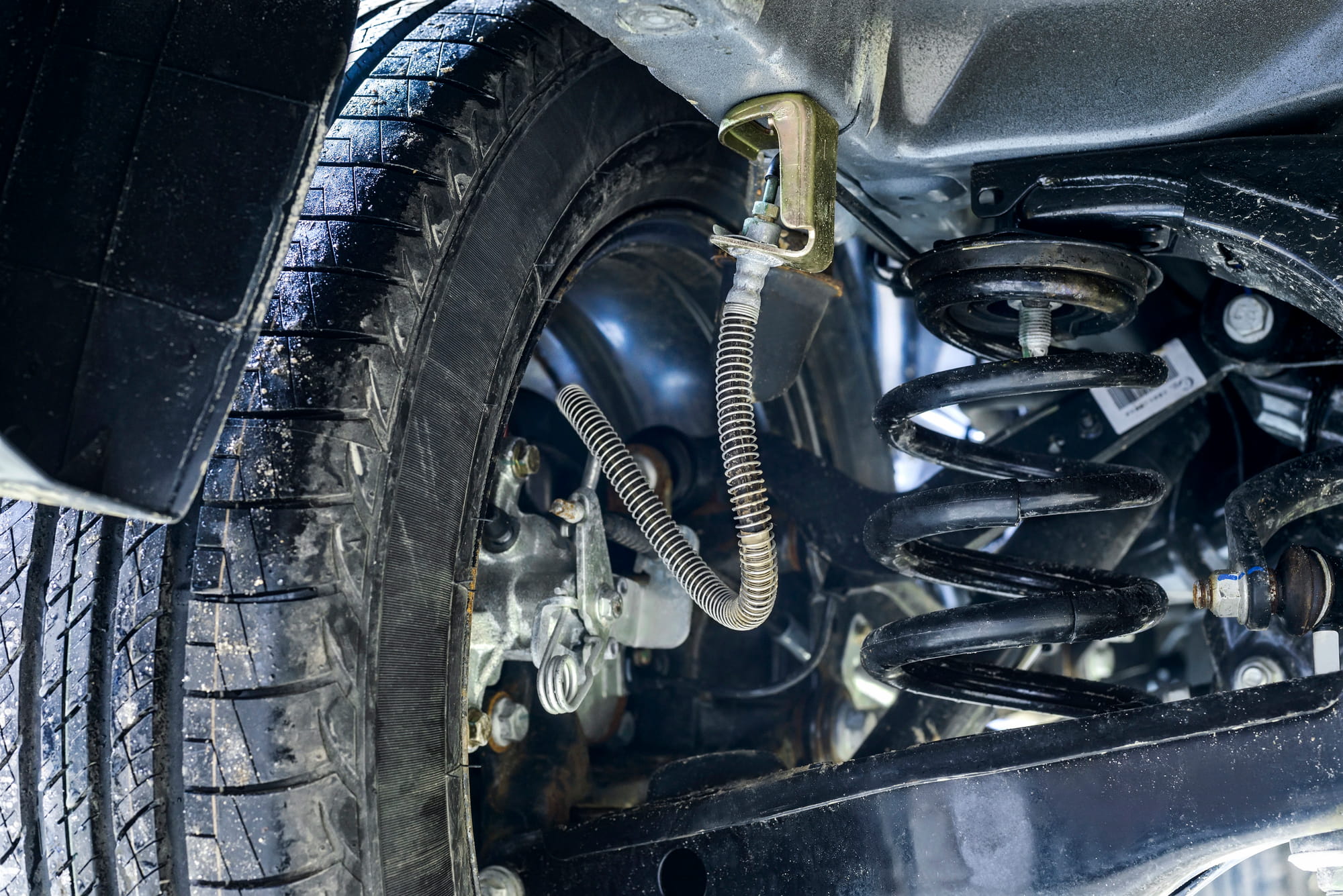
Alfa Romeo Suspension Repair at DART Auto
You bought your Alfa Romeo for the way it carves corners and telegraphs every detail of the road through the steering wheel. When that connection starts to feel vague – when the chassis wallows through turns or the ride quality turns harsh and jarring – it's time to address the suspension before small issues cascade into expensive repairs.
Alfa Romeo suspension systems are tuned for spirited driving, but they demand precision during repair. The Giorgio platform (Giulia, Stelvio) uses adaptive dampers and electronic control modules that require factory-level diagnostics to recalibrate after component replacement. The 4C's carbon tub and non-adjustable coilover suspension require exact spring rates and corner-weight balancing. Even the older 159 and Brera models on the GM Premium platform need specific torque specs for subframe bolts and control arm bushings to maintain proper geometry. Generic alignment racks and guesswork don't cut it – you need technicians who understand how Alfa Romeo's suspension geometry translates driver input into road feel.
At DART Auto, our master technicians use factory diagnostic tools and OEM repair procedures to restore your Alfa's handling precision. We've been Denver's European auto specialists since 2000, and we back every suspension repair with a 3-year/36,000-mile warranty. When you bring your Alfa Romeo to us, you can expect:
- Complete suspension inspection using factory service information and chassis measurement tools
- Diagnosis of adaptive damper faults, control arm wear, and subframe bushing degradation specific to your platform
- OEM or premium aftermarket parts sourced from suppliers who understand Alfa Romeo's performance requirements
- Post-repair alignment using manufacturer specifications, not generic settings that compromise handling
Common Suspension Repair Issues on Alfa Romeo Vehicles
You're cruising through Denver's mountain roads when you notice the steering feels vague through corners, or maybe there's a persistent clunk over every expansion joint. Alfa Romeo owners love their cars for the driving experience, but that same spirited character puts unique demands on suspension components.
Here are the suspension failures we diagnose and repair most often on Alfa Romeo platforms:
- Giulia/Stelvio (Type 952) front lower control arm bushings: The 2017-newer Giorgio platform uses aluminum control arms with pressed-in rubber bushings that crack and separate under Colorado's freeze-thaw cycles and spirited cornering. You'll hear clunking during turn-in and feel wandering at highway speed. The OEM bushings are not serviceable separately – the entire arm must be replaced, and factory torque specs require final tightening at ride height to prevent premature wear.
- 4C (Type 960) rear shock absorber mounts: The carbon-fiber tub chassis on the 2015-2020 4C uses bonded aluminum inserts for shock mounting. Track use and rough pavement can cause these inserts to crack or delaminate, creating a metallic knock from the rear and compromised damping. Diagnosis requires visual inspection with the car on a lift and sometimes removal of the rear clamshell.
- Giulietta (Type 940) rear trailing arm bushings: The 2010-2020 Giulietta's Compact platform shares DNA with Fiat/Chrysler products, and the rear trailing arm bushings tear predictably around 50,000-70,000 miles. Symptoms include rear-end steering under braking and a soggy feel through fast transitions. These require a press to remove and install correctly.
- 159/Brera/Spider (Type 939) front strut top mounts: The 2006-2011 GM/Fiat Premium platform uses strut top mounts with integrated bearings that wear and seize, causing steering binding and groaning noises during parking maneuvers. Replacement requires spring compression and careful torque sequencing to avoid preloading the bearing.
- Stelvio Quadrifoglio adaptive damper failures: The Magnride-equipped 2018-newer Stelvio Q uses magneto-rheological fluid dampers that can develop internal seal leaks or electronic faults. You'll see a suspension warning light and experience harsh ride quality or excessive body roll. Diagnosis requires the factory Alfa Romeo diagnostic system to read real-time damper current draw and fault codes.
- Giulia rear subframe bushings: High-mileage Giulia sedans (typically above 60,000 miles) develop torn rear subframe bushings that allow the differential and rear suspension to shift under load. This creates clunking during acceleration and deceleration, plus unpredictable handling at the limit. Replacement requires subframe removal and precise alignment afterward.
Why Choose DART Auto for Alfa Romeo Suspension Repair
Your Alfa Romeo's suspension was engineered for the perfect balance of sporty handling and refined comfort – when a clunk over bumps or uneven tire wear disrupts that experience, you need a shop that understands the platform-specific geometry and componentry. DART Auto has been diagnosing and repairing European suspension systems since 2000, and our master technicians bring dealer-level training and factory diagnostic tools to every Alfa Romeo that rolls into our Denver facility.
We invest heavily in the equipment and information that separates guesswork from precision:
- Factory scan tools and alignment software – We access Alfa Romeo-specific TSBs, calibration updates, and live sensor data that generic shops miss, especially on Giulia and Stelvio platforms where adaptive dampers and electronic stability systems require OEM-level communication.
- Complete suspension geometry diagnostics – Before replacing a single bushing or strut, we perform a full inspection and alignment check to identify whether that vibration stems from worn control-arm bushings (common on 159/Brera chassis), failing shock absorbers, or out-of-spec camber from lowered springs.
- OEM and premium aftermarket parts – We source genuine Alfa Romeo components and trusted aftermarket equivalents from suppliers we've vetted over two decades, backed by our 3-year/36,000-mile warranty on parts and labor.
- Salaried technicians, not flat-rate – Our team has no incentive to rush your repair or recommend unnecessary parts; we fix the car right the first time and explain exactly what failed and why.
Symptoms – How to Know You Need This Service
Your Alfa Romeo will communicate suspension trouble through sensations you feel behind the wheel and sounds you hear over rough pavement. Catching these early prevents damage to other chassis components and keeps you safe. You may notice:
- Clunking or knocking over bumps, especially during low-speed turns – often worn control arm bushings or ball joints on 159/Brera models, or failing adaptive damper mounts on Giulia/Stelvio
- Wandering or vague steering feel that requires constant correction on the highway – typically tie rod wear or subframe bushing deterioration
- Uneven tire wear on the inside or outside edges, indicating alignment drift from suspension component movement
- Harsh ride quality where you feel every crack in the pavement – failed dampers or broken springs, common on 4C models with high mileage
- Dashboard warning lights for "Suspension System Failure" or "Chassis Control" on Giulia/Stelvio – electronic damper faults requiring scan tool diagnosis
- Excessive body roll through corners or nose-dive during braking – worn dampers or failed anti-roll bar links
- Pulling to one side during braking or acceleration, especially if accompanied by clunking – loose control arms or damaged subframe mounts
If you see dashboard warnings or experience sudden changes in handling, schedule an inspection immediately. Gradual symptoms like tire wear or ride harshness should be addressed soon to prevent accelerated component failure.
Which Alfa Romeo Models We See for Suspension Repair
We service the full range of modern Alfa Romeo platforms, from the track-focused 4C to the daily-driver Giulia sedan. Each generation has distinct suspension architecture that requires specialized knowledge:
- Giulia (2017–present, Type 952 Giorgio platform) – adaptive dampers, electronic stability control integration, aluminum control arms requiring precise torque specs
- Stelvio (2018–present, Type 949 Giorgio platform) – shared architecture with Giulia, additional weight considerations for SUV suspension tuning
- 4C (2014–2020) – carbon fiber monocoque, non-adjustable coilover suspension, limited bushing replacement options requiring complete component swaps
- Giulietta (2014–2020, Type 940) – compact platform with MacPherson struts, common lower control arm bushing wear
- 159 (2006–2011, GM Premium platform) – double-wishbone front suspension, multilink rear, subframe bushing degradation common after 80k miles
- Brera / Spider (2006–2010, GM Premium platform) – shared 159 architecture with sport-tuned dampers and stiffer spring rates
- MiTo (2009–2018, Type 955) – Fiat platform variant with torsion beam rear, simpler suspension but still requiring proper alignment specs
We maintain factory service information and diagnostic capability for all these platforms. Older models like the 147, 156, and GTV require specialized parts sourcing – contact us to confirm availability for your specific year and variant.
Causes & Risks – What Happens if Ignored
Alfa Romeo suspension components fail for predictable reasons. Colorado's temperature swings cause rubber bushings to harden and crack faster than in milder climates. Spirited driving – the reason most people buy an Alfa – accelerates wear on control arms, ball joints, and dampers. Road salt and moisture corrode aluminum suspension components, especially on the Giorgio platform where dissimilar metals can create galvanic corrosion. Many Alfa Romeo owners also use their cars for mountain drives or track days, which subjects components to loads beyond typical commuter duty.
When you ignore early suspension symptoms, the damage spreads in predictable ways:
- Worn bushings destroy alignment: A torn control arm bushing allows the wheel to move out of position under braking and acceleration. Within 3,000-5,000 miles, this abnormal camber and toe wear through a set of high-performance tires (often $1,200-$1,800 for a Giulia Quadrifoglio). The uneven loading also accelerates wear on the opposite side's bushings and ball joints.
- Failed dampers damage springs and mounts: When a shock absorber loses its damping fluid or develops a blown seal, the spring oscillates uncontrolled. This hammering motion cracks strut top mounts, fatigues springs, and can even crack the strut tower on unibody cars. A $400 damper replacement becomes a $1,800 repair involving mounts, springs, and alignment.
- Loose ball joints create steering instability: A ball joint with excessive play allows the wheel to shift unpredictably during cornering and emergency maneuvers. The wandering steering masks developing problems elsewhere in the suspension, and the loose joint puts abnormal loads on tie rod ends and steering rack bushings. Eventually the ball joint can separate completely, causing instant loss of steering control.
- Ignored clunking leads to subframe damage: Clunking noises from worn subframe bushings indicate metal-to-metal contact is already occurring. As the subframe shifts, mounting bolt holes elongate and crack. What starts as a $600 bushing replacement can escalate to welding repairs or subframe replacement costing several thousand dollars.
- Alignment drift from worn components ruins handling: Alfa Romeo's chassis tuning relies on precise suspension geometry. As bushings wear and components shift, camber, caster, and toe drift out of specification. The car feels vague and unpredictable, braking becomes uneven, and tire wear accelerates. More concerning, the electronic stability control and ABS systems rely on predictable suspension geometry to function correctly.
Safety Impact – Why Suspension Repair Matters
Suspension failures compromise every safety system on your Alfa Romeo. The ABS and stability control algorithms assume the wheels maintain consistent contact with the road and move within designed parameters. When bushings wear or dampers fail, wheel position becomes unpredictable, and these systems can't compensate effectively. A worn ball joint or tie rod end can separate completely during hard braking or evasive maneuvers, causing instant loss of control with no warning.
Specific safety risks from neglected suspension work include:
- Braking distance increases: Worn dampers allow weight transfer to oscillate during braking rather than settling smoothly. This reduces tire contact patch consistency and can increase stopping distance by 15-25 feet from highway speeds. On Giulia models with Brembo brakes, the braking system's capability far exceeds what worn suspension can support.
- Stability control becomes ineffective: The chassis control systems on newer Alfa Romeos (Giulia, Stelvio, 4C) use wheel speed sensors and yaw rate data to detect and correct slides. Excessive play in suspension components creates false sensor readings and prevents the system from responding appropriately. You lose the safety net these systems provide.
- Steering response becomes unpredictable: Worn steering and suspension components introduce slack and compliance where the engineers intended precision. In an emergency lane change or obstacle avoidance scenario, the car responds late and inconsistently. This is especially dangerous on Alfa Romeo models with quick steering ratios designed for immediate response.
- Component separation causes immediate crashes: When a ball joint, tie rod end, or control arm bushing fails completely, the wheel instantly loses proper location. This typically results in the wheel folding under the car or pointing in an uncontrolled direction. At any speed above parking lot crawling, this means an immediate crash.
Stop driving immediately if: you hear sudden loud clunking, experience steering that pulls hard to one side without input, notice a wheel visibly tilted when parked, or see a suspension warning light combined with handling changes. Schedule service within the week if: you hear gradual clunking over bumps, feel vague or wandering steering, notice uneven tire wear, or experience a bouncy or floaty ride quality.
How Alfa Romeo Suspension Repair Actually Works
Alfa Romeo suspension systems use a mix of conventional MacPherson struts or multi-link designs with brand-specific tuning and components that require precise procedures. The Giulia and Stelvio Giorgio platform, for example, uses aluminum control arms, forged aluminum knuckles, and specific bushing designs that control compliance in certain directions while remaining stiff in others. The 4C takes this further with a carbon-fiber monocoque that requires bonded aluminum inserts for all suspension mounting points. Proper repair means understanding not just generic suspension geometry, but how Alfa Romeo's engineers tuned each mounting point's stiffness and orientation.
What makes Alfa Romeo suspension work different from generic repairs:
- Torque specifications at ride height: Most Alfa Romeo control arm and
How We Diagnose Suspension Repair Issues on Alfa Romeo
You're noticing a clunk over bumps, or maybe your Giulia pulls to one side under braking. Suspension problems rarely announce themselves politely, and Alfa Romeo's sport-tuned chassis demands precision diagnosis to separate worn bushings from alignment drift or electronic damper faults. We start every suspension evaluation with a structured approach that leverages both Alfa Romeo-specific tooling and old-school mechanical inspection.
- Initial road test and symptom documentation. Our technician drives your Alfa Romeo over varied surfaces – smooth pavement, expansion joints, tight corners – to replicate the noise, vibration, or handling change you've described. We note whether symptoms appear during acceleration, braking, cornering, or straight-line cruising.
- Factory-level scan with Alfa Romeo diagnostic software. We connect our scan tool to read fault codes from the ABS, stability control, and adaptive damper modules (if equipped). Many Giulia and Stelvio models use Magnride or frequency-selective dampers that log faults when a corner loses damping authority or a height sensor drifts out of range.
- Lift inspection and physical measurement. With the vehicle on the lift, we check every ball joint, control arm bushing, tie rod end, and sway bar link for play. Alfa Romeo Giorgio-platform cars (2017+ Giulia, Stelvio) are known for lower control arm bushing wear around 40,000–60,000 miles, especially on front-heavy Quadrifoglio variants. We measure tie rod play with a dial indicator and inspect strut mounts for separation or fluid weepage.
- Alignment check and tire wear analysis. Suspension wear often shows up first as uneven tire wear or a steering pull. We run a four-wheel alignment scan to see if camber, caster, or toe has drifted beyond Alfa Romeo's tight sport-suspension tolerances. Excessive negative camber on the rear can point to sagging springs or damaged subframe mounts.
- Component-specific testing. If adaptive dampers are suspect, we command each corner through soft and firm modes while monitoring sensor feedback. Strut tower mounts get the bounce test; sway bar end links get the pry-bar check. We document findings with photos and measurements.
Once the inspection is complete, you receive a detailed report showing exactly which components have failed, which are marginal, and which remain within spec. We explain the repair plan in plain language and provide a transparent quote before any work begins.
Suspension Repair on Alfa Romeo: Repair vs. Replacement
Not every suspension complaint requires a parts-cannon approach. The right answer depends on what failed, how it failed, and whether the surrounding components remain serviceable. Here's how we decide:
When True Repair Makes Sense
- Alignment correction after curb impact. If you've tagged a pothole and now the steering wheel sits crooked, a four-wheel alignment may restore geometry without replacing anything – provided no arms are bent and no ball joints show play.
- Sway bar link replacement. These wear items are designed to be replaced individually. On Giulia and Stelvio models, aftermarket links often outlast OEM pieces and cost a fraction of replacing the entire sway bar assembly.
- Strut mount refresh on otherwise sound struts. If your dampers still control body motion but the top mount has torn or the bearing has seized, replacing just the mount and bearing plate extends strut life without the expense of new cartridges.
When Partial Replacement Is the Right Call
- Lower control arm bushings on Giorgio-platform cars. The pressed-in bushings wear before the forged arm itself. We replace the bushing or the entire arm depending on labor economics and parts availability. OEM arms come with new bushings and ball joints already installed, saving reassembly time.
- Single leaking damper. If one strut or shock has failed but the others pass our bounce and damping tests, replacing the failed corner (ideally both fronts or both rears for balanced damping) is perfectly acceptable on Alfa Romeo's performance-oriented suspension.
When Full Replacement Is Necessary
- Cascading wear across multiple joints. When ball joints, tie rods, and control arm bushings all show play, replacing the entire front or rear suspension in one service prevents comebacks and ensures the alignment holds.
- Safety-critical failure. A separated ball joint or cracked control arm gets replaced immediately – no repair, no debate.
- Adaptive damper system faults. Magnride dampers on Quadrifoglio models are sealed units. A failed damper requires replacement; there's no rebuild option.
We walk you through the trade-offs – repair cost versus replacement longevity, OEM versus premium aftermarket – so you can make an informed decision. Our salaried technicians have no incentive to upsell; we recommend what makes sense for your Alfa Romeo and your budget.
How to Make Your Alfa Romeo Suspension Repair Last Longer
Once we've restored your Alfa Romeo's suspension to factory-tight performance, a few smart habits will keep it that way. Suspension components wear fastest under abuse, neglect, and deferred maintenance – all of which you control.
Driving Habits That Extend Component Life
- Avoid potholes and curbs. Alfa Romeo's sport suspension uses stiff springs and low-profile tires for sharp handling, but that setup transmits impacts directly to ball joints, bushings, and wheel bearings. Slow down for rough pavement and give curbs a wide berth.
- Moderate your cornering speeds on cold tires. Bushings and dampers work harder when suspension loads spike. Let your Alfa Romeo warm up before pushing through corners; cold rubber and cold damper fluid increase stress on mounts and links.
- Reduce cargo weight and roof loads. Overloading a Giulia or Stelvio – especially with roof racks or heavy cargo – compresses springs and overworks dampers. Stick close to the rated payload to preserve ride height and damping performance.
Maintenance Habits You Can Do Yourself
- Visual inspection every oil change. Pop the hood and look at strut towers for rust staining or fluid weepage. Walk around the car and check tire wear patterns – inside-edge wear signals camber drift; feathering across the tread suggests toe misalignment.
- Listen for new noises. Clunks over bumps, squeaks during turns, or groans when rocking the steering wheel often appear weeks before a component fails completely. Catching them early means smaller, cheaper repairs.
- Keep tires properly inflated. Under-inflated tires increase sidewall flex and suspension travel, accelerating bushing wear. Check pressures monthly and follow the placard on the driver's door jamb – not the max pressure stamped on the tire.
Brand-Specific Care That Matters
- Use OEM or OE-equivalent parts for safety-critical components. Ball joints, tie rods, and control arms should meet Alfa Romeo's engineering tolerances. Cheap aftermarket parts may fit, but they rarely last or handle like the originals.
- Follow Alfa Romeo's alignment and service intervals. The factory recommends alignment checks after suspension work and annually thereafter. Skipping alignments lets toe drift chew through tires and accelerate inner tie rod wear.
- Keep software current. If your Alfa Romeo has adaptive dampers or electronic stability control, software updates can refine damper response and fault detection. We flash updates during service visits when Alfa Romeo releases them.
What to leave to the professionals: Suspension work involves safety-critical fasteners, spring compressors, and alignment equipment. Ball joint presses, torque-to-yield bolts, and subframe alignment require specialty tools and training. We're happy to walk you through what we're doing, but spring compression and ball joint replacement are not safe DIY projects. Let our master technicians handle the heavy lifting while you enjoy the restored handling your Alfa Romeo was engineered to deliver.
What to Expect When You Bring Your Alfa Romeo In
From the moment you schedule your appointment, you'll experience transparent communication and a structured process designed to get you back on the road with confidence. Here's how we handle every Alfa Romeo suspension repair:
- Drop-off and initial consultation – Describe the symptoms you're experiencing (clunking, pulling, vibration, uneven tire wear) and any recent driving events. We'll note your concerns and schedule a thorough inspection. Loaner vehicles and shuttle service are available; just ask when booking.
- Comprehensive suspension inspection – Our technicians lift your Alfa Romeo, perform a hands-on evaluation of every suspension component (bushings, ball joints, tie rods, struts, springs, sway-bar links), and run a factory-level scan for fault codes or adaptive-damper errors on electronically controlled systems.
- Written estimate and explanation – You'll receive a detailed breakdown of what we found, which parts have failed or are approaching failure, and the consequences of addressing or delaying each repair. We never pressure you into unnecessary work.
- Repair execution – Once approved, we replace worn components using OEM or premium parts, torque fasteners to Alfa Romeo specifications, and – when suspension geometry is altered – perform a precision four-wheel alignment.
- Post-repair verification and road test – Before you pick up your car, we road-test it to confirm the symptoms are resolved, re-scan for codes, and verify alignment settings are within factory tolerances.
- Pickup walkthrough and follow-up – At pickup, we'll walk you through the completed work and answer any questions. If something feels off in the days following your repair, call us immediately – we stand behind every job.
After-hours pickup can be arranged if your schedule demands it; just remove valuables and discuss key drop-off when you arrive.
Our Alfa Romeo Services
- Air Conditioning AC Repair
- Battery Repair Replacement
- Brake Repair & Brake Fluid Change
- Check Engine Light Diagnostics
- Clutch Repair & Replacement
- Coolant Leak Repair
- Cooling System Repair
- Drive Shaft Repair
- Engine Repair
- Exhaust & Catalytic Converter Repair
- Head Gasket Repair & Replacement
- Oil Change
- Oil Leak Repair
- Scheduled Service Maintenance
- Steering Repair
- Cambelt Timing Belt Replacement
- Transmission Repair
- Tune Up
- Wheel Alignment