
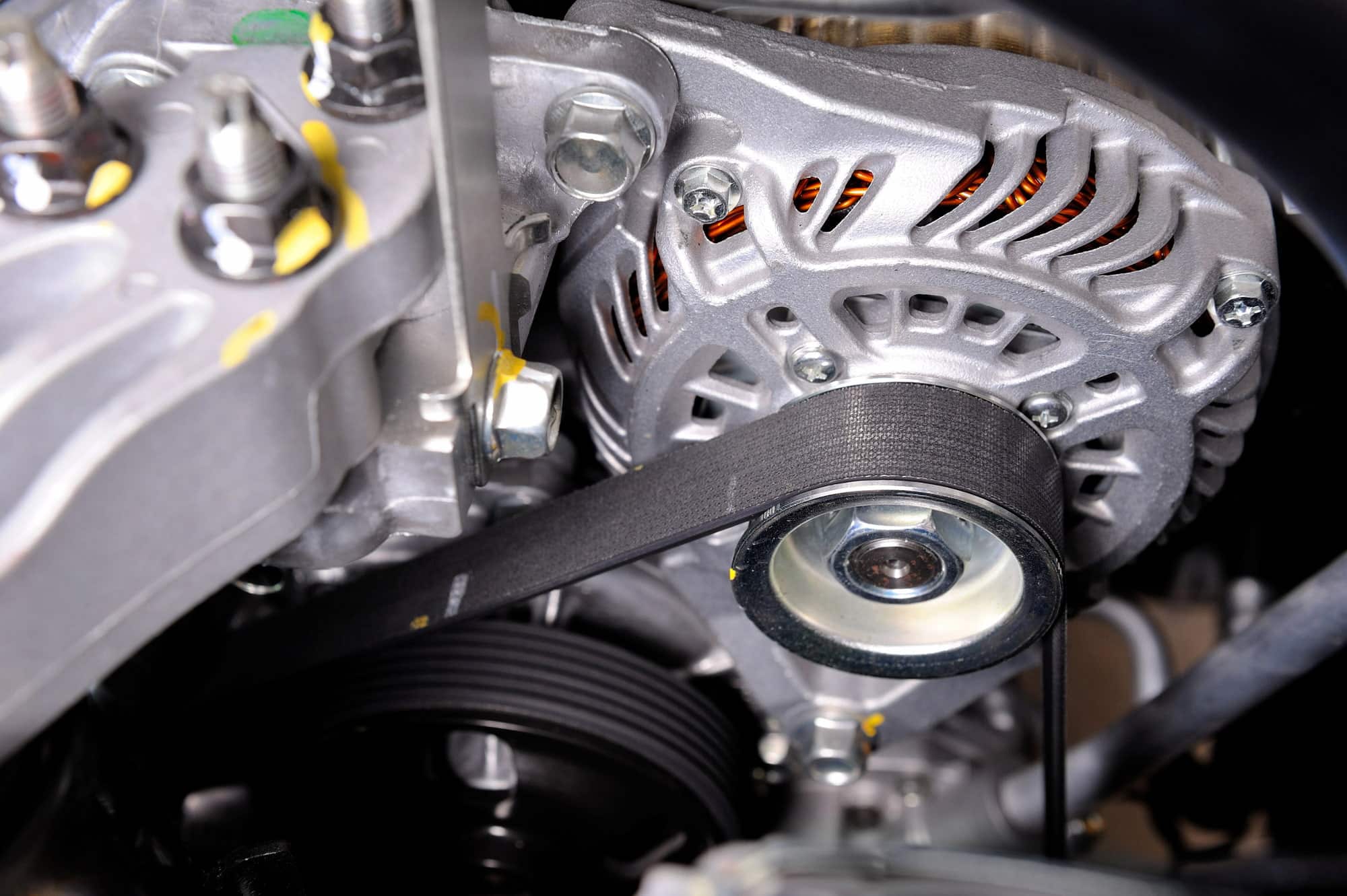
Mercedes-Benz Cambelt Timing Belt Replacement at DART Auto
Mercedes-Benz owners quickly discover that a timing belt failure on an interference engine isn't just inconvenient – it's catastrophic. The moment that belt snaps, valves collide with pistons at thousands of RPM, leaving you with a five-figure engine rebuild instead of a scheduled maintenance item. Generic shops often miss the platform-specific gotchas that separate a textbook timing belt service from one that protects your warranty and resale value.
DART Auto approaches every Mercedes-Benz timing belt replacement with factory-level rigor. We use the OEM crankshaft locking pins and camshaft alignment tools that Mercedes-Benz engineering specifies – not universal aftermarket substitutes that introduce slop. On OM651 diesel engines (common in 2010–2016 E-Class, C-Class, and Sprinter), we follow the multi-stage torque sequence for the crankshaft pulley bolt and replace the stretch bolts that many shops reuse to save a few dollars. Our master technicians also inspect the balance shaft belt on M271 engines (2002–2017 C-Class, E-Class, SLK) and replace the harmonic balancer if the rubber isolator shows separation – a failure mode that generic shops routinely overlook until it grenades the accessory drive.
When you bring your Mercedes-Benz to DART Auto for timing belt replacement, you can expect:
- Complete kit installation – belt, tensioner, idler pulleys, water pump (where driven by timing belt), and all OEM-specified seals and gaskets
- Factory alignment procedure using Mercedes-Benz locking tools and torque specifications, not generic shop guesswork
- Inspection of balance shaft components on M271 engines and replacement of stretch bolts across all platforms
- 3-year/36,000-mile warranty on parts and labor, backed by salaried master technicians with dealer-level training
Common Cambelt Timing Belt Replacement Issues on Mercedes-Benz Vehicles
Mercedes-Benz owners face a unique challenge: many modern models use timing chains rather than belts, but older platforms and certain AMG variants still rely on cambelt systems that demand precise attention. Generic shops often misdiagnose chain noise as belt wear or miss the subtle cues that a Mercedes timing system is nearing failure. Here's what we see regularly at DART Auto:
- M271 and M272 balance shaft failures (2004–2011 C-Class, E-Class, SLK, CLK): The balance shaft sprockets on these engines are notorious for slipping or fracturing, causing catastrophic timing loss even when the belt itself looks fine. The M272 V6 in particular saw a service campaign for updated sprockets, but many cars still run original parts. Shops without Mercedes-specific diagnostic tools miss the telltale rattle at cold start that signals impending failure.
- Idler pulley and tensioner bearing seizure (W202, W210, W124 with M104 inline-six): These older platforms use robust timing belts, but the idler pulleys and hydraulic tensioners degrade with age and heat cycling. A seized bearing can shred a belt in seconds. Colorado's temperature swings accelerate bearing wear, and many owners delay service because "it's just a belt."
- Water pump integration on OM642 diesel V6 (2007–2016 ML, GL, R-Class, Sprinter): The water pump is driven by the timing belt on this engine. Pump seal leaks contaminate the belt with coolant, causing premature cracking and slip. Shops unfamiliar with the OM642 replace the belt without addressing the pump, leading to repeat failures within months.
- Camshaft adjuster solenoid contamination mistaken for belt wear (M276 V6, M278 V8 chain engines): Technicians at quick-lube centers hear timing rattle and recommend belt service on engines that don't have belts. The real culprit is usually carbon buildup in the cam phasers or low oil pressure from neglected changes. Proper diagnosis requires factory scan tools and knowledge of Mercedes variable valve timing architecture.
- Crankshaft seal leaks onto timing belt (older M103, M104, M111 four-cylinder engines): Oil seepage from the front main seal soaks the belt, causing it to slip or glaze. The seal replacement requires precise alignment and OEM-spec RTV application – shortcuts here lead to repeat leaks and belt contamination within 10,000 miles.
Why Choose DART Auto for Mercedes-Benz Cambelt Timing Belt Replacement
Most Mercedes-Benz models built after 1995 use timing chains rather than belts, but certain diesel and early petrol engines – including the OM611/OM612/OM613 diesels and some M111 four-cylinders – still rely on interference-design cambelt systems where a single tooth off can bend valves. Generic shops often miss the critical pre-tensioning sequences and cam-locking procedures spelled out in Mercedes-Benz service documentation, leading to rough running or catastrophic failure within weeks.
DART Auto's master technicians follow factory repair procedures to the letter, using OEM cam-lock tools and torque-angle specifications that protect your engine and preserve your warranty coverage. We've invested in the same diagnostic platforms dealers use – XENTRY, SDconnect – so we can verify valve timing electronically after installation and clear adaptation values that might otherwise trigger limp mode. Because our technicians are salaried rather than flat-rate, there's no incentive to skip the auxiliary-belt inspection, coolant-pump check, or crankshaft-seal replacement that should happen during belt access.
- Platform-specific tooling: cam-lock pins for M111 engines, crankshaft holding tools for OM611/OM612/OM613 diesels.
- OEM parts sourcing: genuine Mercedes-Benz belts, tensioners, and idler pulleys from trusted suppliers – no aftermarket shortcuts on interference engines.
- Post-installation verification: live-data scan to confirm cam-crank correlation and road test under load to rule out timing slip.
- 3-year / 36,000-mile warranty: parts and labor coverage that matches or exceeds dealer protection.
Symptoms – How to Know You Need This Service
Mercedes-Benz timing belts rarely announce their failure in advance – they simply snap. Preventive replacement at the factory-recommended interval is the only reliable defense. That said, a few warning signs can appear if you're approaching the service window or if a component in the timing system begins to fail:
- Mileage or age threshold reached – most Mercedes-Benz timing belt intervals fall between 60,000 and 120,000 miles or 6–10 years, whichever comes first; consult your owner's manual for the exact schedule
- Squealing or chirping from the front of the engine during cold starts, often indicating a worn tensioner bearing or misaligned idler pulley
- Visible cracks, glazing, or fraying on the belt teeth if you inspect through the timing cover access window (not all models provide one)
- Engine misfires or rough idle if the belt has jumped a tooth, throwing valve timing out of spec – this is an emergency; do not continue driving
- Coolant seepage around the water pump on engines where the pump is driven by the timing belt (common on OM651 diesel and some M271 petrol variants)
- Oil leaks from the front crankshaft seal, which shares the timing cover and is typically replaced during belt service
If you notice a sudden loss of power, rough running, or the engine fails to start after a recent cold snap, stop driving immediately and arrange a tow. A jumped or broken timing belt can cause valve-to-piston contact within seconds on interference engines.
Which Mercedes-Benz Models We See for Cambelt Timing Belt Replacement
DART Auto services timing belts across a wide range of Mercedes-Benz platforms. The models below represent the majority of timing-belt-equipped vehicles we see; note that many newer Mercedes-Benz engines have transitioned to timing chains, which have their own service intervals and failure modes.
- W203 / W204 C-Class (2002–2015) – M271 1.8L supercharged and naturally aspirated petrol engines; OM651 2.1L diesel in later C220 CDI / C250 CDI
- W211 / W212 E-Class (2003–2016) – M271 petrol variants and OM651 diesel in E220 CDI / E250 CDI / E300 BlueTEC
- R171 SLK-Class (2005–2011) – M271 1.8L supercharged engines (SLK200 Kompressor, SLK280)
- W169 / W176 A-Class (2005–2018) – M266 and M270 petrol engines, OM607 and OM651 diesel variants
- W245 / W246 B-Class (2006–2018) – same M266, M270, OM607, and OM651 engine families as A-Class
- X204 GLK-Class (2010–2015) – OM651 diesel in GLK220 CDI / GLK250 BlueTEC
- W906 Sprinter (2007–2018) – OM651 and OM642 diesel engines, widely used in commercial and passenger configurations
- Vito / Viano (2004–2014) – OM646 and OM651 diesel engines in European-spec models
If your Mercedes-Benz uses a timing chain (common on V6 and V8 petrol engines, as well as newer four-cylinder turbocharged units), we handle chain replacement, guide rail renewal, and tensioner updates using the same factory-level diagnostic approach. Reach out with your VIN and we'll confirm the correct service interval and procedure for your specific platform.
Causes & Risks – What Happens if Ignored
Timing belt degradation on Mercedes-Benz platforms stems from a combination of heat exposure, ozone cracking from altitude and dry climate, and the high-precision tolerances these engines demand. Unlike domestic V8s with forgiving timing overlap, Mercedes interference engines destroy themselves the moment timing slips even one tooth. The M272 and OM642 are particularly unforgiving – a snapped belt sends valves into pistons, bending valves, cracking cylinder heads, and sometimes punching holes in pistons.
What escalates when you wait:
- Belt surface cracking (visible during inspection): Within 6–12 months, cracks propagate through the load-bearing cords. The belt can snap without warning during a cold start or aggressive acceleration.
- Tensioner hydraulic failure: A weak tensioner allows belt flutter at high RPM, accelerating wear on the camshaft and crankshaft sprockets. Replacing those sprockets adds $800–$1,200 in parts alone.
- Water pump bearing noise (OM642 diesel, M104 inline-six): Ignoring the growl for even a few weeks can lead to pump seizure, which locks the belt and causes immediate catastrophic failure. You're now looking at a full engine teardown instead of a scheduled service.
- Balance shaft sprocket slip (M272): Once the sprocket begins to slip, the engine runs rough and misfires. Continuing to drive damages the catalytic converters (another $2,000+ in parts) and can crack the balance shaft module itself, requiring engine removal for repair.
- Camshaft and crankshaft gear wear: A loose or contaminated belt grinds away at the sprocket teeth. Replacing these gears requires special locking tools and precise TDC alignment – work that takes 8–12 hours instead of the 4–6 hours for a standard belt service.
Safety Impact – Why Cambelt Timing Belt Replacement Matters
A failed timing belt on a Mercedes-Benz doesn't just leave you stranded – it can create dangerous situations. When the belt snaps, the engine stops instantly, often at highway speed. Power steering assist vanishes (older hydraulic systems), and brake boost drops after one or two pedal applications. Drivers unfamiliar with manual braking and steering forces can lose control, especially in Denver traffic or mountain descents.
Specific risks by failure mode:
- Sudden engine shutdown in traffic: No power steering, no brake boost after the vacuum reserve depletes. Requires full pedal force and aggressive steering input to maneuver safely to the shoulder.
- Valve-to-piston contact (interference engines): Broken valves can puncture the cylinder head or damage the piston crown. In rare cases, a piston fragment can pierce the block, causing sudden oil loss and potential fire risk from oil spraying onto the exhaust manifold.
- Loss of coolant circulation (OM642 water pump drive): If the belt drives the water pump and fails, the engine overheats within minutes. Continued driving can warp the cylinder head, requiring head gasket replacement and machine work – or complete head replacement on aluminum V6 engines prone to warping.
- Stranded in unsafe locations: Belt failure is unpredictable. Being stranded on I-70 during a snowstorm or on a remote mountain pass creates exposure and safety risks beyond the mechanical damage.
Stop driving now: any sudden loss of power, loud snapping noise from the engine bay, or visible belt damage during inspection. Schedule within two weeks: oil contamination on the belt, tensioner noise, or approaching the factory service interval (typically 60,000–100,000 miles depending on engine).
How Mercedes-Benz Cambelt Timing Belt Replacement Actually Works
Mercedes-Benz timing belt systems are engineered for precision. Interference engines require the camshaft(s) and crankshaft to maintain exact phase relationship – even a single tooth off causes valve-to-piston contact. The belt drives not only the camshafts but often the water pump, balance shafts (M272), and high-pressure fuel pump on diesel engines. Replacement isn't just "swap the belt" – it demands locking the crankshaft and camshafts at top dead center using Mercedes-specific alignment tools, then tensioning the new belt to exact specifications with a calibrated gauge.
What makes Mercedes timing work different:
- Hydraulic tensioners with bleed-down procedures: The tensioner must be compressed and locked in a vise with a specific pin before installation. Incorrect tensioning causes immediate belt slip or over-tension that damages bearings.
- Balance shaft synchronization (M272): The balance shaft module must be locked separately from the camshafts. Missing this step causes vibration and potential sprocket failure even with a new belt.
- Water pump replacement as standard practice: On OM642 and M104 engines, the water pump is behind the timing cover. Replacing it during belt service is mandatory – the labor overlap makes skipping it false economy, and pump failure destroys the new belt.
- Torque-to-yield fasteners: Many Mercedes timing cover bolts and sprocket bolts are single-use. Reusing them risks bolt failure and oil leaks. OEM procedures specify new hardware – we follow those procedures because your engine's longevity depends on it.
- Camshaft position sensor calibration: After timing service, the ECU must relearn camshaft positions using factory diagnostic software (XENTRY or equivalent). Skipping this causes rough idle, poor fuel economy, and check-engine lights that generic scan tools can't clear properly.
DART Auto has invested in the full suite of Mercedes-Benz locking tools, tensioning gauges, and diagnostic
How We Diagnose Cambelt Timing Belt Replacement Issues on Mercedes-Benz
Most Mercedes-Benz models built after 1995 use timing chains rather than belts, but the M271 four-cylinder (2002–2017 C-Class, E-Class, SLK) relied on a belt-driven balance shaft module that fails catastrophically when neglected. Diagnosing timing component wear on any Mercedes platform requires factory-level tooling and a systematic approach that generic shops often skip.
- Visual inspection under the hood. We remove engine covers and inspect the timing cover area for oil seepage, coolant weeping near the water pump (which shares the belt on many platforms), and tensioner housing cracks. On M271 engines, we look for tell-tale oil staining at the balance shaft module seal – a red flag for imminent failure.
- Xentry diagnostic scan. Using Mercedes-Benz's factory Xentry system, we pull stored and pending fault codes, review freeze-frame data for camshaft/crankshaft correlation errors, and check adaptation values that reveal timing drift before the check-engine light appears.
- Mechanical timing verification. We rotate the engine by hand to TDC and verify cam/crank alignment marks match factory specs. On chain-driven platforms (M276, M278, OM651), we measure chain stretch with a dial indicator at the tensioner guide rail. Stretch beyond 5 mm typically mandates replacement.
- Component-by-component assessment. Tensioners, idler pulleys, and water pumps are inspected for bearing noise, play, and seepage. We document the condition of each ancillary component so you understand what's driving the scope of work.
- Written estimate with options. You receive a detailed quote explaining which parts have reached end-of-life, which are preventive replacements (like the water pump when accessing the timing assembly), and the consequences of deferring the work.
Cambelt Timing Belt Replacement on Mercedes-Benz: Repair vs. Replacement
Timing systems on Mercedes-Benz are modular assemblies where individual components age at different rates. The right approach depends on what's actually worn and how the platform is engineered.
When Repair Makes Sense
- Isolated tensioner failure on chain-driven engines. If a single hydraulic tensioner has lost pressure but the chain and guides show minimal wear, replacing just the tensioner and re-timing the engine is a sound repair on M276 V6 or OM651 diesel platforms.
- Idler pulley bearing replacement. On belt-driven M271 engines, a noisy idler pulley can be swapped without disturbing the belt if the belt itself is within service life and shows no cracking or glazing.
When Full Replacement Is the Right Call
- Belt-driven platforms at or near interval. Mercedes specifies 120,000-mile intervals on M271 engines, but heat cycling and oil contamination degrade the belt earlier. Once you're accessing the timing cover, replacing the belt, tensioner, idler, and water pump together prevents a second teardown within 30,000 miles.
- Chain stretch beyond spec. Chains don't fail gradually – they jump teeth. If measurement shows stretch approaching the limit, replacing the chain, guides, and tensioners as a kit is the only path that preserves your engine and resale value.
- Balance shaft module failure on M271. The balance shaft module is a sealed unit; internal bearing wear requires complete module replacement plus timing belt and water pump while the front of the engine is open.
Our technicians walk you through the trade-offs, showing you the measured wear and explaining why partial fixes often cost more in the long run when a second failure brings the car back in six months.
How to Make Your Mercedes-Benz Cambelt Timing Belt Replacement Last Longer
Timing components wear faster when oil quality degrades, operating temperatures spike, or maintenance intervals stretch. Mercedes-Benz engines are engineered for longevity, but only if you follow platform-specific care routines.
Driving Habits That Protect Timing Components
- Allow proper warm-up. Hydraulic tensioners on chain-driven engines rely on oil pressure. Revving a cold engine before oil reaches full pressure accelerates guide wear and chain stretch.
- Avoid prolonged idling. Extended idle time on turbocharged models (M274, M276) raises under-hood temperatures without airflow, baking timing belt rubber and degrading chain lubrication.
- Service on time, not on mileage alone. Oil change intervals are time-and-mileage; even low-mileage cars need fresh oil annually to prevent sludge buildup that starves timing chain tensioners.
Maintenance You Can Monitor
- Listen for new noises at startup. A brief rattle from the timing cover area during cold starts – especially on M276 V6 engines – signals tensioner wear. Catching it early prevents guide damage.
- Watch for oil consumption or leaks. Oil seepage at the timing cover gasket or valve cover allows contaminants onto the belt/chain. Address leaks promptly rather than topping off and ignoring the source.
- Keep coolant system healthy. The water pump shares the timing belt on M271 engines and the serpentine belt on chain-driven platforms. Coolant leaks or overheating accelerate pump bearing failure, which then destroys the belt or fouls the timing cover.
What to Leave to the Professionals
Timing belt and chain replacement requires locking the camshafts and crankshaft to factory TDC marks, torquing components to exact specs, and verifying valve timing with a scan tool. DIY attempts risk catastrophic engine damage if timing slips even one tooth. Oil changes and visual inspections are safe owner tasks; timing system work is not.
What to Expect When You Bring Your Mercedes-Benz In
We know cambelt replacement is a big-ticket service, so transparency starts the moment you call. Here's how the process unfolds from drop-off to pickup:
- Appointment and drop-off: Schedule online or by phone; we'll ask for your VIN to confirm engine code and service history. Drop off your Mercedes-Benz at your preferred time – loaner vehicles and local shuttle service are available on request.
- Pre-work inspection: Before we touch the cambelt, a master technician performs a complete visual inspection of accessory belts, coolant hoses, oil seals, and tensioner bearings. We'll photograph any additional wear items and include them in your written estimate.
- Written estimate and approval: You'll receive a detailed quote listing OEM belt kit components, labor phases, and any recommended ancillaries (water pump, thermostat, crankshaft seal). We explain why each item matters and the risk of deferring it, then wait for your go-ahead.
- Execution and verification: Our technician locks the camshafts per factory procedure, replaces the belt and tensioners, torques fasteners to spec, then uses XENTRY diagnostics to verify cam-crank correlation. A road test under varied load confirms smooth operation and no fault codes.
- Pickup walkthrough: At pickup we'll show you the old belt, walk through the invoice line by line, and explain the 3-year / 36,000-mile warranty. If anything feels off in the first week – odd noise, rough idle – call us immediately; we'll re-inspect at no charge.
Personal items left in the cabin are secure; we ask that you remove valuables before drop-off. After-hours key drop and pickup are available by arrangement – just let the service advisor know your schedule when you book.
Our Mercedes-Benz Services
- Air Conditioning AC Repair
- Battery Repair Replacement
- Brake Repair & Brake Fluid Change
- Check Engine Light Diagnostics
- Clutch Repair & Replacement
- Coolant Leak Repair
- Cooling System Repair
- Drive Shaft Repair
- Engine Repair
- Exhaust & Catalytic Converter Repair
- Head Gasket Repair & Replacement
- Oil Change
- Oil Leak Repair
- Scheduled Service Maintenance
- Steering Repair
- Suspension Repair
- Transmission Repair
- Tune Up
- Wheel Alignment