
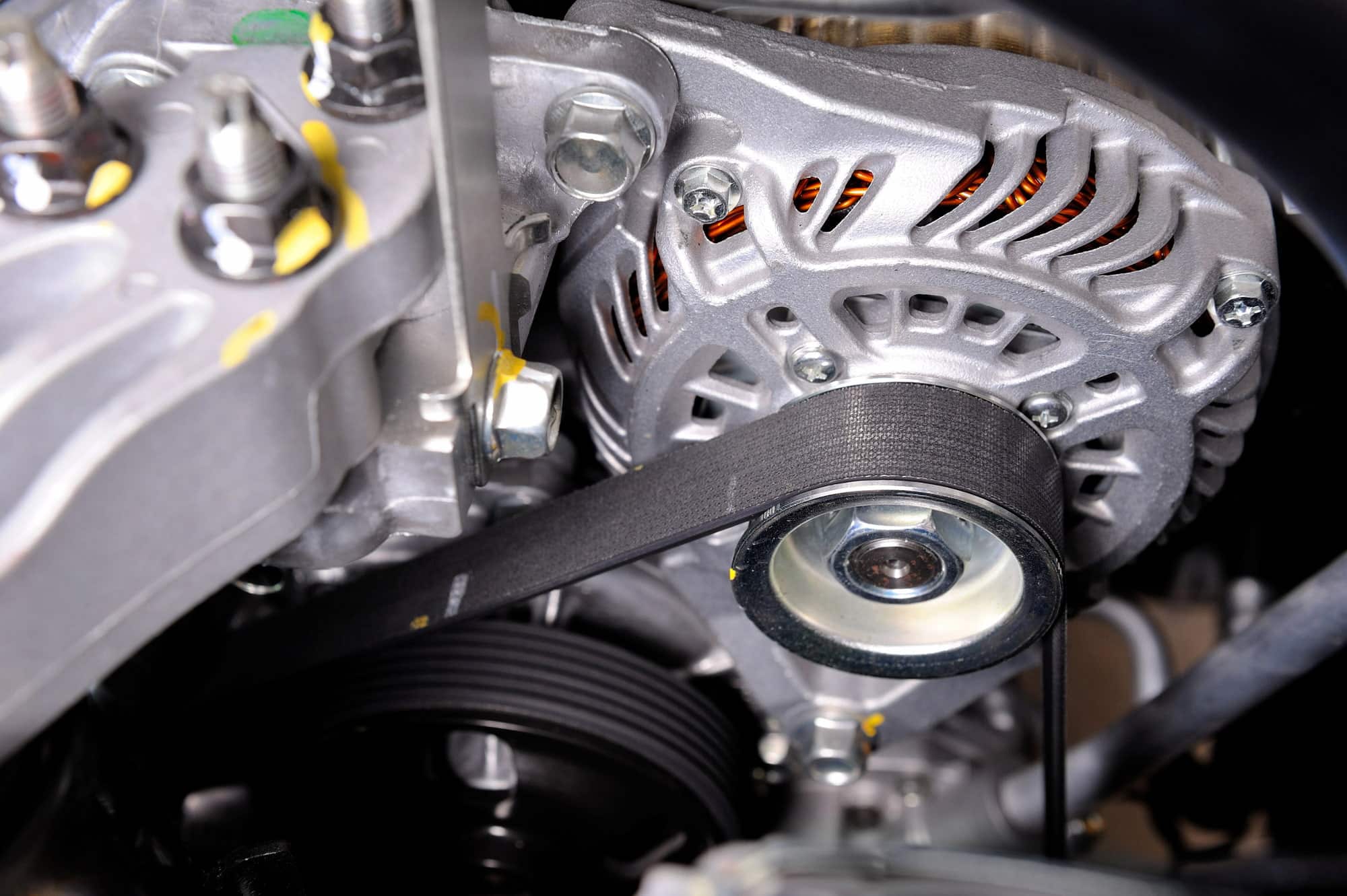
Alfa Romeo Cambelt Timing Belt Replacement at DART Auto
Alfa Romeo engines are precision-built performance machines, and their interference designs mean a failed cambelt can bend valves, damage pistons, and turn a routine maintenance item into a catastrophic engine rebuild. The 1.4 MultiAir turbos (found in 2015–2020 4C and Giulietta models) and the 2.0 JTDm diesels demand strict adherence to factory timing procedures, locking tool placement, and torque sequences that generic shops often skip. We've seen too many Alfas towed in after a budget shop rushed the job, left the engine one tooth off, or reused stretch bolts that should have been replaced.
DART Auto has served Denver's European car community since 2000, and our master technicians bring dealer-level training and the diagnostic tools Alfa Romeo's complex variable valve timing systems require. We follow OEM service procedures to the letter, use factory locking pins to hold the crankshaft and camshafts in position, and replace every tensioner, idler pulley, and water pump that shares the same labor window. Our salaried technicians have no incentive to rush, so they take the time to inspect oil seals, check for coolant weeps, and ensure your Alfa leaves with timing dialed in perfectly.
When you bring your Alfa Romeo to DART Auto for cambelt replacement, you can expect:
- Factory-spec locking tools and torque procedures – we treat your Giulia or 4C like the precision instrument it is.
- Complete belt kit installation – new tensioners, idlers, and water pump (where applicable) to avoid repeat labor costs.
- Pre- and post-service inspection – we document the old belt's condition and verify cam timing with a scan tool before you drive away.
- 3-year/36,000-mile warranty – backed by over two decades of experience and hundreds of five-star reviews.
Common Cambelt Timing Belt Replacement Issues on Alfa Romeo Vehicles
Alfa Romeo timing belts fail in predictable patterns that generic shops often overlook. The 1.75 TBi and 2.0 JTDm engines – found across the Giulietta, MiTo, and 159 platforms from 2008 onward – share a critical vulnerability: the auxiliary belt tensioner degrades prematurely, throwing alignment off and accelerating cambelt wear. Most independent shops replace only the belt itself, missing the tensioner and water pump that will fail within 12,000 miles.
- Twin Spark (TS) 2.0L engines (156, 147, GT, 2000–2010): The interference design means a snapped belt sends valves into pistons immediately. The OEM interval of 72,000 miles is optimistic in Denver's temperature swings; we see cracking and delamination by 60,000. The hydraulic tensioner loses pressure with age, allowing slack that shreds the belt teeth.
- 1.75 TBi turbocharged four-cylinder (Giulietta, 4C, 2010–2020): The MultiAir electrohydraulic valve system adds complexity. Belt failure here doesn't just destroy valves – it can damage the MultiAir solenoids and oil galleries, turning a $1,200 job into a $4,500 nightmare. The plastic cam cover often warps from heat cycles, leaking oil onto the belt and causing premature deterioration.
- 2.0 JTDm diesel (159, Brera, Spider, 2006–2011): High compression ratios amplify damage when timing slips. We've pulled motors where owners delayed replacement by 10,000 miles past interval – bent valves, scored cylinder walls, and cracked pistons. The injection pump is belt-driven on this platform; when it goes out of time, fuel delivery becomes erratic and can hydro-lock the engine.
- V6 Busso engines (GTV, Spider, 156 GTA, 1995–2005): Dual overhead cams per bank mean two belts, two tensioners, two water pumps. Shops unfamiliar with the Busso often replace one side and leave the other, guaranteeing a comeback. The front bank runs hotter due to exhaust proximity, aging that belt 20% faster than the rear.
- Water pump integration across all platforms: Alfa Romeo drives the water pump off the timing belt on nearly every engine. When the pump bearing seizes – common after 70,000 miles – it locks the belt mid-rotation. We've seen this total an engine in under three seconds of running time.
Why Choose DART Auto for Alfa Romeo Cambelt Timing Belt Replacement
Alfa Romeo timing belt service isn't a job for generic shops that treat every car the same. The Twin Spark engines in 147, 156, and GT models require precise valve timing alignment and cam phasing that most techs have never seen. The JTS direct-injection variants add fuel-system complexity. Miss a step on the 1.9 JTD diesel, and you're looking at bent valves and catastrophic damage.
DART Auto's master technicians bring dealer-level training and over a decade of hands-on experience with Alfa Romeo platforms. We follow factory service procedures to the letter, using OEM-spec belts, tensioners, and water pumps sourced from trusted European suppliers. Our shop invests in the specialty locking tools and alignment fixtures that Alfa Romeo timing work demands – not improvised substitutes. We also address known weak points during the service: coolant hoses that crack on high-mileage 159s, auxiliary belt tensioners that fail on Brera/Spider models, and oil leaks from cam cover gaskets that often surface once the belt cover is off.
- Factory diagnostic software to verify cam/crank correlation post-installation
- Complete ancillary replacement – tensioners, idlers, water pump, seals – not just the belt
- Salaried technicians who take the time to torque every fastener to spec, no flat-rate shortcuts
- 3-year/36,000-mile warranty backing every timing belt job we complete
Symptoms – How to Know You Need This Service
Alfa Romeo cambelts are maintenance items with strict interval limits, but certain warning signs tell you replacement is overdue or the belt has already started to fail. Pay attention to these driver-facing clues:
- Mileage or age threshold reached – most Alfa Romeo models call for cambelt replacement every 72,000–105,000 miles or 5–6 years, whichever comes first. Rubber degrades with time even if mileage is low.
- Squealing or chirping from the front of the engine – especially on cold start, indicating a glazed or slipping belt or failing tensioner bearing.
- Rough idle or misfires – if the belt has jumped a tooth, cam timing will be off and the engine will run poorly or throw cam position sensor codes (P0016, P0017, P0018).
- Check engine light with timing-related fault codes – scan the car immediately; driving with skipped timing can destroy valves in seconds.
- Visible cracks or fraying on the belt – if you can see the belt through the cover or during an oil change, surface cracking means replacement is urgent.
- Oil or coolant contamination on the belt – leaking cam cover gaskets or water pump seals can soak the belt and accelerate wear.
- Metallic rattling at idle – often a failing tensioner or idler pulley that will let the belt slip or break.
Stop driving immediately if you hear sudden rattling, experience severe misfires, or see timing codes. Schedule service soon if you're within 10,000 miles of the interval or notice squealing noises.
Which Alfa Romeo Models We See for Cambelt Timing Belt Replacement
We perform cambelt replacement on the full range of modern Alfa Romeo platforms sold in North America and grey-market imports. The work varies significantly between the turbocharged MultiAir four-cylinders, the diesel JTDm engines, and older Twin Spark designs.
- 4C (960, 2015–2020) – 1.4 MultiAir turbo requires careful access through the mid-engine bay and precise locking tool placement.
- Giulietta (940, 2010–2020) – 1.4 MultiAir and 2.0 JTDm variants both use cambelt; the diesel has additional injection pump timing considerations.
- MiTo (955, 2008–2018) – 1.4 MultiAir turbo and naturally aspirated 1.4 16v Twin Spark engines; earlier Twin Spark models have simpler belt routing.
- 159 (939, 2005–2011) – 1.9 JTDm, 2.0 JTDm, and 2.4 JTDm diesels all require cambelt service; petrol V6 models use timing chains.
- Brera / Spider (939, 2006–2010) – same diesel engines as 159; V6 petrol variants have chains and are not covered here.
- 147 / 156 / GT (937/932/937, 2000–2010) – Twin Spark petrol engines and JTD/JTDm diesels use cambelts; later MultiAir conversions are rare.
- Giulia / Stelvio (952/949, 2017+) – the 2.0 turbo and 2.9 V6 both use timing chains, not belts, so they do not require this service.
If you own a grey-market European-spec Alfa or an older model not listed, call us – we have access to global service data and can confirm belt intervals and tooling requirements for your specific chassis.
Causes & Risks – What Happens if Ignored
Timing belt degradation on Alfa Romeo engines accelerates from three primary causes: heat cycling in Colorado's extreme temperature range (which hardens the rubber compound), oil contamination from leaking cam seals or valve cover gaskets (which softens and swells the belt material), and tensioner wear that allows the belt to oscillate and fray. The factory service interval assumes ideal conditions – garage storage, highway miles, and moderate climate. Real-world Denver driving with short trips, winter cold-starts, and summer heat cuts belt life by 15,000 to 20,000 miles.
Here's the damage progression when you delay replacement:
- Months 1–3 past due interval: Belt teeth begin to crack and separate. You won't hear anything yet, but the timing is already drifting by 2–4 degrees. Fuel economy drops 8–12% as ignition timing compensates. The check engine light may appear with camshaft position correlation codes (P0016, P0017 on OBD-II scanners).
- Months 4–8 overdue: Tensioner spring fatigue allows visible belt flutter at idle. The water pump bearing starts grinding – you'll hear a whine that rises with RPM. Coolant seeps from the pump seal, dripping onto the belt and accelerating rot. On Twin Spark engines, misfires appear as valve timing becomes inconsistent.
- Beyond 8 months or 15,000 miles overdue: Catastrophic failure becomes likely. The belt snaps during a cold start (when material is most brittle) or under load (highway merge, mountain pass). Valves and pistons collide at 4,000+ RPM, punching holes through piston crowns, bending valve stems, and scoring cylinder walls. What was a $1,400 preventive service becomes a $7,500–$12,000 engine rebuild or replacement.
- Secondary damage on turbocharged models: When timing jumps on the 1.75 TBi, the turbocharger sees unmetered air and over-boosts, damaging the compressor wheel and wastegate actuator. The MultiAir system floods with debris from broken valve springs, requiring a complete cylinder head replacement.
Safety Impact – Why Cambelt Timing Belt Replacement Matters
A failing timing belt creates immediate safety hazards beyond just engine damage. When the belt skips or snaps while driving, the engine stops producing power instantly – no coasting, no warning. On Alfa Romeo interference engines (which is nearly all of them), the sudden stop can lock the crankshaft momentarily, jerking the vehicle and unsettling chassis dynamics mid-corner or during lane changes. Power steering remains functional for a few seconds on electric systems, but vacuum-assist brakes lose boost after one or two pedal applications, dramatically increasing stopping distances.
- Stop driving immediately if: You hear a slapping or fluttering noise from the timing cover area, see coolant puddling under the front of the engine (water pump failure imminent), or experience sudden rough idle with the check engine light flashing (indicates timing has already slipped).
- Schedule within one week if: You're within 5,000 miles of the service interval, notice a high-pitched whine that changes with engine speed (tensioner or water pump bearing wear), or see oil seepage around the cam cover or front crankshaft seal (will contaminate the belt).
- Plan within one month if: You've reached 60,000 miles on original belt, the vehicle has been stored outdoors for extended periods (UV and ozone degrade rubber even when not running), or maintenance history is unknown on a used purchase.
Insurance liability becomes a factor if a known maintenance deficiency contributes to an accident. If the belt fails and you lose control, causing a collision, and records show you were 20,000 miles past the service interval, insurers can argue negligence and reduce or deny claims.
How Alfa Romeo Cambelt Timing Belt Replacement Actually Works
The timing belt synchronizes crankshaft and camshaft rotation, ensuring valves open and close precisely as pistons move up and down. On Alfa Romeo interference engines – where piston crowns and valve paths overlap – even one tooth of slip causes contact and destruction. The belt is a toothed rubber composite reinforced with Kevlar or fiberglass cords, running around the crankshaft pulley, camshaft sprockets, tensioner, and idler pulleys. Alfa Romeo adds the water pump to this circuit, meaning coolant system service is mandatory during belt replacement.
What makes Alfa Romeo timing work different from mass-market brands:
- Variable valve timing integration: The Twin Spark and JTS engines use cam phasers that must be locked in the home position during belt installation. Generic shops skip this step, resulting in timing that's mechanically correct but electronically wrong – the ECU throws correlation faults and runs in limp mode.
- MultiAir electrohydraulic systems (1.75 TBi): The intake camshaft drives a high-pressure oil pump that actuates the valves electronically. Belt replacement requires bleeding the MultiAir circuit and verifying solenoid function with factory diagnostic software (Witech or equivalent). Aftermarket scanners can't access these parameters.
- Crankshaft locking tools: Alfa Romeo specifies dedicated locking pins that insert through the block and engage machined slots in the crank and cam sprockets. Using generic tools or "eyeballing" TDC with a piston stop guarantees timing error. We maintain the full OEM tool set for every platform from the 156 forward.
- Torque-to-yield fasteners: The cam sprocket bolts and tensioner mounts are single-use on most models. Reusing them
How We Diagnose Cambelt Timing Belt Replacement Issues on Alfa Romeo
Alfa Romeo engines – especially the Twin Spark and JTS units – rely on interference timing, meaning a broken cambelt can bend valves and wreck pistons. Generic shops often miss the subtle clues that a belt is nearing the end of its service life. We approach every Alfa Romeo timing belt inspection with factory-level rigor.
- Service history review. We pull records to confirm when the belt was last changed. Many 147, 156, and GT models from the early 2000s are overdue if the 60,000-mile interval was ignored.
- Visual inspection under the timing cover. We remove the upper cover to inspect belt condition – cracking, glazing, fraying, or oil contamination from a leaking cam seal are all red flags.
- Tensioner and idler bearing check. We spin each pulley by hand and listen for roughness. A failing tensioner on a 159 or Brera 2.2 JTS can let the belt skip a tooth, even if the belt itself looks fine.
- Crankshaft and camshaft alignment verification. We rotate the engine to TDC and confirm timing marks. If the belt has already slipped, we'll see misalignment before we attempt to start the engine and cause valve damage.
- Water pump and auxiliary drive assessment. Because the water pump is driven by the timing belt on many Alfa Romeo engines, we inspect it during every belt service. A weeping pump will contaminate the new belt within months.
At the end of this process, you'll receive a detailed report showing exactly which components need replacement and why. We'll explain the risk of deferral and provide a transparent quote that bundles the belt, tensioner, idlers, seals, and coolant – everything required to do the job once and do it right.
Cambelt Timing Belt Replacement on Alfa Romeo: Repair vs. Replacement
Timing belt service on an Alfa Romeo is almost never a "repair" in the traditional sense. The belt itself is a wear item with a defined service interval, and once it's off, replacement is the only safe option.
When Component Replacement Makes Sense
- Tensioner or idler pulley failure before the belt interval. If a bearing seizes at 50,000 miles but the belt is still in good shape, we'll replace the failed pulley and inspect the belt for damage. If the belt shows no wear or contamination, it can stay.
- Cam or crank seal leak. A weeping seal can sometimes be replaced without disturbing the belt, especially on later 1.75 TBi engines where the front cover is more accessible.
- Water pump replacement on a recently serviced belt. If the belt was changed within the past 10,000 miles and the pump starts leaking, we can sometimes reuse the belt if it hasn't been contaminated by coolant.
When Full Replacement Is the Only Safe Call
Most scenarios demand a complete kit: belt, tensioner, idlers, water pump, and seals. The labor to access the timing system is the same whether you replace one part or six, so partial replacement rarely saves money. On interference engines like the 2.0 JTS and 1.8 TBi, a second failure due to a skipped component isn't just inconvenient – it's catastrophic.
We walk you through the decision with photos and wear measurements. You'll never be upsold on parts you don't need, but you'll understand why cutting corners on a timing belt job is false economy.
How to Make Your Alfa Romeo Cambelt Timing Belt Replacement Last Longer
Timing belts are wear items, but how you drive and maintain your Alfa Romeo directly affects how close you get to the factory interval.
Driving Habits That Extend Belt Life
- Warm up before high RPM. Cold starts followed by immediate redline pulls stress the belt and tensioner. Let oil circulate for 60 seconds before driving hard.
- Avoid short trips in extreme cold. Repeated cold cycles without reaching full operating temperature can cause belt material to harden and crack prematurely.
- Watch for oil leaks. A leaking valve cover or front main seal will drip oil onto the belt. Contaminated belts lose grip and can slip teeth even if they look intact.
Maintenance You Can Monitor Yourself
- Listen for changes in engine noise. A failing tensioner or idler often announces itself with a high-pitched squeal or rattle at idle. Don't ignore new sounds.
- Check for coolant leaks around the timing cover. A weeping water pump will leave pink or green residue. Catching it early means you can address it before the belt is soaked.
- Respect the service interval. Alfa Romeo specifies 60,000 miles or five years for most timing belts. Age matters as much as mileage – rubber degrades even when the car sits.
What to Leave to the Professionals
Timing belt replacement on an Alfa Romeo requires locking tools, torque-angle specifications, and careful tensioner preload. This is not a DIY job unless you have factory tooling and training. Attempting it at home can result in valve-to-piston contact, a repair bill ten times the cost of the belt service, and a car that won't run. Trust this work to a shop with the right tools and experience – it's the single most important preventive service your Alfa Romeo will ever need.
What to Expect When You Bring Your Alfa Romeo In
Timing belt replacement is a planned service, so we'll schedule a dedicated bay and confirm parts availability before your appointment. Here's how the process unfolds:
- Drop-off and intake. Bring your Alfa Romeo in at the scheduled time. We'll ask about any recent symptoms – rough idle, check-engine lights, coolant loss – that might point to additional issues. Leave personal items at home; we'll secure valuables if needed. Loaner vehicles and local shuttle service are available if you can't wait on-site.
- Pre-service inspection. Before we touch the timing belt, our technician performs a complete visual and scan-tool inspection. We check for oil leaks, coolant system integrity, and stored fault codes. You'll receive a written estimate covering the timing belt kit, water pump, any recommended seals or hoses, and labor.
- Timing belt replacement. We remove the front covers, lock the camshafts and crankshaft in factory-specified TDC position, install the new belt and tensioner, and replace the water pump. Every fastener gets torqued to Alfa Romeo spec. We verify cam timing with a scan tool before buttoning everything up.
- Post-repair verification. After reassembly, we road-test your Alfa Romeo and re-scan for any new codes. You'll get a walkaround at pickup explaining what we did and what to watch for in the first few hundred miles. If anything feels off after you drive it, call us immediately – we'll recheck timing and tension at no charge.
We explain every recommended repair and the consequences of delaying it, so you can make informed decisions. No surprises, no upsells – just honest service that fixes your Alfa Romeo right the first time.
Our Alfa Romeo Services
- Air Conditioning AC Repair
- Battery Repair Replacement
- Brake Repair & Brake Fluid Change
- Check Engine Light Diagnostics
- Clutch Repair & Replacement
- Coolant Leak Repair
- Cooling System Repair
- Drive Shaft Repair
- Engine Repair
- Exhaust & Catalytic Converter Repair
- Head Gasket Repair & Replacement
- Oil Change
- Oil Leak Repair
- Scheduled Service Maintenance
- Steering Repair
- Suspension Repair
- Transmission Repair
- Tune Up
- Wheel Alignment