
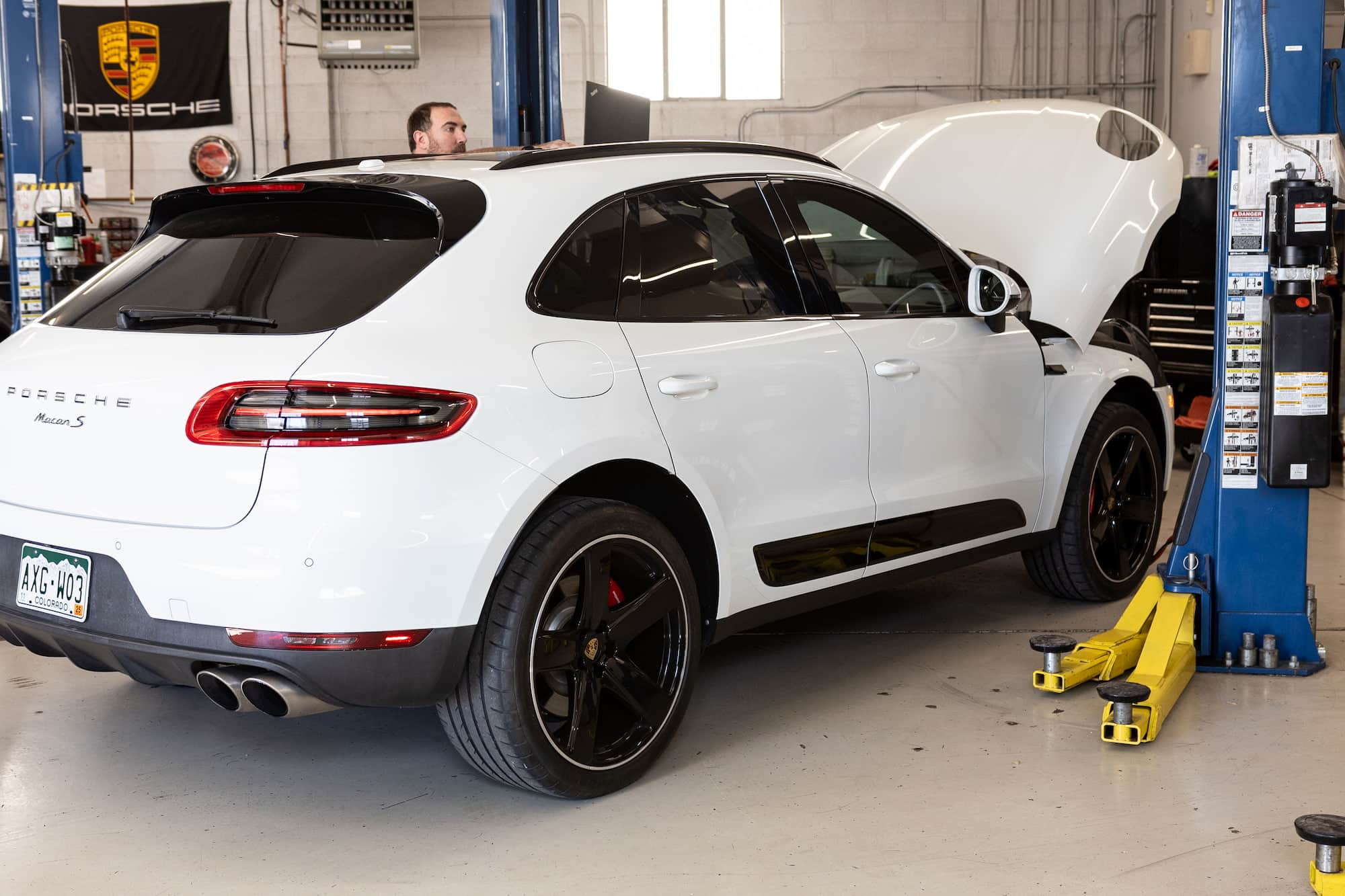
Audi Transmission Repair at DART Auto
A Denver driver pulled into our shop last month with a 2014 A6 3.0T that shuddered during every upshift. The dealer quoted a full transmission replacement. After running ODIS diagnostics and pulling adaptation values, we traced the issue to a failing mechatronic unit and contaminated fluid – a $3,200 repair instead of an $8,500 replacement. That difference matters, and it's why Audi transmission work demands a shop that understands these systems at the component level.
Audi transmissions – whether the ZF 8HP automatic, Multitronic CVT, or DL501/DQ250/DQ500 DSG variants – rely on precise hydraulic mapping, adaptive software, and temperature-sensitive clutch packs that generic shops often misdiagnose. The DL501 7-speed DSG in S4/S5 models (2010-2016) is notorious for mechatronic failures that trigger limp mode, while B8 A4 Multitronic units suffer from chain slip under load when fluid intervals are missed. We use factory ODIS and VAS diagnostic platforms to read transmission adaptation channels, clutch wear counters, and shift pressure data that standard OBD-II scanners cannot access. Our technicians follow Audi repair group procedures for clutch relearns, valve body calibration, and software flashing – work that requires both the tooling and the training most independent shops lack.
When you bring your Audi to DART Auto for transmission repair, you can expect:
- Complete ODIS diagnostics to isolate mechanical versus electronic faults before disassembly
- Component-level repair where possible – replacing mechatronic units, solenoid packs, or clutch modules rather than entire transmissions
- OEM-spec fluid and filter service using G 055 005, G 052 182, or G 055 025 fluids matched to your transmission type
- Post-repair adaptation procedures and road testing to verify shift quality under load
Common Transmission Repair Issues on Audi Vehicles
A few months ago, a customer brought in a 2012 A6 with what he thought was a minor shudder during acceleration. By the time he'd waited another week, the transmission was slipping between gears and throwing fault codes. What could have been a software adaptation reset and fluid service became a full mechatronic replacement. That delay cost him thousands.
Audi transmissions are sophisticated pieces of engineering, but certain platforms have well-documented weak points that show up predictably as mileage climbs:
- 0B5 DL501 mechatronic failure (2008–2016 A4, A5, A6, Q5 with 7-speed DSG): The mechatronic control unit develops internal valve-body wear and solenoid faults, often between 60k–100k miles. Symptoms include harsh shifts, gear hunting, and limp mode. This is a known design weakness on the dual-clutch platform, and software updates alone rarely solve it once hard parts have degraded.
- 09G/09M (6F21WA) valve-body wear (2005–2011 A3, A4, TT): This 6-speed automatic develops internal bore wear and check-ball failures, leading to delayed engagement, flare shifts, and eventually no movement in certain gears. The valve body is a wear item on these units, not a lifetime component.
- Torque-converter shudder on 0AW/0CK 8-speed tiptronic (2012+ A6, A7, Q5, Q7): Early production units suffer from torque-converter lockup clutch material degradation, causing a vibration around 40–50 mph under light throttle. Often misdiagnosed as driveline or engine mounts until a stall-speed test confirms converter slip.
- Clutch pack failure on 02E DSG (2003–2008 TT, A3 3.2): The dual-mass flywheel and clutch packs wear prematurely if the transmission was not serviced every 40k miles. Slipping, burnt-clutch smell, and refusal to engage odd or even gears are telltale signs.
- Conductor plate corrosion on 01J CVT (2002–2005 A4, A6 multitronic): The internal wiring harness corrodes from moisture ingress and heat cycling, causing erratic shifting, limp mode, and no communication with the TCU. This is a replacement-only repair; cleaning doesn't last.
- Software adaptation issues post-battery disconnect (all models with DSG or S-tronic): Audi dual-clutch transmissions require a specific relearn procedure using factory diagnostic tools after any battery service or TCU replacement. Skipping this step leaves the transmission hunting for shift points and feeling rough.
Why Choose DART Auto for Audi Transmission Repair
A customer once brought us a 2012 Audi A4 Quattro with the DL501 dual-clutch transmission – the dealer quoted a full replacement, but we traced the issue to mechatronic software calibration and a failing clutch pack temperature sensor. After flashing the latest factory update and replacing the sensor, the car shifted perfectly. That kind of outcome happens when you combine factory-level diagnostic tools with technicians who know the difference between a software glitch and a mechanical failure.
Our approach to Audi transmission repair sets us apart in several concrete ways:
- Platform-specific expertise: We track Audi TSBs for known issues like valve-body wear in early DL382 seven-speeds or torque-converter shudder in ZF 8HP transmissions used in Q5 and A6 models from 2012 onward.
- Factory tooling and procedures: We use ODIS diagnostics to read adaptation values, reset clutch learning parameters, and flash transmission control modules – the same workflow Audi technicians follow.
- End-to-end ownership: From initial scan and fluid analysis through mechanical repair and post-flash road verification, one team handles your car. No outsourcing, no guesswork.
- Salaried technicians: Our master techs have no incentive to recommend a rebuild when a software update and fluid service will solve the problem.
We've been diagnosing European transmissions since 2000, and every repair comes with a 3-year/36,000-mile warranty on parts and labor.
Symptoms – How to Know You Need This Service
Audi transmission problems announce themselves in ways that range from subtle to impossible to ignore. You may notice:
- Harsh or delayed shifts – especially the 2-3 upshift on DSG models or hesitation when accelerating from a stop on Multitronic CVTs
- Shuddering or judder during engagement – common with DQ250/DQ500 DSG clutch pack wear, often felt between 15-25 mph under light throttle
- Transmission warning lights or limp mode – flashing gear indicator, "PRNDS" display errors, or the car limiting power to third gear only
- Whining, grinding, or rattling noises – metallic sounds from the bellhousing area, particularly during cold starts on CVT models
- Slipping or flaring RPM between gears – engine speed rises without corresponding acceleration, indicating clutch or belt slip
- Burning smell or dark, metallic fluid – overheated transmission fluid smells acrid and appears brown or black instead of red
- Refusal to engage gear – shifter moves but the car won't move forward or reverse, often a mechatronic or valve body failure
- Erratic shifting patterns or gear hunting – transmission constantly searching for the right gear on the highway
If you experience limp mode, complete loss of drive, or burning smells, stop driving immediately and have the car towed. Continued operation can turn a $2,000 mechatronic replacement into a $7,000 transmission rebuild. Intermittent symptoms like occasional harsh shifts or delayed engagement warrant scheduling an inspection within the week – early diagnosis often catches problems before catastrophic failure.
Which Audi Models We See for Transmission Repair
We service Audi transmission issues across the model range, with particular depth on the platforms and transmission types that dominate Denver roads. The work varies significantly by transmission family:
- B8/B8.5 A4/A5 (2009-2016) – ZF 8HP automatic and DL501 7-speed DSG; common mechatronic and clutch pack issues
- C7 A6/A7 (2012-2018) – ZF 8HP45/8HP55; valve body wear and solenoid failures around 80k-120k miles
- B9 A4/A5 (2017-present) – ZF 8HP and DL382 7-speed DSG; newer platforms with fewer chronic issues but software-dependent diagnostics
- 8V S3 (2015-2020) – DQ250 6-speed DSG; mechatronic failures and clutch judder under aggressive driving
- B8.5/B9 S4/S5 (2013-present) – DL501 7-speed DSG; known for mechatronic control unit failures and clutch pack wear
- Q5/Q7 (2009-2017) – ZF 8HP and Aisin 6-speed automatics; torque converter shudder and valve body issues
- B7 A4 (2006-2008) with Multitronic CVT – chain slip, valve body contamination, and software-related shift quality problems
- Manual transmissions (all models) – clutch replacement, flywheel resurfacing, and hydraulic system repairs
We handle both quattro and FWD variants. For older C5/C6 generation cars (pre-2009) and specialized platforms like R8 or RS models with S tronic or R tronic systems, we assess each case individually based on parts availability and diagnostic capability. The factory tooling and repair data we maintain covers 2005-present comprehensively.
Causes & Risks – What Happens if Ignored
Most Audi transmission problems start with heat and contaminated fluid. The Colorado climate – hot summers, cold winters, frequent elevation changes – accelerates fluid breakdown. Add in stop-and-go traffic on I-25 or spirited mountain driving, and you're asking a lot of a transmission that was designed for steady European autobahn cruising. Audi's extended service intervals (some models list 80k–100k miles for fluid changes) assume ideal conditions that simply don't exist here.
When early symptoms appear and get ignored, the damage compounds quickly:
- Worn clutch packs begin to slip: What starts as a slight delay in engagement becomes full clutch failure within 5k–10k miles. Once the friction material sheds into the fluid, it circulates through the valve body and clogs solenoid screens, turning a clutch job into a full rebuild.
- Mechatronic solenoids stick or fail: A single faulty solenoid can cause the TCU to command limp mode, limiting you to third gear and preventing safe highway speeds. Continuing to drive in limp mode overheats the remaining clutches and damages the torque converter.
- Torque-converter lockup clutch disintegrates: The initial shudder becomes a grinding noise, then total loss of lockup. Fuel economy drops 15–20%, and the excess heat cooks seals throughout the transmission, leading to external leaks and eventual pump failure.
- Valve-body bore wear expands: Hydraulic pressure bleeds off internally, causing soft or missed shifts. The transmission begins to hunt between gears, overheating the fluid and warping separator plates. What could have been a $1,200 valve-body replacement becomes a $5,000+ overhaul.
- Contaminated fluid destroys bearings and bushings: Once metal particles circulate, every moving surface becomes a grinding surface. Bearing noise, output-shaft play, and catastrophic internal failure follow within weeks.
Safety Impact – Why Transmission Repair Matters
A failing transmission isn't just an inconvenience – it's a safety hazard. When a dual-clutch unit drops into limp mode on I-70 during a mountain descent, you lose engine braking and the ability to downshift for control. Merging onto the highway in third-gear-only mode puts you and others at risk when you can't accelerate out of a dangerous situation.
Specific failure modes that compromise safety:
- Sudden loss of drive while moving: Clutch or valve-body failure can cause the transmission to drop into neutral without warning, leaving you coasting with no power. This is especially dangerous in intersections or on grades.
- Delayed engagement from Park or Reverse: A worn valve body or low line pressure can cause a 2–3 second delay before the transmission engages. Drivers often add throttle during the delay, then lurch violently when engagement finally happens – a rollback risk on hills and a rear-end collision risk in parking lots.
- Harsh downshifts or gear hunting: Unpredictable shift behavior makes it impossible to maintain steady speed or control, especially in traffic or adverse weather. ABS and stability control systems rely on predictable drivetrain behavior; erratic shifts confuse these systems.
- Overheating and fire risk: A slipping clutch or failing torque converter generates extreme heat. Transmission fluid can ignite if it contacts exhaust components or leaks onto hot surfaces. We've seen fluid temperatures exceed 300°F on neglected units – well into the danger zone.
Stop driving immediately if: you smell burning, see smoke, experience total loss of drive, or the transmission will not engage any gear. Schedule service within the week if: you notice delayed shifts, harsh engagement, shuddering, or warning lights.
How Audi Transmission Repair Actually Works
Audi uses three main transmission families across its lineup: conventional torque-converter automatics (Tiptronic), dual-clutch transmissions (DSG/S-tronic), and the older continuously variable multitronic units. Each requires a completely different diagnostic and repair approach. The dual-clutch systems, in particular, are essentially two manual transmissions controlled by a single mechatronic unit – a hydraulic control module with integrated electronics that manages clutch engagement, shift timing, and torque delivery. Unlike a traditional automatic that uses planetary gearsets and a valve body, the DSG relies on electro-hydraulic solenoids, pressure sensors, and clutch-position feedback to execute shifts in milliseconds.
Why this matters for repair work:
- Factory diagnostic software is mandatory: Audi's proprietary scan tools (VAS, ODIS, or equivalent dealer-level systems) are required to read transmission adaptation values, perform clutch relearns, update TCU software, and clear fault codes properly. Generic OBD-II scanners can't access the necessary control modules or execute the required procedures.
- Fluid and filter specs are transmission-specific: The 0B5 DL501 requires G 052 182 fluid and a specific filter element; the 09G uses G 055 005. Using the wrong fluid – even temporarily – damages clutch friction material and seals. Fill volume, temperature during fill, and adaptation reset procedures are all critical.
- Mechatronic units require coding and calibration: A replacement mechatronic must be coded to the vehicle's VIN, matched to the engine control module, and taught clutch bite points through a series of automated drive cycles. Skipping any step leaves the transmission unable to shift correctly.
A customer arrived at our Denver shop last month with a 2014 Audi A6 3.0T that hesitated between second and third gear. She'd been told by another shop that she needed a full transmission rebuild for over $6,000. After running our diagnostic protocol, we discovered the issue was a failing mechatronic unit – a known weak point on the 0B5 DL501 dual-clutch transmission found in C7-generation A6 and A7 models. We replaced the mechatronic assembly and reflashed the TCU with updated Audi software. Total cost was less than half the quoted rebuild, and the transmission has been shifting flawlessly ever since. That story captures what sets DART Auto apart: we use factory-level diagnostics to find the real problem, then fix exactly what needs fixing – nothing more, nothing less.
How We Diagnose Transmission Repair Issues on Audi
Accurate diagnosis is the foundation of any successful transmission repair. We follow a methodical protocol that combines Audi-specific scan tools with hands-on inspection to pinpoint the exact failure mode before recommending any work.
- Initial interview and road test: We drive the vehicle with the owner or service advisor to replicate the symptoms – whether that's harsh shifts, slipping, delayed engagement, or unusual noises. This real-world data guides the rest of our process.
- Factory-level scan with ODIS or VAS: We connect Audi's own diagnostic platform to read transmission control module codes, adaptation values, clutch pack wear measurements, and shift event counters. On dual-clutch transmissions like the DQ250 (02E) and DL501 (0B5), we pull mechatronic fault memory and hydraulic pressure logs that reveal whether the issue is mechanical, electrical, or software-related.
- Fluid analysis and visual inspection: We drop the pan to examine the fluid for metal shavings, clutch material, or discoloration. On ZF 8HP transmissions (8R45, 8R55, 8R75) used in Q5, Q7, and A8 models, we inspect the valve body and solenoid pack for debris or varnish buildup that can cause erratic shifts.
- Mechanical measurement: We check line pressure with a mechanical gauge, measure end-play on shafts where accessible, and verify that shift solenoids respond correctly to commanded inputs. On older Tiptronic transmissions (01V, 09G), we test the torque converter lock-up clutch separately.
- Software verification: We confirm the TCU is running the latest Audi calibration. Many shift complaints on 2012–2016 A4, A5, and Q5 models with the 0B5 transmission were resolved by software updates alone – no hardware replacement needed.
Once we've gathered this data, we compile a detailed report that explains what failed, why it failed, and what repair strategy makes sense for your car and budget. You'll receive a transparent estimate before any work begins, and we walk you through the findings so you understand exactly what you're paying for.
Transmission Repair on Audi: Repair vs. Replacement
Not every transmission problem requires a full rebuild or replacement. The right approach depends on the specific failure mode, the transmission's overall condition, and how much life remains in the surrounding components.
When Repair Is the Right Choice
- Mechatronic unit failure on dual-clutch transmissions: The DQ250 and DL501 often suffer from internal mechatronic faults – failed solenoids, cracked circuit boards, or worn clutch actuators. Replacing the mechatronic assembly and reflashing the TCU restores full function without touching the clutch packs or gear sets.
- Torque converter shudder on ZF 8HP: If the converter clutch is glazed but the transmission internals are clean, we can replace just the torque converter and refresh the fluid. This is common on 2012–2015 A6 and A7 models.
- Solenoid pack or valve body issues: On older Tiptronic and multitronic CVT transmissions, individual solenoids or the valve body can be replaced without a full teardown, especially if fluid analysis shows minimal wear debris.
- Software-related shift issues: Many 2010–2014 Audi models with the 0B5 transmission experienced harsh shifts or limp mode due to outdated TCU calibration. A software update and adaptation reset often resolves the complaint entirely.
When Replacement Makes Sense
- Clutch pack failure in dual-clutch transmissions: If the friction discs are worn beyond specification or the pressure plate is warped, the clutch module must be replaced. On high-mileage DQ250 units, we often see both clutch packs degraded simultaneously.
- Chain or belt failure in multitronic CVT: The 01J multitronic used in A4, A5, and A6 models is known for chain stretch and pulley wear after 100,000 miles. Once the chain has elongated, the entire CVT assembly typically requires replacement.
- Internal hard-part damage: Broken gear teeth, scored clutch drums, or cracked cases mean a full rebuild or remanufactured unit is the only safe option. We source remanufactured Audi transmissions with OEM-grade internals and a warranty that matches our own 3-year/36,000-mile coverage.
We never push the most expensive option. Instead, we present the repair versus replacement scenarios with honest cost-benefit analysis, so you can make an informed decision. Our salaried technicians have no incentive to upsell – they're paid to fix your car correctly, not to maximize billable hours.
How to Make Your Audi Transmission Repair Last Longer
Once we've repaired or replaced your transmission, a few smart habits will help you get maximum life from the work.
Driving Habits That Protect Your Transmission
- Allow proper warm-up: Dual-clutch and conventional automatics rely on precise hydraulic pressure. In cold weather, let the car idle for 30–60 seconds before driving, and avoid aggressive throttle inputs until the transmission reaches operating temperature.
- Use manual mode strategically: On steep descents or mountain driving, downshift manually to use engine braking instead of riding the brakes. This reduces heat buildup in both the brakes and transmission.
- Avoid prolonged idling in Drive: At long stoplights or drive-throughs, shift to Neutral or Park. Keeping a dual-clutch transmission in Drive with the brake applied generates unnecessary heat in the clutch packs.
- Don't launch aggressively from a stop: Hard launches on dual-clutch transmissions accelerate clutch wear. If you own a performance model like an S4 or S5, save the launch control for the track – not your daily commute.
Maintenance You Can Monitor
- Check for fluid leaks: Inspect your driveway or parking spot for red or brown fluid. Transmission fluid leaks on Audi often originate from the output shaft seal, mechatronic connector seals, or cooler lines.
- Listen for changes: New whining, grinding, or clunking noises are early warning signs. Catching a problem early – before metal debris circulates through the system – can mean the difference between a $1,200 repair and a $7,000 replacement.
- Watch the dashboard: If the transmission warning light, check engine light, or gear position indicator starts flashing, stop driving and have the car towed. Continuing to drive in limp mode can cause catastrophic damage.
Professional Maintenance That Matters
- Follow Audi's fluid service intervals: Despite "lifetime fill" claims, we recommend transmission fluid and filter changes every 40,000–60,000 miles on dual-clutch and conventional automatics. On multitronic CVT transmissions, fluid service every 30,000 miles is critical to prevent chain wear.
- Use OEM or OEM-equivalent fluids: Audi dual-clutch transmissions require G 052 182 (DQ250) or G 052 529 (DL501) specification fluid. Substituting generic ATF will cause shift quality issues and premature wear.
What to Expect When You Bring Your Audi In
Transmission concerns can feel opaque, so we walk you through each phase. Here's how a typical visit unfolds:
- Drop-off and intake: Schedule an appointment or call ahead – we'll ask about symptoms (delayed engagement, slipping, harsh shifts, warning lights) and driving conditions. If you need a loaner or shuttle, let us know when you book.
- Initial inspection and scan: We connect factory-level scan tools to pull fault codes, check adaptation values, and review transmission fluid condition. If the car is drivable, we road-test to confirm the behavior you're experiencing.
- Written estimate: You'll receive a detailed breakdown of what we found – whether it's a software update, solenoid replacement, valve-body service, or internal rebuild – along with the reasoning behind each recommendation and what happens if you delay.
- Repair and verification: Once you approve, we perform the work using OEM or premium aftermarket parts, following Audi torque specs and fill procedures. After reassembly, we reset adaptations, road-test under varied conditions, and re-scan to confirm no stored faults.
- Pickup walkthrough: We'll explain what we repaired, show you old parts if relevant, and answer questions about break-in procedures or fluid service intervals going forward.
If anything feels off within the warranty period, bring the car back – we'll re-check adaptations and verify the repair at no charge. Clear communication and personal items secured in the glovebox or trunk make the process smooth from start to finish.
Our Audi Services
- Air Conditioning AC Repair
- Battery Repair Replacement
- Brake Repair & Brake Fluid Change
- Check Engine Light Diagnostics
- Clutch Repair & Replacement
- Coolant Leak Repair
- Cooling System Repair
- Drive Shaft Repair
- Engine Repair
- Exhaust & Catalytic Converter Repair
- Head Gasket Repair & Replacement
- Oil Change
- Oil Leak Repair
- Scheduled Service Maintenance
- Steering Repair
- Suspension Repair
- Cambelt Timing Belt Replacement
- Tune Up
- Wheel Alignment