
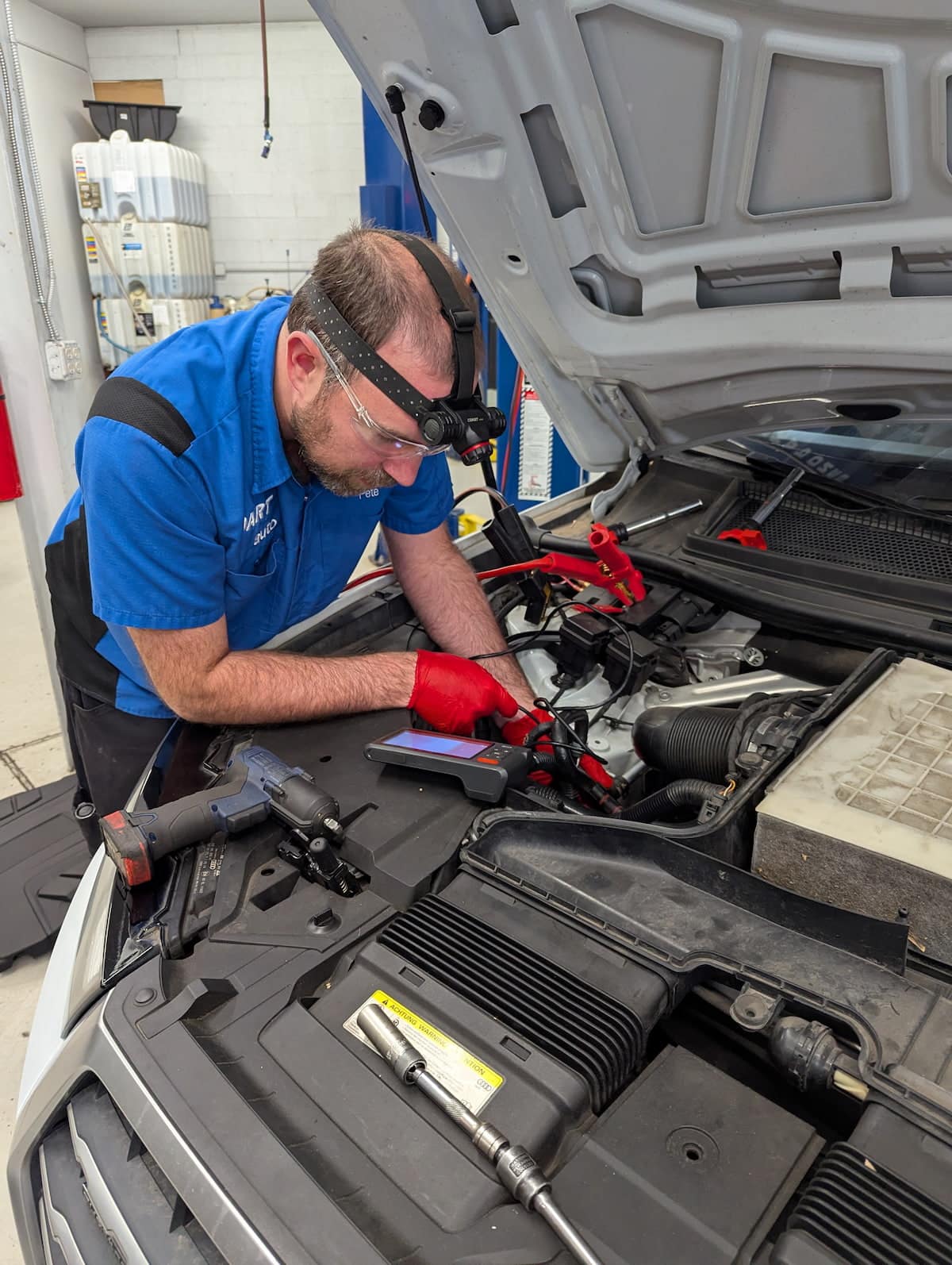
Alfa Romeo Tune Up at DART Auto
Skipping or botching a tune up on an Alfa Romeo doesn't just cost you performance – it invites cascading damage to ignition coils, catalytic converters, and oxygen sensors that can run into thousands. Alfa Romeo engines, especially the 2.0L MultiAir turbo found in Giulia and Stelvio models since 2017, demand precise spark timing and fuel delivery. When spark plugs degrade beyond spec, the direct-injection system compensates by dumping extra fuel, fouling cats and triggering misfires that feel like the car is choking itself. The 2.9L twin-turbo V6 in Quadrifoglio variants is even less forgiving – carbon buildup on intake valves compounds with worn plugs to create a rough-idle nightmare that generic shops misdiagnose as coil packs or injectors.
DART Auto approaches Alfa Romeo tune ups with factory-level rigor. We follow FCA/Stellantis torque specifications for plug installation (critical on aluminum heads prone to thread damage), use OEM-equivalent NGK or Bosch plugs engineered for MultiAir's high-compression environment, and scan for stored misfire codes with Alfa-specific diagnostic software that reads combustion data dealerships rely on. Our salaried master technicians – each with over a decade of European training – inspect coil boots for carbon tracking, measure secondary ignition patterns, and check PCV valve operation because these systems interact directly with spark health on modern Alfas.
When you bring your Alfa Romeo to DART Auto for a tune up, expect:
- Complete ignition system inspection – coils, boots, and secondary waveforms captured with oscilloscope analysis
- OEM-spec spark plugs installed to factory torque with anti-seize on aluminum threads
- PCV and intake system check to address root causes of fouling on direct-injection engines
- Pre- and post-service misfire scans to verify combustion balance across all cylinders
Common Tune Up Issues on Alfa Romeo Vehicles
Alfa Romeo owners face distinct tune-up challenges rooted in the brand's performance-focused engineering and European design philosophy. Getting these issues wrong doesn't just mean poor performance – it means expensive secondary damage that can sideline your car for weeks. Here's what we see most often:
- Twin Spark ignition coil failure on 147/156/GT (2000–2010): The dual-plug design places eight coils under constant thermal stress. Coil pack degradation causes misfires that dump unburned fuel into the catalytic converter, destroying it within months. Early symptoms include rough idle and hesitation under load, but many owners mistake this for normal Italian character until Check Engine lights appear.
- Direct injection carbon buildup on 1750 TBi engines (Giulietta, 4C, Giulia base): Without port injection to wash intake valves, carbon accumulates rapidly – especially in Denver's short-trip, cold-start climate. By 40,000 miles, valve deposits choke airflow enough to trigger misfires and limp mode. This requires walnut-blasting, not a spray cleaner.
- Spark plug fouling on 2.9L V6 BiTurbo (Giulia/Stelvio Quadrifoglio): Factory NGK plugs run hot to prevent fouling, but aggressive tune maps and high boost mean they erode quickly. Worn plugs cause knock sensor false triggers and ECU pull timing, robbing 50+ horsepower. Replacement intervals are shorter than the manual suggests – closer to 20,000 miles under spirited driving.
- Throttle body carbon deposits on MultiAir engines (all 1.4T variants, 2010–present): The electronic throttle plate sits downstream of crankcase ventilation, so oil vapor bakes onto the blade and bore. Idle hunting, stalling at stop signs, and sluggish throttle response all point here. Cleaning requires removal and OEM-spec solvent – not carb cleaner, which damages the coating.
- PCV valve clogging on 2.0L GME T4 engines (Giulia/Stelvio Ti, 2017+): Positive crankcase ventilation failures let blow-by pressure build, forcing oil past turbo seals and into the intake tract. You'll see blue smoke on deceleration and oil consumption between changes. Left unchecked, this contaminates the intercooler and requires a full intake system flush.
- Fuel injector varnish on older Busso V6 engines (GTV, Spider, 156, 166 through 2005): These port-injection engines are sensitive to ethanol fuel. Injector tips clog with varnish, causing lean misfires on specific cylinders. Ultrasonic cleaning and flow-testing are necessary – simple fuel additives won't restore spray pattern on injectors this old.
Why Choose DART Auto for Alfa Romeo Tune Up
Getting a tune-up wrong on an Alfa Romeo – especially on turbocharged MultiAir engines or the Giorgio platform – can mean misfires, rough idle, and expensive comebacks. DART Auto approaches every tune-up with factory-level diagnostic equipment and access to FCA technical service bulletins, so we catch issues like carbon buildup on direct-injection 1.75 and 2.0 turbos, or ignition coil failures on Giulia and Stelvio models before they escalate. Our master technicians have dealer training and over a decade of experience with European platforms, and because they're salaried rather than flat-rate, there's no incentive to rush or recommend unnecessary work.
We own the job from start to finish. Before any spark plug or coil is replaced, we run a full scan with OEM-level tooling to read live data, check for software updates, and verify that the symptoms match the root cause. After the work is complete, we road-test and re-scan to confirm smooth idle, proper fuel trims, and no pending codes. Every tune-up is backed by a 3-year/36,000-mile warranty on parts and labor, and we use OEM or premium aftermarket components sourced from trusted suppliers – not the generic parts that fail early on high-compression Alfa engines.
Symptoms – How to Know You Need This Service
Your Alfa Romeo will telegraph tune-up needs through the seat, the pedal, and the dashboard. Pay attention – these symptoms escalate quickly on turbocharged engines.
- Rough idle or shaking at stoplights – misfires feel like the engine is stumbling over itself, especially when cold
- Check Engine Light with misfire codes – P0300 (random misfire) or P030X (cylinder-specific) stored in memory
- Hesitation or flat spots during acceleration – the turbo spools but power delivery feels inconsistent or jerky
- Increased fuel consumption – the ECU compensates for weak spark by adding fuel, tanking your MPG by 15–20%
- Hard starts or extended cranking – worn plugs need multiple cycles to fire, especially in cold or damp weather
- Smell of raw fuel from the exhaust – unburned fuel passing through the cats signals incomplete combustion
- Loss of top-end power – the engine pulls fine below 4,000 RPM but falls flat at higher loads
- Flashing Check Engine Light – this means active severe misfire; stop driving immediately to avoid catalytic converter damage
If you see a flashing CEL or smell fuel, don't wait – continued driving melts cats and racks up repair bills. For other symptoms, schedule service within a week or two to prevent coil and sensor damage.
Which Alfa Romeo Models We See for Tune Up
DART Auto services tune ups across the modern Alfa Romeo lineup, with deep experience on the turbocharged platforms introduced in 2017. Here's what we commonly see:
- Giulia (2017–present, Type 952) – 2.0L MultiAir turbo and 2.9L twin-turbo V6 Quadrifoglio; both require NGK LKAR8AI-9 or equivalent iridium plugs
- Stelvio (2018–present, Type 949) – same 2.0L and 2.9L engines as Giulia; identical plug intervals and coil-boot concerns
- 4C (2015–2020, Type 960) – 1.75L turbo with direct injection; tight engine bay demands careful coil removal to avoid boot tears
- Giulietta (not US-market, but serviced for imports) – 1.4L MultiAir turbo; European-spec plugs and different ignition coil part numbers
- Quadrifoglio variants (Giulia/Stelvio) – 2.9L V6 runs hotter and fouls plugs faster under track use; consider shorter intervals if driven hard
We focus on 2015-and-newer models where direct injection and turbocharging make tune-up precision non-negotiable. For older 8C or classic Spider/GTV models, call ahead – we'll assess whether our tooling and parts sources fit your platform. Manual and automatic transmissions share the same ignition service; AWD Q4 models require no special access procedures.
Causes & Risks – What Happens if Ignored
Tune-up issues on Alfa Romeo vehicles stem from a combination of aggressive engine tuning, turbocharged forced induction, direct injection design, and Colorado's altitude and temperature swings. Short urban trips never let the engine reach full operating temperature, accelerating carbon and moisture buildup. Ethanol-blended pump gas leaves deposits that Italian engineers didn't anticipate when calibrating fuel maps. Add in the fact that many Alfa owners drive enthusiastically – which is exactly what these cars were built for – and you're cycling components through heat and stress faster than the maintenance schedule assumes.
Here's what deteriorates when you postpone tune-up work:
- Misfires destroy catalytic converters within 2,000–5,000 miles: Unburned fuel superheats the catalyst substrate, melting the honeycomb and creating an exhaust restriction. A $200 coil problem becomes a $2,400 catalyst replacement, plus the original coils still need addressing.
- Carbon buildup triggers limp mode and lean codes: Once intake valves are choked with deposits, the ECU can't maintain target air-fuel ratios. The car enters reduced-power mode to protect itself, leaving you stranded or unable to merge safely. Walnut-blasting costs climb as technicians spend more time removing heavier buildup.
- Worn spark plugs cause knock and timing retard: As the electrode gap widens, combustion becomes inconsistent. Knock sensors detect false detonation, the ECU pulls ignition advance, and you lose power while fuel economy drops. Prolonged knock can crack piston ring lands on high-compression MultiAir engines.
- Throttle body deposits create stalling and safety hazards: When the throttle can't close smoothly to idle position, the engine stalls at intersections or during downshifts. This is dangerous in traffic and compounds wear on the starter motor and battery from repeated restart cycles.
- PCV failures contaminate the entire intake path: Oil vapor coats the intercooler, throttle body, intake manifold, and intake valves. What starts as a $150 PCV valve becomes a $1,200 intake system cleaning and turbo seal inspection because oil has migrated everywhere.
Safety Impact – Why Tune Up Matters
Neglected tune-up maintenance on an Alfa Romeo doesn't just hurt performance – it creates genuine safety risks. Misfires under load mean unpredictable power delivery when merging onto highways or passing slower traffic. Throttle body carbon can cause sudden stalling at stop signs, leaving you vulnerable in intersections. On turbocharged models, a failing PCV system that contaminates the intake can trigger limp mode without warning, cutting power to 30% while you're in the left lane of I-25. These aren't hypothetical scenarios; we see them weekly.
Specific safety concerns include:
- Stop driving immediately if: The engine stalls repeatedly at idle, you see blue or white smoke from the exhaust, or the Check Engine light flashes (indicating active misfire that can damage the catalyst or cause a fire).
- Schedule within the week if: You notice hesitation during acceleration, rough idle that smooths out at higher RPM, or a persistent Check Engine light with no driveability symptoms yet.
- Plan service soon if: Fuel economy has dropped noticeably, the engine feels less responsive than usual, or you're approaching the service interval for spark plugs and ignition components.
From a liability standpoint, ignoring a known Check Engine light related to emissions or misfires can complicate insurance claims if an accident occurs. Colorado emissions testing will fail a car with active misfire codes, and driving with a failed catalyst violates EPA regulations. More importantly, unpredictable power delivery or sudden stalling puts you and other drivers at real risk.
How Alfa Romeo Tune Up Actually Works
Modern Alfa Romeo engines use sophisticated ignition and fuel delivery systems that differ significantly from mass-market designs. Most current models employ direct injection, where fuel sprays at high pressure directly into the combustion chamber rather than mixing with air upstream. This improves power and efficiency but leaves intake valves exposed to oil vapor and carbon without the cleaning effect of fuel wash. MultiAir engines add variable valve actuation controlled by electro-hydraulic solenoids, not traditional camshafts, meaning valve timing and lift change constantly based on load and throttle input. Turbocharged models run higher cylinder pressures and temperatures, stressing ignition components harder than naturally aspirated engines.
Key technical distinctions that affect service procedures:
- OEM diagnostic software required: Alfa Romeo ECUs store misfire counters, fuel trim data, and component activation histories that generic scan tools can't access. Proper diagnosis requires factory-level communication to read these parameters and perform guided component tests.
- Torque-to-yield spark plugs on some engines: Certain MultiAir variants use plugs that must be torqued to exact specifications with a calibrated wrench, then turned an additional angular rotation. Over- or under-torquing cracks the cylinder head or allows combustion leaks.
- Throttle body adaptation after cleaning: Electronic throttle systems learn idle position over time. After cleaning carbon deposits, the ECU must relearn closed and open throttle positions through a specific drive cycle or commanded procedure, or idle quality suffers.
- Coil-on-plug designs with integrated ignition modules: Alfa Romeo coils aren't just transformers – they contain the ignition driver circuitry. This makes
How We Diagnose Tune Up Issues on Alfa Romeo
Modern Alfa Romeo engines – whether the turbocharged 2.0L four-cylinder in the Giulia and Stelvio or the Ferrari-derived twin-turbo V6 in Quadrifoglio models – demand precision diagnostics before any tune-up work begins. Skipping this step means guessing, and guessing on a high-performance Italian engine is expensive. Here's how we approach every tune-up diagnostic on your Alfa Romeo:
- Factory-level scan tool connection. We use diagnostic equipment that speaks directly to Alfa Romeo's proprietary control modules – engine, transmission, body, and ABS. This pulls live data streams, freeze-frame fault codes, and adaptation values that generic OBD-II scanners miss entirely. On 2017-newer Giulia and Stelvio models, we monitor ignition timing, fuel trim, knock sensor activity, and turbocharger boost pressure in real time.
- Ignition system inspection. We pull each spark plug and examine electrode wear, carbon fouling, and gap erosion. On the 2.0T GME engine, we also inspect the individual coil-on-plug assemblies for heat damage and electrical resistance out of spec. Alfa Romeo's direct-injection setup runs high cylinder pressures, so plug life is shorter than on port-injected engines.
- Fuel system pressure and injector flow testing. Direct-injection systems on Giulia and Stelvio operate at rail pressures above 2,000 psi. We verify fuel pressure against factory specs and check injector spray patterns using flow bench equipment. Carbon buildup on intake valves – common on early 2017-2018 models – also gets documented during borescope inspection.
- Air intake and throttle body condition. We inspect the intake tract for cracks, check the mass airflow sensor for contamination, and verify throttle body adaptation values. On turbocharged Alfa Romeo engines, we also inspect intercooler piping for boost leaks.
- Road test under load. After static checks, we drive the car through its power band, monitoring for misfires, hesitation, and abnormal knock events under acceleration. This confirms whether the tune-up will restore smooth power delivery or if deeper issues exist.
Once diagnostics are complete, you receive a detailed quote that explains exactly which components need service, why they matter for performance and reliability, and what happens if you delay the work. No guesswork, no upselling – just the facts your Alfa Romeo needs.
Tune Up on Alfa Romeo: Repair vs. Replacement
Not every tune-up issue requires throwing new parts at the problem. The right approach depends on what's worn, how far gone it is, and whether a partial fix will hold up on a high-strung Italian engine. Here's how we decide:
When Repair Makes Sense
- Carbon cleaning on direct-injection engines. Early Giulia and Stelvio 2.0T engines accumulate carbon on intake valves because fuel never washes over them. Walnut-blasting the valves restores airflow without replacing any hard parts. This is a repair, not a replacement, and it works.
- Throttle body adaptation reset. If the throttle body is dirty but not damaged, a thorough cleaning followed by an electronic relearn procedure often restores crisp throttle response. No new throttle body needed.
- Coil pack testing and selective replacement. If one coil is failing but the others test within spec, we replace only the bad unit. On a V6 Quadrifoglio, that's six coils – no sense replacing all six if only one is weak.
When Full Replacement Is the Right Call
- Spark plugs at interval. Alfa Romeo specifies NGK or Bosch plugs with iridium electrodes. Once they've reached 30,000–40,000 miles on a turbocharged engine, the electrode erosion is measurable and misfires are imminent. Replace all plugs as a set – mixing old and new creates uneven combustion.
- Ignition coils with heat damage. If a coil shows cracks, carbon tracking, or internal resistance out of range, replacement is the only safe option. Coils don't heal themselves, and a failed coil under boost can damage the catalytic converter.
- Mass airflow sensor contamination. If cleaning doesn't restore proper airflow readings, the sensor's hot-wire element is compromised. A new OEM MAF sensor ensures accurate fuel metering, which matters enormously on a turbocharged engine.
We walk you through the decision every time. You'll understand what's repairable, what's not, and why – so you can make an informed choice rather than feeling pressured into the most expensive option.
How to Make Your Alfa Romeo Tune Up Last Longer
Alfa Romeo engines reward attentive owners and punish neglect. A few smart habits can stretch the interval between tune-ups and keep your Giulia, Stelvio, or 4C running at its best. Here's what actually works:
Driving Habits That Protect Ignition and Fuel Systems
- Warm the engine before hard acceleration. Turbocharged engines need oil flow and coolant temperature in range before you lean on the throttle. Give it two minutes of easy driving before hitting boost – this reduces carbon buildup and protects ignition components from thermal shock.
- Run the engine hard occasionally. Italian engines are designed to rev. Short trips and constant low-RPM driving promote carbon deposits. Once a week, take a highway on-ramp or open road and run the engine through its power band. This burns off carbon and keeps intake valves cleaner.
- Use top-tier gasoline. Alfa Romeo's direct-injection systems are sensitive to fuel quality. Top-tier detergent fuels (Shell, Chevron, Mobil, BP) contain additives that reduce injector and valve deposits. It's cheap insurance against carbon buildup.
Maintenance You Can Monitor Yourself
- Check the check-engine light immediately. Alfa Romeo's engine management is aggressive. A flashing check-engine light means active misfires – pull over and call for a tow. A steady light should be diagnosed within a day or two, before a minor issue cascades into catalytic converter damage.
- Listen for changes in idle quality. A smooth idle is your baseline. If you notice a new vibration, stumble, or rough patch when stopped, ignition or fuel delivery may be degrading. Catching it early means a tune-up instead of a repair bill.
- Watch for hesitation or flat spots under acceleration. If your Alfa Romeo used to pull hard and now hesitates or bogs between 2,000 and 4,000 RPM, spark plugs or coils are likely weak. Don't wait for a full misfire – address it during your next service.
What to Leave to the Professionals
Spark plug replacement on the 2.0T GME engine requires careful torque specs and anti-seize application – overtightening can strip the aluminum head threads. Carbon cleaning demands specialized walnut-blast equipment and intake manifold removal. Software updates for fuel and ignition maps require factory tooling. These aren't DIY jobs, and attempting them without the right equipment costs more in the long run. Bring your Alfa Romeo in when it's due, and we'll handle the precision work that keeps it running the way Alfa Romeo intended.
What to Expect When You Bring Your Alfa Romeo In
From the moment you schedule your appointment, the process is designed to keep you informed and in control. Here's how a typical tune-up visit unfolds:
- Drop-Off and Initial Consultation: You'll meet with a service advisor who documents your concerns – rough idle, hesitation, check-engine light, or scheduled maintenance. We ask about recent symptoms, driving conditions, and service history. If you need a loaner vehicle or shuttle service, let us know during scheduling.
- Diagnostic Inspection: Our technician connects factory-level scan tools to pull codes, review live data, and check for software updates or TSBs. We inspect spark plugs, ignition coils, air filters, and throttle body condition. On MultiAir engines, we assess intake valve carbon deposits and fuel system health.
- Written Estimate and Approval: Before any work begins, you receive a detailed estimate explaining what we found, what needs replacement, and why. We walk you through the consequences of doing the work now versus deferring it, so you can make an informed decision.
- Repair and Verification: Once approved, we replace spark plugs, coils, filters, and any related components using OEM or premium parts. After reassembly, we clear codes, road-test the car under load, and re-scan to confirm smooth operation and proper fuel trims.
- Pickup Walkthrough: At pickup, your advisor reviews the completed work, shows you old parts if requested, and answers any questions. If something feels off in the days following your visit, call us – we'll bring the car back in and verify everything at no charge.
Personal items left in the cabin are safe; we place floor mats and seat covers during service. After-hours pickup can be arranged if your schedule requires it.
Our Alfa Romeo Services
- Air Conditioning AC Repair
- Battery Repair Replacement
- Brake Repair & Brake Fluid Change
- Check Engine Light Diagnostics
- Clutch Repair & Replacement
- Coolant Leak Repair
- Cooling System Repair
- Drive Shaft Repair
- Engine Repair
- Exhaust & Catalytic Converter Repair
- Head Gasket Repair & Replacement
- Oil Change
- Oil Leak Repair
- Scheduled Service Maintenance
- Steering Repair
- Suspension Repair
- Cambelt Timing Belt Replacement
- Transmission Repair
- Wheel Alignment