
Brake Pad Warning Light on a 2015 Audi Q3 — What It Means and What We Found
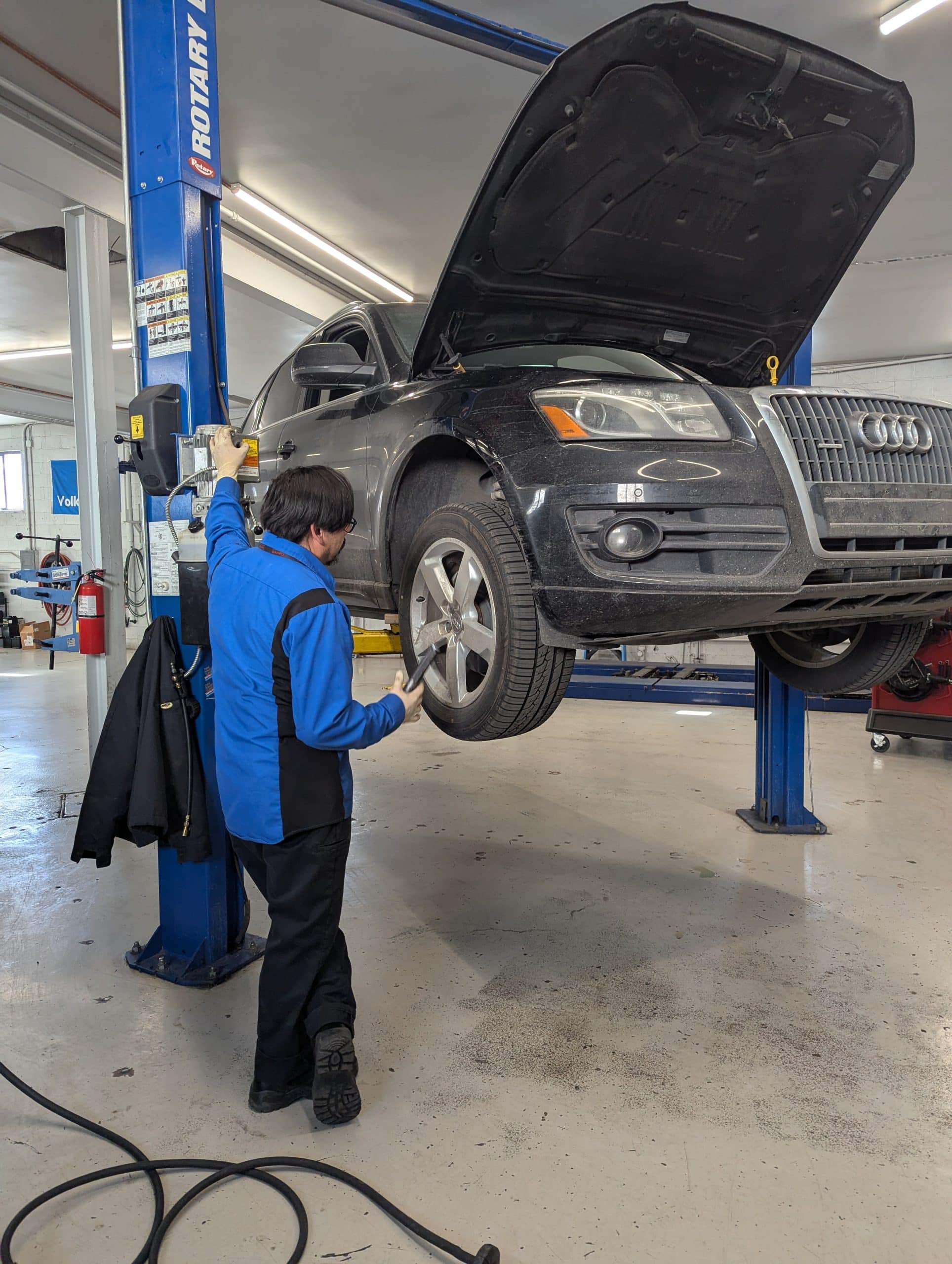
A customer brought their 2015 Audi Q3 into DART Auto recently with the brake pad warning light on. They weren’t sure if it was urgent — it’s a question we hear a lot. The short answer: when an Audi’s brake warning light activates, it’s the car telling you the wear sensor has been triggered. That means you’re past “soon” and into “now.”
Here’s exactly what our technician found and what it means for anyone driving an Audi Q3.
What the inspection revealed
After pulling the vehicle in, our tech found the front inside brake pad had physically contacted the wear sensor — which is what triggers the dashboard light. The rear brakes were still within spec. The vehicle was also coming up on a routine service interval in about 75 days, so we flagged that for the customer to plan around.
The repair needed: front brake pad and rotor replacement.
Why the front brakes on an Audi Q3 wear first
This is one of the most common questions we get. Front brakes on virtually every front-wheel-drive and all-wheel-drive vehicle — including the Q3 — handle the majority of braking force. Under normal driving conditions, your front pads will wear out roughly twice as fast as the rears. Most manufacturers, including Audi make the front braking system larger to somewhat compensate for the added work the front brakes do. It’s not a defect, it’s physics.
Audi’s wear sensor system is designed specifically to catch this at the right moment — before the pad material is gone and metal starts contacting the rotor. Most German car manufacturers specify 2mm of rotor wear before the rotors must be replaced. By the time a set of brake pads have worn out, the rotors are typically worn 1.5 mm and would be below specification if we attempted to resurface them. For that reason most competent repair shops recommend rotor replacement with every brake pad replacement. We also replace all torque to yield caliper bolts and brake hardware as recommended in the Audi Factory Repair Procedures. Some shops cut corners and don’t do a brake job the Audi way. This often results in noise, less than optimal stopping performance, and premature pad wear.
What happens if you keep driving on worn brake pads
We want to be honest with customers about this rather than just say “brakes are important.” Here’s the actual sequence:
Once the pad wears through the sensor, you have a limited amount of material left. Continued driving causes the metal backing plate to contact the rotor. You’ll typically hear grinding before you feel a change in stopping distance — but by that point, you’re cutting into the rotor surface. Stopping distance does increase measurably once pads are metal-on-metal.
The brake warning light on Audi vehicles — FAQ
Can I drive my Audi Q3 with the brake warning light on? For short distances in an emergency, yes. As a regular practice, no. The sensor triggers before the pads are completely gone, but you don’t know how much margin you have without an inspection.
Does the brake light always mean pads? Could it be something else? On the Q3, the brake pad warning light is specifically tied to the wear sensor circuit. A separate ABS or brake system light would indicate a hydraulic or ABS issue. If you’re seeing the pad indicator, it’s almost always the pads.
How long does front brake pad replacement take on an Audi Q3? At DART Auto, a front brake service with pads and rotors typically takes 2 hours.
Audi brake service in Denver
DART Auto specializes in European vehicles including Audi, BMW, Porsche, and Mercedes. We stock OEM-spec brake components and use factory-compatible equipment. If your Audi’s brake warning light is on, we can usually get you in same-day or next-day for an inspection.
Located in Denver, CO — call us or book online.