
About Alfa Romeo Service at DART Auto
Alfa Romeo vehicles demand a shop that understands the Fiat Chrysler Automobiles (FCA) platform architecture and the brand's Italian engineering philosophy. The Giorgio platform underpinning the Giulia and Stelvio shares almost nothing with mainstream FCA products – its carbon-fiber driveshaft, aluminum-intensive construction, and rear-biased AWD system require technicians who've studied factory service procedures and invested in Alfa-specific diagnostic software. DART Auto has served Denver's European car community since 2000, and our master technicians bring dealer-level training to every Alfa that enters our bays.
We perform the full spectrum of Alfa Romeo service: scheduled maintenance following FCA's variable service intervals, electrical diagnostics using factory-grade scan tools that communicate with every module in the vehicle's CAN network, drivetrain work including clutch replacement on manual-transmission Giulias, suspension repair and alignment for the double-wishbone front and multi-link rear setups, and engine work ranging from timing chain service on the 2.0L turbo four-cylinder to carbon cleaning on direct-injection motors. Our salaried technicians take the time to diagnose root causes rather than throwing parts at symptoms, and every repair is backed by a 3-year/36,000-mile warranty.
When you choose DART Auto for Alfa Romeo service, you get:
- Factory diagnostic capability using OEM-aligned software and pinpoint testing procedures
- Technicians with at least 10 years of experience and ongoing European vehicle training
- OEM and premium aftermarket parts sourced from trusted suppliers who understand Alfa's quality requirements
- Transparent estimates and honest advice about repair priority and timing
Common Issues with Alfa Romeo Vehicles
Alfa Romeo ownership delivers exhilarating performance and Italian design flair, but certain platforms carry well-documented failure modes that require specialist attention. Our technicians track these patterns across the lineup and use factory diagnostic protocols to identify root causes before they escalate.
- Timing chain stretch and variator failures (2.0L GME turbo engines, 2017–present): The Global Medium Engine family – found in Giulia, Stelvio, and Tonale models – can develop timing chain elongation as early as 40,000 miles, causing cold-start rattle, rough idle, and Check Engine warnings for camshaft correlation faults. Left unaddressed, the chain can skip teeth and cause catastrophic valve-to-piston contact.
- Transfer case fluid contamination (Q4 all-wheel-drive, Type 952/949 chassis): The active torque-vectoring AWD system in Giulia and Stelvio Q4 models uses a rear-biased power transfer unit that's sensitive to fluid degradation. Contaminated or low fluid triggers limp mode, clunking during tight turns, and eventual PTU bearing failure requiring complete unit replacement.
- Dual-clutch transmission mechatronic failures (TCT, 2014–2020 4C): The 4C's Alfa TCT twin-clutch gearbox shares architecture with Fiat/Chrysler DCT units and suffers from solenoid pack failures, causing delayed shifts, neutral drop-outs at stoplights, and transmission fault warnings. Software updates and clutch adaptation resets often provide temporary relief before hardware replacement becomes necessary.
- Carbon buildup on direct-injection intake valves (all GME and MultiAir engines): Without port injection to wash valve stems, carbon accumulates on intake valves across the 2.0L turbo and 2.9L V6 BiTurbo engines, causing misfires, rough idle, and reduced power. Walnut-blasting service is required every 30,000–50,000 miles to restore airflow and prevent ignition coil damage from prolonged misfires.
- Electronic parking brake module failures (Type 952 Giulia, 2017–2019): Early Giulia production suffered from EPB control module software bugs and actuator motor failures, leaving the parking brake stuck engaged or failing to hold on inclines. Alfa issued multiple software updates, but hardware replacement is sometimes required alongside recalibration with factory tools.
- Infotainment system freezes and connectivity dropouts (Uconnect 8.4, 2017–2021): The 8.4-inch Uconnect system in Giulia and Stelvio experiences spontaneous reboots, Bluetooth pairing failures, and navigation GPS loss. Software updates address many issues, but some units require module replacement and VIN-specific programming to restore full functionality.
- Front lower control arm bushing deterioration (Type 952/949, all years): The front suspension geometry uses pressed bushings that wear prematurely under spirited driving, causing clunking over bumps, wandering steering, and uneven tire wear. Replacement requires specialty presses and precise alignment to Alfa's tight tolerances.
Why Choose DART Auto for Your Alfa Romeo
Alfa Romeo vehicles built on the Giorgio platform – including the Giulia and Stelvio – share sophisticated electronics and suspension calibration with Maserati, demanding diagnostic tools and software access that match factory capability. DART Auto maintains Witech and Alfadiag scan tools alongside OEM repair procedures, so we can address everything from MultiAir valve timing faults to adaptive cruise radar calibration without sending you to the dealer.
Our technicians hold manufacturer-level training and average over a decade of hands-on experience with European marques. Because we pay salaries instead of flat-rate commissions, there's zero incentive to recommend work you don't need or to rush through a diagnosis. We perform complete pre-repair inspections, explain what each recommended service addresses, and back every repair with a 3-year/36,000-mile warranty on parts and labor.
Since 2000, we've built our reputation on fixing cars right the first time. That means:
- Full diagnostic scans before quoting any repair – not guesswork
- OEM and premium aftermarket parts from vetted suppliers
- Post-repair road tests and verification scans to confirm the fault is resolved
- Transparent estimates with no surprise charges at pickup
Symptoms Alfa Romeo Owners Should Watch For
Alfa Romeo drivers should schedule a diagnostic appointment when they notice any of these warning signs:
- Check Engine Light with reduced power: The 2.0L turbo engine uses a complex boost control system, and faults in the wastegate actuator or charge air cooler can trigger limp mode – this needs immediate attention to prevent turbocharger damage.
- Steering wheel off-center or pulling: The Giorgio platform's sophisticated suspension geometry requires precise alignment; hitting a pothole can knock specs out of range and accelerate tire wear.
- Grinding or clicking from the front axle during turns: CV joint wear is common on AWD Stelvio models, and delaying replacement risks complete joint failure.
- Rough idle or hesitation on cold starts: Direct-injection engines accumulate carbon on intake valves, affecting airflow and combustion quality.
- Burning oil smell after spirited driving: Valve cover gasket leaks allow oil to drip onto exhaust manifolds; small leaks become large ones quickly.
- ABS or stability control warnings: Wheel speed sensor faults compromise the Q4 AWD system's torque vectoring and safety systems.
- Transmission slipping or delayed shifts: The ZF eight-speed automatic requires clean fluid and proper adaptation procedures during service.
Alfa Romeo Models and Platforms We Service
DART Auto services the modern Alfa Romeo lineup built on FCA's rear-wheel-drive architecture, plus select earlier models:
Current Giorgio Platform (2016–Present)
- Giulia (Type 952): All trim levels including the Quadrifoglio with its Ferrari-derived 2.9L twin-turbo V6, plus the 2.0L turbo four-cylinder in base, Ti, and Sprint models
- Stelvio (Type 949): Q4 AWD SUV variants from base through Quadrifoglio, sharing drivetrain and electrical architecture with the Giulia
- Tonale (2023–Present): The plug-in hybrid crossover on the Small Wide platform – we service both the 1.3L turbo and the PHEV powertrain
Earlier Platforms
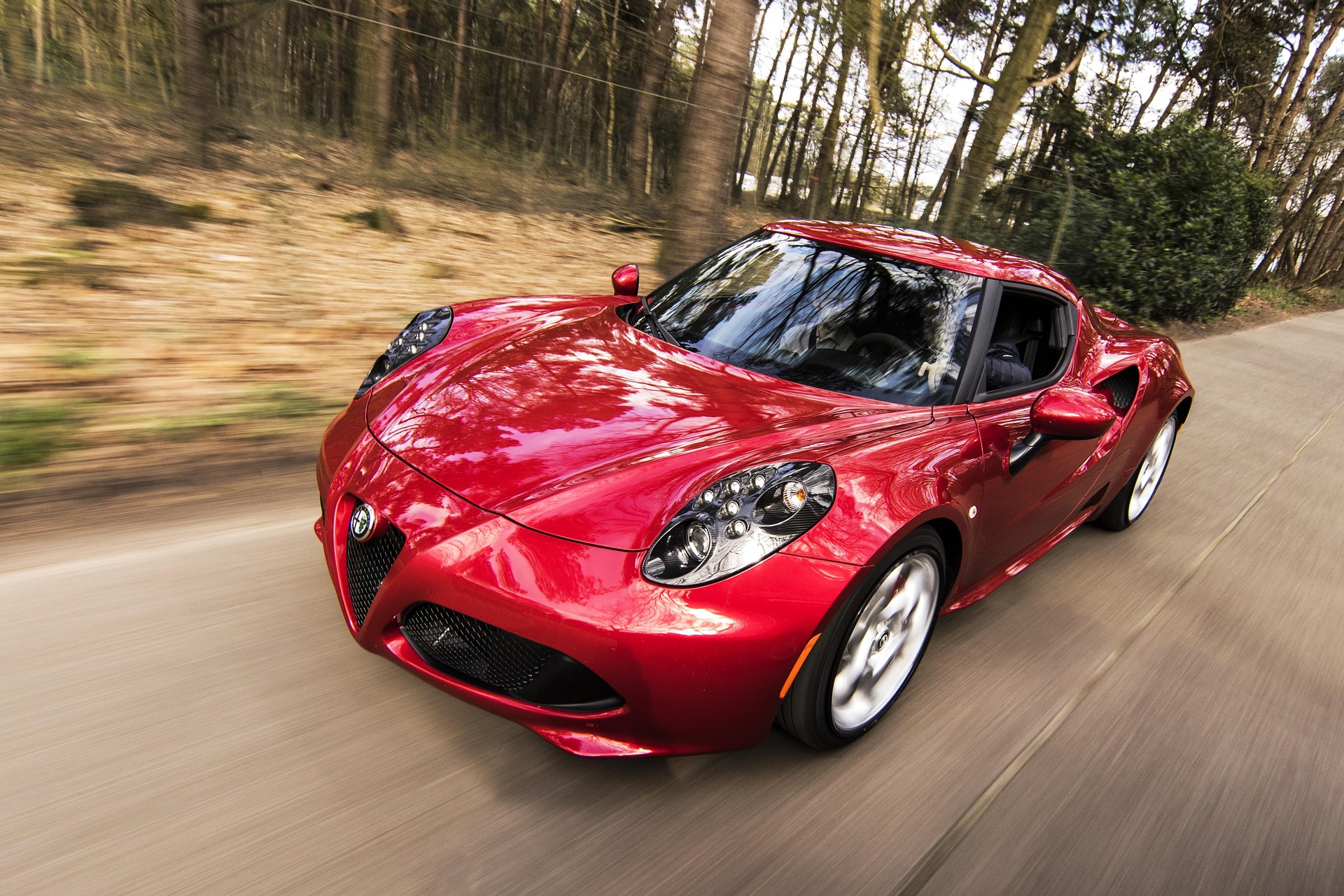
- 4C (Type 960, 2014–2020): The carbon-fiber monocoque mid-engine coupe and spider with the 1.75L turbo four-cylinder
- Giulietta (Type 940, 2010–2020): The compact hatchback on the Compact platform, though these are less common in our market
We focus our expertise on the Giorgio platform vehicles that make up the majority of Alfa's North American presence. For pre-2010 models including the 159, Brera, and Spider, we recommend contacting us to discuss your specific service needs – our diagnostic capability extends to older vehicles, but parts availability can be a factor.
Causes & Risks – What Happens if You Ignore the Warning Signs
Alfa Romeo engineering prioritizes performance and responsiveness, which means tighter tolerances and higher-stress operating conditions than mass-market vehicles. Short urban trips prevent the GME turbo engines from reaching full operating temperature, accelerating carbon buildup and oil contamination. Colorado's temperature swings and altitude changes stress turbocharger wastegate actuators and boost control solenoids. Skipping software updates leaves known control module bugs unpatched, while extended oil change intervals allow timing chain wear to progress unchecked.
The escalation pattern follows a predictable path. A cold-start rattle from early timing chain stretch becomes a Check Engine light for cam correlation codes. Ignoring that warning allows the chain to skip teeth, bending valves and requiring cylinder head replacement or complete engine replacement – turning a $2,500 chain service into a $15,000+ catastrophic failure. Similarly, a slight shudder from a Q4 transfer case with degraded fluid becomes a grinding noise, then total AWD failure and potential differential damage if the PTU seizes while driving.
What gets worse when you wait:
- Timing chain rattle → cam correlation faults → valve-to-piston contact → complete engine replacement
- Carbon buildup misfires → ignition coil damage → catalytic converter failure from unburned fuel
- Transfer case shudder → bearing failure → PTU seizure → rear differential damage
- EPB warning light → stuck brake caliper → overheated rotor → brake fluid boiling → total brake failure
- Infotainment glitches → module corruption → loss of backup camera and safety systems
Safety Impact of Deferred Alfa Romeo Service
Alfa Romeo integrates critical safety functions into electronic control modules that require functioning communication networks and up-to-date software. When the electronic parking brake module fails, the vehicle may not hold on steep Colorado inclines or could lock the rear wheels unexpectedly during driving. Infotainment system crashes don't just mean lost navigation – the Uconnect module controls the backup camera feed, and some safety alerts route through the same processor.
The Giulia and Stelvio's Integrated Brake System combines traditional hydraulic braking with electronic boost and stability control. Low brake fluid or contaminated fluid triggers limp mode that disables regenerative braking coordination and stability interventions, leaving only basic braking function. ABS module faults – sometimes caused by software bugs rather than hardware failure – eliminate anti-lock protection and traction control on snow-covered roads.
Transfer case failures in Q4 models can cause sudden torque shifts or complete loss of rear-wheel drive during acceleration, creating unpredictable handling mid-corner. Timing chain failures don't just damage engines – a chain that skips while driving causes instant power loss and potential stalling in traffic.
Immediate attention required for: EPB warning with brake pedal feel changes, ABS/ESC lights with reduced braking performance, sudden power loss with engine noise, transfer case grinding with AWD engagement. Schedule soon for: Check Engine lights with drivability changes, infotainment system freezes affecting camera display, suspension clunking with steering wander.
Inside Your Alfa Romeo: Key Systems
Modern Alfa Romeo vehicles use the Giorgio platform architecture (Type 952 Giulia, Type 949 Stelvio) with a longitudinal engine layout and near-50/50 weight distribution. The 2.0L GME turbocharged inline-four produces 280 horsepower through direct injection, variable valve timing on both camshafts, and an integrated exhaust manifold within the cylinder head for faster catalyst light-off. The range-topping 2.9L V6 BiTurbo shares its 90-degree architecture with Ferrari, using twin-scroll turbochargers and a cross-plane crankshaft.
Transmission choices include the ZF 8HP eight-speed automatic – a torque-converter design with electronic shift-by-wire control – and the Alfa TCT twin-clutch automated manual in the 4C. The Q4 all-wheel-drive system uses an active transfer case with electronically controlled multi-plate clutch pack, sending up to 50% of torque rearward and enabling true torque vectoring through individual rear-wheel braking.
Systems requiring Alfa Romeo-specific knowledge:
- Chassis Domain Control (CDC): The central gateway module coordinates communication between powertrain, chassis, and body control modules. Software updates must be flashed in specific sequences, and module replacements require VIN coding and system reconfiguration using Alfa's WiTech diagnostic platform or equivalent factory-level tools.
- DNA drive mode selector: Dynamic, Natural, and Advanced Efficiency modes alter throttle mapping, transmission shift points, steering assist levels, and ESC thresholds. The system stores fault codes when actuators fail to respond to mode changes, requiring scan tools that read proprietary Alfa Romeo control module protocols.
- Integrated Brake System (IBS): Combines hydraulic braking with electronic pressure modulation for stability control and future electrification integration. Brake bleeding requires activating solenoid valves through the scan tool, and brake pad replacement triggers electronic wear sensor resets that generic code readers cannot perform.
This level of electronic integration means that even routine service – brake pads, suspension components, battery replacement – often requires module adaptation
Alfa Romeo represents Italian engineering at its most passionate – a blend of racing heritage, distinctive styling, and turbocharged performance that demands equally specialized care. From the Giorgio platform underpinning the Giulia and Stelvio to the compact architecture of the Tonale, each Alfa Romeo chassis brings its own technical quirks: MultiAir valve systems that require precise oil specifications, ZF eight-speed automatics calibrated for spirited driving, and integrated vehicle dynamics systems that talk constantly across CAN bus networks. DART Auto has invested in the factory-level diagnostic tools and OEM repair procedures these Italian machines require, giving Denver Alfa Romeo owners an alternative to dealership pricing without sacrificing expertise. Our master technicians – each with over a decade of experience and dealer-level training – treat every Alfa Romeo as the driver's car it was designed to be, addressing common platform issues like carbon buildup on direct-injection engines or electronic throttle body adaptation with the same precision Alfa Romeo's engineers intended.
How We Diagnose Alfa Romeo Vehicles
Alfa Romeo's reliance on multiplexed electronics means a check-engine light or stability control warning can stem from dozens of potential causes scattered across multiple control modules. We start every diagnosis with factory-grade scan tools capable of reading proprietary Alfa Romeo fault codes – not just the generic OBD-II codes a parts-store scanner pulls, but the manufacturer-specific data that reveals whether a misfire traces to a failing ignition coil, a clogged MultiAir solenoid, or a fuel injector running out of spec. Our process includes:
- Complete system scan across engine, transmission, ABS, airbag, body control, and infotainment modules to capture stored and pending faults
- Live data monitoring during a road test, watching parameters like boost pressure, lambda values, and transmission adaptation in real time
- Guided functional tests using OEM procedures – cycling actuators, commanding solenoids, verifying sensor ranges against factory specifications
- Physical inspection of suspect components, checking for oil leaks at the timing chain cover (a known 2.0T weak point), inspecting charge-air plumbing for boost leaks, and measuring battery voltage under load
Once we've isolated the root cause, we walk you through what failed, why it failed, and what it will take to fix it. You receive a detailed estimate that separates parts, labor, and any related services – no surprises, no upselling. Our salaried technician structure means the diagnosis is thorough because we're paid to get it right, not to rush to the next ticket.
Repair vs. Replacement on Alfa Romeo Vehicles
Not every fault requires a new assembly. Alfa Romeo's turbocharged engines, for instance, often throw low-boost codes that can be resolved by cleaning the charge-air cooler and inspecting hose clamps – a fraction of the cost of replacing a turbocharger. Similarly, a sluggish ZF transmission might need fresh fluid and a software adaptation rather than a new valve body. We evaluate every component against these criteria:
- Can the part be serviced? Carbon buildup on intake valves (common on the 2.0 GME engine) responds well to walnut-blasting; replacement isn't an option.
- What's the failure mode? A leaking timing chain cover gasket is a repair; a stretched timing chain with jumped teeth is a full replacement job with guides and tensioners.
- What does longevity demand? Reusing a worn brake rotor to save $80 today often means comeback noise and another service visit in six months.
We present both paths when they exist. If your Giulia's electronic throttle body is throwing adaptation faults, we'll explain whether a cleaning and relearn procedure will hold or if internal wear means replacement is the durable fix. Because our technicians earn salaries rather than flat-rate commissions, the recommendation you hear is the one we'd make on our own cars.
How to Keep Your Alfa Romeo Healthy Between Visits
Alfa Romeo ownership rewards attention. Between scheduled services, a few habits extend the life of high-strung Italian components:
- Monitor fluid levels monthly – check engine oil on level ground with a cold engine, and watch for coolant drops that might signal a weeping hose or reservoir cap
- Listen for changes in exhaust note, turbo spool, or transmission shift quality; Alfa Romeo drivetrains are vocal when something drifts out of spec
- Respect warm-up cycles – the 2.0T and 2.9 V6 engines use tight tolerances and direct injection; avoid full throttle until oil temperature climbs above 180°F
- Use OEM-spec fluids exclusively – Alfa Romeo's MultiAir system and ZF transmission require specific viscosities and additive packages; substitutes cause long-term damage
- Follow the maintenance schedule in your owner's manual, not the oil-change-chain interval; Alfa Romeo specifies spark plug and air filter changes at precise mileage points tied to engine mapping
What to leave to us: anything involving the CAN bus network, brake system bleeding (ABS module cycling requires a scan tool), or software updates. DIY oil changes are fine if you're meticulous about spec and disposal; suspension work, timing system service, and electrical diagnosis belong in our shop where we have the tooling and training to maintain your warranty-level protection – our 3-year/36,000-mile parts and labor guarantee.
What to Expect at DART Auto for Alfa Romeo Service
From the moment you schedule your appointment, we focus on clarity and convenience. Here's how a typical visit unfolds:
- Drop-off and intake: We'll ask about symptoms, recent history, and any warning lights. If you need transportation, we offer loaner vehicles and local shuttle service – just let us know when booking.
- Inspection and estimate: Our technicians perform a complete scan with factory-level tools, inspect related systems, and document findings with photos. You'll receive a detailed estimate explaining each recommended repair and the consequence of deferring it.
- Approval and repair: Once you approve the work, we order OEM or premium parts and schedule the repair. We'll text or call with updates if we uncover additional issues during disassembly.
- Quality check and pickup: Every Alfa Romeo gets a post-repair road test and diagnostic re-scan to verify the fault is cleared. At pickup, we walk you through what we found, what we fixed, and answer any questions about maintenance intervals or upcoming service.
If you need after-hours pickup, we can arrange key drop-off in our secure lockbox. Keep valuables and personal items with you or locked in the trunk – we'll need access to the cabin for testing. Follow-up questions after you leave? Call anytime; we keep detailed service records and stand behind every repair.
Our Alfa Romeo Services
- Air Conditioning AC Repair
- Battery Repair Replacement
- Brake Repair & Brake Fluid Change
- Check Engine Light Diagnostics
- Clutch Repair & Replacement
- Coolant Leak Repair
- Cooling System Repair
- Drive Shaft Repair
- Engine Repair
- Exhaust & Catalytic Converter Repair
- Head Gasket Repair & Replacement
- Oil Change
- Oil Leak Repair
- Scheduled Service Maintenance
- Steering Repair
- Suspension Repair
- Cambelt Timing Belt Replacement
- Transmission Repair
- Tune Up
- Wheel Alignment