
Mercedes-Benz Air Conditioning AC Repair at DART Auto
When your Mercedes-Benz air conditioning stops blowing cold or starts behaving erratically, you need a shop that understands the intricacies of German climate control engineering. Mercedes-Benz AC systems integrate deeply with the vehicle's CAN-bus network and use proprietary refrigerant specifications, dual-zone or multi-zone logic, and electric compressors on many newer models. Generic shops often misdiagnose these systems because they lack factory scan tools capable of reading climate control fault codes or performing actuator calibrations. DART Auto uses Mercedes-Benz Star Diagnostic System (SDS) and Xentry tooling to pinpoint failures in compressor clutches, expansion valves, evaporator temperature sensors, and blend door actuators – components that vary significantly across W204, W212, W222, and newer MRA/MHA platforms.
Refrigerant type matters. Pre-2013 models typically use R-134a, while 2013-forward vehicles require R-1234yf – a more expensive, environmentally friendly refrigerant that demands precise charging and leak detection. Overfilling or underfilling by even a few ounces causes poor cooling or compressor damage. Our technicians follow OEM refrigerant capacities and use dedicated recovery/recharge machines to avoid cross-contamination. We also address common failure points like leaking O-rings at the liquid line connections on M276 and M278 engines, corroded evaporator cores on W211 E-Class (especially 2003–2006 models), and failing AC compressors on early W204 C-Class. When you bring your Mercedes-Benz to DART Auto, you can expect:
- Complete system pressure testing and electronic leak detection using UV dye and nitrogen trace methods
- Star Diagnostic fault code retrieval and live data monitoring of compressor engagement, refrigerant pressure, and blend door position
- Evacuation, refrigerant recovery, and precise recharge to OEM specifications with correct PAG oil type
- Actuator calibration and self-test routines to restore proper zone control and airflow distribution
Common Air Conditioning AC Repair Issues on Mercedes-Benz Vehicles
When your Mercedes-Benz air conditioning stops delivering cold air or starts blowing warm, the problem often traces back to a handful of platform-specific failure modes. We see these patterns daily, and we know exactly how to diagnose and fix them without the dealer markup.
- Evaporator core leaks on W211/W212 E-Class (2003–2016): The evaporator sits behind the dash, and when it corrodes or develops pinhole leaks, refrigerant escapes slowly. You'll notice diminishing cooling performance over weeks or months. This platform is notorious for evaporator failures due to moisture intrusion and poor drainage design, requiring full dash removal to replace the core.
- Compressor clutch failure on M272/M273 engines (2006–2011): The electromagnetic clutch that engages the AC compressor wears out, especially on models with high idle time or frequent stop-and-go driving. You'll hear clicking or grinding when the AC is turned on, or the compressor won't engage at all. The bearing often seizes, sending metal debris through the system.
- Auxiliary fan module failures on W204 C-Class (2008–2014): Mercedes uses a separate electric fan module to cool the condenser. When the control module or fan motor fails, the system can't reject heat properly. The AC will blow cold at highway speeds but warm air in traffic. The W204 platform saw widespread fan module issues tied to water intrusion near the radiator support.
- Refrigerant leaks at Schrader valve connections on newer models (2015+): The low- and high-pressure service ports on W205, W213, and newer platforms use updated Schrader valves that can leak slowly over time, especially after prior service attempts. You'll need multiple recharges per season, and dye testing reveals seepage at the valve stems.
- Blend door actuator binding on W221 S-Class (2007–2013): While not strictly an AC component, failed blend door actuators prevent cold air from reaching the cabin even when the compressor runs perfectly. You'll hear clicking or ticking from behind the dash, and one zone blows hot while another blows cold. The W221 uses a complex dual-zone or quad-zone HVAC system with multiple actuators that fail independently.
- Condenser damage from road debris on all models: Mercedes condensers mount low and forward, making them vulnerable to rock strikes and road debris. A single puncture drains the refrigerant and contaminates the system with moisture. We see this across all platforms, but especially on SUVs and vehicles driven in construction zones or gravel roads.
Why Choose DART Auto for Mercedes-Benz Air Conditioning AC Repair
When your Mercedes-Benz climate control stops performing, the problem often goes deeper than low refrigerant. We've diagnosed W204 C-Class evaporator core leaks behind the dash, W212 E-Class dual-zone actuator failures, and refrigerant contamination on W221 S-Class platforms where the compressor sheds debris into the system. Our technicians use factory-level XENTRY diagnostics to read fault codes from the climate control module, compressor clutch engagement data, and refrigerant pressure sensor values – the same data a dealership tech sees, but without the dealer markup.
We stock Mercedes-Benz-specific refrigerant oil (PAG 46 for R-134a systems, POE for R-1234yf on 2017+ models) and follow OEM procedures for evacuation, recovery, and recharge. Our salaried master technicians have at least 10 years of experience and dealer-level training, so they know the difference between a clogged expansion valve on a W211 and a failed pressure switch on a W166 GL-Class. Every repair is backed by our 3-year/36,000-mile warranty on parts and labor, and we complete a post-repair pressure test and vent temperature verification before you pick up your vehicle.
- Factory diagnostic capability: XENTRY scan tools and Mercedes-Benz service information subscriptions for TSB lookups and software updates
- Platform-specific knowledge: familiarity with common AC failures on W204, W212, W221, W166, and newer MRA/MHA platforms
- OEM-grade parts and fluids: correct refrigerant type, compressor oil spec, and receiver-drier or accumulator replacements per platform
- Honest diagnostics first: we perform a full leak check with UV dye and pressure decay test before recommending component replacement
Symptoms – How to Know You Need This Service
Mercedes-Benz AC problems rarely announce themselves all at once. You may notice warm air blowing from the vents even when the climate control is set to maximum cold, or inconsistent cooling where the driver side blows cold but the passenger side stays warm – a telltale sign of a failed blend door actuator or low refrigerant affecting dual-zone operation. Listen for unusual noises: a grinding or squealing sound when the AC engages points to a failing compressor clutch bearing, common on W211 and W204 platforms. A hissing sound near the dashboard suggests an evaporator leak, often accompanied by a sweet, chemical smell inside the cabin.
Watch your dashboard. The "REST" or auxiliary climate control may stop working, or you might see a "Visit Workshop" message with climate control fault codes. On newer models with COMAND or MBUX, the system may default to a fixed temperature or refuse to respond to adjustments. If you experience any of these symptoms, schedule service soon:
- Warm or ambient-temperature air from vents despite AC being on
- Intermittent cooling that works only at highway speeds or cuts out randomly
- Visible refrigerant oil stains around compressor, condenser, or line connections
- Fogging or moisture inside the cabin when AC runs, indicating evaporator drain blockage
- Compressor clutch cycling rapidly (short on-off cycles every few seconds)
- Unusual odors – musty smell suggests mold in evaporator, sweet smell indicates refrigerant leak
- Climate control buttons or touchscreen commands not responding or displaying error messages
- Compressor not engaging at all, often due to low refrigerant triggering pressure switch cutoff
Which Mercedes-Benz Models We See for Air Conditioning AC Repair
DART Auto services air conditioning systems across the full Mercedes-Benz lineup, from early W210 E-Class through current W206 C-Class and W223 S-Class. We regularly diagnose and repair AC issues on W203 and W204 C-Class (2001–2014), W211 and W212 E-Class (2003–2016), W221 and W222 S-Class (2006–2020), and R170/R171 SLK models where evaporator access requires significant dashboard disassembly. Our technicians have extensive experience with the transition from R-134a to R-1234yf refrigerant in 2013-forward models, and we stock the correct PAG oil types (PAG 46 vs. PAG 100) required by different compressor designs.
We also service SUV and crossover platforms including W163/W164/W166 M-Class, X204/X253 GLK/GLC, and W251 R-Class, where condenser damage from road debris is common. AMG variants – C63, E63, S63, and GT models – receive the same attention to detail, with awareness of higher heat loads and performance-tuned cooling requirements. If you drive a Sprinter van or older W123/W124 chassis, call ahead; these may require specialty parts sourcing. The models we see most often include:
- C-Class: W203 (2001–2007), W204 (2008–2014), W205 (2015–2021), W206 (2022+)
- E-Class: W210 (1996–2002), W211 (2003–2009), W212 (2010–2016), W213 (2017+)
- S-Class: W220 (2000–2006), W221 (2007–2013), W222 (2014–2020), W223 (2021+)
- SLK/SLC: R170 (1997–2004), R171 (2005–2011), R172 (2012–2020)
- GLK/GLC: X204 GLK (2010–2015), X253/C253 GLC (2016+)
- M-Class/GLE: W163 (1998–2005), W164 (2006–2011), W166 (2012–2019), W167 (2020+)
- AMG models: C63, E63, S63, CLS63, GT (all generations with M156, M157, M177, M178 engines)
- Diesel variants: OM642 and OM651 engines in E-Class, GL-Class, ML-Class with auxiliary electric AC compressors
Causes & Risks – What Happens if Ignored
Most Mercedes-Benz AC failures start with small leaks, worn seals, or failing electrical components. Denver's high altitude and intense UV exposure accelerate refrigerant seal degradation, while temperature swings stress compressor bearings and clutch assemblies. The brand's use of aluminum components in the AC system makes corrosion a constant threat, especially when moisture enters through a compromised evaporator drain or damaged condenser.
When you ignore early symptoms – reduced cooling, intermittent operation, strange noises – the damage spreads quickly:
- Compressor seizure from low refrigerant: Running the system with a slow leak starves the compressor of lubrication. Within weeks, internal components score and seize, sending metal shavings throughout the entire AC circuit. What started as a simple leak repair now requires flushing the entire system, replacing the compressor, condenser, expansion valve, and often the evaporator.
- Moisture contamination after refrigerant loss: An empty AC system pulls in humid air. Moisture reacts with refrigerant residue to form acidic compounds that corrode aluminum lines, the evaporator core, and internal compressor surfaces. The receiver-drier or accumulator becomes saturated and can't be cleaned – only replaced.
- Electrical component cascade on HVAC modules: A failing blower motor or actuator draws excessive current, overheating circuit boards in the climate control module. On W211 and W212 platforms, we've seen a single stuck blend door actuator destroy the entire HVAC control unit, turning a modest actuator replacement into a multi-component repair.
- Overheating risk in summer traffic: A non-functional AC system means you can't defog windows effectively and cabin temperatures become dangerous. More critically, if the auxiliary cooling fans fail alongside the AC, your engine can overheat in stop-and-go traffic, risking head gasket failure or worse.
Safety Impact – Why Air Conditioning AC Repair Matters
A failed air conditioning system affects more than comfort. On a Mercedes-Benz, the HVAC system integrates with defrost, dehumidification, and even battery cooling on hybrid models. When the AC stops working, your ability to clear fogged glass disappears – especially dangerous during sudden rainstorms or temperature drops. Reduced visibility directly increases accident risk.
Beyond glass clarity, cabin heat becomes a medical concern during Colorado summers. Interior temperatures can exceed 140°F within minutes, causing heat exhaustion, impaired reaction time, and dangerous distraction. For families with children or elderly passengers, a non-functional AC isn't an inconvenience – it's a health hazard.
- Stop driving immediately if: You smell burning rubber or electrical odors from the vents, hear grinding or metal-on-metal sounds when the AC engages, or see smoke from under the hood after turning on the climate control.
- Schedule service within days if: The AC blows warm air, you hear clicking or ticking from the dash, cooling performance drops noticeably, or you see refrigerant oil stains under the vehicle.
- Plan service soon if: The system takes longer to cool the cabin, airflow seems weak, or you notice musty odors that suggest evaporator mold growth.
From a liability standpoint, driving with known defects – especially those affecting visibility or creating fire risk from electrical faults – can complicate insurance claims after an incident. Addressing AC problems promptly protects both your safety and your legal position.
How Mercedes-Benz Air Conditioning AC Repair Actually Works
Mercedes-Benz air conditioning systems use a closed-loop refrigerant circuit: the compressor pressurizes R-134a or R-1234yf refrigerant, forcing it through the condenser where it releases heat and condenses into liquid. That liquid flows through an expansion valve or orifice tube, dropping pressure and temperature dramatically before entering the evaporator core inside your dash. Air blown across the cold evaporator chills before reaching the cabin, while the refrigerant returns to the compressor as a gas to repeat the cycle.
What separates Mercedes from generic vehicles is the integration and control complexity:
- Electronic climate control with CAN-bus integration: The HVAC module communicates with the engine ECU, transmission controller, and body control module. Compressor engagement depends on engine load, vehicle speed, and even detected interior humidity levels. Diagnosing failures requires factory-level scan tools that read proprietary fault codes.
- Dual or multi-zone systems with independent actuators: Higher-trim models use separate evaporators or complex blend door arrays to deliver different temperatures to driver, passenger, and rear zones simultaneously. Each actuator must be calibrated after replacement using Star Diagnostic software – generic scan tools can't perform these adaptations.
- Variable-displacement compressors: Many newer Mercedes platforms use compressors that modulate capacity based on cooling demand, improving efficiency but adding diagnostic complexity. When these fail, you can't simply swap in an aftermarket fixed-displacement unit without triggering fault codes and performance issues.
- Refrigerant type and charge precision: R-1234yf systems (2015+) require exact charge weights – even 50 grams over or under specification causes poor performance. The refrigerant is expensive and environmentally sensitive, and cross-contamination with R-134a destroys the entire charge. We use dedicated recovery and charging machines for each refrigerant type.
- Cabin filter and evaporator maintenance: Mercedes evaporators are prone to mold and bacteria growth in Denver's climate. We recommend annual cabin filter replacement and periodic evaporator cleaning to prevent musty odors and maintain airflow. Clogged filters reduce cooling efficiency and strain the blower motor.
How We Diagnose Air Conditioning AC Repair Issues on Mercedes-Benz
When your Mercedes-Benz air conditioning blows warm or cycles erratically, we start by pinpointing the root cause before recommending any work. Here's how we systematically diagnose AC problems:
- Visual inspection and preliminary checks. We examine the compressor clutch engagement, drive belt condition, condenser fins for blockage or damage, and cabin filter state. On W204 and W212 platforms, condenser damage from road debris is common and often overlooked.
- Factory-level scan with Xentry or STAR diagnostic system. We pull fault codes from the climate control module, engine control unit, and body control modules. Mercedes-Benz systems log compressor cycling faults, refrigerant pressure sensor deviations, and blend door position errors that generic scanners miss entirely.
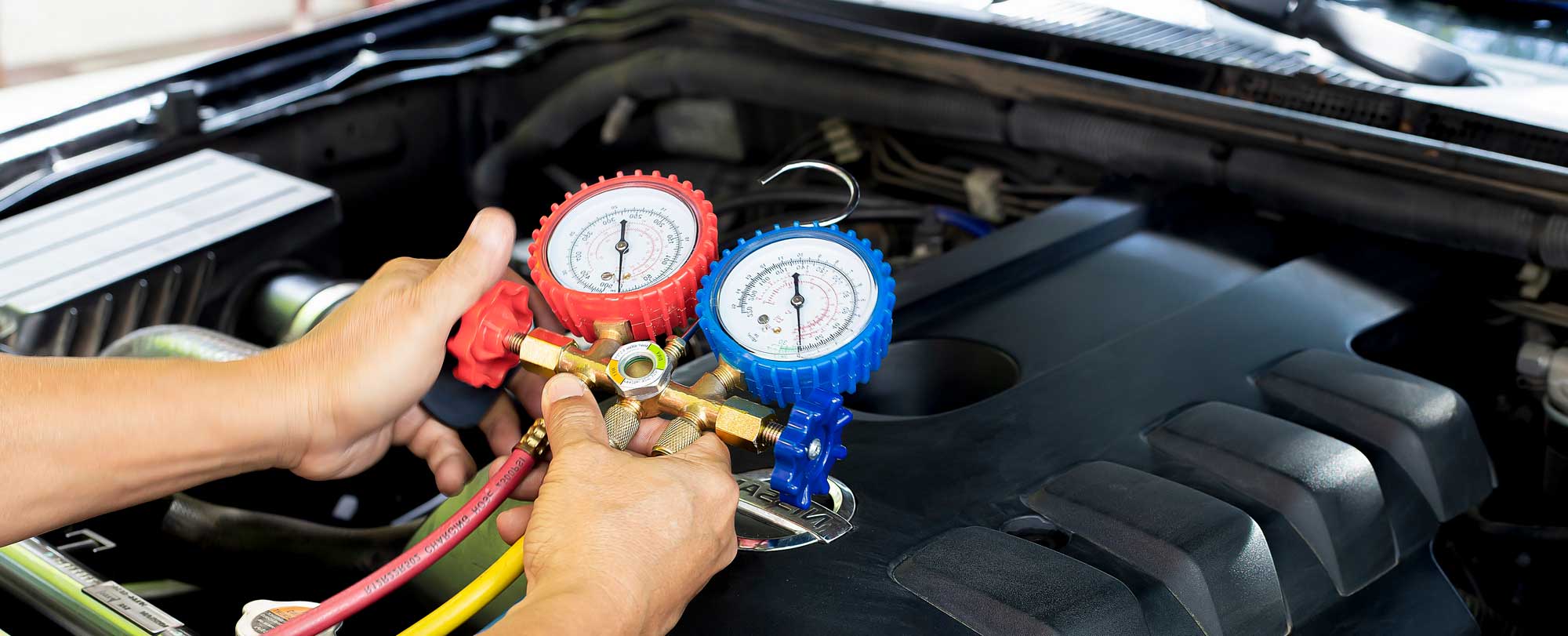
- Refrigerant pressure and leak testing. We connect manifold gauges to measure static and dynamic pressures on both high and low sides. UV dye injection and electronic leak detection locate even small leaks in evaporator cores, condenser seams, and O-ring joints common on W221 S-Class and R231 SL models.
- Electrical and actuator testing. We verify compressor clutch voltage, blower motor current draw, and actuator movement for blend doors and mode flaps. The dual-zone systems on W166 ML and GLE models use multiple actuators that fail independently, causing uneven cabin temperatures.
- Performance testing under load. We measure vent temperatures with the system running, checking for proper temperature drop and consistent airflow across all vents.
After diagnostics, we provide a detailed quote explaining which components need attention, why they failed, and what happens if you delay the repair. You'll know exactly what we found and what it takes to restore ice-cold air.
Air Conditioning AC Repair on Mercedes-Benz: Repair vs. Replacement
Not every AC problem requires replacing entire assemblies. We assess each situation and recommend the approach that makes the most sense for your Mercedes-Benz:
When Repair Is the Right Choice
- Refrigerant recharge after minor leaks. If we find a slow leak at a Schrader valve or loose hose fitting, we repair the seal and recharge the system with the correct PAG oil and R-134a or R-1234yf refrigerant specified for your model year.
- Blend door actuator replacement. Failed actuators on W204, W212, and W166 platforms cause clicking noises and temperature control issues. We replace the faulty actuator without disturbing the rest of the HVAC box.
- Condenser cleaning and minor fin straightening. Surface damage and debris blockage reduce cooling efficiency. If the condenser core is intact, cleaning restores airflow without replacement cost.
When Replacement Makes Sense
- Compressor failure with metal contamination. When the compressor grenades internally – common on early M276 and M278 V6/V8 engines – metal debris circulates through the entire system. We replace the compressor, flush all lines, replace the expansion valve and drier, and install a new condenser to prevent cascade failure.
- Evaporator core leaks. Evaporators buried behind the dashboard on W221 and W222 S-Class models leak from corrosion. Repair isn't possible; replacement requires dash removal but eliminates recurring refrigerant loss.
- Severely damaged condensers. Road debris punctures on W205 C-Class and W213 E-Class condensers mounted low behind the grille require full replacement when core integrity is compromised.
We walk you through the options, explain the cost-benefit of each approach, and let you decide. Our salaried technicians have no incentive to upsell – we recommend what genuinely solves the problem.
How to Make Your Mercedes-Benz Air Conditioning AC Repair Last Longer
Once your AC is running cold again, smart habits keep it that way. Here's how to extend the life of your Mercedes-Benz climate system:
Driving Habits That Protect Your AC
- Run the AC monthly, even in winter. Cycling the compressor for 10 minutes keeps seals lubricated and prevents refrigerant migration. This simple habit prevents costly seal failures on W204 and W212 compressors.
- Use recirculation mode strategically. Recirculation reduces compressor load when cooling down a hot cabin, but switch to fresh air mode once comfortable to prevent evaporator mold growth common in humid climates.
- Avoid maximum cooling settings constantly. Running full cold with maximum blower speed stresses the system. Once the cabin cools, moderate settings reduce compressor cycling and blower motor wear.
Maintenance You Can Monitor
- Replace cabin filters on schedule. Clogged filters on W205, W213, and X253 GLC models restrict airflow, forcing the blower motor to work harder and reducing evaporator efficiency. Check every 15,000 miles or annually.
- Listen for changes. New noises – clicking actuators, squealing belts, or rattling compressor clutches – signal problems before they cascade into expensive failures.
- Watch for weak airflow or inconsistent temperatures. These early warnings often indicate actuator faults or low refrigerant that we can address before compressor damage occurs.
Professional Service That Matters
- Follow Mercedes-Benz service intervals. Scheduled inspections catch refrigerant leaks, belt wear, and electrical faults early when repairs are simple and affordable.
- Use the correct refrigerant and oil. Post-2017 models require R-1234yf refrigerant and specific PAG oil viscosity. Wrong fluids damage compressors and void warranties. This is not DIY territory – let our factory-trained technicians handle refrigerant service with proper recovery and charging equipment.
We'll remind you when inspections are due and catch small issues before they become big repair bills. That's how over two decades of experience keeps your Mercedes-Benz comfortable year-round.
What to Expect When You Bring Your Mercedes-Benz In
We walk you through every phase of the AC repair so you know exactly what's happening with your vehicle. Here's the process from drop-off to pickup:
- Appointment and drop-off: Schedule online or by phone. Bring your key fob and describe the symptoms – weak airflow, warm air on one side, intermittent cooling, or compressor noise. Let us know if you need a loaner vehicle or our local shuttle service.
- Initial inspection and scan: We connect XENTRY diagnostics to pull climate control fault codes and live data, then perform a visual inspection of the compressor, condenser, hoses, and cabin filter. We check refrigerant pressure with manifold gauges and run a UV dye leak test if the system is low.
- Written estimate and approval: You receive a detailed estimate listing every failed component – compressor, evaporator, expansion valve, actuator – with explanation of what each part does and why it needs replacement. We explain the repair sequence and answer your questions before starting any work.
- Repair and verification: Our technicians evacuate the old refrigerant, replace failed components using OEM or premium aftermarket parts, install a new receiver-drier or accumulator (required whenever the system is opened), then vacuum the system to remove moisture and air. We recharge to the exact factory spec and verify vent temperatures meet Mercedes-Benz standards.
- Post-repair checkout: We road-test your vehicle to confirm the AC holds temperature under load, re-scan for fault codes, and check that dual-zone or rear climate controls operate correctly. At pickup, we walk you through what we found, what we replaced, and what to watch for. If anything feels off after you drive it, call us – we'll recheck it at no charge.
Remove personal items from the cabin before drop-off, especially if we're replacing the evaporator core (dash removal required). After-hours key drop and pickup are available by arrangement.
Our Mercedes-Benz Services
- Battery Repair Replacement
- Brake Repair & Brake Fluid Change
- Check Engine Light Diagnostics
- Clutch Repair & Replacement
- Coolant Leak Repair
- Cooling System Repair
- Drive Shaft Repair
- Engine Repair
- Exhaust & Catalytic Converter Repair
- Head Gasket Repair & Replacement
- Oil Change
- Oil Leak Repair
- Scheduled Service Maintenance
- Steering Repair
- Suspension Repair
- Cambelt Timing Belt Replacement
- Transmission Repair
- Tune Up
- Wheel Alignment