
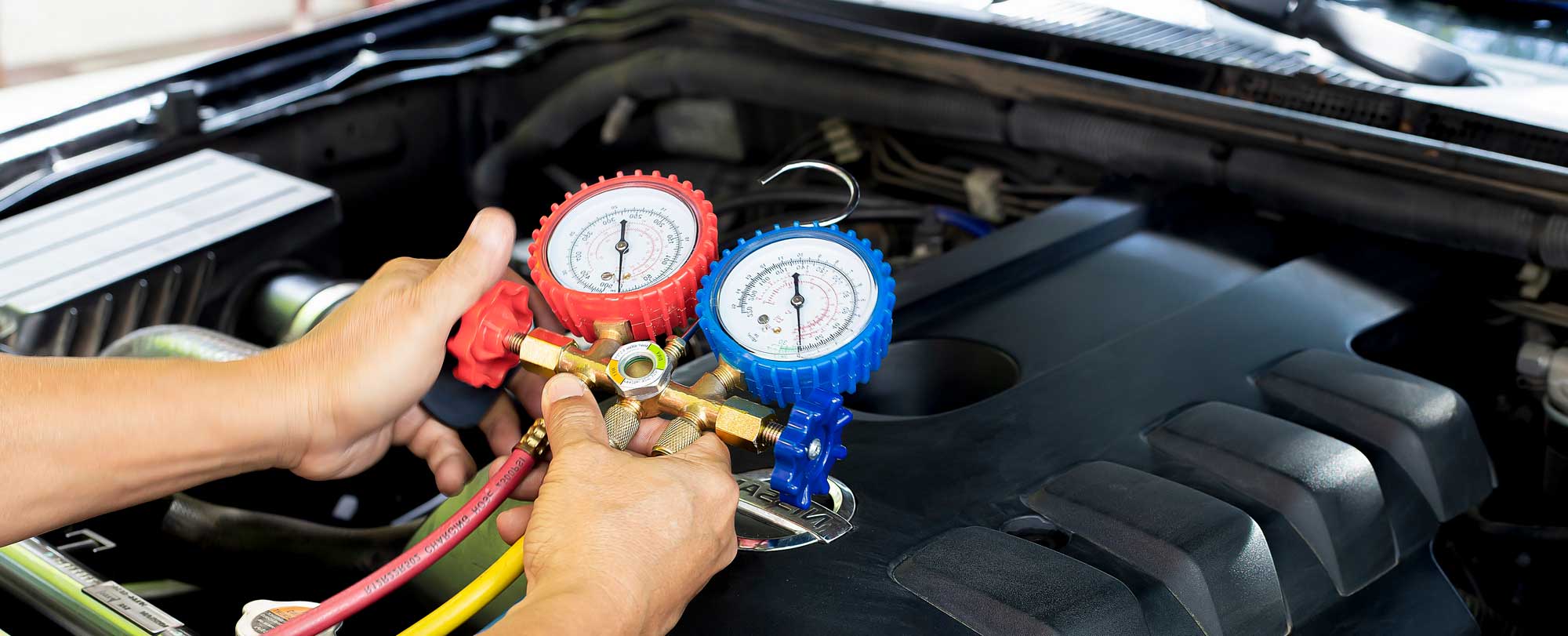
Alfa Romeo Air Conditioning AC Repair at DART Auto
When your Alfa Romeo's climate control stops delivering crisp, cold air, the problem often traces back to specialized components that generic shops struggle to diagnose properly. Alfa Romeo AC systems integrate tightly with the vehicle's electronic architecture – the climate control module communicates with the body computer, engine ECU, and refrigerant pressure sensors in ways that demand factory-level diagnostic capability. A weak compressor clutch or a refrigerant leak on a Giulia or Stelvio isn't just a matter of topping off R-134a; the system monitors charge levels through pressure transducers and will throw the compressor offline if parameters fall outside narrow windows. DART Auto approaches every Alfa Romeo AC repair with the same diagnostic rigor the dealer uses, but without the inflated labor rates.
Our technicians rely on OEM scan tools that read live data from the climate control module, compressor clutch duty cycle, evaporator temperature sensors, and refrigerant pressure switches. We follow Alfa Romeo's exact vacuum and recharge procedures, measure superheat and subcool readings to verify proper charge, and use UV dye tracing to pinpoint leaks in hard-to-reach evaporator cores or condenser coils. Because Alfa Romeo specifies PAG oil viscosity by compressor type and refrigerant capacity down to the gram, we don't guess – we reference the factory service information for your exact platform.
When you bring your Alfa Romeo to DART Auto for AC repair, expect:
- Complete electronic diagnostics of climate control modules, pressure sensors, and compressor clutch operation using factory-equivalent scan tools
- Refrigerant recovery, vacuum testing, and precise recharge to OEM specifications with correct PAG oil type and quantity
- UV dye leak detection and pressure decay testing to locate even the smallest refrigerant leaks before recharging the system
- Transparent explanations of what failed, why it failed, and what we're doing to prevent recurrence – backed by our 3-year/36,000-mile warranty
Common Air Conditioning AC Repair Issues on Alfa Romeo Vehicles
Alfa Romeo air conditioning systems share several platform-specific vulnerabilities that show up consistently across the lineup. When your AC isn't blowing cold or cycles unpredictably, the cause often traces back to one of these known failure points:
- Compressor clutch failure on Giulia and Stelvio (Type 952 platform, 2016–present): The electromagnetic clutch that engages the compressor develops internal wear, particularly in Denver's altitude and temperature swings. Early symptoms include intermittent cooling and a clicking sound from the engine bay. The clutch coil resistance drifts out of spec, preventing reliable engagement even when refrigerant charge is correct.
- Evaporator core leaks on 4C (Type 960, 2014–2020): The ultra-compact evaporator assembly in the 4C's minimalist HVAC system is prone to pinhole leaks where aluminum tubing meets the core. Refrigerant loss is gradual, and because the system holds a small total charge, even minor leaks result in no cooling within weeks.
- Condenser damage on Giulietta (Type 940, 2010–2020): The front-mounted condenser sits directly behind the lower grille with minimal stone guard protection. Road debris punctures the thin aluminum fins and tubing, causing sudden refrigerant loss. This is especially common on vehicles driven in construction zones or gravel roads.
- Expansion valve clogging on older 159 and Brera models (Type 939, 2005–2011): Moisture contamination in the refrigerant circuit leads to ice formation at the expansion valve orifice. Cooling becomes erratic – cold for ten minutes, then warm air, cycling unpredictably. The valve itself rarely fails mechanically; contamination is the root cause.
- Blower motor resistor failure across multiple platforms: The resistor module that controls fan speed burns out its solder joints, leaving you with only one or two speed settings instead of variable control. Heat cycling and vibration accelerate the failure on Colorado roads.
- Refrigerant leaks at service port Schrader valves: Alfa Romeo uses brass Schrader valve cores that corrode when exposed to road salt and moisture. Slow leaks develop at the high-side port, often undetectable without a proper leak-down test using nitrogen pressure and ultrasonic detection.
Why Choose DART Auto for Alfa Romeo Air Conditioning AC Repair
When your Giulia loses cooling on a summer morning or your Stelvio starts blowing warm air at idle, the problem often traces back to platform-specific quirks that generic shops miss. DART Auto has invested in factory-level diagnostic equipment – the same scan tools and refrigerant recovery machines Alfa Romeo dealers use – plus the training to read climate control fault codes and interpret live sensor data from the HVAC module. Our technicians know the evaporator core access procedure on the Giorgio platform (Giulia, Stelvio) requires dashboard removal, and we've handled the dual-zone actuator failures common on 2017–2020 models where the driver and passenger zones fight each other.
We perform complete AC system diagnostics before recommending any repair. That means leak testing with UV dye and electronic sniffers, verifying compressor clutch engagement, checking condenser airflow for blockages, and scanning for software updates that affect blend-door calibration. Because our technicians are salaried rather than flat-rate, there's no incentive to replace a compressor when the real issue is a $40 pressure switch or a clogged expansion valve. You get a written estimate that explains what failed, why it failed, and what we'll do to prevent a comeback – backed by our 3-year/36,000-mile parts-and-labor warranty.
Symptoms – How to Know You Need This Service
Alfa Romeo AC problems announce themselves in distinct ways. You may notice:
- Warm or ambient-temperature air from the vents even when the climate control is set to maximum cold and the blower runs at full speed – often points to low refrigerant charge or a failed compressor clutch
- Intermittent cooling that works for a few minutes then blows warm, cycles back to cold, and repeats – typically indicates a failing compressor clutch, low refrigerant triggering pressure cutoff switches, or a clogged expansion valve freezing and thawing
- Unusual noises from under the hood when AC is engaged – grinding, squealing, or rattling from the compressor bearing or clutch assembly, especially common on higher-mileage Giulia and 4C models
- Visible refrigerant oil stains around AC line fittings, condenser coil, or compressor seals – PAG oil mixed with refrigerant leaves telltale residue at leak points
- Musty or moldy odors from the vents when AC starts – indicates moisture buildup on the evaporator core, often due to a clogged drain tube or failed evaporator temperature sensor cycling the system improperly
- Climate control error messages or warning lights on the dashboard – Alfa Romeo systems will disable the compressor and alert you when pressure sensors detect abnormal readings
- Compressor clutch cycling rapidly (every few seconds) or not engaging at all – audible clicks under the hood or visible clutch movement you can see with the hood open
If you see refrigerant oil leaking or smell burning from the compressor area, schedule service promptly. Continued operation with low refrigerant destroys the compressor and contaminates the entire system.
Which Alfa Romeo Models We See for Air Conditioning AC Repair
DART Auto services AC systems across the modern Alfa Romeo lineup and select classic models. We regularly work on:
- Giulia (2017–present, Type 952) – both 2.0T and Quadrifoglio variants; compressor clutch failures and condenser rock damage are common, and the integrated climate module requires scan tool access for proper diagnosis
- Stelvio (2018–present, Type 949) – shares the Giorgio platform with Giulia; same AC architecture and common failure points including evaporator core leaks on early production units
- 4C / 4C Spider (2014–2020) – mid-engine layout places the condenser and AC lines in challenging locations; we have the specialty tools to access compressor and evaporator without full body disassembly
- Giulietta (2010–2020, Type 940) – European-market hatchback occasionally imported; shares components with Fiat/Chrysler platforms but uses Alfa-specific climate control calibration
- MiTo (2008–2018, Type 955) – compact platform with limited AC service access; condenser replacement often requires front bumper removal
- 159 / Brera / Spider (2005–2011, Type 939) – GM-derived platform with known evaporator core leak issues on higher-mileage examples; we stock common O-rings and seals
- 156 / 147 / GT (1997–2010) – older platforms we service selectively depending on parts availability and system condition; compressor and condenser parts remain available through OEM and quality aftermarket suppliers
For classic Alfa Romeo models predating 1997 or limited-production variants, contact us to discuss parts availability and service feasibility. Our focus remains on platforms where we can deliver dealer-quality diagnostics and long-term reliability.
Causes & Risks – What Happens if Ignored
Most Alfa Romeo AC failures begin with age-related seal degradation, compounded by Denver's intense UV exposure and rapid temperature swings between morning and afternoon. Refrigerant systems are sealed circuits; when a leak develops, moisture enters and reacts with refrigerant and compressor oil to form acidic compounds that corrode aluminum components from the inside. On the Type 952 platform, a small evaporator leak left unaddressed for a single summer season often leads to compressor bearing failure because the system runs low on oil along with refrigerant – the two circulate together.
Delaying AC repair on an Alfa Romeo sets off a predictable cascade:
- Week one to two: Reduced cooling capacity; you compensate by running the system at maximum fan speed and recirculation mode, which masks the underlying problem.
- Week three to six: Refrigerant charge drops below the pressure switch threshold. The compressor stops engaging entirely to protect itself. At this point, moisture has likely entered the system.
- Two months onward: Internal corrosion begins. Moisture reacts with PAG oil to form acids that pit aluminum tubing and damage compressor reed valves. What started as a $40 Schrader valve now requires a full system flush, desiccant replacement, and often a new compressor.
- Extended neglect (one year or more): Corroded particles circulate through the system, clogging the expansion valve and contaminating the condenser. A complete system replacement – compressor, condenser, evaporator, lines, and drier – becomes necessary, turning a modest repair into a multi-thousand-dollar overhaul.
The safety risk is less about collision avoidance and more about driver distraction and heat-related impairment during summer months, when cabin temperatures can exceed 140°F within minutes.
Safety Impact – Why Air Conditioning AC Repair Matters
A failed air conditioning system in an Alfa Romeo affects safety primarily through driver comfort and attention. When cabin temperatures climb above 95°F, reaction times slow measurably, and decision-making becomes impaired – the same cognitive decline seen in mild dehydration. In Denver's summer sun, a black-interior Giulia without AC reaches unsafe temperatures in under fifteen minutes of parking.
Specific safety concerns include:
- Windshield defogging failure: The AC compressor is integral to the defrost cycle. Without it, humidity condenses on the inside of the windshield during rapid temperature changes (morning drives, sudden rain). Visibility drops to near zero until you manually clear the glass.
- Driver fatigue and heat stress: Prolonged exposure to cabin heat above 90°F increases heart rate and reduces concentration. On highway drives, this elevates the risk of lane drift and delayed braking response.
- Child and pet safety: Rear-seat passengers, especially children in car seats, have limited ability to regulate body temperature. A non-functional AC system creates a dangerous environment within minutes, even with windows cracked.
When to act immediately versus schedule soon:
- Stop driving now: Visible refrigerant oil pooling under the vehicle (indicates major line rupture); burning smell from vents (compressor seizure or electrical short).
- Schedule within the week: No cold air at all; intermittent cooling that cycles every few minutes; unusual noises (grinding, squealing) when AC is engaged.
- Schedule within the month: Gradually diminishing cooling performance; musty odor from vents (evaporator mold, not a refrigerant issue but still needs attention).
How Alfa Romeo Air Conditioning AC Repair Actually Works
Alfa Romeo air conditioning systems follow the standard vapor-compression refrigeration cycle but incorporate platform-specific components that require specialized service procedures. The compressor – belt-driven on most models, electrically driven on some hybrid variants – pressurizes R-134a or R-1234yf refrigerant (depending on model year) into a high-pressure, high-temperature gas. This gas flows to the front-mounted condenser, where ram air and the cooling fan drop its temperature until it condenses into a high-pressure liquid. The liquid refrigerant then passes through a receiver-drier (which removes moisture and filters debris) before reaching the expansion valve or orifice tube. Here, pressure drops suddenly, causing the refrigerant to flash into a cold, low-pressure vapor. This vapor absorbs heat from cabin air as it passes through the evaporator core, then returns to the compressor to repeat the cycle.
What makes Alfa Romeo AC service different:
- Refrigerant type and charge precision: Newer Giulia and Stelvio models use R-1234yf, which requires dedicated recovery and charging equipment – it's not compatible with older R-134a systems. Charge quantities are specified to the gram; overcharging by even 50 grams causes high-side pressure spikes and compressor damage.
- Electronic climate control calibration: The Type 952 platform uses a body computer (BCM) that monitors evaporator temperature, cabin temperature, and sunload sensors to modulate compressor clutch engagement and blend door position. After any refrigerant service, the system must complete a self-calibration cycle using factory scan tools to relearn sensor baselines.
- Compressor oil type and quantity: Alfa Romeo specifies PAG oil viscosity by compressor model. Using the wrong viscosity or overfilling causes lubrication failure. Oil quantity must be measured during refrigerant recovery and replaced precisely during recharge – guesswork leads to premature compressor wear.
- Leak detection protocol: Alfa Romeo's aluminum AC lines and micro-channel condensers develop leaks too small for traditional dye methods to detect reliably. Proper diagnosis requires evacuating the system, pressurizing with nitrogen to 150 psi, and using ultrasonic leak detectors to pinpoint the exact failure point before any parts are replaced.
How We Diagnose Air Conditioning AC Repair Issues on Alfa Romeo
When your Alfa Romeo's AC blows warm air or cycles erratically, we start by pinpointing the root cause before touching any components. Our diagnostic process combines factory-level scan tools with hands-on testing to map the entire climate control system.
- Initial scan with Alfa Romeo-compatible diagnostics. We connect a bi-directional scan tool capable of reading proprietary CAN-bus codes from the climate control module, compressor clutch engagement data, and refrigerant pressure sensor values. On Giulia and Stelvio platforms (Type 952), we monitor real-time compressor variable displacement commands and evaporator temperature targets to identify electrical faults before physical inspection.
- Refrigerant pressure and leak testing. We measure high-side and low-side pressures with calibrated gauges, then introduce UV dye if pressures suggest a leak. Common leak points on 159 and Brera models include the condenser (road debris damage), evaporator core (corrosion from moisture), and compressor shaft seal. We use an electronic leak detector and UV lamp to trace even small leaks that won't show up on pressure testing alone.
- Component function testing. We check compressor clutch engagement, condenser fan operation (especially dual-speed fans on Giulia Quadrifoglio), blend door movement via scan tool actuation, and cabin filter condition. On older 147 and GT models with single-zone manual systems, we verify mechanical cable operation and vacuum actuators if equipped.
- Electrical and sensor validation. We test ambient temperature sensors, evaporator temperature sensors, and pressure transducers against known-good values. Faulty pressure sensors on 4C models can prevent compressor engagement even when refrigerant charge is correct.
Once we've mapped every fault, we walk you through what failed, why it failed, and what's needed to restore full cooling capacity. You'll receive a detailed quote that separates必要 repairs from optional improvements, so you can make an informed decision without pressure.
Air Conditioning AC Repair on Alfa Romeo: Repair vs. Replacement
Not every AC fault requires replacing the entire system. We evaluate each component individually and recommend the approach that balances cost, reliability, and longevity.
When Repair Makes Sense
- Refrigerant recharge after minor leak repair. If we find a leaking O-ring at a line connection or a small condenser puncture that can be sealed, we repair the leak, vacuum the system to remove moisture, and recharge with the correct R134a or R1234yf refrigerant spec for your model year.
- Compressor clutch or pulley bearing replacement. On older naturally aspirated models (159, Brera, Spider), a failed clutch coil or bearing can be replaced without condemning the entire compressor if the internal pistons and valves still hold pressure.
- Blend door actuator or resistor replacement. Giulia and Stelvio climate control actuators can be replaced individually when they bind or fail to respond to temperature adjustments, restoring zone control without touching the refrigerant circuit.
When Replacement Is the Right Call
- Compressor internal failure with metal contamination. If the compressor has seized or shed metal debris into the system, we replace the compressor, flush all lines, replace the receiver-drier or accumulator, and install a new expansion valve or orifice tube to prevent future blockages.
- Evaporator core corrosion. Evaporator replacement requires dash removal on most Alfa Romeo models – a labor-intensive job. We combine it with cabin filter housing inspection, heater core evaluation, and blend door service to address everything accessible during disassembly.
- Condenser damage from road debris. Giulia and Stelvio condensers sit low and forward, making them vulnerable to rock strikes. A compromised condenser can't be reliably patched and must be replaced to prevent recurring leaks.
We'll show you the failed component, explain the options, and let you choose the path forward. Our salaried technicians have no incentive to upsell – we recommend what we'd do on our own cars.
How to Make Your Alfa Romeo Air Conditioning AC Repair Last Longer
Once your AC is restored, a few deliberate habits will keep it running cold for years. Alfa Romeo climate systems are engineered for performance, but they reward consistent care.
Driving Habits That Protect the System
- Run the AC regularly, even in winter. Monthly five-minute cycles keep compressor seals lubricated and prevent refrigerant oil from settling. This single habit prevents most compressor shaft seal leaks.
- Use recirculation mode strategically. Recirculation reduces load on the evaporator and compressor during initial cool-down, but switch to fresh air mode once the cabin is comfortable to prevent moisture buildup and musty odors.
- Avoid maximum AC at idle for extended periods. Giulia and Stelvio turbocharged engines generate significant underhood heat at idle. If you're parked with the AC on max, the condenser fan works overtime and coolant temperatures climb. Crack the windows or find shade when possible.
Maintenance You Can Monitor
- Replace the cabin filter on schedule. Alfa Romeo specifies replacement every 15,000–20,000 miles depending on model. A clogged filter restricts airflow, forces the blower motor to work harder, and traps moisture that accelerates evaporator corrosion.
- Check condenser fins during routine washes. Gently rinse the condenser from behind the grille to remove bugs, leaves, and road salt. Bent fins reduce heat exchange efficiency and force the compressor to run longer cycles.
- Listen for changes in compressor engagement. A healthy compressor clutch engages with a crisp click. Grinding, squealing, or chattering sounds indicate bearing wear or clutch slip – address them early before internal damage occurs.
What to Leave to the Professionals
Refrigerant handling requires EPA-certified equipment and proper disposal. Never attempt to recharge the system yourself with retail cans – incorrect charge volume or contaminated refrigerant will damage the compressor and void any warranty. Software updates for climate control modules on newer Giulia and Stelvio models require factory scan tools and should be performed during scheduled service. We'll handle the technical work; you focus on enjoying the drive.
What to Expect When You Bring Your Alfa Romeo In
We start every AC repair with a structured diagnostic process, so you understand exactly what's broken and what it will take to fix it right.
- Drop-off and intake: When you arrive, we document your concerns – whether it's weak airflow, intermittent cooling, strange smells, or compressor noise. We ask when the problem happens (city driving, highway, idle) and whether you've noticed any warning lights. If you need a loaner vehicle or shuttle service, let us know during scheduling.
- Complete system inspection: Our technician connects factory-level scan tools to pull climate control codes and live data, then performs a visual inspection of hoses, the condenser, compressor clutch, and cabin filter. We pressure-test the system, check refrigerant charge and purity, and use UV light to trace any leaks from O-rings, the evaporator core, or line fittings.
- Written estimate and approval: You receive a detailed estimate explaining the failed components, the repair process (including refrigerant evacuation, part replacement, and system recharge), and the warranty coverage. We walk through the consequences of delaying the repair – compressor seizure, moisture contamination, or further refrigerant loss.
- Repair and verification: After you approve the estimate, we evacuate the old refrigerant, replace the faulty parts using OEM or premium aftermarket components, vacuum the system to remove moisture, and recharge with the exact refrigerant spec. We road-test the vehicle under load and verify vent temperatures meet factory standards.
- Pickup walkthrough: At pickup, we show you the old parts, explain what we replaced, and demonstrate the cold air output. If anything feels off in the days following your repair, call us – we'll recheck the system at no charge.
Personal items are safe in your vehicle during service, and if you need after-hours pickup, we can arrange key drop-off in our secure lockbox.
Our Alfa Romeo Services
- Battery Repair Replacement
- Brake Repair & Brake Fluid Change
- Check Engine Light Diagnostics
- Clutch Repair & Replacement
- Coolant Leak Repair
- Cooling System Repair
- Drive Shaft Repair
- Engine Repair
- Exhaust & Catalytic Converter Repair
- Head Gasket Repair & Replacement
- Oil Change
- Oil Leak Repair
- Scheduled Service Maintenance
- Steering Repair
- Suspension Repair
- Cambelt Timing Belt Replacement
- Transmission Repair
- Tune Up
- Wheel Alignment