
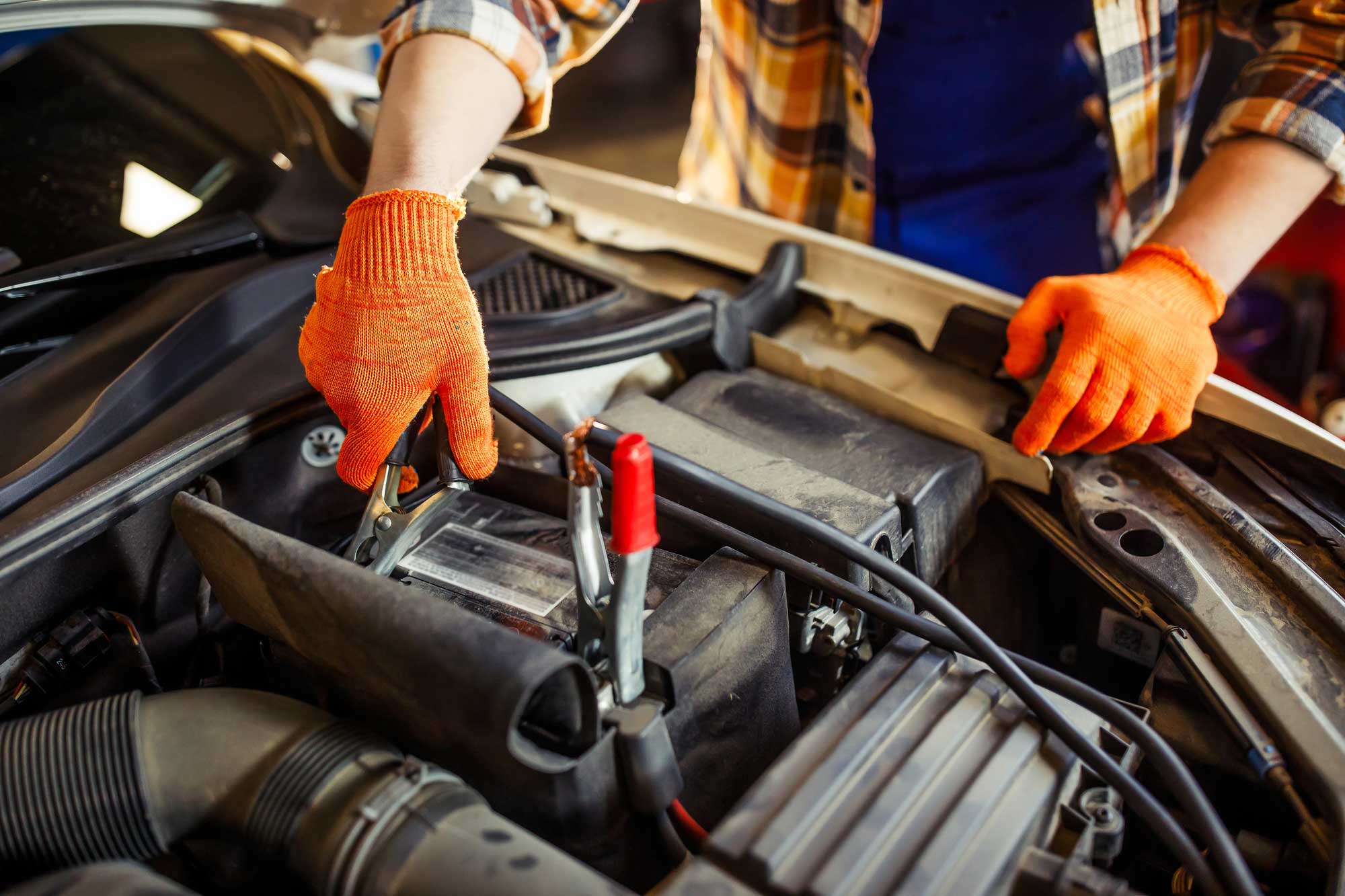
Alfa Romeo Battery Repair Replacement at DART Auto
Getting the battery wrong on an Alfa Romeo costs more than the tow – it costs you the electrical stability that modern Alfa platforms demand. A failing battery doesn't just leave you stranded; it triggers cascading faults across body control modules, infotainment systems, and adaptive suspension controllers that depend on stable voltage. On 2017-newer Giulia and Stelvio models built on the Giorgio platform, a weak battery can throw phantom ABS/stability control warnings and corrupt adaptive cruise calibration data. The 159 (2005-2011, Type 939) and MiTo (2008-2018) are equally sensitive – low voltage confuses the Blue&Me system and can trigger limp mode on JTS and MultiAir engines. Alfa Romeo battery service isn't a parts-swap job; it requires proper registration to the body computer using factory-level diagnostic tools so the charging system adapts to the new battery's chemistry and capacity.
DART Auto has been Denver's European specialist since 2000, and our master technicians understand that Alfa Romeo electrical architecture punishes shortcuts. We use Alfa-specific scan tools to register replacement batteries to the BCM, clear adaptive faults, and verify charging voltage under load – steps that prevent the "new battery, same problem" cycle budget shops create. Every battery replacement includes a complete electrical system health check because on modern Alfas, the battery is just one node in a network that must function as a unit.
When you bring your Alfa Romeo to DART Auto for battery service, you can expect:
- Factory-correct battery registration using OEM-level diagnostics to match charging profiles to the new battery's specifications
- Full electrical system inspection including alternator output testing, parasitic draw measurement, and module voltage stability checks
- Transparent communication about what caused the battery failure and whether upstream charging system faults need attention
- 3-year/36,000-mile warranty on parts and labor, backed by salaried technicians who fix it right the first time
Common Battery Repair Replacement Issues on Alfa Romeo Vehicles
Getting battery work wrong on an Alfa Romeo costs more than the immediate repair – it can cascade into electrical system failures that strand you at the worst moment. The good news: most battery issues follow predictable patterns, and catching them early keeps you on the road.
- Giulia/Stelvio (Type 952, 2017–present) parasitic drain: The infotainment and telemetry modules on these platforms are notorious for staying partially awake, draining the battery in as little as four days of non-use. Alfa Romeo issued multiple software reflashes, but older units still suffer from incomplete sleep-mode cycling. The OEM AGM battery is sensitive to deep-discharge cycles, and one full drain can halve its remaining service life.
- 4C (Type 960, 2014–2020) lightweight AGM failures: The carbon-tub 4C uses a compact, high-output AGM battery mounted behind the seats. Track use and hot-soak conditions accelerate internal plate sulfation. Because the battery is part of the weight-saving strategy, owners often delay replacement until the car won't start after a spirited drive – by then, the alternator has been working overtime and voltage regulation suffers.
- 159/Brera/Spider (Type 939, 2006–2011) alternator-battery mismatch: These Fiat-platform cars shipped with undersized alternators relative to the electrical load (dual-zone climate, Bose audio, heated seats). Batteries wear unevenly, and voltage sag under load triggers false fault codes in the Body Computer (BCM). Replacing the battery without addressing charging-system health leads to repeat failures within 18 months.
- GTV/Spider (Type 916, 1995–2005) ground-strap corrosion: The 916 chassis uses multiple ground points between the battery tray and the engine block. Colorado's freeze-thaw cycles corrode these straps, creating high-resistance paths. Owners mistake slow cranking for a weak battery when the real issue is poor grounding – swapping the battery alone won't fix erratic idle or dim headlights.
- Giulietta (Type 940, 2010–2020) stop-start system abuse: The stop-start AGM battery endures hundreds of micro-cycles per week. When the battery's state-of-charge drops below 75 percent, the system disables itself and the dashboard throws a warning. Many owners ignore this and keep driving on a degraded battery, which then fails to crank after a cold overnight soak.
- MiTo (Type 955, 2008–2018) battery-sensor miscalibration: The intelligent battery sensor (IBS) on the negative terminal monitors charge state and communicates with the ECU. If the sensor isn't recoded after battery replacement, the alternator overcharges the new battery, boiling off electrolyte and warping the plates within months. This is a software step many generic shops skip.
Why Choose DART Auto for Alfa Romeo Battery Repair Replacement
Getting battery work wrong on an Alfa Romeo can cost you far more than the repair itself. A misdiagnosed parasitic draw, an incorrect battery registration procedure, or a failure to update the body computer can leave you stranded again within weeks – and potentially damage your alternator or starter in the process. Alfa Romeo platforms, especially the Giulia and Stelvio built on the Giorgio platform since 2016, require proper battery coding and energy-management recalibration after replacement. Skip those steps, and the system won't recognize the new battery's capacity, leading to chronic undercharging or premature failure.
DART Auto has invested in the factory-level diagnostic tools and training required to perform battery service correctly on Alfa Romeo vehicles. Our technicians use Witech and OEM scan tools to register new batteries to the ECU, clear fault codes related to low-voltage events, and verify that the intelligent battery sensor is communicating properly. We also address the root cause – whether that's a failing alternator, a parasitic draw from the infotainment module, or corroded ground straps common on early Giulia models. Because our technicians are salaried rather than flat-rate, they have no incentive to rush through the diagnostic phase or skip the post-install verification steps that separate a proper repair from a parts swap.
- Platform-specific expertise: familiarity with TSBs for battery drain on 2017–2019 Giulia and Stelvio models, including software updates for the body control module
- Complete electrical system evaluation: alternator output testing, parasitic draw measurement, and inspection of common failure points like corroded battery cable terminals
- OEM-grade battery registration: proper coding and energy-management recalibration using factory procedures, not generic aftermarket tools
- 3-year/36,000-mile warranty: coverage on both the battery and the labor, backed by over 24 years serving Denver's European car community
Symptoms – How to Know You Need This Service
Alfa Romeo battery failure announces itself through electrical chaos before the car refuses to start. Because these vehicles rely on stable voltage for everything from fuel injection timing to electronic throttle control, a dying battery creates symptoms that mimic far more expensive faults. You may notice:
- Sluggish or grinding starter motor – especially on cold mornings or after the car has sat for a few days; the engine turns over slowly or makes clicking sounds instead of firing
- Dashboard warning cluster – multiple amber or red lights (ABS, stability control, airbag, check engine) illuminate simultaneously, often cycling on and off as voltage fluctuates
- Infotainment system resets or freezes – the Uconnect or Alfa Connect screen reboots randomly, loses settings, or displays "electrical system fault" messages
- Dimming interior and exterior lights – headlights visibly dim at idle or when accessories activate; dome lights fade noticeably when you open the door
- Erratic idle or stalling – particularly on MultiAir and JTS engines where low voltage confuses variable valve timing actuators and throttle body calibration
- Remote key fob failures – the car doesn't recognize your key fob consistently, or you need to hold it against the start button to get the engine to crank
- Accessory malfunctions – power windows move slowly, seat adjustments hesitate, or the climate control fan speed fluctuates without input
Stop driving immediately if you see the battery warning light stay illuminated while driving – this signals charging system failure that can leave you stranded. Schedule service soon for any combination of the other symptoms, especially if your battery is over four years old.
Which Alfa Romeo Models We See for Battery Repair Replacement
We service battery replacement and electrical diagnostics across the full range of modern Alfa Romeo platforms. Each generation has specific battery registration requirements and charging system quirks that demand factory-level tooling. The models we see most frequently include:
- Giulia (2017-newer, Type 952 Giorgio platform) – 2.0L turbo and 2.9L Quadrifoglio variants both require BCM battery registration; AGM batteries standard on QV models
- Stelvio (2018-newer, Type 949 Giorgio platform) – shares Giulia electrical architecture; battery location in cargo area on some trims complicates access
- 4C (2015-2020, Type 960) – lightweight battery mounted in rear; extremely sensitive to voltage drops affecting throttle-by-wire and stability control
- Giulietta (2014-2020, Type 940) – 1.4L MultiAir and 1.75L TBi engines; Blue&Me infotainment requires battery registration to prevent module corruption
- MiTo (2009-2018, Type 955) – compact platform shares electrical architecture with Giulietta; battery access requires bumper removal on some model years
- 159 (2005-2011, Type 939) – JTS and JTD engines; older CAN bus architecture still requires scan tool battery adaptation on later years
- Brera / Spider (2006-2010, Type 939) – same platform as 159; convertible top modules particularly sensitive to voltage stability
We occasionally see earlier 147, 156, and GT models (Type 937/932/937), though these older platforms have simpler electrical systems that don't always require registration. If your Alfa Romeo isn't listed or you're uncertain about your specific model year, reach out – our diagnostic process will identify exactly what your car needs.
Causes & Risks – What Happens if Ignored
Alfa Romeo batteries fail for predictable reasons: short-trip driving that never fully recharges the cells, Denver's temperature swings that stress the electrolyte, and the brand's high-current draw from advanced electronics. Giulia and Stelvio models, in particular, run complex body-control networks that never fully power down, accelerating self-discharge. When you combine that with an AGM battery already five years old, you're one cold morning away from a no-start.
Delaying replacement sets off a chain reaction. Here's what escalates:
- Alternator overwork (within 3–6 months): A weak battery forces the alternator to run at maximum output constantly, overheating the voltage regulator and wearing the brushes. On 159 and Giulietta platforms, alternator replacement costs three times what a timely battery swap would have.
- ECU and body-module voltage faults (within 6–12 months): Low voltage during cranking causes the engine control unit and infotainment head to log fault codes, some of which require dealer-level scan tools to clear. On Type 952 cars, repeated low-voltage events can corrupt adaptive memory in the transmission control module, leading to harsh shifts.
- Starter motor damage (after repeated failed cranks): Cranking on insufficient voltage makes the starter draw excessive current, burning the solenoid contacts. The Giulia's direct-injection system requires robust cranking speed to build fuel pressure – a tired battery means longer cranking, which accelerates starter wear.
- Stranded vehicle and tow costs: AGM batteries don't give much warning before total failure. You'll go from "it cranked slowly yesterday" to "completely dead today," often in a parking structure or on a highway shoulder. Towing an Alfa Romeo with all-wheel drive (Stelvio, Giulia Q4) requires a flatbed, not a hook.
- Safety-system faults: Modern Alfa Romeos disable advanced driver-assistance features (adaptive cruise, lane-keep, automatic emergency braking) when battery voltage is marginal. You lose these protections without realizing it until you need them.
Safety Impact – Why Battery Repair Replacement Matters
A failing battery on an Alfa Romeo doesn't just mean inconvenience – it directly undermines the car's active safety systems. The moment voltage drops below the threshold for stable operation, the vehicle begins shedding electronic aids you rely on every day.
- ABS and stability control degradation: Both systems require consistent power to the hydraulic pump and control module. Voltage sag during hard braking or evasive maneuvers can delay ABS modulation or disable electronic stability control entirely, leaving you with 1990s-era braking dynamics on a 3,800-pound sedan.
- Electric power steering dropout (Giulia/Stelvio): These models use fully electric steering with no hydraulic backup. A voltage drop mid-corner can cause the steering to go heavy without warning, requiring significant physical effort to complete the turn. This has been documented in cold-weather no-start scenarios where drivers attempt to move the car with a nearly dead battery.
- Airbag system faults: Low voltage triggers airbag warning lights because the system can't guarantee proper deployment energy. While the airbags may still function, you won't know for certain – and in some jurisdictions, driving with an illuminated airbag light is a roadworthiness violation.
- Instrument cluster blackout: On 159 and Giulietta models, severe voltage sag can cause the digital instrument cluster to reboot while driving, leaving you without speedometer, tachometer, or warning lights for several seconds. That's long enough to miss a critical alert or misjudge your speed in traffic.
When to stop driving immediately: If the battery warning light is on and you smell sulfur (rotten eggs), the battery is off-gassing due to overcharge or internal short – pull over safely and shut down. If the steering feels heavy or the brake pedal goes unusually firm, the electrical system is failing and you should not continue driving.
When to schedule soon: Slow cranking, dimming headlights at idle, or a stop-start system that stays disabled are all signs you have days to weeks before total failure. Don't wait for a cold snap to make the decision for you.
How Alfa Romeo Battery Repair Replacement Actually Works
Alfa Romeo's modern electrical architecture is fundamentally different from older cars. Instead of a simple alternator-to-battery loop, you're dealing with an intelligent charging system that monitors battery state-of-charge, adjusts alternator output based on driving conditions, and communicates across multiple control modules. The battery isn't just a reservoir of electrons – it's a managed component in a network.
On Giulia, Stelvio, and late-model Giulietta platforms, the Battery Management System (BMS) tracks charge cycles, temperature, and internal resistance. When you replace the battery, the BMS must be told that a new battery with fresh capacity has been installed; otherwise, it continues using the old battery's degraded profile, leading to chronic undercharge or overcharge. This requires factory-level scan tools – generic OBD-II readers can't access the body-control network where this data lives.
Here's what makes Alfa Romeo battery service different from a quick-lube swap:
- Battery registration and coding: The new battery's specifications (capacity, type, serial number) must be programmed
How We Diagnose Battery Repair Replacement Issues on Alfa Romeo
Getting battery diagnostics wrong on an Alfa Romeo can cascade into electrical gremlins that haunt you for months – misdiagnosed parasitic drains, damaged body control modules, or worse, a stranded vehicle with no clear culprit. Modern Alfa Romeos, particularly the Giulia and Stelvio platforms built on the Giorgio architecture since 2016, integrate battery health deeply into the vehicle's network. A failing battery doesn't just mean a slow crank; it triggers limp modes, phantom warning lights, and can even corrupt adaptive learning tables in the engine and transmission control units.
Our diagnostic process ensures we identify the root cause, not just the symptom:
- Full electrical system scan with Alfa Romeo-capable diagnostics. We use factory-level scan tools that communicate with every module – powertrain, body control, instrument cluster, infotainment. On 2017+ Giulia and Stelvio models, we pull stored fault codes and check for low-voltage flags that indicate the battery has been operating below threshold, which can set codes in modules you'd never suspect.
- Battery load testing and cranking-voltage measurement. We measure cold-cranking amps against OEM spec (typically 70–80 CCA on Giulia/Stelvio AGM batteries), surface charge, and voltage drop during cranking. A battery that shows 12.6V at rest but sags below 9.5V under load is failing, even if it starts the car today.
- Parasitic draw test with modules active. Alfa Romeos can exhibit parasitic draws from aftermarket alarms, failing convenience modules, or even the infotainment system refusing to sleep. We measure key-off draw after the network settles (should be under 50 mA) and isolate which circuit is pulling current.
- Alternator output and regulator function check. We verify charging voltage at idle and under electrical load (14.2–14.8V is typical), and check for ripple that indicates a failing diode trio. On the 2.0L turbo Giulia, we've seen voltage regulators allow overcharge (15V+), which cooks AGM batteries in months.
- Visual inspection of battery terminals, ground straps, and cable integrity. Corrosion at the positive terminal or a degraded engine-to-chassis ground strap can mimic a failing battery. We clean, measure resistance, and verify torque on all connections per Alfa Romeo spec.
Once testing is complete, we walk you through what we found – scan data, voltage graphs, and load-test printouts – and present a clear repair plan with transparent pricing. You'll know exactly what failed, why it failed, and what it takes to fix it right.
Battery Repair Replacement on Alfa Romeo: Repair vs. Replacement
Not every battery issue demands a new battery, and not every charging-system fault means replacing the alternator. The right call depends on what failed and how the rest of the system is holding up.
When Repair Makes Sense
- Corroded terminals with an otherwise healthy battery. If load testing confirms the battery meets spec and the only issue is surface corrosion or loose connections, we clean terminals to bare metal, apply dielectric grease, and torque to factory spec. This is common on early 4C models where the battery sits in the rear trunk and moisture intrusion corrodes the positive terminal.
- Parasitic draw from a single module. If a failing body control module or aftermarket accessory is draining the battery overnight, replacing that component and verifying normal key-off draw restores battery life without replacing a battery that's still good.
- Alternator voltage-regulator replacement on older platforms. On pre-2016 MiTo and Giulietta models with Bosch alternators, the voltage regulator can be replaced separately if the stator and diodes test good, saving the cost of a complete alternator assembly.
When Full Replacement Is the Right Call
- Battery fails load test or shows internal-cell damage. Once an AGM battery (standard on 2017+ Giulia/Stelvio) drops below 80% of rated CCA or exhibits a dead cell, repair isn't an option. We replace with OEM-spec AGM batteries and register the new battery to the ECU so the charging strategy adapts correctly.
- Alternator with multiple failing components. If the diode trio, stator windings, and regulator all show wear, replacing the alternator as an assembly is more reliable and cost-effective than chasing individual internal parts.
- Cascading wear from chronic undercharge or overcharge. If a failing alternator has been overcharging the battery for months, both components are compromised. We replace both and verify the entire charging circuit to prevent recurrence.
We walk you through the options with data in hand – no upselling to the most expensive fix, just honest guidance on what will solve the problem and what corners you can safely cut if budget is tight.
How to Make Your Alfa Romeo Battery Repair Replacement Last Longer
Alfa Romeo electrical systems reward attentive ownership and punish neglect. A few habits can double your battery's service life and keep charging-system components healthy well past 100,000 miles.
Driving Habits That Extend Component Life
- Avoid chronic short trips in cold weather. The 2.0L turbo Giulia and Stelvio draw significant current on cold starts – glow plugs, heated seats, defrosters – and a 10-minute commute doesn't give the alternator enough time to recover the battery. If short trips dominate your routine, plan a longer highway drive weekly to fully recharge the battery.
- Minimize key-off electrical loads. Leaving the infotainment system on, doors ajar with interior lights active, or using accessory mode for extended periods drains the battery without the alternator running. If you're sitting in the car working or waiting, start the engine.
- Let the engine reach operating temperature before heavy electrical loads. On cold starts, the ECU prioritizes fast catalyst light-off and limits alternator output to reduce engine load. Running heated seats, rear defrost, and high-beam headlights before the engine warms forces the battery to shoulder the load.
Maintenance You Can Do Yourself
- Visual terminal inspection every oil change. Pop the hood (or trunk on 4C models) and check for white or green corrosion, loose connections, or frayed cables. Catching corrosion early prevents voltage drop and module faults.
- Listen for slow cranking or dimming lights. If the starter sounds labored on a warm engine or the dashboard dims noticeably during cranking, the battery is losing capacity. Addressing it early prevents a no-start and potential module damage from low-voltage events.
- Monitor the battery warning light and voltage gauge (if equipped). If the battery light flickers at idle or the voltage gauge reads below 13V with the engine running, the charging system has a fault. Don't ignore it – bring the car in before you're stranded.
What to Leave to the Professionals
Battery replacement on 2017+ Giulia and Stelvio models requires ECU registration of the new battery so the body control module can adjust charging parameters. Skipping this step causes premature battery failure and can set fault codes. Alternator replacement involves serpentine-belt tensioner access and torque-critical fasteners – not a driveway job. We handle the technical work; you handle the easy checks. That division of labor keeps your Alfa Romeo reliable without turning ownership into a second job.
What to Expect When You Bring Your Alfa Romeo In
When you schedule battery service at DART Auto, you'll work directly with a service advisor who understands Alfa Romeo electrical systems. During drop-off, we'll ask about any symptoms you've noticed – slow cranking, warning lights, infotainment resets – and note any recent work that might have introduced a parasitic draw. We'll also ask you to remove valuables and personal items from the cabin, since our technicians may need to access fuse panels and control modules during diagnosis.
- Initial inspection and testing: We perform a complete electrical system evaluation, including battery load testing, alternator output verification, and parasitic draw measurement with the vehicle in sleep mode. If you've been experiencing intermittent no-start conditions, we'll also pull stored fault codes to check for low-voltage events or communication errors.
- Written estimate and explanation: Before any work begins, you'll receive a detailed estimate that breaks down parts, labor, and any additional services needed – such as cleaning corroded terminals or updating body control module software. We'll explain what each repair addresses and what happens if you choose to delay it.
- Battery replacement and registration: We install OEM or premium aftermarket batteries that meet Alfa Romeo specifications for cold-cranking amps and reserve capacity. After installation, we use factory diagnostic tools to register the new battery to the ECU and verify that the intelligent battery sensor is reading correctly.
- Post-repair verification: Every battery service includes a final scan-tool check to confirm no active fault codes, a road test to verify charging system performance, and a review of the energy-management data to ensure the system recognizes the new battery's state of charge.
We offer loaner vehicles and local shuttle service during the repair, so you're not left waiting. If your schedule requires after-hours pickup, let us know during drop-off and we'll arrange it. Before you leave, your advisor will walk you through the work completed, show you any old parts we replaced, and explain what to watch for in the coming weeks. If you notice any warning lights or starting issues after pickup, call us immediately – we'll get you back in and make it right at no additional charge.
Our Alfa Romeo Services
- Air Conditioning AC Repair
- Brake Repair & Brake Fluid Change
- Check Engine Light Diagnostics
- Clutch Repair & Replacement
- Coolant Leak Repair
- Cooling System Repair
- Drive Shaft Repair
- Engine Repair
- Exhaust & Catalytic Converter Repair
- Head Gasket Repair & Replacement
- Oil Change
- Oil Leak Repair
- Scheduled Service Maintenance
- Steering Repair
- Suspension Repair
- Cambelt Timing Belt Replacement
- Transmission Repair
- Tune Up
- Wheel Alignment