
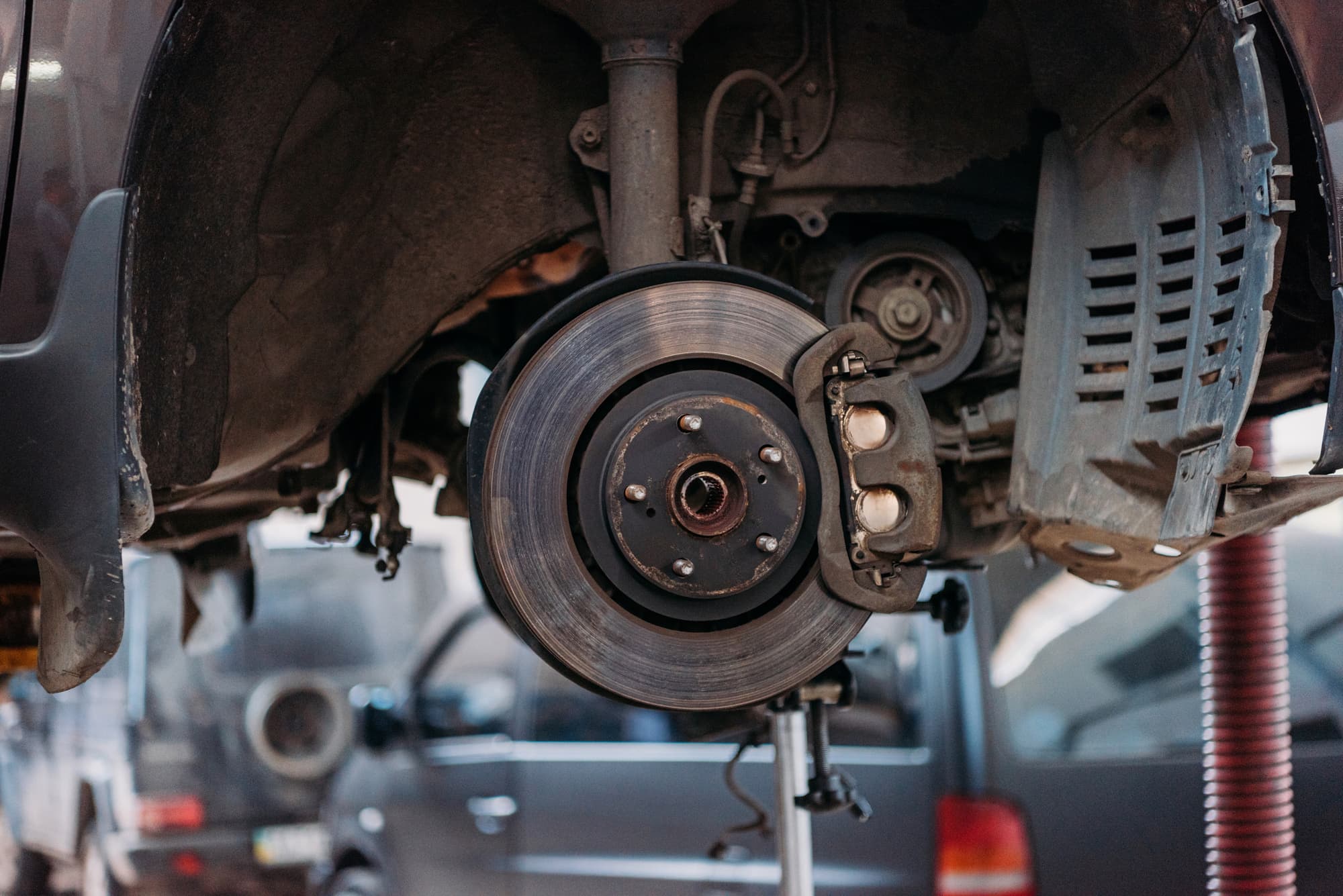
Audi Brake Repair & Brake Fluid Change at DART Auto
You're pressing the brake pedal and feeling something that wasn't there last week – maybe a pulsation, maybe a longer stopping distance, maybe just a nagging sense that your Audi isn't responding the way it should. Audi braking systems are engineered for precision, blending hydraulic pressure with electronic stability control, ABS, and in many models, brake-by-wire assist through systems like electromechanical parking brakes and regenerative braking on hybrid platforms. When something feels off, it's rarely a single worn pad – it's often a cascade of issues involving calipers, rotors, hydraulic fluid condition, and electronic calibration that generic shops overlook.
At DART Auto, we approach Audi brake work the way the factory intended. We use ODIS diagnostic software to read brake system fault codes, monitor hydraulic pressures, and verify that electronic parking brake motors and ABS modules are functioning within spec. Audi specifies DOT 4 Low Viscosity brake fluid on many newer models (2016+ A4/A5/Q5/Q7), and using standard DOT 4 can trigger stability control faults or premature ABS pump wear. We stock the correct fluid, follow OEM bleeding sequences that prevent air from migrating into the ABS modulator, and torque caliper brackets and wheel bolts to factory specifications – details that prevent comebacks and preserve your three-year, 36,000-mile warranty coverage.
What you can expect when you bring your Audi to DART Auto:
- Complete brake system inspection – pads, rotors, calipers, fluid condition, brake lines, and electronic parking brake function
- ODIS diagnostics to check for stored faults in the ABS module, ESC system, and brake wear sensors
- OEM-spec brake fluid replacement using the correct DOT rating and factory bleeding procedure
- Transparent estimate explaining which components need immediate attention and which can wait, so you decide the scope and timing
Common Brake Repair & Brake Fluid Change Issues on Audi Vehicles
If you're driving an Audi and noticing soft pedal feel, vibration under braking, or dashboard warnings, you're likely facing one of several platform-specific brake issues. Here's what we see most often:
- Electronic parking brake (EPB) actuator failure on B8/B8.5 A4/A5/Q5 (2009–2016): The rear caliper-mounted electric motors seize or strip their internal gears, triggering a red brake warning and preventing the parking brake from releasing or engaging. This is a known weak point on the MQB and MLB platforms, often requiring caliper replacement rather than just pads.
- Premature front rotor warping on C7 A6/A7 (2012–2018) and D4 A8 (2011–2017): The larger, heavier sedans with sport packages develop thickness variation in the front rotors after 20,000–30,000 miles, causing steering-wheel shake during highway braking. OEM rotors are two-piece floating designs that require specific torque sequences and hub cleaning to prevent repeat warping.
- Hygroscopic brake fluid degradation accelerated by Colorado altitude: DOT 4 Low Viscosity fluid (required on most 2016+ Audis with ESC and electronic brake force distribution) absorbs moisture faster at altitude, dropping the boiling point and causing spongy pedal feel or ABS pump cycling. Many owners skip the factory 2-year fluid interval, leading to internal corrosion in the ABS module – a repair that can run into thousands if the module fails.
- Rear caliper piston corrosion on B9 A4/A5 (2017+) and Q5/Q7: The single-piston sliding calipers develop corrosion on the piston face and dust boot, causing uneven pad wear and pull to one side. Colorado's road salt and freeze-thaw cycles accelerate this, and the calipers often need rebuilding or replacement during what should be a routine pad swap.
- Brake wear sensor connector corrosion on MQB platform (A3, Q3, TT): The front brake pad wear sensors use a plug that sits low on the strut, exposed to road spray. Corrosion triggers a false "brake pad" warning on the dash even after new pads are installed, requiring connector replacement and proper sealing to prevent recurrence.
- Brake dust shield rust-through and contact noise on older C6 A6 (2005–2011) and B7 A4 (2006–2008): The thin steel dust shields corrode and warp, rubbing against the rotor and creating a scraping sound that owners mistake for pad wear. This is cosmetic but annoying, and removal or replacement requires hub work to avoid damaging the wheel bearing.
Why Choose DART Auto for Audi Brake Repair & Brake Fluid Change
If you're noticing soft pedal feel, pulsation during braking, or that annoying brake warning light on your dash, you're dealing with symptoms that demand factory-level diagnostics. Audi brake systems – especially on C7 A6/A7 platforms with electromechanical parking brakes or B9 A4/A5 models running electronic stability control calibrations – require more than generic pad slaps. DART Auto owns the complete process: ODIS diagnostic scans to read brake wear sensors and EPB fault codes, torque-spec rotor installation per VW/Audi SSP guidelines, proper bleeding sequences for ABS modules, and post-repair calibration of electronic parking brake motors.
Our master technicians bring dealer training and over a decade of hands-on Audi experience, but without the dealership markup. We use OEM or premium aftermarket pads and rotors sourced from trusted European suppliers, and our salaried compensation structure means no one rushes your brake job to chase flat-rate hours. Every brake service includes a full system inspection – caliper slide pins, flex hoses for cracking, brake fluid moisture content – so we catch issues before they strand you with a seized caliper on I-25.
- Factory-level ODIS and VAS diagnostic tools to read Audi-specific brake fault codes and perform EPB service mode entry
- Platform expertise: familiarity with common B8/B8.5 rear caliper piston corrosion, C6 A6 brake booster vacuum leaks, and Q5/Q7 brake pad sensor wiring failures
- 3-year/36,000-mile warranty on parts and labor – we stand behind every brake repair
- Complete fluid exchange using DOT 4 low-viscosity fluid meeting VW 501.14 spec, not generic off-the-shelf product
Symptoms – How to Know You Need This Service
Your Audi will tell you when the braking system needs attention – sometimes subtly, sometimes loudly. Here's what to watch for:
- Brake warning light or ABS/ESC light on the dashboard – often triggered by low fluid, a failed brake pad wear sensor, or a fault in the ABS module; schedule service soon to avoid losing stability control.
- Pulsation or vibration through the brake pedal – usually warped rotors, common on B8/B8.5 A4/A5 models with aggressive driving or prolonged mountain descents; safe to drive gently but book an appointment this week.
- Grinding or metal-on-metal noise when braking – the pad backing plate is contacting the rotor; stop driving immediately to avoid rotor damage and caliper piston scoring.
- Soft or spongy brake pedal – air in the hydraulic system, contaminated fluid, or a failing master cylinder; schedule service immediately, as pedal travel will worsen.
- Brake pedal sinks slowly to the floor – internal master cylinder leak or severe caliper piston seal failure; do not drive the vehicle.
- Squealing or squeaking during light braking – often glazed pads or dust buildup, but can also be the early-warning tab on the pad wear sensor; safe to drive but have it inspected within the week.
- Pulling to one side when braking – uneven pad wear, a seized caliper slide pin, or contaminated rotor surface; safe at low speeds but book service soon to prevent uneven tire wear.
- Burning smell after repeated braking – overheated pads or a dragging caliper; let the brakes cool and schedule service the same day to prevent rotor warping.
Which Audi Models We See for Brake Repair & Brake Fluid Change
We service the full range of Audi platforms, from daily-driver sedans to high-performance RS models. Each generation brings specific brake system architecture – electronic parking brakes on 2017+ models, carbon-ceramic options on RS variants, and hybrid regenerative braking on e-tron and PHEV platforms. Here's what we commonly see:
- A3/S3 (8P, 8V, 8Y) – 2006–present, including Sportback and sedan; electronic parking brake standard from 2013+
- A4/S4/RS4 (B7, B8, B8.5, B9) – 2005–present; B8.5 and newer use DOT 4 LV fluid and electronic parking brake
- A5/S5/RS5 (8T, F5) – 2008–present coupe, Sportback, and cabriolet; same brake architecture as corresponding A4 generation
- A6/S6/RS6 (C6, C7, C8) – 2005–present; C7 and C8 feature larger calipers and optional carbon-ceramic rotors on S/RS models
- A7/S7/RS7 (4G, 4K) – 2012–present; shares C7/C8 A6 brake platform with sportier pad compounds
- A8/S8 (D3, D4, D5) – 2004–present; larger hydraulic system, more complex ABS/ESC calibration, and air suspension interaction
- Q3/Q5/Q7/Q8 and SQ variants – 2007–present; heavier SUV platforms with larger rotors and higher fluid capacity
- TT/TTS/TT RS (8J, 8S, FV) – 2007–present; sport-tuned brake bias and optional carbon-ceramic on TT RS
- R8 (42, 4S) – 2008–present; carbon-ceramic standard on V10 Plus and Performance models, requires specialized bedding procedure
- e-tron, e-tron GT, Q4 e-tron – electric and hybrid platforms with regenerative braking; brake service intervals differ due to reduced friction braking
We also service older models including B6 A4, C5 A6, and 8L/8N A3 platforms. If your Audi falls outside these ranges or you're unsure of your chassis code, call us – we'll confirm compatibility and walk you through what your specific model needs.
Causes & Risks – What Happens if Ignored
Brake issues on Audi vehicles stem from a mix of aggressive driving dynamics (quattro all-wheel drive puts more demand on the front brakes during deceleration), environmental factors (Denver's altitude, road salt, and temperature swings), and the complexity of modern electronic brake systems. The DOT 4 LV fluid mandated by VW/Audi is hygroscopic by design, pulling moisture from the air every time you open the reservoir or simply through normal permeation. At Denver's 5,280 feet, water boils at a lower temperature, so contaminated fluid reaches vapor lock thresholds sooner than at sea level. Meanwhile, the electronic parking brake actuators and ABS modules are sensitive to voltage spikes and corrosion – small issues cascade quickly.
Here's what escalates when you delay brake service:
- Warped rotors score the pads: Thickness variation in the rotor creates high spots that gouge the pad material, turning a rotor-only replacement into a full pad-and-rotor job within a few hundred miles.
- Moisture-laden fluid corrodes the ABS hydraulic unit: Once the boiling point drops below 350°F, repeated hard braking (mountain descents, emergency stops) boils the fluid internally, leaving water and glycol residue that pits the aluminum valve body. ABS module replacement on a C7 A6 or Q7 is a multi-thousand-dollar repair that could have been prevented with a biennial flush.
- Seized EPB motors damage the caliper housing: Ignoring the parking brake warning for weeks can strip the internal worm gear, forcing the actuator motor to run continuously and overheat. The heat transfers to the caliper piston bore, warping it and necessitating full caliper replacement instead of a simple actuator swap.
- Uneven pad wear triggers ESC faults: When one caliper drags or releases inconsistently, the wheel speed sensors detect asymmetry and throw stability control warnings. The car may enter a limp mode that disables quattro torque vectoring, leaving you with front-wheel-drive-only behavior in snow or on wet pavement.
- Corroded brake lines rupture under pressure: The rubber flex hoses at each wheel are rated for a specific pressure and age. Old fluid with high water content accelerates internal cracking; a sudden stop can blow a hose, dumping fluid and leaving you with a pedal that goes to the floor.
Safety Impact – Why Brake Repair & Brake Fluid Change Matters
Your Audi's braking system is the backbone of every active safety feature: ABS, electronic stability control, brake assist, and even the pre-collision systems that prime the brakes when a crash is imminent. When brake fluid is contaminated or components are worn, these systems can't modulate pressure accurately. The ABS pump relies on precise hydraulic pressure to pulse the brakes during a skid – if the fluid has absorbed enough moisture to compress or boil, the pump can't generate the rapid pressure changes needed, and your stopping distance grows unpredictably. On quattro models, uneven braking side-to-side confuses the torque vectoring logic, potentially sending power to the wrong axle mid-corner and inducing oversteer or understeer you didn't ask for.
Here's when to act immediately versus when you have a bit of time:
- Stop driving now: Pedal goes to the floor with little resistance; red brake warning light stays on with parking brake released; grinding or metal-on-metal noise during light braking; complete loss of parking brake function on a slope.
- Schedule within the week: Steering wheel vibration above 50 mph during braking; amber brake pad warning on the dash; spongy or soft pedal feel that wasn't there before; pulling to one side under moderate braking.
- Plan ahead but don't delay past a month: Squealing or chirping from the wheels (wear indicator tabs touching the rotor); brake fluid is dark brown instead of clear amber; you're past the 2-year fluid change interval; minor pulsation in the pedal at highway speeds.
From a liability standpoint, if a known brake issue contributes to a collision, insurers and attorneys will scrutinize your service records. Skipping documented maintenance intervals – like the 2-year brake fluid flush – can complicate claims and raise questions about negligence.
How Audi Brake Repair & Brake Fluid Change Actually Works
Modern Audis use a sophisticated hydraulic brake system with electronic oversight at every corner. The master cylinder generates pressure when you press the pedal; that pressure travels through steel and rubber lines to each caliper, where pistons clamp the pads against the rotor. What sets Audi apart is the integration: the ABS module (often called the hydraulic control unit or HCU) sits inline and can modulate pressure independently at each wheel, enabling not just anti-lock function but also electronic brake-force distribution, brake assist, and hill-hold. On 2016+ models, you'll also find an electronic parking brake with caliper-mounted actuators that screw the piston outward via a small electric motor, replacing the old cable-and-lever setup.
Why this matters for service:
- EPB calipers require scan-tool retraction: You can't simply push the piston back with a C-clamp. The actuator motor must be commanded into service mode using VCDS, VAS, or equivalent VAG-specific software, or the motor will fight you and strip its gears.
- Brake fluid flushing demands a specific bleed
How We Diagnose Brake Repair & Brake Fluid Change Issues on Audi
When you notice pulsation through the pedal, longer stopping distances, or that dashboard warning light glowing amber, your Audi is telling you something specific. We start by listening to what you've experienced behind the wheel – when the symptoms appear, what you hear, how the pedal feels – because those clues guide our diagnostic approach.
- Visual inspection at all four corners. We pull the wheels and measure pad thickness with a caliper, inspect rotor surfaces for scoring or heat discoloration, check caliper slide pins for corrosion (a chronic issue on B8/B9 A4 and Q5 models), and look for uneven pad wear that signals a sticking piston or collapsed brake hose.
- Fluid analysis and system test. We draw a sample of brake fluid and test its moisture content with a refractometer. Audi specifies DOT 4 low-viscosity fluid, and moisture above 3 percent degrades boiling point and invites internal corrosion. We also check the reservoir for sediment and inspect ABS/ESP module connections for corrosion, especially on 2009-2016 A4/A5/Q5 platforms where module faults can mimic mechanical brake issues.
- VCDS or factory-level scan. We connect our diagnostic interface and interrogate the ABS controller, reading fault codes, live data from wheel-speed sensors, and pressure-sensor values. On vehicles with electromechanical parking brakes (most 2017+ models), we command actuator self-tests to verify motor function and cable tension.
- Road test with data logging. We drive the car under controlled braking scenarios while monitoring pedal-travel sensor output, individual wheel speeds, and yaw-rate data to confirm the system responds symmetrically and without delay.
Once we've gathered measurements and scan data, we walk you through what we found, explain which components have reached their service limit, and provide a detailed quote that separates necessary work from advisories you can schedule later.
Brake Repair & Brake Fluid Change on Audi: Repair vs. Replacement
Not every brake concern demands wholesale replacement. The right course depends on what's worn, how far it's progressed, and whether adjacent components are still within specification.
When Repair Makes Sense
- Sticking caliper slides. If the pads still have 5mm or more remaining and the rotors are above minimum thickness, we can often disassemble the caliper bracket, clean and re-lubricate the slide pins with high-temperature synthetic grease, and restore smooth operation without replacing hardware.
- Fresh fluid flush on schedule. Audi recommends brake-fluid replacement every two years regardless of mileage. If your pads and rotors are healthy but the fluid is dark or moisture-contaminated, a complete system flush with fresh DOT 4 LV restores pedal feel and protects internal components from corrosion.
- Minor rotor resurfacing. Light surface rust or minor glazing can sometimes be addressed on a brake lathe, provided the rotor still meets minimum thickness and has no cracks or hard spots.
When Replacement Is the Right Call
- Rotors below discard thickness. Audi specifies a minimum thickness stamped on each rotor hub. Once you're within 1mm of that limit, replacement is mandatory – the metal can't safely dissipate heat, and cracking becomes likely under hard braking.
- Pads worn to the backing plate. If the friction material is gone and the wear indicator has been screaming for weeks, the rotor surface is usually damaged beyond economical repair. At that point, pads and rotors go together.
- Seized caliper pistons. Corrosion or torn dust boots allow moisture into the piston bore. Once a piston sticks, the caliper assembly is replaced – rebuilding calipers on modern Audis rarely pencils out against the cost of a remanufactured unit with a warranty.
- Electromechanical parking-brake actuators. On 2017+ A4/A5/Q5/Q7 models with electronic parking brakes, actuator-motor failure typically means replacing the entire caliper assembly, as Audi does not sell the motor separately.
We lay out the options, explain the safety and cost trade-offs, and let you decide. Our technicians are salaried, so there's no incentive to upsell you into parts you don't need.
How to Make Your Audi Brake Repair & Brake Fluid Change Last Longer
Smart driving and consistent maintenance can add thousands of miles to your brake components and keep that fluid fresh longer.
Driving Habits That Extend Component Life
- Use engine braking on downhill grades. Shift the transmission into manual mode or select a lower gear range to let the drivetrain slow the car, sparing your pads and rotors from continuous heat cycling.
- Anticipate stops and brake progressively. Hard, late braking generates extreme heat that accelerates pad glazing and rotor warping. Smooth, early deceleration spreads the thermal load and reduces wear.
- Avoid riding the brake pedal. Resting your foot on the pedal while cruising drags the pads against the rotors, creating unnecessary friction and heat.
- Allow cooldown after spirited driving. If you've been on a mountain road or track day, drive gently for the last few miles to let the rotors cool gradually rather than parking immediately with glowing-hot discs.
Maintenance You Can Monitor
- Check pad thickness through the wheel spokes. Most Audi wheels allow a sight line to the outboard pad. If the friction material looks thinner than a pencil eraser, schedule an inspection.
- Listen for changes in brake noise. A new squeal, grinding, or clicking that wasn't there last week often signals a worn pad, loose hardware, or failing caliper.
- Watch the brake-fluid level in the reservoir. A slow drop over months is normal as pads wear and pistons extend; a sudden drop means a leak that demands immediate attention.
- Follow the two-year fluid-change interval. Even if the fluid looks clear, moisture absorption is invisible and degrades boiling point. Mark your calendar and stick to the schedule.
What to Leave to the Professionals
Brake work on modern Audis involves safety-critical hydraulics, electronic control modules that require special service modes to retract pistons, and torque specifications that matter. Bleeding ABS systems, resetting electronic parking brakes, and clearing adaptation values after pad replacement all require factory-level scan tools. We're happy to show you how to check your own fluid level and inspect pads visually, but the actual service work belongs in expert hands with the right equipment and training.
What to Expect When You Bring Your Audi In
We walk you through every phase so there are no surprises. Here's how your visit unfolds:
- Appointment and drop-off: Schedule online or by phone. When you arrive, we document your concerns – whether it's pedal travel, noise, or a dashboard warning – and note any recent symptoms like pulling or vibration. We offer loaner vehicles and local shuttle service; just ask when booking.
- Diagnostic inspection: Before recommending anything, we perform a complete brake system evaluation: pad and rotor thickness measurements, caliper operation, flex hose condition, brake fluid moisture test, and a full ODIS scan for stored fault codes. If your Audi has an electronic parking brake, we check actuator function and cable tension.
- Written estimate and consultation: You receive a detailed estimate explaining what needs attention now and what can wait. We walk through the consequences of delaying repairs – for example, a warped rotor that damages new pads, or moisture-saturated fluid that corrodes ABS internals – so you can make an informed decision.
- Repair execution: Our technicians follow factory torque specs, use proper bleeding sequences (often rear-to-front on Audi ABS systems), and perform EPB calibration where required. All work is double-checked before your car leaves the bay.
- Post-repair verification and pickup: We road-test your Audi to confirm pedal feel, verify ABS self-test completion, and re-scan for any lingering codes. At pickup, we show you old parts if requested and explain the work completed. If anything feels off in the days following your service, call us – we'll get you back in immediately to make it right.
You'll leave with documentation of the brake fluid spec used, torque values applied, and a warranty card covering the next three years or 36,000 miles. That's the DART Auto difference: honest expertise, transparent process, and accountability long after you drive away.
Our Audi Services
- Air Conditioning AC Repair
- Battery Repair Replacement
- Check Engine Light Diagnostics
- Clutch Repair & Replacement
- Coolant Leak Repair
- Cooling System Repair
- Drive Shaft Repair
- Engine Repair
- Exhaust & Catalytic Converter Repair
- Head Gasket Repair & Replacement
- Oil Change
- Oil Leak Repair
- Scheduled Service Maintenance
- Steering Repair
- Suspension Repair
- Cambelt Timing Belt Replacement
- Transmission Repair
- Tune Up
- Wheel Alignment