
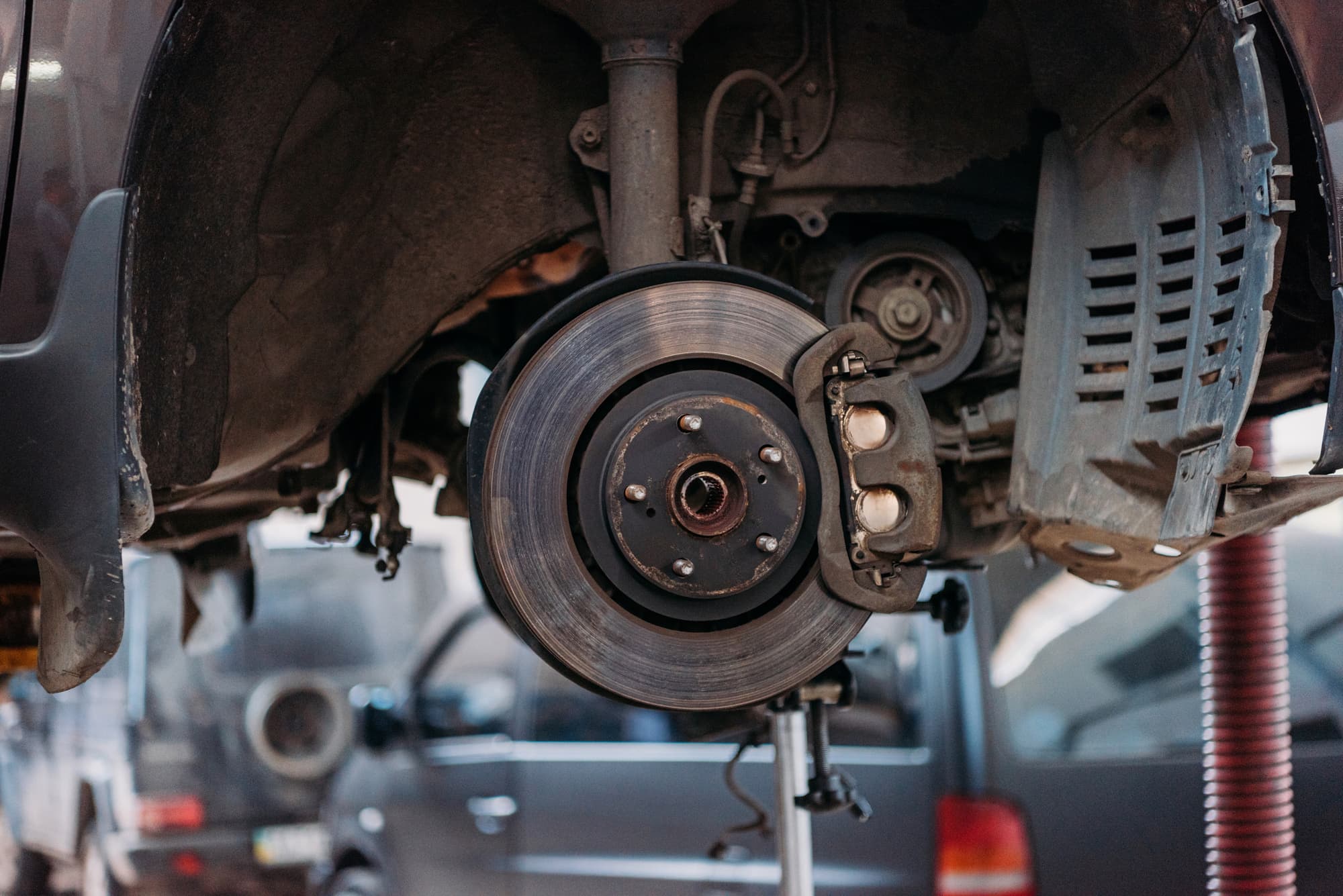
Alfa Romeo Brake Repair & Brake Fluid Change at DART Auto
When your Alfa Romeo develops a soft pedal or pulls under braking, the solution starts with understanding how Brembo systems and integrated ABS/DSC modules work together. We diagnose the actual cause – whether it's contaminated DOT 4 fluid breaking down under heat, worn rotors on a Giulia Quadrifoglio's six-piston calipers, or air in the lines after a pad swap – then address it with OEM-aligned procedures and the right equipment.
Alfa Romeo brake systems demand more than generic pad slaps. The 4C uses a brake-by-wire system where pedal feel is electronically managed. Giulia and Stelvio platforms (Giorgio architecture, 2017+) integrate brake force distribution through the chassis domain controller, requiring proper bleeding sequences and often a scan tool to cycle ABS valves. Older 159 and Brera models (2006–2011, Type 939) share GM-era components but still need attention to caliper slide pins and specific torque specs to avoid comeback noise and uneven wear. We use factory service information, not guesswork, and our scan tools can command ABS pump cycles during fluid changes to purge trapped air that gravity bleeding misses.
When you bring your Alfa Romeo to DART Auto for brake work, expect:
- Complete system inspection – pads, rotors, calipers, flex lines, fluid condition, and electronic fault codes
- OEM or premium aftermarket parts (Brembo, ATE, Bosch) matched to your platform
- Proper bleeding procedures using scan-tool-commanded ABS cycling where required
- Transparent explanations of what needs attention now versus what can wait, with no pressure to over-repair
Common Brake Repair & Brake Fluid Change Issues on Alfa Romeo Vehicles
When your Alfa Romeo starts showing brake symptoms, you're likely dealing with one of a handful of well-documented issues. We see these patterns regularly and know exactly how to address them:
- Giulia/Stelvio (Type 952, 2016–present) electronic parking brake failures: The integrated EPB caliper motors seize or throw fault codes, often triggered by moisture intrusion or software glitches. The system won't release, leaving the rear brakes partially engaged and generating heat. Requires scan-tool service mode entry and, in many cases, caliper replacement with OEM units that include the motor assembly.
- 159/Brera/Spider (Type 939, 2005–2011) rear caliper corrosion: The aluminum rear calipers corrode internally where the piston seals ride, causing uneven pad wear and sticky pistons. Colorado's freeze-thaw cycles accelerate this. You'll notice pulling under braking or a spongy pedal that doesn't improve with bleeding.
- 4C (Type 960, 2014–2020) carbon-ceramic rotor delamination: Track use or aggressive street driving can cause the carbon matrix to separate from the aluminum hat. Symptoms include vibration at high speeds and uneven braking force. These rotors are non-serviceable and require complete replacement with factory parts.
- Giulietta (Type 940, 2010–2020) master cylinder internal leak: The tandem master cylinder develops internal bypass, where fluid leaks past the primary piston seal. The pedal sinks slowly to the floor under sustained pressure but pumps back up. Often misdiagnosed as air in the lines until pressure testing reveals the fault.
- Moisture-contaminated brake fluid across all models: Alfa Romeo specifies DOT 4 fluid with a minimum dry boiling point of 230°C. Denver's altitude and temperature swings pull moisture into the hygroscopic fluid faster than at sea level. Once water content exceeds three percent, you'll see corrosion in ABS modules, calipers, and brake lines, plus dramatically reduced boiling points that cause pedal fade.
- 156/147/GT (Type 932/937, 1997–2010) ABS pump corrosion: The Bosch 5.3 ABS unit develops internal corrosion that clogs the return pump and valve block. You'll get ABS/ESP warning lights, loss of stability control, and eventually a rock-hard pedal with poor braking force.
Why Choose DART Auto for Alfa Romeo Brake Repair & Brake Fluid Change
When your Giulia's brake pedal feels soft or your Stelvio's ABS light flashes, you need technicians who understand how Alfa Romeo's integrated braking systems work – not just generic pad-and-rotor replacements. DART Auto has invested in the factory diagnostic tooling and OEM repair procedures that let us properly bleed the Bosch ABS modules found across the 2017+ Giulia and Stelvio platforms, address the electronic parking brake calibration on 4C models, and handle the DOT 4 Low Viscosity fluid spec that Alfa Romeo requires for proper pedal feel and ABS modulation.
Our master technicians bring dealer-level training and over a decade of hands-on experience with European platforms. We've seen the premature rear caliper seizure common on early Giulia Quadrifoglio models, the electronic brake servo faults on 159/Brera chassis, and the unique torque specs for the lightweight aluminum suspension components on the 4C. Because our techs are salaried – not flat-rate – they take the time to perform complete brake inspections, check rotor runout with a dial indicator, and verify that your brake fluid meets the boiling-point standards Alfa Romeo engineers designed the system around.
- Factory scan tools and TSB access for proper ABS module bleeding and electronic parking brake resets
- OEM and premium aftermarket parts sourced from Brembo, ATE, and other Alfa Romeo-approved suppliers
- 3-year/36,000-mile warranty on all brake work – parts and labor included
- Transparent written estimates before any work begins, with clear explanations of what each repair addresses
Symptoms – How to Know You Need This Service
Brake problems announce themselves in ways you feel, hear, and see. Catching them early keeps repair costs down and keeps you safe.
You may notice:
- Soft or spongy pedal that sinks toward the floor – often means air in the lines or moisture-saturated fluid that's boiling under heat
- Pedal pulsation or steering-wheel shake during braking – warped rotors or excessive runout, common on Giulia QV and Stelvio Quadrifoglio after track use or aggressive street driving
- Grinding or metal-on-metal noise – pads worn to the backing plate; stop driving and arrange a tow to avoid rotor and caliper damage
- Squealing or chirping at low speeds – can be normal pad material (especially performance pads) or wear indicators touching the rotor
- Vehicle pulls to one side under braking – seized caliper slide pins or uneven pad wear, seen on 159/Brera and early Giulietta models
- ABS or brake warning light on the dashboard – fault in the ABS module, wheel-speed sensor, or low fluid level
- Burning smell after hard stops – overheated pads or fluid; schedule service soon
- Increased stopping distance or delayed bite – contaminated fluid (DOT 4 absorbs moisture over time) or glazed pads
If you hear grinding or see the brake warning light, arrange service immediately. Soft pedal and pulling should be checked within the week.
Which Alfa Romeo Models We See for Brake Repair & Brake Fluid Change
We service the full range of modern Alfa Romeo platforms, each with its own brake architecture and service requirements. Whether you drive a lightweight mid-engine 4C or a Giorgio-platform sedan, we have the tooling and know-how.
Common models and generations:
- Giulia (Type 952, 2017–present) – including Quadrifoglio with Brembo six-piston front calipers; requires scan tool for proper ABS bleeding
- Stelvio (Type 949, 2018–present) – shares Giorgio platform brake architecture with Giulia; same bleeding procedures apply
- 4C / 4C Spider (Type 960, 2014–2020) – brake-by-wire system with no mechanical connection between pedal and master cylinder; specialized diagnostics required
- Giulietta (Type 940, 2010–2020) – compact platform with Bosch ABS; common issues include rear caliper seizing and slide-pin corrosion
- 159 / Brera / Spider (Type 939, 2006–2011) – GM-era platform sharing some Saab/Opel components; still needs Alfa-specific torque specs and bleed sequences
- MiTo (Type 955, 2008–2018) – Fiat Punto-based platform; straightforward brake service but requires attention to rear drum or disc variants
We see fewer 8C Competizione and classic GTV/Spider models for routine brake work, but can refer you to marque specialists for those. For everything from 2005 forward, we have you covered with the right scan tools, service data, and parts sources.
Causes & Risks – What Happens if Ignored
Most Alfa Romeo brake problems start with deferred fluid maintenance or exposure to our climate. Brake fluid absorbs water from the air, and at Denver's elevation the boiling point drops faster than manufacturers account for. Pair that with Alfa Romeo's performance-oriented brake systems – which generate more heat than economy cars – and you accelerate corrosion inside calipers, ABS modules, and master cylinders.
Delayed attention turns manageable repairs into expensive cascades:
- Contaminated fluid becomes corroded components: Ignoring a fluid change for three years typically means replacing calipers, not just flushing lines. Water in the system etches aluminum bores and pits stainless pistons.
- Sticky caliper pistons score rotors: A seized piston drags one pad constantly, overheating the rotor and warping it within weeks. What starts as a caliper rebuild becomes rotors, pads, calipers, and possibly a brake hose if the heat damaged the rubber lining.
- EPB faults lock the system: On Giulia and Stelvio, an ignored EPB warning often progresses to a full system lockout. The car won't release the parking brake, requiring a tow and forcing replacement of both rear calipers instead of a software recalibration.
- Master cylinder leaks compromise ABS: Internal bypass in the master cylinder drops system pressure. The ABS module tries to compensate, runs its pump continuously, and burns out the motor. A master cylinder repair becomes a master cylinder plus ABS module.
- Boiling fluid causes brake fade: Once water content is high enough, hard braking on a mountain pass boils the fluid. The pedal goes soft, braking distance doubles, and you risk thermal damage to calipers and hoses that were otherwise healthy.
Safety Impact – Why Brake Repair & Brake Fluid Change Matters
Your Alfa Romeo's braking system does more than slow the car. It's the foundation for every electronic stability and traction system onboard. When brake hydraulics fail, the ABS can't modulate pressure to individual wheels, stability control can't prevent spins, and traction control can't manage power delivery. A single hydraulic fault cascades through the entire safety network.
Specific failure modes create these risks:
- Seized calipers cause pull and instability: If one front caliper sticks, the car pulls hard under braking. In emergency stops, this can rotate the vehicle into adjacent lanes.
- Fluid fade eliminates stopping power: Boiled brake fluid compresses instead of transmitting force. Your pedal hits the floor and the car doesn't slow. This is a stop-driving-immediately condition.
- EPB failures trap you in park: A locked electronic parking brake means the car won't move. If it fails while driving – rare but documented – the rear brakes engage unexpectedly.
- Master cylinder bypass creates unpredictable pedal: The pedal feels normal on the first press, then sinks on the second. In traffic, this creates panic stops when the brakes don't respond as expected.
Stop driving if: the pedal sinks to the floor, you see fluid under the car, or warning lights for ABS and brake system illuminate together. Schedule soon if: you feel pulsation, hear grinding, notice pulling, or the pedal feels softer than usual.
How Alfa Romeo Brake Repair & Brake Fluid Change Actually Works
Alfa Romeo brake systems use a tandem master cylinder to split front and rear circuits, ensuring you retain some braking even if one circuit fails. Pressure from your foot travels through vacuum-assisted boost (or electrohydraulic boost on newer models), into the master cylinder, and out to each wheel through steel and rubber lines. At the wheels, caliper pistons clamp pads against rotors. The ABS module sits in the middle of this circuit, ready to modulate pressure during hard stops.
What makes Alfa Romeo different:
- Integrated electronic parking brakes on Giulia/Stelvio: The rear calipers contain electric motors that mechanically clamp the piston. Releasing them requires entering service mode with a factory-level scan tool; you can't simply retract the pistons with a cube tool.
- Brembo calipers on performance models: The four- and six-piston Brembo calipers used on Quadrifoglio variants require specific bleeding sequences and torque specs. Pad compound is also model-specific – using incorrect pads causes noise, poor bite, or rotor damage.
- DOT 4 low-viscosity fluid: Alfa Romeo specifies fluid with tighter viscosity and boiling-point tolerances than generic DOT 4. Using off-spec fluid affects ABS modulation and can cause valve-block sticking.
- Pressure bleeding and scan-tool cycling: A complete fluid change means pressure-bleeding at each caliper in the correct sequence, then using the scan tool to cycle the ABS pump and purge fluid trapped in the valve block. Skipping the scan-tool step leaves old fluid in the system.
This is why dealership-equivalent tooling and OEM procedures matter. Cutting corners – skipping the scan-tool bleed, using wrong fluid, or retracting EPB calipers manually – creates new problems or leaves old fluid behind.
How We Diagnose Brake Repair & Brake Fluid Change Issues on Alfa Romeo
When your Alfa Romeo arrives with a brake concern – whether it's pulsation, noise, soft pedal feel, or a dashboard warning – we move straight into a structured diagnostic sequence that combines factory-level scan tools with hands-on inspection. Here's how we pinpoint what your brakes need:
- Full scan with Alfa Romeo-compatible diagnostics. We connect factory-grade tooling to read ABS module fault codes, brake wear sensor status, and fluid level alerts. On vehicles with electronic parking brakes (common on Giulia and Stelvio platforms), we interrogate EPB calibration and actuator health. This reveals software-tracked issues the dashboard may not yet display.
- Road test and pedal-feel assessment. A technician drives the vehicle to confirm symptoms – pulsation under braking, pull to one side, ABS activation thresholds, or regenerative braking behavior on mild-hybrid models. We note pedal travel and firmness, which can indicate air in the lines or master cylinder wear.
- Wheel-off visual and measurement inspection. Each corner comes apart: rotors measured for thickness and runout with precision micrometers, pads checked for remaining material and uneven wear patterns, calipers inspected for piston seal leaks and slide-pin corrosion. On older 159 and Brera models, rear caliper parking-brake mechanisms are a known weak spot and get extra scrutiny.
- Brake fluid condition test. We use an electronic tester to measure moisture content and boiling point. Alfa Romeo specifies DOT 4 fluid with a two-year replacement interval; contaminated fluid accelerates internal corrosion and reduces ABS modulator lifespan.
- System integrity checks. Flexible brake lines are inspected for swelling or cracking, hard lines for rust perforation (especially on undercarriage routing), and proportioning valves or ABS pump operation confirmed during the scan.
Once the diagnostic is complete, you receive a detailed report with photos and measurements, a clear explanation of what needs attention now versus what can wait, and a transparent quote. No guesswork, no upselling – just the facts your Alfa Romeo is telling us.
Brake Repair & Brake Fluid Change on Alfa Romeo: Repair vs. Replacement
Not every brake issue demands wholesale replacement. We evaluate each component individually and recommend the approach that balances safety, longevity, and value.
When Repair Makes Sense
- Caliper slide-pin service. If calipers are binding but the pistons and seals are intact, cleaning and re-lubricating the slide pins with high-temperature synthetic grease restores smooth operation without replacing the entire caliper.
- Rotor resurfacing. Mild pulsation from minor thickness variation can be corrected by machining rotors – provided they remain above minimum thickness spec. This is common on lightly driven vehicles with surface rust or pad deposits.
- Brake fluid exchange. Scheduled fluid replacement prevents internal corrosion and maintains ABS modulator health. This is pure maintenance, not repair, but it's the most cost-effective way to avoid expensive downstream failures.
When Partial Replacement Is the Right Call
- Pad and rotor replacement at one axle. If the front brakes are worn but the rears are serviceable, replacing only the front set is appropriate. On Alfa Romeo platforms with Brembo calipers (Giulia Quadrifoglio, Stelvio Quadrifoglio), we use OEM or equivalent pads to preserve pedal feel and dust characteristics.
- Single caliper replacement. A leaking caliper on one corner gets replaced; the others stay if they're healthy. We always replace hardware and bleed the entire system to maintain hydraulic balance.
When Full Replacement Is Necessary
- Rotors below minimum thickness. Once rotors are at or below discard spec, replacement is mandatory. Thin rotors overheat, crack, and compromise stopping distance.
- Seized calipers or corroded hard lines. If multiple calipers are frozen or brake lines are rusted through, piecemeal repair becomes unsafe and uneconomical. A complete overhaul ensures system integrity.
- ABS modulator failure. On higher-mileage 159 and Brera models, internal corrosion from neglected fluid can damage the ABS pump. Replacement is the only fix, and it's why we emphasize fluid service.
We walk you through the decision with photos and measurements, explaining why we're recommending what we're recommending. You'll understand the trade-offs and make an informed choice.
How to Make Your Alfa Romeo Brake Repair & Brake Fluid Change Last Longer
Brake longevity starts with how you drive and how you maintain. Here's what keeps your Alfa Romeo's braking system healthy between services:
Driving Habits That Extend Component Life
- Anticipate stops and brake progressively. Smooth, gradual braking reduces pad and rotor wear. Aggressive stops generate heat that accelerates pad glazing and rotor warping.
- Avoid riding the brakes downhill. Use engine braking (downshift the DNA system or manual transmission) on mountain descents to spare the friction surfaces.
- Let the brakes cool after spirited driving. If you've pushed your Giulia or Stelvio hard, drive gently for the last few miles to dissipate heat before parking. This prevents pad material transfer and rotor stress cracks.
Maintenance You Can Monitor Yourself
- Listen for changes. New squealing, grinding, or pulsation means something has shifted – catch it early before minor wear becomes major damage.
- Check brake fluid level monthly. A dropping reservoir can indicate a leak or worn pads (as pistons extend, they draw more fluid). Top off only with DOT 4 fluid that meets Alfa Romeo specs.
- Inspect pad thickness through the wheel spokes. If you can see less than a quarter-inch of friction material, schedule service soon.
Professional Service That Matters
- Follow the two-year brake fluid interval. Alfa Romeo specifies this because DOT 4 fluid is hygroscopic – it absorbs moisture over time, lowering boiling point and corroding internal components. Fresh fluid protects your ABS modulator and caliper pistons.
- Use OEM or equivalent brake pads. Aftermarket pads that don't match OEM friction coefficients can trigger stability-control intervention and increase stopping distances. On Brembo-equipped models, pad compound matters even more.
- Replace hardware during pad service. Anti-rattle clips, shims, and slide-pin boots wear out. Reusing old hardware invites noise and uneven pad wear.
What's safe to DIY: Checking fluid level, visual pad inspection, listening for changes. What should stay with the shop: Brake fluid bleeding (especially on ABS-equipped vehicles), caliper work, rotor replacement, and any repair involving hydraulic lines. Brakes are safety-critical – shortcuts here carry real risk.
What to Expect When You Bring Your Alfa Romeo In
From the moment you schedule your appointment, we walk you through what brake service looks like for your specific Alfa Romeo model. Here's how the process unfolds:
- Appointment and drop-off: We'll confirm your Alfa Romeo's year, model, and the symptoms you've noticed – pulsing pedal, squealing, warning lights, or simply maintenance-interval fluid service. Bring any service records if you have them. We offer loaner vehicles and local shuttle service; just ask when you book.
- Complete brake inspection: Our technician connects factory-level scan tools to pull ABS fault codes, measures rotor thickness and runout, inspects caliper slide pins and dust boots, and tests brake fluid moisture content with a digital tester. You'll receive a written estimate detailing which components need replacement and why, along with photos of worn parts.
- Repair and calibration: We replace pads, rotors, calipers, or lines as needed using OEM-spec torque values and proper bleeding sequences. On models with electronic parking brakes or ABS modules, we perform the factory service-mode procedures to retract calipers and purge the system completely. Fresh DOT 4 LV fluid goes in, and we verify pedal firmness before the road test.
- Post-repair verification and pickup: Every Alfa Romeo gets a test drive to confirm smooth, straight stops and proper ABS function. We'll walk you through what we found, what we fixed, and what to monitor going forward. If anything feels off after you drive it home, call us – we'll get you back in and make it right.
Remove personal items from the cabin before drop-off, and let us know if you need after-hours pickup arrangements. We'll keep you updated by phone or text as the work progresses, and you'll leave with a detailed invoice and warranty documentation.
Our Alfa Romeo Services
- Air Conditioning AC Repair
- Battery Repair Replacement
- Check Engine Light Diagnostics
- Clutch Repair & Replacement
- Coolant Leak Repair
- Cooling System Repair
- Drive Shaft Repair
- Engine Repair
- Exhaust & Catalytic Converter Repair
- Head Gasket Repair & Replacement
- Oil Change
- Oil Leak Repair
- Scheduled Service Maintenance
- Steering Repair
- Suspension Repair
- Cambelt Timing Belt Replacement
- Transmission Repair
- Tune Up
- Wheel Alignment