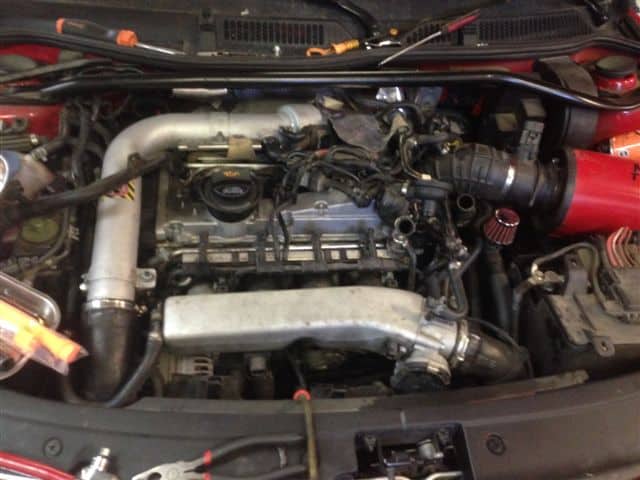
A 2003 Audi TT with a 1.8l engine suffered a timing belt failure at 76k miles, causing major engine damage. The belt deteriorated from age rather than mileage, highlighting the importance of time-based replacement intervals.
Audi recommends timing belt changes between 80k and 110k miles, but the belt manufacturer recommends replacement every 7 years at minimum. In this case, age caused the belt to fail before the mileage limit was reached.
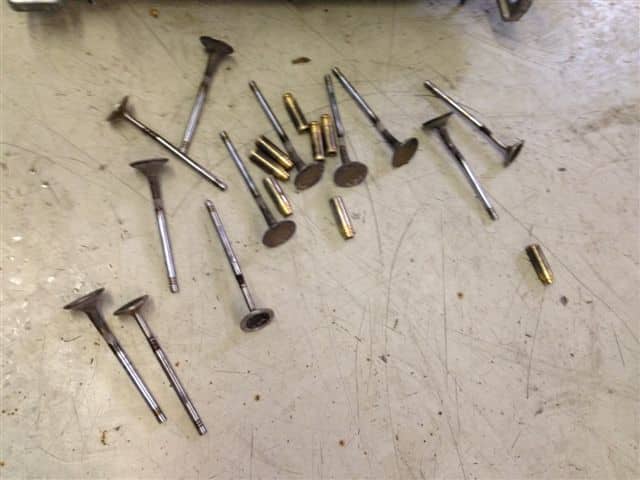
Almost all valves were bent and the valve guides were damaged, requiring machine shop work to repair the cylinder head. All timing belt components and the water pump were also replaced.
A standard timing belt replacement costs around $1,100, but repairing the damaged head added up to $5,300 - making preventive maintenance far less costly than the alternative.
What happens when an Audi 1.8l TT timing belt fails?
When an Audi 1.8l TT timing belt fails, the engine can suffer severe internal damage. Almost all of the valves can bend and the valve guides may need replacement. A preventive timing belt replacement costs around $1,100, but repairing the cylinder head after a belt failure can cost over $5,300.
Bent 1.8l valves
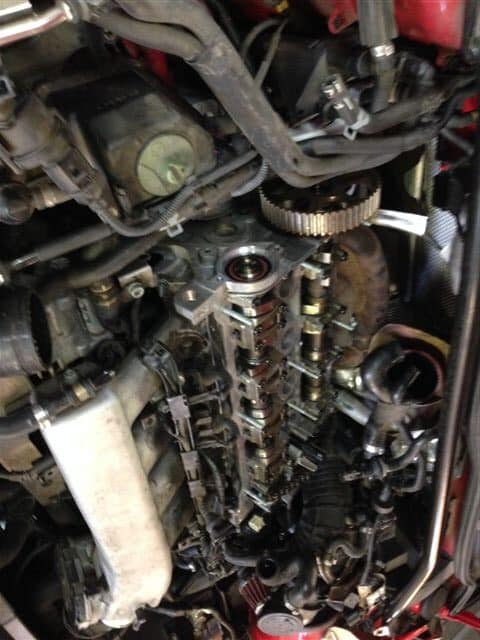
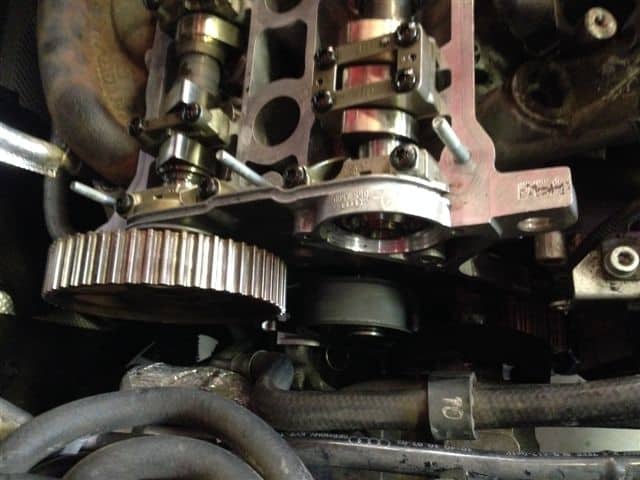
Timing Gear
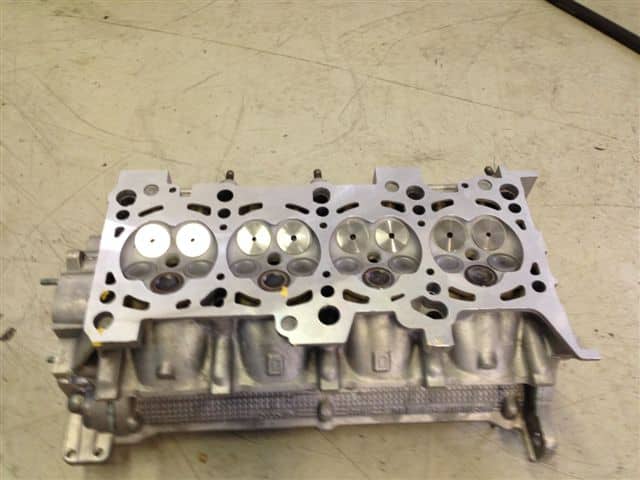
Head back from the machine shop
Almost ready to drive again
This 03 Audi TT with 1.8l engine had a timing belt failure with 76k miles on the odometer. We have seen this several times. Although Audi recommends the timing belts be changed on these 1.8l engines anywhere between 80k and 110k miles the belt manufacturer recommend that the belts be changed a minimum of every 7 years. In this case the low mileage belt deteriorated from age more than miles. Almost all of the valves were bent, and the valve guides were damaged and had to be replaced. Of course we replaced all of the timing belt components and the water pump. A timing belt job is a little expensive at about $1100 but redoing the head for $5300 is a lot more.
FAQs
On the Audi 1.8l TT, timing belt failure is often caused by age-related deterioration rather than high mileage. Rubber belts break down over time regardless of how many miles are on the car, which means a low-mileage vehicle can still experience a catastrophic failure if the belt is old enough.
Audi recommends changing the timing belt on the 1.8l engine somewhere between 80,000 and 110,000 miles. However, belt manufacturers recommend replacing it at a minimum of every 7 years, whichever comes first - so if your car has low mileage but is several years old, the belt should still be replaced on schedule.
When the timing belt fails on an Audi 1.8l TT, the engine's valves and pistons can collide, causing serious internal damage. In many cases, nearly all of the valves end up bent, and the valve guides can be damaged as well, requiring a full cylinder head rebuild.
The cost of repairing an Audi TT after a timing belt failure can be very high. Rebuilding the cylinder head after bent valves and damaged valve guides can run around $5,300, compared to a preventive timing belt replacement which costs roughly $1,100.
Yes, replacing the timing belt on a low-mileage Audi TT is absolutely worth it if the belt is approaching 7 years old. Age alone can cause the rubber to deteriorate and fail, and the cost of a preventive replacement is a fraction of what an engine rebuild would run after a failure.
When replacing the timing belt on an Audi 1.8l TT, it is a good idea to replace all related timing belt components at the same time, including the water pump. Since the water pump is accessible during the timing belt job, replacing it together saves on labor costs and helps prevent a separate failure down the road.
Unfortunately, a timing belt often gives little to no warning before it fails. If your engine suddenly stops running, makes a loud noise, or will not start, a broken timing belt could be the cause. The best way to avoid this situation is to follow a replacement schedule based on both mileage and age rather than waiting for symptoms to appear.