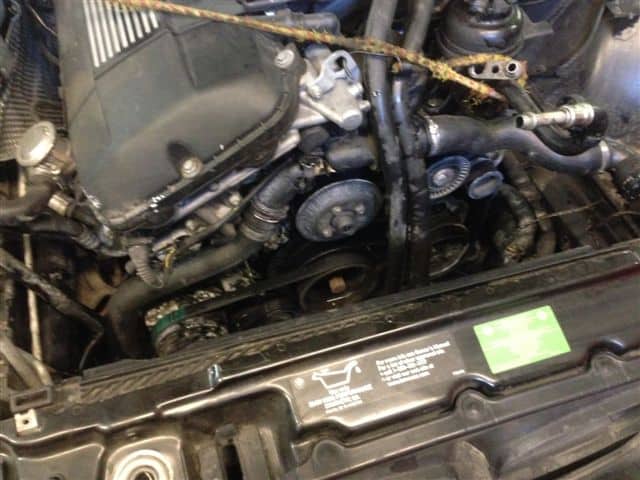
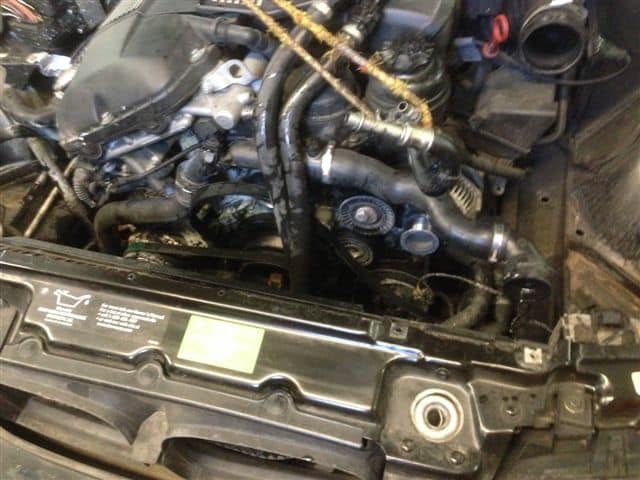
A BMW 528i 5 Series came in with a leaking water pump, and the attentive owner brought it in before more serious damage occurred. The repair involved removing the radiator, fan, and belts, then replacing the pump and inspecting the full cooling system.
Water pumps on these BMWs typically start leaking from the drive shaft but can also leak at the seal to the block. A loose impeller can develop as well, which causes overheating rather than a visible leak.
The old pump was removed and inspected, the block was cleaned, and a new pump was installed. Any questionable hoses or belts were replaced during the process.
New BMW coolant was added after a full cooling system inspection, and the car was returned to the road.
What is involved in a BMW 528i water pump replacement?
A BMW 528i water pump replacement addresses leaks that typically originate from the drive shaft or the seal at the block. The pump can also develop a loose impeller, which does not cause a visible leak but will cause the engine to overheat. Catching the issue early helps prevent more serious engine damage.
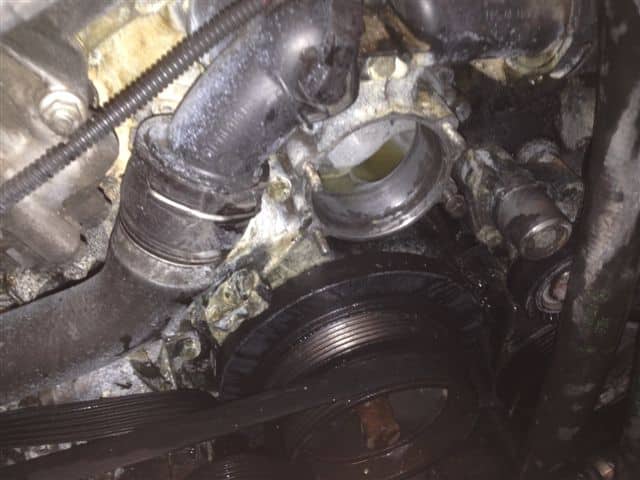
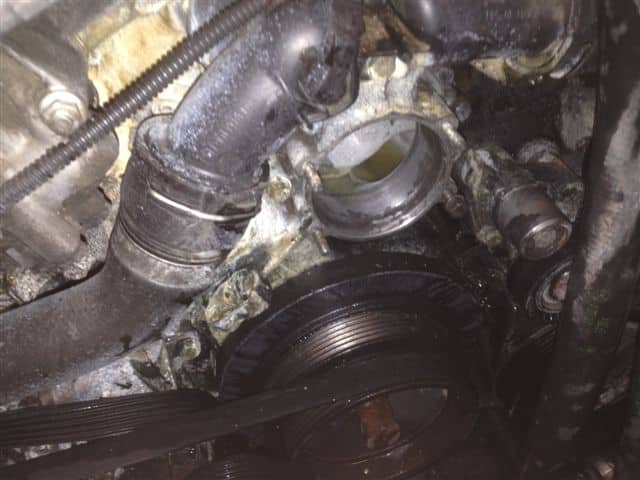
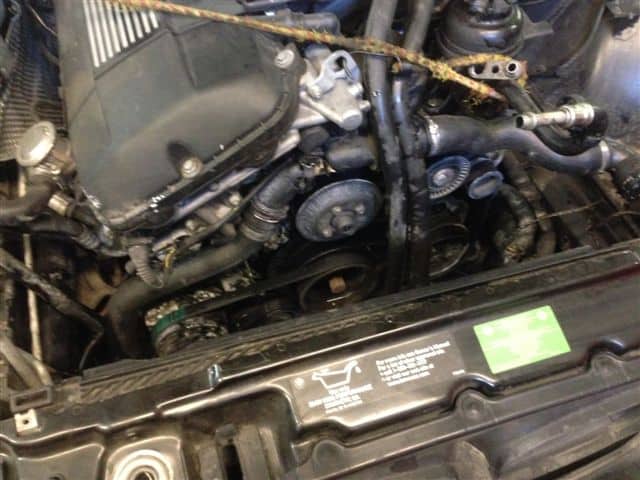
Old Pump removed
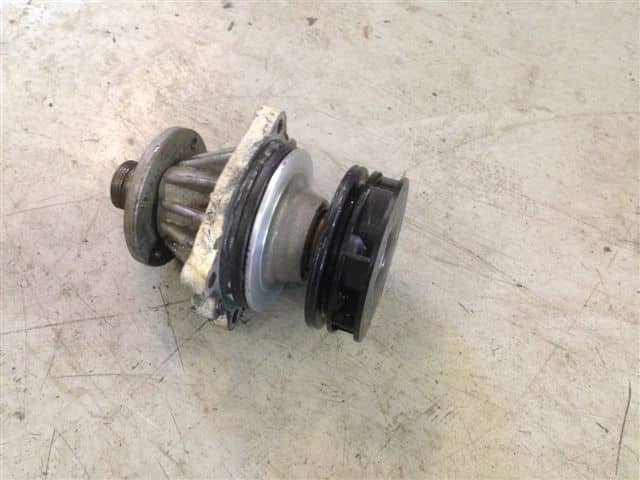
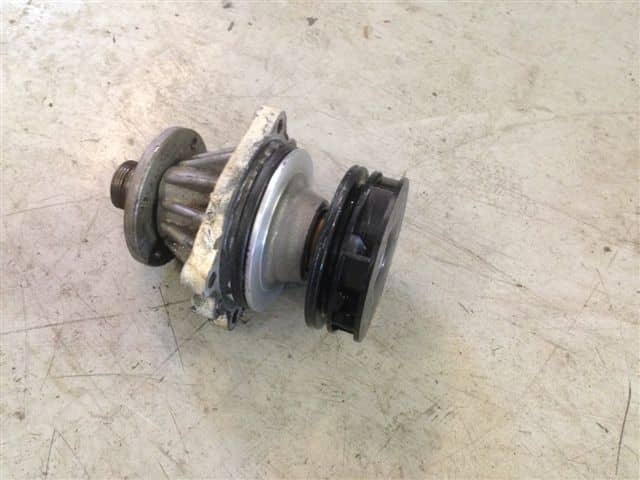
Old water pump
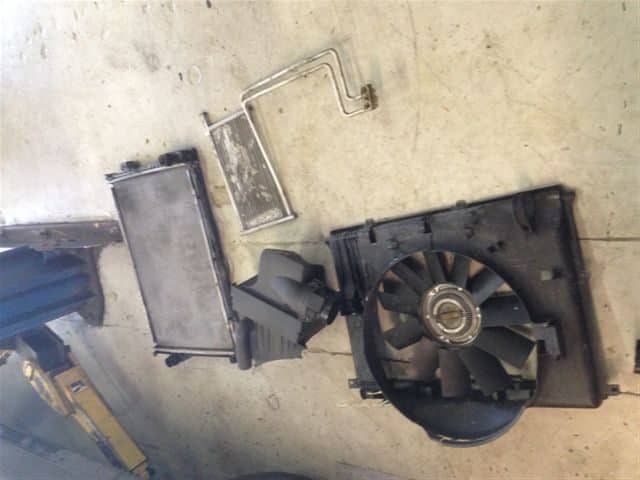
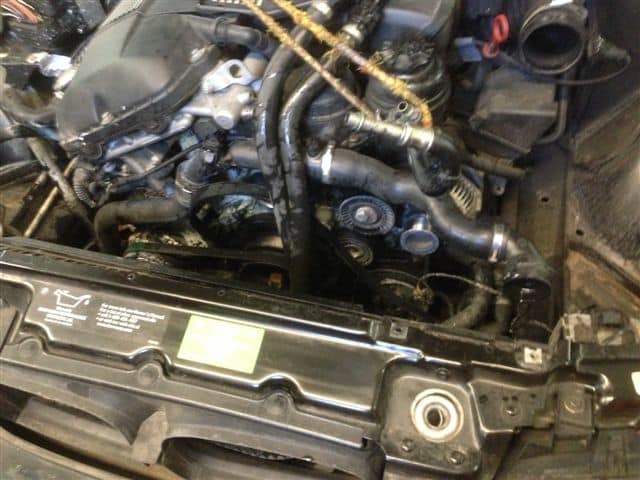
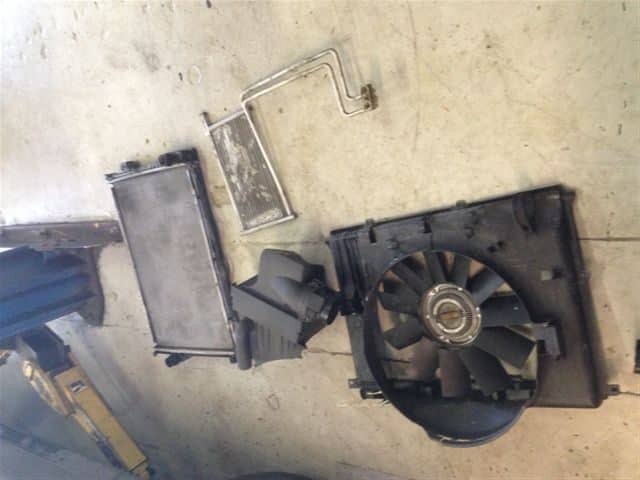
Radiator and cooling fan removed
This 5 series BMW came in with a leaking water pump. Luckily the owner was attentive and brought it in before more serious problems developed (see previous post). These pumps usually start leaking from the drive shaft but can also leak at the seal to the block. These sometimes develop a loose impeler as well. This won’t cause a leak at the pump but will cause the car to overheat.
This is a fairly straightforward job. The radiator, fan and belts are removed. The old pump is removed and inspected, the block is cleaned up and a new pump is installed. The cooling system is always inspected thoroughly, any questionable hoses or belts should be replaced, new BMW coolant is added and the car is back on the road.
FAQs
The most common signs are a visible coolant leak near the front of the engine, the car running hotter than normal, or the temperature gauge climbing higher than usual. You may also notice a puddle of coolant under the car after it has been parked. In some cases, a failing pump with a loose impeller will not leak at all but will still cause the engine to overheat because coolant is not circulating properly.
The most frequent failure point is the drive shaft seal, which can wear out over time and allow coolant to leak. The seal where the pump meets the engine block can also fail. Another common issue is a loose impeller inside the pump, which stops coolant from circulating even though there is no visible leak.
The total cost typically ranges from around $400 to $800 or more depending on the shop, your location, and whether additional parts like hoses, belts, or the thermostat are replaced at the same time. BMW water pumps themselves are more expensive than those for many other vehicles, and the labor involved adds to the overall price.
The job requires removing the radiator, cooling fan, and drive belts to gain access to the pump. The old pump is then removed, the mating surface on the engine block is cleaned up, and a new pump is installed. The cooling system is inspected for worn hoses or belts, fresh BMW-approved coolant is added, and the system is checked before the car is returned to service.
It is not a good idea to drive the car if the water pump is leaking or if the engine is overheating. Continuing to drive can lead to serious engine damage such as a warped cylinder head or a blown head gasket, which are far more expensive repairs. If you notice a leak or rising temperature, have the car inspected as soon as possible.
A skilled mechanic can typically complete the job in about two to four hours. The time can vary depending on the condition of surrounding components and whether additional parts like belts or hoses need to be replaced at the same time. It is generally considered a straightforward repair for a shop familiar with BMW vehicles.
Since the radiator, fan, and belts are already removed during the repair, it is a smart time to inspect and replace any hoses or belts that show signs of wear. Many shops also recommend replacing the thermostat at the same time since it is easily accessible and works closely with the water pump. Doing these items together saves labor costs down the road.