
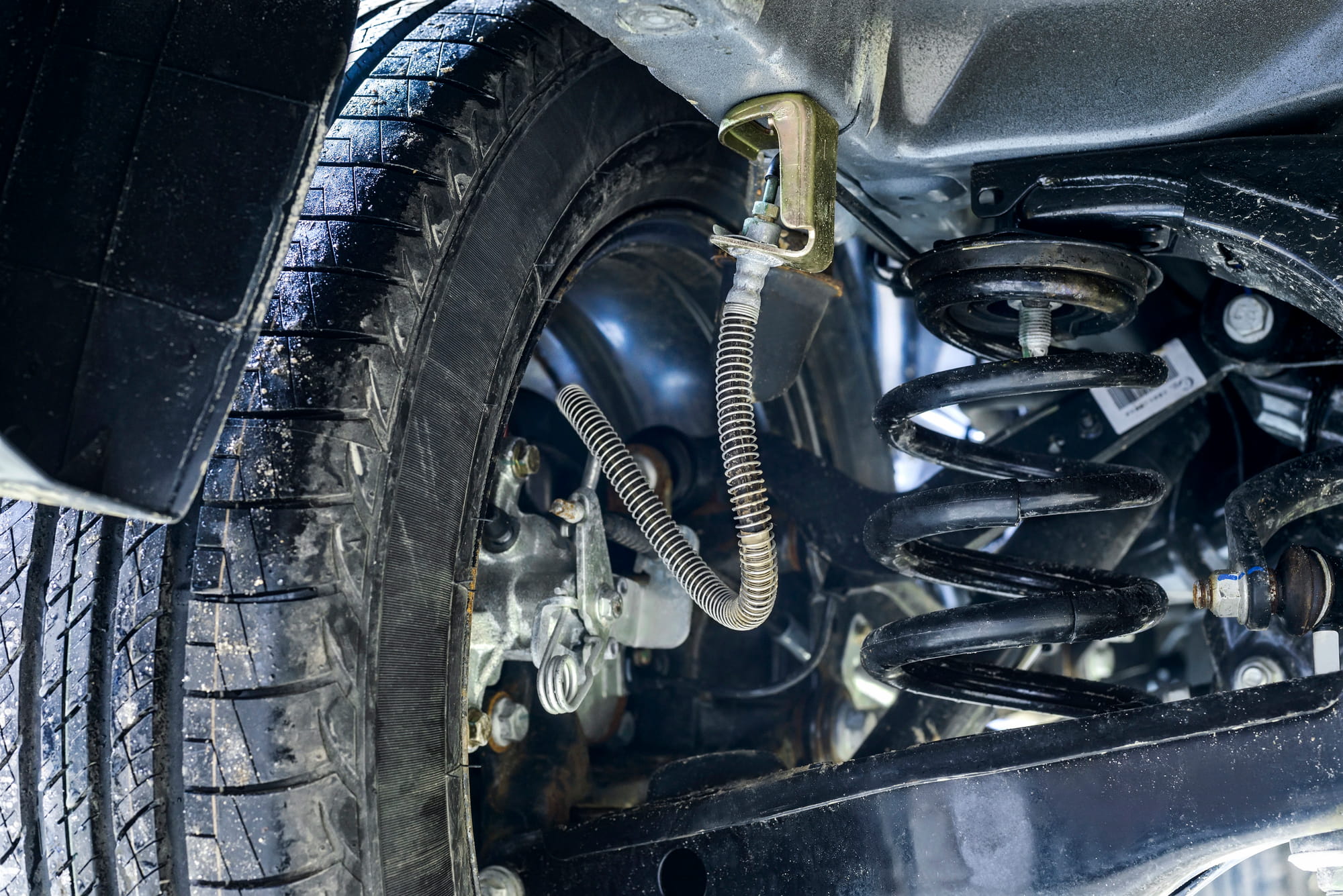
Fiat Suspension Repair at DART Auto
Fiat's platform-sharing strategy with Chrysler and Peugeot-Citroën means your 500, 124 Spider, or 500X rides on suspension architecture that blends Italian tuning with shared multinational components. The 2012–2019 500 (Type 312) uses MacPherson struts up front with a torsion-beam rear – simple in theory, but Italian ride calibration demands precise damper valving and spring rates. The 124 Spider (Type 348) borrows the ND Mazda MX-5 platform yet substitutes Fiat-specific springs, dampers, and bushings to deliver a softer, more GT-like character. Generic shops treat these as commodity repairs; we recognize that factory ride-height sensors on Abarth variants, torque-to-yield fasteners on subframe mounts, and alignment specifications that differ between base and sport trim all matter when you want to preserve that nimble, darty feel Fiat engineered into these cars.
Our master technicians use Fiat-specific alignment databases, OEM torque procedures, and premium Bilstein or Koni dampers sourced from trusted European suppliers. We've invested in the diagnostic tooling to read ABS wheel-speed sensors and electronic stability-control faults that often accompany worn suspension components. Since 2000, we've built our reputation on fixing European cars right the first time – no flat-rate rush jobs, no parts-cannon guessing. When you bring your Fiat to DART Auto, you can expect:
- Complete suspension inspection – struts, shocks, springs, control arms, bushings, ball joints, sway-bar links, and subframe mounts on a lift before any parts are ordered
- Transparent diagnosis – we explain which components are worn, why they matter for handling and safety, and the consequences of delaying replacement
- OEM and premium aftermarket parts – Mopar OE for warranty preservation or upgraded Bilstein/Koni for enthusiasts seeking improved damping
- 3-year/36,000-mile warranty on parts and labor, backing every repair with confidence you won't find at independent quick-lube shops
Common Suspension Repair Issues on Fiat Vehicles
Fiat's European suspension engineering prioritizes ride comfort and handling feedback, but Colorado's freeze-thaw cycles and uneven pavement accelerate wear on components designed for smoother European roads. The 500/500L/500X platform shares Chrysler Group architecture post-2007, introducing specific failure patterns not seen in earlier pure-Fiat designs. Here's what we diagnose most frequently:
- Front strut mount bearing failure on 2012–2019 Fiat 500 and 500L models. The upper strut mounts use a bearing that allows steering rotation while supporting spring load. Salt intrusion and repeated compression cycles cause the bearing to seize or develop notchy rotation. Owners hear clunking over bumps and feel steering resistance when turning at low speed. The 500L's heavier curb weight accelerates this wear compared to the base 500.
- Rear trailing arm bushing deterioration on 2014–2019 500X AWD variants. The multilink rear suspension uses large rubber bushings to isolate road noise. Denver's temperature swings crack the rubber, allowing excessive rear-axle deflection under cornering and braking. Symptoms include a wandering rear end on highway lane changes and uneven rear tire wear on the inside edges.
- Lower control arm ball joint wear on 2012–2016 500 Abarth and Turbo models. Increased power and torque steer place higher lateral loads on the ball joints than the naturally aspirated 500. The OEM ball joints are pressed into the control arm and cannot be replaced separately – the entire arm assembly must be replaced when play develops. Clunking during acceleration or over potholes is the telltale sign.
- Front sway bar end link failure across all 500-platform models. The short-wheelbase design uses relatively long end links to connect the sway bar to the struts. These links use ball-and-socket joints that wear quickly on rough roads. Rattling or clunking over small bumps, especially when cold, indicates failed end links. Left unaddressed, the loose end link hammers the strut mount and accelerates upper mount bearing wear.
- Rear shock absorber mount corrosion on 2012–2015 500 models built before mid-2015. Early 500 production used inadequate corrosion protection on the rear shock tower mounting points. Road salt migrates into the mounting area, causing rust perforation around the upper shock bolt. This creates a safety hazard – the shock can pull through the weakened tower under hard compression. Fiat issued a TSB for inspection and reinforcement, but many cars were never serviced.
Why Choose DART Auto for Fiat Suspension Repair
Fiat platforms – particularly the 500, 500X, and 124 Spider – share components with Chrysler and Mazda, but the European tuning and electronic integration demand specialized knowledge. The 500's MacPherson front strut geometry and semi-independent rear torsion beam require precise ride-height settings to avoid premature tire wear and ESC faults. The 124 Spider, built on the ND Miata platform, uses Bilstein dampers and specific spring rates that differ from Mazda's calibration. DART's technicians use factory service information and Mopar diagnostic software to verify suspension sensor inputs, recalibrate steering-angle sensors after alignment, and confirm that electronic stability systems function correctly post-repair.
Our master technicians – each with over a decade of experience and dealer-level training – diagnose suspension complaints using the same scan tools and procedures Fiat dealers rely on. We've addressed common failures on 2012–2019 500 models: front control-arm bushings that crack and cause wandering, rear shock mounts that separate on rough roads, and stabilizer-link wear that triggers clunking over bumps. Because our technicians are salaried rather than flat-rate, they take the time to perform complete inspections, identify root causes, and explain which repairs preserve your warranty and resale value. Every suspension job includes a post-repair alignment check and road test to confirm steering feel, ride quality, and electronic system integration match factory specifications.
Symptoms – How to Know You Need This Service
Fiat suspension components telegraph wear through steering feel and chassis response long before catastrophic failure. You may notice:
- Clunking or knocking over bumps – worn strut mounts, sway-bar end-links, or control-arm bushings allow metal-on-metal contact; common on 2012–2016 500 models with original dampers past 60,000 miles
- Wandering or vague steering – excessive play in tie-rod ends or worn lower control-arm bushings let the front wheels deflect under load, requiring constant correction
- Nose-dive during braking – fatigued front springs or blown struts lose their ability to control compression, transferring too much weight forward and lengthening stopping distances
- Uneven or cupped tire wear – camber or toe drift from worn bushings accelerates inside or outside shoulder wear; schedule alignment inspection soon to avoid premature tire replacement
- Bouncing or floating over highway undulations – exhausted dampers can no longer control spring oscillation, creating a disconnected, unsafe feel at speed
- Visible fluid leaks on shock bodies – hydraulic dampers rely on sealed oil; any seepage means internal failure and immediate replacement is needed
- Dashboard stability-control or ABS warning lights – wheel-speed sensor wiring runs near suspension components; damaged harnesses or corroded connectors often accompany worn mounts
If you hear sudden loud banging, experience steering lock-up, or see a wheel sitting at an abnormal angle, stop driving immediately and arrange towing. For gradual symptoms like wandering or clunking, schedule an inspection within the week to prevent accelerated wear to tires and adjacent components.
Which Fiat Models We See for Suspension Repair
DART Auto services the full range of modern Fiat platforms sold in North America, as well as older European-market models that enthusiasts import or maintain. Our technicians are equipped to handle:
- 500 (Type 312, 2012–2019) – including 500C convertible, 500e electric, Abarth 500, and Abarth 595; front struts, rear torsion-beam bushings, and Abarth sport-tuned dampers
- 500L (Type 330, 2014–2020) – taller MPV platform with independent rear suspension; control-arm bushings and rear trailing-arm mounts common wear points
- 500X (Type 334, 2016–2022) – Small Wide 4x4 platform shared with Jeep Renegade; front lower control arms, rear multi-link bushings, and AWD variants with rear differential mounts
- 124 Spider (Type 348, 2017–2020) – ND Mazda MX-5 chassis with Fiat-specific dampers, springs, and bushings; front lower control arms, rear upper lateral links, and polyurethane bushing upgrades for Abarth models
- Older European models – Punto, Bravo, Stilo, and Panda (limited service; call to confirm parts availability and diagnostic capability)
We see the highest volume of suspension work on 2012–2016 500 models approaching or exceeding 70,000 miles, where original dampers and bushings reach end-of-service life. The 124 Spider benefits from Mazda's robust engineering but requires Fiat-specific alignment specs and damper part numbers. If you own a gray-market European Fiat or a specialty variant, contact us to verify parts sourcing and diagnostic tooling before scheduling.
Causes & Risks – What Happens if Ignored
Suspension wear on Fiat vehicles accelerates due to Colorado's specific conditions: rapid temperature swings cause rubber bushings to harden and crack, road salt attacks fasteners and mounting points, and pothole impacts overload components designed for European road standards. The 500 platform's short wheelbase and relatively firm suspension tuning transmit more impact energy directly into bushings and mounts compared to larger vehicles with longer suspension travel. Fiat's use of pressed-in ball joints and non-serviceable assemblies means that minor wear often requires complete component replacement rather than individual joint replacement.
Delaying suspension repairs creates a cascade of secondary damage:
- Worn strut mounts transfer impact loads directly to the strut shaft, bending the shaft and requiring strut replacement in addition to the mount. A $280 mount repair becomes a $950 strut-and-mount job within 6–8 months of continued driving.
- Failed trailing arm bushings allow the rear axle to steer itself under braking, creating unpredictable handling that can trigger stability control intervention or loss of control on slick pavement. The excessive movement also accelerates rear tire wear, requiring premature tire replacement.
- Loose ball joints allow the wheel to move independently of steering input, creating a dangerous delay between turning the wheel and the car responding. In extreme cases, the ball joint can separate completely, allowing the wheel to collapse outward and making the car undriveable.
- Corroded shock towers can fail catastrophically during hard braking or hitting a large pothole, allowing the shock to punch through the body and potentially rupturing the fuel tank on 500 models where the tank sits directly below the rear suspension.
- Worn sway bar end links create a hammering action that damages strut mounts, steering rack boots, and CV joint boots, turning a $180 end link replacement into a $1,400 repair involving multiple suspension and steering components.
From a safety perspective, suspension failures on the 500 platform are particularly concerning because the short wheelbase provides less margin for error. A rear suspension failure that would be manageable on a longer vehicle can cause a 500 to spin abruptly. Insurance liability becomes a factor if an accident investigation reveals that known suspension wear contributed to loss of control.
Safety Impact – Why Suspension Repair Matters
Fiat's electronic stability control, ABS, and traction control systems all depend on predictable suspension geometry to function correctly. When bushings wear or ball joints develop play, the wheel position sensors feed incorrect data to the control modules. The system interprets normal driving as a loss-of-traction event and intervenes inappropriately, or worse, fails to intervene when actually needed. On 500X AWD models, suspension wear can cause the rear differential to distribute torque incorrectly, reducing traction in slippery conditions.
Specific safety risks by symptom severity:
- Stop driving immediately: Clunking accompanied by steering wheel off-center when driving straight, visible wheel tilt when parked, fluid leaking from shock absorbers, or any grinding/scraping noise from the suspension area during turning.
- Schedule repair within one week: Consistent clunking over bumps, steering wheel vibration at highway speed, car pulling to one side during braking, or uneven tire wear appearing rapidly (more than 2/32" difference across the tread in under 3,000 miles).
- Schedule at next service interval: Occasional rattling over rough roads that stops when the suspension settles, minor steering wheel vibration only on very rough pavement, or slight pulling that corrects with steering input.
The 500's light weight and short wheelbase make it particularly sensitive to suspension damage. What feels like minor wear on a heavier sedan can create dangerous instability on a 500, especially in emergency maneuvers. Colorado's mountain driving amplifies these risks – worn suspension components that seem manageable on flat Denver streets become hazardous on descending switchbacks with limited runoff areas.
How Fiat Suspension Repair Actually Works
The 500-platform suspension uses a MacPherson strut front with a multilink or torsion-beam rear, depending on model and drivetrain. The front strut integrates the spring, shock absorber, and steering knuckle into a single assembly, with the upper mount containing a bearing that allows steering rotation. Unlike older designs where the spring sits separately, this integrated design means that spring removal requires a specialized spring compressor rated for the high spring rates Fiat uses – attempting this with generic tools risks catastrophic spring release.
Fiat-specific repair requirements that distinguish this work from generic suspension service:
- Steering angle sensor calibration is mandatory after any suspension work that affects wheel alignment. The 500's electronic stability control uses steering angle as a primary input. Fiat's wiTECH diagnostic system must recalibrate the sensor after alignment, or the stability control will malfunction. Generic scan tools cannot perform this procedure.
- Control arms use torque-to-yield fasteners that must be replaced, not reused. The mounting bolts stretch during installation to achieve precise clamping force. Reusing these bolts – common practice at budget shops – results in loose suspension components within months.
- Rear suspension on AWD 500X models requires rear differential fluid drain before removing certain components. The differential mounting is integrated with the rear subframe. Attempting to remove trailing arms without draining the differential risks fluid spills and contamination.
- Ride height must be set to factory specification before final torquing of bushing fasteners. Rubber bushings are designed to operate at a specific preload. Torquing fasteners with the suspension hanging or compressed creates internal stress that causes premature bushing failure. Proper procedure requires loading the suspension to simulate normal ride height before final torque.
The 500's compact packaging leaves little room to work, which means the job takes longer than the same repair on a larger car. We plan for that up front rather than rushing the setup steps.
How We Diagnose Suspension Repair Issues on Fiat
Fiat platforms – especially the 500, 500X, and Tipo built on the Small Wide or 326 architectures – rely on integrated electronic damping control and stability systems that communicate directly with the ABS and traction modules. A clunk or sag isn't always mechanical; it can be a software flag or a failing sensor telling the ECU to limp the dampers. We start every suspension diagnosis with a full-system scan using factory-level tooling that reads live data from the suspension control module, wheel-speed sensors, and ride-height sensors where equipped.
- Initial scan and fault-code retrieval: We connect Fiat-compatible scan tools to pull codes from the suspension, ABS, and body-control modules. Many Fiat models store soft faults that don't trigger a dashboard light but still affect damping logic.
- Road test with data logging: A technician drives the car over varied surfaces while monitoring live suspension-sensor data, noting any asymmetry in damper response or wheel travel that points to a failed strut, bushing, or control arm.
- Lift inspection and measurement: On the rack, we measure ball-joint play with a dial indicator, check bushing integrity visually and by hand, inspect CV boots and tie-rod ends, and look for fluid leaks from struts or shocks.
- Component-specific tests: For electronic dampers (common on Abarth and Sport trims), we command the module to cycle damping modes and verify actuator response. For passive systems, we perform bounce tests and listen for metallic contact or worn mounts.
Once we've correlated the scan data with physical findings, we translate the diagnosis into a clear repair plan and detailed quote. You'll know exactly which parts have failed, why they matter for safety and handling, and what happens if you delay the fix.
Suspension Repair on Fiat: Repair vs. Replacement
Not every suspension complaint requires new assemblies. The decision hinges on what's actually worn and whether isolating that component makes sense for your Fiat's platform and mileage.
When Repair Is the Right Call
- Adjustable components out of spec: Camber bolts or toe links that have drifted after a curb strike can be reset to factory alignment without replacing anything.
- Fastener or mount refresh: Loose subframe bolts or deteriorated top-mount isolators (common on 500 and 500L) can be torqued or replaced independently, restoring ride quality without touching the strut cartridge.
- Electronic actuator faults: On models with Koni FSD or Magneti Marelli electronic dampers, a failed actuator motor can sometimes be replaced separately if the strut body and seal are sound.
When Partial Replacement Makes Sense
- Single worn component in an assembly: A torn lower control-arm bushing or a leaking outer tie-rod end can be swapped while leaving the rest of the suspension intact, provided adjacent parts pass inspection.
- Strut cartridge replacement: If the strut body is rust-free and the spring is good, installing a new cartridge and seal kit avoids the cost of a complete assembly.
When Full Replacement Is Non-Negotiable
- Cascading wear: A blown rear shock on a 500X often means the opposite side is near failure; replacing both prevents a return visit in 3,000 miles.
- Safety-critical corrosion: Rust-compromised spring perches or cracked control-arm brackets (seen on older 500 models in salt states) require complete assembly replacement to meet safety standards.
We walk you through the trade-offs – repair cost versus longevity, single-side versus axle-set replacement – and recommend the approach that balances safety, durability, and your budget. Because our technicians are salaried, there's no incentive to upsell you into parts you don't need.
How to Make Your Fiat Suspension Repair Last Longer
Once we've restored your Fiat's suspension, a few deliberate habits will keep those new components working as intended and delay the next round of wear.
Driving Habits That Preserve Suspension Life
- Avoid potholes and curbs at speed: Fiat's compact platforms use shorter control arms and stiffer springs than larger cars, so impacts transfer more force directly into bushings and ball joints.
- Brake progressively: Hard stops pitch weight forward onto the front struts and compress bushings unevenly; smooth deceleration spreads the load and reduces stress on mounts.
- Limit heavy cargo: The 500 and 500L have modest payload ratings; exceeding them sags springs and accelerates bushing wear, especially on the rear beam axle.
Owner Maintenance You Can (and Should) Do
- Visual checks every oil change: Crouch beside each wheel and look for fresh fluid on the strut body, torn CV boots, or cracks in rubber bushings – all early warnings that let you schedule service before a failure.
- Listen for new noises: A clunk over bumps or a squeak during turns often signals a worn mount or bushing; catching it early means a $150 part instead of a $600 assembly.
- Monitor tire wear patterns: Uneven tread across the face of a tire suggests alignment drift, which accelerates suspension-component wear if left uncorrected.
Brand-Specific Care That Matters
- Use OEM or premium bushings: Fiat's polyurethane and rubber compounds are tuned for NVH and compliance; generic aftermarket parts often harden prematurely or transmit excess road noise.
- Keep software current: Electronic damper systems receive calibration updates via dealer or specialist scans; outdated firmware can cause erratic damping and premature actuator wear.
- Follow the service book: Fiat specifies alignment checks and suspension inspections at set intervals – skipping them lets small issues compound into expensive failures.
What to leave to the professionals: Suspension work involves safety-critical torque specs, spring compression under high tension, and alignment that requires calibrated equipment. Attempting DIY strut replacement or control-arm swaps without the right tools risks injury and creates handling problems that cost more to fix than the original repair. We're here to handle the technical work so you can focus on enjoying the drive.
What to Expect When You Bring Your Fiat In
We've streamlined the suspension-repair process so you know exactly what happens at each step. Here's how your visit unfolds:
- Appointment and drop-off: Schedule online or by phone. When you arrive, a service advisor documents your concerns – clunking, pulling, uneven tire wear – and notes any recent work. We offer loaner vehicles and shuttle service within Denver; ask when you book. Remove personal items from the cabin and trunk before drop-off.
- Initial inspection and diagnosis: A technician performs a comprehensive suspension inspection: visual check for leaking dampers, torn boots, and corroded mounts; test-drive to replicate symptoms; scan-tool pull to check for ABS, ESC, or steering-angle faults. We measure ride height, check ball-joint play, and inspect tire-wear patterns for alignment clues.
- Written estimate and approval: You receive a detailed estimate listing failed components, recommended repairs, and the consequences of delaying work. We explain OEM versus premium aftermarket options and answer questions before you approve any repair.
- Repair and verification: Technicians replace worn parts using OEM or premium aftermarket components, torque fasteners to Fiat specifications, and perform a four-wheel alignment. After the repair, we road-test the car, re-scan for faults, and verify steering-angle calibration.
- Pickup walkthrough: At pickup, your advisor reviews completed work, shows old parts if requested, and explains the 3-year/36,000-mile warranty. If anything feels off after you drive home, call us – we'll re-check the work at no charge.
After-hours key drop and pickup are available by arrangement. Every repair is backed by our commitment to fix it right the first time, so you leave confident in your Fiat's handling and safety.
Our Fiat Services
- Air Conditioning AC Repair
- Battery Repair Replacement
- Brake Repair & Brake Fluid Change
- Check Engine Light Diagnostics
- Clutch Repair & Replacement
- Coolant Leak Repair
- Cooling System Repair
- Drive Shaft Repair
- Engine Repair
- Exhaust & Catalytic Converter Repair
- Head Gasket Repair & Replacement
- Oil Change
- Oil Leak Repair
- Scheduled Service Maintenance
- Steering Repair
- Cambelt Timing Belt Replacement
- Transmission Repair
- Tune Up
- Wheel Alignment


