
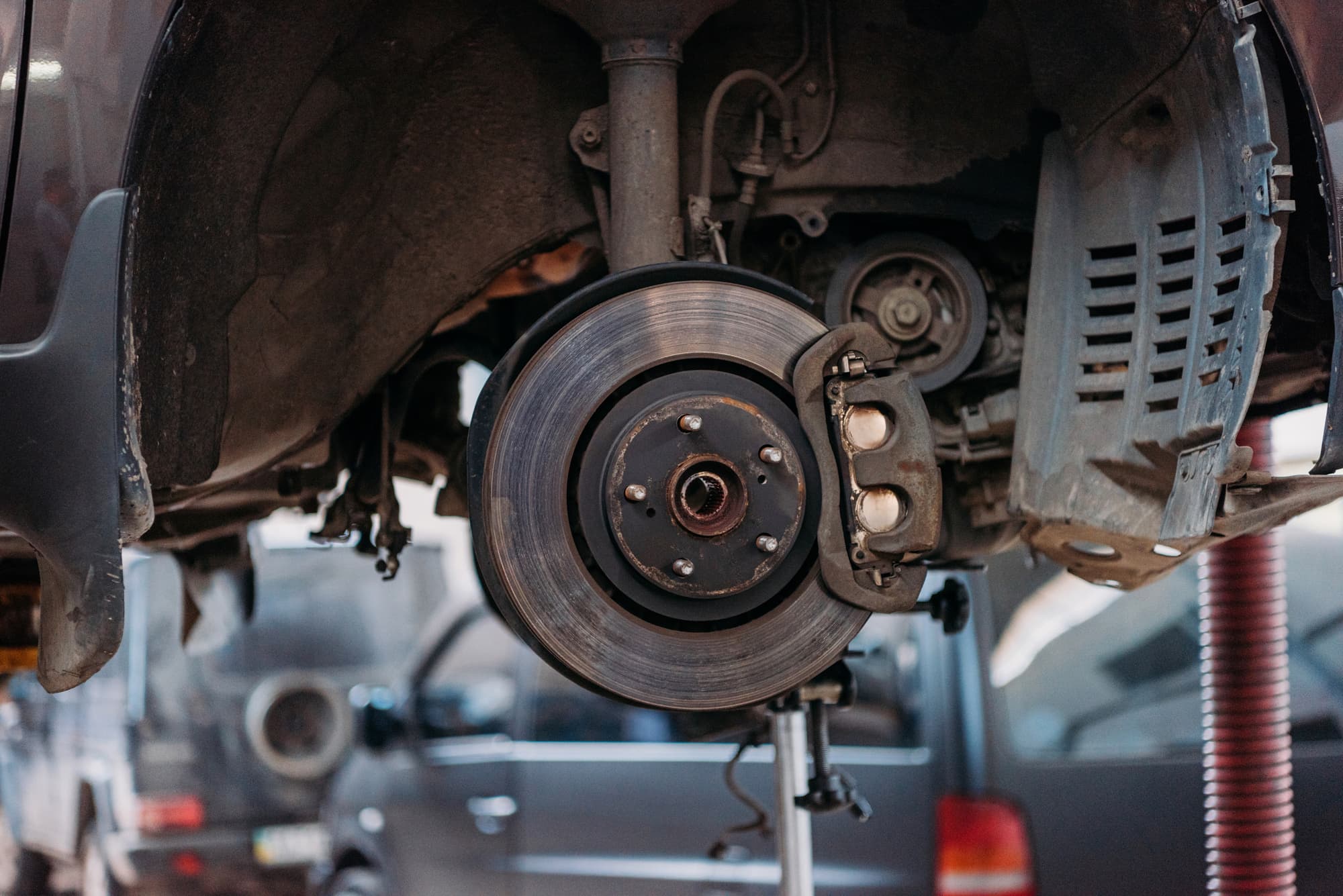
Land Rover Brake Repair & Brake Fluid Change at DART Auto
If your brake pedal feels softer than it used to, or you've noticed a grinding sound when slowing down, you're right to be concerned. Land Rover braking systems demand precision – from the electronic brake force distribution on Discovery and Range Rover models to the advanced Terrain Response calibration that adjusts braking torque across all four wheels. Generic shops often treat brake work as simple pad slaps, but your Land Rover deserves better. The integrated ABS modules, hill descent control systems, and platform-specific hydraulic configurations require factory-level diagnostics and OEM procedures to maintain the confidence you expect when navigating Colorado's steep descents.
DART Auto has specialized in European vehicles since 2000, and our master technicians bring dealer training and factory repair information to every Land Rover brake job. We use the same diagnostic tools dealerships rely on – including Land Rover-specific software to bleed ABS modules properly and verify brake pedal travel specs post-service. Whether you're driving an L319 Discovery 3 with its known tendency for rear caliper seizure or an L405 Range Rover with electronic parking brake modules that require activation sequences during pad replacement, we follow OEM torque specs and use genuine or premium aftermarket components from trusted suppliers.
When you bring your Land Rover to DART Auto for brake service, you can expect:
- Complete brake system inspection including rotor thickness measurements, caliper slide pin condition, and hydraulic line integrity
- Factory-spec brake fluid flush using DOT 4 low-viscosity fluid and proper ABS module bleeding procedures
- Transparent diagnosis with clear explanations of what needs attention now versus what to monitor
- A 3-year/36,000-mile warranty on all parts and labor, backed by over two decades serving Denver drivers
Common Brake Repair & Brake Fluid Change Issues on Land Rover Vehicles
If your Land Rover is pulling to one side under braking, making grinding noises, or showing a spongy pedal feel, you're likely dealing with one of several platform-specific brake issues. Land Rover owners face unique challenges that go beyond typical brake wear, particularly when electronic parking brakes, terrain response systems, and advanced ABS modules are involved.
- Electronic Parking Brake (EPB) motor failure on 2010-2016 Range Rover Sport (L320) and Discovery 4 (LR4): The EPB actuator motors seize or burn out, often accompanied by a "Parking Brake Fault" message. These systems require dealer-level scan tools to retract the calipers for pad replacement, and aftermarket attempts without proper software frequently damage the motor assembly.
- Rear brake caliper piston corrosion on 2006-2013 Range Rover (L322) and 2005-2009 Discovery 3 (LR3): The rear calipers on these platforms develop corrosion between the piston and caliper bore, causing the piston to stick. Owners notice uneven pad wear, dragging brakes, and excessive heat. The aluminum caliper bodies are particularly vulnerable in Denver's winter salt exposure.
- Hygroscopic brake fluid degradation accelerated by hill descent control (HDC) use: Land Rover brake fluid absorbs moisture faster than most brands because HDC and terrain response cycling generate higher brake temperatures. Fluid that tests above 3% moisture content (typically after 24-30 months in Colorado) causes internal corrosion in the ABS modulator and master cylinder, leading to expensive hydraulic component failures.
- Front brake rotor warping on 2013-2022 Range Rover (L405) and Range Rover Sport (L494): The ventilated front rotors on these heavier platforms develop lateral runout and thickness variation, causing steering wheel pulsation under braking. The issue is exacerbated by aggressive pad compounds and frequent mountain driving, often appearing between 25,000-35,000 miles.
- ABS modulator internal valve sticking on 2010-2016 models due to contaminated brake fluid: When brake fluid isn't changed on schedule, particulate buildup causes the ABS modulator's solenoid valves to stick. Drivers experience intermittent ABS activation at low speeds, extended stopping distances, and eventually a "Brake System Fault" warning with total ABS failure.
- Brake dust shield corrosion and contact noise on all models exposed to winter road treatments: The thin metal dust shields behind the rotors corrode and bend inward, creating a scraping sound that owners often mistake for pad wear. While not a safety issue initially, ignoring it allows the shield to contact the rotor and eventually break off, potentially jamming between the caliper and wheel.
Why Choose DART Auto for Land Rover Brake Repair & Brake Fluid Change
If your Land Rover's brake pedal feels spongy, you're hearing grinding from the corners, or the ABS warning light won't clear, you're likely dealing with worn pads, contaminated fluid, or a failing module – and these systems demand more than generic shop work. Land Rover's Terrain Response and hill-descent control rely on precise brake-by-wire communication, especially on L319 (LR3/LR4) and L405 (Range Rover) platforms where the ABS module, yaw sensors, and brake fluid condition all interact. DART Auto's technicians use factory-level diagnostics to distinguish between a simple pad replacement and deeper electronic faults that trigger false warnings.
We follow Land Rover's strict bleeding sequences – critical on models with integrated brake boosters and electronic parking brakes – and verify system integrity with post-repair road tests that exercise Terrain Response modes. Our master techs have dealer training and over a decade of experience on Discovery, Range Rover, and Defender platforms, so they recognize early signs of caliper seizure on L320 Sport models or fluid degradation that accelerates corrosion in aluminum components. Because our technicians are salaried rather than flat-rate, there's no incentive to skip steps or recommend unnecessary work – just honest, methodical service that fixes the problem correctly the first time.
- Factory diagnostic tools and software to read Land Rover-specific fault codes and perform guided bleeding procedures
- OEM and premium aftermarket parts sourced from trusted suppliers who meet Land Rover's material and fitment standards
- 3-year/36,000-mile warranty on parts and labor, backing every brake repair with confidence
- Complete pre-repair inspection to catch rotor thickness issues, caliper slide wear, and fluid contamination before they cascade into bigger failures
Symptoms – How to Know You Need This Service
Your Land Rover will communicate brake system issues in specific ways. Pay attention to these warning signs:
- Soft or spongy brake pedal – indicates air in hydraulic lines or degraded brake fluid that has absorbed moisture over time
- Grinding or metal-on-metal scraping when braking – pads have worn through to backing plates; stop driving immediately to avoid rotor damage
- Pulsing or vibration through the brake pedal – typically warped rotors from heat cycling or uneven pad deposits
- Dashboard warnings – "Brake System Fault," ABS warning light, or electronic parking brake malfunction messages require immediate diagnosis
- Pulling to one side during braking – suggests seized caliper, collapsed brake hose, or uneven pad wear across axles
- Burning smell after hard braking – overheated pads or a dragging caliper that hasn't released fully
- Increased stopping distances – contaminated fluid reduces hydraulic pressure and boiling point, especially dangerous on mountain roads
- Squealing or chirping noises – often wear indicators contacting rotors; schedule service soon before pad material is completely gone
If you see dashboard warnings or hear grinding sounds, don't wait. These symptoms indicate your braking performance is already compromised.
Which Land Rover Models We See for Brake Repair & Brake Fluid Change
We regularly service brake systems across the full Land Rover lineup, with deep familiarity in platform-specific quirks and common failure modes:
- Range Rover (L322, 2002–2012) – frequent rear caliper corrosion and electronic parking brake cable stretch
- Range Rover (L405, 2013–present) – electronic parking brake actuator faults and premium brake pad bedding procedures
- Range Rover Sport (L320, 2006–2013) – front caliper slide pin seizing and brake fluid contamination from moisture ingress
- Range Rover Sport (L494, 2014–present) – electronic systems requiring activation modes during pad replacement
- Discovery 3/LR3 (L319, 2005–2009) – notorious for rear caliper piston corrosion and uneven pad wear
- Discovery 4/LR4 (L319, 2010–2016) – similar rear brake issues plus ABS module bleeding complexity
- Discovery Sport (L550, 2015–present) – compact platform with specific rotor runout tolerances
- LR2/Freelander 2 (2008–2015) – shared Ford platform with unique hydraulic routing
- Defender (L663, 2020–present) – advanced brake-by-wire systems requiring factory diagnostic protocols
We handle both naturally aspirated and supercharged variants, including HSE, Autobiography, and SVR performance models with upgraded Brembo calipers. Our experience extends to older Defender, Discovery Series I/II, and classic Range Rover models, though parts availability may require additional lead time on vintage platforms.
Causes & Risks – What Happens if Ignored
Land Rover brake issues stem from a combination of the vehicle's weight (most models exceed 5,000 pounds), advanced electronic brake systems that cycle frequently, and Colorado's harsh climate. The terrain response and hill descent systems activate brake components even when you're not pressing the pedal, generating heat and accelerating fluid degradation. Winter road salt penetrates caliper seals and corrodes aluminum components faster than on steel-bodied calipers found in other brands.
When you ignore early warning signs, the damage escalates predictably:
- Spongy pedal feel (high moisture content in fluid) progresses to complete brake fade: Within 6-12 months, moisture-saturated fluid boils under hard braking, creating vapor pockets that compress instead of transferring hydraulic pressure. Your pedal will go to the floor with minimal stopping power, typically first noticed during mountain descents or emergency stops.
- Grinding noise (metal-on-metal contact) destroys rotors and calipers: Once pads wear to the backing plate, you have roughly 100-200 miles before rotor damage becomes irreversible. The hardened rotor surface scores deeply, requiring replacement instead of resurfacing. Continued driving damages caliper pistons as metal debris contaminates the brake fluid and hydraulic system.
- Sticking caliper (ignored corrosion) warps rotors and overheats brake fluid: A dragging brake generates constant friction heat. Within weeks, the rotor develops hard spots and warps, the brake fluid in that circuit breaks down, and the wheel bearing begins to fail from excessive heat transfer. What started as a $400 caliper repair becomes a $1,800 job involving rotors, fluid system flush, and bearing replacement.
- EPB fault (ignored warning message) leads to complete parking brake failure: The electronic parking brake motor continues attempting to engage despite internal damage, eventually stripping gears or burning out the motor completely. Replacement requires both the caliper assembly and EPB module coding, turning a $600 actuator replacement into a $1,400 repair.
- ABS modulator contamination (delayed fluid changes) causes total hydraulic failure: Particulate buildup in the ABS unit eventually blocks hydraulic passages entirely. The repair requires ABS modulator replacement, complete brake system flush, and often master cylinder replacement – a $3,500-4,500 repair that proper fluid maintenance would have prevented.
Safety Impact – Why Brake Repair & Brake Fluid Change Matters
Your Land Rover's brake system does more than slow the vehicle. It integrates with stability control, traction management, terrain response, and hill descent control. When brake components fail, these interconnected safety systems degrade or shut down entirely. A sticking rear caliper doesn't just reduce braking power – it confuses the stability control system, which relies on individual wheel speed sensors and expects symmetric braking force. The result is unpredictable vehicle behavior during emergency maneuvers or low-traction situations.
Specific failure modes create distinct safety risks:
- Stop driving immediately: Pedal goes to floor with little resistance, brake warning light stays illuminated, grinding metal-on-metal noise from any wheel, complete loss of parking brake function on an incline, or "Brake System Fault" message combined with ABS warning light.
- Schedule service within the week: Steering wheel pulsation during braking, pulling to one side under moderate braking, spongy or soft pedal feel that firms up with pumping, intermittent ABS activation at low speeds, or EPB fault message without loss of parking brake function.
- Address at next service interval: Minor squealing during initial brake application (normal pad wear indicators), slight brake dust shield contact noise at low speeds, or routine fluid change interval reached (24-36 months or 30,000-40,000 miles).
Colorado mountain driving amplifies these risks. Brake fade from boiled fluid on a steep descent leaves you with virtually no stopping power, and engine braking alone cannot safely control a 5,500-pound Range Rover on a 7% grade. If an incident occurs and inspection reveals you ignored known brake defects – documented by previous service warnings or visible wear – liability questions arise that insurance companies scrutinize closely.
How Land Rover Brake Repair & Brake Fluid Change Actually Works
Land Rover brake systems use a hydraulic foundation similar to other vehicles – master cylinder, brake lines, calipers, pads, and rotors – but layer on electronic complexity that fundamentally changes service procedures. Most 2010-newer models use electronic parking brakes instead of mechanical cables. The EPB system integrates electric motors into the rear calipers that screw the pistons in and out. You cannot simply compress these pistons with a C-clamp like traditional brakes; doing so strips the internal screw mechanism and destroys the caliper.
Proper Land Rover brake service requires:
- OEM-level diagnostic scan tool to command EPB motors into service mode: The tool sends specific commands to retract the caliper pistons electronically, then re-calibrates the system after pad replacement. Aftermarket tools often lack the correct software version for newer models, leaving the parking brake inoperative or triggering fault codes.
- Closed-loop brake fluid exchange using pressure bleeding: Land Rover specifies DOT 4 low-viscosity fluid (or DOT 5.1 on some models) and requires bleeding at all four corners plus the ABS modulator. The system holds 1.2-1.5 liters, and proper exchange involves cycling the ABS pump using the scan tool to purge old fluid from the modulator's internal passages, which a plain pedal-and-nipple bleed leaves untouched.
How We Diagnose Brake Repair & Brake Fluid Change Issues on Land Rover
If your brake pedal feels spongy, you're hearing grinding from the wheels, or the ABS warning light is glowing on your dash, you're likely dealing with degraded brake fluid or worn components. Our diagnostic process starts the moment you describe what you're experiencing behind the wheel.
- Customer interview and road test. We drive your Land Rover to replicate the symptoms – pedal travel, fade under repeated stops, pulling to one side, or electronic intervention that shouldn't be happening. Discovery 3/4 and Range Rover L322 models often exhibit brake accumulator failures that produce a characteristic hard pedal followed by sudden drop, which we can confirm on the test drive.
- Factory-level scan with IDS/SDD or Pathfinder. We connect Land Rover diagnostic software to read fault codes in the ABS module, Terrain Response controller, and brake-by-wire systems. The scan reveals stored pressure faults, wheel speed sensor discrepancies, and valve solenoid errors that point directly to hydraulic or electronic root causes.
- Brake fluid contamination test. We measure moisture content with a refractometer. DOT 4 fluid absorbs water over time, lowering the boiling point and causing internal corrosion in the aluminum ABS blocks common to Range Rover Sport and Evoque. Moisture above 3% typically mandates a full system flush.
- Component inspection at each wheel. We pull wheels to measure pad thickness, rotor runout, caliper piston retraction, and slide-pin freedom. On 2013+ Range Rover L405 and Sport L494 models with electronic parking brake calipers, we check for seized actuator motors and cable corrosion.
- Pressure bleed and baseline test. If fluid is dark or compressible, we perform a vacuum bleed at all four corners and the ABS modulator to establish whether the symptom resolves with fresh fluid or points to a mechanical fault downstream.
Once the diagnosis is complete, we walk you through exactly what we found, why it matters for safety and performance, and what the repair plan looks like before any wrench turns.
Brake Repair & Brake Fluid Change on Land Rover: Repair vs. Replacement
Not every brake concern requires new parts. The decision hinges on what failed, how far the damage has spread, and whether a repair restores factory safety margins.
When Repair Is the Right Call
- Fluid exchange alone. If pads and rotors measure within spec and the only issue is contaminated or aged DOT 4 fluid, a complete system flush with OEM-spec fluid restores pedal feel and ABS function without touching hardware.
- Caliper service. Sticking slide pins or dust boot tears on Discovery Sport or Evoque calipers can often be cleaned, re-lubricated with high-temp silicone grease, and sealed with new boots rather than replacing the entire caliper.
- Sensor replacement. A single failing wheel speed sensor on a Range Rover L322 triggers ABS and traction faults but doesn't require modulator or caliper work – swap the sensor, clear the codes, done.
When Partial Replacement Makes Sense
- Rotors below minimum thickness but pads still serviceable – replace rotors only and preserve the pads if they have 5mm or more remaining.
- One seized caliper on a Discovery 4 – replace the failed unit and match it with fresh pads on that axle; the opposite side can stay if it's functioning correctly and wear is even.
When Full Replacement Is Non-Negotiable
- Brake accumulator failure on Discovery 3/4 or Range Rover L322 – the nitrogen-charged sphere cannot be serviced and must be replaced as an assembly to restore proper pedal assist.
- Rotors worn past the ventilation vanes or cracked from thermal stress – machining isn't an option, and safety demands new rotors on both sides of the axle.
- ABS modulator with internal valve corrosion from water-saturated fluid – repair kits don't exist for Land Rover Bosch ABS units; replacement with a remanufactured or new module is the only path forward.
We explain each option, show you the measurements and fault data, and let you decide. Our technicians are salaried, so there's no incentive to upsell – we recommend what keeps your Land Rover safe and reliable.
How to Make Your Land Rover Brake Repair & Brake Fluid Change Last Longer
Your brakes work harder than almost any other system, especially on a 5,500-pound Range Rover navigating mountain grades or towing a trailer. Small habits make a measurable difference in how long components last.
Driving Habits That Extend Brake Life
- Engine braking on descents. Use the Terrain Response system's Hill Descent Control or manually select a lower gear on steep downhills. Letting the drivetrain slow the vehicle reduces brake temperatures and pad wear dramatically.
- Anticipate stops. Gradual deceleration from distance generates far less heat than hard, late braking. High heat accelerates pad glazing and rotor warping, especially on heavy SUVs.
- Avoid riding the brake pedal. Resting your foot on the pedal while driving keeps light pressure on the pads, creating constant friction, heat, and premature wear.
Maintenance You Can Monitor Yourself
- Listen for squealing, grinding, or pulsing when you brake – early warning signs that pads are thin or rotors are uneven.
- Watch the brake fluid reservoir under the hood monthly. If the level drops noticeably, pads are wearing (the caliper pistons extend to compensate) or there's a leak that needs immediate attention.
- Check your wheels for brake dust patterns. Uneven dust buildup on one wheel suggests a sticking caliper on that corner.
Professional Maintenance That Pays Off
- Flush brake fluid every two years. Land Rover specifies DOT 4 fluid replacement at 24-month intervals because moisture absorption is inevitable and leads to ABS module corrosion and boiling under heavy use.
- Use OEM or equivalent DOT 4 fluid only. Generic or silicone-based fluids don't meet the viscosity and boiling-point specs for Land Rover ABS systems and can damage seals in the modulator.
- Software updates during service. Land Rover periodically releases ABS and stability control calibration updates that refine braking behavior and fault detection – these are applied during brake service at our shop.
You can safely inspect fluid level and listen for changes, but bleeding ABS modulators, measuring rotor runout, and servicing electronic parking brake actuators require factory tooling and training. Leave those tasks to the shop, where we have the equipment to do them correctly and safely.
What to Expect When You Bring Your Land Rover In
From the moment you schedule your appointment, we'll ask about symptoms – pedal feel, warning lights, noises – so our team can prepare the right diagnostic plan. When you arrive, we'll perform a thorough visual and electronic inspection before quoting any work, and you'll receive a written estimate that explains what we found, what needs attention now, and what can wait.
- Drop-off and initial inspection: Bring your Land Rover in at your scheduled time. We'll document your concerns, pull stored fault codes, and measure pad thickness, rotor condition, and fluid moisture content. If you need a loaner vehicle or shuttle service, let us know when you book – we'll arrange transportation so your day stays on track.
- Written estimate and approval: You'll receive a detailed breakdown of recommended repairs, including what happens if you delay certain items. We'll explain the difference between a standard pad-and-rotor job and work that requires module coding or brake-system re-initialization, so you can make an informed decision.
- Repair and verification: Our technicians perform the work using factory procedures – proper torque specs, OEM-equivalent parts, and multi-point bleeding sequences for models with electronic boosters. After reassembly, we road-test your Land Rover to verify pedal feel, ABS function, and hill-descent engagement, then re-scan for any lingering codes.
- Pickup walkthrough: At pickup, we'll show you old parts if requested, review what we did, and answer any questions. If something feels off in the days following your repair, call us – we'll bring your Land Rover back in and make it right at no additional charge.
Remove personal items and valuables before drop-off, and let us know if you have after-hours pickup needs – we'll coordinate key handoff so the process fits your schedule.
Our Land Rover Services
- Air Conditioning AC Repair
- Battery Repair Replacement
- Check Engine Light Diagnostics
- Clutch Repair & Replacement
- Coolant Leak Repair
- Cooling System Repair
- Drive Shaft Repair
- Engine Repair
- Exhaust & Catalytic Converter Repair
- Head Gasket Repair & Replacement
- Oil Change
- Oil Leak Repair
- Scheduled Service Maintenance
- Steering Repair
- Suspension Repair
- Cambelt Timing Belt Replacement
- Transmission Repair
- Tune Up
- Wheel Alignment


