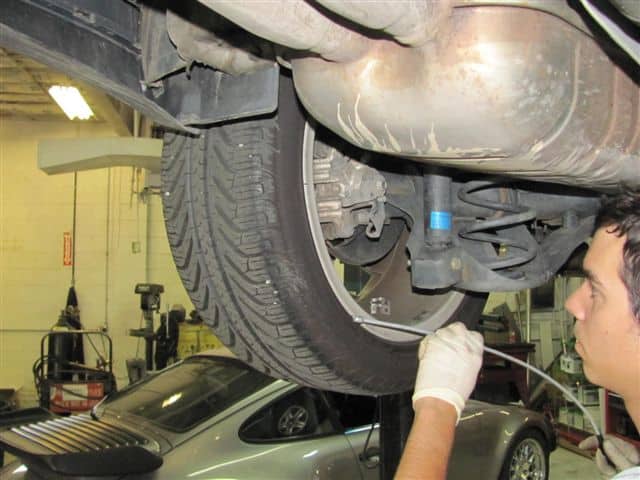
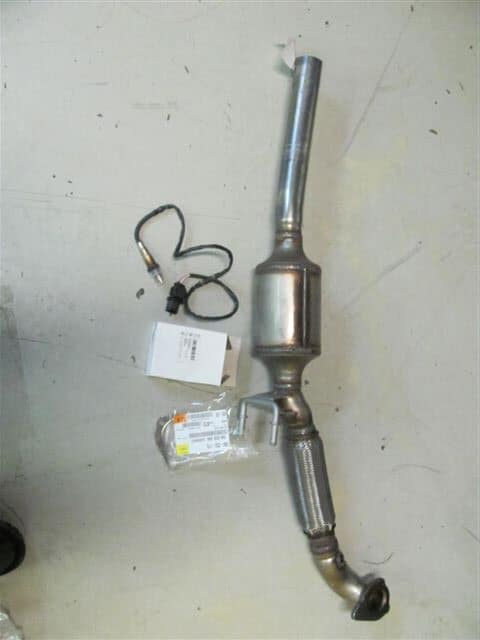
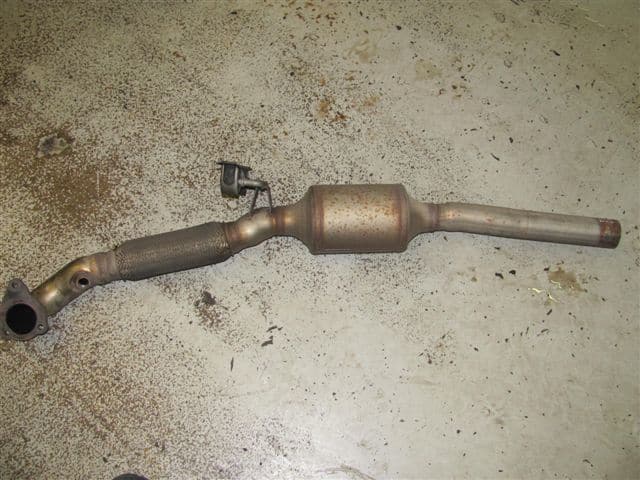
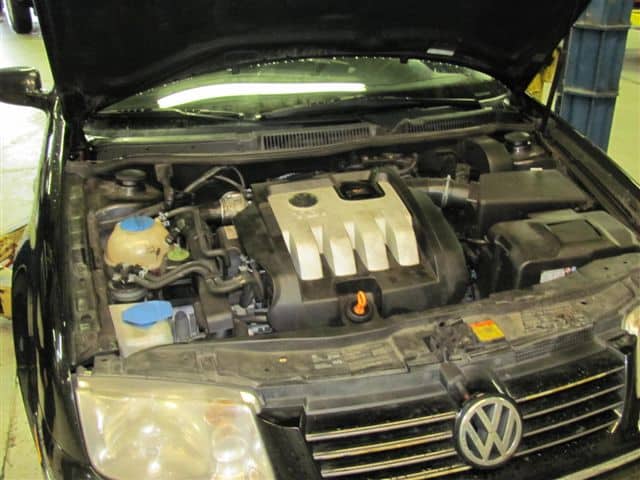
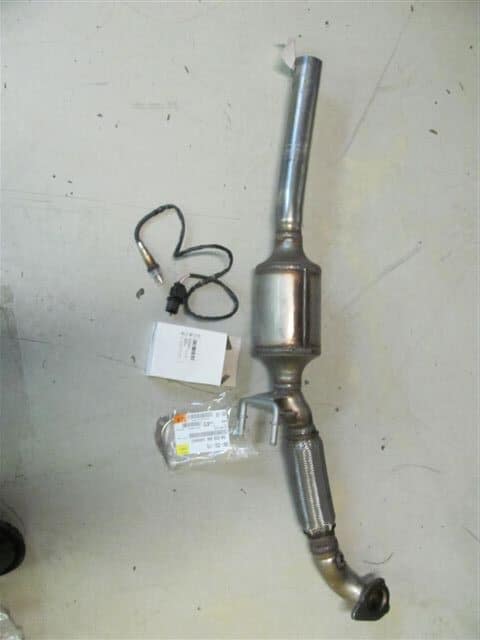
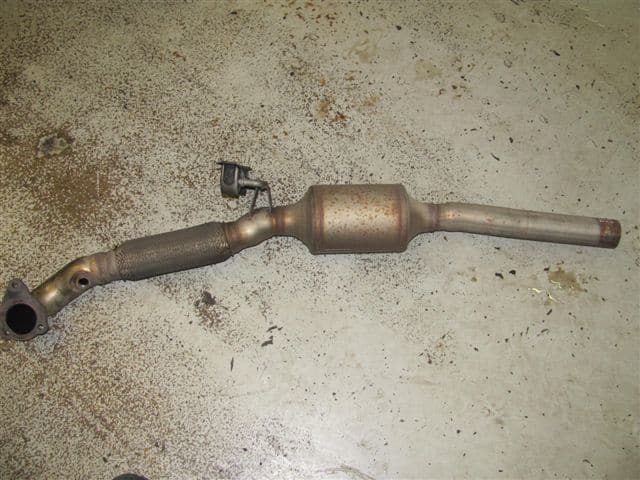
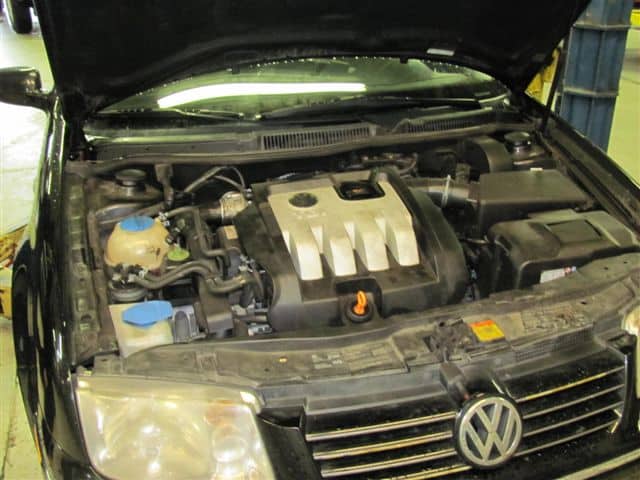
A VW Jetta TDI came in with a failed turbocharger where the impeller separated and sent large amounts of oil through the exhaust. The catalytic converter was later replaced after the customer returned with a check engine light and more funds available.
The turbocharger failure was severe - the impeller came off and pushed large amounts of oil into the exhaust system, damaging the catalytic converter.
The customer was informed the catalytic converter would likely need replacement but chose to delay due to budget constraints, hoping the oil would burn off on its own.
A few months later the customer returned with a check engine light on, and after installing a new catalytic converter the car runs clean with no warning lights.
What causes a catalytic converter to fail after a turbocharger replacement?
A catalytic converter can fail after a turbocharger failure if the turbo's impeller breaks off, sending large amounts of oil through the exhaust system. This oil saturates the catalytic converter, and while it sometimes burns off on its own, severe cases cause permanent damage that triggers a check engine light and requires full replacement.
This particular Volkswagen Repair found a turbo charger that failed. It was severe failure where the impeller came off the turbo and large amounts of oil went through the turbo into the exhaust. We let the customer know when we installed the turbo that the catalytic converter would most likely have to be replaced as well, but sometimes they can burn off the oil and survive the trauma. Funds were tight for the customer so he elected not to do the catalytic converter at the same time as the turbo. In this case the patient could not be saved. A few months later the customer returned with a check engine light on and a little more money in the bank. We installed the new Volkswagen catalytic converter, and now the car is running clean with no check engine light.
FAQs
The most common sign is a check engine light combined with poor engine performance or a sulfur-like smell from the exhaust. A mechanic can pull the diagnostic trouble codes to confirm whether the catalytic converter is failing or has already failed.
Yes, a turbo failure - especially one where the impeller breaks apart - can send large amounts of oil through the exhaust system and into the catalytic converter. This oil contamination can clog or destroy the converter, making replacement necessary even after the turbo itself has been fixed.
It is strongly recommended to replace both at the same time if the turbo failure was severe. While some catalytic converters can burn off the oil and recover, many cannot, and waiting a few months often means paying for a second repair visit on top of the original turbo job.
The cost can vary depending on whether you use an OEM or aftermarket part, as well as labor rates in your area. TDI catalytic converters tend to be more expensive than those on gasoline engines, so getting a quote from a Volkswagen specialist before committing to the repair is a good idea.
In most cases, yes - once a new catalytic converter is installed and the vehicle is running properly, the check engine light will turn off. A technician will typically clear the codes after the repair to confirm the light does not return.
You can drive it for a short period, but it is not a good idea to put it off for too long. A clogged or damaged catalytic converter can reduce engine performance, hurt fuel economy, and may eventually cause the engine to run poorly enough that it becomes difficult to drive.
A shop that specializes in Volkswagen or European vehicles is your best option, since TDI diesel engines have specific requirements that not every general repair shop is familiar with. A specialist will be better equipped to source the right part and properly diagnose any related issues that may have caused the converter to fail.
Published On: October 15, 2013Categories: Volkswagen