
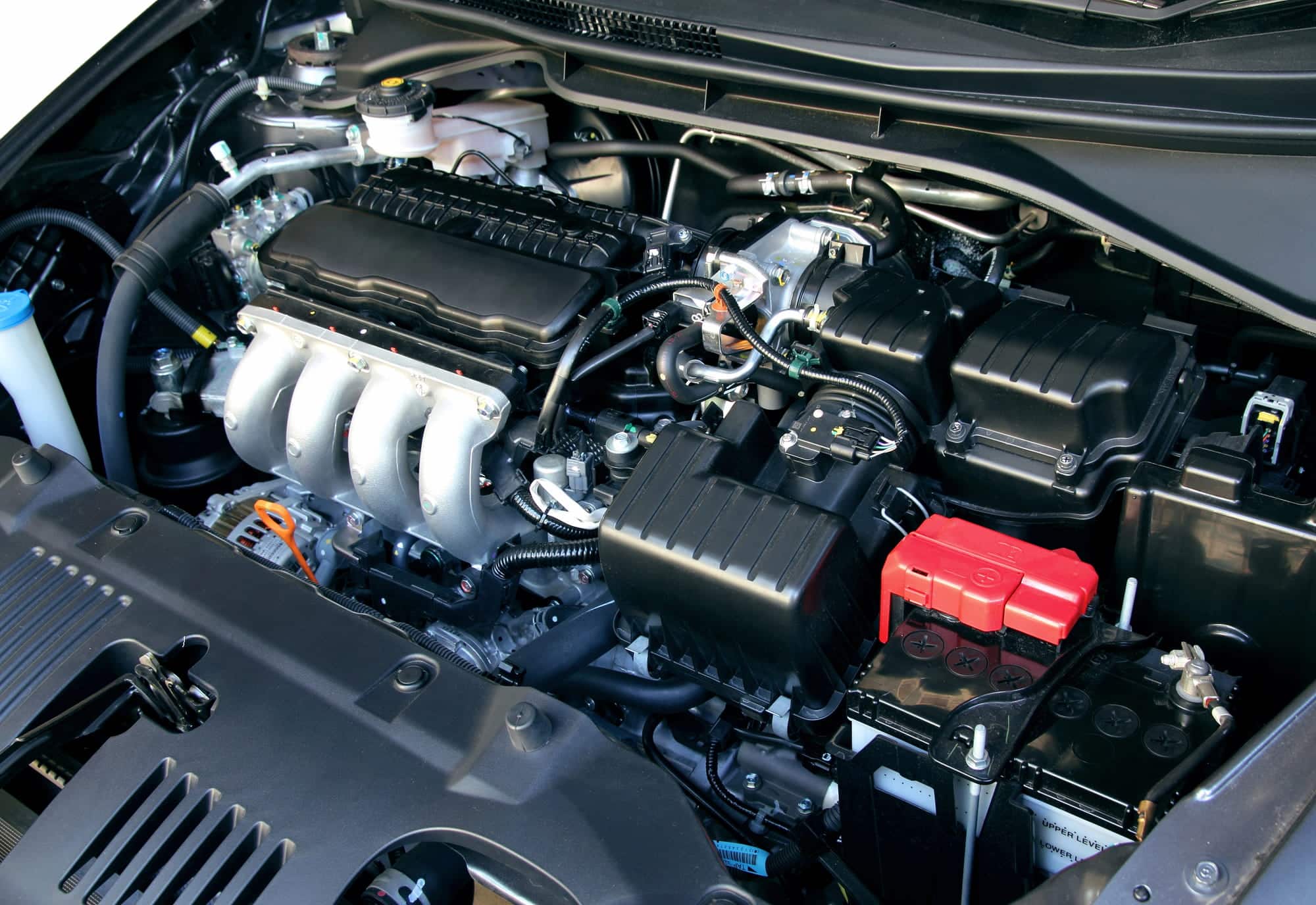
Land Rover Engine Repair at DART Auto
Land Rover engines power vehicles designed to conquer terrain most cars can't imagine, but that capability comes with complexity. When your Range Rover, Discovery, or Defender needs engine work, the cost of cutting corners is measured in thousands – failed turbos from oil starvation, warped heads from coolant system neglect, and timing chain failures that turn a $2,000 repair into a $12,000 catastrophe. DART Auto has specialized in European vehicles since 2000, and our master technicians understand the platform-specific quirks that separate a proper Land Rover engine repair from guesswork.
Land Rover engine repair demands more than generic shop experience. The 3.0L supercharged V6 (AJ126) in 2014-2019 Range Rover Sport models requires specific timing chain tensioner updates and supercharger oil feed attention that factory service information spells out in detail. The 5.0L naturally aspirated and supercharged V8 engines share the AJ133 platform but have different failure modes – naturally aspirated versions suffer timing chain guide wear around 80,000 miles, while supercharged variants add intercooler coolant pump failures and supercharger coupler deterioration to the mix. We use Land Rover-specific diagnostic software and follow OEM repair procedures, not generic shop manuals.
When you bring your Land Rover to DART Auto for engine repair, expect:
- Complete diagnostic scans using factory-level tooling to identify root causes, not just symptoms
- Detailed inspections of cooling system integrity, oil quality, and timing component wear before recommending teardown
- OEM or premium aftermarket parts from trusted suppliers who understand Land Rover quality standards
- A 3-year/36,000-mile warranty on parts and labor, backing every repair we complete
Common Engine Repair Issues on Land Rover Vehicles
Land Rover engines deliver impressive capability, but their complexity means certain failure patterns appear predictably across generations. Getting these repairs wrong costs far more than the initial estimate – often triggering cascading damage that transforms a manageable repair into a full rebuild.
- Timing chain stretch and guide failure on Jaguar-Land Rover AJ-V8 engines (2010–2016 Range Rover Sport, LR4): The 5.0L naturally aspirated and supercharged AJ-V8 develops timing chain slack as mileage climbs past 80,000 miles. Plastic chain guides crack, metal fragments circulate through oil passages, and the variable valve timing system loses precision. Cold-start rattle is the first warning; by the time the check engine light illuminates for cam/crank correlation faults, internal damage has often begun.
- Cylinder liner slippage on early Discovery 3/LR3 and Range Rover Sport 4.4L V8 (2005–2009): The Jaguar-derived AJ-V8 in 4.4L form suffers from inadequate liner-to-block clamping force. Coolant seeps into cylinders, combustion gases pressurize the cooling system, and overheating becomes chronic. White exhaust smoke and rapid coolant loss signal advanced failure – catching it early means liner replacement rather than block replacement.
- Turbocharger oil feed line coking on 3.0L SDV6 diesel (2010–2016 Range Rover, Discovery 4): The twin-turbo V6 diesel routes oil through narrow feed lines prone to carbon buildup when service intervals stretch or oil quality degrades. Starved turbos develop bearing wear, boost pressure drops, and metal debris contaminates the intercooler and intake tract. Limp mode and blue smoke on acceleration indicate damage is underway.
- Coolant crossover pipe corrosion on Ford-era 4.0L and 4.6L V8 (1995–2004 Discovery II, Range Rover P38): Aluminum crossover pipes corrode internally where dissimilar metals meet in the cooling system. External leaks appear suddenly as corrosion breaks through, dumping coolant onto hot exhaust manifolds. Overheating follows within minutes if not addressed immediately.
- Piston ring land failure on 2.0L Ingenium diesel (2016–2019 Discovery Sport, Range Rover Evoque): Early Ingenium engines developed piston ring groove cracking under high combustion pressure, particularly in vehicles driven predominantly on short trips. Excessive oil consumption, blue smoke, and fouled spark plugs appear before catastrophic failure. Software updates and revised pistons address the root cause, but damaged engines require complete rebuilds.
- Head gasket failure on 2.7L TDV6 diesel (2004–2009 Range Rover Sport, Discovery 3): The Lion V6 diesel shares architecture with PSA Peugeot-Citroën, inheriting head bolt stretch issues. Repeated thermal cycling weakens clamping force, allowing combustion gases into coolant passages. Pressurized cooling systems, white exhaust smoke, and oil-contaminated coolant signal imminent failure – delay means warped heads and block damage.
Why Choose DART Auto for Land Rover Engine Repair
Land Rover engine work demands more than generic mechanical skill – it requires platform-specific knowledge and the right diagnostic hardware. Get this wrong, and you're looking at repeat failures, misdiagnosed misfires, or worse: catastrophic damage from improper timing procedures on interference engines like the 2.0L Ingenium or 3.0L supercharged V6.
DART Auto has invested heavily in Land Rover-specific tooling and training since 2000. Our master technicians – each with over a decade of experience and dealer-level training – use factory repair information, not generic repair manuals. We own the same diagnostic platforms dealerships use, allowing us to read module-specific codes, perform forced DPF regenerations on TDV6 engines, and validate camshaft timing on Jaguar Land Rover AJ-V8 platforms where a single tooth off causes check-engine lights and drivability nightmares.
- Platform expertise: familiarity with LR3/LR4 timing chain stretch on 4.4L AJ-V8s, coolant crossover pipe failures on Range Rover Sport supercharged V8s, and carbon buildup on direct-injection Ingenium motors
- Salaried technicians: no flat-rate incentives to rush diagnosis or skip verification steps
- OEM and premium parts: genuine Land Rover components or equivalent-spec aftermarket from trusted suppliers, never bargain-bin substitutes
- 3-year/36,000-mile warranty: parts and labor coverage that backs our commitment to getting it right the first time
Symptoms – How to Know You Need This Service
Land Rover engines communicate distress through specific symptoms. Recognizing them early can mean the difference between a manageable repair and catastrophic failure.
You may notice:
- Metallic rattling on cold starts lasting 3-5 seconds, especially on 5.0L V8 engines – classic timing chain tensioner wear that worsens until chains jump teeth
- Check Engine light with misfire codes (P0300-P0308) combined with rough idle – often points to carbon buildup on direct-injection engines or failing ignition coils
- White or blue smoke from the exhaust – white indicates coolant entering combustion chambers (head gasket or cracked cylinder head), blue means oil consumption from worn rings or valve seals
- Sudden loss of power with limp mode activation – turbocharged diesel models (TDV6/SDV6) often throw this when variable vane turbo actuators fail or EGR systems clog
- Persistent coolant loss without visible leaks – internal head gasket failure or cracked block, common on early 3.6L TDV8 diesel engines
- Knocking or pinging under acceleration despite premium fuel – can indicate carbon buildup, failing knock sensors, or actual bearing wear
- Oil pressure warning light illuminating at idle – stop driving immediately; this signals critical lubrication failure
- Overheating with coolant system pressure – often combustion gases entering the cooling system through a failing head gasket
If you see oil pressure warnings, severe overheating, or white smoke, stop driving and have the vehicle towed. Continuing to operate can escalate a repairable issue into complete engine replacement.
Which Land Rover Models We See for Engine Repair
DART Auto services the full spectrum of modern Land Rover platforms. Our technicians have extensive experience with the engines and failure modes specific to each generation.
We regularly perform engine repair on:
- Range Rover (L322, 2002-2012) – 4.4L V8 (M62/N62 BMW-sourced), 4.2L supercharged V8, 3.6L TDV8 diesel with known crankshaft and liner issues
- Range Rover (L405, 2013-2021) – 3.0L supercharged V6 (AJ126), 5.0L naturally aspirated and supercharged V8 (AJ133), 3.0L TDV6/SDV6 diesel
- Range Rover Sport (L320, 2006-2013) – shares L322 engine lineup with similar failure patterns
- Range Rover Sport (L494, 2014-2023) – same AJ126 supercharged V6 and AJ133 V8 platforms as L405, plus 2.0L Ingenium turbo four-cylinder
- Discovery 3/LR3 and Discovery 4/LR4 (2005-2016) – 4.0L and 4.4L V8, 2.7L and 3.0L TDV6 diesel with timing chain and injector issues
- Discovery 5/LR5 (2017-present) – 2.0L and 3.0L Ingenium gasoline and diesel engines, newer platform with emerging failure modes
- Defender (L663, 2020-present) – 2.0L and 3.0L Ingenium inline engines, P300/P400 variants
- LR2/Freelander 2 (2007-2015) – 3.2L inline-six and 2.0L turbo four, timing chain service critical
- Evoque and Discovery Sport – 2.0L Ingenium turbo engines, both gasoline and diesel variants
We focus on 2002-present Land Rover models where our diagnostic tooling and OEM repair information provide the most value. Earlier vehicles with Rover V8 engines fall outside our specialty European focus.
Causes & Risks – What Happens if Ignored
Land Rover engines face unique stress from their dual-purpose design – refined highway cruising one moment, extreme off-road angles and heat the next. Extended service intervals common in European markets clash with Denver's temperature swings and elevation changes, accelerating wear on timing components and seals. Aluminum-intensive construction saves weight but demands precise thermal management; coolant neglect or thermostat failures create hot spots that warp heads and crack blocks.
The cost of waiting compounds rapidly because Land Rover engines integrate so many systems electronically. A failing turbo doesn't just lose boost – it showers the intake with oil, fouls the intercooler, contaminates the MAF sensor, and triggers limp mode that stresses the transmission. What starts as a $2,800 turbo replacement becomes a $7,500 job once you're cleaning the entire intake tract, replacing sensors, and addressing transmission adaptation issues.
Specific escalation paths on Land Rover platforms:
- Timing chain neglect (AJ-V8): Initial rattle ignored for 5,000 miles typically results in jumped timing, bent valves, and piston-to-valve contact. A $3,200 chain and guide replacement becomes an $11,000 head removal, valve replacement, and block inspection.
- Coolant system leaks (any platform): Small weeps turn into sudden failures when corroded aluminum finally breaks through. Overheating for even 30 seconds warps cylinder heads on modern thin-wall castings – what was a $600 hose or pipe replacement becomes a $5,400 head resurfacing or replacement job.
- Turbocharger oil starvation (SDV6 diesel): Ignoring boost loss for 2,000 miles allows metal fragments to circulate through oil passages, scoring bearings in the balance shafts and camshafts. The turbo replacement cost triples when you're addressing secondary bearing damage throughout the engine.
- Piston ring failure (Ingenium): Driving with excessive oil consumption fouls catalytic converters and oxygen sensors. A $6,800 engine rebuild becomes a $9,200 job once you're replacing emissions components destroyed by oil contamination.
Why Engine Repair Matters
Engine failures on Land Rover vehicles create immediate safety risks because these platforms integrate engine performance with traction and stability systems. Sudden power loss on a highway merge or mountain pass removes your ability to accelerate out of danger. Limp mode triggered by engine faults limits speed to 35 mph – manageable in suburban traffic, potentially catastrophic on I-70 with loaded semi-trucks approaching at 75 mph.
Land Rover's Terrain Response system depends on predictable engine torque delivery. When timing chain stretch or turbo failures create inconsistent power, the transfer case and differential controllers receive conflicting data. Traction control intervenes unpredictably, stability control misinterprets wheel slip, and the vehicle's off-road capability – the reason many owners chose Land Rover – disappears exactly when it's needed most.
Symptoms requiring immediate action:
- Stop driving now: Temperature gauge in red zone, metal-on-metal grinding from engine bay, complete loss of power with warning lights, white smoke pouring from exhaust (head gasket failure), or sudden oil pressure drop to zero.
- Schedule within 48 hours: Check engine light with reduced power, unusual engine noise on cold start, coolant loss requiring weekly top-ups, or visible oil leaks pooling under the vehicle.
- Schedule within two weeks: Intermittent rough idle, minor oil consumption between changes, or occasional turbo whistle under load.
Insurance liability becomes relevant when a known engine defect contributes to an accident. If your Land Rover's documented timing chain rattle causes sudden power loss that leads to a collision, failure to address a recognized defect may complicate claims. More immediately, a seized engine at highway speed removes power steering assist and brake boost simultaneously – the few seconds before momentum bleeds off are among the most dangerous you'll experience.
How Land Rover Engine Repair Actually Works
Modern Land Rover engines integrate electronic control in ways that fundamentally change the repair process. The ECU doesn't just manage fuel and ignition – it coordinates with the transmission controller, transfer case module, and suspension computer to optimize power delivery for terrain and load. When you replace timing components or rebuild an engine, the ECU must relearn camshaft position, adapt fuel trims, and recalibrate variable valve timing. This requires Land Rover's SDD (Symptom Driven Diagnostics) software and genuine or equivalent scan tools capable of bidirectional communication across the vehicle's MOST or CAN networks.
Land Rover's aluminum block construction demands precise torque sequences and angle-based tightening that generic shop manuals don't capture. Head bolts follow multi-stage torque-to-yield procedures where reuse causes clamping force loss and subsequent gasket failure. Main bearing caps require specific torque angles that vary by engine family – the AJ-V8 uses different specs than the Ingenium four-cylinder, and mixing procedures guarantees comebacks.
Land Rover-specific engine repair considerations:
- Timing chain replacement requires
How We Diagnose Engine Repair Issues on Land Rover
Getting an engine diagnosis wrong on a Land Rover can mean thousands wasted chasing symptoms instead of root causes. These platforms – from the L322 Range Rover to the L405, from the LR3/LR4 Disco to the Sport – share powertrain architectures with Jaguar and rely on integrated module communication that generic code readers can't interpret. We use factory-level diagnostic tools that access not just the ECU but also the transmission controller, ABS module, and body control modules to see the full picture of what's failing.
Our Step-by-Step Engine Diagnostic Process
- Pre-scan and freeze-frame capture. We pull codes from every module using Land Rover-specific diagnostic software (IDS/SDD) to capture pending faults, stored codes, and live data streams before the vehicle moves.
- Visual and physical inspection. We check for oil leaks around timing cover gaskets (common on 5.0L AJ-V8 engines), coolant weeping from valley pan crossover pipes, and crankcase ventilation system clogs that cause vacuum leaks on 3.0L supercharged V6 platforms.
- Mechanical tests. Compression testing, leak-down testing, and cylinder balance tests isolate whether the problem is mechanical wear, valve train damage, or fuel/ignition misfires.
- Road test with live data logging. We monitor fuel trims, timing advance, boost pressure (on supercharged engines), and knock sensor activity under real load to confirm whether the fault is intermittent or load-dependent.
- Correlation and repair plan. We cross-reference fault codes with physical findings and known failure modes – timing chain stretch on early 5.0L engines, supercharger coupler wear on 3.0L SC V6, intake manifold runner flap failures – to build a repair plan that addresses the cause, not just the symptom.
Once we've completed the diagnostic process, we provide a detailed written estimate that explains what failed, why it failed, and what we'll do to fix it right the first time. You'll understand exactly what you're paying for before we turn a wrench.
Engine Repair on Land Rover: Repair vs. Replacement
Not every engine fault requires a full rebuild or replacement. The right call depends on the extent of damage, the age and mileage of your Land Rover, and whether the affected components can be serviced in isolation.
When True Repair Makes Sense
- Valve cover gasket leaks – common on 5.0L AJ-V8 and 3.0L V6 engines; reseal with OEM gaskets and clean the valley of pooled oil.
- Intake manifold runner motor replacement – on 5.0L engines, the actuator motor fails but the manifold itself is fine; replace the motor and re-learn with factory scan tool.
- Coolant crossover pipe replacement – plastic valley pipes crack on 5.0L engines; replace with updated metal pipe and flush the cooling system.
- PCV valve and separator cleaning – clogged crankcase ventilation causes rough idle and oil consumption; clean or replace separator and check hoses.
When Partial or Full Replacement Is the Right Call
- Timing chain stretch on early 5.0L engines (2010–2012) – requires timing chain kit, guides, tensioners, and cam phasers; labor-intensive but less than a short block.
- Supercharger coupler wear on 3.0L SC V6 – if the coupler has shredded and debris entered the blower, the supercharger itself may need replacement or rebuild.
- Scored cylinder walls or bearing wear – if compression tests show uneven results and leak-down confirms ring or bore damage, a short block or full engine replacement is safer and more cost-effective than a half-measure repair.
We walk you through the decision with transparent data – compression numbers, photos of failed parts, and a side-by-side cost comparison. You choose the path that fits your budget and how long you plan to keep the vehicle.
How to Make Your Land Rover Engine Repair Last Longer
Once we've repaired or replaced your engine components, a few habits will extend the life of the work and protect your investment.
Driving Habits That Protect Your Engine
- Allow proper warm-up in cold weather. Land Rover's aluminum-intensive engines expand at different rates than iron blocks; let oil pressure stabilize and coolant reach operating temperature before heavy throttle.
- Avoid sustained low-RPM lugging. Supercharged V6 engines and turbo diesels build boost at low RPM; lugging under load can stress timing components and increase carbon buildup.
- Use premium fuel on supercharged and naturally aspirated engines. The 5.0L and 3.0L SC engines are calibrated for 91+ octane; lower grades cause knock and retarded timing that increase heat and wear.
Maintenance You Can Monitor Yourself
- Check oil level weekly – Land Rover V8 engines consume oil by design; keeping level topped off prevents oil starvation to the timing chain tensioners.
- Watch for new leaks or seepage around valve covers, oil pan, and timing cover after repair; catch small seeps before they become problems.
- Listen for new ticking or rattling at cold start – timing chain noise or lifter tick that wasn't there before may signal low oil pressure or a part that needs adjustment.
What to Leave to the Professionals
Oil and filter changes are safe DIY if you use the correct Castrol or Mobil 1 spec and OEM-style filter. Coolant flushes, timing component work, and any repair requiring scan tool re-learning or module programming should be left to a shop with factory tooling. Software updates and adaptive value resets after engine work require Land Rover IDS/SDD – skipping these steps leaves the ECU running on old fuel trims and can cause driveability issues even after perfect mechanical repair.
What to Expect When You Bring Your Land Rover In
We treat engine work as a methodical process, not a guessing game. Here's how your visit unfolds:
- Drop-off and intake: Schedule an appointment or call ahead. Bring any service records, especially if the check-engine light is on or you've noticed performance changes. Remove personal items; we'll provide a loaner or shuttle if the work spans multiple days.
- Comprehensive inspection: Before we quote anything, a master technician performs a complete diagnostic scan and mechanical inspection. On Land Rovers, that means checking for stored fault codes across all modules, inspecting timing components through access ports where possible, and performing leak-down or compression tests if symptoms warrant.
- Written estimate and consultation: You'll receive a detailed breakdown of what we found, what needs immediate attention, and what can wait. We explain the repair in plain language and the consequences of delaying it – no pressure, just facts.
- Repair execution: Our technicians follow Land Rover-specific torque sequences, use factory-spec fluids, and replace wear items (coolant hoses, accessory belts, gaskets) that are exposed during teardown. No shortcuts.
- Post-repair verification: Every engine repair gets a road test and a final scan-tool check to confirm fault codes are cleared and all systems report normal. We walk you through what we did at pickup and provide documentation for your records.
If something feels off after you leave, call us immediately. We'll get you back in and address it – no runaround, no surprise charges for follow-up diagnostics related to our work.
Our Land Rover Services
- Air Conditioning AC Repair
- Battery Repair Replacement
- Brake Repair & Brake Fluid Change
- Check Engine Light Diagnostics
- Clutch Repair & Replacement
- Coolant Leak Repair
- Cooling System Repair
- Drive Shaft Repair
- Exhaust & Catalytic Converter Repair
- Head Gasket Repair & Replacement
- Oil Change
- Oil Leak Repair
- Scheduled Service Maintenance
- Steering Repair
- Suspension Repair
- Cambelt Timing Belt Replacement
- Transmission Repair
- Tune Up
- Wheel Alignment