
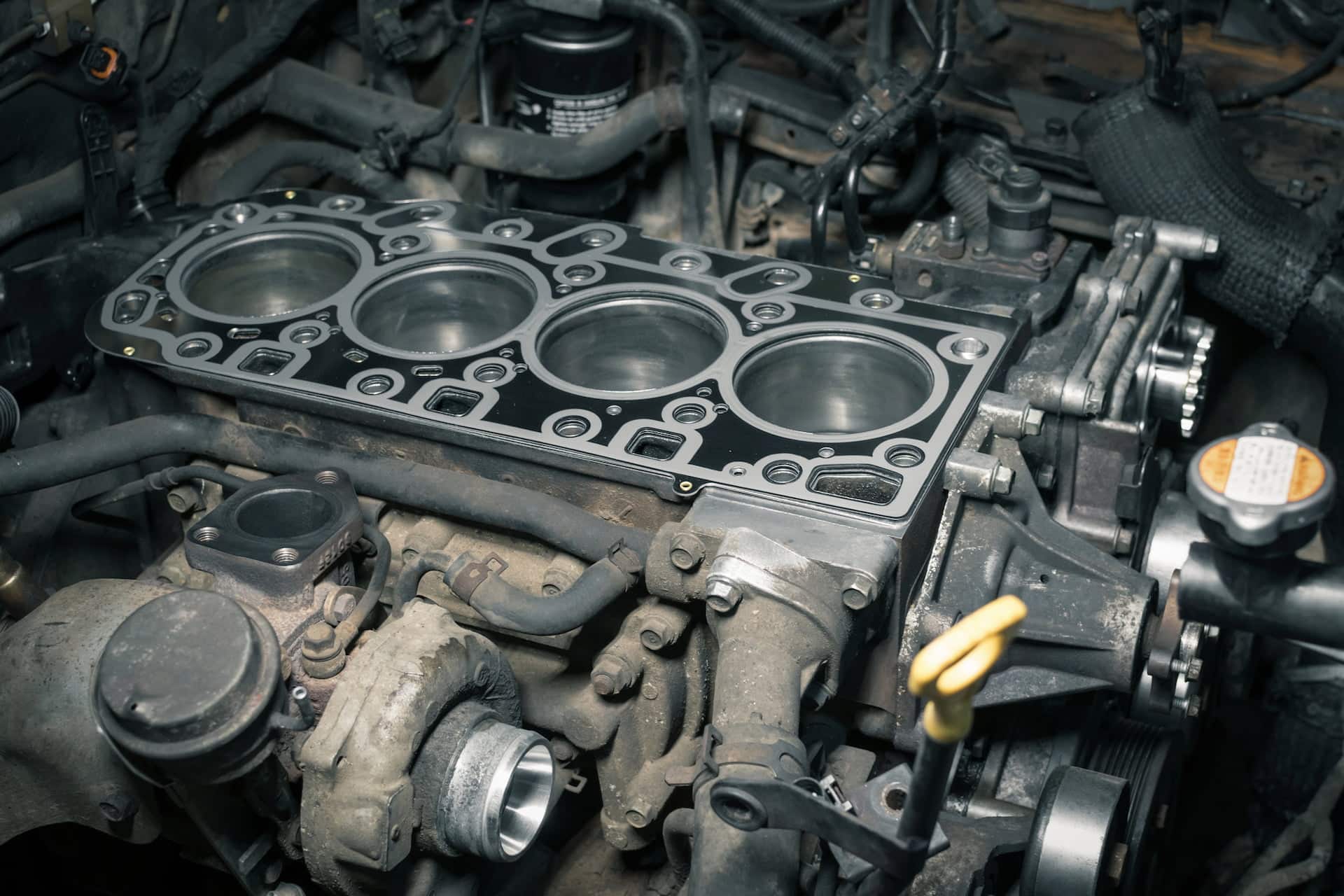
Land Rover Head Gasket Repair & Replacement at DART Auto
You're checking the coolant reservoir more often than you'd like. Maybe you've noticed a sweet smell through the vents, or the temperature gauge climbs higher than it used to on I-70. Head gasket failures on Land Rover vehicles demand more than generic shop experience – they require technicians who understand aluminum block architecture, multi-layer steel gasket design, and the precise torque-to-yield procedures that separate a reliable repair from a comeback.
Land Rover head gasket work differs from domestic repairs in critical ways. The AJ-V8 engines in Range Rover Sport and LR4 models use specific OEM head bolt sequences and torque angles that must be followed exactly. Discovery 3 and 4 platforms with the 2.7L TDV6 require careful attention to timing chain position during reassembly. The 5.0L supercharged engines in Range Rover and Range Rover Sport need block deck surface measurements within 0.002" – precision work that generic shops often skip. We use factory service information, calibrated torque equipment, and the same diagnostic protocols Land Rover dealerships follow.
When you bring your Land Rover to DART Auto for head gasket repair, you can expect:
- Complete cylinder head inspection including crack testing, valve seat condition, and deck surface measurement
- OEM or premium multi-layer steel gaskets matched to your specific engine variant
- Torque-to-yield head bolt replacement with factory-specified angle tightening procedures
- Cooling system pressure testing and fluid analysis to confirm the repair resolved the root cause
Common Head Gasket Repair & Replacement Issues on Land Rover Vehicles
You've noticed coolant disappearing without visible leaks, white smoke trailing from the exhaust, or an engine that runs hotter than it should. These aren't minor annoyances – they're signs your Land Rover's head gasket is failing. The problem is more common than most owners realize, and certain platforms suffer predictably.
- 4.0-liter and 4.6-liter V8 (Discovery II, Range Rover P38): The Rover V8 in 1999-2004 Discovery II and late P38 Range Rovers develops head gasket leaks between cylinders and coolant passages. Overheating accelerates the failure, and owners often see milky oil or persistent coolant loss with no external drips. The block-to-head mating surface distorts slightly under heat cycling, and OEM composite gaskets don't always withstand repeated thermal stress.
- 2.7-liter and 3.0-liter TDV6 diesel (LR3, LR4, Range Rover Sport, Discovery 3/4): The PSA-derived V6 diesel in 2005-2009 LR3/Discovery 3 and early Range Rover Sport suffers cracked cylinder heads and blown gaskets, particularly between cylinders four and five. Coolant enters the combustion chamber, causing white smoke and rapid coolant loss. The issue stems from inadequate head-bolt torque retention and thermal cycling in the aluminum head.
- 5.0-liter supercharged V8 (AJ133 – Range Rover, Range Rover Sport, LR4): While generally robust, the AJ133 in 2010-2013 models can develop gasket seepage at the valley between cylinder banks when coolant crossover pipes corrode or when the engine has been severely overheated due to cooling-system neglect. Early symptoms include slight oil contamination in the coolant reservoir.
- 2.0-liter Ingenium diesel (Discovery Sport, Range Rover Evoque, Velar): The Ingenium four-cylinder introduced in 2015 has shown isolated head-gasket failures in high-mileage examples, often linked to EGR cooler failures that allow exhaust gas into the cooling system, over-pressurizing it and blowing the gasket. Owners report persistent coolant loss and rough idle.
- Overheating-induced failure across all platforms: Land Rovers use complex cooling systems with multiple hoses, plastic fittings, and electric water pumps. When a thermostat sticks, a hose splits, or the auxiliary coolant pump fails, the engine overheats rapidly. Aluminum heads warp, and gaskets blow. This secondary failure is expensive because the head often requires machining or replacement.
Why Choose DART Auto for Land Rover Head Gasket Repair & Replacement
Head gasket failure on a Land Rover isn't a quick fix, and cutting corners invites catastrophic engine damage. You're likely noticing coolant loss, white exhaust smoke, or overheating – symptoms that demand immediate attention and platform-specific expertise.
DART Auto's master technicians bring dealer-level training and over a decade of hands-on experience with Land Rover powertrains. We own the complete diagnostic and repair process:
- Platform-specific diagnosis: We use factory scan tools and pressure testing to pinpoint whether you're dealing with a head gasket breach, cracked cylinder head, or block porosity – common on Td6 and AJ-V8 engines.
- OEM procedures and torque specs: Land Rover head bolts often require torque-to-yield fasteners and multi-stage tightening sequences. We follow factory repair information to the letter, including surface prep and coolant system bleeding protocols.
- Post-repair verification: After reassembly, we pressure-test the cooling system, perform combustion leak tests, and road-test under load to confirm the repair holds before you take delivery.
Our salaried technicians have no incentive to rush your repair. We invest in the specialty tooling Land Rover engines demand – and back every repair with a 3-year/36,000-mile warranty on parts and labor.
Symptoms – How to Know You Need This Service
Head gasket failure rarely announces itself all at once. You may notice one or two subtle changes before the problem becomes urgent. Recognizing these early warnings gives you time to schedule the repair before you're stranded with an overheated engine.
Watch for these symptoms in your Land Rover:
- White exhaust smoke that persists after warmup – coolant burning in the combustion chamber, especially visible on cold starts
- Coolant loss with no visible leaks – the reservoir drops steadily but you don't see puddles under the vehicle
- Overheating under load – temperature spikes when towing, climbing grades, or during highway merges
- Milky residue on the oil cap or dipstick – coolant mixing into the crankcase, a sign of immediate concern
- Rough idle or misfires – coolant entering cylinders disrupts combustion and may trigger check engine codes
- External coolant seepage at the head-to-block junction – visible wetness along the engine sides, often near the exhaust manifold
- Bubbles in the coolant reservoir while idling – combustion gases pushing into the cooling system
- Sweet smell inside the cabin – vaporized coolant coming through the HVAC system
If you see milky oil or persistent overheating, stop driving and arrange for towing. Continued operation risks warping the cylinder head or damaging the engine block beyond economical repair.
Which Land Rover Models We See for Head Gasket Repair & Replacement
We service head gasket failures across the Land Rover lineup, with particular experience on models from the mid-2000s forward. Certain engines and platforms show up more frequently due to design characteristics or common failure modes.
Land Rover platforms we regularly repair:
- Range Rover (L322, 2002–2012) – 4.4L AJ-V8 and 5.0L naturally aspirated variants; head gasket failures often coincide with cooling system neglect
- Range Rover Sport (L320, 2006–2013) – 4.4L and 5.0L supercharged engines; supercharged models require additional intercooler system inspection
- Discovery 3 / LR3 (2005–2009) – 4.4L AJ-V8; prone to liner movement if overheated repeatedly
- Discovery 4 / LR4 (2010–2016) – 5.0L naturally aspirated V8; less common than older platforms but still serviceable
- Range Rover Evoque (L538, 2012–2018) – 2.0L turbocharged four-cylinder; head gasket issues less frequent but require EcoBoost-specific procedures when they occur
- Discovery Sport (L550, 2015–2019) – 2.0L Ingenium turbo diesel and gasoline variants; newer platform with different torque specifications
We have limited experience with pre-2002 Discovery Series II and Defender models due to parts availability and the age of those platforms. If you own a classic or low-production Land Rover variant, call us to discuss your specific vehicle before scheduling.
Causes & Risks – What Happens if Ignored
Head gasket failures on Land Rover vehicles stem from a combination of thermal stress, aging materials, and cooling-system weaknesses. The aluminum cylinder heads expand and contract at different rates than the iron or aluminum block, and the gasket must seal combustion pressure (often exceeding 1,000 psi), coolant passages, and oil galleries simultaneously. When coolant hoses degrade, thermostats fail, or owners ignore low-coolant warnings, the engine overheats and the head distorts. On older Rover V8s and TDV6 diesels, inadequate head-bolt clamping force and gasket material choices exacerbate the problem. High-mileage examples with neglected cooling systems are at highest risk.
Ignoring early symptoms turns a gasket replacement into a full engine rebuild. Here's what escalates:
- Coolant enters the combustion chamber: White exhaust smoke becomes constant. The engine misfires as coolant fouls spark plugs (or glow plugs on diesels). Catalytic converters fail from coolant contamination, adding thousands to the repair.
- Combustion gases pressurize the cooling system: Coolant boils over repeatedly. Hoses burst. The radiator and heater core crack from over-pressure. You'll replace the entire cooling system, not just the gasket.
- Oil and coolant mix: Milky sludge circulates through the engine, starving bearings of lubrication. Camshaft lobes and crankshaft journals score. What started as a gasket job now requires new bearings, possibly a new crankshaft, and machine work on the block.
- Cylinder head warps beyond repair: Aluminum heads distort when overheated. If the warp exceeds 0.003 inches (common on TDV6 diesels), the head must be replaced, not just resurfaced. On some Land Rover engines, new heads are $3,000+ from the dealer.
- Engine seizure: In extreme cases, coolant loss leads to catastrophic overheating. Pistons seize in the cylinders. The engine locks up while driving, leaving you stranded and facing a complete engine replacement or rebuild.
Safety Impact – Why Head Gasket Repair & Replacement Matters
A failing head gasket doesn't just damage the engine – it creates hazardous driving conditions. When coolant enters the combustion chamber, the engine loses power unpredictably. Misfires cause hesitation during acceleration, dangerous when merging onto highways or navigating Denver's mountain passes. Overheating can cause the engine to stall without warning, leaving you without power steering or brake assist in traffic.
On Land Rover models with electronic stability control and hill-descent systems, sudden power loss disables these safety features. The vehicle's computer may throw the drivetrain into limp mode, limiting speed to 30 mph on a busy road. Coolant boiling over under the hood obscures your vision and can spray onto hot exhaust components, creating fire risk.
When to stop driving immediately:
- Temperature gauge enters the red zone or the engine-overheat warning illuminates.
- White smoke pours continuously from the exhaust.
- The engine runs rough, misfires, or loses significant power.
- You smell sweet coolant inside the cabin or see steam from under the hood.
Schedule service soon (but you can drive carefully):
- Coolant level drops slowly over days or weeks with no visible leaks.
- Occasional white smoke on cold starts that clears after warm-up.
- Slight oil contamination (tan residue) visible in the coolant reservoir.
How Land Rover Head Gasket Repair & Replacement Actually Works
The head gasket sits between the engine block and cylinder head, sealing combustion chambers, coolant passages, and oil galleries. On Land Rover V8s and V6s, it's a multi-layer steel or composite gasket with precisely engineered compression zones. The cylinder head bolts down with specific torque values and sequences – often requiring angle-torque ("torque-to-yield") procedures where bolts stretch slightly to achieve proper clamping force. This isn't a simple "tighten until snug" job; OEM specs call for exact Newton-meter values followed by additional rotation measured in degrees.
Land Rover engines add complexity. The TDV6 diesel requires removing the entire intake manifold, turbocharger plumbing, and EGR system before accessing the heads. The AJ133 supercharged V8 demands removal of the supercharger assembly, intercooler, and valley coolant crossover. On Ingenium four-cylinders, the timing chain must be locked in position and the variable valve-timing actuators indexed correctly during reassembly, or the engine won't start.
Why Land Rover head-gasket work differs from generic repairs:
- OEM torque-to-yield bolts: Head bolts stretch during installation and cannot be reused. Land Rover specifies new bolts for every gasket job, and the torque sequence runs in multiple stages with angle measurements.
- Cylinder-head machining requirements: Aluminum heads must be checked for flatness with a precision straightedge and feeler gauges. If warpage exceeds 0.002–0.003 inches, the head goes to a machine shop for resurfacing. Over-milling changes compression ratio and valve timing, so there's a maximum cut depth.
- Coolant system bleeding: Land Rovers use complex cooling systems with bleed screws at multiple points. Air p
How We Diagnose Head Gasket Repair & Replacement Issues on Land Rover
When you bring your Land Rover in with symptoms like overheating, white exhaust smoke, or coolant mysteriously disappearing, we start with a systematic approach designed to pinpoint the exact failure mode before recommending any work.
- Initial interview and symptom verification. We document when the symptoms occur, whether coolant loss is gradual or sudden, and if you've noticed any performance changes. Discovery 3/LR3 and Range Rover Sport models with the AJ-V8 engine often show external coolant seepage from the valley gasket before true head gasket failure, so we clarify what you're experiencing.
- Visual inspection and pressure testing. We check for external coolant leaks, oil contamination in the coolant reservoir, and coolant in the oil (milky dipstick). A cooling system pressure test reveals whether the leak is internal or external. On Td6 and SDV6 diesel engines, we inspect EGR cooler integrity separately, as those failures mimic head gasket symptoms.
- Combustion gas leak test. Using a block tester with chemical indicator fluid, we sample gases from the radiator neck. Hydrocarbon presence confirms combustion gases are entering the coolant – a definitive sign of head gasket breach.
- Scan tool analysis with Land Rover IDS/SDD. We connect factory-level diagnostic equipment to read live coolant temperature data, check for stored fault codes related to overheating events, and monitor sensor rationality. The scan history often reveals when the failure began.
- Cylinder compression and leak-down testing. If the block test is positive, we perform compression tests across all cylinders to identify which cylinder(s) are affected and whether valve sealing or piston ring integrity is also compromised.
Once testing is complete, we walk you through what we found, show you the data, and outline whether you need head gasket replacement alone or if additional machine work – resurfacing, valve work, or block inspection – is required. You get a detailed quote before any repair work begins.
Head Gasket Repair & Replacement on Land Rover: Repair vs. Replacement
Head gasket work on a Land Rover almost always means replacement rather than repair, but the scope of that replacement varies based on what we find during disassembly.
When Gasket Replacement Alone Is Enough
- The head surface and block deck are flat and free of corrosion or warping (measured with a precision straightedge and feeler gauges).
- No coolant has entered the cylinders long enough to damage bearings or wash cylinder walls.
- Head bolts (which are torque-to-yield on most Land Rover engines) have not stretched beyond reuse limits – we replace them as a matter of course.
- Common on early-caught failures where the driver noticed symptoms immediately and didn't continue driving with coolant loss.
When Machine Work or Additional Parts Are Needed
- Head resurfacing: If the head has warped from overheating (common on the 4.4L AJV8 and 5.0L supercharged engines), the machine shop resurfaces it to restore flatness. We measure before and after to stay within Land Rover's minimum thickness spec.
- Valve work: Prolonged overheating can warp valves or damage seats. We inspect valve sealing during disassembly and recommend a valve job if sealing is compromised.
- Block decking: Severe overheating can warp the block deck itself. If out of spec, the block must be resurfaced or, in extreme cases, replaced.
When Full Engine Replacement Makes Sense
If the engine has been driven extensively with a blown head gasket – coolant mixing with oil, bearing damage, scored cylinder walls – the cost of machine work, new pistons, bearings, and labor can approach or exceed a remanufactured long block. We present both options with transparent pricing and let you decide based on your vehicle's overall condition and your plans for it.
How to Make Your Land Rover Head Gasket Repair & Replacement Last Longer
Once we've replaced your head gasket and restored your Land Rover's cooling system integrity, a few habits will help you avoid a repeat failure.
Driving Habits That Protect the Gasket
- Don't ignore the temperature gauge. If it climbs into the red, pull over immediately and shut down. Continued driving with an overheating engine will warp the head in minutes.
- Allow proper warm-up in cold weather. Let the engine reach operating temperature before heavy throttle or high RPM, especially on supercharged 5.0L engines where rapid temperature swings stress gasket sealing.
- Avoid prolonged idling under load. Towing or running accessories (air suspension compressor, climate control) while stationary reduces airflow through the radiator and raises combustion chamber temperatures.
Maintenance You Can Monitor Yourself
- Check coolant level weekly when the engine is cold. Gradual loss indicates a developing leak – catching it early prevents gasket failure.
- Inspect the oil cap and dipstick for milky residue, which signals coolant intrusion.
- Watch for white exhaust smoke on startup, especially after the vehicle has sat overnight. This can indicate coolant seeping past the gasket into a cylinder.
What to Leave to the Professionals
Cooling system work on Land Rovers requires specialized procedures. The bleeding process differs by model year and engine – trapped air pockets cause overheating and gasket failure. We use Land Rover's specific bleeding sequences and tools to ensure complete air evacuation. Coolant type matters, too: mixing OAT and IAT coolants creates sludge that clogs passages and causes hotspots. We use only the correct Land Rover-spec coolant and flush the system completely during gasket replacement. Software updates occasionally revise cooling fan control strategies – we check and apply any relevant updates during service to optimize thermal management.
What to Expect When You Bring Your Land Rover In
We'll walk you through every phase so you know exactly what's happening with your vehicle. Here's how the process unfolds:
- Drop-off and intake: Bring your Land Rover in by appointment or during walk-in hours. We'll document your symptoms, check service history, and arrange a loaner vehicle or shuttle if you need one.
- Diagnostic inspection: Our technicians perform a cooling system pressure test, combustion leak test, and scan for fault codes. We inspect coolant condition, check for external leaks, and may perform a cylinder compression test to rule out deeper engine damage.
- Written estimate and approval: You'll receive a detailed estimate covering parts, labor, and any additional work we recommend (thermostat, hoses, coolant flush). We explain what we found, what needs immediate attention, and the consequences of delaying repairs.
- Repair and reassembly: We disassemble the top end, inspect the cylinder head for cracks or warping, resurface or replace as needed, install OEM or premium gaskets, and torque everything to factory spec. Cooling system components are replaced if they show wear.
- Post-repair verification and pickup: Before you arrive, we pressure-test the system, road-test under load, and re-scan for codes. At pickup, we walk you through what we did and answer any questions. If something feels off in the days following, call us – we'll get you back in immediately.
Remove personal items before drop-off. If you need after-hours pickup, let us know during scheduling and we'll arrange key drop and vehicle placement.
Our Land Rover Services
- Air Conditioning AC Repair
- Battery Repair Replacement
- Brake Repair & Brake Fluid Change
- Check Engine Light Diagnostics
- Clutch Repair & Replacement
- Coolant Leak Repair
- Cooling System Repair
- Drive Shaft Repair
- Engine Repair
- Exhaust & Catalytic Converter Repair
- Oil Change
- Oil Leak Repair
- Scheduled Service Maintenance
- Steering Repair
- Suspension Repair
- Cambelt Timing Belt Replacement
- Transmission Repair
- Tune Up
- Wheel Alignment