
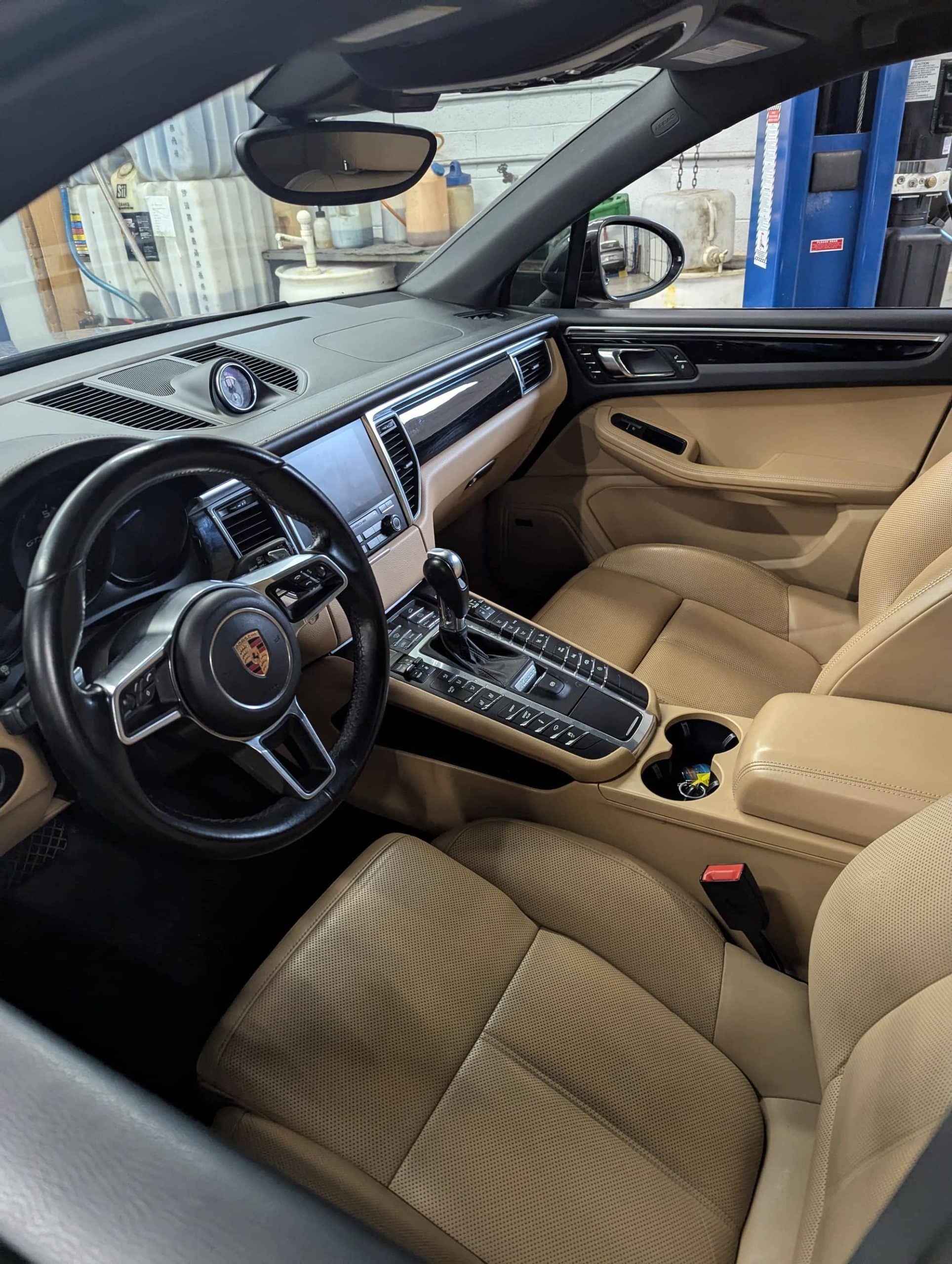
Land Rover Steering Repair at DART Auto
Land Rover steering systems blend electronic power assist, adaptive damping, and terrain response calibrations that generic shops rarely see. When your Discovery Sport pulls left under acceleration or your Range Rover's steering angle sensor throws fault codes after a routine alignment, you need technicians who understand how Land Rover Terrain Response 2 interacts with electric power-assisted steering (EPAS) modules and what it costs to get those repairs wrong. A misdiagnosed rack-and-pinion leak on a 2013–2016 L494 Range Rover Sport can cascade into hydraulic fluid contamination of EPAS components, turning a $900 repair into a $3,200 replacement. DART Auto has invested in factory-level diagnostic tools – including Jaguar Land Rover approved SDD (Symptom Driven Diagnostics) software – to pinpoint whether your steering complaint stems from mechanical wear, software calibration drift, or sensor failure before recommending parts.
Land Rover steering repair differs from domestic work in three critical ways: many 2013+ models use EPAS with torque overlay calibrations that require post-repair software flashing; hydraulic systems on older LR3/LR4 platforms demand specific Pentosin CHF 11S fluid (substitutes cause seal degradation); and Dynamic Response active anti-roll systems share hydraulic circuits with steering assist on supercharged Range Rover Sport models, meaning a steering fluid leak may indicate failing Dynamic Response valve blocks. Our master technicians – each with over a decade of European vehicle experience and dealer-level training – diagnose the root cause, explain what failed and why, then execute repairs using OEM or premium aftermarket components that meet Land Rover's exacting specifications.
When you bring your Land Rover to DART Auto for steering repair, expect:
- Complete system diagnosis using JLR-approved scan tools to read EPAS module fault codes, steering angle sensor data, and Dynamic Response pressures
- Transparent explanation of which components have failed, why they failed on your specific platform, and the consequences of delaying repair
- Repairs performed to factory torque specifications with correct fluid types and post-repair calibration procedures
- 3-year/36,000-mile warranty on parts and labor – confidence we stand behind our work long after you drive away
Common Steering Repair Issues on Land Rover Vehicles
Land Rover steering systems face unique challenges that stem from both their off-road capability and the complexity of their electronic systems. Getting these repairs wrong means losing the confidence you need behind the wheel – and on a vehicle engineered for both highway cruising and trail duty, precision matters.
- Hydraulic Power Steering Pump Failure on Discovery 3/LR3 and Range Rover Sport (2005–2009): The ZF hydraulic pumps on these L319/L320 platforms develop internal seal wear and bearing noise, often accompanied by whining that intensifies with steering input. The pump shares fluid with the suspension on some configurations, so contamination from one system accelerates failure in the other. Delayed replacement leads to rack damage and fluid starvation across multiple systems.
- Electric Power Steering Column Failures on Discovery Sport and Range Rover Evoque (2015–present): The L550/L551 platforms use a column-mounted EPS motor that develops internal gear wear and controller faults. Symptoms include intermittent loss of assist, steering binding at low speeds, and fault codes C1A13-49 or C1A00-49. The module requires programming to the vehicle VIN and steering angle sensor calibration after replacement – work that generic scan tools cannot complete.
- Steering Rack Boot Tears and Tie Rod End Wear on Range Rover L322 (2002–2012): The long-wheelbase L322 chassis puts significant load on outer tie rods during articulation. Boot tears allow moisture and dirt into the rack, accelerating internal corrosion. Left unaddressed, the rack develops play and leaks, requiring full replacement rather than a simple boot and tie rod service.
- Steering Angle Sensor Drift on All Models with Dynamic Stability Control: Land Rover's Terrain Response and DSC systems rely on precise steering angle data. Sensor drift or calibration loss after suspension work causes traction control intervention at inappropriate times, stability light illumination, and reduced off-road capability. Recalibration requires factory-level diagnostic access and a level surface with specific wheel alignment parameters.
- Intermediate Shaft U-Joint Clunk on Discovery 4/LR4 and Range Rover Sport (2010–2016): The steering column intermediate shaft develops wear in the universal joint, creating a distinct clunk or knock when turning at low speeds or over bumps. The issue worsens in cold weather and is often misdiagnosed as suspension noise. Replacement requires precise torque specifications and steering wheel centering to avoid airbag clock spring damage.
Why Choose DART Auto for Land Rover Steering Repair
Getting steering work wrong on a Land Rover doesn't just mean a wandering wheel – it means rapid tire wear, secondary suspension damage, and safety risks that compound fast. Since 2000, DART Auto has specialized in the nuances of Land Rover platforms, from the early Discovery II hydraulic rack failures to the electronic power steering modules on L405 and L494 chassis that require factory-level software calibration after replacement.
Our master technicians bring dealer training and over a decade of hands-on experience with Land Rover systems. We own the full diagnostic toolset – including OEM scan tools that can read steering angle sensor data, perform EPS module adaptations, and pull fault codes that generic scanners miss. When a Range Rover Sport (L320, 2006–2013) comes in with heavy steering at low speeds, we don't guess – we log live data from the steering control module, verify pump pressure with Land Rover-specific gauges, and check for known TSB updates addressing rack valve sticking.
- Platform-specific knowledge: We track the failure modes unique to each Land Rover generation – whether it's outer tie-rod wear on LR3/LR4 models or the rack mount bushing deterioration common on 2010–2016 Range Rover Sport.
- End-to-end ownership: From initial scan and road test through post-repair steering angle sensor recalibration and alignment verification, one team handles your entire repair.
- OEM procedures and parts: We follow Land Rover service information to the letter, use genuine or premium aftermarket components from trusted suppliers, and apply factory torque specs with calibrated tooling.
- Transparent pricing: Salaried technicians mean no incentive to inflate hours – you pay for what the job actually requires, backed by our 3-year/36,000-mile warranty.
Symptoms – How to Know You Need This Service
Land Rover steering problems announce themselves through sensations and warnings that range from subtle to alarming. You may notice:
- Steering wheel off-center after straight-line driving – the wheel sits at 10 or 2 o'clock when traveling straight, often indicating worn tie rod ends, a shifted steering rack, or uncalibrated steering angle sensor after suspension work
- Groaning or whining during low-speed turns – hydraulic pump strain on LR3/LR4/early Range Rover Sport models, or EPAS motor noise on 2013+ vehicles; both suggest imminent failure
- Steering effort that changes unpredictably – light then suddenly heavy mid-corner, common when EPAS modules lose communication with the ECU or when hydraulic pressure regulators stick
- Dashboard warnings: "Steering System Fault" or "Dynamic Stability Control Not Available" – EPAS module faults, steering angle sensor drift, or hydraulic pressure loss; these disable traction and stability systems
- Fluid puddles beneath the front of the vehicle – power steering fluid (reddish-brown, slick) pooling under the engine bay indicates rack seal failure, high-pressure hose leaks, or Dynamic Response valve block weeping
- Clunking over bumps with steering input – worn inner tie rods, loose steering rack mounts, or failing intermediate shaft U-joints on LR2/Evoque platforms
- Steering wheel vibration at highway speeds – can indicate tie rod wear, but also wheel imbalance or hub bearing failure; proper diagnosis separates steering issues from unrelated vibration sources
If you see "Steering System Fault" with heavy, unassisted steering effort, stop driving immediately – complete EPAS failure eliminates power assist and makes emergency maneuvers dangerous. Fluid leaks and off-center wheels warrant scheduling service within days, not weeks, to prevent accelerated tire wear and suspension damage.
Which Land Rover Models We See for Steering Repair
DART Auto services steering systems across Land Rover's modern lineup, with deep experience in the platform-specific issues that affect each generation. We regularly perform steering repair on:
- Range Rover (L322, 2003–2012; L405, 2013–2021) – hydraulic rack replacements on supercharged L322 models with Dynamic Response; EPAS module reflashing and steering angle sensor calibration on L405 platforms
- Range Rover Sport (L320, 2006–2013; L494, 2014–2023) – high-pressure hose failures and rack seal leaks on L320 5.0L supercharged variants; EPAS torque sensor faults and intermediate shaft replacements on L494 models
- Discovery/LR3/LR4 (Discovery 3/4, 2005–2016; L462 Discovery 5, 2017–2023) – steering rack mount bushing wear and tie rod end replacement on LR4 platforms; EPAS calibration and software updates on Discovery 5
- Discovery Sport (L550, 2015–2023) – EPAS motor noise complaints and steering column intermediate shaft clunking; torque overlay calibration after rack replacement
- Range Rover Evoque (L538, 2012–2018; L551, 2020–2023) – tie rod end wear accelerated by 20-inch wheel packages; EPAS module faults on first-generation models
- LR2/Freelander 2 (2008–2015) – intermediate shaft U-joint failures and steering rack boot tears; shares platform components with Volvo, requiring cross-reference part sourcing
- Defender (L663, 2020–2023) – early software calibration issues affecting EPAS assist curves; we handle post-repair recalibration using JLR-approved procedures
We focus on 2003-and-newer Land Rover platforms where our diagnostic tooling and parts sourcing provide the greatest advantage. Classic Range Rover and pre-2003 Discovery models require specialized vintage Land Rover expertise we refer to marque specialists.
Causes & Risks – What Happens if Ignored
Steering issues on Land Rover vehicles typically originate from three sources: the demanding loads placed on components during off-road use, the integration of steering with electronic stability and terrain management systems, and the hydraulic complexity of models that share fluid between steering and suspension. Colorado's temperature swings accelerate seal degradation in hydraulic systems, while road salt and moisture infiltration through torn boots destroy rack internals faster than in milder climates.
Delaying steering repairs creates a cascade of secondary damage that multiplies the final bill:
- Hydraulic pump noise ignored for 3,000–5,000 miles: Internal vane wear sends metal contamination through the system, scoring the steering rack and damaging the rotary valve. What starts as a $600–900 pump replacement becomes a $2,200–3,500 rack-and-pump job once the rack seals fail and internal scoring occurs.
- Tie rod end play left unaddressed: Loose tie rods allow the wheel to toe in and out during driving, scrubbing the tire and creating uneven loading on the rack. The resulting vibration damages the rack bushings and accelerates inner tie rod wear. A $300–450 tie rod replacement becomes a $1,800–2,600 rack job plus the cost of prematurely worn tires.
- EPS faults that come and go: Intermittent electric power steering failures often indicate controller overheating or motor brush wear. Continuing to drive with intermittent assist loss strains the motor and can cause sudden total failure at highway speeds – a dangerous scenario that also risks damaging the column assembly, turning a $1,400–1,900 motor replacement into a $2,800–3,800 column-and-motor job.
- Steering angle sensor miscalibration: Driving with an uncalibrated sensor after suspension or steering work causes the ABS and stability systems to apply braking intervention based on incorrect data. This creates uneven brake wear, triggers limp mode on steep terrain, and can permanently damage ABS modulators on models with integrated brake-by-wire systems.
The safety risk escalates quickly. Loss of power assist at parking-lot speeds is manageable; loss of assist during an emergency lane change at 70 mph is not.
Safety Impact – Why Steering Repair Matters
Steering system integrity directly affects every safety system on your Land Rover. The vehicle's Dynamic Stability Control, Roll Stability Control, Terrain Response, and ABS all rely on accurate steering angle data and predictable steering response. When the steering system fails, these electronic aids either intervene incorrectly or shut down entirely, leaving you without the safety net you expect.
Specific failure modes create distinct hazards:
- Sudden loss of power assist: Electric power steering failures can occur without warning. At low speeds this means difficulty maneuvering; at highway speeds during evasive action, it can mean losing control entirely. The manual effort required to steer a 5,500-pound Range Rover without assist is beyond what most drivers can safely manage in an emergency.
- Play or looseness in steering linkage: Worn tie rods or a loose rack allow the wheels to wander independently of steering input. This creates unpredictable handling, delayed response to corrections, and the possibility of a tie rod separating entirely – which causes immediate loss of directional control on the affected wheel.
- Hydraulic fluid leaks onto hot components: Power steering fluid is flammable. A pressurized leak from a failed pump or rack can spray fluid onto the exhaust manifold or turbocharger, creating a fire risk. Leaks also contaminate the engine bay and create slippery conditions on the ground beneath the vehicle.
- Steering angle sensor faults triggering stability intervention: Incorrect sensor data causes the stability system to apply individual wheel braking when it shouldn't, potentially destabilizing the vehicle mid-corner or on uneven terrain. This is especially dangerous in off-road situations where predictable throttle and brake response is critical.
When to stop driving immediately: sudden loss of assist, any grinding or binding in the steering column, fluid leaking onto exhaust components, or steering wheel off-center with the vehicle tracking straight. Schedule service within the week: whining pump noise, intermittent assist loss, clunking from the column, or stability system warnings paired with steering symptoms.
How Land Rover Steering Repair Actually Works
Land Rover uses two distinct steering architectures depending on model year and platform. Older vehicles (Discovery 3/LR3, Range Rover L322, early Range Rover Sport) employ hydraulic power steering with a belt-driven pump, high-pressure hoses, and a rack-and-pinion assembly. Newer models (Discovery Sport, Range Rover Evoque, Discovery 5/LR5, current Range Rover and Range Rover Sport) use electric power steering with a column-mounted or rack-mounted motor controlled by a dedicated module. Both systems integrate tightly with the vehicle's stability control, terrain management, and driver assistance features – meaning repairs require more than mechanical replacement.
What makes Land Rover steering work different from a typical repair:
- Shared hydraulic systems on some models: Discovery 3/LR3 and early Range Rover Sport share power steering fluid with the air suspension compressor. Contamination in one system spreads to the other, so proper diagnosis requires inspecting both. Fluid type is also critical – Land Rover specifies CHF 11S or CHF 202 synthetic fluid, and using conventional ATF damages seals.
- VIN-specific programming for EPS modules: Electric power steering controllers are VIN-locked and must be programmed using Land Rover's IDS or SDD diagnostic system. Aftermarket scan tools cannot complete the configuration, and an unprogrammed module will not function. Steering angle sensor calibration is a separate procedure that requires the vehicle on a level surface with wheels pointed straight and specific alignment parameters met.
- Torque-sensitive intermediate shaft installation: The steering column U-joint and intermediate shaft require precise torque specifications and angular alignment. Over-tightening damages the sp
How We Diagnose Steering Repair Issues on Land Rover
Getting steering diagnostics wrong on a Land Rover can spiral into thousands of dollars in misdiagnosed rack replacements, unnecessary modules, or repeated comebacks. Discovery and Range Rover platforms share complex electric power steering (EPS) and hydraulic systems that require factory-level tooling to separate electrical faults from mechanical wear. We approach every steering concern methodically:
- Pre-scan with Land Rover-specific diagnostic software. We pull fault codes from the steering control module, ABS/DSC module, and suspension ECU. On L405 Range Rover (2013–2021) and L462 Discovery (2017+), EPS faults often store soft codes that a generic scanner misses entirely. We log live data for steering angle sensor drift, torque sensor offset, and motor current draw under load.
- Physical inspection on the lift. We check tie rod ends, ball joints, and steering rack boots for tears or grease leaks. L319 Discovery 3/4 and L320 Range Rover Sport (2005–2013) are notorious for inner tie rod wear that mimics rack failure. We measure play at the wheel and compare to Land Rover tolerance specs before condemning any hard part.
- Road test with diagnostic tablet connected. We replicate the concern while monitoring real-time steering parameters. Intermittent assist loss, common on 2010–2012 Range Rover Sport with failing EPS motors, only shows under specific load and temperature conditions. We correlate driver input with sensor response to isolate whether the issue is mechanical binding, electrical dropout, or calibration drift.
- Fluid and pressure testing (hydraulic systems). On older L322 Range Rover (2002–2012) and Discovery 3/4 with hydraulic assist, we check fluid condition and pump output pressure. Contaminated fluid or a weak pump can cause steering feel issues that owners mistake for rack problems.
Once diagnostics are complete, we walk you through what we found, what needs attention now, and what can wait. You get a detailed quote with part numbers and labor breakdown before any wrench turns.
Steering Repair on Land Rover: Repair vs. Replacement
Not every steering concern demands a full rack or module swap. The right path depends on what failed, how far the damage has spread, and whether Land Rover still supports individual components for your platform.
When Repair Is the Right Call
- Outer tie rod ends and boots. These wear items are designed to be replaced individually. On Discovery Sport and Evoque (L550/L538), outer tie rods fail predictably around 60,000–80,000 miles. Replacing just the worn end restores tight steering without touching the rack.
- EPS calibration and software updates. L405 Range Rover and L494 Range Rover Sport (2014–2021) sometimes develop steering wander or inconsistent assist after battery replacement. A steering angle sensor recalibration and software flash often resolves the concern without any hardware changes.
- Hydraulic hose replacement. L322 Range Rover high-pressure steering hoses crack and weep. Replacing the leaking hose and flushing the system prevents pump and rack damage down the line.
When Partial or Full Replacement Makes Sense
- Inner tie rods on L319/L320 platforms. When inner tie rod sockets wear loose, we replace both sides and perform a full alignment. The rack itself usually remains serviceable.
- EPS motor or control module failure. On 2010–2016 models with electric assist, motor brush wear or module capacitor failure requires component replacement. We source OEM or premium remanufactured units with core exchange to control cost.
- Rack replacement when the housing is scored. If the rack pinion or internal seals have damaged the housing, repair isn't possible. We replace with a remanufactured rack that meets Land Rover specifications and comes with a warranty that matches our own 3-year/36,000-mile coverage.
We present the options, explain the trade-offs, and let you decide. No pressure, no upselling – just honest guidance based on what your specific Land Rover needs.
How to Make Your Land Rover Steering Repair Last Longer
Steering components on a Land Rover face unique stress from curb weight, off-road use, and the demands of adaptive suspension systems. Small changes in how you drive and maintain the vehicle can add years to the life of racks, tie rods, and assist systems.
Driving Habits That Protect Steering Components
- Avoid holding the wheel at full lock. Parking with the wheels cranked hard loads the rack and pump. Straighten the wheels before shutting down, especially on hydraulic systems where residual pressure can stress seals overnight.
- Warm up before hard maneuvering. Cold power steering fluid is thick and slow-moving. Give the system 30 seconds to circulate before aggressive steering inputs, particularly in winter.
- Ease over potholes and curbs. Impact loads transfer directly to tie rod ends and rack mounts. Discovery and Range Rover suspension is capable, but repeated sharp hits accelerate ball joint and bushing wear.
Maintenance You Can Monitor
- Check fluid level and condition monthly (hydraulic systems). Low or dark fluid indicates a leak or internal wear. Top off with Land Rover-spec fluid only – generic power steering fluid lacks the additives these systems require.
- Listen for new noises. Groaning on lock, clunking over bumps, or whining from the pump are early warnings. Catching them before complete failure prevents collateral damage.
- Watch the dash for steering or suspension warnings. EPS and adaptive damping faults store codes before you feel symptoms. Addressing them early avoids expensive cascading failures.
What to Leave to the Professionals
Steering angle sensor calibration, rack alignment, and EPS software updates require factory diagnostic tools and precise procedures. Attempting these at home can trigger stability control faults or leave the vehicle unsafe. We handle the technical work; you handle the easy checks. Together, we keep your Land Rover steering tight and responsive for the long haul.
What to Expect When You Bring Your Land Rover In
We've designed our process to keep you informed at every step, so you understand what's happening under your Land Rover and why.
- Drop-off and intake: Schedule an appointment or call ahead for same-day service. When you arrive, we'll document your concerns – wandering at highway speed, clunking over bumps, heavy steering effort – and note any recent warning lights. Remove personal items from the cabin; we offer loaner vehicles and local shuttle service while your vehicle is with us.
- Comprehensive inspection: Before recommending repairs, we perform a complete steering system evaluation: scan for fault codes, measure steering play with a dial indicator, inspect rack boots and tie-rod ends on the lift, and road-test to replicate your symptoms. On models with electronic power steering, we log live sensor data during the test drive.
- Written estimate and consultation: You'll receive a detailed estimate explaining what we found, which components need replacement, and the consequences of delaying the work. We walk you through the diagnosis – photos of worn parts, scan data printouts – so you can make an informed decision.
- Repair and calibration: Once approved, we source OEM or premium parts, perform the repair following Land Rover service procedures, and complete any required software adaptations. Steering angle sensors are recalibrated, alignment is set to factory specs, and we road-test to verify the fix.
- Pickup walkthrough: At pickup, we review what was done, show you the old parts, and explain how to monitor the system going forward. If anything feels off in the days after, call us – we'll bring the vehicle back in and verify the repair at no charge.
After-hours key drop and pickup are available by arrangement. Our goal is simple: fix your Land Rover right the first time, communicate clearly throughout, and give you the confidence that comes from expert-level service without the dealer markup.
Our Land Rover Services
- Air Conditioning AC Repair
- Battery Repair Replacement
- Brake Repair & Brake Fluid Change
- Check Engine Light Diagnostics
- Clutch Repair & Replacement
- Coolant Leak Repair
- Cooling System Repair
- Drive Shaft Repair
- Engine Repair
- Exhaust & Catalytic Converter Repair
- Head Gasket Repair & Replacement
- Oil Change
- Oil Leak Repair
- Scheduled Service Maintenance
- Suspension Repair
- Cambelt Timing Belt Replacement
- Transmission Repair
- Tune Up
- Wheel Alignment