
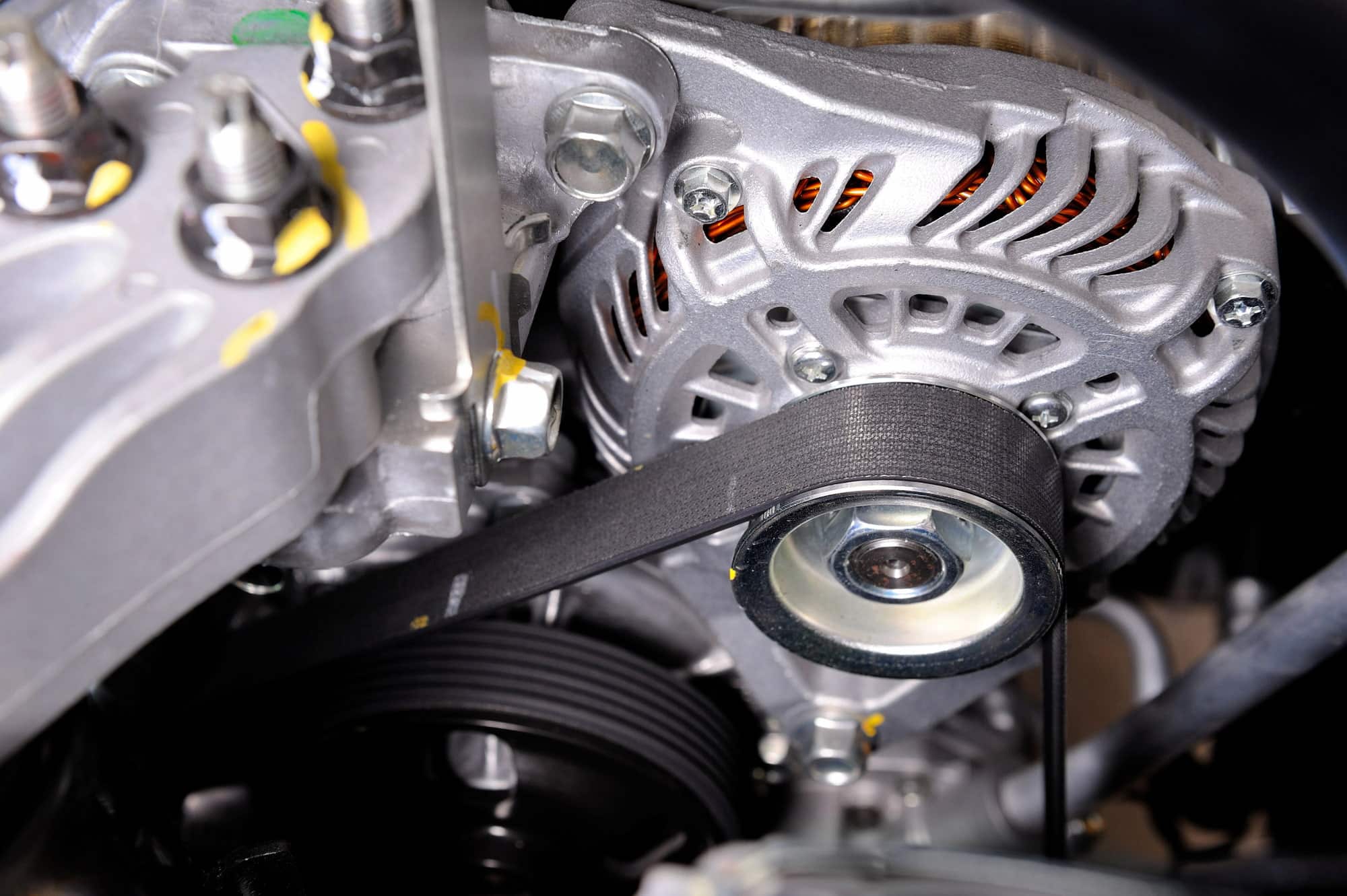
Land Rover Cambelt Timing Belt Replacement at DART Auto
Getting the cambelt replacement wrong on a Land Rover can cost you an entire engine. Unlike simpler platforms, Land Rover timing belt service involves interference engines where a skipped tooth or misaligned cam can send valves into pistons at highway speed. The 2.0L Ingenium turbodiesel and 3.0L TDV6 engines common in Discovery 4, Range Rover Sport (L320/L494), and Range Rover Evoque require precise alignment using OEM-specific timing pins and locking tools that most general shops don't stock. Torque sequences for the crankshaft pulley bolt and auxiliary belt tensioners follow Land Rover-specific procedures – deviate from those specs and you risk oil pump damage or accessory drive failure within months.
DART Auto has invested in the factory tooling, diagnostic software, and training to perform Land Rover cambelt replacement to OEM standards. Our master technicians have dealer-level experience with JLR platforms and understand the nuances of each engine family. We've been Denver's European specialist since 2000, and our salaried technicians take the time to do this work correctly the first time – no shortcuts, no rushed flat-rate work.
When you bring your Land Rover to DART Auto for cambelt timing belt replacement, expect:
- Complete timing system inspection – we assess tensioners, idlers, water pump, and seals before recommending the full scope of work
- OEM-spec alignment procedures using manufacturer-specific locking tools and torque values for your engine platform
- Transparent explanation of what we found, what we recommend, and the consequences of delaying any component replacement
- 3-year/36,000-mile warranty on parts and labor, backing every cambelt service we perform
Common Cambelt Timing Belt Replacement Issues on Land Rover Vehicles
Getting cambelt service wrong on a Land Rover doesn't just cost you time – it can destroy an engine in seconds. Land Rover timing systems are interference designs on nearly every petrol engine since the mid-2000s, meaning a snapped belt sends valves into pistons at highway speed. Here's what we see regularly:
- Discovery 3 and 4 / Range Rover Sport (2004–2013) 4.4L V8 Jaguar-derived AJ-V8: Timing chain guides crack and fragment around 80,000–120,000 miles. These engines share architecture with Jaguar's AJ133, and the plastic tensioner guides fail predictably. When fragments circulate, they jam the oil pickup and starve the engine.
- Freelander 2 / LR2 (2007–2015) 3.2L I6 (Volvo SI6): This transverse straight-six uses a rubber cambelt that must be replaced every 105,000 miles or ten years, whichever comes first. Shops unfamiliar with the Volvo-sourced engine often skip the water pump (driven by the belt) or fail to tension correctly, leading to premature belt slip and valve contact.
- Discovery Sport / Range Rover Evoque (2015–2019) 2.0L Ingenium TD4 diesel: The wet-belt-in-sump design on early Ingenium engines disintegrates when oil-change intervals stretch past 10,000 miles or low-quality oil is used. Belt material contaminates the oil system, clogging the pickup screen and causing catastrophic bearing failure.
- Defender 90/110 (2020+) 3.0L P400 mild-hybrid inline-six: Though this engine uses a timing chain, the electric supercharger and 48V mild-hybrid system require precise crankshaft position calibration after any front-end timing work. Skipping the JLR IDS/SDD relearn leaves the engine in limp mode or throws persistent fault codes.
- Range Rover L322 (2002–2012) 4.2L and 4.4L supercharged V8: Timing chain tensioners wear on high-mileage examples (beyond 100,000 miles), producing a characteristic cold-start rattle. Delaying replacement allows the chain to jump a tooth, bending valves even on these robust engines.
- Freelander 1 (1997–2006) 1.8L K-series petrol: The Rover K-series uses a cambelt with a recommended 60,000-mile interval. Overheating – common on this platform due to head-gasket failures – accelerates belt degradation. A heat-damaged belt snaps without warning, and because it's an interference engine, valve-to-piston contact is immediate.
Why Choose DART Auto for Land Rover Cambelt Timing Belt Replacement
Getting the timing belt wrong on a Land Rover can mean catastrophic engine damage – bent valves, damaged pistons, and repair bills that dwarf the cost of the belt itself. DART Auto has been the go-to European specialist in Denver since 2000, with master technicians who know the nuances of every Land Rover platform that uses interference timing belt designs.
We use factory repair procedures and Land Rover-specific tooling – the same diagnostic software and holding fixtures the dealer uses, without the dealer markup. Our technicians are salaried, not flat-rate, so there's zero incentive to rush through critical alignment steps or skip the post-installation verification that prevents comebacks. We source OEM or premium aftermarket belts, tensioners, and water pumps from trusted suppliers, and every cambelt service includes a complete accessory drive inspection to catch idler pulley wear or oil leaks that could contaminate the new belt.
- Platform expertise: Familiarity with Td5, Puma, and AJ-V8 timing systems and the TSBs that address common failure modes
- Complete replacement kits: Belt, tensioner, idler pulleys, and water pump replaced as an assembly when indicated
- Post-repair verification: Compression test and crank-rotation check confirm valve timing before the first start
- 3-year/36,000-mile warranty: Parts and labor coverage that backs the work long-term
Symptoms – How to Know You Need This Service
Cambelt replacement is largely mileage-driven preventive maintenance, but certain warning signs indicate your Land Rover's timing belt system needs immediate attention:
- Ticking or slapping noise from the front of the engine that increases with RPM – often points to worn tensioners or idler pulleys on the TDV6 or Ingenium engines
- Rough idle or misfires after cold starts – can signal timing belt stretch allowing cam timing to drift out of spec
- Check engine light with cam/crank correlation codes (P0016, P0017, P0018, P0019) – the ECU detects timing discrepancies between crankshaft and camshaft position sensors
- Visible cracking or fraying on the belt surface during inspection – rubber degrades over time even if mileage is low
- Oil weeping around the front crankshaft seal – oil contamination accelerates belt degradation and tensioner failure
- Coolant leaks near the timing cover – water pump failure is common on high-mileage TDV6 engines and requires timing belt removal to access
- Engine won't start after sitting – in rare cases, a snapped belt leaves the engine unable to turn over properly
If you hear sudden loud rattling or the engine dies while driving, do not attempt to restart – a broken timing belt may have already caused valve-to-piston contact. Have the vehicle towed to avoid compounding internal damage. For gradual symptoms like ticking or rough idle, schedule an inspection soon to prevent a roadside failure.
Which Land Rover Models We See for Cambelt Timing Belt Replacement
Land Rover uses timing belts on several diesel and select petrol engine families. We regularly service cambelt replacement on these platforms:
- Discovery 4 (2009–2016) with 3.0L TDV6 and 2.7L TDV6 diesel engines – both interference designs requiring timing belt service every 105,000 miles or 7 years
- Range Rover Sport L320 (2005–2013) equipped with TDV6 and TDV8 diesels – timing belt service includes water pump and auxiliary belt replacement on these platforms
- Range Rover Sport L494 (2014–2020) with 3.0L SDV6 diesel – uses updated Ingenium timing belt system with revised tensioner design
- Range Rover L322 (2002–2012) TDV6 and TDV8 variants – earlier TDV6 engines (2.7L) are particularly sensitive to tensioner wear
- Range Rover Evoque L538 (2011–2018) with 2.0L TD4 diesel – compact engine bay requires specialized access procedures for timing cover removal
- Freelander 2 (LR2 in North America, 2006–2015) with 2.2L TD4 diesel – timing belt interval is 105,000 miles; water pump replacement is recommended during belt service
- Discovery Sport L550 (2015–2019) with 2.0L Ingenium diesel – newer platform with tighter service intervals and updated belt material specifications
Most Land Rover petrol engines (supercharged V6, V8) use timing chains rather than belts. If you're unsure whether your model requires cambelt service, contact DART Auto – we'll verify your engine type and recommend the appropriate maintenance schedule based on your VIN and service history.
Causes & Risks – What Happens if Ignored
Cambelt and timing chain failures on Land Rover platforms stem from a mix of design choices and real-world stress. Rubber cambelts degrade with heat cycling, oil contamination, and time – even if mileage is low. Timing chains stretch under load, especially when oil-change intervals slip or the wrong viscosity is used. Land Rover's increasing reliance on wet-belt systems (Ingenium diesel and some petrol variants) means belt material lives inside the oil sump, where it's vulnerable to oil quality and temperature extremes. Colorado's temperature swings – sub-zero mornings followed by midday warmth – accelerate rubber hardening and chain-guide embrittlement.
Ignoring early warning signs turns a scheduled service into an engine rebuild:
- Cold-start rattle (chain engines): Worn tensioners let the chain slap against guides. Within 5,000–10,000 miles, the chain jumps timing, bending valves and requiring head removal at minimum.
- Oil contamination with belt debris (Ingenium wet-belt): Once fragments appear in the oil, the pickup screen clogs. Oil pressure drops, main and rod bearings score, and the engine seizes – often while driving.
- Coolant leaks near the timing cover (belt-driven water pump): A leaking pump drips coolant onto the cambelt, softening the rubber. The belt slips or snaps within weeks, and valve-to-piston contact destroys the head and often cracks pistons.
- Check Engine light with cam/crank correlation codes (P0016, P0017): This indicates the belt or chain has already stretched or jumped. Continuing to drive risks complete timing failure at speed, where momentum drives pistons into open valves with enough force to punch through the block.
The cost gap is stark: scheduled cambelt service runs a fraction of what a full engine rebuild or replacement costs after catastrophic failure.
Safety Impact – Why Cambelt Timing Belt Replacement Matters
A snapped cambelt or jumped timing chain doesn't just stop the engine – it can stop it violently, mid-traffic. On interference engines (most Land Rover petrol and diesel powerplants), valves and pistons occupy the same space at different times. When timing fails, they occupy it simultaneously. Valves bend, pistons crack, and the engine locks solid. If this happens at highway speed, you lose all power – no acceleration to merge, no engine braking on downhill grades, and no power steering assist on older hydraulic-assist models.
Specific safety risks include:
- Sudden loss of motive power in traffic: A seized engine leaves you coasting with no ability to accelerate out of danger. On Colorado mountain passes or I-25 merges, this is a collision risk.
- Loss of vacuum-assisted braking (older models): Engine-driven vacuum pumps stop when the engine locks. Brake pedal effort increases dramatically, and stopping distances lengthen.
- Loss of electric power steering assist (post-2010 models): When the engine dies, the alternator stops. Battery reserve powers steering for only a few minutes before assist fades, making emergency maneuvers difficult.
- Fire risk from oil starvation: Wet-belt debris clogs oil passages, starving bearings. Friction generates extreme heat, igniting oil mist inside the crankcase. We've seen Ingenium engines catch fire after wet-belt failure.
Stop driving immediately if you hear rattling from the timing cover, see oil pressure warnings, or get cam/crank correlation codes. Schedule service soon if you're approaching the mileage or age interval, even if the engine runs smoothly.
How Land Rover Cambelt Timing Belt Replacement Actually Works
Land Rover timing systems synchronize crankshaft and camshaft rotation so valves open and close precisely as pistons rise and fall. Rubber cambelts use toothed profiles that mesh with sprockets on the crank and cam gears. Timing chains use roller links over sprockets, tensioned by hydraulic or spring-loaded arms. Wet-belt systems (Ingenium engines) run a reinforced rubber belt inside the oil sump, lubricated by engine oil. All three designs demand exact alignment – off by even one tooth, and valve timing shifts enough to cause misfires, power loss, or internal contact.
What makes Land Rover timing work different:
- Interference engine design across the range: Nearly every Land Rover petrol and diesel engine since 2000 is an interference type. Valve-to-piston clearance at top dead center is measured in fractions of a millimeter, so timing accuracy is non-negotiable.
- Wet-belt-in-sump on Ingenium engines: The belt runs submerged in engine oil, which means oil quality directly affects belt life. Conventional belt-replacement procedures don't apply – the sump must be dropped, the oil system flushed, and the pickup screen inspected for debris.
- Jaguar Land Rover IDS/SDD software for relearns: Post-2010 models with variable valve timing (VVT) or hybrid systems require crankshaft position relearns and VVT actuator calibrations after timing work. Generic scan tools can't perform these procedures – only JLR-specific diagnostic platforms can.
- Locking tools and torque-to
How We Diagnose Cambelt Timing Belt Replacement Issues on Land Rover
Getting cambelt timing wrong on a Land Rover can mean catastrophic engine damage – bent valves, damaged pistons, and a repair bill that dwarfs the cost of proper preventive service. That's why our diagnostic process starts with a thorough understanding of your specific engine platform and service history.
- Service history review and platform identification. We pull up your Land Rover's complete maintenance records and identify the exact engine variant. The 3.0L TDV6 diesel, for instance, uses a timing belt system prone to water pump-driven failures, while the 5.0L AJ-V8 petrol runs a timing chain that can stretch under certain conditions. Knowing your platform dictates the entire diagnostic path.
- Visual inspection of belt condition and accessory drive components. We remove the timing cover to inspect the cambelt for cracking, glazing, fraying, or oil contamination. On Td5 and TDCi engines, oil leaks from the camshaft seal or front crankshaft seal often saturate the belt, accelerating wear. We also check tensioner bearings for play and idler pulleys for roughness.
- Measurement of belt tension and component alignment. Using OEM-spec tension gauges and alignment tools, we verify that the belt sits correctly on all pulleys and that tension falls within Land Rover's published range. Misalignment or improper tension – even by a few millimeters – can cause premature failure or timing slip.
- Inspection of water pump, tensioner, and related seals. The water pump is often cambelt-driven on Land Rover diesel engines, and pump bearing failure is a leading cause of belt destruction. We check for coolant weeping, bearing noise, and shaft play. Tensioners are replaced as a matter of course during any cambelt service – they're a wear item with a finite lifespan.
- Documentation and repair plan. We photograph the findings, document component wear levels, and present a clear recommendation: replace the belt, tensioner, idler pulleys, water pump (if driven by the belt), and any leaking seals as a complete assembly. You get a detailed quote with no surprises.
Cambelt Timing Belt Replacement on Land Rover: Repair vs. Replacement
On Land Rover timing belt systems, "repair" is rarely an option – these are interference engines where a failed belt means immediate valve-to-piston contact. The decision tree is straightforward but depends on what we find during inspection.
When a Repair Makes Sense
If the belt itself is in good condition but an accessory component has failed – a leaking camshaft seal or a weeping water pump – we can address that single part without disturbing the belt, provided the belt is well within its service interval and shows no contamination. This scenario is uncommon but does happen on recently serviced engines.
When Partial Replacement Is Appropriate
If you're approaching the service interval (typically 60,000 to 105,000 miles depending on engine) but only the tensioner shows wear, we'll replace the tensioner and inspect the belt. However, given the labor cost to access the timing components on transverse-mounted engines like the Freelander's, partial replacement rarely makes financial sense. You're paying for the same labor twice.
When Full Replacement Is the Right Call
- At or near the factory service interval. Land Rover specifies cambelt replacement every 105,000 miles on many diesel engines, but real-world conditions – short trips, dusty environments, oil leaks – often shorten that window.
- Any sign of oil or coolant contamination. A saturated belt loses strength and can slip or snap without warning.
- When the water pump is belt-driven. Pump bearing failure is a common failure mode on TDV6 engines; replacing the belt without addressing the pump invites a callback in 20,000 miles.
- On a used Land Rover with unknown service history. If you can't prove the belt was replaced, assume it's overdue and plan accordingly.
We walk you through the findings and explain the consequences of delaying the work. You make the call, but we'll never recommend a shortcut that puts your engine at risk.
How to Make Your Land Rover Cambelt Timing Belt Replacement Last Longer
Once we've installed a fresh cambelt kit, your goal is to reach or exceed the next service interval without incident. That means protecting the belt from the conditions that cause premature failure.
Driving Habits That Protect the Cambelt
- Allow the engine to reach operating temperature before heavy load. Cold starts and immediate highway acceleration stress the belt and tensioner. Give the oil a few minutes to circulate.
- Avoid extended idling in extreme heat. High underhood temperatures degrade rubber compounds. If you're sitting in traffic in summer, the air conditioning is working the accessory belt hard and raising compartment temps.
- Watch for oil leaks and address them immediately. A dripping camshaft seal or valve cover gasket can soak the cambelt in weeks. Oil destroys the belt's tension cords and causes slip.
Maintenance You Can Monitor
- Listen for changes in engine noise. A squealing or chirping sound at startup can indicate a failing tensioner or idler bearing – early warning signs that the belt is at risk.
- Check coolant levels weekly. A slow coolant loss without visible external leaks may point to a weeping water pump, which can fail suddenly and take the cambelt with it.
- Keep service records and follow Land Rover's interval. The factory interval is based on engineering data, not marketing. If Land Rover says 105,000 miles, that's the maximum under ideal conditions – real-world use often demands earlier replacement.
What to Leave to the Professionals
Cambelt replacement on Land Rover engines requires specialized locking tools to hold the crankshaft and camshafts in precise timing position. Attempting this work without the correct tooling and training risks catastrophic engine damage. We use OEM-spec parts and follow factory procedures to the millimeter – this is not a job for a general shop or a DIY weekend. Trust the experts who've done hundreds of these services and have the diagnostic capability to verify correct timing before you drive away.
What to Expect When You Bring Your Land Rover In
We start every timing belt appointment with a conversation about your Land Rover's service history and any symptoms you've noticed – rough idle, accessory whine, or coolant loss can all influence the scope of work. Here's how the process unfolds:
- Drop-off and initial inspection: We'll ask about recent repairs, confirm mileage, and note any personal items to remove from the vehicle. If you need a loaner or shuttle service, let us know during scheduling.
- Pre-repair assessment: Before we touch the belt, we run a full scan for stored codes, check for oil leaks at the front cover, and inspect accessory drive components. You'll receive a written estimate covering the belt kit, any additional seals or gaskets, and recommended ancillary work like coolant hoses or serpentine belts.
- Approval and execution: Once you approve the estimate, we order parts and schedule the work. Our techs follow Land Rover torque specs and alignment procedures, using locking tools to hold camshaft and crankshaft position during installation.
- Post-repair verification: We hand-rotate the engine two full revolutions to confirm timing marks align, then perform a no-start compression check. After the first start, we monitor for noise, leaks, and proper accessory function.
- Pickup walkthrough: At pickup, we'll show you the old belt and explain what we found. If anything feels off in the first few days, call us – we'll recheck alignment and address any concerns immediately.
After-hours pickup can be arranged if your schedule demands it, and we keep detailed service records so future timing belt intervals are never a guessing game.
Our Land Rover Services
- Air Conditioning AC Repair
- Battery Repair Replacement
- Brake Repair & Brake Fluid Change
- Check Engine Light Diagnostics
- Clutch Repair & Replacement
- Coolant Leak Repair
- Cooling System Repair
- Drive Shaft Repair
- Engine Repair
- Exhaust & Catalytic Converter Repair
- Head Gasket Repair & Replacement
- Oil Change
- Oil Leak Repair
- Scheduled Service Maintenance
- Steering Repair
- Suspension Repair
- Transmission Repair
- Tune Up
- Wheel Alignment