
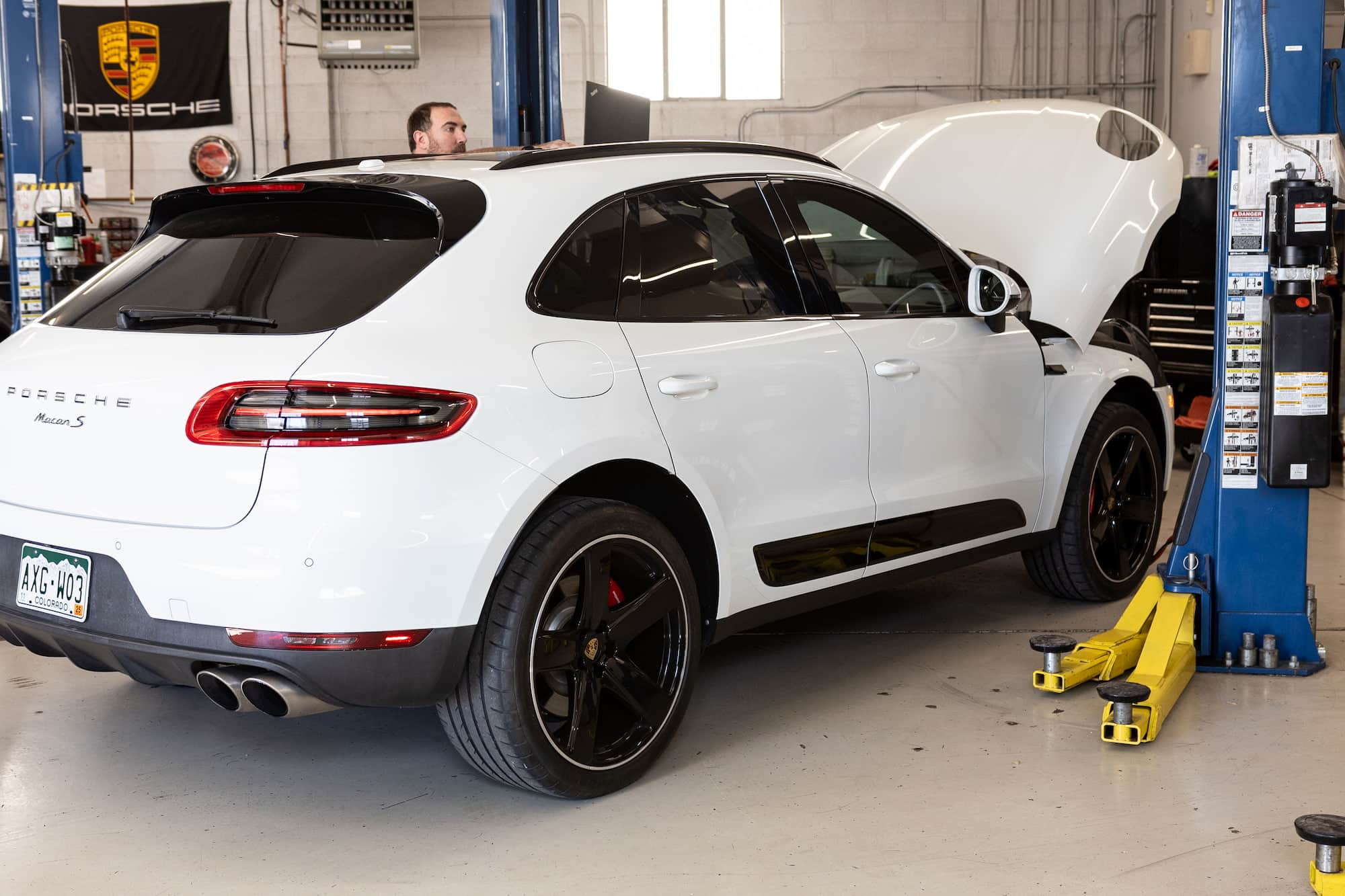
Fiat Transmission Repair at DART Auto
Fiat transmission repair demands a shop that understands the unique engineering philosophy behind these Italian platforms. Whether you're driving a 500 with the C514 six-speed automated manual, a 124 Spider sharing the Mazda ND platform, or an older 500L with the PowerShift dual-clutch, each system requires specialized diagnostic protocols and software access that generic shops simply don't maintain. The automated manual transmissions found in most modern Fiats operate fundamentally differently from conventional automatics – clutch actuation is managed electronically, and even minor software glitches or actuator wear can create symptoms that mimic catastrophic failure. DART Auto has invested in the factory-level scan tools and training to distinguish between a $200 actuator replacement and a full rebuild, saving you from unnecessary expense.
Our approach starts with comprehensive electronic diagnostics using Fiat-specific software that reads transmission control module data, clutch position sensors, and hydraulic actuator performance logs. We then perform road-test verification under the exact conditions that trigger your symptoms. Because our technicians are salaried rather than flat-rate, they have the time to diagnose correctly rather than rushing to the most expensive solution. When we recommend transmission work, you'll receive a detailed explanation of what failed, why it failed, and what we'll do to prevent recurrence.
When you bring your Fiat to DART Auto for transmission repair, expect:
- Factory-level diagnostics using Witech or equivalent OEM scan tools that access transmission control module data streams
- Transparent communication about whether your issue requires software recalibration, component replacement, or full rebuild
- Use of OEM clutch kits, actuators, and transmission fluid meeting Fiat MS-9602 specifications where applicable
- A 3-year/36,000-mile warranty on parts and labor, backed by over two decades serving Denver's European vehicle community
Common Transmission Repair Issues on Fiat Vehicles
Fiat transmissions – particularly the automated manual gearboxes and dual-clutch units deployed across the 500, 500L, 500X, and Renegade lines – demand specialist attention because their electro-hydraulic actuation and clutch-pack logic differ sharply from conventional automatics. When these systems fail, the symptoms are immediate and the repair window is narrow.
- C635 dual-clutch actuator failure (2012–2019 500, 500L, 500X): The electro-hydraulic actuator that selects gears and modulates clutch engagement wears internally, causing harsh shifts, refusal to engage gears, or complete loss of drive. Early-generation C635 units are especially prone to seal leaks and valve-body contamination.
- Clutch-pack wear on automated-manual transmissions (2007–2016 500, Punto): The Dualogic and MTA robotized manuals use a single dry clutch actuated by hydraulic servo. Stop-and-go city driving accelerates friction-disc wear, leading to slippage, juddering on takeoff, and eventually a burning smell as the clutch overheats.
- Transmission control module software faults (2014+ 500X, Renegade with ZF 9HP): The ZF nine-speed automatic used in AWD and certain FWD variants can exhibit erratic shift logic, limp-mode activation, or delayed engagement after software glitches or corrupted adaptive tables. OEM reflash procedures and module relearning are often required alongside mechanical repair.
- Mechatronic sleeve failure (C635 dual-clutch): The mechatronic sleeve that houses solenoids and pressure sensors can crack or develop internal short-circuits, throwing multiple fault codes and causing the transmission to default to a fixed gear or refuse to shift entirely.
- Torque-converter shudder (ZF 9HP, 2014+ Renegade/500X): Contaminated ATF or worn lockup-clutch friction material produces a pronounced vibration during light-throttle acceleration between 30–50 mph. Left unaddressed, the converter's internal damper springs can fracture.
- Shift-fork and synchronizer wear (manual six-speed, 500 Abarth): High-performance driving on the Abarth's Aisin C514 gearbox can wear second- and third-gear synchros, causing grinding or pop-out under load. The shift linkage's plastic bushings also deteriorate, leading to vague or notchy shifts.
Why Choose DART Auto for Fiat Transmission Repair
Fiat transmissions – particularly the dual-clutch C635 in the 500 Abarth and the Aisin six-speed automatic found in the 500X and 500L – demand platform-specific tooling and software that most independent shops lack. DART Auto maintains factory-level diagnostic capability, including direct access to Fiat service bulletins addressing known shift-quality issues, clutch adaptation procedures, and transmission control module updates that often resolve erratic behavior without hardware replacement.
Our salaried master technicians bring dealer training and over a decade of hands-on experience with European platforms. Because we don't work on flat-rate, there's no incentive to replace a transmission when a software flash, clutch adaptation reset, or mechatronic unit repair will restore smooth operation. We perform end-to-end ownership of the work:
- Full electronic scan using OEM-level tools to pull fault codes, monitor live data streams, and capture shift events under load
- Mechanical inspection of fluid condition, cooler lines, and shift linkage specific to Fiat's compact packaging
- Post-repair road test with scan-tool verification to confirm adaptation values and shift quality meet factory specifications
We source OEM Mopar components and premium aftermarket parts from trusted European suppliers, ensuring compatibility with Fiat's calibration requirements. Every transmission repair is backed by our 3-year/36,000-mile warranty on parts and labor – a level of confidence that comes from fixing it right the first time.
Symptoms – How to Know You Need This Service
Fiat transmission issues often announce themselves through distinct symptoms that reflect the automated manual and dual-clutch designs common across the lineup. Pay attention to what your car is telling you:
- Harsh engagement or lurching when shifting from park to drive or reverse, particularly after the car has been sitting – often indicates clutch actuator wear or hydraulic pressure loss in C514 transmissions
- Flashing gear indicator or transmission warning light on the dashboard, sometimes accompanied by the car defaulting to a single gear – this is limp mode and requires immediate diagnosis
- Grinding or clunking sounds during shifts, especially between first and second gear – may point to clutch disc wear or synchronizer damage
- Refusal to shift out of first gear or getting stuck in neutral – common with failed TCM communication or actuator motor failure
- Burning smell during stop-and-go driving or hill starts – suggests clutch slippage from worn friction material or incorrect fluid level
- Delayed response when accelerating from a stop, with the engine revving but the car hesitating to move – indicates clutch engagement problems
- Jerky or shuddering shifts during normal driving, particularly in lower gears – may result from contaminated transmission fluid or software calibration drift
If you see warning lights or experience sudden loss of forward gears, stop driving and arrange towing. Continuing to operate the vehicle can turn a repairable actuator issue into a complete transmission failure requiring full replacement.
Which Fiat Models We See for Transmission Repair
DART Auto regularly services transmission issues across the Fiat lineup, with particular expertise in the automated manual and dual-clutch systems that define the modern Fiat driving experience. The platforms we see most frequently include:
- 500 (2012–2019, 312 chassis) – C514 six-speed automated manual transmission, known for actuator motor and clutch wear issues, particularly in city-driven examples with high stop-and-go mileage
- 500L (2014–2020) – PowerShift six-speed dual-clutch (DDCT), shares components with Ford's DPS6 and experiences similar clutch shudder and mechatronic unit failures
- 500X (2016–2019) – Nine-speed automatic (948TE) in AWD models, six-speed dual-clutch in FWD variants; the dual-clutch versions see clutch pack wear and software-related shift quality issues
- 124 Spider (2017–2020, ND platform) – Six-speed manual or Aisin six-speed automatic; while the manual is robust, the automatic can develop valve body and solenoid issues
- 500 Abarth (2012–2019) – Same C514 automated manual as the standard 500 but driven harder, leading to accelerated clutch wear and actuator stress
- 500e (2013–2019) – Single-speed reduction gearbox; while simpler, we diagnose motor/inverter integration issues that affect drivability
We also service older Fiat models including the Punto, Bravo, and Stilo when they appear, though parts availability can require longer lead times. Our focus remains on the 312-chassis 500 family and the 124 Spider, where our diagnostic capability and parts relationships deliver the fastest turnaround.
Causes & Risks – What Happens if Ignored
Fiat transmission issues stem from a combination of design compactness, aggressive software calibration for fuel economy, and the reality that many owners drive these cars in dense urban traffic where clutch modulation and low-speed shifting cycles are constant. Colorado's altitude and temperature swings exacerbate fluid breakdown and seal shrinkage, particularly in the C635's hydraulic circuits.
Delaying repair accelerates damage in predictable ways:
- Actuator leaks contaminate the clutch packs: A weeping seal in the C635 actuator drips hydraulic fluid onto the dual-clutch assembly. Within 500–1,000 miles, the friction material becomes saturated, causing slip and eventually requiring full clutch replacement on top of the actuator rebuild.
- Worn clutches overheat the flywheel: A slipping automated-manual clutch generates enough heat to blue the flywheel surface and warp the pressure plate. What starts as a $900 clutch job becomes a $2,200 repair once flywheel resurfacing or replacement is needed.
- Software faults corrupt adaptive data: Ignoring limp-mode or erratic shifts allows the TCM to learn incorrect shift points and pressure curves. Eventually the module's EEPROM can lock into a fault state that survives even after mechanical repair, requiring module replacement instead of a simple reflash.
- Torque-converter debris circulates through the valve body: A disintegrating converter pumps metal particles into the ZF 9HP's valve body, scoring solenoid bores and clogging filter screens. The repair escalates from a $1,400 converter swap to a $4,500 valve-body and solenoid overhaul.
- Driving on a failing transmission risks sudden loss of drive: A C635 actuator that intermittently refuses to engage can strand you mid-intersection or on a highway on-ramp, creating immediate collision risk.
Safety Impact – Why Transmission Repair Matters
A failing Fiat transmission doesn't just inconvenience – it removes your ability to accelerate out of danger, merge safely, or maintain speed on grades. The C635 dual-clutch and ZF 9HP both rely on electronic control modules that communicate with the ABS, traction-control, and stability systems. When the transmission enters limp mode or loses hydraulic pressure, the powertrain control network can disable torque-vectoring and hill-start assist, leaving you with degraded vehicle dynamics exactly when you need full capability.
Symptoms that mean stop driving immediately:
- Complete loss of forward or reverse gears with the engine running.
- Burning smell from the transmission tunnel or clutch area.
- Loud grinding, clunking, or metal-on-metal noise during shifts.
- Transmission warning light flashing (solid is "schedule soon"; flashing is "stop now").
Schedule service within the week:
- Harsh or delayed shifts, especially when cold.
- Slipping between gears or unexpected RPM flare during acceleration.
- Intermittent limp-mode activation that clears after a restart.
Insurance and liability concerns apply if a known transmission defect contributes to an accident. Documented neglect of warning lights or symptoms can complicate claims and increase your exposure in multi-vehicle incidents.
How Fiat Transmission Repair Actually Works
Fiat's C635 dual-clutch transmission uses two independent clutch packs – one for odd gears, one for even – controlled by a single electro-hydraulic actuator mounted atop the gearbox. The actuator contains a high-pressure pump, solenoid valves, and position sensors that modulate clutch engagement and shift-fork movement with millisecond precision. Unlike a traditional torque-converter automatic, there's no fluid coupling; every launch and shift depends on precise hydraulic pressure and electronic timing. The ZF 9HP automatic found in AWD Renegade and 500X models uses a conventional planetary gearset but pairs it with a complex valve body and adaptive shift logic that requires OEM scan tools to access transmission-adaptive tables and perform clutch-relearn procedures after any internal work.
Design points that shape the repair process:
- OEM diagnostic software required: Fiat's wiTECH or authorized aftermarket equivalents are necessary to read clutch-position values, actuator pressure curves, and stored fault codes that generic scanners miss.
- Clutch-pack replacement demands flywheel inspection: The dual-mass flywheel on C635-equipped cars must be measured for runout and inspected for damper-spring failure; reusing a marginal flywheel guarantees premature clutch wear.
- Actuator rebuilds require clean-room conditions: Contamination during actuator disassembly will cause immediate repeat failure. Shops without proper procedures often replace the entire unit at three times the cost of a rebuild.
- Transmission-fluid specification is non-negotiable: The C635 requires Tutela CS Speed fluid; substituting generic DCT fluid changes clutch modulation and can damage seals. The ZF 9HP uses ZF Lifeguard 9 ATF, and mixing or underfilling by even half a quart affects shift quality.
- Adaptive relearn after repair: Both the C635 TCM and ZF 9HP controller must run factory relearn routines post-repair to recalibrate clutch bite points and shift pressures. Skipping this step leaves the car with harsh or delayed shifts even after perfect mechanical work.
How We Diagnose Transmission Repair Issues on Fiat
Fiat transmissions – whether the C514 5-speed manual found in the 500, the C635 6-speed dual-clutch in Abarth models, or the Aisin 6F24 automatic used across the 500X and 500L – each speak a different diagnostic language. We start every diagnosis by listening to what the transmission is actually telling us, not guessing based on symptoms alone.
- Initial interview and test drive: We replicate the concern with you or based on your description – whether it's harsh 2-3 upshifts in the C635, delayed engagement from Park, or grinding on downshifts in the manual. The test drive reveals whether the issue is temperature-dependent, load-sensitive, or present only in specific gears.
- Factory-level scan with Fiat-specific software: We connect our diagnostic platform – equivalent to the dealership's wiTECH system – to pull transmission control module codes, live data streams, and adaptation values. For dual-clutch models, we monitor clutch actuation counts, pressure sensor readings, and shift fork positions in real time. Generic code readers miss half the picture on these electronically managed gearboxes.
- Fluid analysis and visual inspection: We drop the pan (on conventional automatics) or inspect the fill plug on manuals and dual-clutch units. Metal shavings, clutch material, or burnt fluid odor tells us immediately whether internal damage has occurred. On the C635, we inspect the mechatronic unit for leaks and contamination – a common failure point on 2012–2016 models.
- Hydraulic pressure and electrical testing: Using a pressure gauge kit, we verify line pressure, clutch pack engagement pressure, and solenoid response. Electrical testing confirms that shift solenoids, speed sensors, and wiring harnesses are functioning within Fiat's specifications.
Once we've gathered the data, we walk you through what we found, what it means for your transmission's longevity, and which repair path makes sense. You'll receive a detailed quote before any work begins, so there are no surprises when you pick up your keys.
Transmission Repair on Fiat: Repair vs. Replacement
Not every transmission fault means you need a complete rebuild or replacement. The decision hinges on what's actually worn and whether surrounding components can continue to serve reliably.
When Genuine Repair Makes Sense
- Mechatronic valve body replacement on C635 dual-clutch: If the hydraulic control unit has failed but the clutches and gears remain healthy, we replace the mechatronic assembly with an OEM or remanufactured unit and perform the required adaptation procedure. This restores full function without touching the transmission internals.
- Shift linkage and cable adjustment on manuals: Grinding or difficulty finding gears often stems from worn shift cables or misadjusted linkage, not internal damage. Replacing cables and bushings and performing the factory adjustment procedure solves the issue at a fraction of rebuild cost.
- Solenoid pack or speed sensor replacement on automatics: A single failed shift solenoid or input/output speed sensor can cause harsh shifts, limp mode, or no upshift beyond second gear. If fluid is clean and pressure tests are normal, replacing the faulty sensor or solenoid restores normal operation.
When Partial or Full Replacement Is the Right Call
- Clutch pack wear in dual-clutch transmissions: If the C635 clutches are slipping due to high mileage or abuse, and the mechatronic unit shows contamination, a remanufactured transmission often costs less than a full in-house rebuild and includes updated components that address known weak points.
- Internal hard part failure: Broken gears, damaged synchronizers, or scored clutch drums mean the case must come apart. At that point, we evaluate whether a complete rebuild with all new wear items or a factory-remanufactured unit offers better value and warranty coverage.
We never push the most expensive option. Instead, we lay out the repair-versus-replace math, explain what each path buys you in terms of longevity and warranty, and let you make the call that fits your plans for the vehicle.
How to Make Your Fiat Transmission Repair Last Longer
Once your transmission is back in service, a few deliberate habits will protect your investment and keep shifts smooth for years to come.
Driving Habits That Protect the Transmission
- Allow the transmission to warm up: Fiat dual-clutch and automatic transmissions rely on precise hydraulic pressure. In cold weather, let the car idle for 30 seconds and drive gently for the first mile to allow fluid to reach operating temperature and viscosity.
- Avoid aggressive launches and hard downshifts: The C635 dual-clutch, in particular, doesn't tolerate repeated full-throttle launches well. The clutches are small and heat-sensitive. Save the Abarth's performance for occasional spirited drives, not daily commutes.
- Come to a complete stop before shifting into Reverse: Rolling shifts – even at low speed – put unnecessary stress on the parking pawl and clutch packs. A full stop takes one extra second and prevents hundreds of dollars in future damage.
Maintenance You Can Monitor
- Check for fluid leaks regularly: Look under the car for red or brown fluid spots. Fiat transmissions use specific ATF formulations, and low fluid leads to overheating and slipping.
- Listen for changes in shift quality: New noises – clunks, whines, or grinding – are early warning signs. Catching a problem before it cascades into internal damage saves thousands.
- Follow Fiat's service intervals for transmission fluid: Many Fiat models call for fluid changes every 60,000 miles on dual-clutch and automatic transmissions, despite marketing claims of "lifetime" fluid. Fresh fluid removes contaminants and restores hydraulic efficiency.
What to Leave to the Professionals
Transmission fluid changes on dual-clutch and modern automatic transmissions require specific procedures, fill volumes, and software adaptation. DIY fluid changes without the correct tooling and scan tool can result in overfill, underfill, or incorrect clutch calibration. We handle fluid service using OEM-spec fluids and perform the required relearns to keep your transmission shifting as Fiat intended.
What to Expect When You Bring Your Fiat In
We've streamlined the process so you know exactly what happens from drop-off to pickup. Transparency and clear communication are built into every phase of your visit.
- Appointment and drop-off. Schedule a time that works for you or use our after-hours key drop if you need early morning service. Remove personal items from the cabin; leave the key and a brief description of symptoms.
- Initial inspection and scan. A technician performs a complete electronic scan, retrieves stored and pending fault codes, and conducts a visual inspection of fluid level, color, and cooler lines. We document findings in writing.
- Written estimate and consultation. You'll receive a detailed estimate explaining what we found, which repairs are necessary now, and what can wait. We walk you through the options – software update, clutch pack replacement, valve-body rebuild, or full transmission overhaul – and explain the consequences of delaying any work.
- Authorized repair. Once you approve the estimate, we order parts and schedule the work. Loaner vehicles and local shuttle service are available during the repair window; ask our service advisor when you drop off.
- Post-repair verification. Before we call you, the technician road-tests your Fiat under varied load and speed conditions, re-scans the transmission control module to confirm adaptation values, and verifies smooth shifts across all gears.
- Pickup walkthrough. At pickup, we review the work completed, show you old parts if requested, and answer any questions. If something feels off in the days following, call us – we'll bring the car back in and re-check at no charge.
You'll leave with a detailed invoice, warranty documentation, and direct contact information for your service advisor. We're here to support you long after the repair is complete.
Our Fiat Services
- Air Conditioning AC Repair
- Battery Repair Replacement
- Brake Repair & Brake Fluid Change
- Check Engine Light Diagnostics
- Clutch Repair & Replacement
- Coolant Leak Repair
- Cooling System Repair
- Drive Shaft Repair
- Engine Repair
- Exhaust & Catalytic Converter Repair
- Head Gasket Repair & Replacement
- Oil Change
- Oil Leak Repair
- Scheduled Service Maintenance
- Steering Repair
- Suspension Repair
- Cambelt Timing Belt Replacement
- Tune Up
- Wheel Alignment