
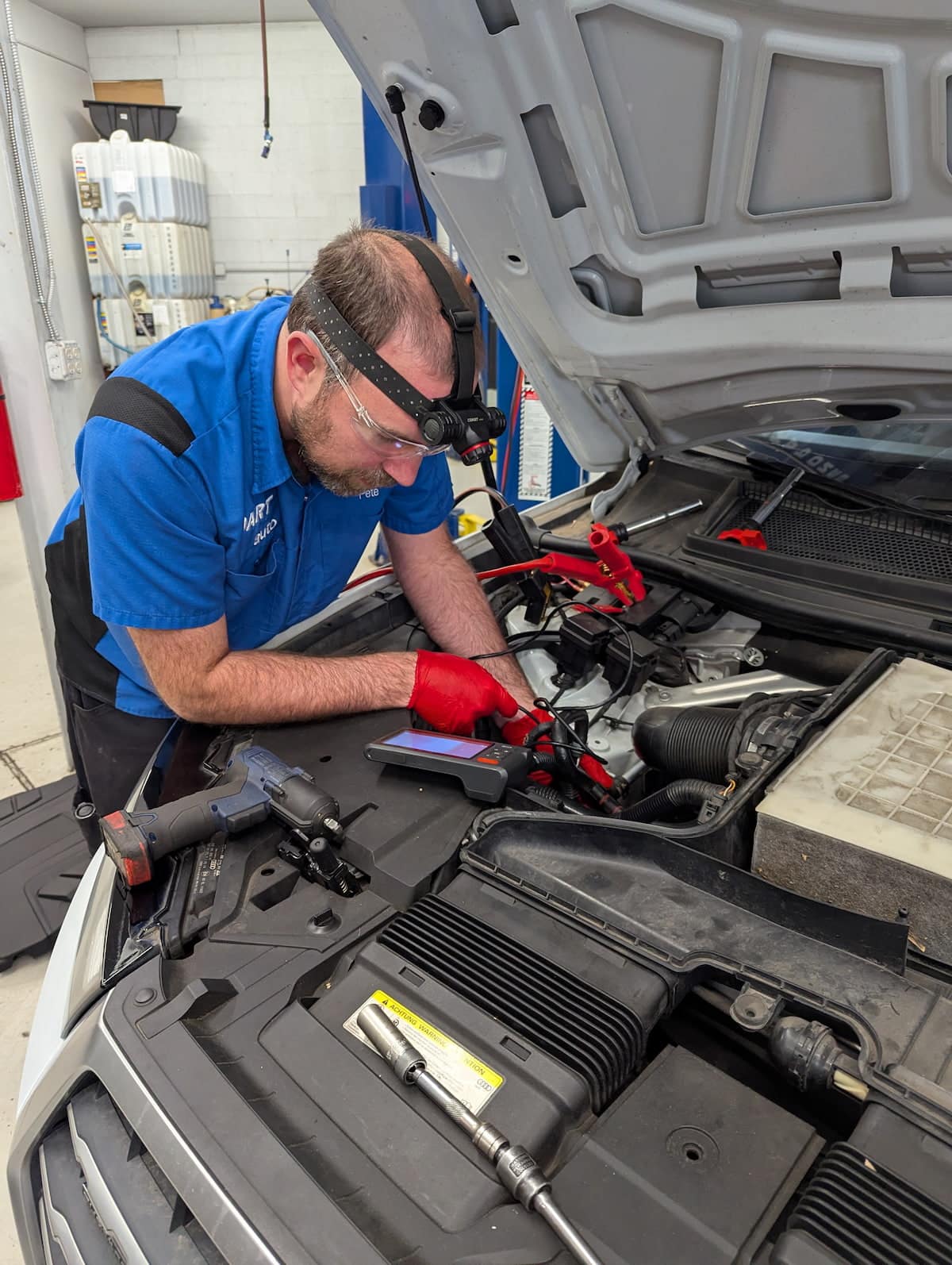
Land Rover Tune Up at DART Auto
Your Land Rover was engineered to deliver refinement and capability across any terrain, but maintaining that performance requires attention to the sophisticated systems under the hood. If you're noticing rough idling, hesitation during acceleration, or a check engine light that won't clear, your vehicle is telling you it needs expert care. Modern Land Rovers – from the L405 Range Rover to the L494 Range Rover Sport and L663 Defender – rely on complex ignition systems, direct injection, and engine management software that generic shops often misdiagnose. A proper tune up on these platforms means more than swapping spark plugs; it requires understanding how the Bosch Motronic or Siemens engine control units interact with coil packs, fuel trims, and emissions systems.
At DART Auto, we've been the European specialist Denver trusts since 2000. Our master technicians use Land Rover-specific diagnostic protocols and OEM repair procedures to restore your engine's performance without the dealership markup. We address ignition system wear patterns common to the Ford-era AJ-V8 engines and Jaguar Land Rover's newer Ingenium four- and six-cylinder platforms, ensuring every component meets factory specifications. Because our technicians are salaried rather than flat-rate, they take the time to diagnose correctly the first time – no guesswork, no unnecessary parts.
When you bring your Land Rover to DART Auto for a tune up, expect:
- Complete ignition system inspection using factory-level scan tools to read misfire counters, fuel trims, and coil performance data
- OEM or premium aftermarket spark plugs and coils matched to your engine's specifications
- Thorough diagnosis of related systems – intake manifold runners, PCV valves, and throttle body deposits that affect idle quality
- Transparent explanation of findings and a 3-year/36,000-mile warranty on parts and labor
Common Tune Up Issues on Land Rover Vehicles
Land Rover engines demand precision maintenance, and the brand's unique engineering choices create specific patterns of wear that owners need to understand. When your Discovery or Range Rover starts showing hesitation, rough idle, or reduced fuel economy, you're likely seeing the early signs of tune up needs that, if addressed now, prevent far more expensive repairs down the road.
- Ignition coil failure on AJ-V8 engines (2003–2009 Range Rover, Discovery): The 4.4L Jaguar-sourced AJ-V8 uses individual coil-on-plug ignition, and these coils fail progressively due to heat cycling and moisture intrusion. You'll notice misfires that move between cylinders as each coil degrades. The aluminum valve covers on these engines trap heat, accelerating coil deterioration compared to cast-iron designs.
- Carbon fouling on direct-injection turbocharged engines (2013+ Range Rover Sport, Evoque with Ingenium 2.0L): Land Rover's Ingenium direct-injection four-cylinders develop heavy carbon deposits on intake valves because fuel never washes over them. After 40,000–60,000 miles, you'll feel rough cold starts, hesitation under load, and declining fuel economy. The lack of port injection makes this a maintenance reality, not a defect.
- Spark plug gap erosion on supercharged 3.0L V6 (2014–2021 Range Rover Sport, Discovery): The supercharged AJ126 V6 runs high cylinder pressures that erode spark plug electrodes faster than naturally aspirated engines. Gap wear beyond 0.004 inch causes misfires under boost and triggers adaptive fuel trim corrections that mask the problem temporarily while damaging catalytic converters.
- Throttle body carbon buildup on LR4/Discovery 4 5.0L V8: The naturally aspirated AJ133 V8 accumulates carbon on throttle plates and idle air passages, causing surging idle and delayed throttle response. This engine uses drive-by-wire throttle with adaptive learning that tries to compensate, but eventually the ECU can't adapt enough and you'll see fault codes.
- PCV system clogging on 2.7L and 3.0L TDV6 diesels: While not traditional tune up items, the positive crankcase ventilation systems on these Ford-Peugeot diesel V6s clog with oil vapor residue, causing rough running and excessive oil consumption. Cleaning or replacing PCV components during tune up service prevents turbocharger oil seal failure.
Why Choose DART Auto for Land Rover Tune Up
Your Land Rover wasn't built like a Camry, and its tune-up shouldn't be treated like one. DART Auto's technicians use the same factory diagnostic software – IDS/SDD – that Land Rover dealers rely on, giving us full access to module programming, adaptation resets, and TSB updates that generic scan tools can't touch. When your Discovery Sport throws a P050D for cold-start misfire or your Range Rover Evoque develops the characteristic TD4 glow plug circuit faults, we diagnose at the module level, not just the symptom level.
We've been the go-to European shop in Denver since 2000, and that two-decade foundation means our master techs have seen every iteration of the AJ-V8, Ingenium four-cylinder, and Ford-era Jaguar Land Rover powertrains. Our salaried compensation structure removes the flat-rate incentive to replace parts without diagnosing root cause – if your LR4's rough idle is actually a PCV valve issue rather than coil packs, we'll tell you. Every tune-up includes a complete multi-point inspection and post-repair road test with live data verification, backed by our 3-year/36,000-mile parts and labor warranty. You get dealer-level capability without the dealer invoice.
Symptoms – How to Know You Need This Service
Your Land Rover will communicate when ignition components are wearing out. Pay attention to these warning signs:
- Rough or uneven idle – the engine shakes or vibrates noticeably when stopped at a light, especially after the vehicle warms up
- Check engine light with misfire codes – P0300 through P0308 codes indicate cylinder-specific or random misfires that compromise performance and catalytic converter health
- Hesitation or stumbling during acceleration – the engine bogs down or jerks when you press the throttle, particularly noticeable merging onto highways
- Reduced fuel economy – you're filling up more frequently because worn ignition components create incomplete combustion
- Hard starting or extended cranking – the engine turns over longer than usual before firing, especially on cold mornings
- Loss of power under load – climbing grades or towing feels labored, and the transmission hunts for gears to compensate
- Engine pinging or knocking sounds – pre-ignition or detonation noises under acceleration signal timing or fuel delivery issues
If you see a flashing check engine light or experience severe misfires that cause the engine to shake violently, stop driving immediately – continued operation can damage the catalytic converters. For other symptoms, schedule service within the next few weeks to prevent secondary damage to oxygen sensors and exhaust components.
Which Land Rover Models We See for Tune Up
We regularly service the full range of Land Rover platforms at our Denver shop. The ignition system work varies considerably depending on engine family and model year, so identifying your specific variant helps us prepare the correct parts and procedures:
- Range Rover (L322, 2003–2012) – AJ-V8 naturally aspirated and supercharged engines prone to coil pack failure around 60,000–80,000 miles
- Range Rover (L405, 2013–2021) – 5.0L supercharged V8 and 3.0L supercharged V6 with updated coil-on-plug design
- Range Rover Sport (L320, 2006–2013) – shared AJ-V8 platform with L322, same coil pack wear patterns
- Range Rover Sport (L494, 2014–2023) – 3.0L supercharged V6 and 5.0L supercharged V8, plus 2.0L Ingenium turbocharged four-cylinder
- Discovery (LR3/LR4, 2005–2016) – 4.4L and 5.0L V8 engines with similar ignition system architecture to Range Rover
- Discovery (L462, 2017–present) – 2.0L and 3.0L Ingenium engines with direct injection requiring specific plug gap specs
- Defender (L663, 2020–present) – 2.0L turbocharged four-cylinder and 3.0L inline-six mild hybrid with unique ignition timing maps
- LR2/Freelander 2 (2008–2015) – 3.2L inline-six and 2.0L turbocharged four-cylinder with transverse engine layout
- Evoque (L538, 2012–2018 and L551, 2020–present) – 2.0L turbocharged Ingenium engines sensitive to spark plug condition
We see fewer pre-2003 Discovery Series II and original Range Rover Classic models, though we can service them with advance notice for specialty parts sourcing. Our focus remains on the modern platforms where our factory-level diagnostic tools and training deliver the most value.
Causes & Risks – What Happens if Ignored
Land Rover tune up intervals exist because combustion byproducts, thermal cycling, and the brand's performance-oriented calibrations accelerate wear on ignition and fuel delivery components. Short trips in Denver traffic never fully warm the engine, allowing moisture and fuel dilution to contaminate oil and corrode ignition components. High-altitude operation leans out air-fuel mixtures slightly, which increases combustion temperatures and accelerates spark plug electrode wear. Land Rover's use of aluminum engine blocks and heads means greater thermal expansion cycles than cast iron, stressing gaskets and seals around ignition components.
When you postpone tune up service, the deterioration follows a predictable and expensive path:
- Misfires damage catalytic converters: Unburned fuel from weak spark or fouled plugs enters the exhaust and ignites inside the catalytic converter, melting the substrate. Replacing cats on a Range Rover costs three to five times what proper tune up service runs, and you'll face that expense within 10,000–15,000 miles of persistent misfires.
- Adaptive fuel trim masks problems until sensors fail: The ECU compensates for weak combustion by richening the mixture and advancing timing. This overworks oxygen sensors and eventually damages them, adding sensor replacement to your repair bill while still not fixing the underlying ignition weakness.
- Carbon deposits cause valve damage on direct-injection engines: Heavy carbon buildup on intake valves changes airflow patterns and creates hot spots. On Ingenium engines, this leads to valve seat recession and eventually requires cylinder head work – a $4,000+ repair that proper walnut-blasting service during tune up would have prevented.
- Coil failure cascades across cylinders: When one coil fails and you replace only that cylinder's coil and plug, the remaining original coils are under the same stress and will fail within weeks. You'll pay diagnostic time and labor multiple times instead of addressing all cylinders in one service.
- Reduced power triggers limp mode on forced-induction engines: Misfires under boost on supercharged or turbocharged Land Rovers cause the ECU to limit engine output to prevent damage. You'll lose passing power and towing capability, creating dangerous situations in highway merging or mountain driving.
Safety Impact – Why Tune Up Matters
Ignition system deterioration doesn't just cost money – it creates real safety risks that escalate quickly. When your Land Rover misfires under load, you lose predictable throttle response exactly when you need it most: merging onto I-25, climbing I-70 toward the mountains, or passing slower traffic on two-lane roads. The engine hesitates or bucks instead of delivering smooth power, and that split-second delay can put you in the path of oncoming traffic or leave you stranded in a dangerous merge situation.
Specific safety concerns tied to deferred tune up service:
- Sudden power loss while towing: Land Rovers are frequently used to tow boats and trailers. Misfires under the added load of towing cause abrupt power cuts that make controlling the vehicle-trailer combination extremely difficult, especially on mountain grades or in crosswinds.
- Stalling at intersections: Carbon buildup and weak ignition cause rough idle that can stall the engine when you're stopped. Restarting takes precious seconds while cross-traffic approaches, and the electronic parking brake on 2013+ models doesn't prevent rollback if the engine dies on a hill.
- Catalytic converter fire risk: Severely damaged converters can glow red-hot from burning unburned fuel. If you park over dry grass or leaves after driving with heavy misfires, you're risking a vehicle fire.
- Reduced braking assist on engine stall: If ignition problems cause the engine to die while driving, you lose vacuum assist for the brake booster. Pedal effort increases dramatically, and many drivers don't press hard enough in an emergency, extending stopping distances.
Stop driving and arrange towing if: you see flashing check-engine lights (indicates catalyst-damaging misfires), smell raw fuel in the cabin, experience complete power loss, or hear backfiring from the exhaust. Schedule service within the week if: you notice rough idle, reduced fuel economy beyond 15%, hesitation during acceleration, or steady check-engine lights with misfire codes.
How Land Rover Tune Up Actually Works
Modern Land Rover engines use coil-on-plug ignition systems where each spark plug has its own dedicated ignition coil mounted directly on top. The engine control module fires each coil independently based on crankshaft and camshaft position sensors, allowing precise timing control for each cylinder. This design eliminates distributor caps and spark plug wires, but it means that coil failure affects one cylinder at a time and requires individual diagnosis. Land Rover's use of aluminum cylinder heads and blocks demands specific torque sequences and values when reinstalling components – overtightening spark plugs in aluminum threads strips them, while undertightening allows combustion gases to blow by and erode the threads.
What makes Land Rover tune up service different from generic work:
- Adaptive value resets: After replacing ignition components, the ECU's learned fuel trims and misfire history must be cleared using Land Rover's IDS (Integrated Diagnostic System) or a compatible scan tool. Simply clearing codes isn't enough – the adaptive tables need proper reset or the engine will run rich based on old compensation values.
- Coil coding on 2018+ models: Newer Ingenium engines require software coding when coils are replaced, matching coil part numbers to ECU records. This prevents counterfeit parts from being installed and ensures proper dwell time for each coil type.
- Torque-to-yield considerations: Some Land Rover engines use torque-angle specifications for spark plug installation rather than simple torque values. The plug is tightened to a specific torque, then rotated an additional number of degrees to achieve
How We Diagnose Tune Up Issues on Land Rover
When your Land Rover starts showing symptoms – rough idle, hesitation during acceleration, or that persistent check engine light – we begin with a complete diagnostic workup designed specifically for Land Rover's complex engine management systems. Here's how we pinpoint what your vehicle needs:
- Factory-level scan with IDS/SDD tooling. We connect Land Rover's official diagnostic platform to read live data streams from the ECU, transmission controller, and body control modules. This reveals misfires by cylinder, fuel trim corrections, ignition timing advance, and throttle position sensor data that generic scanners simply can't access.
- Ignition system voltage and resistance testing. We measure primary and secondary coil resistance, spark plug gap erosion, and high-voltage leakage across the plug boots. On older LR3 and Range Rover Sport models with the 4.4L Jaguar V8, coil-on-plug failures often cascade – one weak coil stresses the others.
- Fuel system pressure and injector balance test. We verify fuel pressure at idle and under load, then use the scan tool to command individual injector pulses and listen for flow irregularities. Discovery 3 and 4 models with the 3.0L TDV6 are particularly sensitive to injector imbalance causing rough running.
- Intake and throttle body inspection. We physically inspect for carbon buildup on throttle plates and intake valves, especially on direct-injection engines where fuel doesn't wash the valves clean. The 2.0L Ingenium engine in newer Discovery Sport and Range Rover Evoque models accumulates carbon faster than port-injected designs.
- Road test under real-world conditions. We drive the vehicle through varying loads and speeds to replicate your symptoms, monitoring live data to catch intermittent faults that don't always trigger stored codes.
Once testing is complete, we compile findings into a clear report showing exactly which components have failed or fallen out of spec, what's still serviceable, and what preventive work will keep your Land Rover running smoothly. You'll receive a detailed quote with no surprises before any work begins.
Tune Up on Land Rover: Repair vs. Replacement
Not every tune up issue demands wholesale replacement. We tailor the repair to what your Land Rover actually needs, balancing cost against long-term reliability.
When Repair Makes Sense
- Throttle body carbon cleaning. If your 3.0L supercharged V6 (found in 2014–2016 Range Rover Sport) shows reduced airflow but the throttle plate motor and position sensor test good, a professional cleaning restores performance without replacing the entire assembly.
- Single coil or spark plug replacement. On engines with individual coil packs, replacing only the failed unit works if the others test within spec and the plugs haven't exceeded their service life. We'll replace all plugs if they're near the end of their interval to avoid a return visit in six months.
When Partial Replacement Is Right
- Ignition coils in sets. If one coil has failed on a high-mileage LR4 with the 5.0L V8, we often recommend replacing all eight. Coils age together, and the labor to access them is substantial – replacing them now prevents repeat failures and additional labor charges.
When Full Replacement Is the Only Safe Option
- Fuel injectors showing electrical or mechanical failure. Leaking injectors on the 3.0L TDV6 diesel can't be repaired safely; they must be replaced with OEM or premium remanufactured units calibrated to Land Rover's tight tolerances.
- Worn distributor components on older models. If you're maintaining a Discovery Series II with the 4.0L V8, a failing distributor cap, rotor, and ignition module should all be addressed together – piecemeal repairs rarely last.
We walk you through the trade-offs, showing you test results and explaining why we recommend one approach over another. Our technicians are salaried, so there's no incentive to upsell – just honest advice on what will fix your Land Rover correctly.
How to Make Your Land Rover Tune Up Last Longer
Proper care extends the interval between tune ups and keeps your Land Rover's engine running as Land Rover intended. Here's what makes a difference:
Driving Habits That Protect Ignition and Fuel Systems
- Allow proper warm-up time. Land Rover's direct-injection engines run rich when cold to protect catalysts. Short trips where the engine never reaches full operating temperature leave unburned fuel residue on spark plugs and promote carbon buildup on intake valves.
- Use premium fuel when specified. The supercharged and turbocharged engines in Range Rover and Discovery models require 91+ octane. Lower-grade fuel causes knock, forcing the ECU to retard timing and stressing ignition components.
- Avoid prolonged idling. Extended idle time – common when using remote start in Denver winters – fouls plugs faster and accelerates oil contamination without contributing to the vehicle's service interval mileage.
Owner-Level Maintenance You Can Do Safely
- Monitor the check engine light and performance changes. If you notice roughness, hesitation, or reduced fuel economy, schedule diagnosis promptly. Ignoring misfires can destroy catalytic converters, turning a $400 tune up into a $2,500 exhaust repair.
- Check your oil level monthly. Some Land Rover engines – particularly older supercharged V8s – consume oil by design. Low oil accelerates wear on variable valve timing components that affect idle quality and throttle response.
What to Leave to the Professionals
- Spark plug replacement on V8 engines. Accessing rear-bank plugs on the 5.0L engine requires removing the intake plenum. Improper torque or cross-threading in aluminum heads causes expensive damage.
- Fuel system work. High-pressure direct-injection systems operate at 2,000+ PSI. Incorrect procedures risk fuel leaks and fire hazards – this isn't a DIY job.
- Software updates. Land Rover periodically releases ECU calibration updates that improve drivability and fuel delivery. These require factory tooling and can only be flashed by shops with IDS/SDD access.
Stick to Land Rover's maintenance schedule, use OEM or equivalent-spec parts, and address symptoms early. That's how you protect your investment and avoid surprise breakdowns.
What to Expect When You Bring Your Land Rover In
Here's how we handle your Land Rover tune-up from arrival to pickup:
- Drop-off and intake. We'll document your concerns – hesitation on cold starts, check-engine light behavior, any driveability changes – and note your service history. If you need a loaner or shuttle to downtown Denver, let us know when you schedule.
- Complete inspection and diagnosis. Before replacing a single spark plug, we run a full system scan with IDS/SDD, pull freeze-frame data, and check for open campaigns or software updates. We inspect ignition coils for carbon tracking, verify fuel trim values, and test compression if misfire history suggests deeper trouble.
- Written estimate and your approval. You'll receive a detailed breakdown of what we found, what we recommend now, and what can wait. We explain the why behind each line item – if your 2016 Discovery Sport needs all six coils due to the known early-failure pattern on Ingenium engines, we'll show you the data.
- The work itself. We use OEM or premium aftermarket plugs and coils spec'd to your engine and model year, torque everything to Land Rover's published values, and reset adaptations so your ECU relearns from a clean baseline.
- Post-repair verification and pickup. Every vehicle gets a road test with live data monitoring and a final scan to confirm no pending codes. At pickup, we walk you through what we did and what to watch for. If anything feels off in the first few days, call us – we'll recheck it at no charge.
Remove valuables and garage-door openers before drop-off. If you're picking up after hours, we can leave keys in our secure lockbox.
Our Land Rover Services
- Air Conditioning AC Repair
- Battery Repair Replacement
- Brake Repair & Brake Fluid Change
- Check Engine Light Diagnostics
- Clutch Repair & Replacement
- Coolant Leak Repair
- Cooling System Repair
- Drive Shaft Repair
- Engine Repair
- Exhaust & Catalytic Converter Repair
- Head Gasket Repair & Replacement
- Oil Change
- Oil Leak Repair
- Scheduled Service Maintenance
- Steering Repair
- Suspension Repair
- Cambelt Timing Belt Replacement
- Transmission Repair
- Wheel Alignment