
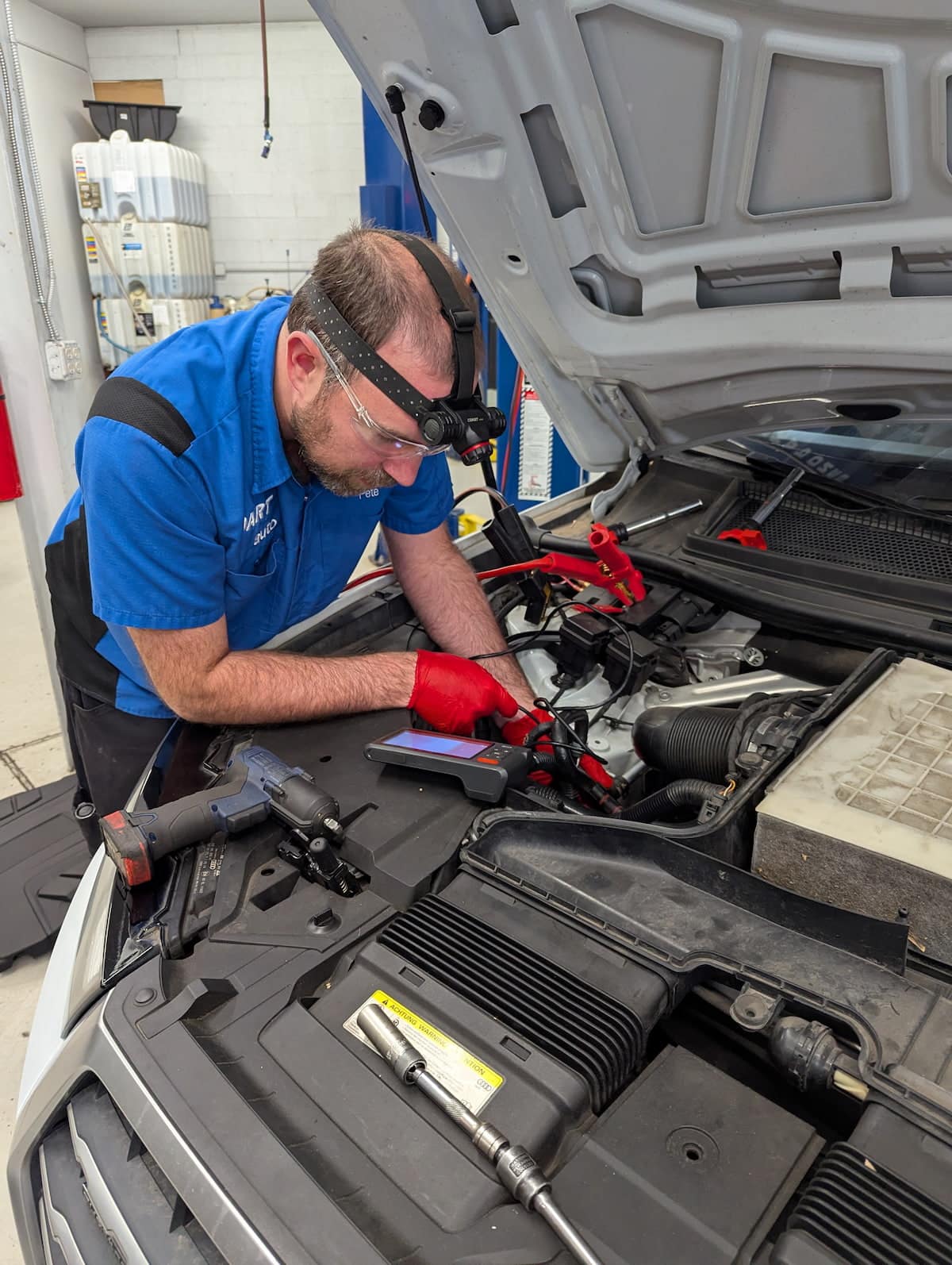
Fiat Tune Up at DART Auto
When your Fiat starts hesitating at stoplights or the check engine light flickers on, you need a shop that knows exactly how to diagnose and fix it. Modern Fiats – especially the MultiAir-equipped 500, 500L, and 500X models – demand precision during tune up work. These engines use electronically controlled intake valve timing without traditional camshafts on the intake side, which means spark plug torque specs, coil pack seating, and throttle body calibration all matter more than on conventional designs. We've invested in factory-level diagnostic software and OEM repair procedures specifically for Fiat's unique architecture, so we can reset adaptations, verify fuel trims, and confirm ignition timing after every service.
DART Auto has been the go-to European specialist in Denver since 2000. Our master technicians bring dealer training and at least ten years of hands-on experience to every Fiat that rolls in. Because we pay our techs salaries instead of flat-rate, there's no incentive to rush your tune up or recommend parts you don't need. We'll inspect your ignition coils for the carbon tracking common on 1.4L MultiAir engines, check for oil fouling on plugs caused by valve guide wear, and verify that your throttle body isn't gummed up from direct-injection carbon buildup. You get honest answers, fast turnaround, and a 3-year/36,000-mile warranty on parts and labor.
Here's what you can expect when you bring your Fiat in for tune up:
- Complete multi-point inspection before we touch a single spark plug – we'll find the root cause, not just swap parts
- OEM or premium aftermarket plugs and coils matched to your engine's exact specification
- Post-service road test and scan to confirm smooth idle, crisp throttle response, and no pending codes
- Transparent estimate with no surprise charges – you'll know exactly what we found and why it matters
Common Tune Up Issues on Fiat Vehicles
When your Fiat starts losing power, idling rough, or lighting up the check engine lamp, the culprit is often a neglected tune up. We see these patterns daily at DART Auto, and we move quickly to diagnose and fix them before they cascade into larger failures.
- MultiAir valve-train carbon buildup (2012–2019 500, 500L, 500X with 1.4L Turbo): The MultiAir electrohydraulic valve actuation system is sensitive to oil quality and induction deposits. Carbon accumulates on intake valves because the direct-injection design never washes them with fuel. This chokes airflow, causes misfires, and triggers lean codes. We clean valves manually or via walnut blasting and replace spark plugs to restore smooth combustion.
- Ignition coil failure on 1.4L Turbo engines (2012–2019 500, 500X, 500L): The coil-on-plug design sits directly over each spark plug, exposed to high heat and vibration. Coils crack internally, causing intermittent misfires that feel like a stumble under load. We replace all four coils as a set and install OEM-spec iridium plugs to eliminate repeat failures.
- PCV valve clogging on 1.4L MultiAir engines: The positive crankcase ventilation valve is integrated into the valve cover. When it clogs with sludge, crankcase pressure rises, oil seeps past gaskets, and the engine runs rich. We replace the valve cover assembly with an updated OEM unit and reset fuel trims.
- Throttle body carbon deposits on naturally aspirated 1.4L engines (2012–2019 500): The electronic throttle plate accumulates carbon from blow-by vapors, restricting airflow at idle and causing hunting, stalling, or rough starts. We remove the throttle body, clean it with approved solvents, and perform the factory idle-learn procedure using our Fiat-specific scan tool.
- Fuel injector fouling on turbocharged 1.4L engines: Direct injectors operate at extremely high pressure and are prone to tip coking when fuel quality is poor or oil enters the combustion chamber. Misfires, hard starts, and black smoke result. We test injector flow, replace fouled units, and update the ECU with any available calibration patches.
- Air filter housing cracks on 500 and 500X models: The plastic airbox develops stress cracks near mounting tabs, allowing unmetered air into the intake. This leans out the mixture, triggers fault codes, and reduces power. We replace the housing and verify MAF sensor readings post-repair.
Why Choose DART Auto for Fiat Tune Up
When your Fiat starts showing rough idle, hesitation, or a check engine light tied to ignition or fuel delivery, you need a shop that knows the platform inside and out. DART Auto has been diagnosing and servicing European vehicles since 2000, and our technicians have factory-level training on Fiat's MultiAir engines, electronic throttle systems, and the quirks of the 1.4L turbo found in the 500 and 500L. We use the same diagnostic software and scan tools the dealer relies on, pulling freeze-frame data and monitoring live sensor values to pinpoint misfires, fuel trim deviations, and coil failures before we touch a wrench.
Our master technicians – each with at least a decade of experience – are salaried rather than flat-rate, so there's zero incentive to recommend parts you don't need. We perform a complete ignition and fuel system inspection, checking:
- Spark plugs and coil packs – common failure points on turbocharged 1.4L engines after 30,000 miles
- Intake manifold and throttle body – carbon buildup on MultiAir systems affects idle quality
- Fuel injectors and pressure – verifying spray patterns and rail pressure against Fiat's OEM specs
- PCV system and vacuum lines – leaks trigger lean codes and rough running
Every tune up is backed by our 3-year/36,000-mile parts and labor warranty, and we road-test your Fiat after service to confirm smooth acceleration and stable idle before you pick it up.
Symptoms – How to Know You Need This Service
Your Fiat will give you clear signals when it's time for a tune up. Pay attention to how the engine behaves during cold starts and city driving – that's when worn plugs and weak coils show themselves first.
- Rough idle or vibration at stoplights – often felt through the steering wheel or seat, especially when the A/C compressor kicks on
- Hesitation or stumble during acceleration – the engine bogs for a split second before picking up speed, most noticeable merging onto highways
- Check engine light with misfire codes – P0300 through P0304 are common on 1.4L MultiAir engines when plugs exceed 30,000 miles
- Hard starting or extended cranking – takes three or four seconds longer than usual to fire up, particularly on cold mornings
- Reduced fuel economy – you're filling up noticeably more often without changing your driving habits
- Lack of power climbing hills – the engine feels flat and struggles to maintain speed on grades it used to handle easily
- Rough running that smooths out after warm-up – classic sign of spark plug gap wear or coil insulation breakdown
If you see a flashing check engine light or smell raw fuel, stop driving and have the car towed. A severe misfire can damage your catalytic converter within minutes. For steady check engine lights or gradual performance loss, schedule service within the week to prevent secondary damage to ignition coils and O2 sensors.
Which Fiat Models We See for Tune Up
We service the full range of modern Fiats sold in North America, with particular expertise in the turbocharged MultiAir platforms that dominate the lineup. Most tune up work applies to these models:
- 500 (2012–2019, Type 312) – both 1.4L naturally aspirated and 1.4L MultiAir Turbo (Abarth) variants; Abarth models need colder-range plugs and careful coil inspection due to higher boost
- 500L (2014–2020, Type 330) – 1.4L MultiAir Turbo; these see more carbon fouling on plugs due to direct injection and longer service intervals
- 500X (2016–2019, Type 334) – 1.4L MultiAir Turbo; shares the same ignition components as the 500L but runs different fuel maps
- 124 Spider (2017–2020, Type 348) – 1.4L MultiAir Turbo; built on the Mazda MX-5 platform but uses Fiat's engine and electronics, requiring Fiat-specific scan tools
- 500e (2013–2019) – battery-electric vehicle with no traditional tune up, though we service the electric motor and power electronics
For older Fiat models or grey-market imports, call us first. We focus on the Type 312 and newer platforms where we have factory tooling and up-to-date repair information. If your car falls outside this range, we'll point you toward a shop better equipped for classic or rare variants.
Causes & Risks – What Happens if Ignored
Fiat tune up intervals are driven by heat, short trips, and the brand's reliance on advanced combustion technologies. The 1.4L MultiAir engine, for example, runs higher compression and tighter tolerances than older designs, making it less forgiving of worn plugs or fouled injectors. Denver's altitude compounds the problem – thinner air means the ECU leans out fuel delivery, and any misfire or vacuum leak becomes immediately noticeable. Stop-and-go city driving never fully warms the engine, allowing moisture and fuel dilution to degrade oil and promote carbon buildup.
When you delay a tune up, the damage escalates predictably:
- Ignoring misfires for 500–1,000 miles: Unburned fuel washes down cylinder walls, diluting oil and accelerating bearing wear. Catalytic converters overheat from raw fuel ignition, and honeycomb substrates melt. What starts as a $400 tune up becomes a $1,800 converter replacement.
- Driving with clogged PCV valves: Rising crankcase pressure blows out the rear main seal or valve cover gasket. Oil leaks onto the exhaust manifold, creating smoke and fire risk. Turbocharger seals fail when oil pressure spikes unevenly.
- Running on fouled injectors: Cylinder wash from excess fuel scores piston rings and cylinder walls. Compression drops, oil consumption climbs, and the engine eventually needs a rebuild rather than a simple injector service.
- Neglecting throttle body cleaning: Idle control becomes so erratic the ECU can no longer compensate. The engine stalls at stoplights, creating a rear-end collision hazard in traffic.
Safety Impact – Why Tune Up Matters
A neglected tune up on your Fiat directly affects drivability and safety systems that depend on stable engine operation. When combustion is uneven or incomplete, the ECU pulls timing and limits throttle response to protect the catalytic converter. This means reduced power exactly when you need it – merging onto I-25, climbing mountain grades, or accelerating out of danger.
- Misfires under load: The engine stumbles or hesitates mid-corner or during passing maneuvers, creating unpredictable handling. Electronic stability control can't compensate for power loss it doesn't anticipate.
- Stalling at idle: A clogged throttle body or failing idle-air control causes the engine to die at stop signs or in parking lots. Losing power steering and brake boost simultaneously is dangerous in tight spaces.
- Lean conditions triggering limp mode: When the ECU detects a vacuum leak or faulty MAF sensor, it limits engine speed to 3,000 rpm. You lose the ability to maintain highway speed or climb grades, stranding you in live traffic.
- Catalytic converter glow: A sustained misfire superheats the converter until it glows red-hot, igniting undercoating or roadside debris. This is a fire hazard, not just a performance issue.
Stop driving immediately if: the check engine light flashes (active misfire), you smell raw fuel in the cabin, or the engine stalls repeatedly. Schedule within the week if: you notice rough idle, hesitation under acceleration, or reduced fuel economy. We'll diagnose the root cause and explain exactly what needs attention now versus what can wait.
How Fiat Tune Up Actually Works
Modern Fiat engines – particularly the 1.4L Turbo MultiAir – use electrohydraulic valve actuation instead of a traditional camshaft-driven intake valve train. A high-pressure oil circuit controlled by solenoid valves opens each intake valve independently, allowing infinitely variable lift and duration. This delivers excellent fuel economy and torque, but it's sensitive to oil contamination and requires precise calibration. When we perform a tune up, we're not just swapping plugs – we're verifying that the MultiAir system is operating within spec, that fuel trims are centered, and that ignition timing maps match the current engine condition.
Fiat-specific design elements that shape our tune up procedure:
- Direct injection with no port wash: Fuel sprays directly into the combustion chamber, never touching intake valves. Carbon accumulates on valve backs and requires manual cleaning or walnut blasting – a step generic shops often skip.
- Integrated PCV in valve cover: The breather system is built into the cam cover casting. When it fails, you replace the entire cover assembly, not a $15 valve. We use OEM parts with updated internal baffling.
- Coil-on-plug ignition with no plug wires: Each coil sits directly over its spark plug. Heat cycling causes internal short circuits. We replace coils and plugs together to eliminate mismatched impedance.
- Electronic throttle body with learned idle parameters: After cleaning or replacement, the ECU must relearn idle speed and throttle plate position. This requires a Fiat-specific scan tool to perform the initialization procedure – a generic code reader can't access these modules.
- Turbocharged variants with boost-dependent fueling: The ECU adjusts fuel delivery based on manifold pressure. Worn plugs or weak coils cause misfires under boost, triggering overboost protection and limp mode. We verify ignition performance under simulated load using our scope and pressure-test equipment.
We follow factory service information for torque specs, spark plug gaps, and coil resistance values. Our master technicians have dealer-level training on Fiat's proprietary systems, and we invest in the Mopar WiTech diagnostic platform to match dealership capability. When we finish a tune up
How We Diagnose Tune Up Issues on Fiat
When your Fiat starts running rough, hesitating on acceleration, or showing a check engine light, we get straight to work pinpointing the root cause. Modern Fiats – especially the MultiAir turbocharged engines found in 500 Abarth, 124 Spider, and late-model 500L – rely on precise ignition timing, fuel delivery, and sensor feedback. Our diagnostic process cuts through guesswork and gets you back on the road fast.
- Initial scan and freeze-frame data: We connect our factory-level scan tools to pull diagnostic trouble codes (DTCs) and freeze-frame data. On Fiat platforms, misfire codes often point to specific cylinders, while fuel trim data reveals whether the engine is running lean or rich. The MultiAir system's variable valve actuation adds complexity – we check solenoid operation and cam position sensor data to rule out valve train issues masquerading as ignition problems.
- Live data stream analysis: With the engine running, we monitor oxygen sensor response, throttle position, manifold absolute pressure, and ignition advance in real time. The 1.4L MultiAir is sensitive to intake manifold leaks and PCV system faults, so we watch short-term and long-term fuel trims closely.
- Physical inspection: We pull spark plugs to check electrode wear, fouling, and gap. On turbocharged Fiats, oil-fouled plugs often signal turbo seal wear or excessive blow-by. We inspect coil packs for carbon tracking, check plug wire resistance where applicable, and examine the air filter and intake tract for restrictions or unmetered air leaks.
- Compression and leak-down testing (when indicated): If misfires persist after ignition component replacement, we perform cylinder compression or leak-down tests to rule out valve or piston ring issues – especially on higher-mileage 500 Abarth engines that have seen spirited driving.
Once diagnostics are complete, we walk you through what we found, explain which components need replacement, and provide a transparent quote with no surprises. You'll know exactly what's wrong and what it takes to fix it right the first time.
Tune Up on Fiat: Repair vs. Replacement
Not every tune up issue demands wholesale replacement. We tailor the solution to the actual condition of your Fiat's ignition and fuel delivery systems, balancing cost and reliability.
When Repair Makes Sense
- Spark plug re-gapping or cleaning: If plugs show light deposits but electrodes are still within spec, a cleaning and re-gap can restore performance on lower-mileage engines. However, iridium and platinum plugs on the 1.4L MultiAir are wear items – if they're due by mileage, we replace rather than nurse them along.
- Coil pack connector repair: Corroded or loose coil connectors can cause intermittent misfires. We clean terminals, apply dielectric grease, and verify secure contact before condemning the coil itself.
- Intake cleaning: Carbon buildup on throttle bodies and intake valves (less common on port-injected Fiats, but still seen on high-mileage examples) can be cleaned chemically or manually, restoring airflow without parts replacement.
When Partial Replacement Is the Right Call
- Individual coil packs: The 1.4L MultiAir uses individual coil-on-plug ignition. If one cylinder misfires and the coil tests faulty, we replace that coil rather than all four – unless the others are original and approaching end-of-life mileage.
- Oxygen sensors: Pre-cat and post-cat O2 sensors age independently. We replace only the sensor that's failed or sluggish, not the entire exhaust system.
When Full Replacement Is Necessary
- Complete ignition refresh: On Fiats approaching 60,000–100,000 miles, we often recommend replacing all spark plugs and coil packs together. Piecemeal replacement on aging components leads to comebacks and wasted labor.
- MultiAir solenoid and cam sensor replacement: When the variable valve system fails, half-measures don't work. We replace the solenoid, update software if a TSB applies, and verify cam timing to factory spec.
We walk you through the trade-offs – repair cost, expected lifespan, and risk of recurrence – so you can make an informed decision. Our salaried techs have no incentive to upsell; we recommend what we'd do on our own cars.
How to Make Your Fiat Tune Up Last Longer
Fiats reward attentive care and punish neglect. A few smart habits extend the intervals between tune ups and keep your MultiAir engine running smoothly.
Driving Habits That Protect Ignition Components
- Warm up before boost: Turbocharged Fiats (500 Abarth, 124 Spider) build serious heat under load. Let oil circulate for a minute or two before hammering the throttle, and avoid lugging the engine at low RPM in high gear.
- Use high-quality fuel: The 1.4L MultiAir benefits from Top Tier gasoline with detergent additives. Cheap fuel accelerates carbon buildup and can cause pre-ignition under boost.
- Avoid excessive idling: Long idle periods – especially in stop-and-go traffic – foul spark plugs and stress the cooling system. If you're parked for more than a minute, shut it down.
Maintenance You Can Do Yourself
- Check the air filter every oil change: A clogged filter starves the engine and throws off fuel trim. Swap it when it's visibly dirty or at the interval in your owner's manual.
- Listen for misfires and hesitation: Rough idle, stumbling on acceleration, or a flashing check engine light are early warnings. Address them promptly – misfires damage catalytic converters, turning a $200 tune up into a $1,200 exhaust repair.
- Monitor coolant and oil levels: The MultiAir system is sensitive to oil quality. Check your dipstick weekly and top off with the correct viscosity (typically 5W-40 synthetic). Low coolant can cause the engine to run lean and misfire under load.
What to Leave to the Professionals
- Spark plug replacement on turbocharged engines: Plugs are buried under the intake manifold on some Fiat platforms. Improper torque or cross-threading can crack the cylinder head. Let our techs handle it with the correct tooling and factory torque specs.
- MultiAir software updates: Fiat has issued service bulletins addressing rough idle and hesitation on 2012–2016 500 models. These require factory scan tools and calibration files – not a DIY job.
- Coil pack diagnosis: Swapping coils to isolate a misfire sounds simple, but incorrect installation can damage the coil or plug. We have the resistance testers and scope equipment to confirm failure without trial-and-error.
Follow Fiat's service intervals, use OEM or premium aftermarket parts, and bring your car in at the first sign of trouble. Our master technicians have the training and tools to keep your Fiat's ignition system performing exactly as the factory intended – without the dealer markup.
What to Expect When You Bring Your Fiat In
From the moment you schedule your appointment, we'll walk you through the process so there are no surprises. Here's how a typical tune up visit unfolds at DART Auto:
- Drop-off and initial consultation. Bring your Fiat in at your scheduled time. We'll ask about symptoms – rough idle, hesitation, warning lights – and note recent mileage and service history. If you need a loaner or shuttle, let us know when you book.
- Diagnostic scan and inspection. Our technicians connect factory-level scan tools to pull fault codes, check live data streams, and perform a visual inspection of ignition coils, spark plugs, air filter, and intake components. We look for oil fouling on plugs, carbon deposits in the throttle body, and vacuum leaks that affect fuel trim.
- Written estimate and approval. You'll receive a detailed estimate listing each recommended part – OEM or premium aftermarket – and the labor involved. We explain what we found, why it matters, and what happens if you delay the work. No pressure, just clear information.
- Repair and verification. Once you approve, we replace spark plugs, coils, filters, or other components using torque specs and procedures from Fiat's service manual. After reassembly, we clear codes, road-test the car, and re-scan to confirm no pending faults.
- Pickup walkthrough. At pickup, we review what we replaced, show you the old parts if requested, and answer any questions. If something feels off in the days following service, call us – we'll get you back in promptly to verify everything is running as it should.
Remove personal items and valuables before drop-off. After-hours key drop and pickup are available by arrangement, and we'll text or call with updates throughout the day so you're never left wondering.
Our Fiat Services
- Air Conditioning AC Repair
- Battery Repair Replacement
- Brake Repair & Brake Fluid Change
- Check Engine Light Diagnostics
- Clutch Repair & Replacement
- Coolant Leak Repair
- Cooling System Repair
- Drive Shaft Repair
- Engine Repair
- Exhaust & Catalytic Converter Repair
- Head Gasket Repair & Replacement
- Oil Change
- Oil Leak Repair
- Scheduled Service Maintenance
- Steering Repair
- Suspension Repair
- Cambelt Timing Belt Replacement
- Transmission Repair
- Wheel Alignment