
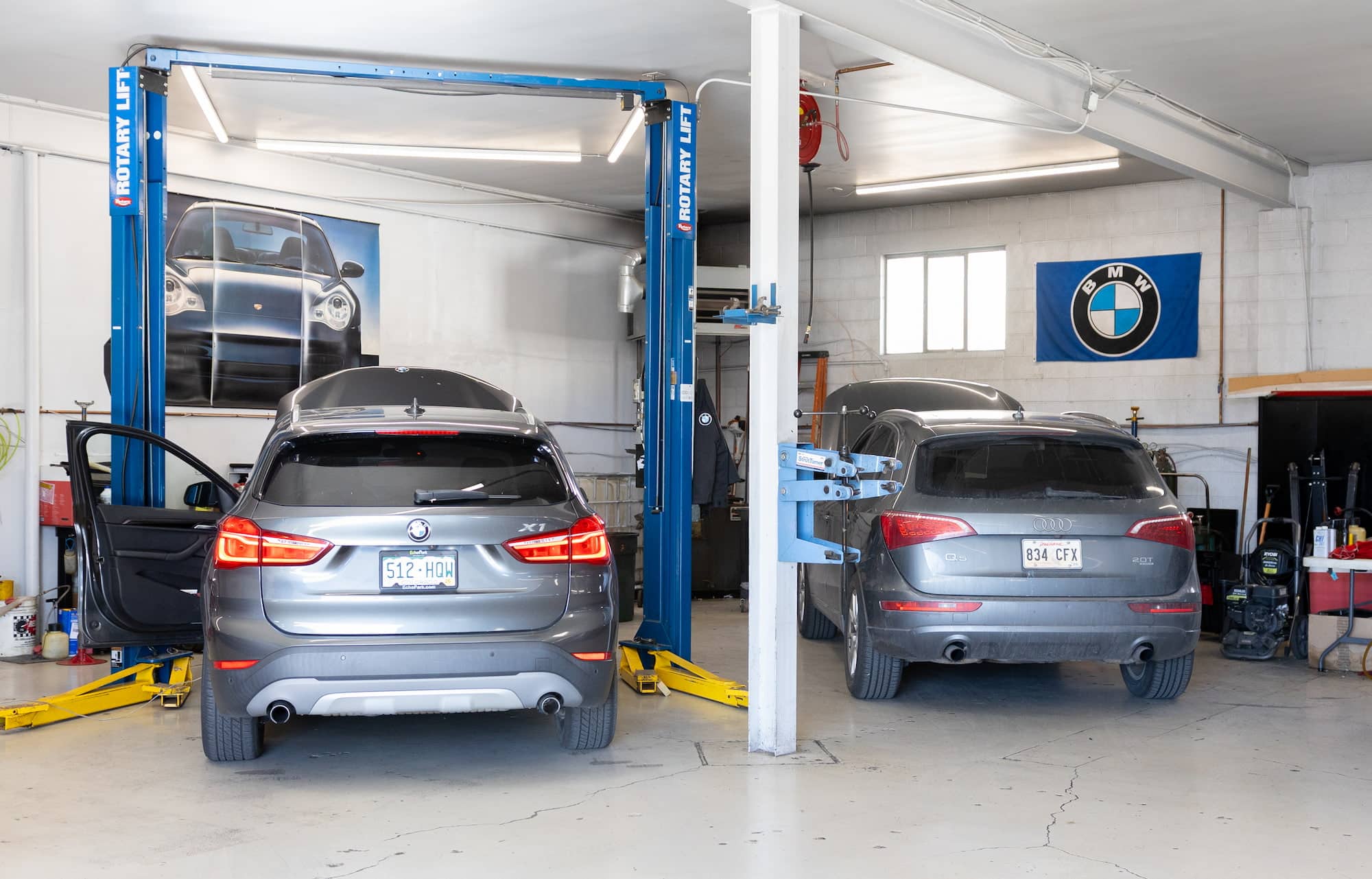
Fiat Wheel Alignment at DART Auto
Fiat platforms – particularly the 500, 124 Spider, and Punto lineups – rely on precise suspension geometry to deliver the nimble handling these Italian cars are known for. The 124 Spider shares its ND Mazda MX-5 platform but uses Fiat-specific suspension tuning and different offset wheels, meaning alignment specs differ from the Mazda donor car. The 500 (Type 312) and 500L use MacPherson strut front suspension with a torsion beam rear, where camber and toe adjustments demand adherence to factory specifications measured in tenths of a degree. Generic shops often lack the Mopar/Fiat-specific alignment databases and may apply generic small-car specs, leading to premature tire wear and compromised handling.
At DART Auto, we use Hunter alignment systems loaded with OEM Fiat specifications for every platform and model year. Our technicians understand that Fiat suspension components – especially on the 500 Abarth and 124 Spider – are tuned for spirited driving, and even minor deviations from factory geometry degrade the experience. We inspect suspension bushings, ball joints, and tie rod ends before aligning, because worn components make precision alignment impossible. Since 2000, we've aligned hundreds of Fiat vehicles using the same Mopar service procedures the dealer follows, but without the inflated labor rates.
When you bring your Fiat to DART Auto for wheel alignment, expect:
- Pre-alignment suspension inspection to identify worn components that would prevent accurate adjustment
- Four-wheel alignment using Hunter equipment with Fiat OEM specifications for your exact model year and trim
- Printed before-and-after alignment reports showing camber, caster, toe, and thrust angle measurements
- Transparent communication about any parts that need replacement to achieve proper alignment, with no pressure to approve unnecessary work
Common Wheel Alignment Issues on Fiat Vehicles
Fiat vehicles are engineered for nimble handling and urban agility, but their compact suspension geometry makes them particularly sensitive to alignment drift. The 500 platform – spanning 2012 to present across the 500, 500L, 500X, and Abarth variants – relies on MacPherson struts up front with a torsion-beam rear axle on base models. This setup delivers great packaging efficiency but offers limited rear adjustability, meaning any impact or worn bushings translate directly into tire wear patterns that can't be easily corrected without replacing components first.
- Premature inner-edge tire wear on 2012–2019 Fiat 500/500C models: The front camber specification on these cars runs slightly negative from the factory to sharpen turn-in feel. When lower control arm bushings soften after 50,000 miles or pothole impacts bend the strut, camber goes further negative and chews through the inside tread in under 10,000 miles. The rear torsion beam is non-adjustable, so any rear-end collision or curb strike requires beam replacement to restore geometry.
- Toe-out condition on 500X (2016–present) after strut or tie-rod replacement: The 500X uses a more sophisticated multilink rear suspension borrowed from the Jeep Renegade platform, but many shops skip the mandatory steering-angle sensor reset after front-end work. Without recalibration using OEM scan tools, the electric power steering system holds a skewed zero point, causing the car to pull and accelerating outer-edge tire wear.
- Caster drift on 500L (2014–2020) with worn subframe bushings: The 500L's tall body and relatively narrow track make it prone to subframe movement when the rubber isolators age. Unequal caster side-to-side creates a persistent pull toward the low-caster side and makes highway tracking feel vague. Standard alignment equipment can measure the symptom but can't correct it without first replacing the subframe bushings – a job many shops misdiagnose as "needs new struts."
- Rear camber issues on Abarth 500 (2012–2019) lowered or tracked: Enthusiast owners who lower their Abarth or run aggressive track days frequently exceed the rear torsion beam's camber tolerance. The rear camber bolts offer only ±0.5 degrees of adjustment, so cars sitting lower than factory ride height develop severe negative camber that can't be aligned out without aftermarket camber shims or adjustable trailing arms.
- Thrust-angle problems after rear collision repair on all 500-series models: Because the rear axle is a welded beam with no lateral adjustment, even minor rear-end damage that shifts the beam laterally creates a thrust angle – the rear axle pointing slightly left or right relative to centerline. This causes the steering wheel to sit off-center during straight-line driving and accelerates tire wear on the side tracking further from center.
Why Choose DART Auto for Fiat Wheel Alignment
Fiat platforms – from the 500's McPherson strut front end to the 124 Spider's rear double-wishbone setup shared with the ND Mazda MX-5 – demand precision alignment to preserve steering feel and tire life. Many shops treat alignment as a quick toe-and-go procedure; we approach it as a diagnostic opportunity. Our master technicians start with a complete suspension inspection: worn control arm bushings on 2012–2019 500 models, strut mount bearing play on Abarth variants, and rear trailing-arm bushing sag on 500L and 500X platforms all skew alignment readings and accelerate tire wear. We measure ride height before touching the alignment rack because sagging springs – common on higher-mileage 500 Pop and Lounge models – shift geometry outside factory spec.
We use Hunter alignment equipment calibrated to Fiat factory tolerances, cross-referencing OEM service procedures and technical service bulletins for platform-specific quirks. The 500's rear beam axle requires shim adjustment rather than eccentric bolts; the 124 Spider's rear camber links demand torque-angle tightening after adjustment. Because our technicians are salaried rather than flat-rate, they take the time to document before-and-after specs, explain which angles were out and why, and confirm the steering wheel sits centered after the correction. You'll receive a printed alignment report showing factory spec alongside your vehicle's actual measurements – transparency that builds trust and helps you understand what we fixed.
Symptoms – How to Know You Need This Service
Fiat drivers often notice alignment issues through subtle changes in how the car tracks and feels. You may experience:
- Steering wheel off-center when driving straight – the wheel sits cocked left or right even though the car tracks straight, indicating toe misalignment
- Vehicle pulls to one side on level roads – you must hold constant steering pressure to maintain a straight line, suggesting unequal caster or camber side-to-side
- Uneven or rapid tire wear – feathering on inner or outer tread blocks, or one tire wearing faster than its opposite side, points to toe or camber problems
- Steering feels vague or wanders – the car requires frequent small corrections on the highway, common with excessive toe-out
- Vibration or shaking at highway speeds – while often a balance issue, misalignment can amplify tire irregularities and create vibration
- Squealing tires during normal turns – excessive toe misalignment causes tires to scrub sideways rather than roll cleanly
- Recent curb impact or pothole strike – even minor impacts can bend suspension components or shift alignment on the 500's compact platform
If you notice pulling combined with steering wheel vibration after hitting a pothole, schedule an alignment inspection soon. If the steering wheel is severely off-center or the car pulls aggressively to one side, have the vehicle towed rather than driven – you may have bent a control arm or tie rod that makes the car unsafe.
Which Fiat Models We See for Wheel Alignment
DART Auto provides wheel alignment service for the full range of Fiat models sold in the North American market, with particular expertise in the platforms most commonly requiring precision alignment work:
- 500 (Type 312, 2012–2019) – including Pop, Lounge, Sport, and Turbo trims; front strut and rear torsion beam require careful toe and camber adjustment
- 500 Abarth (2012–2019) – sport-tuned suspension with tighter tolerances; alignment critical for maintaining predictable handling and preventing inner-edge tire wear
- 500L (Type 330, 2014–2020) – larger platform with different suspension geometry than the standard 500; uses specific alignment specs for the taller ride height
- 500X (Type 334, 2016–2022) – crossover platform with available AWD; four-wheel alignment essential after any suspension work or tire replacement
- 124 Spider (Type 348, 2017–2020) – ND Mazda platform with Fiat-specific suspension tuning; requires Fiat alignment specs, not Mazda MX-5 settings
- 500e (electric, 2013–2019 and 2024+) – battery weight affects suspension geometry; alignment prevents premature tire wear on the heavier platform
We occasionally service older Punto and Bravo models for customers who imported them or brought them from overseas markets. If you own a grey-market or European-spec Fiat, call ahead so we can verify we have the correct alignment specifications for your chassis. Our focus remains on the North American Fiat lineup from 2012 forward, where we maintain complete Mopar service data and OEM procedures.
Causes & Risks – What Happens if Ignored
Wheel alignment problems on Fiat vehicles stem from three primary sources: Denver's aggressive pothole season combined with the 500 platform's short wheelbase and stiff suspension tuning, age-related bushing degradation in the control arms and subframe mounts, and the brand's tendency toward minimal rear adjustability that leaves no margin for impact damage. The 500's 90.6-inch wheelbase amplifies every jolt, and the relatively thin sidewalls on the standard 15- and 16-inch wheel packages offer little cushion between rim and road hazard.
When you postpone alignment correction, the damage compounds in predictable stages:
- Weeks 1–4: Tire wear accelerates on the misaligned edge. On a 500 with excessive negative camber, the inner tread can lose 3/32-inch of depth while the outer tread still looks new. Fuel economy drops 1–2 MPG as rolling resistance increases and the engine works harder to overcome the scrubbing tires.
- Months 2–6: Steering components – tie rod ends, inner tie rods, and the electric power steering rack – experience uneven loading. The 500's electromechanical steering uses a brushless motor mounted directly to the rack; side loads from misalignment wear the motor's internal gears and create notchy feedback or assist dropout at center. Replacing the EPS rack costs significantly more than addressing the alignment issue early.
- 6–12 months: Suspension bushings that were merely worn now tear completely. The lower control arm bushings on 500-series cars are pressed into stamped-steel arms; once the rubber separates from the outer sleeve, the arm shifts during braking and acceleration, creating clunking noises and making alignment impossible to hold. At this stage you're replacing control arms, not just adjusting angles.
- Beyond one year: Wheel bearings develop uneven wear from constant side loading. The front hubs on the 500 use sealed cartridge bearings pressed into the steering knuckle; premature failure means knuckle replacement since the bearing isn't serviceable separately on many model years. Tires reach minimum tread depth and require replacement 10,000–15,000 miles sooner than normal, and the cost of four new tires often exceeds what the original alignment service would have been.
Safety Impact – Why Wheel Alignment Matters
Misalignment on a Fiat directly degrades the electronic stability control and ABS systems that define modern crash-avoidance capability. The 500 platform's ESP system relies on accurate wheel-speed sensor data and steering-angle input to modulate brake pressure at individual corners during emergency maneuvers. When the thrust angle is off – rear axle not tracking parallel to the front – the stability control computer receives conflicting data: the steering wheel says "straight," but the yaw sensor detects rotation. The system intervenes inappropriately or hesitates when you actually need it, extending stopping distances and reducing the effectiveness of panic swerves.
Specific safety failures tied to neglected alignment include:
- Stop driving immediately: Steering wheel off-center by more than 45 degrees during straight-line driving (indicates severe thrust-angle or bent suspension component); clunking or popping from the front suspension during turns (torn control arm bushing allowing wheel to shift position); vibration or grinding from a wheel bearing (uneven load from misalignment accelerates bearing failure).
- Schedule service within the week: Rapid tire wear on one edge (more than 2/32-inch difference across the tread); car pulls consistently to one side requiring constant steering correction; steering wheel vibrates or shakes at highway speed (often a bent wheel or separated tire belt caused by prolonged misalignment stress).
- Address at next service interval: Slight pull to one side that's easily corrected with light steering input; steering wheel slightly off-center (less than 15 degrees) but car tracks straight; uneven but not severe tire wear across the tread face.
Insurance and liability considerations come into play if you're aware of alignment issues – documented by a previous shop or visible through tire wear – and choose to delay. In Colorado, knowingly operating a vehicle with defective steering or suspension can affect fault determination in an accident, and your insurer may reduce or deny a claim if they establish that deferred maintenance contributed to the incident.
How Fiat Wheel Alignment Actually Works
Modern wheel alignment on Fiat vehicles goes far beyond the old "rack the car and twist some bolts" approach. The 500 platform uses electric power steering with a steering-angle sensor mounted in the column beneath the airbag module; this sensor tells the EPS computer where the driver intends to go and feeds data to the stability control system. Every time you adjust toe – the most common alignment angle – you're changing where the wheels point relative to where the steering wheel thinks they point. Without recalibrating the steering-angle sensor using Fiat's factory diagnostic software after the alignment, the car's zero-point reference is skewed. The steering wheel may sit straight, but the computer believes you're turning, so it applies asymmetric power assist and confuses the ESP logic.
Fiat's suspension geometry also imposes specific procedural requirements that distinguish proper alignment from a quick-lube rack job:
- Ride-height verification before measurement: The 500's short suspension travel means even 15mm of ride-height loss from worn springs or sagging subframe bushings shifts camber and caster out of specification. Factory procedure requires measuring ride height at four corners and comparing to published specs before touching an adjustment bolt.
- Steering-wheel centering and sensor reset: After any toe adjustment, the steering wheel must be mechanically centered
Fiat vehicles – particularly the 500, 500L, and 500X built on the Small Wide platform – are engineered for nimble urban handling and responsive steering feel. That precision depends on tight suspension geometry, and even a minor misalignment can turn your confident city car into a tire-eating, wandering handful. The multilink rear suspension on the 500X and the twist-beam rear on the base 500 both demand accurate toe and camber settings; the factory spec is narrow, and Denver's potholes and curb strikes push alignments out of tolerance faster than most owners realize. When your Fiat pulls left, the steering wheel sits off-center, or you notice uneven tread wear on the inside edge of the front tires, it's time for a proper four-wheel alignment – not a quick toe-and-go, but a full diagnostic check that accounts for suspension wear, chassis flex, and the unique geometry of Fiat's European platforms.
How We Diagnose Wheel Alignment Issues on Fiat
Accurate alignment diagnosis starts before the car touches the rack. We begin with a thorough inspection and a structured process that reveals the root cause, not just the symptom.
- Visual and road-test assessment. We drive the vehicle to confirm pull direction, steering-wheel centering, and any vibration or tramline sensitivity. On the lift, we inspect tire wear patterns – inside-edge scalloping signals excessive negative camber or toe-out; feathering across the tread suggests toe misalignment. We check for curb rash on wheels, bent control arms, torn tie-rod boots, and worn ball joints, all of which can mask or cause alignment drift.
- Suspension component inspection. Fiat 500 and 500X models commonly develop wear in the front lower control-arm bushings and rear trailing-arm bushings, especially after 60,000 miles or aggressive city driving. We measure ball-joint play, check strut-mount bearing condition, and verify that sway-bar end links are tight. Any loose or worn component will prevent the alignment from holding, so we document everything before mounting the alignment heads.
- Four-wheel computerized alignment measurement. We use a Hunter or John Bean alignment system with rolling-radius compensation to measure camber, caster, toe, and thrust angle on all four corners. Fiat's factory specifications are published in degrees and minutes; we compare live readings against OEM tolerances for your specific model year and trim. The system flags out-of-spec angles in red and calculates the thrust line – critical on Fiats with non-adjustable rear camber.
- Adjustment and verification. Front toe is adjusted at the tie-rod ends; camber may require eccentric bolts or aftermarket plates if the strut towers have shifted. Rear toe on the 500X is adjustable via eccentric cam bolts on the trailing arms; the base 500's twist-beam rear is fixed, so any rear misalignment points to chassis damage or bent components. After adjustment, we road-test to confirm straight-line tracking and centered steering.
Once the measurements are complete, we walk you through the printout, explain which angles were out and why, and provide a transparent estimate for any suspension parts that need replacement before or during the alignment. You'll know exactly what we found, what we adjusted, and what – if anything – needs further attention.
Wheel Alignment on Fiat: Repair vs. Replacement
Wheel alignment itself is an adjustment service, not a repair – but the decision often hinges on whether the suspension components can hold an alignment once set.
When Alignment Alone Is Enough
- All suspension components are tight and within tolerance. If bushings, ball joints, tie rods, and strut mounts pass inspection, we simply adjust toe and camber to factory spec, verify thrust angle, and send you on your way. This is the ideal scenario and the most cost-effective outcome.
- Minor impact or seasonal drift. A light curb strike or a winter's worth of potholes can knock toe out of spec without damaging parts. A single alignment service restores geometry and prevents premature tire wear.
When Component Replacement Makes Sense
- Worn bushings or tie-rod ends. If the front lower control-arm bushings are torn or the inner tie-rod has excessive play, the alignment will drift within weeks. Replacing the failed part – whether it's a single tie-rod end, a control arm, or a trailing-arm bushing – and then aligning the car is the durable fix.
- Bent or damaged suspension links. A hard pothole strike can bend a control arm or knuckle on the 500X. If the component is deformed, no amount of adjustment will bring the wheel back into spec; replacement is the only safe, lasting solution.
- Strut or shock wear affecting camber. Worn strut mounts or collapsed springs can shift camber out of range. Replacing the strut assembly or mount restores the correct suspension height and camber curve, and a fresh alignment locks it in.
We never push parts you don't need. Our technicians are salaried, not flat-rate, so there's no incentive to oversell. We show you the worn component, explain how it affects alignment stability, and let you decide on the timeline – though we'll always be clear about safety and the cost of delaying a repair.
How to Make Your Fiat Wheel Alignment Last Longer
Alignment stability depends on how you drive, how you maintain the suspension, and how quickly you address small issues before they cascade.
Driving Habits That Protect Alignment
- Avoid potholes and curbs. Denver streets are hard on small cars. Slow down for potholes, don't mount curbs during parking, and steer around road debris when safe. A single hard impact can bend a control arm or knock toe out by a degree.
- Reduce aggressive cornering and hard braking. The 500's short wheelbase and stiff springs amplify suspension loads. Smooth inputs reduce stress on bushings and ball joints, extending their service life and keeping alignment stable.
- Rotate tires on schedule. Uneven wear from a misaligned car accelerates further misalignment as the tires develop flat spots or feathering. Rotating every 5,000–7,500 miles spreads wear evenly and makes alignment drift easier to spot early.
Maintenance You Can Monitor
- Inspect tire wear monthly. Run your hand across the tread front-to-back. Feathering or scalloping means alignment has drifted; catching it early saves the cost of premature tire replacement.
- Listen for clunks or rattles over bumps. Worn bushings or loose ball joints announce themselves with noise before they fail completely. Address the sound promptly, and you'll often save the alignment and the tire tread.
- Check steering-wheel position. If the wheel is off-center when driving straight, your alignment has shifted. Don't ignore it – the longer you drive misaligned, the faster you wear tires and stress suspension components.
What to Leave to the Professionals
- Suspension component replacement. Pressing out bushings, torquing control-arm bolts to spec at ride height, and setting tie-rod lengths requires specialty tools and training. DIY attempts often result in incorrect preload or mismatched toe side-to-side.
- Alignment adjustment. Modern alignment racks measure in hundredths of a degree; backyard string-and-tape methods can't match that precision. A professional four-wheel alignment ensures your Fiat tracks straight, wears tires evenly, and handles predictably.
- Thrust-angle correction. If the rear axle is out of square with the chassis – common after a rear-end collision or bent trailing arm – the car will "dog-track" down the road. Diagnosing and correcting thrust angle requires computerized measurement and sometimes frame straightening; it's not a DIY job.
Follow Fiat's maintenance intervals, use OEM or premium aftermarket parts when suspension work is needed, and have the alignment checked annually or after any suspension repair or impact. Proactive care keeps your Fiat driving the way it was designed – sharp, responsive, and confident through Denver's tightest streets.
What to Expect When You Bring Your Fiat In
Scheduling is straightforward: call or book online, and we'll arrange a time that fits your day. If you need transportation while we work, ask about loaner availability or our local shuttle service. Bring any recent service records – knowing when struts or bushings were last replaced helps us diagnose faster.
- Drop-off and initial inspection. We'll ask about symptoms: pulling left or right, off-center steering wheel, uneven tire wear, or recent suspension work. Our technician performs a pre-alignment inspection on the lift – checking ball joints, tie rod ends, strut mounts, and bushing condition – before committing to the alignment itself. If we find worn parts that will compromise the alignment's accuracy or longevity, we'll document them with photos and call you with a written estimate before proceeding.
- Alignment and adjustment. Once you approve the work, we mount your Fiat on the alignment rack, measure all four corners, and adjust camber, caster, and toe to factory specifications. On platforms with limited adjustability, we'll explain which angles can be corrected and which require parts replacement to bring into spec.
- Road test and pickup walkthrough. After adjustment, we road-test the car to verify straight-line tracking and steering-wheel centering. At pickup, we'll review the printed alignment report, show you the before-and-after numbers, and explain any recommendations for future maintenance. If something feels off after you drive it home, call us – we'll recheck at no charge to confirm the work meets our standard.
Remove personal items from the interior before drop-off; we'll need access to the steering wheel and driver's seat. After-hours key drop and pickup can be arranged if your schedule demands it – just let us know when you book.
Our Fiat Services
- Air Conditioning AC Repair
- Battery Repair Replacement
- Brake Repair & Brake Fluid Change
- Check Engine Light Diagnostics
- Clutch Repair & Replacement
- Coolant Leak Repair
- Cooling System Repair
- Drive Shaft Repair
- Engine Repair
- Exhaust & Catalytic Converter Repair
- Head Gasket Repair & Replacement
- Oil Change
- Oil Leak Repair
- Scheduled Service Maintenance
- Steering Repair
- Suspension Repair
- Cambelt Timing Belt Replacement
- Transmission Repair
- Tune Up