
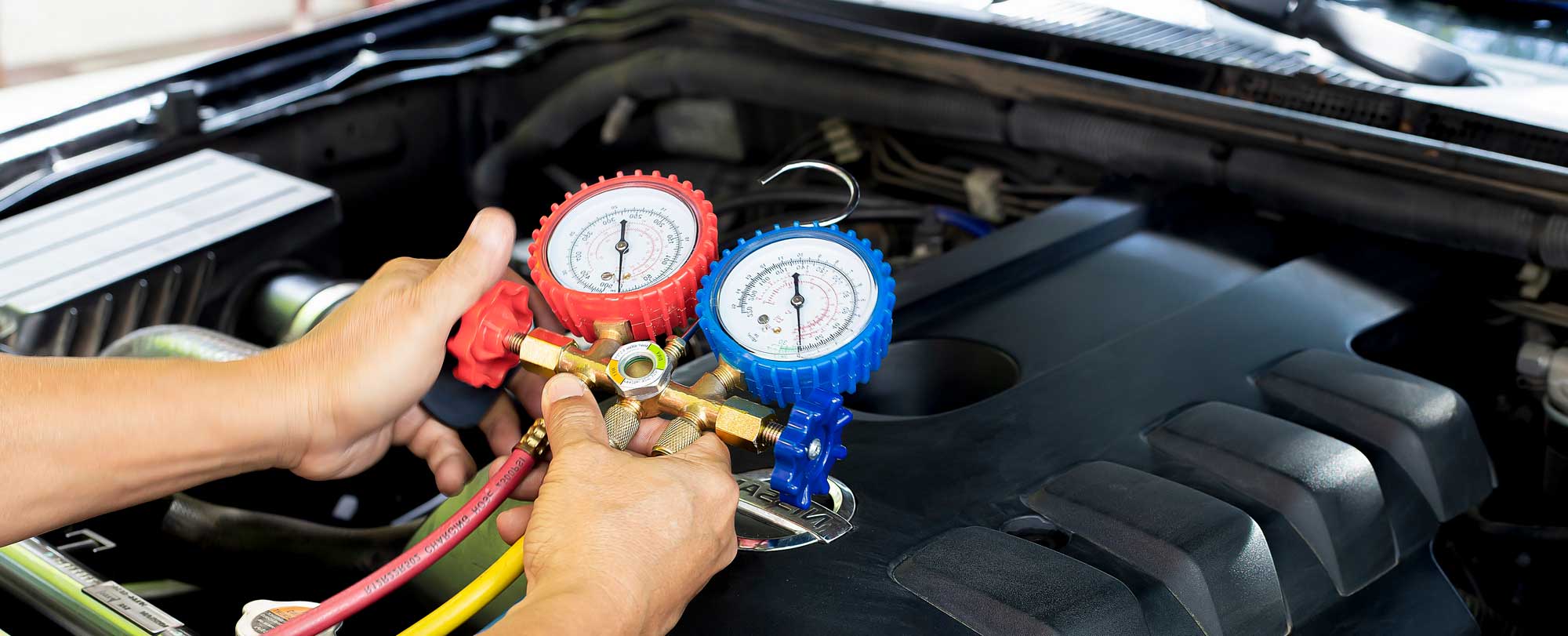
Land Rover Air Conditioning AC Repair at DART Auto
Land Rover climate control systems are built around sophisticated dual-zone or quad-zone HVAC architectures that rely on precise refrigerant charge tolerances, integrated software calibration, and platform-specific compressor clutch logic. The Discovery 3/4 and Range Rover Sport L320 platforms, for example, use a variable-displacement Denso compressor that communicates directly with the vehicle's CAN bus – a system that generic shops often misdiagnose as a simple low-refrigerant issue when the real culprit is a failed pressure transducer or corrupted HVAC module software. Proper Land Rover AC repair requires factory-level diagnostic tools capable of reading live data from the climate control module, understanding the interplay between the blower motor final stage resistor (a notorious failure point on 2010–2013 Range Rover Sport models), and knowing the exact PAG oil viscosity and R134a or R1234yf charge specs down to the gram.
At DART Auto, our master technicians use the same diagnostic protocols and OEM repair information that Land Rover dealerships follow, but without the inflated labor rates. We've been diagnosing and repairing European climate systems since 2000, and our salaried techs take the time to isolate the root cause rather than throwing parts at symptoms. Every AC repair begins with a complete system performance test, leak detection using electronic sniffers and UV dye, and a full electrical diagnostic sweep of the compressor clutch circuit, pressure switches, and blend door actuators.
What you can expect during your Land Rover AC repair at DART Auto:
- Full refrigerant recovery, vacuum test, and precise recharge to OEM specifications using calibrated equipment
- Electronic leak detection and pressure decay testing to locate even micro-leaks in evaporator cores, condenser coils, and hard-to-reach hose fittings
- Compressor clutch gap measurement, bearing play inspection, and electrical draw testing to confirm compressor health before reinstallation
- Blend door actuator function testing and recalibration using factory scan tools to eliminate clicking, temperature inconsistencies, and airflow distribution faults
Common Air Conditioning AC Repair Issues on Land Rover Vehicles
Land Rover climate control systems are sophisticated, integrating multiple zones, automatic temperature management, and electronic controls that talk to the vehicle's CAN bus. When they fail, the diagnosis requires more than a simple pressure gauge. Here are the failure patterns we see most often:
- Evaporator core leaks on L319 Discovery 3/4 and L320 Range Rover Sport (2005–2013): The evaporator sits deep behind the dash. Refrigerant weeps through corroded aluminum tubes, often triggered by moisture intrusion from clogged sunroof drains or cabin air filter housing seals. Symptoms include intermittent cooling, oily residue on the windshield, and a persistent sweet smell. Replacement requires full dash removal – a 12+ hour job that also exposes failing heater cores and blend door actuators.
- Compressor clutch failure on LR2 (2008–2015) and Evoque (2012–2018): The electromagnetic clutch that engages the compressor pulley wears prematurely, especially in stop-and-go traffic. You'll hear a grinding or squealing noise when the AC is turned on, or the compressor won't engage at all. If the clutch bearing seizes, it can shred the serpentine belt and leave you stranded.
- Dual-zone actuator faults on L405 Range Rover (2013–present) and L494 Range Rover Sport (2014–present): These vehicles use up to eight blend door actuators to manage airflow and temperature. Plastic gears strip inside the actuators, causing clicking noises, temperature discrepancies between zones, or air blowing only from defrost vents. The IID Tool or Autologic scan tool is required to identify which actuator has failed and recalibrate the HVAC system after replacement.
- Condenser damage on all models with front-mounted intercoolers: Land Rover condensers sit ahead of the radiator and intercooler, exposed to road debris, salt, and stone impacts. Pinhole leaks are common, and they're often discovered only after a full AC recharge fails within days. Supercharged and turbocharged models are especially vulnerable because any front-end work (intercooler service, radiator replacement) risks condenser damage.
- Refrigerant leaks at Schrader valve cores and service ports: Older Land Rovers (2004–2012 Discovery 3, Range Rover Sport, LR3) develop slow leaks at the high- and low-pressure service ports. Technicians who've added refrigerant without replacing valve cores often create chronic leak points. We replace cores as standard practice during any AC service.
- Blower motor resistor and final stage unit failures on all platforms: The resistor pack or final stage unit (depending on model year) controls blower speed. When it fails, you lose all fan speeds except maximum, or the blower stops working entirely. On L322 Range Rover (2003–2012), the final stage unit is mounted near the blower motor and fails due to heat cycling and moisture.
Why Choose DART Auto for Land Rover Air Conditioning AC Repair
Land Rover climate control systems rely on complex HVAC software integration and dual-zone or quad-zone temperature management that generic shops often misdiagnose. DART Auto's technicians use Land Rover–approved diagnostic software to read proprietary HVAC fault codes, recalibrate blend-door actuators, and update climate-control module firmware when TSBs require it – procedures that basic scan tools miss entirely.
We stock OEM and premium aftermarket refrigerant components designed for Land Rover's R-134a and newer R-1234yf systems, which demand precise oil-type matching and charge volumes. Our master technicians – each with over a decade of experience and dealer training – follow factory service procedures for leak detection using UV dye and electronic sniffers, compressor-clutch testing, and evaporator-core access on models like the Range Rover Sport (L494) and Discovery (L462) where dash removal is required. Because we pay our technicians salaries rather than flat-rate, they take the time to trace refrigerant leaks to their source instead of rushing to the easiest fix. Every repair includes a final pressure test, vent-temperature verification across all zones, and a road test to confirm the system holds under load.
Symptoms – How to Know You Need This Service
Land Rover AC problems rarely announce themselves subtly. You may notice warm air blowing from the vents even when the system is set to maximum cold, or intermittent cooling that works fine at highway speeds but fails in stop-and-go traffic – a classic sign of condenser airflow restriction or a failing cooling fan module. Listen for a high-pitched squealing or grinding noise from the engine bay when the AC is engaged, which points to compressor bearing failure or a seized clutch assembly that needs immediate attention to prevent serpentine belt damage.
Common symptoms that indicate your Land Rover needs AC repair:
- Weak airflow from dashboard vents accompanied by a clicking or ticking sound behind the dashboard – usually failed blend door actuators on Discovery 4 and Range Rover Sport models
- Visible refrigerant oil residue or green UV dye staining around AC line connections, compressor body, or condenser seams
- "AC Off Due to High Engine Temp" message on the instrument cluster, often caused by a failing auxiliary cooling fan or clogged condenser fins
- Musty or moldy odor when the AC first activates, indicating microbial growth on the evaporator core that requires cleaning or replacement
- Compressor clutch cycling rapidly on and off every few seconds, signaling low refrigerant charge, a faulty pressure switch, or an electrical fault in the clutch coil circuit
- Foggy or frosted evaporator symptoms where the system blows cold briefly then switches to warm air as ice blocks airflow – points to a restricted orifice tube or failing expansion valve
- Hissing sound from under the dashboard after shutting off the engine, which can indicate a refrigerant leak at the evaporator core or thermal expansion valve
If you see refrigerant oil leaking or smell a sweet chemical odor inside the cabin, schedule service promptly – active refrigerant leaks reduce system performance and can damage the compressor. A seized compressor clutch that won't disengage requires immediate attention to prevent engine accessory belt failure.
Which Land Rover Models We See for Air Conditioning AC Repair
We service the full range of modern Land Rover platforms at DART Auto, with particular depth of experience on the L320, L319, L322, and L405 chassis codes where AC system complexity increased dramatically. The transition to dual-zone and quad-zone climate control beginning with the 2005 Range Rover Sport introduced multiple blend door actuators, dual evaporator cores on some configurations, and software-driven temperature management that requires factory-level scan tools to diagnose properly. We also handle the earlier Discovery Series II and Range Rover P38 models, though parts availability and refrigerant conversion considerations apply to pre-2000 systems still running R12.
Land Rover models we commonly service for AC repair:
- Range Rover Sport (L320, 2005–2013; L494, 2014–present) – frequent blend door actuator failures and compressor clutch coil issues on supercharged variants
- Range Rover (L322, 2002–2012; L405, 2013–present) – quad-zone systems with complex actuator networks and refrigerant capacity over 1,400 grams requiring precise charging
- Discovery 3/LR3 and Discovery 4/LR4 (L319, 2005–2016) – known for blower motor final stage failures and evaporator core leaks on high-mileage examples
- Range Rover Evoque (L538, 2012–2018; L551, 2019–present) – compact condenser placement makes leak detection challenging; shares platform AC components with Freelander 2
- Discovery Sport (L550, 2015–present) – similar AC architecture to Evoque with improved blend door actuator durability
- Defender (L663, 2020–present) – new-generation climate systems with R1234yf refrigerant and integrated cabin air quality sensors
- LR2/Freelander 2 (2007–2015) – transverse-engine layout requires different compressor access procedures
- Discovery Series II (1999–2004) and Range Rover P38 (1995–2002) – we service these earlier models but recommend discussing refrigerant type and parts availability during your initial consultation
Our technicians have the training and tooling to handle both R134a systems (most 2005–2016 models) and the newer R1234yf refrigerant used in 2017-and-newer Land Rovers, along with the hybrid-specific AC configurations found in Range Rover and Range Rover Sport P400e plug-in models.
Causes & Risks – What Happens if Ignored
AC failures in Land Rovers stem from a mix of environmental exposure, system complexity, and deferred maintenance. Colorado's intense UV exposure degrades rubber hoses and O-rings. Road salt accelerates condenser corrosion. Infrequent use – common when owners drive these vehicles seasonally – allows seals to dry out and refrigerant to migrate. The multi-zone climate systems add failure points: more actuators, more sensors, more potential leak paths.
Here's what escalates when you ignore early symptoms:
- A small evaporator leak becomes a complete system contamination: Refrigerant loss allows moisture into the system. Moisture reacts with refrigerant and compressor oil to form hydrochloric acid, which corrodes aluminum components and clogs the expansion valve. What started as a $1,800 evaporator job becomes a $4,500+ total system replacement – compressor, condenser, lines, drier, and a full flush.
- A failing compressor clutch destroys the compressor itself: If the clutch bearing seizes, the pulley locks up and the serpentine belt either shreds or the compressor shaft snaps. Now you're replacing the compressor, the belt, and possibly the tensioner and idler pulleys. If belt debris enters the engine valley, you're looking at additional cleanup labor.
- Blend door actuator faults cascade into HVAC module failure: A single failed actuator that's left clicking for months can strip gears in adjacent actuators or jam the blend doors themselves. On L405/L494 platforms, the entire HVAC module may need replacement if multiple actuators have damaged the door linkages – a repair that exceeds $3,000.
- Condenser leaks lead to compressor starvation: Low refrigerant reduces lubrication inside the compressor. The pistons and reed valves wear rapidly, and metal debris circulates through the system. When the compressor finally seizes, every component downstream – condenser, evaporator, lines, drier – must be replaced to remove contamination.
- Deferred cabin air filter replacement damages the blower motor: A clogged cabin filter forces the blower motor to work harder, overheating the final stage unit and shortening motor bearing life. Replacing a $25 filter every 15,000 miles prevents a $600 blower motor and final stage replacement.
Safety Impact – Why Air Conditioning AC Repair Matters
AC failure in a Land Rover isn't just about comfort – it directly affects your ability to operate the vehicle safely. Windshield defogging depends on the AC compressor running, even in winter. When the compressor fails, humidity fogs the glass and you lose forward visibility. In Colorado mountain passes or during sudden weather changes, that's a crash risk.
Specific safety concerns include:
- Loss of defrost capability: The AC system dehumidifies air before it reaches the windshield. Without it, you can't clear fog or frost quickly. Driving with impaired visibility violates traffic law and dramatically increases accident risk.
- Driver distraction from noise and malfunction: A grinding compressor clutch, clicking blend door actuators, or squealing serpentine belt pulls your attention away from the road. In technical off-road situations or highway merging, that split-second distraction matters.
- Heat-related impairment on summer trails: Land Rovers are used for overlanding and trail driving in remote areas. Cabin temperatures above 100°F cause dehydration, fatigue, and impaired decision-making. If you're navigating rock crawls or steep descents, heat stress is a legitimate safety issue.
- Compressor seizure and belt failure: A locked-up compressor can snap the serpentine belt, which also drives the alternator and power steering pump. Losing power steering at highway speed or on a tight mountain switchback creates an immediate control hazard.
When to stop driving: If you hear grinding from the compressor, see smoke from under the hood, or lose power steering simultaneously with AC failure, pull over immediately. When to schedule soon: Reduced cooling, intermittent operation, or unusual noises mean the system is failing but still drivable – schedule diagnosis within the week.
How Land Rover Air Conditioning AC Repair Actually Works
Land Rover AC systems use a closed-loop refrigerant cycle. The compressor – belt-driven by the engine – pressurizes R134a refrigerant (R1234yf on 2018+ models) and sends it to the condenser at the front of the vehicle. The condenser dissipates heat, turning the refrigerant into a high-pressure liquid. That liquid passes through a receiver-drier (which removes moisture) and then to the expansion valve or orifice tube, where pressure drops suddenly and the refrigerant evaporates. This phase change absorbs heat from the cabin air passing over the evaporator core. The now-gaseous refrigerant returns to the compressor to repeat the cycle.
What makes Land Rover systems different:
- Dual- and tri-zone climate control with CAN bus integration: Temperature, fan speed, and airflow direction are managed by the HVAC control module, which communicates with blend door actuators, temperature sensors, and the engine ECU. Diagnosing faults requires a capable scan tool (Autologic, IID Tool, or JLR SDD) to read live data and actuator positions.
How We Diagnose Air Conditioning AC Repair Issues on Land Rover
Land Rover air conditioning systems are tightly integrated with the vehicle's climate control modules and body control networks. Discovery 3/4 and Range Rover Sport (L320/L494) platforms often experience refrigerant leaks at the condenser or evaporator core, while LR3/LR4 models are notorious for blend door actuator failures that mimic compressor issues. We start every AC diagnosis by connecting factory-level diagnostic equipment that reads live data from the HVAC control module, compressor clutch engagement cycles, and refrigerant pressure sensors embedded in the high and low sides of the system.
- Initial scan and freeze-frame capture: We pull fault codes from the climate control module, body control module, and engine ECU to identify electrical faults, refrigerant pressure anomalies, or compressor clutch relay failures.
- Refrigerant pressure and temperature measurement: Using calibrated manifold gauges, we measure static and dynamic pressures on both high and low sides while the system cycles, revealing undercharge, overcharge, restriction, or compressor inefficiency.
- UV dye and leak detection: If pressures indicate a leak, we inject UV dye into the system and use ultraviolet lighting to trace refrigerant escape points at O-rings, hose fittings, condenser seams, and evaporator drain paths.
- Electrical and mechanical checks: We verify compressor clutch gap, serpentine belt condition, cabin air filter restriction, and blend door actuator operation using a scan tool's bidirectional controls to command each actuator through its full range.
- Road test and thermal imaging: A test drive under load confirms vent temperatures, compressor cycling behavior, and whether the issue appears only at idle or persists at highway speeds.
This layered approach produces a clear repair plan with itemized costs, so you understand exactly what failed, why it failed, and what we'll do to restore full cooling performance.
Air Conditioning AC Repair on Land Rover: Repair vs. Replacement
Not every AC fault requires a complete system overhaul. On Land Rover platforms, the decision hinges on whether the failed component is serviceable, whether adjacent parts have been compromised, and whether repair costs approach the price of a new assembly.
When Repair Makes Sense
- O-ring and seal replacement: Leaking O-rings at hose fittings or the compressor manifold are straightforward repairs that restore refrigerant integrity without replacing major components.
- Blend door actuator replacement: Discovery 3/4 and Range Rover Sport models frequently experience actuator gear strip; replacing the single actuator (often accessible without dash removal on later L405/L494 platforms) solves the problem completely.
- Refrigerant recharge after minor leak: If the leak is at a hose crimp or Schrader valve and the compressor oil is clean, recharging after the repair is sufficient.
When Partial or Full Replacement Is the Right Call
- Compressor seizure or internal contamination: A failed compressor sheds metal debris throughout the system; best practice is to replace the compressor, flush or replace the condenser, replace the receiver-drier, and install an inline filter to capture residual particles.
- Evaporator core leaks: Accessing the evaporator on LR3/LR4 and Discovery 3/4 requires dash removal; at that labor investment, replacing the evaporator core and expansion valve together prevents a second teardown.
- Condenser damage from road debris: Condensers on Range Rover and Discovery models sit low and forward; stone strikes cause pinhole leaks that cannot be reliably repaired.
We walk you through the cost-benefit analysis for each option, showing when a targeted repair saves money and when comprehensive replacement prevents repeat failures and additional labor charges down the road.
How to Make Your Land Rover Air Conditioning AC Repair Last Longer
Preserving your Land Rover's AC system requires attention to both driving habits and scheduled maintenance. Because these vehicles often operate in varied climates and off-road conditions, proactive care pays dividends.
Driving and Operating Habits
- Run the AC year-round: Cycling the compressor monthly (even in winter) keeps seals lubricated and prevents refrigerant oil from pooling in the evaporator.
- Use recirculation mode sparingly: Fresh air mode reduces cabin filter clogging and evaporator mold growth, especially in humid climates.
- Allow cool-down before shutdown: Switching to fan-only mode for the last few minutes of a drive evaporates condensation from the evaporator core, reducing mildew and corrosion.
Owner-Level Maintenance
- Replace cabin air filters on schedule: Land Rover recommends replacement every 15,000 miles or annually; a clogged filter starves airflow and forces the blower motor and evaporator to work harder.
- Inspect condenser fins during routine washes: Mud, leaves, and road salt accumulate in the front grille and condenser; a gentle rinse from behind prevents blockage and corrosion.
- Monitor vent temperature and unusual noises: A gradual decline in cooling or new rattles from the dash signal early-stage failures that are cheaper to address before total system breakdown.
Professional Maintenance and Parts Quality
- Use OEM or premium refrigerant oil: Land Rover systems specify PAG oil viscosity matched to the compressor type; generic oils cause seal swelling and compressor wear.
- Keep software current: Climate control module updates (available through dealer-level diagnostic tools) correct calibration bugs and improve blend door logic on L405 and L494 platforms.
- Follow Land Rover service intervals: The factory schedule includes AC performance checks and refrigerant purity tests that catch slow leaks before they strand you in summer heat.
DIY filter changes and visual inspections are safe and effective; refrigerant work, compressor replacement, and electrical diagnostics require professional tools and EPA-certified handling. Attempting refrigerant recovery or compressor service without proper equipment risks personal injury, environmental violations, and expensive system damage.
What to Expect When You Bring Your Land Rover In
When you schedule your appointment, we'll ask about symptoms – weak airflow, intermittent cooling, strange odors, or compressor noise – so our technicians can prepare the right diagnostic tools. Drop off your Land Rover at your scheduled time; if you need transportation, ask about our shuttle service or loaner availability when you book.
- Initial inspection and diagnostic scan: We connect factory-level diagnostic equipment to read HVAC module codes, check refrigerant pressures, and inspect the compressor clutch, condenser fins, and cabin-air filter. If the system is low on charge, we perform a leak test using UV dye and electronic detection before adding refrigerant.
- Written estimate and approval: You'll receive a detailed estimate explaining which components need replacement – compressor, evaporator core, expansion valve, blend-door actuator – and the consequences of delaying the repair. We walk through the findings by phone or email, answer your questions, and wait for your go-ahead before starting work.
- Repair and verification: Our technicians replace failed parts using OEM or premium aftermarket components, evacuate and recharge the system to factory specs, recalibrate actuators through the scan tool, and road-test the vehicle to confirm all zones reach target temperatures. We check for leaks one final time before calling you for pickup.
- Pickup walkthrough: At pickup, we show you the old parts, explain what we found, and demonstrate that cold air now flows consistently from every vent. If anything feels off in the days after pickup, call us – we'll recheck the system at no charge and stand behind our 3-year/36,000-mile warranty on parts and labor.
Remove personal items and valuables before drop-off; after-hours key drop and pickup arrangements are available if your schedule requires it.
Our Land Rover Services
- Battery Repair Replacement
- Brake Repair & Brake Fluid Change
- Check Engine Light Diagnostics
- Clutch Repair & Replacement
- Coolant Leak Repair
- Cooling System Repair
- Drive Shaft Repair
- Engine Repair
- Exhaust & Catalytic Converter Repair
- Head Gasket Repair & Replacement
- Oil Change
- Oil Leak Repair
- Scheduled Service Maintenance
- Steering Repair
- Suspension Repair
- Cambelt Timing Belt Replacement
- Transmission Repair
- Tune Up
- Wheel Alignment