
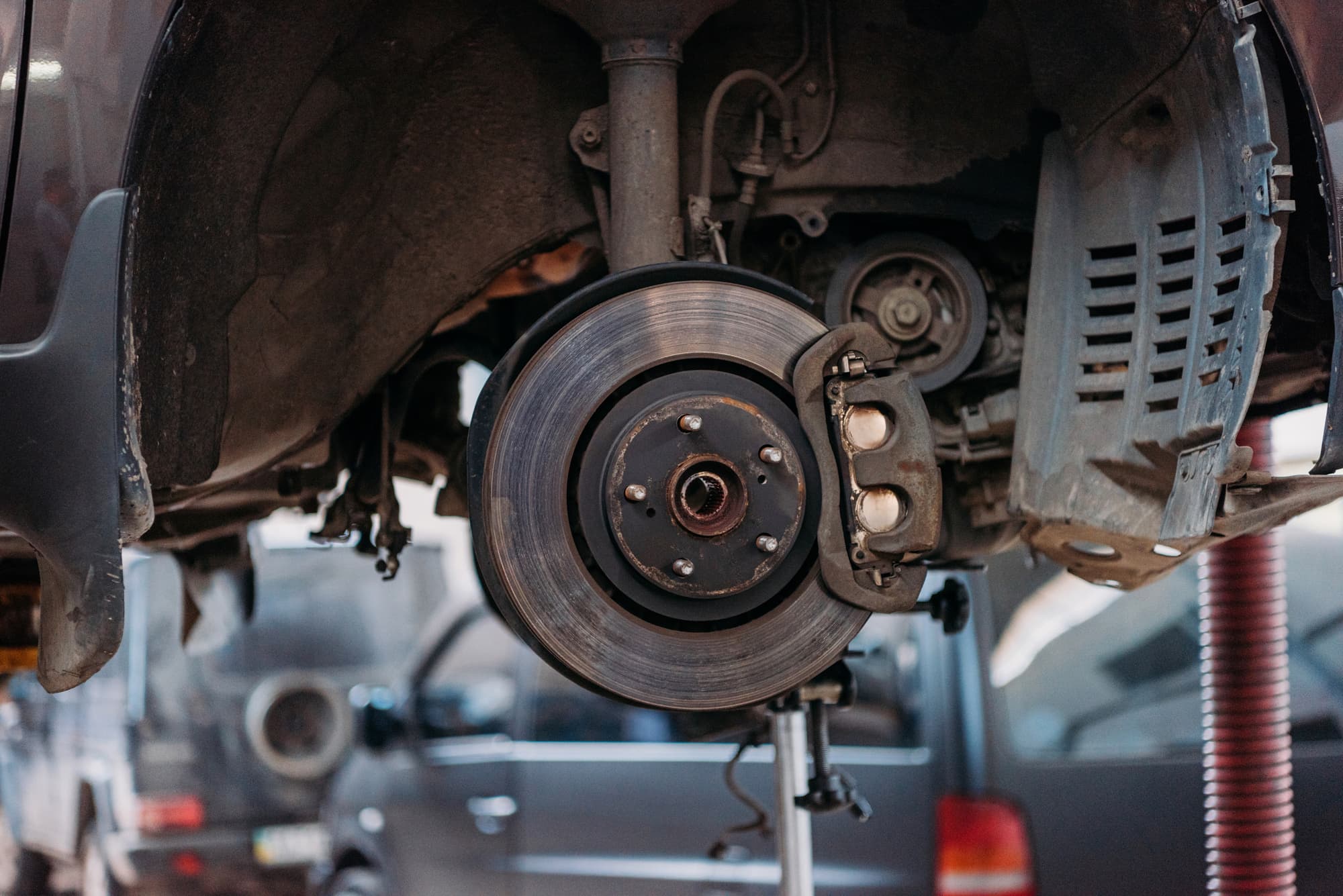
Fiat Brake Repair & Brake Fluid Change at DART Auto
Fiat platforms blend Italian design with unique engineering choices that demand specialist attention when servicing brakes. The 500 and 124 Spider share components with platforms from other manufacturers, but their brake systems use specific torque specs, proprietary bleeding procedures, and electronic parking brake modules that communicate through the CAN bus. Generic shops often skip the electronic handbrake retraction steps required on 2012-newer 500 models equipped with EPB, risking module damage or incomplete pad replacement. Our factory-trained technicians use dealer-level diagnostic software to properly retract electronic calipers, bleed ABS units through active cycling, and reset brake pad wear sensors without triggering fault codes.
Fiat brake fluid change intervals are aggressive – typically every two years – because DOT 4 fluid absorbs moisture in Colorado's temperature swings, reducing boiling points and corroding the ABS modulator from the inside. The 500 Abarth and 124 Spider Abarth demand particular care: their performance-oriented Brembo calipers require complete system bleeding using pressure or vacuum methods that reach every caliper port and the ABS pump reservoir. We've seen early 500 models (2012-2015) develop soft pedals from improper bleeding that leaves air trapped in the modulator.
When you bring your Fiat to DART Auto for brake service, expect:
- Electronic parking brake retraction using OEM-equivalent scan tools before pad replacement
- Complete fluid exchange with pressure bleeding to purge moisture from the ABS unit and all four calipers
- Rotor measurement and machining or replacement based on manufacturer minimum thickness specs
- Thorough inspection of caliper slide pins, brake hoses, and pad wear sensors with documented findings
Common Brake Repair & Brake Fluid Change Issues on Fiat Vehicles
Fiat engineers built these Italian vehicles around compact, efficient platforms that deliver spirited driving dynamics – but those same design choices create distinct brake service patterns Denver owners should recognize. The 500, 500X, 124 Spider, and older Punto models share brake components with tight tolerances and moisture-sensitive hydraulics that demand specialized attention beyond what a general shop typically provides.
- Electronic Parking Brake (EPB) calibration errors on 2012+ 500 and 500L models: Unlike cable-operated systems, Fiat's EPB requires factory scan tools to retract calipers during pad replacement. Shops without proper software often damage actuators or leave fault codes that trigger ABS warnings and partial brake loss.
- Rear caliper piston corrosion on 2012-2019 500 and 500X: The single-piston floating rear calipers on these platforms corrode rapidly in Denver's freeze-thaw cycles, seizing the slide pins and causing uneven pad wear. Owners typically notice grinding from one rear wheel while the opposite side shows minimal wear.
- Bosch 9.0 ABS module contamination on 500 Abarth and 124 Spider: These performance variants use high-pressure ABS systems extremely sensitive to moisture in brake fluid. Contaminated fluid causes internal valve corrosion, triggering intermittent ABS faults and spongy pedal feel that worsens in cold weather.
- Front brake rotor warping on 500 Abarth (2012-2019): The aggressive brake bias and lightweight 11.1-inch front rotors overheat during spirited driving, developing thickness variation that causes pulsation. Many owners mistake this for ABS activation during normal stops.
- Brake fluid degradation on all Fiat models: Factory DOT 4 fluid absorbs moisture faster in Colorado's dry climate than coastal regions, dropping the boiling point and introducing corrosion throughout the hydraulic system within two years – well before the factory three-year interval.
- Master cylinder seal failure on 2007-2012 500 (European models): Early 500 platforms develop internal seal leaks that allow fluid bypass, creating a slowly sinking pedal that many drivers adapt to until complete failure occurs without warning.
Why Choose DART Auto for Fiat Brake Repair & Brake Fluid Change
Fiat brake systems demand more than generic shop work. Electronic parking brakes on 500 and 500X models require dealer-level scan tools to retract calipers before pad replacement – tools most independents don't own. DART Auto's diagnostic suite matches or exceeds dealership capability, letting us service EPB modules, clear brake wear sensors, and perform proper bleed sequences on ABS-equipped platforms without triggering fault codes or leaving air trapped in the hydraulic unit.
Our master technicians track Fiat-specific service bulletins, including TSBs addressing soft pedal feel on 2012–2016 500 models after fluid changes and rear caliper piston corrosion on older 500L variants. We use DOT 4 fluid meeting Fiat 9.55523 spec and follow factory torque procedures for banjo bolts and caliper brackets – details that preserve warranty coverage and prevent comebacks. Because our technicians are salaried rather than flat-rate, they take the time to inspect brake hoses for the age-related cracking common on European cars and verify pad wear sensor function before reassembly.
Every brake job includes a complete system inspection: rotor thickness measurement against factory minimums, caliper slide pin lubrication, and a post-repair pressure bleed to eliminate spongy pedal feel. We back the work with a 3-year/36,000-mile parts and labor warranty – confidence you won't find at quick-lube shops attempting European brake service with universal scan tools.
Symptoms – How to Know You Need This Service
Your Fiat will communicate brake problems through distinct sensory cues and dashboard alerts. Pay attention to these warning signs:
- Grinding or metal-on-metal scraping when braking – the wear indicators have contacted the rotor, and you're now damaging rotors with every stop. Schedule service immediately to avoid replacing rotors unnecessarily.
- Spongy or soft brake pedal that sinks toward the floor – moisture-contaminated fluid has lowered the boiling point, or air has entered the hydraulic system. Common on Fiats overdue for the two-year fluid change.
- Pulsation or vibration through the pedal during braking – warped rotors from heat cycling or uneven pad deposit. Frequently seen on 500 Abarth models driven aggressively without upgraded fluid.
- Brake warning light or ABS light illuminated – low fluid level, worn pads triggering the sensor, or ABS modulator fault. Requires scan tool diagnosis to pinpoint the exact cause.
- Pulling to one side during braking – seized caliper slide pin or uneven pad wear. Left unchecked, this destroys rotors and creates dangerous handling.
- Burning smell after repeated stops – overheated pads or dragging caliper. Electronic parking brake modules can fail partially engaged on 500 models, causing rear brake drag.
- Squealing or chirping at low speeds – glazed pads, worn pad material, or missing anti-rattle shims. Often harmless but worth inspecting during routine service.
Which Fiat Models We See for Brake Repair & Brake Fluid Change
We service brake systems across the Fiat lineup, with particular depth of experience on the platforms sold in North America since the brand's 2011 return. Our technicians regularly work on:
- 500 (2012-2019, Type 312) – including Pop, Lounge, Sport, Turbo, and Abarth variants. Electronic parking brake on most trims requires scan tool retraction.
- 500L (2014-2020) – larger MPV platform with conventional rear drum parking brake on base models, disc with EPB on higher trims.
- 500X (2016-2019) – crossover variant sharing components with Jeep Renegade. AWD models require specific bleeding sequence to avoid ABS pump air entrapment.
- 124 Spider (2017-2020, Type 348) – Mazda MX-5 platform with Fiat powertrain. Abarth models use Brembo front calipers demanding performance-grade DOT 4 fluid.
- 500e (2013-2019) – electric model with regenerative braking that reduces conventional brake wear but accelerates fluid moisture absorption from infrequent use.
We also maintain classic Fiat 124 Spider and X1/9 models when owners seek brake upgrades or restorations, though our primary focus remains the modern lineup. If you own a grey-market or European-spec Fiat not officially sold in the U.S., contact us to confirm parts availability before scheduling.
Causes & Risks – What Happens if Ignored
Fiat brake issues stem from three converging factors: the brand's reliance on moisture-sensitive DOT 4 fluid, compact caliper designs with minimal corrosion protection, and electronic systems that mask early symptoms until failures cascade. Denver's altitude, temperature swings, and road salt accelerate every wear path. Most Fiat owners drive these cars enthusiastically – exactly the use case that exposes marginal brake performance.
Delaying brake service on a Fiat rarely saves money. What starts as a fluid change or pad replacement quickly involves calipers, ABS modules, and hydraulic lines once corrosion takes hold.
- Ignored EPB faults progress to full caliper replacement: A simple calibration error left unaddressed burns out the electric motor, turning a software fix into a complete caliper assembly at several times the cost.
- Contaminated fluid destroys ABS modules: Moisture in the system corrodes Bosch 9.0 internal valves within 6-12 months, requiring module replacement that often exceeds the value of older 500 models.
- Seized slide pins score rotors and damage pads: Corroded caliper hardware causes cocked pad wear, cutting deep grooves into rotors that then require replacement alongside the pads and hardware you originally needed.
- Warped rotors crack under thermal stress: Continuing to drive on pulsating rotors overheats the friction surface, creating stress fractures that lead to catastrophic rotor failure during hard braking.
- Master cylinder leaks lead to complete pedal loss: Internal seal bypass worsens gradually until the pedal goes to the floor without warning, often in traffic or during emergency stops.
Safety Impact – Why Brake Repair & Brake Fluid Change Matters
Brake failures on Fiat vehicles present unique risks because the compact platforms offer minimal weight advantage during emergency stops, and the sport-tuned suspension delivers handling that encourages speeds the braking system must reliably control. When brake performance degrades, the electronic stability control and ABS systems that drivers rely on either activate inappropriately or fail to engage when needed.
Contaminated brake fluid lowers boiling points, causing vapor lock during sustained braking – descending mountain passes or panic stops in traffic. The pedal goes soft or sinks to the floor while the vehicle continues at speed. Seized calipers create side-to-side imbalance that triggers unexpected steering pull during braking, especially dangerous in wet conditions or highway lane changes. Failed EPB systems leave the vehicle without parking brake function on inclines, and malfunctioning ABS modules extend stopping distances unpredictably.
Symptoms requiring immediate attention:
- Pedal sinks slowly to the floor when held at a stop
- ABS or brake warning lights illuminate and stay on
- Grinding, scraping, or metal-on-metal noise from any wheel
- Steering pulls sharply to one side during braking
- Brake pedal feels spongy or requires pumping to build pressure
- EPB will not release or engage, or shows fault messages
Schedule service soon if you notice:
- Pulsation or vibration through the brake pedal during normal stops
- Squealing or chirping from brakes (wear indicator contact)
- Brake fluid below minimum line or visibly dark/contaminated
- Increased stopping distances compared to when the vehicle was new
How Fiat Brake Repair & Brake Fluid Change Actually Works
Fiat brake systems combine traditional hydraulic components with electronic controls that require factory-level diagnostic access. The master cylinder generates hydraulic pressure distributed through steel and flexible lines to each wheel. On 2012+ models, an Electronic Parking Brake replaces mechanical cables with electric motors integrated into the rear calipers, controlled by the body computer. The Bosch ABS module modulates pressure during wheel lockup, but it also communicates with stability control, traction management, and the instrument cluster – meaning brake work often involves multiple vehicle systems.
Proper service on these platforms goes well beyond bleeding fluid or swapping pads. Technicians must retract EPB actuators through the scan tool before compressing pistons, then recalibrate the system after installation to prevent fault codes. The ABS module requires specific bleeding sequences to purge air from internal valves, and many Fiat models need steering angle sensor resets after brake work to restore stability control accuracy. Torque specifications for caliper brackets and wheel bolts are critical on these lightweight platforms – undertorquing risks hardware loosening, while overtorquing cracks aluminum components.
Fiat-specific brake service requirements:
- Factory scan tool access to retract and calibrate Electronic Parking Brake systems
- Bosch-specific ABS bleeding procedures to evacuate air from modulator valves
- Steering angle sensor and yaw sensor resets after hydraulic work
- Platform-specific torque values for caliper brackets (differ between 500, 500X, and 124 Spider)
- DOT 4 fluid meeting Fiat 9.55597 specification (standard DOT 4 may not provide adequate corrosion protection)
- Electronic pad wear sensor coding on Abarth and Turbo models
How We Diagnose Brake Repair & Brake Fluid Change Issues on Fiat
Fiat braking systems – especially on 500, 500X, and 124 Spider platforms – rely heavily on integrated electronic stability control and ABS modules that communicate faults through the CAN bus. A proper diagnosis starts with factory-grade tooling that reads not just generic OBDG-II codes, but manufacturer-specific fault memory stored in the ABS controller, body control module, and instrument cluster. We begin every brake concern with a complete system scan to capture stored and pending codes, then move systematically through physical inspection and performance testing.
- Factory-level scan: We connect Fiat-specific diagnostic software to pull ABS fault codes, wheel speed sensor data, brake pressure sensor readings, and stability control event logs. This reveals electronic issues that generic scanners miss entirely.
- Brake fluid condition test: We measure moisture content with a refractometer and inspect color and clarity. Fiat DOT 4 fluid degrades faster in humid climates, and contaminated fluid corrodes the ABS modulator – a common failure on 2012–2016 500 models.
- Pad and rotor measurement: We measure remaining pad thickness with calipers and rotor thickness with a micrometer, comparing against Fiat's minimum service limits. We also check for uneven wear patterns that indicate caliper slide pin seizing or mismatched pad compounds.
- Caliper and line inspection: We inspect flex hoses for cracking (common on older 500L and 500X), check caliper slide pins for corrosion, and test caliper piston retraction. Seized pistons often present as pulling or uneven pad wear before the customer feels a problem.
- Road test and pedal feel evaluation: We drive the vehicle to assess pedal travel, firmness, pulsation, and any pulling under braking. ABS activation during normal stops often points to wheel speed sensor drift or failing modulators.
Once we complete the diagnostic sequence, we compile findings into a detailed estimate that separates immediate safety concerns from items you can schedule later. You'll understand exactly what failed, why it matters, and what the repair involves before we touch a wrench.
Brake Repair & Brake Fluid Change on Fiat: Repair vs. Replacement
Not every brake concern requires wholesale replacement. The right approach depends on component condition, safety margin, and cost-effectiveness. Here's how we decide:
When Repair Makes Sense
- Caliper slide pin service: If pads are wearing unevenly but calipers and rotors are within spec, cleaning and re-lubricating slide pins with high-temp synthetic grease often restores even braking. This is especially common on 500 and 500L front calipers exposed to road salt.
- Rotor resurfacing: Rotors with minor scoring or light pulsation can be machined if they're above minimum thickness. We measure carefully – Fiat rotors are often thin from the factory and can't tolerate aggressive cuts.
- Brake fluid exchange: Replacing degraded fluid before it damages the ABS modulator saves thousands compared to modulator replacement. We recommend fluid service every two years on all Fiat models.
When Replacement Is the Right Call
- Rotors below minimum thickness: Once rotors are at or below the stamped minimum, resurfacing compromises heat dissipation and structural integrity. We replace them with OEM-equivalent parts that match the factory thermal profile.
- Seized calipers: Calipers with frozen pistons or corroded bores can't be reliably rebuilt. Replacement prevents comeback failures and restores proper pad retraction.
- Contaminated or failing ABS modulators: If moisture has corroded internal valves in the ABS unit – a known issue on early 500 platforms – repair isn't possible. We source remanufactured units with updated seals and perform a complete system bleed with factory scan tool activation.
We walk you through the options with photos and measurements so you can make an informed decision. Our salaried technicians have no incentive to upsell – we recommend what we'd do on our own vehicles.
How to Make Your Fiat Brake Repair & Brake Fluid Change Last Longer
Brake system longevity on Fiat platforms depends on driving habits, maintenance discipline, and using the right parts. Small changes deliver measurable results.
Driving Habits That Extend Brake Life
- Anticipate stops: Coasting down to slower speeds before applying brakes reduces pad and rotor temperatures, preventing glazing and extending component life by thousands of miles.
- Avoid riding the brake pedal: Resting your foot on the pedal generates constant friction heat and keeps pads in contact with rotors, accelerating wear and warping rotors prematurely.
- Use engine braking on descents: Downshift on mountain roads or long grades to let the engine absorb speed. This keeps brake temperatures manageable and prevents fluid boil.
Maintenance You Can Monitor
- Listen for changes: New squealing, grinding, or pulsation means immediate inspection. Catching wear early prevents rotor damage that turns a pad replacement into a full brake job.
- Check fluid level monthly: A dropping brake fluid reservoir often signals worn pads (the caliper pistons extend further, drawing more fluid) or a leak. Top off only with DOT 4 fluid meeting Fiat MS-90039 spec.
- Inspect pads visually: On many Fiat models, you can see the outboard pad through the wheel spokes. If material is below 3mm, schedule service soon.
Brand-Specific Care
- Use OEM-spec brake fluid: Fiat specifies low-viscosity DOT 4 fluid for proper ABS modulator function. Substituting DOT 3 or generic DOT 4 can cause sluggish ABS response and premature modulator wear.
- Follow the two-year fluid interval: Fiat's service schedule calls for brake fluid replacement every two years regardless of mileage. Moisture absorption is time-based, not mileage-based, and contaminated fluid corrodes expensive ABS components.
- Replace pads and rotors as sets: Mixing old and new pads or rotors side-to-side creates uneven braking force and accelerates wear on the newer components. Always service both sides of an axle together.
Leave caliper service, ABS bleeding, and rotor replacement to the shop – these tasks require torque specs, proper bleeding sequences, and scan tool activation that aren't safe to improvise at home.
What to Expect When You Bring Your Fiat In
We start every brake appointment with a structured process designed to give you clarity before any wrench turns:
- Drop-off and Initial Assessment: When you arrive, we'll ask about symptoms – pulsation, noise, warning lights, pedal feel – and note your mileage. If you need a loaner vehicle or shuttle service, let us know at check-in so we can arrange transportation.
- Complete Brake Inspection: Our technician measures pad thickness, rotor condition, caliper operation, and fluid contamination. We scan for ABS faults and brake wear sensor codes, then document findings with photos where helpful.
- Written Estimate and Consultation: You'll receive a detailed estimate explaining what needs attention now versus what can wait. We'll walk through options – OEM pads versus premium aftermarket, rotor resurfacing versus replacement – and the trade-offs of each choice.
- Repair and Quality Checks: Once approved, we perform the work using factory procedures: proper torque specs, EPB retraction sequences, and pressure bleeding to purge all air from the ABS unit. Every job finishes with a road test to verify pedal feel and stopping power.
- Pickup Walkthrough: At pickup, we'll show you old parts, explain what we found, and answer questions about break-in procedures or any noises you might hear initially. If anything feels off in the first week, call us – we'll recheck the work at no charge.
Personal items are safe in your car during service, though we recommend taking valuables with you. After-hours key drop and pickup are available by arrangement – just let us know your schedule.
Our Fiat Services
- Air Conditioning AC Repair
- Battery Repair Replacement
- Check Engine Light Diagnostics
- Clutch Repair & Replacement
- Coolant Leak Repair
- Cooling System Repair
- Drive Shaft Repair
- Engine Repair
- Exhaust & Catalytic Converter Repair
- Head Gasket Repair & Replacement
- Oil Change
- Oil Leak Repair
- Scheduled Service Maintenance
- Steering Repair
- Suspension Repair
- Cambelt Timing Belt Replacement
- Transmission Repair
- Tune Up
- Wheel Alignment